These are the 10 Houston companies that together raised over $525 million between July and September. Photo via Getty Images

October means several things — postseason baseball, pumpkins everywhere, and the last quarter of the year.

Before Q4 firmly takes its hold, let's talk about the 10 Houston companies that raised over $526 million between July and September, according to previous reporting from InnovationMap.

Houston chemicals company raises $357M, claims unicorn status

Solugen closed its Series C funding round at $357 million to grow its chemical products. Photo via Getty Images

Houston-based Solugen, a startup that specializes in combating carbon dioxide emitted during the production of chemicals, has hauled in $357 million in a Series C funding round. That amount eclipses the size of any Houston VC funding round this year or last year.

The Series C round lifts Solugen's pre-money valuation to $1.5 billion, according to the Axios news website. This gives Solugen "unicorn" status as a startup with a valuation of at least $1 billion.

Singapore-based GIC and Edinburgh, Scotland-based Baillie Gifford led the round, with participation from Temasek Holdings, affiliates of BlackRock, Carbon Direct Capital Management, Refactor Capital, and Fifty Years.

Since its founding in 2016, Solugen has raised more than $405 million in venture capital, according to Crunchbase.

"Solugen's vision for cleaner chemicals through synthetic biology has the potential to be a fundamental shift in how chemicals are made, to help tackle the environmental challenges we face globally. The chemical market itself is colossal, and Solugen is just getting started," Kirsty Gibson, investment manager at Baillie Gifford, says. Click here to continue reading.

Rapidly scaling Houston e-commerce software startup raises $98M series B

Houston-based Cart.com, which equips e-commerce businesses with a suite of software services, has raised $140 million in venture capital investment since its founding last year. Photo via cart.com

After closing a sizable series A round in April, a Houston tech startup has closed another round of funding — this time a near $100 million one.

Cart.com, an end-to-end e-commerce software startup and Amazon competitor, closed its series B round at $98 million. The investment announcement follows the company's series A in the spring and, according to a news release, brings Cart.com's total funding to $140 million since it launched eight months ago.

"At Cart.com, we believe e-commerce brands should be free to scale up without having to juggle countless outside vendors, and without compromising their unique vision for their brand," says Omair Tariq, CEO of Cart.com, in the release. "Our one-stop platform supports sellers across the full range of e-commerce functionality, empowering them to efficiently scale up and reach new markets using proven, best-of-breed services and technologies." Click here to continue reading.

AI-backed SaaS company based in Houston secures $30M series B funding

Imubit uses artificial intelligence for optimization at manufacturing plants. The company closed its series B at $30 million. Photo via imubit.com

Houston-based Imubit, whose AI-powered technology provides process optimization for refiners' and chemical operators' manufacturing plants, has raised $30 million in venture capital.

Zeev Ventures led the $30 million Series B round alongside Insight Partners, with participation from existing investors Spider Capital and UpWest. Since its founding in 2016, the company has raised $50 million.

"Imubit's goal is to transcend the industry beyond the decades old process control and optimization software hierarchy. … Today, we are solving previously unsolvable problems that are worth millions of dollars in annual margin to our clients," Gil Cohen, Imubit's co-founder and CEO, says in an August 16 news release. Click here to continue reading.

Houston-based medical device company snags $12.8M in series B
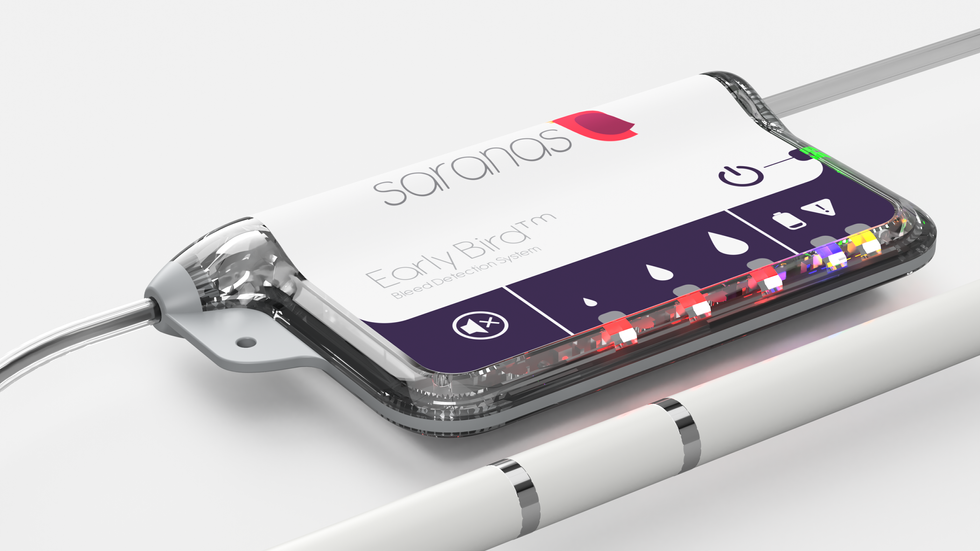
Saranas closed its series B round this week. Photo courtesy of Saranas

A Houston company that's changing the game when it comes to early bleed detection has raised its next round of funding.

Saranas Inc. announced that it closed a $12.8 million series B investment led by Wisconsin-based Baird Capital, the venture capital and global private equity arm of Baird, a global company with a location in Houston. Austin-based S3 Ventures also supported the round.

The company will use the funds to continue its clinical trials, per a news release.

"We are pleased to announce this round of funding led by Baird Capital," says Saranas President and CEO James Reinstein in the release. "It underscores the importance of real-time monitoring of bleeding complications and our opportunity to accelerate the commercialization of Early Bird. We look forward to expanding our clinical evidence through prospective clinical trials and launching next generation products, including Bird on a Wire, to address a much broader range of endovascular procedures." Click here to continue reading.

Houston health tech company raises $7.85M series A led by local VC

Houston-based Kare Technologies has raised fresh funds to spur its national expansion. Image courtesy of Kare

A Houston-based health tech company has scored fresh funds from a Houston venture group to fuel its growth and to expand nationally.

KARE Technologies, a digital labor marketplace for health care workers, raised a $7.85 million series A investment round led by Houston-based Golden Section Ventures.

"The KARE team are well known in senior care and the caring industry at large," says Dougal Cameron, general partner at GSV, in a news release. "They are experts in their field and know this problem well. Their care for the industry and knowledge in the space clearly shows in the company's rapid adoption. They are providing a needed solution to an extremely important industry for our society." Click here to continue reading.

Houston energy blockchain company announces $7.7M in funding, plans to expand to the Middle East
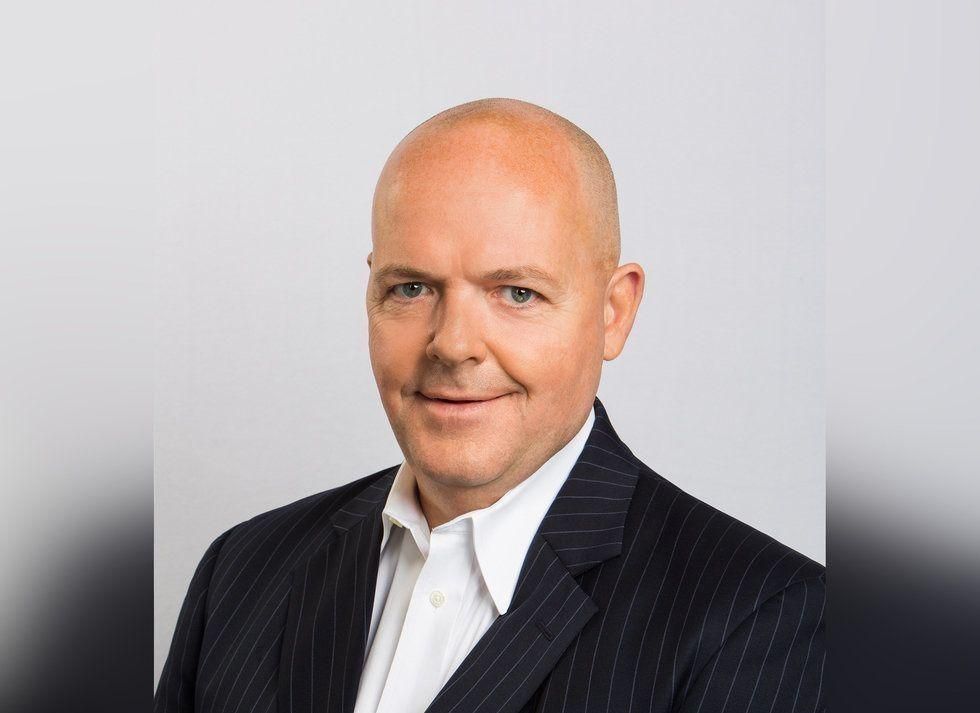
Data Gumbo, founded and led by Andrew Bruce, has announced its latest funding. Photo courtesy of Data Gumbo

A Houston-based tech company has announced another round of funding to support its blockchain network growth as well as to establish a presence in the Middle East.

Data Gumbo has closed its series B funding round totaling $7.7 million with follow-on investments led by Equinor Ventures. The round includes participation from Saudi Aramco Energy Ventures and Bay Area and Houston-based venture firm L37. The round's first close was announced in September 2020 at $4 million. The additional funds to close the Series B will be used to scale Data Gumbo to serve demand for GumboNet™ and GumboNet™ ESG. Additionally, Data Gumbo plans to establish a presence in the Middle East to cover expected demand growth in the region.

"The successful close of our series B is continued proof of the efficacy and booming interest in our ability to capture critical cost savings, deliver trust and provide transparency across commercial relationships," says Andrew Bruce, founder and CEO of Data Gumbo, in a news release. "Compounded by the growing demand for transparent, accurate sustainability data and the launch of our automated ESG measurement solution, GumboNet™ ESG, Data Gumbo's trajectory is well-positioned to serve our growing customer base by ensuring economic productivity and value. This infusion of capital will support our expansion efforts as we bring more international users to our network." Click here to continue reading.

Houston artificial intelligence startup raises $6M in seed funding

This Houston startup has a game-changing technology for deep learning. Photo via Getty Images

A computer science professor at Rice University has raised seed funding last month in order to grow his company that's focused on democratizing artificial intelligence tools.

ThirdAI, founded by Anshumali Shrivastava in April, raised $6 million in a seed funding round from three California-based VCs — Neotribe Ventures and Cervin Ventures, which co-led the round with support from Firebolt Ventures.

Shrivastava, CEO, co-founded the company with Tharun Medini, a recent Ph.D. who graduated under Shrivastava from Rice's Department of Electrical and Computer Engineering. Medini serves as the CTO of ThirdAI — pronounced "third eye." The startup is building the next generation of scalable and sustainable AI tools and deep learning systems.

"We are democratizing artificial intelligence through software innovations," says Shrivastava in a news release from Rice. "Our innovation would not only benefit current AI training by shifting to lower-cost CPUs, but it should also allow the 'unlocking' of AI training workloads on GPUs that were not previously feasible." Click here to continue reading.

Houston construction tech company raises $4M round

Buildforce is an app that can connect contractors with construction experts. Photo courtesy of Buildforce

A locally founded company that's focusing on changing the construction labor game has raised a round of institutional funding.

Buildforce, which splits its headquarters between Houston and Austin, closed its latest round of funding at $4 million. The round was led by Maryland-based TDF Ventures, with participation from existing investor Houston-based Mercury Fund and Austin-based S3 Ventures.

The company uses construction staffing and management software to more efficiently connect contractors to skilled workers across trades — electrical, mechanical, plumbing, flooring, concrete, painting, and more.

"Contractors depend on skilled and reliable tradespeople to meet project timelines," says Moody Heard, co-founder and CEO of Buildforce, in a news release. "Our key insight is that by optimizing the user experience for skilled tradespeople seeking higher pay and job security, we are able to help meet contractors' needs. We're thrilled to have become the partner of choice for the top contractors in our current markets looking to connect with this workforce." Click here to continue reading.

Houston startup raises $1.75M round with support from local female-focused investor
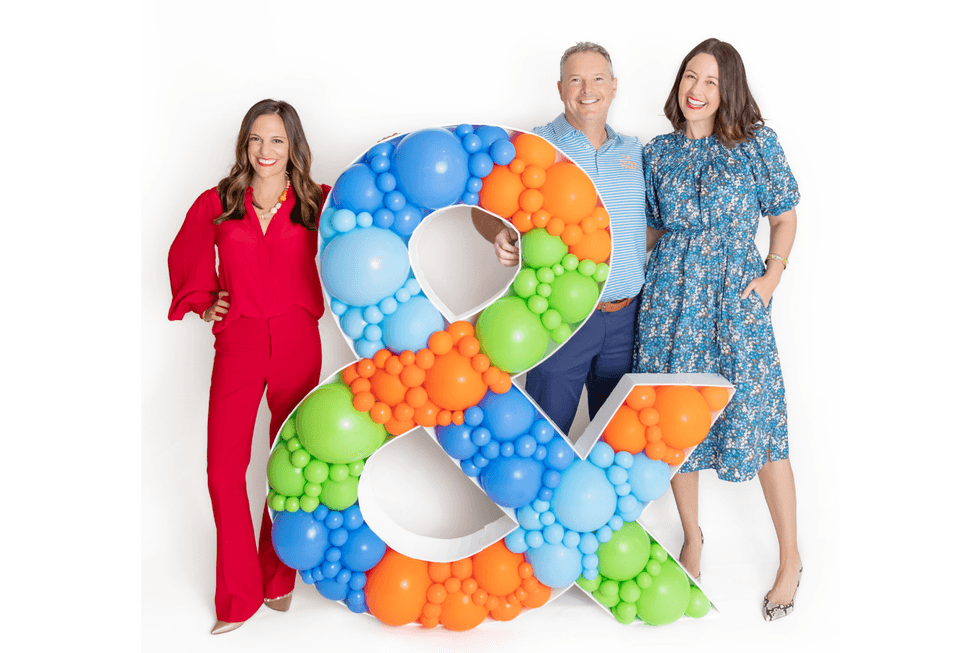
Ampersand and Curate Capital are working together to move the needle on the future of work. Photo courtesy of Curate Capital

A Houston-based startup focused on upskilling young professionals has closed its latest round of funding with support from a local investor.

Ampersand Professionals Inc. raised $1.75 million in pre-seed funding led by Curate Capital, a Houston-based, female-focused venture capital fund. Carrie Colbert, Curate's founding and general partner, will join Ampersand's advisory board.

Ampersand — founded in 2020 by Allie Danziger with Co-Founders Kathrin Applebaum and Scott Greenberg — has developed a platform for businesses to easily implement internship programs. The program also upskills and educates young professionals, providing them career development and job skills training.

"Ampersand's mission to democratize access to career-building opportunities for young professionals, ties in nicely with Curate's mission to empower women, says Colbert in a news release. "The company's platform will have a direct positive impact on young women (and others) as they begin their professional careers." Click here to continue reading.

Houston digital health platform raises $1.2M seed round
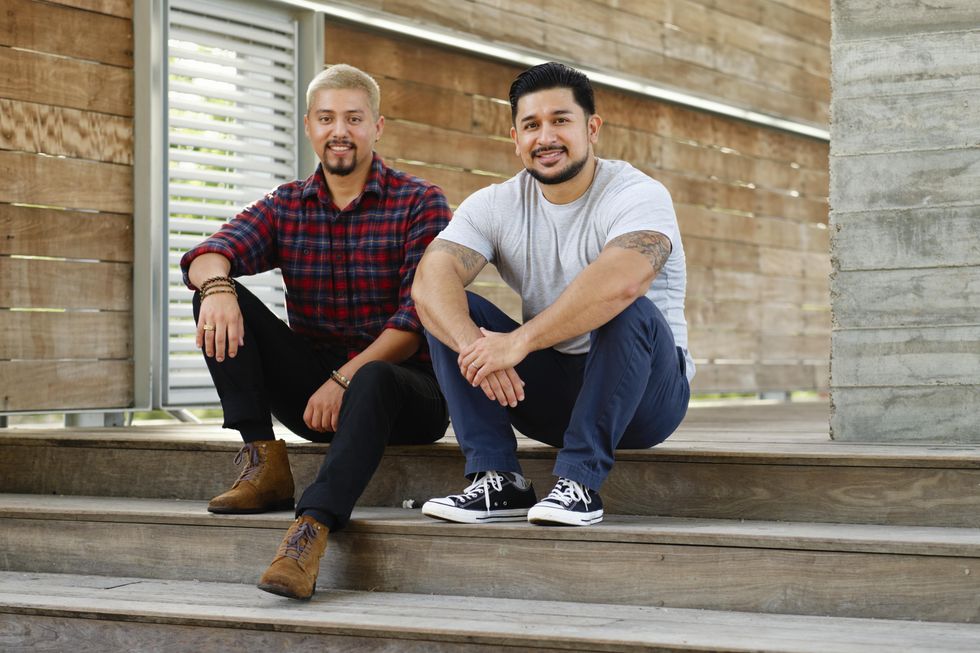
DocSpace was founded by Chief Product Officer Miles Montes (left) and CEO Mario Amaro, a physician and U.S. Navy Veteran. Photo courtesy of DocSpace

A Houston-based software company providing clinicians a turn-key platform for their practice has announced the close of its seed funding round.

DocSpace raised $1.2 million in seed funding led by Slauson & Co. with participation by Precursor Ventures, Acrew Capital's Scout Fund, and SputnikATX Ventures. The company's angel investors Nathan and Sonia Baschez, Nikhil Krishnan, and Eliana Murillo. The company was founded by CEO Mario Amaro, a physician and U.S. Navy Veteran, and Chief Product Officer Miles Montes, an expert in platform product management previously at ADP and ShopLatinx.

"Existing practice management software requires clinicians to manually self-navigate the expensive and complicated business formation process before they're able to utilize any of their product services," says Amaro in a news release. "When you require clinicians to do all the hard work of starting a new business then force them to purchase expensive software, it's no surprise that fewer clinicians have the opportunity to build new businesses in their communities." Click here to continue reading.


The second quarter of this year was good to these Houston tech startups. Photo via Getty Images

These 10 Houston startups closed funding rounds in Q2

following the money

It's been a banner year for Houston startups raising funds. From an Amazon competitor emerging from stealth and snagging a $25 million series A to a $74 million series B for a clinical-stage biopharmaceutical company, Houston's innovative companies have seen a great second quarter of 2021 in terms of VC activity.

In fact, according to a report from Houston Exponential, Q2's funding activity follows a 12-month period of $1 billion raised in Houston. This report included the first quarter's deals, which is rounded up in this article.

In case you missed some of these Q2 deals, InnovationMap has rounded up all its coverage of funding rounds closed between April and June based on previous reporting. Scroll through to see which Houston startups are catching the eyes — and cashing the checks — of investors.

Cancer-fighting company based in Houston emerges from stealth and snags $74M in its latest round

Tvardi Therapeutics Inc. has fresh funds to support its drug's advancement in clinical trials. Photo via Getty Images

A Houston-based clinical-stage biopharmaceutical company has raised millions in its latest round.

Tvardi Therapeutics Inc. closed its $74 million series B funding round led by new investors New York-based Slate Path Capital, Florida-based Palkon Capital, Denver-based ArrowMark Partners, and New York-based 683 Capital, with continued support and participation by existing investors, including Houston-based Sporos Bioventures.

"We are thrilled to move out of stealth mode and partner with this lineup of long-term institutional investors," says Imran Alibhai, CEO at Tvardi. "With this financing we are positioned to advance the clinical development of our small molecule inhibitors of STAT3 into mid-stage trials as well as grow our team." Click here to continue reading.

Houston-based cancer and disease bio-venture launches after $38.1M series A

A Houston biotech company has raised $38.1 million. Photo by Dwight C. Andrews/Greater Houston Convention and Visitors Bureau

Sporos Bioventures LLC launched this month after closing a $38.1 million round of series A financing.

The Houston-based biotech company aims to accelerate the development of breakthrough therapies for cancer and immune diseases by sharing resources, capital, access to clinical trial infrastructure, and talent from within its knowledgeable team of biotech executives, entrepreneurs, academic scholars, and investors. The company was launched with four entities: Tvardi Therapeutics, Asylia Therapeutics, Nirogy Therapeutics, and Stellanova Therapeutics.

The most advanced of the four entities, Tvardi, is currently in Phase 1 clinical trial to evaluate it's STAT3 oral inhibitor. It was named a "most promising" life sciences company at the 2020 Texas Life Science Forum, hosted by BioHouston and the Rice Alliance in December. The remaining entities are in the development stages and are focused on cancer, autoimmune disease, fibrosis, and tumor growth, among other conditions.

"Sporos was founded to accelerate the development of new medicines by addressing inefficiencies and risk in the establishment of new biotech companies," Peter Feinberg, Sporos co-founder, said in a statement. "By leveraging our extensive network, including the Texas Medical Center, we first identify transformative scientific opportunities and then deploy our top-tier talent, funding, and operational support to drive these insights into a growing pipeline of first-in-class treatment options." Click here to continue reading.

Houston-based e-commerce software startup and Amazon competitor raises $25M in its series A

Houston-based Cart.com, which equips e-commerce businesses with a suite of software services, has raised $45 million in venture capital investment since its founding in September. Photo via cart.com

An end-to-end e-commerce services provider based in Houston has closed its series A round of financing led by a Houston venture capital group.

Cart.com announced the closing of its $25 million led by Houston-based Mercury Fund and Florida-based Arsenal Growth with contribution from Austin-based Moonshots Capital and Ohio-based Scarlet Venture Fund. The new round follows its $20 million Seed round led by Amsterdam-based Bearing Ventures.

The company was founded last September by two former entrepreneurs — Omair Tariq, former executive at Home Depot and COO of Blinds.com, serves as CEO and Jim Jacobsen, co-founder and former CEO of RTIC Outdoors, serves as executive chairman.

"We know the pain points brands face in the e-commerce value chain because we have experienced them firsthand. We built Cart.com to solve those problems and deliver unequaled value for brands from a single platform," Jacobsen says in a news release. Click here to continue reading.

Houston alternative energy startup raises $23M series B with global support

Syzygy Plasmonics has raised $23 million thanks to international support. Photos via plasmonics.tech

A Houston startup founded based off research coming out of Rice University has closed its series B funding, the company announced this week.

Founded in 2017, Syzygy Plasmonics is a chemical company developing a photocatalyst-powered hydrogen fuel cell technology that produces a cheaper source of energy that releases fewer carbon emissions. As of this week, the company has $23 million more to fund its scaling and grow its team thanks to the closing of its series B financing led by Hong Kong-based Horizons Venture. Equinor Ventures, a new investor, also joined in on the round, along with previous seed and series A investors including The Engine, GOOSE Capital, and Evok Innovations.

"With renewable electricity as an energy source, our technology is cleaner, and because of the stability and activity of our photocatalysts, we can drive dozens of possibilities, tuning reactions that produce different chemicals," says Trevor Best, Syzygy Plasmonics' co-founder and CEO, in a news release. "Our initial product will focus on eliminating emissions from hydrogen production, transforming the industrial process involved in making semiconductors, LEDs and metals. Our system will also enable industries that are consumers of hydrogen fuel cells, like fuel cell vehicles." Click here to continue reading.

Houston-based artificial heart company snags $22M in fresh funds

Through a series B round and a federal grant, BiVACOR has raised $22 million in funding ahead of human trials. Photo via bivacor.com

Houston-based medtech company BiVACOR has picked up $22 million in funding — in the form of a series B round and a federal grant — to propel development of its Total Artificial Heart device for treatment of severe heart failure.

In a May 19 news release, BiVACOR says it received a series B round of $19 million and a National Institutes of Health grant of $3 million. Boston-based Cormorant Asset Management and Australia's OneVentures, through its OneVentures Healthcare Fund III, led the round.

OneVentures first invested in BiVACOR three years ago. According to Australia's Financial Review, OneVentures initially pumped $3 million (Australian dollars) into BiVACOR, with the potential of contributing as much as $10 million if BiVACOR met certain milestones. BiVACOR received a round of seed funding from U.S. investors in 2013.

"BiVACOR's one-of-a-kind technology is supported by a remarkable team that has moved this technology a significant distance toward the clinic," Paul Kelly, managing partner of OneVentures, says in BiVACOR's news release. Click here to continue reading.

Houston small biz tech platform raises $21M series B

Hello Alice Co-Founders Carolyn Rodz and Elizabeth Gore recently raised funds to continue to grow their company that supports startups and small businesses. Photos via helloalice.com

A tech company focused on supporting and growing startups and small businesses has reached its own next big growth milestone this week.

Machine learning-enabled small business support company Hello Alice, founded in Houston with a large presence in California, has closed its $21 million series B raise led by Virginia-based QED Investors with participation from new investors including Backstage Capital, Green Book Ventures, Harbert Growth Partners, and How Women Invest.

The raise comes at a pivotal time for the company, which worked hard during the pandemic to support struggling business and now aims to support entrepreneurs of all backgrounds as the world re-emerges out of the COVID-19 era. The fresh funds, according to a press release, will be used to refine the predictive capabilities on its platform, launch a mobile application, and more.

"These investments signal that despite the recent challenges small business owners have faced, there is an economic tidal wave that will revitalize Main Street, led by the entrepreneurs we serve," says Elizabeth Gore, co-founder and president of Hello Alice, in the release. Click here to continue reading.

Houston data management company closes $18M in fresh funding

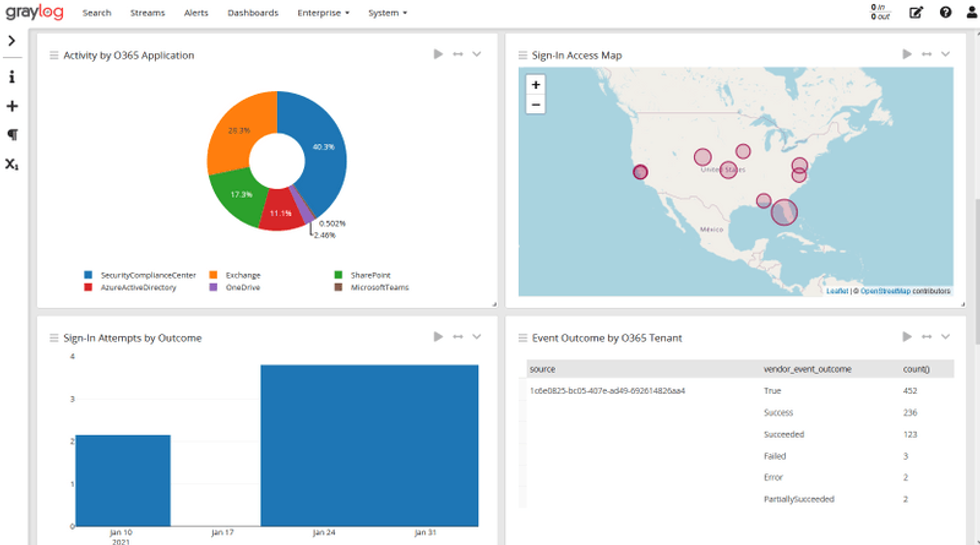
Houston-based data management startup Graylog has fresh funds to fuel its growth. Photo via Graylog.org

A Houston company that's created a centralized log management solution has closed a new round in funding.

Graylog closed its $18 million growth equity round led by Richmond, Virginia-based Harbert Growth Partners, a new investor, and Minneapolis, Minnesota-based Piper Sandler Merchant Banking, the company announced today. The round also received contribution from existing investors Houston-based Mercury Fund and Integr8d Capital, as well as Germany-based HTGF.

"This investment will enable us to accelerate our global go-to-market strategies and enhancements to the award-winning solutions we deliver for IT, DevOps, and Security teams," says Andy Grolnick, CEO of Graylog, in a press release. "We're excited to have the support of new and existing investor partners to help us realize our potential." Click here to continue reading.

JLABS-based cancer therapies company closes $15.5M series A led by Houston bioventure

Laura Furr Mericas

Houston-based Stellanova Therapeutics closed a $15.5 million series A financing this month, which will advance the company's first-in-human clinical trials for oncology and help build out its team.

Stellanova is a resident company at Johnson & Johnson's biotech incubator in the TMC (JLABS @ TMC) and is one of four entities that make up cancer and disease biotech company Sporos Bioventures, which officially launched last month after closing a $38.1 million series A of its own.

Stellanova is focused on advancing therapies for cancers that are resistant to current treatments, like chemotherapy and immune therapies. According to a release, it has seen unprecedented anti-tumor activity in preclinical models of pancreas and triple negative breast cancer through the use of its lead antibody, which targets DKK3, a factor secreted by cancer-associated fibroblasts that spur tumors. Click here to continue reading.

Houston-based electronics manufacturing biz raises $15M in new funding

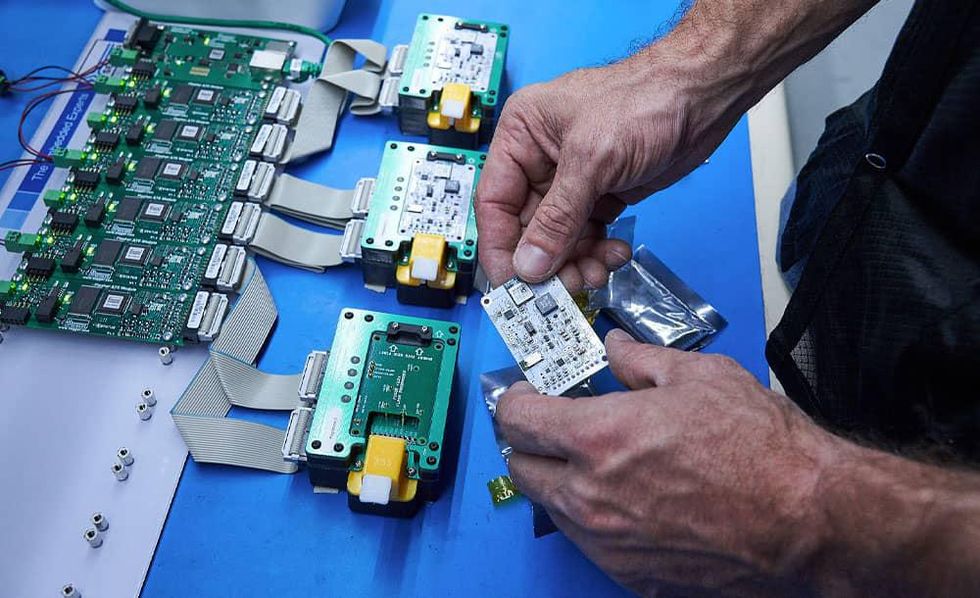
MacroFab's latest $15 million round will help it expand and grow throughout North America. Photo via macrofab.com

A Houston company that has optimized electronics manufacturing by setting up a digital platform connecting a network of factories across North America has raised its latest round of funding.

MacroFab closed a $15 million series B round led by New Jersey-based Edison Partners. ATX Venture Partners also participated, along with strategic investor Altium Limited, a leader in the electronics design software space.

The new funds will go toward keeping up with MacroFab's growth, specifically in expanding in North America and an increased investment in research and development, sales and marketing, and the opening of a new distribution center for international logistics this summer, according to a news release.

"MacroFab customers found themselves in a perfect storm last year, and went from being curious about cloud-enabled manufacturing to going all-in," says Misha Govshteyn, MacroFab CEO, in the release. "The turbulence started with the trade war and tariffs, and only accelerated with massive delays in delivering products from overseas and the ongoing microchip availability crisis." Click here to continue reading.

Houston SaaS startup closes $12M series A funding round with support from local VC

Molecule has closed new funding in order to focus on the energy transition. Photo via Getty Images

A Houston startup with a software-as-a-service platform for the energy transition has announced it closed a funding round with participation from a local venture capital.

Molecule closed its $12 million series A, and Houston-based Mercury Fund was among the company's investors. The company has a cloud-based energy trading and risk management solution for the energy industry and supports power, natural gas, crude/refined products, chemicals, agricultural commodities, softs, metals, cryptocurrencies, and more.

"We led the seed round of Molecule upon their formation and are excited to participate in their series A," says Blair Garrou, co-founder and managing director of Mercury, in a news release. "Molecule's success in the ETRM/CTRM industry, especially in relation to electricity and renewables, positions them as the company to beat for the energy transition in the 2020s." Click here to continue reading.

These Houston startups are starting the year off funded. Photo via Getty Images

5 Houston startups start 2021 strong with fresh funding

following the money

Houston startups saw a tumultuous year last year when it came to funding, but some local businesses are seeing an uptick in various stages of venture funding — from a $130 million series B round to a few seed and pre-seed fundings.

In case you missed some of these headlines, InnovationMap has rounded up these seven deals based on previous reporting. Scroll through to see which Houston startups are catching the eyes — and cashing the checks — of investors.

Houston software startup closes $7.5M series A led by two Houston-area​ VC firms

A Houston startup has closed a $7.5 million round of funding with mostly local investment. Photo courtesy of WizeHire

A Houston B2B software startup has closed a new round of funding led by two Houston venture capital firms.

WizeHire, a tech-enabled hiring solution for small businesses, closed a $7.5 million series A funding round that was led by Houston-based Mercury Fund and Amplo, which is based just north of Houston in Spring. Additional support came from existing backers Ruchit Shah and RigUp co-founder Sandeep Jain. The company was co-founded by Sid Upadhyay, Nick Carneiro, and Jay Niblick.

According to a news release, WizeHire will use the funds to scale their business, which is centered around providing personalized hiring resources to small businesses, as well as to hire more staff and expand its partner program.

"We're a small business helping small businesses with a team of people looking out for you," says Upadhyay, who serves the company as CEO, in the release. "Hiring is complex and personal. Our customers see what we do not just as software; they see us as a trusted advisor." Click here to continue reading.
Houston B2B software company raises $3.2M in seed funding to grow team and product

DocJuris has raised its first round of venture funding to grow its team to keep up with demand for its legal software platform. Image courtesy of DocJuris

A Houston-based software-as-a-service company that is revolutionizing the contract process has closed a round of funding this week.

DocJuris, founded in 2018, raised $3.2 million in seed funding led by New York-based RTP Seed with additional support from Houston-based Seed Round Capital, California-based Watertower Ventures, Maryland-based Crossbeam, and Remote First Capital.

It's the startup's first round of venture funding and Henal Patel, CEO of DocJuris, says he was looking for funds as well as support from investors who had experience with software and could open doors to new clients for the legal software. Click here to continue reading.

Houston space tech company raises $130M series B

Houston-based Axiom Space has raised more funds for its growing commercial space business. Image via axiomspace.com

Just around a year ago, Houston-based Axiom Space Inc. closed a $100 million series A round. Now, the space tech company has announced even more financing as it grows and scales to support a NASA-commissioned project.

Axiom raised $130 million in its series B round led by C5 Capital with support from TQS Advisors, Declaration Partners, Moelis Dynasty Investments, Washington University in St. Louis, The Venture Collective, Aidenlair Capital, Hemisphere Ventures, and Starbridge Venture Capital.

"Axiom Space is a force in the space sector, and it will become a centerpiece of the C5 Capital portfolio and enhance our vision for a secure global future," says C5 operating partner Rob Meyerson, who will join the Axiom board of directors, in a news release. "The Axiom Station will be the infrastructure upon which we will build many new businesses in space, and it will serve as the foundation for future exploration missions to the Moon, Mars, and beyond." Click here to continue reading.
Houston construction staffing startup emerges from stealth with $1.5 pre-seed funding

Houston-based Buildforce is developing a technology to better connect contractors and the trade professionals they employ. Photo via Getty Images

A Houston startup has been quietly working on a tech solution for construction staffing and has now emerged from stealth mode to announce a recent funding round as well as an acquisition.

Launched in July of 2020, Buildforce is a construction staffing app that aims to more efficiently connect contractors to skilled workers in trades ranging from electrical, mechanical, and plumbing to flooring, concrete, painting, and more, according to a news release. The company raised a $1.5 million pre-seed round led by Houston-based Mercury Fund.

Co-founder and CEO Moody Heard, who previously served as senior investment analyst at Mercury, says the tech product — the Buildforce Contractor App — will have a big impact on Texas, which is experiencing growing construction volume across the state. Click here to continue reading.

Houston digital studio closes $2M seed round with local investment

Umbrage, a Houston-based developer of enterprise software, has closed its seed funding. Photo via umbrage.com

A software startup in Houston has leveled up thanks to new funding. Houston-based digital studio Umbrage has reportedly raised $2 million.

Founded in 2019 by Will Womble, Umbrage creates custom software solutions for companies within digitally transforming industries, such as oil and gas, healthcare, and supply chain.

"Umbrage is a new way that enterprises can overcome the inherent challenges of building and scaling digital solutions," Womble, who also serves as CEO, says in a news release. "Umbrage partners with internal technology teams to create scalable products that directly impact business' success. And by training our clients to effectively scale and improve these custom-built solutions, we're setting up our customers for long-term, sustainable success." Click here to continue reading.
Ad Placement 300x100
Ad Placement 300x600

CultureMap Emails are Awesome

Amazon launches ultrafast, 30-minute delivery service across Houston

Amazon Now

More than 20 years after it redefined fast shipping, Amazon is preparing to raise the bar on consumer expectations again by offering to fulfill customers' most urgent product needs in Houston and other parts of the world in a half-hour or less for an extra fee.

The company, which revolutionized online shopping in 2005 with two-day deliveries for Prime members, is rapidly opening small order-processing hubs in dozens of U.S. and foreign cities to cater to shoppers who can't or don't want to wait for cough medicine to relieve flu symptoms or tomatoes for tonight's dinner salad.

The ultrafast service, called Amazon Now, first launched in India last June. Amazon says 30-minute deliveries now are also available in urban areas of the United States, Brazil, Mexico, Japan, the United Arab Emirates, the United Kingdom.

The mini-warehouses devoted to Amazon Now are about the size of a CVS drugstore. They stock about 3,500 products for expedited delivery, including beer, diapers, pet food, meat, nonprescription medications, playing cards and cellphone charging cables.

“We know that customers love speed and always have,” Beryl Tomay, Amazon’s head of transportation, told The Associated Press on Monday. “What we see customers doing, when we offer faster speeds, are they purchase more from Amazon. And Amazon becomes more top of mind for that or other types of items as well.”

In the U.S., the company first tested Amazon Now in Seattle, the home of its headquarters, and in Philadelphia. Most residents of the Dallas-Fort Worth area and Atlanta now have access as well. The service is also live in Dallas-Fort Worth, Denver, Minneapolis, Phoenix, Oklahoma City, Orlando, and dozens of other cities, Amazon said, with New York City and others expected by year-end.

The service charges for Amazon Now start at $3.99 for Prime members, who pay an annual fee of $139, and $13.99 for non-members. A $1.99 small basket fee applies to orders under $15, Amazon said.

The company's bet on a need for speed also comes as some consumers are rebelling against rushed deliveries as they weigh the potential impact on the environment and the workers tasked with preparing orders at a rapid rate.

Amazon’s approach
A relentless focus on speed helped Amazon build a logistics and e-commerce empire. After it made two days the new delivery time normal, Amazon moved into one-day and same-day deliveries for its Prime members. This spring, the company began making 90,000 products available in one hour or three hours at an extra cost.

The scaled down and sped up microhubs that are designed to handle 30-minute orders represent another step in Amazon's pursuit.

Only a handful of people prepare orders from aisles of shelves in the 5,000- to 10,000-square-foot facilities, unlike the sprawling fulfillment centers storing millions of items where Amazon employs a mix of human workers and robotics to pick and pack orders.

Amazon tailors the product inventory to each location and uses artificial intelligence and other technology to analyze what customers buy, as well as when and how often. The most popular U.S. purchases so far include soap, toothpaste, mouthwash, toilet plungers, bananas, limes and wireless earbuds, Amazon said.

The competition
Amazon’s attempt to up the instant gratification ante provides direct competition to on-demand food delivery platforms like Instacart, Uber Eats, DoorDash and Grubhub, which don't have the scale of the e-commerce titan, according to independent retail analyst Bruce Winder.

“What Amazon brings is their prowess in supply chain,” Winder said.

These smaller companies said they don't see Amazon as a threat, though, citing the hundreds of thousands of items they are able to deliver to users' doorsteps by partnering with various merchants and restaurants.

“DoorDash has a mission to empower grocers and retailers and augment their existing footprint, not to replace them,” DoorDash spokesperson Ali Musa said in an emailed statement. “We win only when they win, which is how we can offer over half a million grocery and retail items in under an hour across the country.”

Amazon also is in a race with Walmart to become the retailer that reliably gets orders to online shoppers in under an hour.

For an additional $10 on top of standard delivery charges, shoppers can place Walmart Express Delivery orders from among more than 100,000 products that are guaranteed to arrive in an hour. Many customers, however, are receiving the items under 30 minutes, Walmart CEO John Furner told analysts in February.

Domino's cautionary tale
Companies have promised deliveries in 30 minutes or less before, but the landscape also is littered with failed attempts to break the speed barrier.

The COVID-19 pandemic produced a flurry of companies that promised 10- to 15-minute grocery deliveries from microwarehouses in dense neighborhoods, according to Sucharita Kodali, an analyst at market research firm Forrester Research.

But soaring operating costs, low customer loyalty and the drying up of investor money ultimately caused most to fail before the pandemic was over, analysts said.

Domino’s in 1984 pushed a guarantee that customers would receive their pizzas for free if they weren't delivered in under a half-hour. The company amended the “30 minutes or it’s free” policy after two years, providing only a $3 discount for late deliveries.

The promotion helped Domino’s win market share, but it ended up tarnishing the company's reputation. It dropped the guarantee in December 1993 after a string of crashes and lawsuits involving drivers racing to meet the deadline.

Brad Jashinsky, a retail analyst at information technology research and consulting firm Gartner, said he thinks Amazon should take the pizza chain's experience as a cautionary tale.

“You get in trouble when you start overpromising something like that,” he said.

Amazon won't be making any time guarantees and instead plans to keep customers who chose the 30-minute delivery option updated on the progress of their orders, Tomay said.

“There's no rushing either in our building workers or the gig workers,” she said.

Taking it slow
Kodali thinks Amazon will need a lot of people placing orders around the same time from the same or adjacent apartment buildings for the 30-minute service to be cost-effective.

Consumers may appreciate rapid receipt of products like toilet paper and batteries, but retailers and logistics experts said they also see some online shoppers, especially members of Generation Z, choosing no-rush shipping for products they don't need in a hurry.

Amazon for several years has invited customers to skip one- or two-day delivery and to receive their orders on the same day in as few parcels as possible. Consolidating orders into fewer packages by electing to have them delivered at the same time cuts down on boxes, shipping envelopes and fuel use, analysts said.

“The millennials who came to age in an era that was on fast delivery came to expect it de facto, whereas ... Gen Z is more accepting of a slower speed than previous generations before them,” said Darby Meegan, a general manager at Flexport, a supply chain and logistics company that fulfills orders for thousands of online merchants.

Still, Amazon executives have cited positive early results for Amazon Now in India, where they said Prime members tripled their requests for 30-minute deliveries once they started using the service.

Amazon Now also is attracting more repeat American customers, Tomay said.

“It’s in early days and time will tell,” she said. “I think that it will be interesting to see how it evolves.”

Houston company partners on AI-powered medical support for space missions

AI in space

Houston-based Aexa Aerospace has partnered with SpacePort Australia (SPA) to build medical AI solutions for space crews.

Known as The Hamilton Project, the collaboration aims to complete the training and refinement of a “deductive medical AI model” designed to aid and treat astronauts and space travellers. With limited to no real-time access to doctors on Earth during space missions, the project's goal is to create an AI model that would serve as a medical resource.

“‘The Hamilton Project’ is a sophisticated AI model, integrating academic and clinical knowledge in a unique way,” Aexa founder and CEO Feranando De La Peña Llaca said in a news release. “It is paving the way for future autonomous attending.”

The project is named after NASA flight surgeon Dr. Douglas Hamilton, who participated in 50 missions.

SPA, an independent research organization, will bring its practical medical knowledge and clinical experience to The Hamilton Project, which builds on Australia’s rural and remote medical training programs. SPA founder Dr. Gabrielle Caswell brings 20 years of remote medicine experience that SPA believes will help address the issues that could be encountered in space.

“Rural general practitioners in Australia practice ‘pre-cradle to grave’ medicine, including areas considered sub-specialities in most western countries: OBYN, paediatrics, trauma management, anaesthetics, general surgery, mental health and geriatrics,” Caswell added in the release. “This broad clinical skill set encompasses all stages and phases of human life. And importantly practitioners are also trained in the management of severe trauma. "It is anticipated that doctors and medical staff will become embedded into missions, and all these skills will be required over time, to create successful space economic zones.”

Aexa Aerospace’s previous work includes developing holographic medical devices that have been trialled on the International Space Station. Read more here.

Houston residents rank economy as biggest problem, new Kinder survey shows

by the numbers

The region’s economy tops the list of concerns of Houston-area residents surveyed by Rice University’s Kinder Institute for Urban Research.

Respondents in the Kinder Houston Area Survey, which questioned nearly 9,000 residents of Harris, Fort Bend and Montgomery counties, cite the regional economy as the area’s “biggest problem.”

Shrinking confidence in job opportunities and growing household financial pressures fueled the grim economic outlook:

  • The share of residents rating job prospects as “good” or “excellent” fell by more than 25 percentage points, the sharpest single-year decline since the 1980s.
  • Seventy-nine percent of those earning less than $25,000 said they’d be unable to cover an unplanned $400 expense. That was up from 72 percent last year. In the $50,000-to-$99,999 category, the figure was 39 percent, up from 30 percent last year.
  • More than 20 percent of residents said their financial status was worse than it was 12 months earlier.

“These challenges were particularly notable among lower- and middle-earning households,” according to a report about the survey.

Dan Potter, co-director of the institute’s Houston Population Research Center, says the annual survey “provides community leaders and the public with a map of where we’ve been on key issues, where we are now, and what’s of looming importance. It allows everyone to work together toward a better future for our city and our region.”