Here's what Houston startups scored investment in Q3 of 2023. Photo via Getty Images

With Houston's business and innovation community firmly in its final leg of 2023, it's time to look back on funding from the previous quarter.

While last quarter revealed a decline in VC funding in line with the rest of the country, per PitchBook data, around 60 Houston-area companies secured venture funding in the third quarter. These deals spanned across angel and seed rounds all the way up to a monolith of a series C and unicorn status achievement.

According to InnovationMap reporting, 5 Houston-based companies announced VC funding between July and September. Here's a roundup of these second quarter deals — click on each story to read more.

Axiom's $350M series C round

Axiom Space CEO Michael Suffredini (right) has announced the company's series C round with support from Aljazira Capital, led by CEO Naif AlMesned. Photo courtesy of Axiom Space

Houston has another unicorn — a company valued at $1 billion or more — thanks to a recent round of funding.

Axiom Space released the news this week that it's closed its series C round of funding to the tune of $350 million. While the company didn't release its valuation, it confirmed to Bloomberg that it's over the $1 billion threshold. Axiom reports that, according to available data, it's now raised the second-most funding of any private space company in 2023 behind SpaceX.

Saudi Arabia-based Aljazira Capital and South Korea-based Boryung Co. led the round. To date, Axiom has raised over $505 million with $2.2 billion in customer contracts, according to the company.

“We are honored to team with investors like Aljazira Capital, Boryung and others, who are committed to realizing the Axiom Space vision,” Axiom Space CEO and president Michael Suffredini says in a news release. “Together, we are working to serve innovators in medicine, materials science, and on-orbit infrastructure who represent billions of dollars in demand over the coming decade. Read more.

VenoStent's $16M series A round
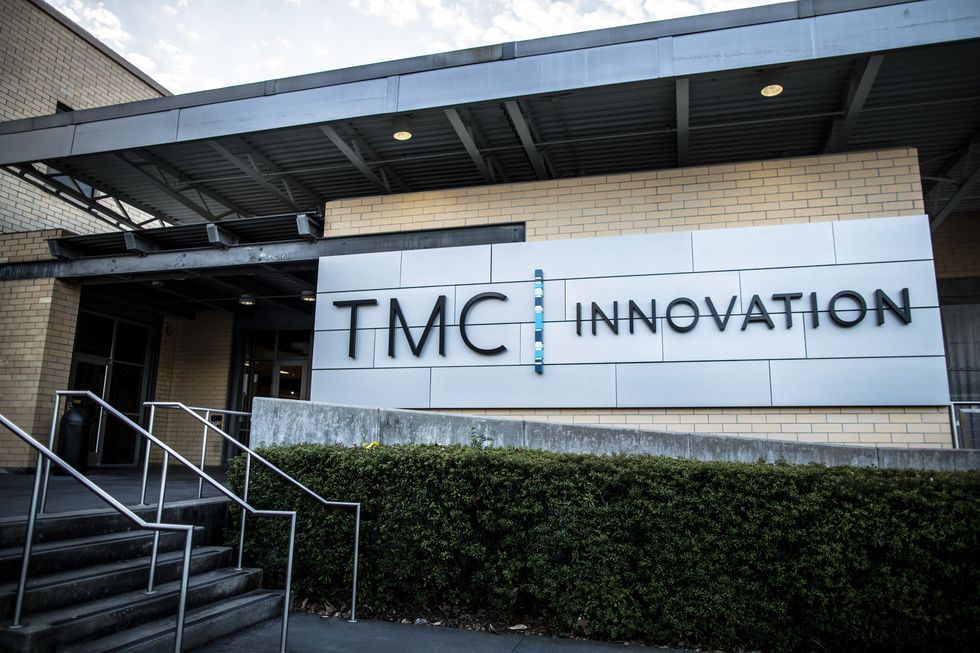
A Houston startup based out of the TMC Innovation Factory has announced funding and upcoming trials. Photo courtesy of TMC

Fueled by fresh funding in the bank, a medical device startup has announced upcoming trials.

VenoStent, Inc., a company developing an innovative tool to improve outcomes for hemodialysis patients, has closed $16 million in a series A round of financing. Two Charleston, South Carolina-based firms — Good Growth Capital and IAG Capital Partners — led the round.

The company also announced it received Investigational Device Exemption from the FDA for its United States clinical trial, SAVE-FistulaS.

“Our mission at VenoStent is to improve the quality and length of life of dialysis patients. On the heels of our very promising results in several preclinical studies and a 20-patient feasibility study that led to our Breakthrough Designation last year, this recent IDE approval is perhaps our biggest milestone to date," Tim Boire, CEO of VenoStent, says in a news release. "We now enter an exciting new epoch in our company’s development that we believe will ultimately result in FDA Approval and vastly improve the quality and length of life for patients." Read more.

CardioOne's $8 million seed round

CardioOne has fresh funding and new partners, resulting in a five-state expansion. Photo via Getty Images

With fresh funding, a Houston-based health tech platform that's less than a year old has grown its United States footprint.

CardioOne, which has created a cardiology care delivery enablement platform that serves independent cardiologists, has closed an $8 million seed round of funding and secured three new partnerships. Axios and Crunchbase report that the round has closed, and CardioOne confirms the funding and new partnerships in a press release.

The company has three new partnerships with independent cardiology clinics in New Jersey, Florida, and Pennsylvania, Cardiac Associates of New Jersey, Twin Hearts LLC, and Corrieius Cardiology. The trio joins existing partner practices in Texas and Maryland. Read more.

Industrial Daa Labs' $1.5M seed round

Industrial Data Labs announced the close of its $1.5 million seed round of funding. Photo via Getty Images

A Houston startup that's on a mission to transform and expedite data processing for its industrial clients has raised seed funding.

Industrial Data Labs announced this week that it's closed a $1.5 million seed round of funding. The company has created an applied artificial intelligence technology for the pipe, valve, fitting, and flange, or PVF, industry's inside sales team. The terms of the seed round were not disclosed.

"Our groundbreaking AI-Powered Inside Sales Copilot is transforming the way inside sales teams operate in the PVF industry," Marty Dytrych, co-founder and CEO of Industrial Data Labs, says in a news release. "By embedding our solution into existing BOM and MRO workflows, we empower teams to achieve unmatched efficiency, accuracy, and sales performance.” Read more.

Nanotech's oversubscribed funding round
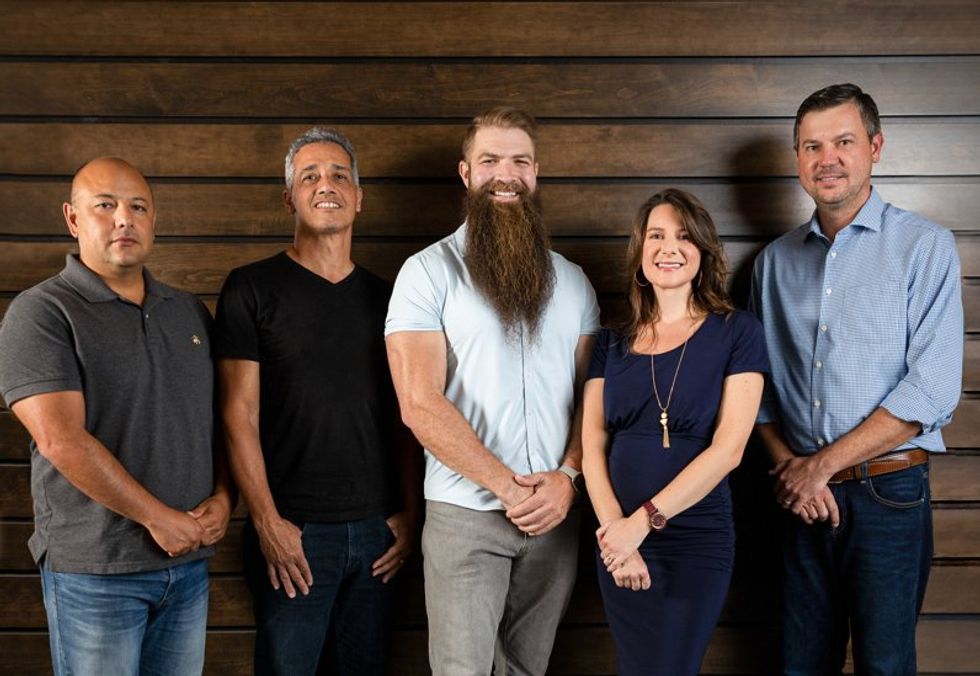
NanoTech closed an oversubscribed round of funding, the company announced this week. Photo courtesy of NanoTech

A Houston startup that has developed an innovative coating material that can reduce energy consumption has raised fresh funding for its cross-country expansion.

NanoTech Inc. announced its latest funding news — an oversubscribed funding round that brings onboard a handful of new investors. The details of the round were not disclosed, but NanoTech did release that the round included participation from three institutional investors, two corporate-strategic investors, and seven family offices. These entities join initial investor, Austin-based Ecliptic Capital.

NanoTech's flagship product is a waterproof thermal coating, called the Nano Shield Cool Roof Coat, which began rolling out across the country this year. Not only does the product reduce energy costs for the building owner, but it reduces emissions as well. Read more.

Here are the Houston startups that together raised over $222 million in venture capital investment last quarter. Photo via Getty Images

VC roundup: Here's what Houston startups raised funds last quarter

following the money

Houston startups are keeping pace when it comes to venture capital raised this year. In this roundup of funding closed in the second quarter, Houston businesses across sectors and industries close significant rounds from seed to series C.

Eleven startups raised over $222 million last quarter, according to InnovationMap reporting, which is more than in the first and second quarters. In chronological order, here's what companies snagged fresh funding recently.


Houston EV charging tech company raises $6M series A

Revterra Corp. closed a $6 million series A round led by Equinor Ventures. Photo courtesy of Revterra

Houston-based tech company Revterra Corp. has picked up $6 million in a series A funding round to propel development of its battery for electric vehicle charging stations.

Norway’s Equinor Ventures led the round, with participation from Houston-based SCF Ventures. Previously, Revterra raised nearly $500,000 through a combination of angel investments and a National Science Foundation grant.

Revterra says its kinetic flywheel battery enables quick, simple, cost-effective installation of high-powered DC chargers for electric vehicles. The technology eases the burden placed on electrical grids, the company says. Continue reading.

Houston-founded blockchain startup raises $15M series A to increase international impact

Topl's latest fundraising round includes participation from a Houston investor as well as international partners. Image via Getty Images

A blockchain technology company that was founded out of Rice University has closed its latest round of funding.

Founded in 2017, Topl is a blockchain-as-a-service company that's developing a purpose-built blockchain ecosystem to empower impact and sustainability within its userbase of businesses. The company's $15 million series A round was co-led by Houston-based Mercury, Republic Asia, and Malta-based Cryptology Asset Group.

“Topl’s blockchain was purpose built to power the next wave of supply chains and markets, that are more sustainable and inclusive,” says Chris Georgen, founder and managing director of Topl, in a news release. “Every decision we’ve made has been relentlessly focused on this problem and it’s exciting to see this approach yielding results with more than 30 different impact-forward use cases already live or approaching launch." Continue reading.

Houston-based gig economy startup raises $1.2M, launches beta platform

Madison Long, left, and Simone May co-founded Clutch to democratize side gig success on college campuses. Photo courtesy of Clutch

Two Houstonians on a mission to enable safe and equitable entrepreneurship on college campuses have launched a new beta platform and closed pre-seed funding.

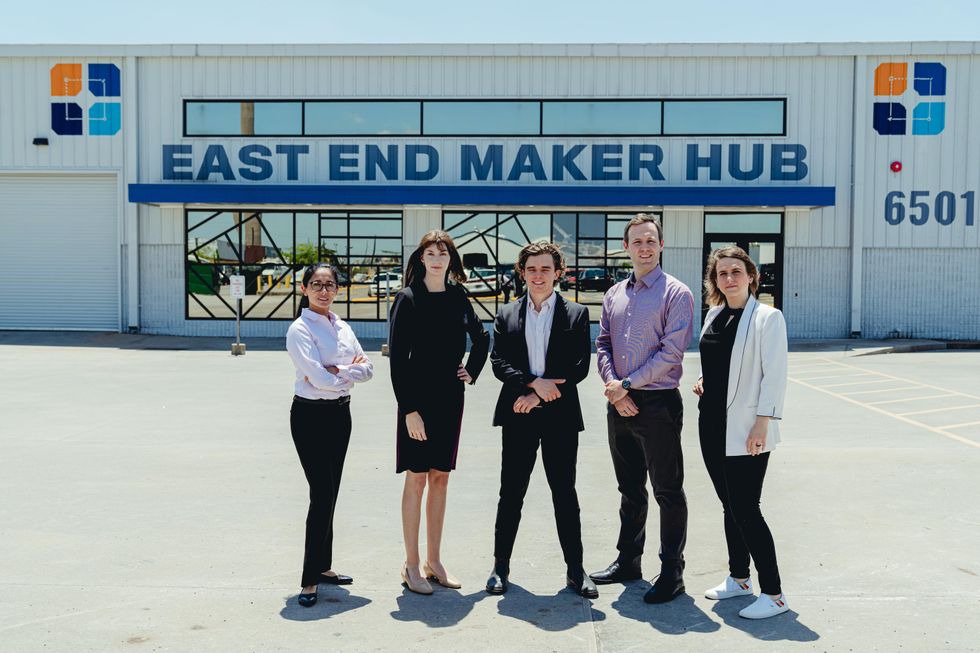
Clutch, a digital marketplace startup founded by Simone May and Madison Long, closed its pre-seed round of funding at $1.2 million – led by Precursor Ventures and other partners such as Capital Factory and HearstLab. The investment from this round will support Clutch’s national open beta launch of its platform for brands and student creators nationwide and its continued investment in customer and product strategy.

“We are at this inflection point where marketing is changing,” May says in a press release. “We know that the next generation can clearly see that and I think a lot of marketing agencies are starting to catch on. We need to be prioritizing the next generation’s opinion because they are driving who is interested in what they buy. This upcoming generation does not want to be sold to and they don’t like inorganic, inauthentic advertisements. That’s why user generated content is so big, it feels authentic.” Continue reading.

Houston hydrogen startup closes $25M series B

This hydrogen company has fresh funding. Photo via utility.global

Utility Global, a Houston-based sustainable hydrogen company, has closed its series B round of funding to the tune of $25 million, Axios reports.

Houston-based private equity firm Ara Partners led the round. Other participating investors included: Samsung Ventures, NOVA, and Aramco.

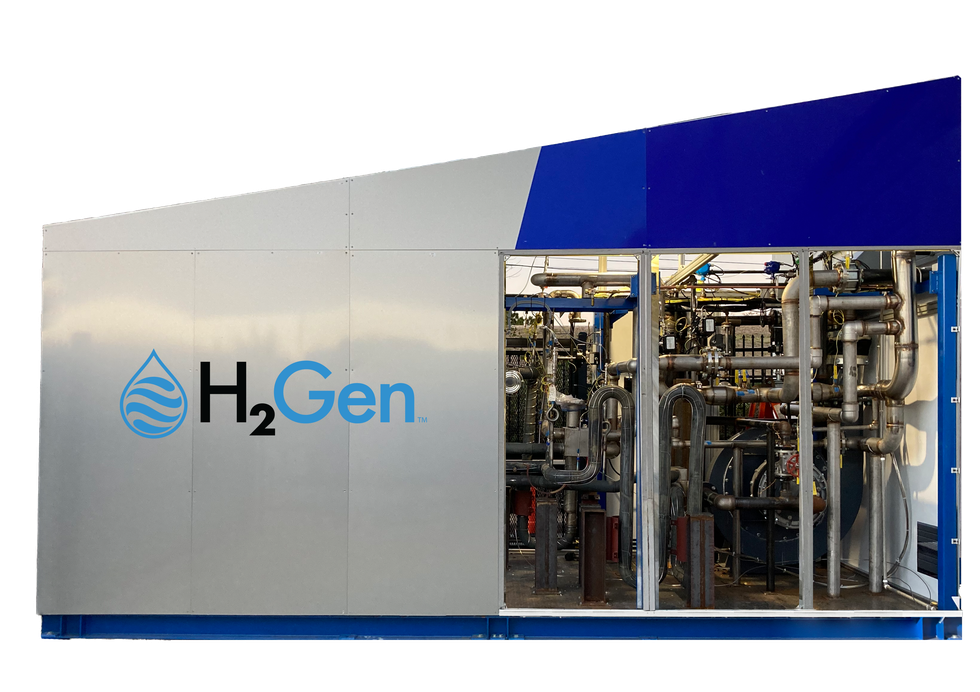
Utility Global, founded in 2018, has developed a clean hydrogen solution. The proprietary tech — called the eXERO Technology Platform — includes a zero electricity process that converts sustainable waste streams into high-purity hydrogen. Additionally, the company developed its H2Gen Product Line that delivers customers reliable, low carbon, and high purity hydrogen, which offers unparalleled feedstock flexibility and highly competitive economics. Continue reading.

Industrial blockchain tech company headquartered in Houston closes $4M series C round

Houston-based Data Gumbo, an industrial blockchain-software-as-a-service company, announced that its latest round or funding. Photo courtesy of Data Gumbo

Data Gumbo, a Houston-based tech startup, has picked up $4 million in a series C round from the venture capital arms of foreign energy companies Saudi Aramco and Equinor.

The funding for Data Gumbo came from Saudi Aramco Energy Ventures, the VC subsidiary of government-owned oil and natural gas giant Saudi Aramco, and Equinor Technology Ventures, the VC subsidiary of Norwegian energy operator Equinor. The U.S. headquarters for both Saudi Aramco and Equinor are in Houston. Continue reading.

Houston company raises $138M for next-generation geothermal energy

The future of geothermal energy is here — and just got a big payday. Photo via Getty Images

Houston-based startup Fervo Energy has picked up $138 million in funding to propel its creation and operation of carbon-free power plants fueled by geothermal energy.

Fervos says the series C round will help it complete power plants in Nevada and Utah and evaluate new projects in California, Idaho, Oregon, Colorado, and New Mexico, as well as in other countries.

California-based investment firm DCVC led the round, with participation from six new investors. Continue reading.

Houston 'sneakerheads' raise $8.9M to further develop digital marketplace

Tradeblock's three co-founders have known each other since childhood. Photo via tradeblock.us

A Houston-based company is kicking it with some fresh funding with plans to expand development of its marketplace platform.

Unique sneaker trading platform, Tradeblock, has raised $8.9 million in funding from investment partners Courtside VC, Trinity Ventures, and Concrete Rose Capital. Per the news release, the company expects additional funding of around $4.5 million to its seed round.

Tradeblock — founded in 2020 by self-proclaimed "sneakerheads" and childhood friends Mbiyimoh Ghogomu, Tony Malveaux, and Darren Smith — will use the fresh funding to expand and improve its digital marketplace for shoes. Continue reading.

Health tech startup with Houston HQ raises $14M series A

Optellum, which has its United States operations based in the TMC Innovation Institute, has raised fresh funding. Photo via Getty Images

A Oxford-based health tech startup that has its United States headquarters in Houston has announced the close of its series A round of funding.

Optellum, which has created a breakthrough AI platform to diagnose and treat early-stage lung cancer, has raised $14 million in a series A funding round. The round was led by United Kingdom-based Mercia, with additional investors California-based Intuitive Ventures and New York-based Black Opal Ventures. Existing investors, including St John's College in the University of Oxford, IQ Capital, and the family office of Sir Martin & Lady Audrey Wood, also participated in the round, per a news release.

"Lung cancer is an urgent public health crisis and Optellum's groundbreaking approach utilizing AI to accelerate early detection and intervention may fundamentally alter the healthcare community's approach to combating this disease," says Dr. Oliver Keown, managing director of Intuitive Ventures, in the release. "Optellum is uniquely positioned to align and provide considerable value to patients, providers, and payers alike. Intuitive Ventures is thrilled to provide our full arsenal of financial and strategic support to Optellum as we work towards a world of better outcomes for cancer patients." Continue reading.

Houston-based biomaterials company raises $1.1M to grow team, build new HQ

BUCHA BIO has raised over $1 million to grow its team, build a new headquarters, and accelerate its go-to-market strategy. Image courtesy of BUCHA BIO

A Houston company that has created a plant-based material that can replace unsustainable conventional leathers and plastics has announced the close of its oversubscribed seed funding round.

BUCHA BIO announced it's raised $1.1 million in seed funding. The round included participation from existing partners New Climate Ventures, Lifely VC, and Beni VC, as well as from new partners Prithvi VC, Asymmetry VC, and investors from the Glasswall Syndicate, including Alwyn Capital, as well as Chris Zarou, CEO & Founder of Visionary Music Group and manager of multi-platinum Grammy-nominated rapper, Logic, the startup reports in a news release.

“I’m excited to back BUCHA BIO’s amazing early market traction," Zarou says in the release. "Their next-gen bio-based materials are game-changing, and their goals align with my personal vision for a more sustainable future within the entertainment industry and beyond.” Continue reading.

Houston-based Codenotary has expanded its series B fundraising round

Codenotary's software enables tools for notarization and verification of the software development life cycle. Photo via Getty Images

A Houston software startup that raised $12.5 million earlier this year has announced additional funding of $6 million. Codenotary, whose technology helps secure software supply chains, closed its series B round in January. The fresh funding brings the company's total investment raised to $24 million — thanks to investors Bluwat and Elaia.leaders and following a series A round that was announced in 2020.

Codenotary, formerly known as vChain, was founded in 2018 by CEO Moshe Bar and CTO Dennis Zimmer. The additional capital, which will go towards scaling up sales in the U.S. and Europe as well as entering the Asian market, was raised as an extension of the series B round. Continue reading.

Houston-based virtual reality startup raises $3.2M in first outside capital round

VR training startup, HTX Labs, has raised funding from an outside investor for the first time. Courtesy of HTX Labs

HTX Labs, a Houston-based company that designs extended reality training for military and business purposes, announced last week that it has raised its first outside capital.

The company has received a $3.2 million investment from Cypress Growth Capital. Founded in 2017, HTX Labs — developer of the EMPACT Immersive Learning Platform — has been granted funding from the Department of Defense as well as grown its client base of commercial Enterprises. The platform uses virtual and extended reality that "enables organizations to rapidly create, deploy, measure, and sustain cost-effective, secure, and centralized immersive training programs, all within engaging, fully interactive virtual environments," per a news release.

“We have been looking to secure outside capital to accelerate the growth of our EMPACT platform and customer base but we hadn’t found the right partner who provided an investment vehicle that matched our needs,“ says HTX Labs CEO Scott Schneider in the release. Continue reading.

Ad Placement 300x100
Ad Placement 300x600

CultureMap Emails are Awesome

Houston institutions launch Project Metis to position region as global leader in brain health

brain trust

Leaders in Houston's health care and innovation sectors have joined the Center for Houston’s Future to launch an initiative that aims to make the Greater Houston Area "the global leader of brain health."

The multi-year Project Metis, named after the Greek goddess of wisdom and deep thought, will be led by the newly formed Rice Brain Institute, The University of Texas Medical Branch's Moody Brain Health Institute and Memorial Hermann’s comprehensive neurology care department. The initiative comes on the heels of Texas voters overwhelmingly approving a ballot measure to launch the $3 billion, state-funded Dementia Prevention and Research Institute of Texas (DPRIT).

According to organizers, initial plans for Project Metis include:

  • Creating working teams focused on brain health across all life stages, science and medical advances, and innovation and commercialization
  • Developing a regional Brain Health Index to track progress and equity
  • Implanting pilot projects in areas such as clinical care, education and workplace wellness
  • Sharing Houston’s progress and learnings at major international forums, including Davos and the UN General Assembly

The initiative will be chaired by:

  • Founding Chair: Dr. Jochen Reiser, President of UTMB and CEO of the UTMB Health System
  • Project Chair: Amy Dittmar, Howard R. Hughes Provost and Executive Vice President of Rice University
  • Project Chair: Dr. David L. Callender, President and CEO of Memorial Hermann Health System

The leaders will work with David Gow, Center for Houston’s Future president and CEO. Gow is the founder and chairman of Gow Media, InnovationMap's parent company.

“Now is exactly the right time for Project Metis and the Houston-Galveston Region is exactly the right place,” Gow said in a news release. “Texas voters, by approving the state-funded Dementia Prevention Institute, have shown a strong commitment to brain health, as scientific advances continue daily. The initiative aims to harness the Houston’s regions unique strengths: its concentration of leading medical and academic institutions, a vibrant innovation ecosystem, and a history of entrepreneurial leadership in health and life sciences.”

Lime Rock Resources, BP and The University of Texas MD Anderson Cancer Center served as early steering members for Project Metis. HKS, Houston Methodist and the American Psychiatric Association Foundation have also supported the project.

An estimated 460,000 Texans are living with dementia, according to the Alzheimer’s Association, and more than one million caregivers support them.

“Through our work, we see both the immense human toll of brain-related illness and the tremendous potential of early intervention, coordinated care and long-term prevention," Callender added in the release. "That’s why this bold new initiative matters so much."

Texas launches cryptocurrency reserve with $5 million Bitcoin purchase

Money Talks

Texas has launched its new cryptocurrency reserve with a $5 million purchase of Bitcoin as the state continues to embrace the volatile and controversial digital currency.

The Texas Comptroller’s Office confirmed the purchase was made last month as a “placeholder investment” while the office works to contract with a cryptocurrency bank to manage its portfolio.

The purchase is one of the first of its kind by a state government, made during a year where the price of Bitcoin has exploded amid the embrace of the digital currency by President Donald Trump’s administration and the rapid expansion of crypto mines in Texas.

“The Texas Legislature passed a bold mandate to create the nation’s first Strategic Bitcoin Reserve,” acting Comptroller Kelly Hancock wrote in a statement. “Our goal for implementation is simple: build a secure reserve that strengthens the state’s balance sheet. Texas is leading the way once again, and we’re proud to do it.”

The purchase represents half of the $10 million the Legislature appropriated for the strategic reserve during this year’s legislative session, but just a sliver of the state’s $338 billion budget.

However, the purchase is still significant, making Texas the first state to fund a strategic cryptocurrency reserve. Arizona and New Hampshire have also passed laws to create similar strategic funds but have not yet purchased cryptocurrency.

Wisconsin and Michigan made pension fund investments in cryptocurrency last year.

The Comptroller’s office purchased the Bitcoin the morning of Nov. 20 when the price of a single bitcoin was $91,336, according to the Comptroller’s office. As of Friday afternoon, Bitcoin was worth slightly less than the price Texas paid, trading for $89,406.

University of Houston energy economist Ed Hirs questioned the state’s investment, pointing to Bitcoin’s volatility. That makes it a bad investment of taxpayer dollars when compared to more common investments in the stock and bond markets, he said.

“The ordinary mix [in investing] is one that goes away from volatility,” Hirs said. “The goal is to not lose to the market. Once the public decides this really has no intrinsic value, then it will be over, and taxpayers will be left holding the bag.”

The price of Bitcoin is down significantly from an all-time high of $126,080 in early October.

Lee Bratcher, president of the Texas Blockchain Council, argued the state is making a good investment because the price of Bitcoin has trended upward ever since it first launched in early 2009.

“It’s only a 16-year-old asset, so the volatility, both in the up and down direction, will smooth out over time,” Bratcher said. “We still want it to retain some of those volatility characteristics because that’s how we could see those upward moves that will benefit the state’s finances in the future.”

Bratcher said the timing of the state’s investment was shrewd because he believes it is unlikely to be valued this low again.

The investment comes at a time that the crypto industry has found a home in Texas.

Rural counties have become magnets for crypto mines ever since China banned crypto mining in 2021 and Gov. Greg Abbott declared “Texas is open for crypto business” in a post on social media.

The state is home to at least 27 Bitcoin facilities, according to the Texas Blockchain Council, making it the world’s top crypto mining spot. The two largest crypto mining facilities in the world call Texas home.

The industry has also come under criticism as it expands.

Critics point to the industry’s significant energy usage, with crypto mines in the state consuming 2,717 megawatts of power in 2023, according to the comptroller’s office. That is enough electricity to power roughly 680,000 homes.

Crypto mines use large amounts of electricity to run computers that run constantly to produce cryptocurrencies, which are decentralized digital currencies used as alternatives to government-backed traditional currencies.

A 2023 study by energy research and consulting firm Wood Mackenzie commissioned by The New York Times found that Texans’ electric bills had risen nearly 5%, or $1.8 billion per year, due to the increase in demand on the state power grid created by crypto mines.

Residents living near crypto mines have also complained that the amount of job creation promised by the facilities has not materialized and the noise of their operation is a nuisance.

“Texas should be reinvesting Texan’s tax money in things that truly bolster the economy long term, living wage, access to quality healthcare, world class public schools,” said state Sen. Molly Cook, D-Houston, who voted against the creation of the strategic fund. “Instead it feels like they’re almost gambling our money on something that is known to be really volatile and has not shown to be a tide that raises all boats.”

State Sen. Charles Schwertner, R-Georgetown, who authored the bill that created the fund, said at the time it passed that it will allow Texas to “lead and compete in the digital economy.”

___

This story was originally published by The Texas Tribune and distributed through a partnership with The Associated Press.

Houston-based HPE wins $931M contract to upgrade military data centers

defense data centers

Hewlett Packard Enterprise (HPE), based in Spring, Texas, which provides AI, cloud, and networking products and services, has received a $931 million contract to modernize data centers run by the federal Defense Information Systems Agency.

HPE says it will supply distributed hybrid multicloud technology to the federal agency, which provides combat support for U.S. troops. The project will feature HPE’s Private Cloud Enterprise and GreenLake offerings. It will allow DISA to scale and accelerate communications, improve AI and data analytics, boost IT efficiencies, reduce costs and more, according to a news release from HPE.

The contract comes after the completion of HPE’s test of distributed hybrid multicloud technology at Defense Information Systems Agency (DISA) data centers in Mechanicsburg, Pennsylvania, and Ogden, Utah. This technology is aimed at managing DISA’s IT infrastructure and resources across public and private clouds through one hybrid multicloud platform, according to Data Center Dynamics.

Fidelma Russo, executive vice president and general manager of hybrid cloud at HPE, said in a news release that the project will enable DISA to “deliver innovative, future-ready managed services to the agencies it supports that are operating across the globe.”

The platform being developed for DISA “is designed to mirror the look and feel of a public cloud, replicating many of the key features” offered by cloud computing businesses such as Amazon Web Services (AWS), Microsoft Azure and Google Cloud Platform, according to The Register.

In the 1990s, DISA consolidated 194 data centers into 16. According to The Register, these are the U.S. military’s most sensitive data centers.

More recently, in 2024, the Fort Meade, Maryland-based agency laid out a five-year strategy to “simplify the network globally with large-scale adoption of command IT environments,” according to Data Center Dynamics.