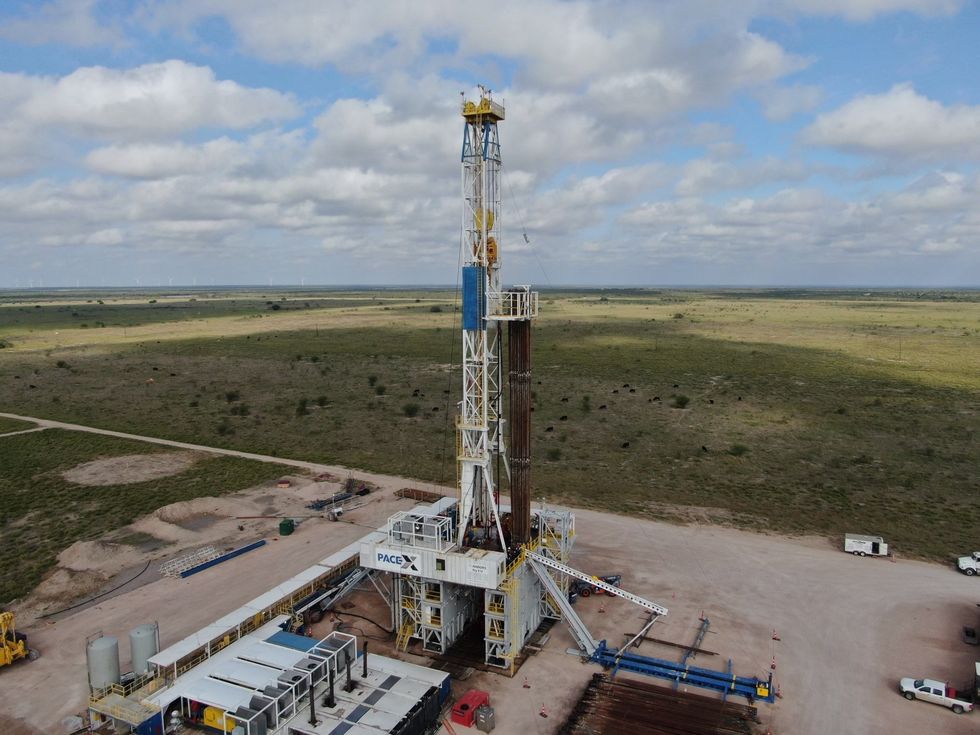
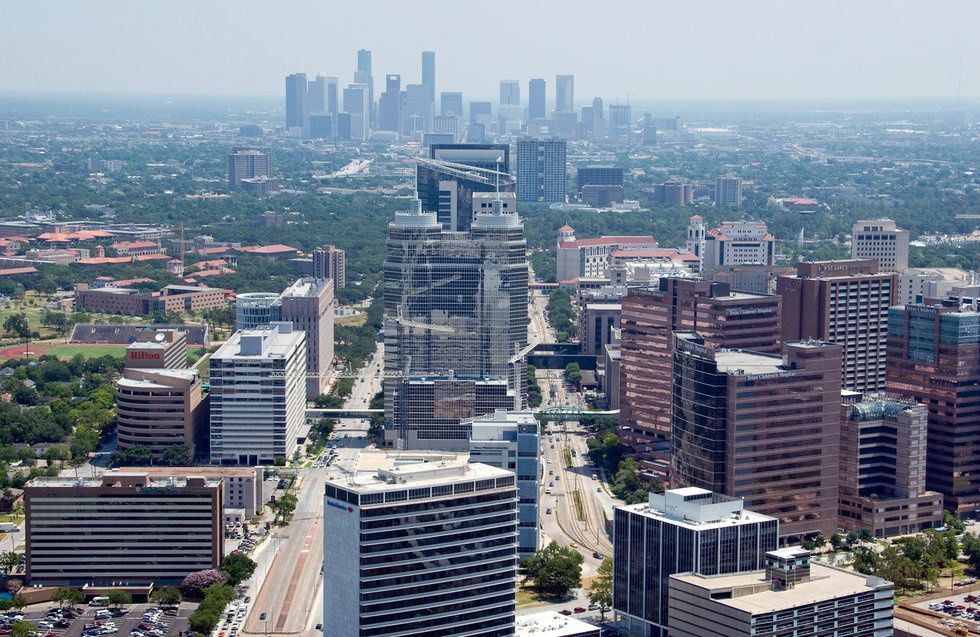
Houston startups raised a combined $380 million in venture funding last quarter. Photo via Getty Images

Seven Houston startups have started the new year strong with over $380 million in venture funding — most of which from one mega deal for a geothermal company.

According to InnovationMap reporting, Houston's VC activity in the first quarter of 2024 spanned industry and stage — from pre-seed to series E. It's a large chunk of money raised in Houston for one quarter — but not in terms of deals closed, at least compared to the previous quarter, in which startups raised over $170 million but across nine deals.

On the national side, it's not too different of a story. According to a quarterly report from PitchBook, the United State's VC activity for the start of the year "showed to be one of the slowest areas of the venture market during the quarter." Only $9.3 billion in capital was raised in the U.S. last quarter, which is only 11.3 percent of the total raised in the already slowed market of 2023.

"While dry powder remains high, slowed fundraising portends to LP hesitancy toward VC, and should predict a more difficult dealmaking environment down the road," reads an email from PitchBook. "During the past few years, large mega-funds drove fundraising trends, but Q1 VC fundraising shows there may be no appetite for such vehicles in today’s market."

These are the seven startup VC deals closed in Houston so far this year, according to reporting on InnovationMap.

Fervo Energy raises $244M in latest funding round

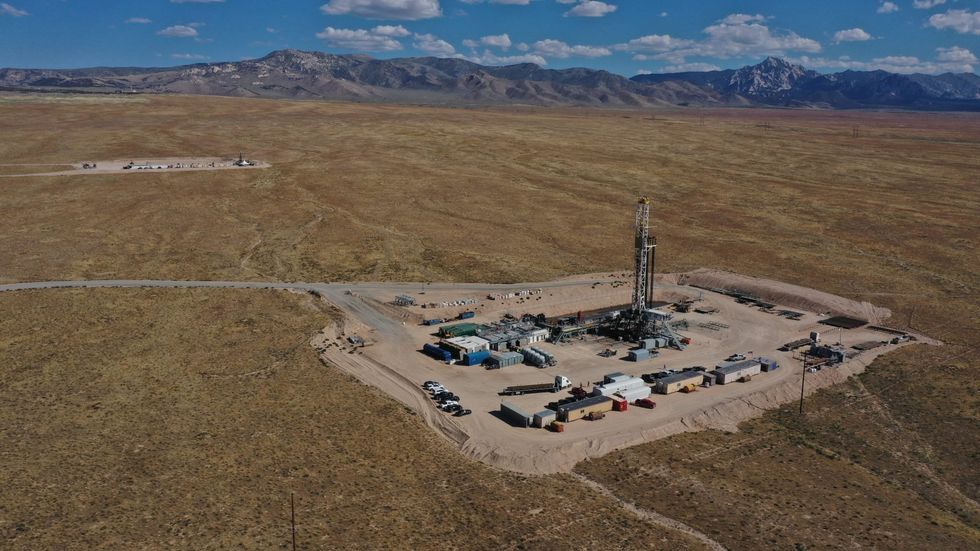
Fervo Energy scored a $244 million round of funding thanks to existing and new investors. Photo via Fervo Energy

An Oklahoma-based shale oil and gas leader has backed Fervo Energy's latest round of funding, supporting the startup's geothermal technology yet again.

Fervo announced its latest round of funding this week to the tune of $244 million. The round was led by Devon Energy, a company that's previously backed the startup.

“Demand for around-the-clock clean energy has never been higher, and next-generation geothermal is uniquely positioned to meet this demand,” Tim Latimer, Fervo CEO and co-founder, says in a news release. “Our technology is fully derisked, our pricing is already competitive, and our resource pipeline is vast. This investment enables Fervo to continue to position geothermal at the heart of 24/7 carbon-free energy production.” Read more about the round.

Procyrion secures $57.7M series E

Procyrion has announced the closing of its series E round of funding. Photo via Getty Images

Houston-born and bred medical device company, Procyrion, has completed its series E with a raise of $57.7 million, including the conversion of $10 million of interim financing.

Procyrion is the company behind Aortix, a pump designed to be placed in the descending thoracic aorta of heart failure patients, which has been shown to improve cardiac performance in seriously ill subjects. The money raised will allow the company to proceed with a the DRAIN-HF Study, a pivotal trial that will be used for eventual FDA approval and commercialization.

The Aortix is the brainchild of Houston cardiologist Reynolds Delgado. According to Procyrion’s CSO, Jace Heuring, Delgado, gained some of his experience with devices for the heart working with legendary Texas Heart Institute surgeon O.H. “Bud” Frazier. He filed his first patents related to the Aortix in 2005. Read more about the round.

Welligence Energy Analytics raises $41M series B

Houston-based Welligence Energy Analytics specializes in data and intelligence for the oil and gas markets, greenhouse gas emissions sector, and CCUS projects. Photo via Getty Images

A group of investors has chipped in $41 million to purchase a minority stake in Houston-based Welligence Energy Analytics, a provider of energy data and intelligence.

Boston-based venture capital firm Elephant Partners led the series B round, with participation from Veriten, a Houston-based, energy-focused research, investing, and strategy firm, and EDG, a Metairie, Louisiana-based energy consulting firm. Several executives from the energy, information services, and software sectors also contributed to the round.

Founded in 2016, Welligence specializes in data and intelligence for the oil and gas markets, greenhouse gas emissions sector, and carbon capture, storage, and utilization (CCUS) projects. Clients include major oil and gas companies, as well as large investment banks. Read more about the round.

Motif Neurotech secures nearly $19M series A

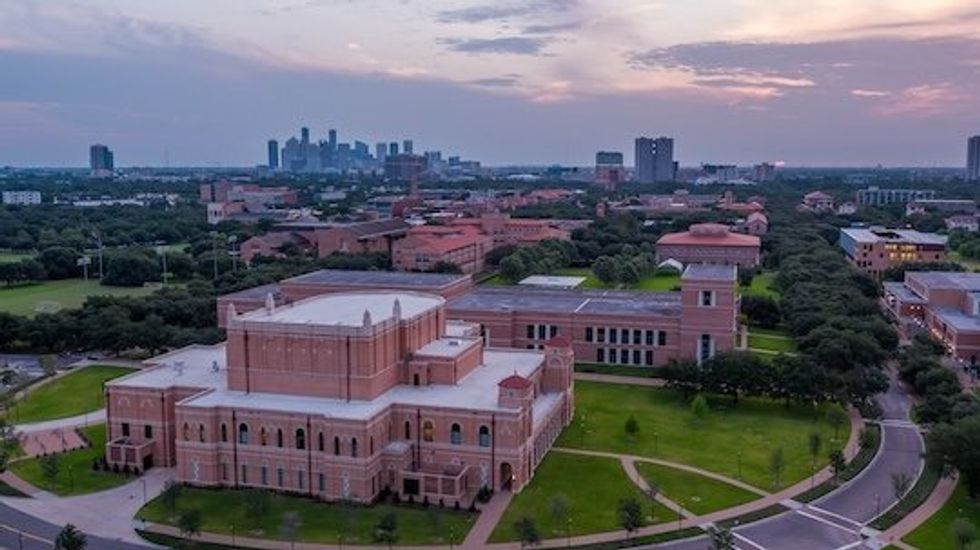
Motif Neurotech, which develops minimally invasive bioelectronics for mental health treatment, closed its series A round with an oversubscribed $18.75 million. Photo via Rice.edu

A health tech startup based out of a newly formed accelerator program at Rice University has raised venture funding.

Motif Neurotech closed its series A round with an oversubscribed $18.75 million. The company, which develops minimally invasive bioelectronics for mental health treatment, was formed out of the Rice Biotech Launch Pad that launched last fall.

The round was led by Arboretum Ventures, with participation from new investors KdT Ventures, Satori Neuro, Dolby Family Ventures, re.Mind Capital and existing investors Divergent Capital, TMC Venture Fund, PsyMed Ventures, Empath Ventures and Capital Factory. Read more about the round.

Sage Geosystems closes $17M series A 

Houston-based Sage Geosystems announced the first close of $17 million round led by Chesapeake Energy Corp. Photo via sagegeosystems.com

A Houston geothermal startup has announced the close of its series A round of funding.

Houston-based Sage Geosystems announced the first close of $17 million round led by Chesapeake Energy Corp. The proceeds aim to fund its first commercial geopressured geothermal system facility, which will be built in Texas in Q4 of 2024. According to the company, the facility will be the first of its kind.

The venture is joined by technology investor Arch Meredith, Helium-3 Ventures and will include support from existing investors Virya, LLC, Nabors Industries Ltd., and Ignis Energy Inc.

“The first close of our Series A funding and our commercial facility are significant milestones in our mission to make geopressured geothermal system technologies a reality,” Cindy Taff, CEO of Sage Geosystems, says in a news release. “The success of our GGS technologies is not only critical to Sage Geosystems becoming post-revenue, but it is an essential step in accelerating the development of this proprietary geothermal baseload approach. Read more about the round.

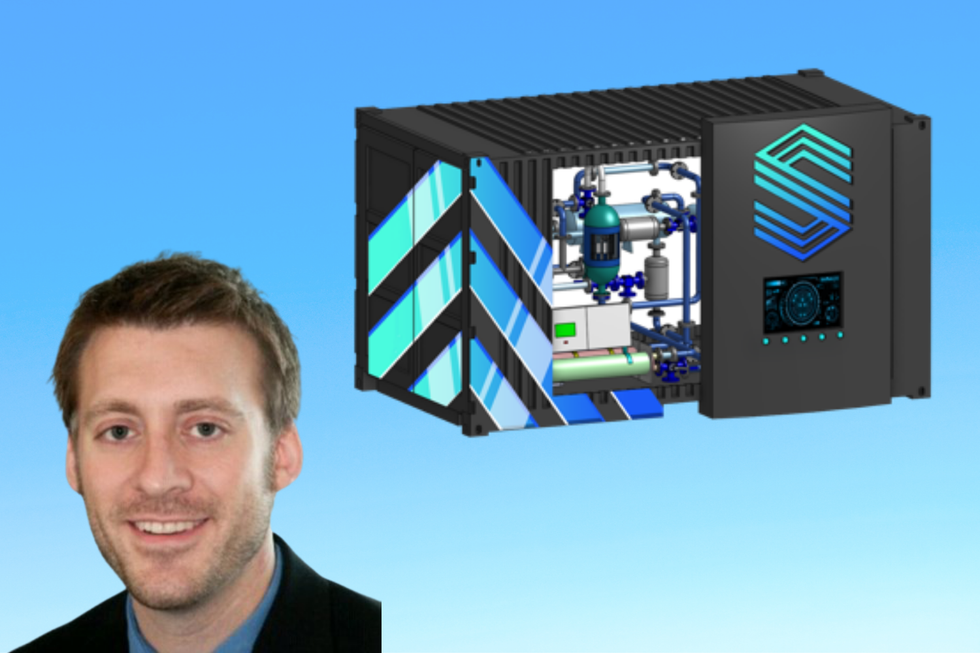
Ema raises $2M round of bridge funding

Ema, which operates as a health and wellness-focused, AI-based chat for women, has raised additional funding. Screenshot courtesy of Ema

A Houston-based startup that's improving health and wellness for women with its artificial intelligence-backed platform has raised a bridge round of funding.

Ema closed its latest bridge round, bringing its total funding to nearly $2 million. The company received investment from Kubera's Venture Capital and Victorum Capital, which joined existing investors Hearst Labs, Wormhole Capital, Acumen America, and Techstars.

Ema strives to deliver "personalized, empathetic, and evidence-based support" to its users through its generative AI technology. The platform has more than 100,000 users, and has expanded into the B2B sector with $100,000 in contracts within just 30 days after pivoting to this model, according to the company. Read more about the round.

TrueLeap Inc. raises oversubscribed $610,000 pre-seed round

The edtech company offers a comprehensive approach to shrinking the digital divide with a suite of technology including software, hardware, and more. Photo courtesy of TrueLeap

An edtech startup has just secured funding to further its mission of increasing accessibility to education.

TrueLeap Inc., global digital education startup addressing the digital divide in education, has raised $610,000, which is over its target of $500,000. The round was led by United Kingdom-based Maya Investments Limited.

"This oversubscribed funding round, led by Maya Investments Limited, is a testament to the urgent need for innovative educational technologies in emerging markets. Our commitment to providing affordable and integrated solutions is stronger than ever," says Sandip Bordoloi, CEO and Co-Founder of TrueLeap, in a news release. Read more about the round.

Despite its VC growth over the past few years, Houston startups saw a setback in funding in 2023. Photo via Getty Images

Report: Houston sees significant dip in VC activity in 2023

by the numbers

The amount of venture capital pumped into Houston-area companies shriveled in 2023, dropping to its lowest level since the pandemic year of 2020.

The latest PitchBook-NVCA Venture Monitor shows Houston-area businesses collected nearly $1.5 billion in venture capital in 2023, down from more than $2.2 billion in 2022 and over $2.6 billion in 2021. The amount of venture capital fell below $1 billion in both 2019 and 2020.

Houston-based Axiom Space accounted for the biggest chunk of the region’s VC haul in 2023 — a series C round worth $350 million. According to InnovationMap reporting, other local startups leading the way last year in VC were:

Here are Houston area’s full VC numbers for the past five years, according to the PitchBook-NVCA report:

  • 2023 — $1.478 billion
  • 2022 — $2.207 billion
  • 2021 — $2.625 billion
  • 2020 — $718.94 million
  • 2019 — $950.76 million

Across the country last year, $170.6 billion was invested in private companies, says the report — down $71.6 billion from 2022 and roughly half the sum invested in 2021.

In the report, Bobby Franklin, president and CEO of NVCA, notes that while the continued drop in U.S. venture capital activity “does not lend itself to optimism, it would be a mistake to declare the market in crisis. Rather, the market has changed. From interest rates to foreign conflict, the world looks very different than it did two years ago, and a new set of problems needs to be solved for.”

These are the 10 Houston companies that together raised over $525 million between July and September. Photo via Getty Images

VC roundup: Here's what Houston startups raised funds last quarter

money moves

October means several things — postseason baseball, pumpkins everywhere, and the last quarter of the year.

Before Q4 firmly takes its hold, let's talk about the 10 Houston companies that raised over $526 million between July and September, according to previous reporting from InnovationMap.

Houston chemicals company raises $357M, claims unicorn status

Solugen closed its Series C funding round at $357 million to grow its chemical products. Photo via Getty Images

Houston-based Solugen, a startup that specializes in combating carbon dioxide emitted during the production of chemicals, has hauled in $357 million in a Series C funding round. That amount eclipses the size of any Houston VC funding round this year or last year.

The Series C round lifts Solugen's pre-money valuation to $1.5 billion, according to the Axios news website. This gives Solugen "unicorn" status as a startup with a valuation of at least $1 billion.

Singapore-based GIC and Edinburgh, Scotland-based Baillie Gifford led the round, with participation from Temasek Holdings, affiliates of BlackRock, Carbon Direct Capital Management, Refactor Capital, and Fifty Years.

Since its founding in 2016, Solugen has raised more than $405 million in venture capital, according to Crunchbase.

"Solugen's vision for cleaner chemicals through synthetic biology has the potential to be a fundamental shift in how chemicals are made, to help tackle the environmental challenges we face globally. The chemical market itself is colossal, and Solugen is just getting started," Kirsty Gibson, investment manager at Baillie Gifford, says. Click here to continue reading.

Rapidly scaling Houston e-commerce software startup raises $98M series B

Houston-based Cart.com, which equips e-commerce businesses with a suite of software services, has raised $140 million in venture capital investment since its founding last year. Photo via cart.com

After closing a sizable series A round in April, a Houston tech startup has closed another round of funding — this time a near $100 million one.

Cart.com, an end-to-end e-commerce software startup and Amazon competitor, closed its series B round at $98 million. The investment announcement follows the company's series A in the spring and, according to a news release, brings Cart.com's total funding to $140 million since it launched eight months ago.

"At Cart.com, we believe e-commerce brands should be free to scale up without having to juggle countless outside vendors, and without compromising their unique vision for their brand," says Omair Tariq, CEO of Cart.com, in the release. "Our one-stop platform supports sellers across the full range of e-commerce functionality, empowering them to efficiently scale up and reach new markets using proven, best-of-breed services and technologies." Click here to continue reading.

AI-backed SaaS company based in Houston secures $30M series B funding

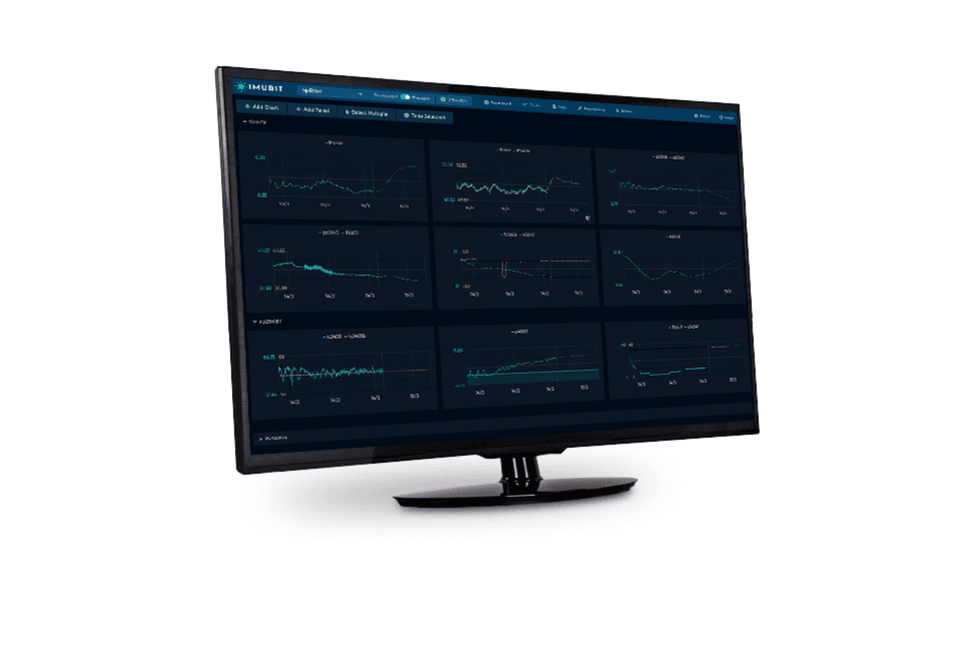
Imubit uses artificial intelligence for optimization at manufacturing plants. The company closed its series B at $30 million. Photo via imubit.com

Houston-based Imubit, whose AI-powered technology provides process optimization for refiners' and chemical operators' manufacturing plants, has raised $30 million in venture capital.

Zeev Ventures led the $30 million Series B round alongside Insight Partners, with participation from existing investors Spider Capital and UpWest. Since its founding in 2016, the company has raised $50 million.

"Imubit's goal is to transcend the industry beyond the decades old process control and optimization software hierarchy. … Today, we are solving previously unsolvable problems that are worth millions of dollars in annual margin to our clients," Gil Cohen, Imubit's co-founder and CEO, says in an August 16 news release. Click here to continue reading.

Houston-based medical device company snags $12.8M in series B

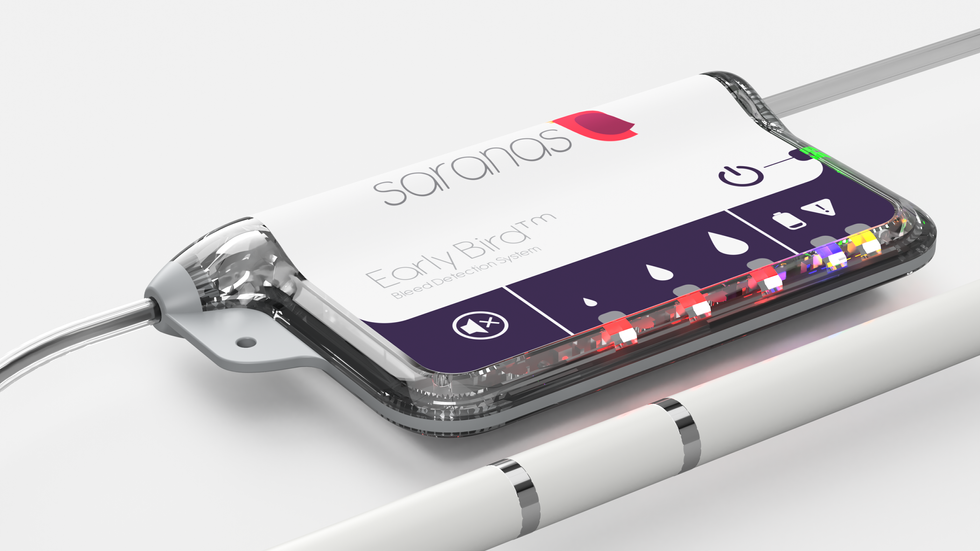
Saranas closed its series B round this week. Photo courtesy of Saranas

A Houston company that's changing the game when it comes to early bleed detection has raised its next round of funding.

Saranas Inc. announced that it closed a $12.8 million series B investment led by Wisconsin-based Baird Capital, the venture capital and global private equity arm of Baird, a global company with a location in Houston. Austin-based S3 Ventures also supported the round.

The company will use the funds to continue its clinical trials, per a news release.

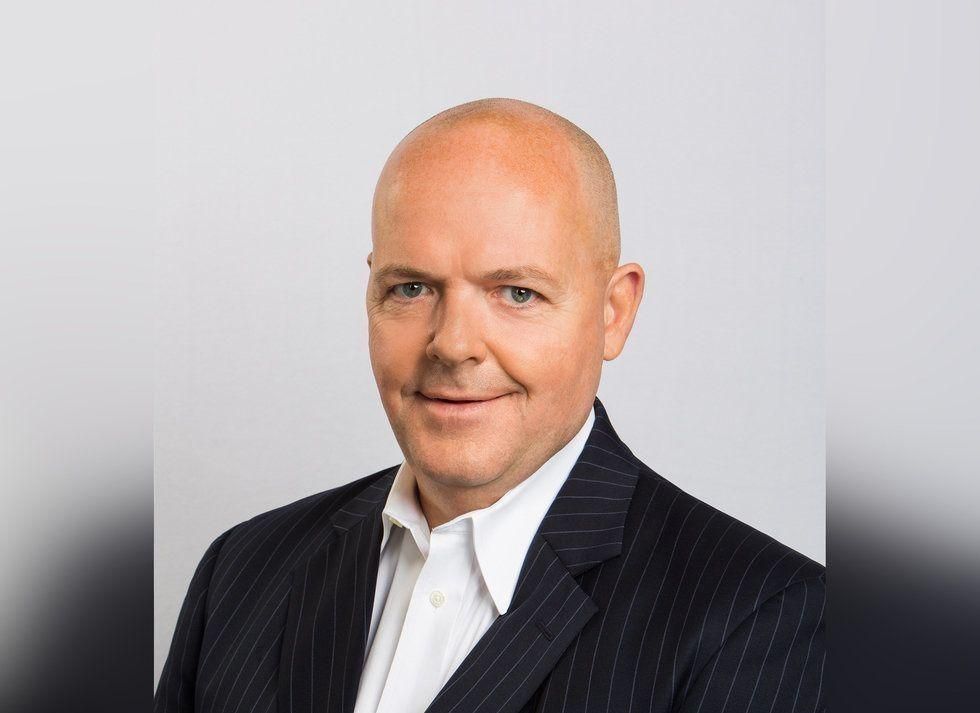
"We are pleased to announce this round of funding led by Baird Capital," says Saranas President and CEO James Reinstein in the release. "It underscores the importance of real-time monitoring of bleeding complications and our opportunity to accelerate the commercialization of Early Bird. We look forward to expanding our clinical evidence through prospective clinical trials and launching next generation products, including Bird on a Wire, to address a much broader range of endovascular procedures." Click here to continue reading.

Houston health tech company raises $7.85M series A led by local VC

Houston-based Kare Technologies has raised fresh funds to spur its national expansion. Image courtesy of Kare

A Houston-based health tech company has scored fresh funds from a Houston venture group to fuel its growth and to expand nationally.

KARE Technologies, a digital labor marketplace for health care workers, raised a $7.85 million series A investment round led by Houston-based Golden Section Ventures.

"The KARE team are well known in senior care and the caring industry at large," says Dougal Cameron, general partner at GSV, in a news release. "They are experts in their field and know this problem well. Their care for the industry and knowledge in the space clearly shows in the company's rapid adoption. They are providing a needed solution to an extremely important industry for our society." Click here to continue reading.

Houston energy blockchain company announces $7.7M in funding, plans to expand to the Middle East

Data Gumbo, founded and led by Andrew Bruce, has announced its latest funding. Photo courtesy of Data Gumbo

A Houston-based tech company has announced another round of funding to support its blockchain network growth as well as to establish a presence in the Middle East.

Data Gumbo has closed its series B funding round totaling $7.7 million with follow-on investments led by Equinor Ventures. The round includes participation from Saudi Aramco Energy Ventures and Bay Area and Houston-based venture firm L37. The round's first close was announced in September 2020 at $4 million. The additional funds to close the Series B will be used to scale Data Gumbo to serve demand for GumboNet™ and GumboNet™ ESG. Additionally, Data Gumbo plans to establish a presence in the Middle East to cover expected demand growth in the region.

"The successful close of our series B is continued proof of the efficacy and booming interest in our ability to capture critical cost savings, deliver trust and provide transparency across commercial relationships," says Andrew Bruce, founder and CEO of Data Gumbo, in a news release. "Compounded by the growing demand for transparent, accurate sustainability data and the launch of our automated ESG measurement solution, GumboNet™ ESG, Data Gumbo's trajectory is well-positioned to serve our growing customer base by ensuring economic productivity and value. This infusion of capital will support our expansion efforts as we bring more international users to our network." Click here to continue reading.

Houston artificial intelligence startup raises $6M in seed funding

This Houston startup has a game-changing technology for deep learning. Photo via Getty Images

A computer science professor at Rice University has raised seed funding last month in order to grow his company that's focused on democratizing artificial intelligence tools.

ThirdAI, founded by Anshumali Shrivastava in April, raised $6 million in a seed funding round from three California-based VCs — Neotribe Ventures and Cervin Ventures, which co-led the round with support from Firebolt Ventures.

Shrivastava, CEO, co-founded the company with Tharun Medini, a recent Ph.D. who graduated under Shrivastava from Rice's Department of Electrical and Computer Engineering. Medini serves as the CTO of ThirdAI — pronounced "third eye." The startup is building the next generation of scalable and sustainable AI tools and deep learning systems.

"We are democratizing artificial intelligence through software innovations," says Shrivastava in a news release from Rice. "Our innovation would not only benefit current AI training by shifting to lower-cost CPUs, but it should also allow the 'unlocking' of AI training workloads on GPUs that were not previously feasible." Click here to continue reading.

Houston construction tech company raises $4M round

Buildforce is an app that can connect contractors with construction experts. Photo courtesy of Buildforce

A locally founded company that's focusing on changing the construction labor game has raised a round of institutional funding.

Buildforce, which splits its headquarters between Houston and Austin, closed its latest round of funding at $4 million. The round was led by Maryland-based TDF Ventures, with participation from existing investor Houston-based Mercury Fund and Austin-based S3 Ventures.

The company uses construction staffing and management software to more efficiently connect contractors to skilled workers across trades — electrical, mechanical, plumbing, flooring, concrete, painting, and more.

"Contractors depend on skilled and reliable tradespeople to meet project timelines," says Moody Heard, co-founder and CEO of Buildforce, in a news release. "Our key insight is that by optimizing the user experience for skilled tradespeople seeking higher pay and job security, we are able to help meet contractors' needs. We're thrilled to have become the partner of choice for the top contractors in our current markets looking to connect with this workforce." Click here to continue reading.

Houston startup raises $1.75M round with support from local female-focused investor

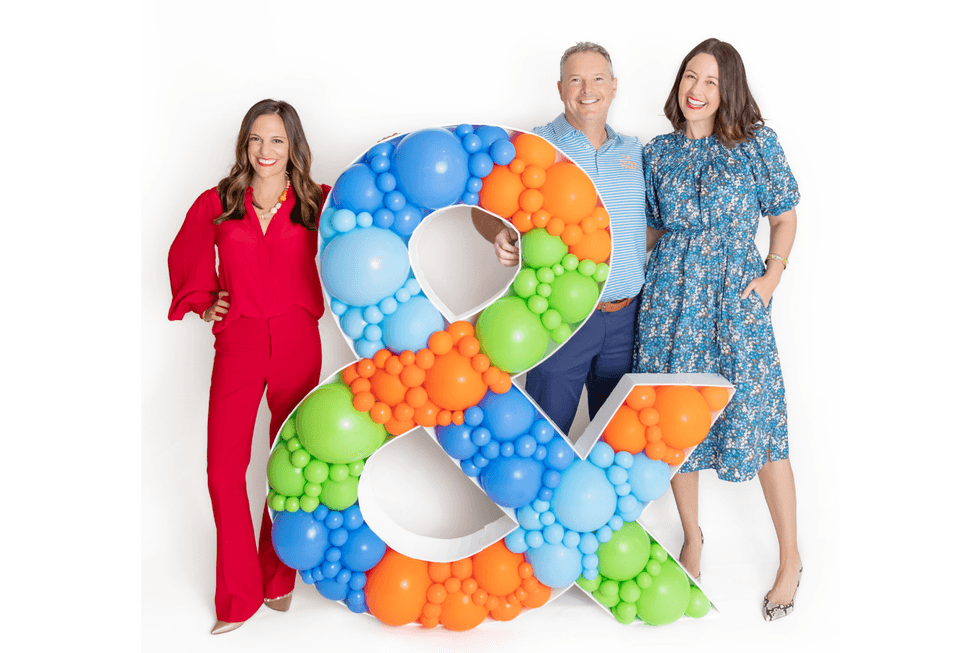
Ampersand and Curate Capital are working together to move the needle on the future of work. Photo courtesy of Curate Capital

A Houston-based startup focused on upskilling young professionals has closed its latest round of funding with support from a local investor.

Ampersand Professionals Inc. raised $1.75 million in pre-seed funding led by Curate Capital, a Houston-based, female-focused venture capital fund. Carrie Colbert, Curate's founding and general partner, will join Ampersand's advisory board.

Ampersand — founded in 2020 by Allie Danziger with Co-Founders Kathrin Applebaum and Scott Greenberg — has developed a platform for businesses to easily implement internship programs. The program also upskills and educates young professionals, providing them career development and job skills training.

"Ampersand's mission to democratize access to career-building opportunities for young professionals, ties in nicely with Curate's mission to empower women, says Colbert in a news release. "The company's platform will have a direct positive impact on young women (and others) as they begin their professional careers." Click here to continue reading.

Houston digital health platform raises $1.2M seed round

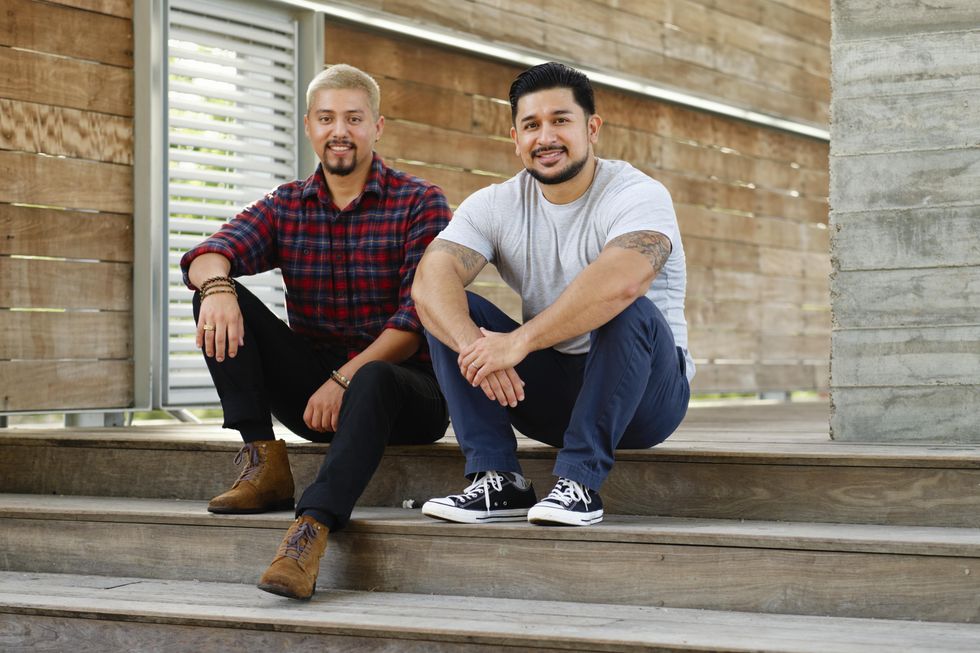
DocSpace was founded by Chief Product Officer Miles Montes (left) and CEO Mario Amaro, a physician and U.S. Navy Veteran. Photo courtesy of DocSpace

A Houston-based software company providing clinicians a turn-key platform for their practice has announced the close of its seed funding round.

DocSpace raised $1.2 million in seed funding led by Slauson & Co. with participation by Precursor Ventures, Acrew Capital's Scout Fund, and SputnikATX Ventures. The company's angel investors Nathan and Sonia Baschez, Nikhil Krishnan, and Eliana Murillo. The company was founded by CEO Mario Amaro, a physician and U.S. Navy Veteran, and Chief Product Officer Miles Montes, an expert in platform product management previously at ADP and ShopLatinx.

"Existing practice management software requires clinicians to manually self-navigate the expensive and complicated business formation process before they're able to utilize any of their product services," says Amaro in a news release. "When you require clinicians to do all the hard work of starting a new business then force them to purchase expensive software, it's no surprise that fewer clinicians have the opportunity to build new businesses in their communities." Click here to continue reading.

The second quarter of this year was good to these Houston tech startups. Photo via Getty Images

These 10 Houston startups closed funding rounds in Q2

following the money

It's been a banner year for Houston startups raising funds. From an Amazon competitor emerging from stealth and snagging a $25 million series A to a $74 million series B for a clinical-stage biopharmaceutical company, Houston's innovative companies have seen a great second quarter of 2021 in terms of VC activity.

In fact, according to a report from Houston Exponential, Q2's funding activity follows a 12-month period of $1 billion raised in Houston. This report included the first quarter's deals, which is rounded up in this article.

In case you missed some of these Q2 deals, InnovationMap has rounded up all its coverage of funding rounds closed between April and June based on previous reporting. Scroll through to see which Houston startups are catching the eyes — and cashing the checks — of investors.

Cancer-fighting company based in Houston emerges from stealth and snags $74M in its latest round

Tvardi Therapeutics Inc. has fresh funds to support its drug's advancement in clinical trials. Photo via Getty Images

A Houston-based clinical-stage biopharmaceutical company has raised millions in its latest round.

Tvardi Therapeutics Inc. closed its $74 million series B funding round led by new investors New York-based Slate Path Capital, Florida-based Palkon Capital, Denver-based ArrowMark Partners, and New York-based 683 Capital, with continued support and participation by existing investors, including Houston-based Sporos Bioventures.

"We are thrilled to move out of stealth mode and partner with this lineup of long-term institutional investors," says Imran Alibhai, CEO at Tvardi. "With this financing we are positioned to advance the clinical development of our small molecule inhibitors of STAT3 into mid-stage trials as well as grow our team." Click here to continue reading.

Houston-based cancer and disease bio-venture launches after $38.1M series A

A Houston biotech company has raised $38.1 million. Photo by Dwight C. Andrews/Greater Houston Convention and Visitors Bureau

Sporos Bioventures LLC launched this month after closing a $38.1 million round of series A financing.

The Houston-based biotech company aims to accelerate the development of breakthrough therapies for cancer and immune diseases by sharing resources, capital, access to clinical trial infrastructure, and talent from within its knowledgeable team of biotech executives, entrepreneurs, academic scholars, and investors. The company was launched with four entities: Tvardi Therapeutics, Asylia Therapeutics, Nirogy Therapeutics, and Stellanova Therapeutics.

The most advanced of the four entities, Tvardi, is currently in Phase 1 clinical trial to evaluate it's STAT3 oral inhibitor. It was named a "most promising" life sciences company at the 2020 Texas Life Science Forum, hosted by BioHouston and the Rice Alliance in December. The remaining entities are in the development stages and are focused on cancer, autoimmune disease, fibrosis, and tumor growth, among other conditions.

"Sporos was founded to accelerate the development of new medicines by addressing inefficiencies and risk in the establishment of new biotech companies," Peter Feinberg, Sporos co-founder, said in a statement. "By leveraging our extensive network, including the Texas Medical Center, we first identify transformative scientific opportunities and then deploy our top-tier talent, funding, and operational support to drive these insights into a growing pipeline of first-in-class treatment options." Click here to continue reading.

Houston-based e-commerce software startup and Amazon competitor raises $25M in its series A

Houston-based Cart.com, which equips e-commerce businesses with a suite of software services, has raised $45 million in venture capital investment since its founding in September. Photo via cart.com

An end-to-end e-commerce services provider based in Houston has closed its series A round of financing led by a Houston venture capital group.

Cart.com announced the closing of its $25 million led by Houston-based Mercury Fund and Florida-based Arsenal Growth with contribution from Austin-based Moonshots Capital and Ohio-based Scarlet Venture Fund. The new round follows its $20 million Seed round led by Amsterdam-based Bearing Ventures.

The company was founded last September by two former entrepreneurs — Omair Tariq, former executive at Home Depot and COO of Blinds.com, serves as CEO and Jim Jacobsen, co-founder and former CEO of RTIC Outdoors, serves as executive chairman.

"We know the pain points brands face in the e-commerce value chain because we have experienced them firsthand. We built Cart.com to solve those problems and deliver unequaled value for brands from a single platform," Jacobsen says in a news release. Click here to continue reading.

Houston alternative energy startup raises $23M series B with global support

Syzygy Plasmonics has raised $23 million thanks to international support. Photos via plasmonics.tech

A Houston startup founded based off research coming out of Rice University has closed its series B funding, the company announced this week.

Founded in 2017, Syzygy Plasmonics is a chemical company developing a photocatalyst-powered hydrogen fuel cell technology that produces a cheaper source of energy that releases fewer carbon emissions. As of this week, the company has $23 million more to fund its scaling and grow its team thanks to the closing of its series B financing led by Hong Kong-based Horizons Venture. Equinor Ventures, a new investor, also joined in on the round, along with previous seed and series A investors including The Engine, GOOSE Capital, and Evok Innovations.

"With renewable electricity as an energy source, our technology is cleaner, and because of the stability and activity of our photocatalysts, we can drive dozens of possibilities, tuning reactions that produce different chemicals," says Trevor Best, Syzygy Plasmonics' co-founder and CEO, in a news release. "Our initial product will focus on eliminating emissions from hydrogen production, transforming the industrial process involved in making semiconductors, LEDs and metals. Our system will also enable industries that are consumers of hydrogen fuel cells, like fuel cell vehicles." Click here to continue reading.

Houston-based artificial heart company snags $22M in fresh funds

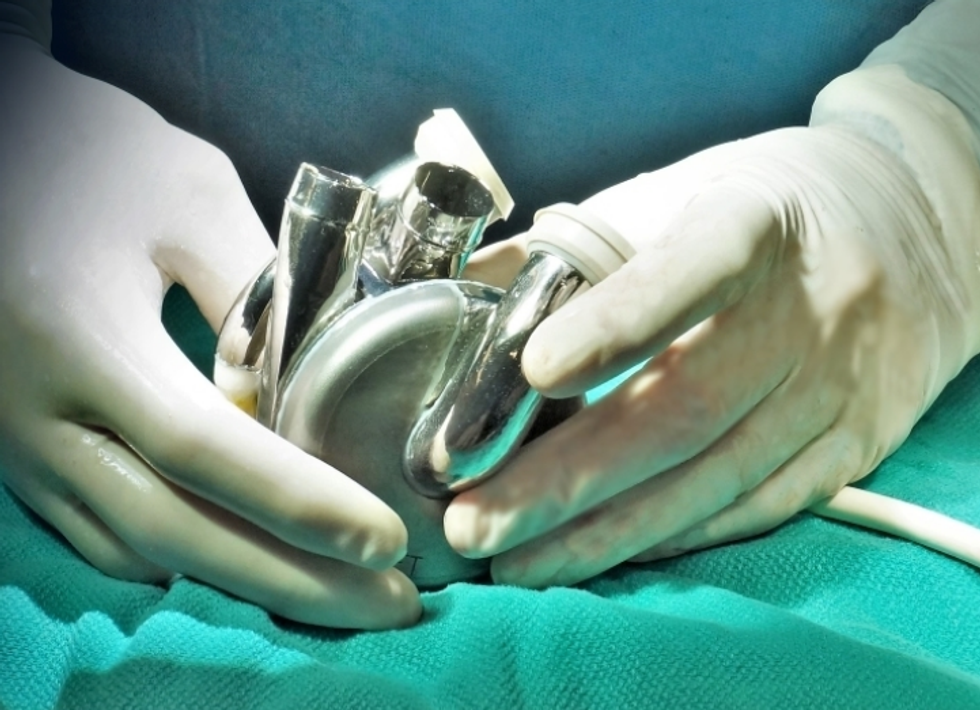
Through a series B round and a federal grant, BiVACOR has raised $22 million in funding ahead of human trials. Photo via bivacor.com

Houston-based medtech company BiVACOR has picked up $22 million in funding — in the form of a series B round and a federal grant — to propel development of its Total Artificial Heart device for treatment of severe heart failure.

In a May 19 news release, BiVACOR says it received a series B round of $19 million and a National Institutes of Health grant of $3 million. Boston-based Cormorant Asset Management and Australia's OneVentures, through its OneVentures Healthcare Fund III, led the round.

OneVentures first invested in BiVACOR three years ago. According to Australia's Financial Review, OneVentures initially pumped $3 million (Australian dollars) into BiVACOR, with the potential of contributing as much as $10 million if BiVACOR met certain milestones. BiVACOR received a round of seed funding from U.S. investors in 2013.

"BiVACOR's one-of-a-kind technology is supported by a remarkable team that has moved this technology a significant distance toward the clinic," Paul Kelly, managing partner of OneVentures, says in BiVACOR's news release. Click here to continue reading.

Houston small biz tech platform raises $21M series B

Hello Alice Co-Founders Carolyn Rodz and Elizabeth Gore recently raised funds to continue to grow their company that supports startups and small businesses. Photos via helloalice.com

A tech company focused on supporting and growing startups and small businesses has reached its own next big growth milestone this week.

Machine learning-enabled small business support company Hello Alice, founded in Houston with a large presence in California, has closed its $21 million series B raise led by Virginia-based QED Investors with participation from new investors including Backstage Capital, Green Book Ventures, Harbert Growth Partners, and How Women Invest.

The raise comes at a pivotal time for the company, which worked hard during the pandemic to support struggling business and now aims to support entrepreneurs of all backgrounds as the world re-emerges out of the COVID-19 era. The fresh funds, according to a press release, will be used to refine the predictive capabilities on its platform, launch a mobile application, and more.

"These investments signal that despite the recent challenges small business owners have faced, there is an economic tidal wave that will revitalize Main Street, led by the entrepreneurs we serve," says Elizabeth Gore, co-founder and president of Hello Alice, in the release. Click here to continue reading.

Houston data management company closes $18M in fresh funding

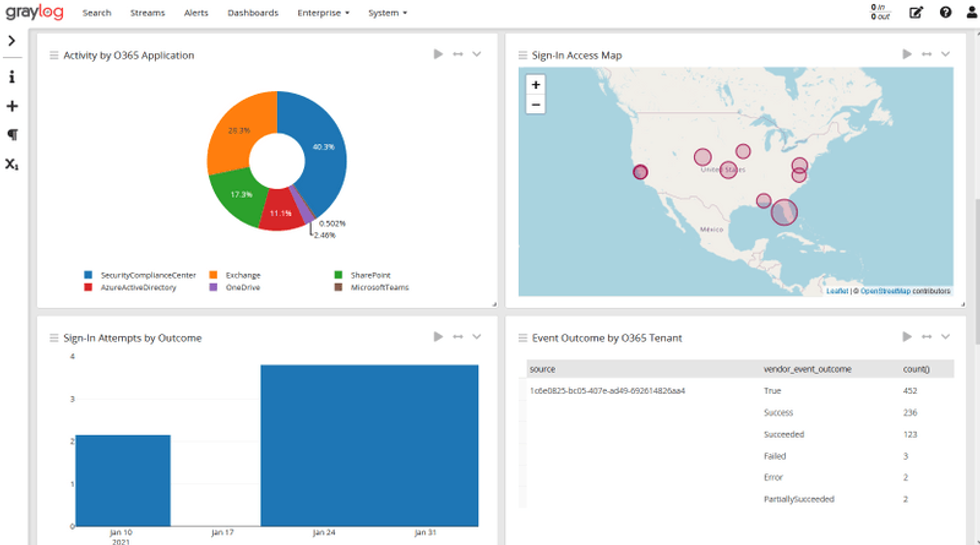
Houston-based data management startup Graylog has fresh funds to fuel its growth. Photo via Graylog.org

A Houston company that's created a centralized log management solution has closed a new round in funding.

Graylog closed its $18 million growth equity round led by Richmond, Virginia-based Harbert Growth Partners, a new investor, and Minneapolis, Minnesota-based Piper Sandler Merchant Banking, the company announced today. The round also received contribution from existing investors Houston-based Mercury Fund and Integr8d Capital, as well as Germany-based HTGF.

"This investment will enable us to accelerate our global go-to-market strategies and enhancements to the award-winning solutions we deliver for IT, DevOps, and Security teams," says Andy Grolnick, CEO of Graylog, in a press release. "We're excited to have the support of new and existing investor partners to help us realize our potential." Click here to continue reading.

JLABS-based cancer therapies company closes $15.5M series A led by Houston bioventure

Laura Furr Mericas

Houston-based Stellanova Therapeutics closed a $15.5 million series A financing this month, which will advance the company's first-in-human clinical trials for oncology and help build out its team.

Stellanova is a resident company at Johnson & Johnson's biotech incubator in the TMC (JLABS @ TMC) and is one of four entities that make up cancer and disease biotech company Sporos Bioventures, which officially launched last month after closing a $38.1 million series A of its own.

Stellanova is focused on advancing therapies for cancers that are resistant to current treatments, like chemotherapy and immune therapies. According to a release, it has seen unprecedented anti-tumor activity in preclinical models of pancreas and triple negative breast cancer through the use of its lead antibody, which targets DKK3, a factor secreted by cancer-associated fibroblasts that spur tumors. Click here to continue reading.

Houston-based electronics manufacturing biz raises $15M in new funding

MacroFab's latest $15 million round will help it expand and grow throughout North America. Photo via macrofab.com

A Houston company that has optimized electronics manufacturing by setting up a digital platform connecting a network of factories across North America has raised its latest round of funding.

MacroFab closed a $15 million series B round led by New Jersey-based Edison Partners. ATX Venture Partners also participated, along with strategic investor Altium Limited, a leader in the electronics design software space.

The new funds will go toward keeping up with MacroFab's growth, specifically in expanding in North America and an increased investment in research and development, sales and marketing, and the opening of a new distribution center for international logistics this summer, according to a news release.

"MacroFab customers found themselves in a perfect storm last year, and went from being curious about cloud-enabled manufacturing to going all-in," says Misha Govshteyn, MacroFab CEO, in the release. "The turbulence started with the trade war and tariffs, and only accelerated with massive delays in delivering products from overseas and the ongoing microchip availability crisis." Click here to continue reading.

Houston SaaS startup closes $12M series A funding round with support from local VC

Molecule has closed new funding in order to focus on the energy transition. Photo via Getty Images

A Houston startup with a software-as-a-service platform for the energy transition has announced it closed a funding round with participation from a local venture capital.

Molecule closed its $12 million series A, and Houston-based Mercury Fund was among the company's investors. The company has a cloud-based energy trading and risk management solution for the energy industry and supports power, natural gas, crude/refined products, chemicals, agricultural commodities, softs, metals, cryptocurrencies, and more.

"We led the seed round of Molecule upon their formation and are excited to participate in their series A," says Blair Garrou, co-founder and managing director of Mercury, in a news release. "Molecule's success in the ETRM/CTRM industry, especially in relation to electricity and renewables, positions them as the company to beat for the energy transition in the 2020s." Click here to continue reading.


Ad Placement 300x100
Ad Placement 300x600

CultureMap Emails are Awesome

Houston lab explores how AI bots can help the elderly

AI for aging

The University of Houston’s Empathetic Lifespan AI & Robotics for Aging (ELARA) Lab is currently conducting research into how AI bots may be able to help the elderly live more social and independent lives through several ongoing initiatives.

The lab officially launched last month as part of the Gerald D. Hines College of Architecture & Design under the leadership of Assistant Professor Chorong Park. Part of the lab’s mission is tackling ongoing problems with aging, such as dealing with disabilities and social isolation. Researchers’ current work is focused on designing a new AI companion bot specifically tailored to the needs of older people.

“We need to take all the needs of older adults seriously,” Park said in a news release. “They won't use the robot if they don't feel at ease or if they feel they are being constantly watched.”

The field testing of new AI bots in this population hopes to overcome several traditional obstacles in technology use among the elderly. A study by Park shows that many older people have a fear of overt surveillance when using advanced AI. There is also ageism to consider. Most new technologies are designed with younger and employed buyers in mind, not retirees who may need help remembering daily tasks or accessing important information.

“The more older adults are excluded from technology development, the worse those technology gaps will become,” Park said. “AI and the majority of technologies are created for younger people, so my research method integrates older adults directly into the design process.”

ELARA recently collaborated with the Mamie George Community Center in Richmond, Texas, to track seniors’ response to desktop AI bots like Emo and Cupboo. Researchers also had participants use air-dry modeling clay to create their ideal robotic companion.

While the eventual AI bot may be able to help the elderly feel less isolated and more supported, there are concerns to consider. A study published in the Asian Journal of Psychology charted the development of delusional thinking in a 72-year-old woman who became convinced the empathic-response bot was in love with her. The rise of “AI psychosis” has the potential to exacerbate mental health problems, particularly in socially isolated people, which a quarter of Americans over the age of 65 are.

ELARA’s research is focused on creating “pet-like” AI models with enhanced trust cues. If it can overcome the dangers of socially isolated people relying on AI for companionship, it could be a big step forward for independent aging.

SpaceX IPO set to be biggest ever and could make Elon Musk a trillionaire

IPO News

SpaceX says it plans to raise up to $75 billion when it goes public this month, setting the stage for the largest-ever stock market debut and putting Elon Musk on course to becoming the world's first trillionaire.

The company, formally known as Space Exploration Technologies Corp., said Wednesday it will sell 555.6 million shares at $135 a piece in an initial public offering. The estimated proceeds would easily top the $26 billion raised by oil giant Saudi Aramco in 2019. The offering would also give SpaceX a market value of $1.77 trillion. Only six companies in the S&P 500 are currently worth more, with Nvidia tops at $5.2 trillion.

Besides the size of the offering and the expected proceeds, SpaceX's amended prospectus updates details about how much control of the company Musk will have. As SpaceX's CEO, chief technical officer and chairman, Musk's voting power will come primarily through his ownership of 5.22 billion Class B shares, which give the holder 10 votes for every share held. According to the filing, Musk would have 82.4% of the voting power in the company.

Forbes currently values Musk's net worth at $826 billion and his stake in SpaceX at $542 billion. The estimated value of his SpaceX holdings was based on an overall value for the company of $1.25 trillion. Based on those numbers, a $1.77 trillion valuation for SpaceX would boost Musk's net worth by $223 billion, making him a trillionaire. However, much of Musk's worth is in stock that he has yet to cash in.

Even as it makes a bid for a blockbuster market debut, SpaceX is currently losing billions of dollars a year. The filing shows that the company lost $2.6 billion from operations last year on $18.7 billion in revenue, and the losses kept piling up at the start of this year, too.

Fantastical plans

Time will tell how SpaceX fares on the market. Musk's plans for the company are as fantastical as the money he hopes raise in the sale.

Colorful, even frightening in parts, the IPO document strikes a contrast with the typically dry, technical prose in IPO documents, detailing plans to use proceeds from the sale to help put men on the moon again and perhaps even Mars. In one section, it talks of a need to build "a permanent human colony" on the red planet with "at least one million inhabitants" as existential threats loom that could consign man to "the same fate as the dinosaurs."

Musk has almost equally ambitious plans for his other publicly traded company, Tesla. His goal is to transform the maker of electric vehicles into a producer of robotaxis and humanoid robots. Dan Ives of Wedbush Securities wrote in a research note that he expects Tesla and SpaceX to merge next year.

AI plays a key role

Key to the success of both companies — and any merged entity — is artificial intelligence. In its IPO filing, SpaceX says it sees potential revenue from AI of up to $26.5 trillion. But that depends on another lofty Musk ambition — putting data centers in space, which is not technologically possible at the moment.

Transforming his space company into a primarily AI-focused company will be a challenge for Musk, who started xAI in 2023 with 11 other co-founders who have all since left. Some were recruited away by rivals.

Its main AI product, the chatbot Grok, is "less impressive than anything that we see from any other major player in the space, whether that's OpenAI, or Anthropic, or (Google's) Gemini," said IDC analyst Arnal Dayaratna.

Dayaratna said that doesn't mean SpaceX doesn't have potential as a major AI player, thanks in part to its computing partnership with Anthropic and Musk's recent deal that gave SpaceX the rights to buy AI coding tool Cursor for $60 billion later this year. Folding in Cursor's capabilities would give SpaceX access to the coveted business customers now using Anthropic's Claude or OpenAI's ChatGPT.

SpaceX plans to use the net proceeds from the IPO to fund the expansion of infrastructure for its AI and rocket businesses, and to beef up the constellation of satellites that power Starlink Mobile, among other investments.

The company plans to list on the Nasdaq under the symbol "SPCX" and could begin trading as soon as the end of next week.

And SpaceX isn't the only colossal market debut investors are now bracing for. Earlier this week, Anthropic submitted a confidential filing with the U.S. Securities and Exchange Commission to officially start its own IPO clock.

OpenAI has not yet reported filing the initial SEC paperwork, but an IPO from the ChatGPT maker is widely expected.

"This listing represents the first major test for public markets after years of muted IPO activity with SpaceX paving the way for AI giants Anthropic and OpenAI to follow soon after," Ives wrote.

___

Associated Press Technology Writer Matt O'Brien contributed.

New UH survey reveals concerns over AI data center growth in Houston

data findings

A new report out of the University of Houston shows that area residents remain wary of the long-term effects of operating data centers.

The recent survey from the University of Houston’s latest SPACE City Panel, conducted by the Center for Public Policy at the Hobby School of Public Affairs, shows that while 85 percent of Houston-area residents use AI, nearly 63 percent oppose the construction of AI data centers within 1 mile of their homes.

Respondents’ concerns centered around data centers’ high energy demand and the area’s power grid reliability. According to the survey, 32 percent of residents who oppose local data center projects would be more likely to support the centers if they relied on renewable energy over fossil fuels.

“Respondents understand that AI can bring economic and educational benefits, but they are also concerned about the physical infrastructure needed to fuel AI, especially data centers,” Soran Mohtadi, post-doctoral fellow at the Hobby School and a researcher on the report, said in a news release. “This physical infrastructure demands more electricity and water, leading to environmental impacts.”

Experts estimate that 6.5 gigawatts of data center capacity will be added to the Texas grid by 2030. And Houston’s data center capacity is predicted to more than double by 2028.

The Electric Reliability Council of Texas also projects electricity demand could reach 218 gigawatts by 2031, which would be more than double the record peak set in August 2023. Data centers are expected to account for 86 gigawatts of that new demand.

Survey respondents also said they are concerned about the state's future water supply, given the large amounts of water that data centers need to stay cool.

In terms of who’s responsible for that issue, 57.6 percent of respondents said they put the onus on Texas lawmakers, while 31.5 percent say tech companies should be responsible.

Additionally, more than 75 percent of respondents believed that data center developers and technology companies—not residents—should bear the cost of infrastructure upgrades to support data centers.

“Every decision legislators make has implications on residents’ everyday lives and local infrastructure now and in the future,” Maria P. Perez Arguelles, lead researcher on the report and research assistant professor at the Hobby School, added in the news release. “This issue is going to become more important in years to come, so this is just the beginning.”

Read the full report here.