Three Houston students won at the 2023 Intel AI Global Impact Festival competition. Photo via Intel

Three students from Houston Community College Southwest won the top national prize at the 2023 Intel AI Global Impact Festival competition, HCC announced this month.

Sumesh Surendran, Ruben Treviño, and Muskaan Shahzad won the top spot in the the 18-and-older age group of United States competitors. Their project, “MedINtel: Automated Triage Machine (ATM),” is an ongoing effort for HCC’s AI program.

“Our students have often told me how grateful they are to our faculty and staff for their support and commitment to their success,” Samir Saber, dean of the Digital and Information Technology Center of Excellence, says in a news release.” We’re all proud of bringing home a top award back-to-back from an international competition of this caliber.”

The students' entry involved a kiosk-style version of an ATM to collect data at a patient intake. The kiosk used AI technologies like computer vision, to accelerate and help with patient triage. The festival featured future developers, teachers, policymakers, and emerging technologists sharing innovations and discussions on the impact of artificial intelligence according to the educational partner to HCC’s AI program the Intel Corporation.

“This group of students has demonstrated their exceptional talents on a national and global stage in a rapidly growing field that continues to transform all industry sectors,” HCC Southwest President Madeline Burillo-Hopkins says in the release. “Their innovative project shows why Houston is a city where companies can find the best qualified, competent and creative tech talent.”

HCC’s participation and success in the program is well-documented, as last year during the Intel Global Impact Festival competition, HCC Southwest won top global prize in the 18-and-older age group, and another HCC team took home a national honor.

Houston Community College will have a new program this fall focused on smart building tech. Photo via HCC.edu

Houston college to launch new smart building degree-program in the fall

coming soon

Houston Community College will launch a new 60-hour Smart Building Technology program this fall, the college announced last week.

The program will train students on the installation of low-voltage controls, such as audio/visual systems, energy management, lighting controls, security cameras, burglar and fire alarm systems, retail and grocery store automation, medical automation and more, according to HCC. Students will receive an Associate of Applied Science degree after completing the program.

“This program is both cutting edge and down to earth,” Matt Adams, instructor and program coordinator for HCC’s Electrical Technology program, said in a statement.

"A lot of new technology is coming into this industry, but a lot of the technology is the same as it has been for the last five to 10 years," he went on to add. "What is new is the integration of it all, making it all work together, to make people’s lives better.”

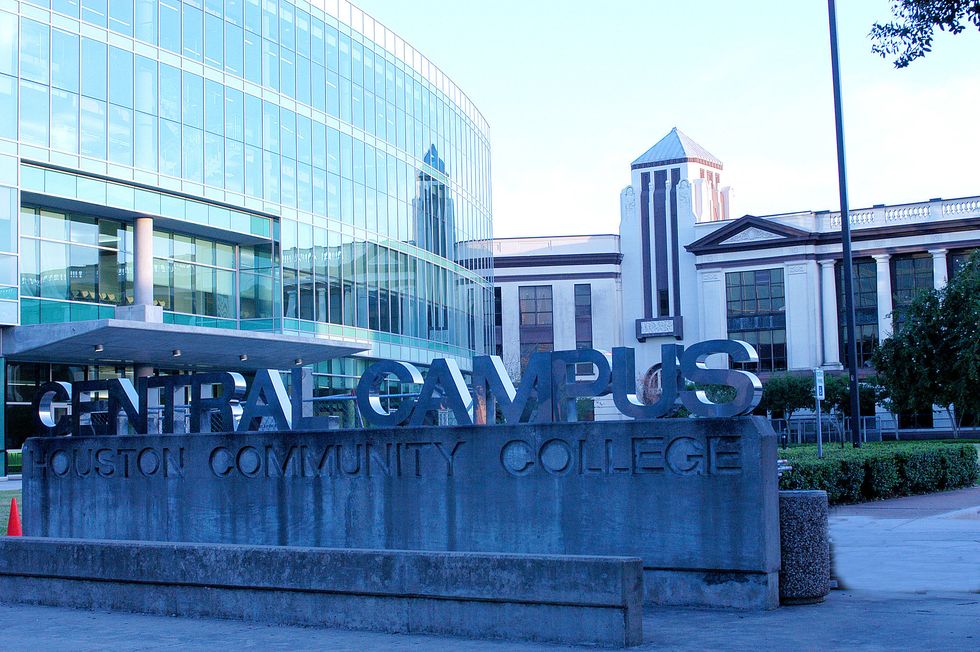
The Smart Building Technology program will be part of HCC Central’s Electrical Technology program in the Architectural Design and Construction Center of Excellence (COE). According to the college, it's one of the first programs of its kind.

Adams says that the earning potential in this line of work starts at around $50,000 a year, with the potential to earn double that with additional learning and training.

In late 2022, HCC and partners also received a $1.8 million grant from JP Morgan Chase to launch a new certificate program to help residents who come from some of Houston’s most underserved and under-resourced neighborhoods find career opportunities in the clean energy, disaster response, utilities, trades and manufacturing fields. Partnering employers included The City of Houston, Harris County and TRIO Electric.

Meanwhile, Houston Methodist and Texas A&M University graduated the inaugural class from its School of Engineering Medicine earlier this month.

Graphic courtesy of HCC

Together, the city and HCC will train Houstonians in resiliency preparedness. Image via Getty Images

City of Houston announces partnership college on 5th anniversary of Hurricane Harvey

preparing the city of Houston

Last week, Houston Mayor Sylvester Turner looked back on the past five years since Hurricane Harvey and made a lofty goal to provide the community with resiliency training.

The city of Houston and Houston Community College signed a memorandum of understanding that will address the city's goal to train 500,000 citizens, employees, small businesses, volunteers, and first responders in new resiliency training programs starting this fall.

The agreement was signed last week at the "Embracing Resiliency Symposium" hosted by the Resilience Innovation Hub, Amegy Bank, and HCC in front of 175 business, civic, community, education, and government leaders attending.

“I am pleased to announce the City of Houston’s partnership with Houston Community College’s new Resilience Center of Excellence and the Operations Training Facility and all the many ways we will collectively pave the path for a stronger and more prepared citizens, workforce, and community and a more resilient future,” Mayor Turner says at the event.

“Five years back, as we faced the wrath and impacts of Hurricane Harvey, it was a moment of reckoning for us as a city. It spurred us to think more cohesively about response and recovery; and most importantly, it urged us to think about building forward from recovery, from response towards resilience," he continues.

Starting this fall, the Houston community will have access to the following seven resiliency courses:

  • Resiliency 101 + Community Emergency Response Training (CERT)
  • Disaster Case Management
  • Facilities and Infrastructure
  • Disaster Recovery
  • Drones, Data Science, and Internet of Things
  • Public Safety and Rescue
  • Medical Triage

An additional 30 courses and programs will follow in 2023.

“As Mayor Turner recently stated, the lessons learned from Hurricane Harvey and subsequent disasters have identified one common take-away: When we work together as a team, Greater Houston is always resilient,” HCC Chancellor Cesar Maldonado says at the event. “In light of this observation, we must remain vigilant so these disasters will not continue to harm our families, our neighborhoods, our companies, our facilities and the community-at-large."

Earlier this summer, HCC announced that it is developing the Resilience Center of Excellence to aid the city’s resilience campaign. At the heart of this project is the 65,000-square-foot, $30 million Resiliency Operations Center, which will be built on a five-acre site HCC’s Northeast campus. The complex is scheduled to open in 2024.

"The HCC Resiliency Center of Excellence and Operations Training Facility will contribute to addressing preparedness and long-term mitigation from future floods, storms, snow and ice, pandemics and other challenges that have cost the region in the loss of lives, community, operations, and economic competitiveness," Maldonado continues.

In this roundup of short stories, Houston has been recognized as an emerging hub for life sciences, HCC wins an award for entrepreneurship, and more local innovation news. Photo by Dwight C. Andrews/Greater Houston Convention and Visitors Bureau

Houston named growing hub for life sciences, cybersecurity startups win contest, and more innovation news

short stories

Houston's innovation ecosystem has been booming with news, and it's likely some might have fallen through the cracks.

For this roundup of short stories within Houston innovation, see why Houston has been named a top emerging hub for life sciences, Hatch Pitch reveals its cybersecurity startup winners, and more.

Houston named an emerging life science hub

A new report finds that Houston's life sciences scene — soon to be home to TMC3 — is growing. Courtesy of Elkus Manfredi Architects

According to a new report from CBRE, Houston is on track to be a top market for life sciences. The report factored in size and growth of life-sciences employment, the venture capital and National Institutes of Health funding, and more.

"Interest in Houston's life sciences sector from developers, investors and financial backers has grown significantly in recent years," says Nelson Udstuen, senior vice president at CBRE, in a press release. "Several factors have contributed to this, including an increase in both federal funding from NIH and private venture capital, a growth in R&D employment and commitments from Texas Medical Center member institutions and other private developers to establish new life science buildings and campuses."

Houston's life-sciences industry, which comes in at No. 2 on the list behind Pittsburgh and ahead of Austin, ranks within the 20 largest in the U.S. by employment. In terms of growth, Houston is expanding at a 6.5 percent pace from 2018 to 2019. Houston institutes received around $600 million in funding from NIH last year, which amounted to the 12th-largest sum by market.

"Houston is also a draw for the life sciences industry due to its large cluster of life science employees," continues Udstuen. "Our market is home to a large population with the technical ability to perform Research and Development, meaning employers do not have to focus as heavily on recruiting from other markets."

Inaugural pitch competition names winners

pitch

Hatch Pitch named the winners of its inaugural cybersecurity-focused competition. Photo via Getty Images

Houston-based Hatch Pitch announced its Cyber Pitch competition in December, and, other than having to pivot to virtual, the competition went off without a hitch. The winners at the Houston Cyber Summit were revealed on October 22.

  • Toronto-based Paqt took first place
  • PixoAnalytics, based in Bonn, Germany, came in second
  • And Austin-based Clocr placed in third place as well as the Audience Favorite.

Hatch Pitch will return in March 2021 for the Hatch Pitch Digital Summit, but until then, check out video clips and the pitches from Cyber Pitch 2020 online.

Houston college receives national entrepreneurship award

Houston Community College has been named the 2020 Heather Van Sickle Entrepreneurial College of the Year. Photo via HCC.edu

The National Association for Community College Entrepreneurship has named Houston Community College as the 2020 Heather Van Sickle Entrepreneurial College of the Year at its 18th Annual Conference in Nashville, Tennessee, earlier this month.

"Houston Community College is a model of how colleges contribute to their local entrepreneurial ecosystems," says Rebecca Corbin, president and CEO of NACCE, in a news release. "Through persistence and entrepreneurial mindset and action, HCC has scaled replicable and sustainable entrepreneurial programs that have impacted thousands of students over the past several years. It is a pleasure to recognize this outstanding college, which was selected by an independent judging panel, as the winner of NACCE's 2020 Entrepreneurial College of the Year Award."

Energy tech startup names new CEO

Tachyus has a new head honcho. Photo via tachyus.com

Data-focused energy software startup Tachyus has announced the promotion of Fernando Gutierrez to CEO — formerly vice president of customer success.

"We are in a unique time within the upstream oil and gas space, and I truly believe Tachyus has the ability to pioneer the acceleration of the digital transformation within the industry," says Gutierrez, in a news release. "We are at the intersection of innovation and conventionalism, and I'm excited to lead the organization in a movement that continues to establish our technical solutions with our unique product signature."

Tachyus was founded in 2013 in Silicon Valley and recently relocated to Houston. The fresh funds will go into growing its cloud-based, artificial intelligence-enabled platform. Last year, the company raised $15 million in a round led by Houston-based Cottonwood Venture Partners.

Former CEO and Co-Founder Paul Orland has assumed the role of chairman.

Female founder selected for new program backed by Houston organization

Kim Roxie, founder of LAMIK Beauty, is among the 15 recipients of a new initiative. Photo via stacysrise.helloalice.com

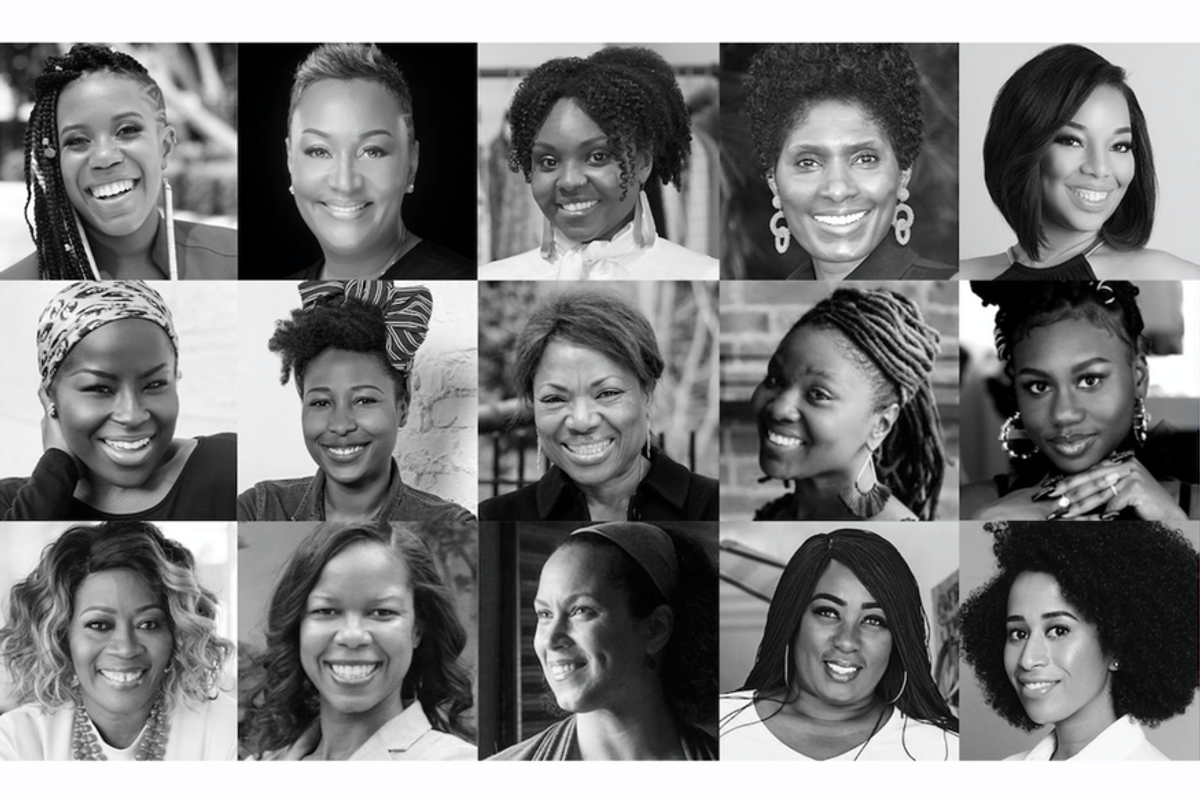
Plano, Texas-based Stacy's Rise Project expanded its annual grant and mentorship program in order to give more aid to Black female business founders, who on average only receive 0.2 percent of venture capitalist funding, according to a press release. The organization teamed up with its longtime partner, Houston-founded Hello Alice, to back an additional 15 Black female founders with a total of $150,000.

Among the 15 recipients was Houston's own Kim Roxie of LAMIK Beauty. LAMIK Beauty is a beauty-tech company designed for multicultural women with products made with natural and organic ingredients.

From enlightening talks to networking opportunities, here's where you need to be in July. Getty Images

10+ can't-miss Houston business and innovation events for July

Where to be

If you were hoping that business events would slow down for the summer, keep hoping. While you're probably getting plenty of OOO emails during your daily communications, there's no shortage of face-to-face opportunities within Houston business and innovation.

If you know of innovation-focused events for this month or next, email me at natalie@innovationmap.com with the details and subscribe to our daily newsletter that sends fresh stories straight to your inboxes every morning.

July 3 — Is Venture Capital Right for My Business?

Venture Capital is a path that every startup has to evaluate. In this panel-led event the intent is to form a foundation for answering the question: "Is VC right for me?"

Details: The event is from noon to 1:30 pm on Wednesday, July 3 at Station Houston (1301 Fannin Street, #2440). Learn more.

July 10 — Smart Cities: How Smart is Houston?

The Center for Houston's Future presents this event with support from graduates of its Leadership Forum program and in partnership with Station Houston, City of Houston's Innovation Office, and Houston Exponential.

The City of Houston is using data and emerging technology to improve the quality of life for citizens, share information with the public, drive economic growth and build a more inclusive society. Two key Smart City initiatives will be discussed at the event, one focused on transportation and one focused on resiliency and sustainability.

Details: The event is from 7:30 to 9:30 am on Wednesday, July 10, at Station Houston (1301 Fannin Street, #2440). Learn more.

July 10 — Social Advertising 101: Training by The Black Sheep Agency

Learn the basics of Facebook and Instagram advertising as Black Sheep professionals walk through the best type of #ad for your campaign! The team will also talk you through formulating a budget, targeting your audience, optimizing your efforts, and other creative options to execute your social advertising needs.

Details: The event is from 5:30 to 7:30 pm on Wednesday, July 10, at Impact Hub Houston #PopHUB @HX (410 Pierce Street). Learn more.

July 11 — Startup Pains: What I Wish I Knew

This monthly series hosted by the University of Houston lets you learn from someone else's mistakes and successes. This month's speaker is Carlos Genty, CEO & CTO of Critical X Solutions.

Details: The event is from 4 to 5 pm on Thursday, July 11, at the UH Technology Bridge (Innovation Center, building 4, floor 2, 5000 Gulf Fwy). Learn more.

July 13 — Enventure Basecamp - Business Building Workshop

Basecamp is an inclusive environment for those who are interested in adapting their life science experiences to real business applications. All are welcome, and the event is free.

Details: The event is from 9 am to noon on Saturday, July 13, at the TMC Innovation Institute (2450 Holcombe Blvd). Learn more.

July 15 — Enventure Innovation Stories: Dan Harrington, PhD (Polyvascular)

Enventure welcomes Daniel Harrington, PhD for its Innovation Stories speaker series. Dr. Harrington is a co-founder and the chief scientific officer of Polyvascular, and an assistant professor at UTHealth.

Details: The event is from 6 to 8:30 pm on Monday, July 15, at the CUBIO Innovation Center (7707 Fannin St.). Learn more.

July 16 — Is My Idea Lucrative? A Small Business Success Series Workshop

Figure out if whether your business idea is crazy — or perhaps just crazy enough to work. Featured presenters include Ned Mueller, entrepreneur in residence at HCC Center for Entrepreneurship - Southeast, and Austin Tenette is a certified business coach with the Focal Point Coaching organization.

Details: The event is from 8:30 am to 4:30 pm on Tuesday, July 16, at the HCC Alief Hayes (2811 Hayes Road). Learn more.

July 16 — GCxN Clean Tech Start-up Pitch Competition

The Shell GameChanger AcceleratorTM Powered by NREL, GCxN, is a collaboration between Shell and the National Renewable Energy Lab to identify and advance the next generation of transformative energy technologies. GCxN addresses market gaps by providing clean tech startups with technical and business development support to move their technologies from early stage prototypes to commercially viable energy solutions.

Details: The event is from 3 to 8 pm on Tuesday, July 16, at Station Houston (1301 Fannin St., suite 2440). Learn more.

July 16 — Workshop: Mastering the Brain Dump to Reduce Business Frustrations

Christina Wright, founder of WrightNow Results, will guide you through her method to help you get clear on — and develop a plan for — your biggest challenges surrounding business and managing "it all."

Details: The event is from 5:30 to 7:30 pm on Tuesday, July 18, at Impact Hub Houston #PopHUB @HX (410 Pierce Street). Learn more.

July 17 — Fuckup Nights Houston

Failure is a part of any success story, but we don't talk about it enough. We've all been to plenty of events where people tell you how they hacked, hustled, and created their success, but very few where someone gets up and says "I totally messed up, and this is what you can learn from it."

Details: The event is from 6 to 8 pm on Wednesday, July 17, at TBA. Learn more.

July 18 — Chancellor’s Technology Bridging Fund 2019 Launch Event

In an effort to support the University of Houston's mission of building a thriving culture around innovation and entrepreneurship amongst its faculty, staff and students, Chancellor Renu Khator has allocated $2 million into launching the Chancellor's Technology Bridging Fund (CTBF). This five-year proof-of-concept program is aimed to help our faculty inventors move their technologies closer to commercialization. Goals for the CTBF include prototyping, creating industry partnerships, and preparing for further funding.


Details: The event is from 5 to 7 pm on Thursday, July 18, at the UH Innovation Center (UH Technology Bridge, Building 4, Floor 2, 5000 Gulf Fwy). Learn more.

July 18 — TMCx alpha Opening Event

TMC alpha provides a pathway for any innovator affiliated with a TMC member institution to find support for the development and commercialization of their idea or product. The program will run every third Thursday (apart from where this conflicts with another function/holiday/etc.) from noon to 5 PM. Lunch and parking validation will be available.

Details: The event is from noon to 5 pm on Thursday, July 18, at the TMC Innovation Institute (2450 Holcombe Blvd. Suite, X, TMCx17 Board room). Learn more.

July 22 — TMC Biodesign Info Session

Do you want to start your own healthcare company? The TMC Biodesign Fellowship is a one-year paid innovation program that unites the talents of innovators and entrepreneurs with diverse backgrounds to quickly bring breakthrough healthcare products to market.

Details: The event is from 5 to 7 pm on Monday, July 22, at the TMC Innovation Institute (2450 Holcombe Blvd). Learn more.

July 25 — Managing Your Sales Function

Startups with a direct sales model have to evolve from founders doing all the sales to managing a sales function. Since revenue generation is on the line, the stakes are high and the punishment for mistakes are even higher. This supplement to the quarterly Founders Academy boot camp focuses on establishing and effectively managing the sales function for an early stage company.

    Details: The event is from 2 to 4 pm on Thursday, July 25, at The Cannon (1334 Brittmoore Road). Learn more.

    July 30 — Open Project Night with Impact Hub Houston and Sketch City

    Connect and collaborate with real, passionate people who are working on projects, ventures, and collaborations to improve to the city of Houston. If you have an idea, are working on something, or are looking for ways to collaborate with people who are doing work at the intersection of innovation and impact this event is for you.

    Details: The event is from 6 to 8 pm on Tuesday, July 30, at The Black Sheep Agency (611 West 22nd Street). Learn more.

    Life Time Work opening its first Houston location is among this roundup of Houston innovation news. Courtesy of Life Time Work

    Hypergiant receives funding from Japan, UH honored for entrepreneur program, coworking space opens, and more Houston innovation news

    Short stories

    In the Houston innovation news cycle, it's hard to keep up. Three higher education institutions are celebrating big wins within innovation and entrepreneurialism, a new coworking space joins the scene, and a health tech competition launches out of the Texas Medical Center.

    Here are all the short stories within Houston innovation that you may have missed.

    Texas AI company makes international partnership

    Photo via hypergiant.com

    Hypergiant Industries, a Texas industrial AI company with a presence in Houston, announced that it has received funding from and has entered into a partnership with Japan-based Sumitomo Corporation of Americas. The relationship will allow the company to enable and accelerate Hypergiant's AI-driven innovation initiatives across over 900 Sumitomo subsidiaries and associated companies.

    "We're proud to be backed by a global leader like SCOA," says Ben Lamm, CEO and co-founder of Hypergiant, in a release. "SCOA is a company that has advanced so many industries with critical technological breakthroughs decade after decade. This relationship will ensure that both SCOA and Hypergiant remain ahead of the competition in AI for years to come."

    The funding amount wasn't disclosed.

    Bauer College of Business gets top marks

    Photo via bauerticker.uh.edu

    The Deshpande Foundation has selected The University of Houston for its 2019 Entrepreneurial University Award, recognizing the Cyvia and Melvyn Wolff Center for Entrepreneurship at the C.T. Bauer College of Business.

    "Over the past decade, the Wolff Center's reputation as one of the nation's leading entrepreneurship programs has grown tremendously, and this award from the Deshpande Foundation reinforces that Bauer College is empowering students to innovate through a world-class program that emphasizes experiential learning and personalized attention by dedicated mentors," says Paul A. Pavlou, incoming dean of the Bauer College, in a release.

    The award was announced by the Massachusetts-based organization at the Deshpande Symposium for Innovation and Entrepreneurship in Higher Education at the University of Massachusetts Lowell on June 11.

    Life Time Work opens its doors

    Courtesy of Life Time Work

    Life Time Work's first Houston-area location has opened its doors in City Centre Five at 825 Town & Country Lane. The next location has already been announced to open in downtown Houston next year.

    "Life Time Work is a natural extension of the lifestyle brand we have built in our athletic resorts over the past 27 years," says Life Time Work president, James O'Reilly, in a release. "With Houston's continued growth and diversified business and entrepreneurial community, City Centre is the perfect location for us to unveil this concept. We look forward to helping our members in their pursuit of a fulfilling and healthy work life."

    The 25,000-square-foot space features 79 desks, 48 offices, lounge spaces, eight phone booths, two phone rooms, five conference rooms, and more features.

    JLABS @ TMC opens contest for health care startups

    Photo via jlabs.jnjinnovation.com

    Johnson & Johnson Innovation, the Texas Medical Center, and AngelMD have teamed up to launch the Breakthrough Medical Technologies QuickFire Challenge, which is looking for game-changing medical device ideas from all over the world for a chance to win prizes.

    The winner — or winners — will "receive up to $250,000 in convertible notes funding from TMC, entry to the TMCx accelerator program, one year of residency at JLABS @ TMC in Houston, Texas, and access to the Johnson & Johnson, Innovation - JLABS global ecosystem," according to the website. Also on the line — an additional convertible note investment up to $100,000 from AngelMD's Catalyst Fund.

    The competition is looking for innovations within a wide range of health technologies, from oncology to 3D printing.

    Houston hospital ranks No. 1 in the state for being one of America's Best Employers

    Courtesy of Methodist Hospital/Facebook

    Forbes partnered with market research company Statista to identify the best employers in each state. In Texas, Houston was represented at the top. Houston Methodist ranked as the number one company on the Texas list.

    Royal Dutch Shell, which ranks at No. 11, is the next Houston-headquartered company on the list, followed by The University of Texas Health Science Center at Houston (No. 19), Katy Independent School District (No. 22), and Texas Children's Hospital (No. 23.)

    HCC recognized for innovation of the year

    Photo courtesy of HCC

    Houston Community College received the Innovation of the Year Award from the League for Innovation in the Community College. HCC won for its Zero Textbook Degree initiative, which launched in 2017 and has grown from 28 to 98 sections across five HCC campuses.

    "The Z-Degree program is managed by an entire group of hardworking and forward-thinking HCC faculty who are all deserving of the accolades currently bestowed on them," says Chancellor Cesar Maldonado in a news release.

    Textbook prices have increased 88 percent since 2006, according to the Bureau of Labor Statistics, and, according to the release, textbooks could end up costing some HCC students more than their tuition.

    Rice University hosts inaugural program for future entrepreneurs

    Photo courtesy of Lilie


    Rice's Liu Idea Lab for Innovation and Entrepreneurship got a jump on molding its young minds. Lilie hosted 44 incoming freshmen as a part of its inaugural Lilie Change Maker Summit. For four days, the to-be students had the opportunity to get get a taste of the program and entrepreneurialism through workshops, guest speakers, and more.

    The summit was led by Jamie Jones, executive director of Lilie, and Hesam Panahi, lecturer in entrepreneurship at Rice's Jones Graduate School of Business and a faculty member at Lilie.

    "We truly believe this will be a game changer in the Rice entrepreneurial ecosystem," says Caitlin Bolanos, associate director at Lilie, in an email to InnovationMap. "We were able to connect with these students and build loyalty before they even officially started in the fall, and the students are so pumped to have found each other and to continue working on their ideas while at Rice."

    Ad Placement 300x100
    Ad Placement 300x600

    CultureMap Emails are Awesome

    Rice University researchers unveil new model that could sharpen MRI scans

    MRI innovation

    Researchers at Rice University, in collaboration with Oak Ridge National Laboratory, have developed a new model that could lead to sharper imaging and safer diagnostics using magnetic resonance imaging, or MRI.

    In a study recently published in The Journal of Chemical Physics, the team of researchers showed how they used the Fokker-Planck equation to better understand how water molecules respond to contrast agents in a process known as “relaxation.” Previous models only approximated how water molecules relaxed around contrasting agents. However, through this new model, known as the NMR eigenmodes framework, the research team has uncovered the “full physical equations” to explain the process.

    “The concept is similar to how a musical chord consists of many notes,” Thiago Pinheiro, the study’s first author, a Rice doctoral graduate in chemical and biomolecular engineering and postdoctoral researcher in the chemical sciences division at Oak Ridge National Laboratory, said in a news release. “Previous models only captured one or two notes, while ours picks up the full harmony.”

    According to Rice, the findings could lead to the development and application of new contrast agents for clearer MRIs in medicine and materials science. Beyond MRIs, the NMR relaxation method could also be applied to other areas like battery design and subsurface fluid flow.

    “In the present paper, we developed a comprehensive theory to interpret those previous molecular dynamics simulations and experimental findings,” Dilipkumar Asthagiri, a senior computational biomedical scientist in the National Center for Computational Sciences at Oak Ridge National Laboratory, said in the release. ”The theory, however, is general and can be used to understand NMR relaxation in liquids broadly.”

    The team has also made its code available as open source to encourage its adoption and further development by the broader scientific community.

    “By better modeling the physics of nuclear magnetic resonance relaxation in liquids, we gain a tool that doesn’t just predict but also explains the phenomenon,” Walter Chapman, a professor of chemical and biomolecular engineering at Rice, added in the release. “That is crucial when lives and technologies depend on accurate scientific understanding.”

    The study was backed by The Ken Kennedy Institute, Rice Creative Ventures Fund, Robert A. Welch Foundation and Oak Ridge Leadership Computing Facility at Oak Ridge National Laboratory.

    Luxury transportation startup connects Houston with Austin and San Antonio

    On The Road Again

    Houston business and leisure travelers have a luxe new way to hop between Texas cities. Transportation startup Shutto has launched luxury van service connecting San Antonio, Austin, and Houston, offering travelers a comfortable alternative to flying or long-haul rideshare.

    Bookings are now available Monday through Saturday with departure times in the morning and evening. One-way fares range from $47-$87, putting Shutto in a similar lane to Dallas-based Vonlane, which also offers routes from Houston to Austin and San Antonio.

    Shutto enters the market at a time when highway congestion is a hotter topic than ever. With high-speed rail still years in the future, its model aims to provide fast, predictable service at commuter prices.

    The startup touts an on-time departure guarantee and a relaxed, intimate ride. Only 12 passengers fit inside each Mercedes Sprinter van, equipped with Wi-Fi and leather seating. And each route includes a pit stop at roadside favorite Buc-ee's.

    In announcing the launch, founder and CEO Alberto Salcedo called the company a new category in Texas mobility.

    “We are bringing true disruptive mobility to Texas: faster and more convenient than flying (no security lines, no delays), more comfortable and exclusive than the bus or train, and up to 70 percent cheaper than private transfers or Uber Black,” Salcedo said in a release.

    “Whether you’re commuting for business, visiting family, exploring Texas wineries, or doing a taco tour in San Antonio, Shutto makes traveling between these cities as easy and affordable as riding inside the city."

    Beyond the scheduled routes, Shutto offers private, customizable trips anywhere in the country, a service it expects will appeal to corporate retreat planners, party planners, and tourists alike.

    In Houston, the service picks up and drops off near the Galleria at the Foam Coffee & Kitchen parking lot, 5819 Richmond Ave.. In San Antonio, it is located at La Panadería Bakery’s parking lot at 8305 Broadway. In Austin, the location is the Pershing East Café parking lot at 2501 E. Fifth St.

    ---

    This article originally appeared on CultureMap.com.

    Houston-area lab grows with focus on mobile diagnostics and predictive medicine

    mobile medicine

    When it comes to healthcare, access can be a matter of life and death. And for patients in skilled nursing facilities, assisted living or even their own homes, the ability to get timely diagnostic testing is not just a convenience, it’s a necessity.

    That’s the problem Principle Health Systems (PHS) set out to solve.

    Founded in 2016 in Clear Lake, Texas, PHS began as a conventional laboratory but quickly pivoted to mobile diagnostics, offering everything from core blood work and genetic testing to advanced imaging like ultrasounds, echocardiograms, and X-rays.

    “We were approached by a group in a local skilled nursing facility to provide services, and we determined pretty quickly there was a massive need in this area,” says James Dieter, founder, chairman and CEO of PHS. “Turnaround time is imperative. These facilities have an incredibly sick population, and of course, they lack mobility to get the care that they need.”

    What makes PHS unique is not only what they do, but where they do it. While they operate one of the largest labs serving skilled nursing facilities in the state, their mobile teams go wherever patients are, whether that’s a nursing home, a private residence or even a correctional facility.

    Diagnostics, Dieter says, are at the heart of medical decision-making.

    “Seventy to 80 percent of all medical decisions are made from diagnostic results in lab and imaging,” he says. “The diagnostic drives the doctor’s or the provider’s next move. When we recognized a massive slowdown in lab results, we had to innovate to do it faster.”

    Innovation at PHS isn’t just about speed; it’s about accessibility and precision.

    Chris Light, COO, explains: “For stat testing, we use bedside point-of-care instruments. Our phlebotomists take those into the facilities, test at the bedside, and get results within minutes, rather than waiting days for results to come back from a core lab.”

    Scaling a mobile operation across multiple states isn’t simple, but PHS has expanded into nine states, including Texas, Oklahoma, Kansas, Missouri and Arizona. Their model relies on licensed mobile phlebotomists, X-ray technologists and sonographers, all trained to provide high-level care outside traditional hospital settings.

    The financial impact for patients is significant. Instead of ambulance rides and ER visits costing thousands, PHS services often cost just a fraction, sometimes only tens or hundreds of dollars.

    “Traditionally, without mobile diagnostics, the patient would be loaded into a transportation vehicle, typically an ambulance, and taken to a hospital,” Dieter says. “Our approach is a fraction of the cost but brings care directly to the patients.”

    The company has also embraced predictive and personalized medicine, offering genetic tests that guide medication decisions and laboratory tests that predict cognitive decline from conditions like Alzheimer's and Parkinson’s.

    “We actively look for complementary services to improve patient outcomes,” Dieter says. “Precision medicine and predictive testing have been a great value-add for our providers.”

    Looking to the future, PHS sees mobile healthcare as part of a larger trend toward home-based care.

    “There’s an aging population that still lives at home with caretakers,” Dieter explains. “We go into the home every day, whether it’s an apartment, a standalone home, or assisted living. The goal is to meet patients where they are and reduce the need for hospitalization.”

    Light highlighted another layer of innovation: predictive guidance.

    “We host a lot of data, and labs and imaging drive most treatment decisions,” Light says. “We’re exploring how to deploy diagnostics immediately based on results, eliminating hours of delay and keeping patients healthier longer.”

    Ultimately, innovation at PHS isn’t just about technology; it’s about equity.

    “There’s an 11-year life expectancy gap between major metro areas and rural Texas,” Dieter says. “Our innovation has been leveling the field, so everyone has access to high-quality diagnostics and care, regardless of where they live.”