


This week's roundup of Houston innovators includes Gaurab Chakrabarti of Solugen, Andy Grolnick of Graylog, and Stuart Corr of Pumps and Pipes. Photos courtesy

Editor's note: In this week's roundup of Houston innovators to know, I'm introducing you to three local innovators across industries — from software to biotech — recently making headlines in Houston innovation.


Gaurab Chakrabarti, CEO and co-founder of Solugen
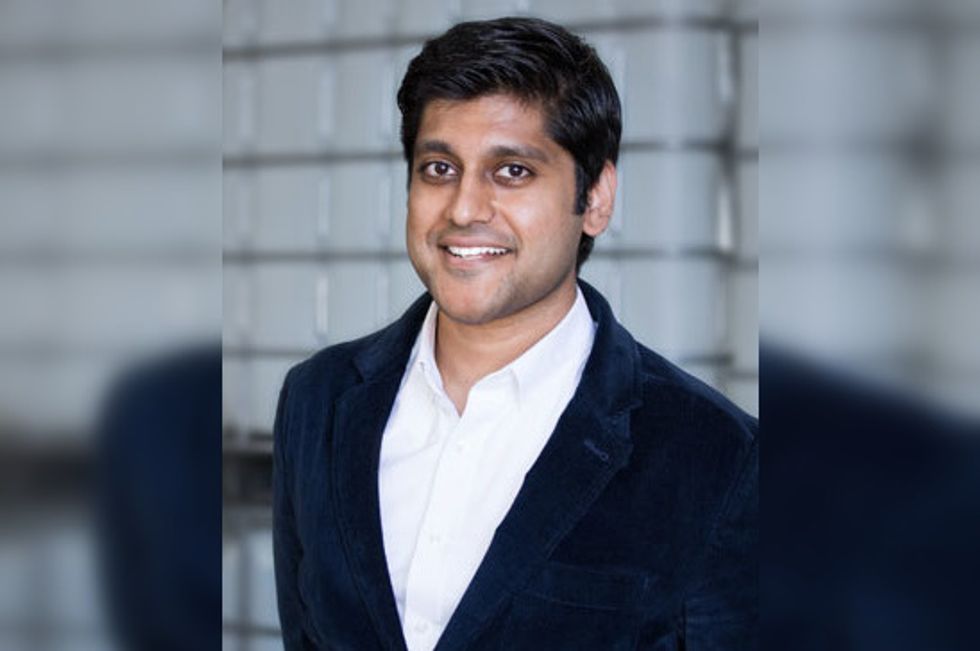
Solugen has announced two major partnerships. Photo via solugentech.com

Solugen had a busy week. The Houston-based company that makes sustainable chemicals announced two new partnerships.

Solugen and Sasol Chemicals, a business unit of Saslo Ltd., revealed that they are working together to explore commercialization of sustainably-made home and personal care products. Read more.

Later last week, Solugen announced that it has scored a partnership with ADM to build a biomanufacturing facility adjacent to an existing corn complex in Marshall, Minnesota. Read more.

Andy Grolnick, CEO of Graylog

Graylog, a Houston SaaS company, has new fuel to scale and develop its product. Photo via Graylog

A Houston software-as-a-service company has secured $39 million in financing and announced its latest upgrade to its platform.

Graylog, which has created an innovative platform for cybersecurity and IT operations, raised equity funding with participation from new investor Silver Lake Waterman and existing investors Piper Sandler Merchant Banking and Harbert Growth Partners leading the round.

“The growth we are seeing globally is a response to our team’s focus on innovation, a superior user experience, low total cost of ownership, and strong execution from our Go-To-Market and Customer Success teams,” Andy Grolnick, CEO of Graylog, says in a news release. “We expect this momentum to continue as Graylog expands its reach and raises its profile in the security market.” Read more.

Stuart Corr, executive director of Pumps & Pipes
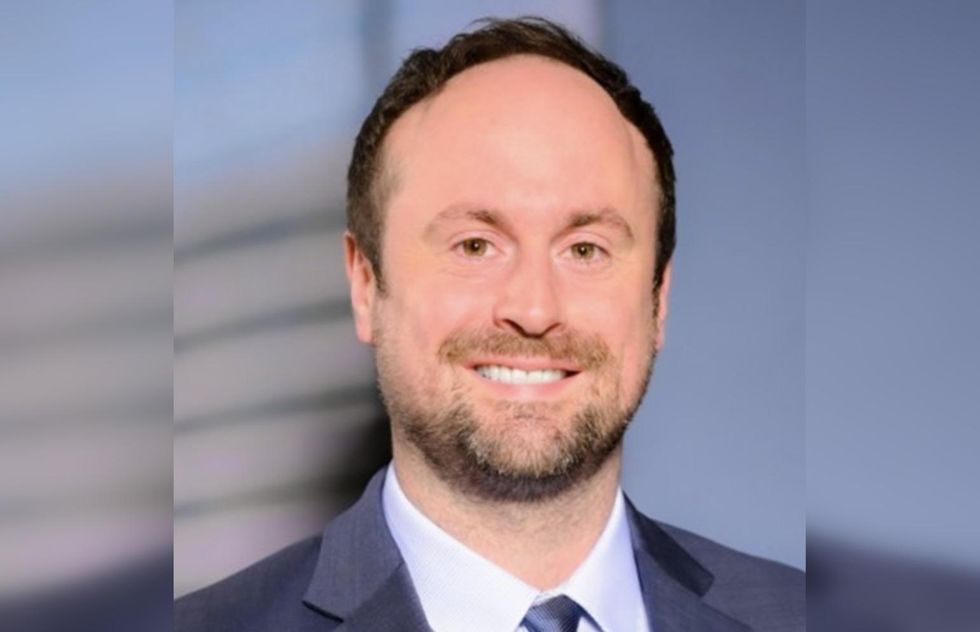
A Houston expert shares reasons to swap screen time for extended reality. Photo via pumpsandpipes.org

Virtual and augmented reality are having a moment, as Stuart Corr, executive director of Pumps & Pipes, explains in a guest column for InnovationMap.

"The COVID-19 pandemic saw an unprecedented shift to even more screen time and interactions using remote video communication platforms," he writes. "It was also around this time that wireless virtual reality headsets were, for the first time ever, economically accessible to the consumer due to the large push of one multinational corporation. Fast forward to 2023, there are even more companies beginning to enter the market with new extended reality (XR) headsets (i.e. virtual, mixed, and augmented reality) that offer spatial computing – the ability for computers to blend into the physical worlds (amongst other things)." Read more.

Graylog, a Houston SaaS company, has new fuel to scale and develop its product. Photo via Getty Images

Houston software co. secures $39M in financing, launches latest product upgrade

fresh funding

A Houston software-as-a-service company has secured $39 million in financing and announced its latest upgrade to its platform.

Graylog, which has created an innovative platform for cybersecurity and IT operations, raised equity funding with participation from new investor Silver Lake Waterman and existing investors Piper Sandler Merchant Banking and Harbert Growth Partners leading the round.

“The growth we are seeing globally is a response to our team’s focus on innovation, a superior user experience, low total cost of ownership, and strong execution from our Go-To-Market and Customer Success teams,” Andy Grolnick, CEO of Graylog, says in a news release. “We expect this momentum to continue as Graylog expands its reach and raises its profile in the security market.”

Grolnick tells TechCrunch that the financing includes $9 million in a series C extension round and $30 million in “flex debt.” The company closed its series C in 2021.

In its news release, Graylog reported a 67 percent increase in new bookings as of last quarter. The company also reported the acquisition of Resurface.io’s API security platform in July, growth in Europe and Asia Pacific, and availability on AWS Marketplace among its list of recent growth opportunities.

“Graylog’s solid growth underscores the strength of the extensible Threat Detection & Incident Response platform the team has built to help customers detect and respond to cybersecurity threats and leverage advanced log management for operational effectiveness,” Shawn O’Neill, managing director and group head of Silver Lake Waterman, says in the release. “We look forward to partnering with Graylog to help enable their continued success.”

The financing was announced October 31, and today, November 1, Graylog announced version 5.2 of its platform technology for its users.

The company plans to use its funding on product development and differentiation, scaling, and as a bridge to profitability, which Grolnick tells TechCrunch is just around the corner.

“Graylog’s product-led growth model, combined with its focus on customer success, continues to be an attractive combination that bodes well for its future," Bob Rinek, managing director with Piper Sandler Merchant Banking, says in the release. "We’re also excited about Graylog’s expansion into the API Security space to help its customers defend this vulnerable attack surface."

Originally founded in 2009 by Lennart Koopmann as an open source project, Houston-based VC firm Mercury invested in the company in 2014. Grolnick has served as CEO since 2020.

Houston-based Graylog announced new financing as well as a new version of its software this week. Photo via graylog.org
This week's roundup of Houston innovators includes Spencer Randall of CryptoEQ, Andy Grolnick of Graylog, and Imran Alibhai of Tvardi. Courtesy photos

3 Houston innovators to know this week

who's who

Editor's note: In this week's roundup of Houston innovators to know, I'm introducing you to three local innovators across industries — from software to cryptocurrency — recently making headlines in Houston innovation.

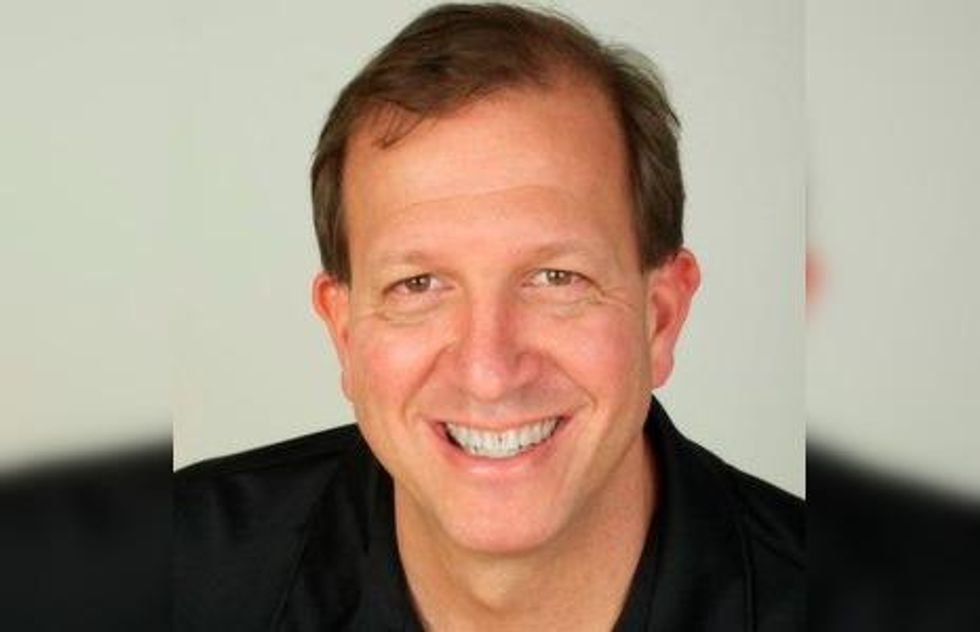
Spencer Randall, co-founder and principal at CryptoEQ

Spencer Randall, principal and co-founder of CryptoEQ, joins the Houston Innovators Podcast to discuss how his company has grown alongside the cryptocurrency industry. Photo courtesy of CryptoEQ
It's an interesting time for cryptocurrency and no one knows that better than Spencer Randall, principal and co-founder of Houston-based CryptoEQ, a company that's built a platform for resources and information for everyone interested in cryptocurrency and digital assets.

"CryptoEQ is really built to be the North Star for digital asset research and information. We provide market insights for both newcomers and folks that are already well-versed in cryptocurrency and digital assets," Randall says on this week's of the Houston Innovators Podcast. "The idea of the company is to help shepherd folks along and guide them on their crypto journey."

Recently the company entered into a partnership with The Cannon, an entrepreneurial hub with locations across Houston, to provide a one-of-a-kind crypto starter pack to help onboard innovators to the cryptosphere worldwide. Click here to read more and stream the episode.

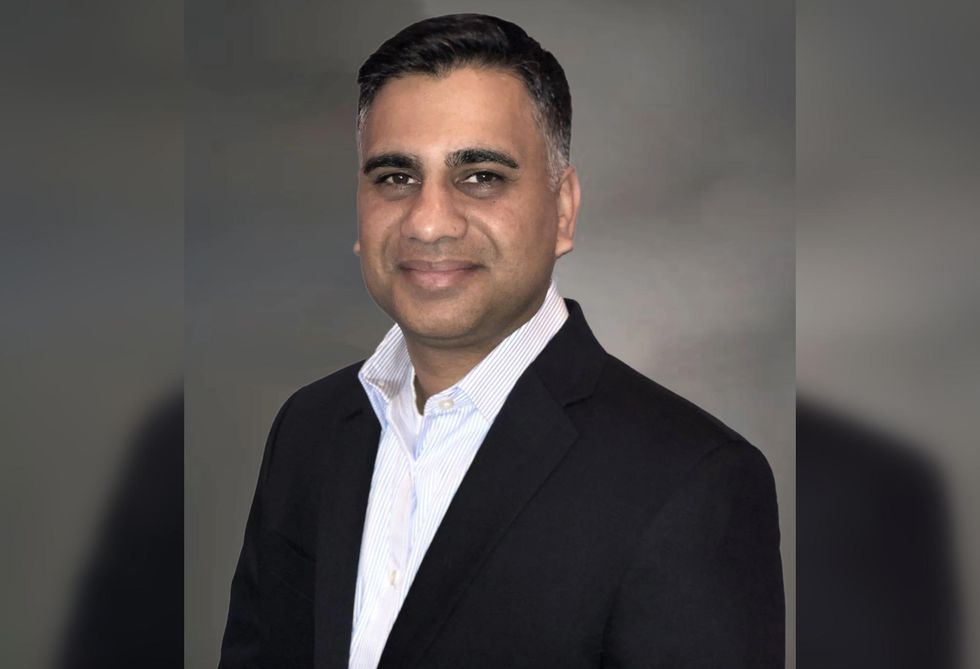
Andy Grolnick, CEO of Graylog

A Houston company that's created a centralized log management solution has closed a new round in funding. Photo courtesy of Graylog

Houston-based Graylog closed its $18 million growth equity round led by new investors Harbert Growth Partners and Piper Sandler Merchant Banking, as well as existing investors Houston-based Mercury Fund and Integr8d Capital.

"This investment will enable us to accelerate our global go-to-market strategies and enhancements to the award-winning solutions we deliver for IT, DevOps, and Security teams," says Andy Grolnick, CEO of Graylog, in a press release. "We're excited to have the support of new and existing investor partners to help us realize our potential." Click here to read more.

Imran Alibhai, CEO at Tvardi

Tvardi Therapeutics Inc. has fresh funds to support its drug's advancement in clinical trials. Photo courtesy of Tvardi

Houston-based, cancer-fighting company Tvardi Therapeutics Inc. closed its $74 million series B funding round led by new investors New York-based Slate Path Capital, Florida-based Palkon Capital, Denver-based ArrowMark Partners, and New York-based 683 Capital, with continued support and participation by existing investors, including Houston-based Sporos Bioventures.

"We are thrilled to move out of stealth mode and partner with this lineup of long-term institutional investors," says Imran Alibhai, CEO at Tvardi. "With this financing we are positioned to advance the clinical development of our small molecule inhibitors of STAT3 into mid-stage trials as well as grow our team." Click here to read more.

Houston-based data management startup Graylog has fresh funds to fuel its growth. Photo via Graylog.org

Houston data management company closes $18M in fresh funding

money moves

A Houston company that's created a centralized log management solution has closed a new round in funding.

Graylog closed its $18 million growth equity round led by Richmond, Virginia-based Harbert Growth Partners, a new investor, and Minneapolis, Minnesota-based Piper Sandler Merchant Banking, the company announced today. The round also received contribution from existing investors Houston-based Mercury Fund and Integr8d Capital, as well as Germany-based HTGF.

"This investment will enable us to accelerate our global go-to-market strategies and enhancements to the award-winning solutions we deliver for IT, DevOps, and Security teams," says Andy Grolnick, CEO of Graylog, in a press release. "We're excited to have the support of new and existing investor partners to help us realize our potential."

Andy Grolnick is CEO of Graylog. Photo courtesy

Per the release, the funds will go toward growing the company's platform that allows its users the ability to capture, store, and enable real-time analysis of terabytes of machine data.

"Graylog is well-positioned to be a long-term winner in the rapidly growing market for log management and analysis solutions," says Brian Carney, general partner of Harbert Growth Partners, in the release. "With its focus on delivering a superior analyst experience coupled with a vibrant Open Source community, the company provides customers a compelling alternative to other log management solutions plagued with high complexity and high total cost of ownership (TCO). We are thrilled to partner with the Graylog team to leverage the significant opportunity that lies ahead for the company."

Over the past year, despite the challenging business climate, the company saw growth in business and even expanded its European operations, according to the release.

"As a long-standing customer, Graylog is strategic to our success. We are excited to see new investment that will enable the company to accelerate innovation and continue to deliver excellent log management and SIEM solutions," says Rob Reiner, CTO of PROS, in the release.

Ad Placement 300x100
Ad Placement 300x600

CultureMap Emails are Awesome

Rice University researchers unveil new model that could sharpen MRI scans

MRI innovation

Researchers at Rice University, in collaboration with Oak Ridge National Laboratory, have developed a new model that could lead to sharper imaging and safer diagnostics using magnetic resonance imaging, or MRI.

In a study recently published in The Journal of Chemical Physics, the team of researchers showed how they used the Fokker-Planck equation to better understand how water molecules respond to contrast agents in a process known as “relaxation.” Previous models only approximated how water molecules relaxed around contrasting agents. However, through this new model, known as the NMR eigenmodes framework, the research team has uncovered the “full physical equations” to explain the process.

“The concept is similar to how a musical chord consists of many notes,” Thiago Pinheiro, the study’s first author, a Rice doctoral graduate in chemical and biomolecular engineering and postdoctoral researcher in the chemical sciences division at Oak Ridge National Laboratory, said in a news release. “Previous models only captured one or two notes, while ours picks up the full harmony.”

According to Rice, the findings could lead to the development and application of new contrast agents for clearer MRIs in medicine and materials science. Beyond MRIs, the NMR relaxation method could also be applied to other areas like battery design and subsurface fluid flow.

“In the present paper, we developed a comprehensive theory to interpret those previous molecular dynamics simulations and experimental findings,” Dilipkumar Asthagiri, a senior computational biomedical scientist in the National Center for Computational Sciences at Oak Ridge National Laboratory, said in the release. ”The theory, however, is general and can be used to understand NMR relaxation in liquids broadly.”

The team has also made its code available as open source to encourage its adoption and further development by the broader scientific community.

“By better modeling the physics of nuclear magnetic resonance relaxation in liquids, we gain a tool that doesn’t just predict but also explains the phenomenon,” Walter Chapman, a professor of chemical and biomolecular engineering at Rice, added in the release. “That is crucial when lives and technologies depend on accurate scientific understanding.”

The study was backed by The Ken Kennedy Institute, Rice Creative Ventures Fund, Robert A. Welch Foundation and Oak Ridge Leadership Computing Facility at Oak Ridge National Laboratory.

Luxury transportation startup connects Houston with Austin and San Antonio

On The Road Again

Houston business and leisure travelers have a luxe new way to hop between Texas cities. Transportation startup Shutto has launched luxury van service connecting San Antonio, Austin, and Houston, offering travelers a comfortable alternative to flying or long-haul rideshare.

Bookings are now available Monday through Saturday with departure times in the morning and evening. One-way fares range from $47-$87, putting Shutto in a similar lane to Dallas-based Vonlane, which also offers routes from Houston to Austin and San Antonio.

Shutto enters the market at a time when highway congestion is a hotter topic than ever. With high-speed rail still years in the future, its model aims to provide fast, predictable service at commuter prices.

The startup touts an on-time departure guarantee and a relaxed, intimate ride. Only 12 passengers fit inside each Mercedes Sprinter van, equipped with Wi-Fi and leather seating. And each route includes a pit stop at roadside favorite Buc-ee's.

In announcing the launch, founder and CEO Alberto Salcedo called the company a new category in Texas mobility.

“We are bringing true disruptive mobility to Texas: faster and more convenient than flying (no security lines, no delays), more comfortable and exclusive than the bus or train, and up to 70 percent cheaper than private transfers or Uber Black,” Salcedo said in a release.

“Whether you’re commuting for business, visiting family, exploring Texas wineries, or doing a taco tour in San Antonio, Shutto makes traveling between these cities as easy and affordable as riding inside the city."

Beyond the scheduled routes, Shutto offers private, customizable trips anywhere in the country, a service it expects will appeal to corporate retreat planners, party planners, and tourists alike.

In Houston, the service picks up and drops off near the Galleria at the Foam Coffee & Kitchen parking lot, 5819 Richmond Ave.. In San Antonio, it is located at La Panadería Bakery’s parking lot at 8305 Broadway. In Austin, the location is the Pershing East Café parking lot at 2501 E. Fifth St.

---

This article originally appeared on CultureMap.com.

Houston-area lab grows with focus on mobile diagnostics and predictive medicine

mobile medicine

When it comes to healthcare, access can be a matter of life and death. And for patients in skilled nursing facilities, assisted living or even their own homes, the ability to get timely diagnostic testing is not just a convenience, it’s a necessity.

That’s the problem Principle Health Systems (PHS) set out to solve.

Founded in 2016 in Clear Lake, Texas, PHS began as a conventional laboratory but quickly pivoted to mobile diagnostics, offering everything from core blood work and genetic testing to advanced imaging like ultrasounds, echocardiograms, and X-rays.

“We were approached by a group in a local skilled nursing facility to provide services, and we determined pretty quickly there was a massive need in this area,” says James Dieter, founder, chairman and CEO of PHS. “Turnaround time is imperative. These facilities have an incredibly sick population, and of course, they lack mobility to get the care that they need.”

What makes PHS unique is not only what they do, but where they do it. While they operate one of the largest labs serving skilled nursing facilities in the state, their mobile teams go wherever patients are, whether that’s a nursing home, a private residence or even a correctional facility.

Diagnostics, Dieter says, are at the heart of medical decision-making.

“Seventy to 80 percent of all medical decisions are made from diagnostic results in lab and imaging,” he says. “The diagnostic drives the doctor’s or the provider’s next move. When we recognized a massive slowdown in lab results, we had to innovate to do it faster.”

Innovation at PHS isn’t just about speed; it’s about accessibility and precision.

Chris Light, COO, explains: “For stat testing, we use bedside point-of-care instruments. Our phlebotomists take those into the facilities, test at the bedside, and get results within minutes, rather than waiting days for results to come back from a core lab.”

Scaling a mobile operation across multiple states isn’t simple, but PHS has expanded into nine states, including Texas, Oklahoma, Kansas, Missouri and Arizona. Their model relies on licensed mobile phlebotomists, X-ray technologists and sonographers, all trained to provide high-level care outside traditional hospital settings.

The financial impact for patients is significant. Instead of ambulance rides and ER visits costing thousands, PHS services often cost just a fraction, sometimes only tens or hundreds of dollars.

“Traditionally, without mobile diagnostics, the patient would be loaded into a transportation vehicle, typically an ambulance, and taken to a hospital,” Dieter says. “Our approach is a fraction of the cost but brings care directly to the patients.”

The company has also embraced predictive and personalized medicine, offering genetic tests that guide medication decisions and laboratory tests that predict cognitive decline from conditions like Alzheimer's and Parkinson’s.

“We actively look for complementary services to improve patient outcomes,” Dieter says. “Precision medicine and predictive testing have been a great value-add for our providers.”

Looking to the future, PHS sees mobile healthcare as part of a larger trend toward home-based care.

“There’s an aging population that still lives at home with caretakers,” Dieter explains. “We go into the home every day, whether it’s an apartment, a standalone home, or assisted living. The goal is to meet patients where they are and reduce the need for hospitalization.”

Light highlighted another layer of innovation: predictive guidance.

“We host a lot of data, and labs and imaging drive most treatment decisions,” Light says. “We’re exploring how to deploy diagnostics immediately based on results, eliminating hours of delay and keeping patients healthier longer.”

Ultimately, innovation at PHS isn’t just about technology; it’s about equity.

“There’s an 11-year life expectancy gap between major metro areas and rural Texas,” Dieter says. “Our innovation has been leveling the field, so everyone has access to high-quality diagnostics and care, regardless of where they live.”