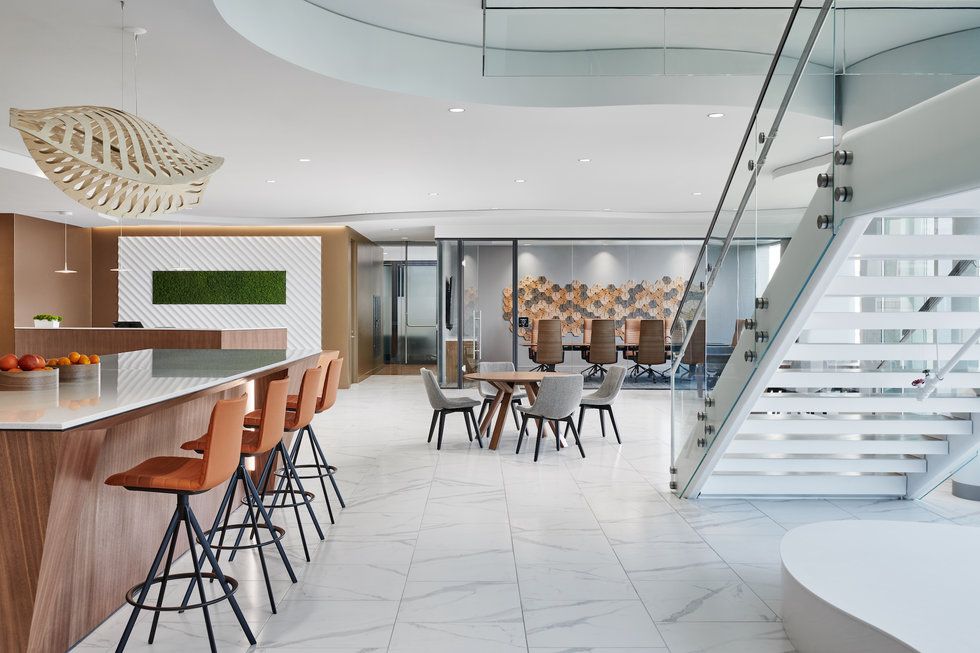
Austin-based Firmspace opened its Houston location last year. Courtesy of Firmspace

Before the pandemic, Houston coworking demand mirrored that of the rest of the country: shared space was booming, new operators were opening up. Demand was growing in Houston, as it was in other markets.

When the pandemic arrived in Houston last spring, the city was hit with a crisis on two fronts: local public health challenges due to the arrival of COVID-19 were further complicated by a downturn in the price of oil and gas industry — the literal fuel of this city's dominant industry.

But coworking hasn't faded away as office spaces closed or reduced capacity – it's evolved. In fact, the ongoing pandemic has accelerated this changing space and pushed operators to adapt their offerings to meet the market's needs. The result in Houston is the emergence of three major trends that we expect to see persist beyond 2021.

Increased demand for private offices

According to a recent report from JLL, up to 70 percent of all office spaces were primarily or partially open plan in design by the first quarter of 2020. But few of us want to sit in an open plan office with a dozen other masked professionals while fielding Zoom calls, but working from home isn't an option for those who lack the space and privacy they need to effectively work from home.

This combination of pandemic-related stressors has driven more Houstonians to seek out private office space for rent. The basic requirements in the pandemic era look slightly different than what we might have observed a year ago. Professionals want:

  • Private office spaces with doors that close and lock
  • Walls that provide privacy and noise insulation
  • Secure IT infrastructure, chiefly high-speed internet access
  • Enhanced cleaning protocols in common spaces and high-touch areas
  • Closed ventilation loops and as much clean air piped in from the outdoors as possible

And coworking spaces are doing their best to deliver this calm, safe environment where busy professionals can come to do focused work.

More short-term arrangements

The future has never looked more uncertain to professionals and leadership in all sectors. Here at the end of 2020, many companies that have paid nearly nine months of rent on office space that they've been unable to safely use are weighing the benefits of breaking their years-long commercial leases.

Companies are not sure what the structure of their teams will be in three months, nevermind three years, and this is changing how leaders think about their real estate contracts. In this climate, many are turning to coworking spaces that offer six- and 12-month contracts with furnishes and IT infrastructure in place to lighten their financial commitments to physical spaces.

The other trend in short-term leasing that local coworking spaces have embraced is the day office. Given that many of us are planning to work at least part-time from our home offices for the near future, coworking spaces have spotted the opportunity to offer a pay-per-day model to engage professionals that only need a break from the home office one or two days a week.

A private office as a status symbol

The office used to be where we went to get away from home five days a week. For members of traditional coworking spaces in the startup and tech industries, the office often felt like an incubator where spontaneous connections happened.

But in light of the pandemic, private office space has become a refuge where professionals go to feel safe, achieve focused work, and execute sensitive tasks with assurance that they have a level of privacy that can't be achieved at home.

Whether you're looking to speak with clients or prospective employees remotely, private office space and polished meeting rooms have also come to be a status symbol. A video call with chic design elements visible in the background of their office space communicates something powerful – the people in those chairs are invested in the time they spend at work.


Moving into 2021, Houstonians are ready to return to work. Even before the pandemic arrived, commercial real estate was beginning to see that the future of work will be more flexible and more often remote than it was in the past. While we're not through this crisis yet, many professionals are already looking for a new kind of private office arrangement, and local coworking operators are working to deliver the space these Houstonians need.

------

Anish Michael is the CEO of Austin-based Firmspace, which has a 32,000-square-foot space in BBVA Compass Plaza in Houston.


From enlightening talks to networking opportunities, here's where you need to be in April. Getty Images

10+ can't-miss Houston business and innovation events for April

Where to be

Happy Q2, everyone. With 2019 already a quarter of the way through, it's a bit overwhelming to prioritize what networking and thought talks to attend. We've rounded up a list of over 10 (and growing) events for you to consider adding to your calendar.

If you know of innovation-focused events for this month or next, email me at natalie@innovationmap.com with the details and subscribe to our daily newsletter that sends fresh stories straight to your inboxes every morning.

April 4 — FIRMSPACE Houston Grand Opening Celebration

A national high-end workspace brand has opened its latest location in Houston. Check out the space and network with potential coworkers.

Details: The event is from 7 to 10 pm on Thursday, April 4, at FIRMSPACE Houston (2200 Post Oak Boulevard). Learn more.

April 4 — Accelerator Info Session and Panel

Join the Social Enterprise Alliance for an info session on BBVA Momentum's accelerator program followed by a panel discussion led by Grace Rodriguez, CEO of Impact Hub Houston.

Details: The event is from 11:30 am to 1 pm on Thursday, April 4, at Station Houston (1301 Fannin, suite 2440). Learn more.

April 4-6 — Rice Business Plan Competition

This weekend, 42 teams will be competing for over $1.5 million in awards at the 19th annual Rice Business Plan Competition. Learn more about the awards and teams here.

Details: The three-day challenge takes place in a few different buildings on Rice University Campus. Learn more.

April 5 — ChIPs Texas' Houston Innovation Ecosystem

Gina Luna of Houston Exponential and Tom Luby of the TMC Innovation Institute will take the stage for a panel moderated by Payal Patel of Station Houston. It's the first ChIPs event in Houston. ChIPs is a nonprofit organization that advances and connects women in technology, law, and policy.

Details: The event is from 11:30 am to 1:30 pm on Friday, April 5, at TMC Innovation Institute (2450 Holcombe Blvd, Suite X). Learn more.

April 10 — MassChallenge Texas' Houston Launch Party

In case you missed it, MassChallenge Texas has a new Houston program and it's officially launching this month. Network with the international program, potential applicants, and other members of the Houston innovation ecosystem.

Details: The event is from 6 to 8 pm on Wednesday, April 10, at Four Seasons Houston (1300 Lamar St.). Learn more.

April 11 — 2019 Future of Leadership Luncheon

The annual event honors leadership and celebrates the important role of philanthropy in the Houston community. Tickets start at $250 for the luncheon that features a conversation between Darren Walker, president of the Ford Foundation, and Laura Arnold, co-chair of Arnold Ventures, on the future of philanthropy.

Details: The event is from noon to 1:30 pm on Thursday, April 11, at the Hilton Americas (1600 Lamar Street). Learn more here.

April 11 — Startup Pains: What I Wish I Knew

This monthly series hosted by the University of Houston lets you learn from someone else's mistakes and successes. This month's speaker is Jason Eriksen, Ph.D.UH associate professor of pharmacy, and founder of Alzeca Biosciences and Teomics LLC.

Details: The event is from 4 to 5 pm on Thursday, April 11, at the UH Technology Bridge (Innovation Center, building 4, floor 2, 5000 Gulf Fwy). Learn more here.Learn more here.

April 11 — B2B Startup Pitch Party

Cannon Ventures is hosting another night of pitches. This event is focused on all things B2B and will feature some B2B startups looking for early stage funding in Houston.

Details: The event is from 6:30 to 9 pm on Thursday, April 11, at The Cannon (1336 Brittmoore Road). Learn more.

April 12 — The Agile Shift Conference

Join industry professionals to network and talk the unification of Agile and DevOps to build and deliver better teams and software.

Details: The event is from 8 am to 5 pm on Friday, April 12, at the Hyatt Regency Houston (1200 Louisiana St.). Learn more.

April 18 — Lemonade Day at Station Houston

Join Station Houston for what is likely going to be the cutest pitch competition you'll ever see. Ten teams made up of future entrepreneurs will pitch their ideas for a lemonade stand.

Details: The event is from 5:30 to 7:30 pm on Thursday, April 18, at Station Houston (1301 Fannin Street, suite 2440). Learn more.

April 18 — Rice Alumni | Entrepreneurs & Innovators, Houston Launch

A Rice University organization has a new name, and they are ready to celebrate it. Meet the new Rice Alumni | Entrepreneurs & Innovators network, or RA|EI, and discuss what you want out of the organization.

Details: The event is from 5:30 to 7:30 pm on Thursday, April 18, at Pitch 25 (2120 Walker Street). Learn more.

April 23 — Houston Female Founder Roundtable: How to Get Ahead in Entrepreneurship with Alice

A panel of entrepreneurial women will share their stories, challenges, successes, and tips.

Details: The event is from 11 am to 1 pm on Tuesday, April 23, at The Cannon (1336 Brittmoore Rd). Learn more.

April 25 — EO Talks Houston

Think TED Talks but from Houston entrepreneurs. The goal is to share success stories and inspire other entrepreneurs in town.

Details: The event is from 7:30 to 10:30 am on Thursday, April 25, at Houston Baptist University, Linda & Archie Dunham Theater (7502 Fondren Road). Learn more.

April 25 — 7th Annual City of Houston Investor Conference

The City of Houston is gathering professionals to talk money for a full day of presentations by local government CFOs and an update on the region's economy.

Details: The event is from 8 am to 5 pm on Thursday, April 25, at Hilton Americas-Houston (1600 Lamar Street). Learn more.

April 25 — Enterprise XR: How AR/VR is Preparing Modern Workers

Immersive technology is shifting the paradigm of corporate training, and you and your company need to learn about it. The event has a keynote speaker and networking before and after.

Details: The event is from 6:30 to 8 pm on Thursday, April 25, at Station Houston (1301 Fannin St., suite 2440). Learn more.

April 26 — Data Science and You: Ethics in Data Science

Visiting professor Lawrence Hunter, director of the Computational Bioscience Program and of the Center for Computational Pharmacology at the University of Colorado School of Medicine, talks advances in data science and what you need to know.

Details: The event is from 3 to 5 pm on Friday, April 26, at the University of Houston Student Center (4455 University Drive).Learn more here.

April 26 — SPE Pitch Perfect

Join the Society of Professional Engineers' GCS Innovate! Committee for an event that will help you perfect your business plan.

Details: The event is from 9 am to 2 pm on Friday, April 26, at the Newpark Drilling Fluids (21920 Merchants Way). Learn more here.

Ad Placement 300x100
Ad Placement 300x600

CultureMap Emails are Awesome

Houston-area lab grows with focus on mobile diagnostics and predictive medicine

mobile medicine

When it comes to healthcare, access can be a matter of life and death. And for patients in skilled nursing facilities, assisted living or even their own homes, the ability to get timely diagnostic testing is not just a convenience, it’s a necessity.

That’s the problem Principle Health Systems (PHS) set out to solve.

Founded in 2016 in Clear Lake, Texas, PHS began as a conventional laboratory but quickly pivoted to mobile diagnostics, offering everything from core blood work and genetic testing to advanced imaging like ultrasounds, echocardiograms, and X-rays.

“We were approached by a group in a local skilled nursing facility to provide services, and we determined pretty quickly there was a massive need in this area,” says James Dieter, founder, chairman and CEO of PHS. “Turnaround time is imperative. These facilities have an incredibly sick population, and of course, they lack mobility to get the care that they need.”

What makes PHS unique is not only what they do, but where they do it. While they operate one of the largest labs serving skilled nursing facilities in the state, their mobile teams go wherever patients are, whether that’s a nursing home, a private residence or even a correctional facility.

Diagnostics, Dieter says, are at the heart of medical decision-making.

“Seventy to 80 percent of all medical decisions are made from diagnostic results in lab and imaging,” he says. “The diagnostic drives the doctor’s or the provider’s next move. When we recognized a massive slowdown in lab results, we had to innovate to do it faster.”

Innovation at PHS isn’t just about speed; it’s about accessibility and precision.

Chris Light, COO, explains: “For stat testing, we use bedside point-of-care instruments. Our phlebotomists take those into the facilities, test at the bedside, and get results within minutes, rather than waiting days for results to come back from a core lab.”

Scaling a mobile operation across multiple states isn’t simple, but PHS has expanded into nine states, including Texas, Oklahoma, Kansas, Missouri and Arizona. Their model relies on licensed mobile phlebotomists, X-ray technologists and sonographers, all trained to provide high-level care outside traditional hospital settings.

The financial impact for patients is significant. Instead of ambulance rides and ER visits costing thousands, PHS services often cost just a fraction, sometimes only tens or hundreds of dollars.

“Traditionally, without mobile diagnostics, the patient would be loaded into a transportation vehicle, typically an ambulance, and taken to a hospital,” Dieter says. “Our approach is a fraction of the cost but brings care directly to the patients.”

The company has also embraced predictive and personalized medicine, offering genetic tests that guide medication decisions and laboratory tests that predict cognitive decline from conditions like Alzheimer's and Parkinson’s.

“We actively look for complementary services to improve patient outcomes,” Dieter says. “Precision medicine and predictive testing have been a great value-add for our providers.”

Looking to the future, PHS sees mobile healthcare as part of a larger trend toward home-based care.

“There’s an aging population that still lives at home with caretakers,” Dieter explains. “We go into the home every day, whether it’s an apartment, a standalone home, or assisted living. The goal is to meet patients where they are and reduce the need for hospitalization.”

Light highlighted another layer of innovation: predictive guidance.

“We host a lot of data, and labs and imaging drive most treatment decisions,” Light says. “We’re exploring how to deploy diagnostics immediately based on results, eliminating hours of delay and keeping patients healthier longer.”

Ultimately, innovation at PHS isn’t just about technology; it’s about equity.

“There’s an 11-year life expectancy gap between major metro areas and rural Texas,” Dieter says. “Our innovation has been leveling the field, so everyone has access to high-quality diagnostics and care, regardless of where they live.”

Aegis Aerospace appoints Houston space leader as new president

moving up

Houston-based Aegis Aerospace's current chief strategy officer, Matt Ondler, will take on the additional role of president on Jan. 1. Ondler will succeed Bill Hollister, who is retiring.

“Matt's vision, experience, and understanding of our evolving markets position us to build on our foundation and pursue new frontiers,” Stephanie Murphy, CEO of Aegis Aerospace, said in a news release.

Hollister guided Aegis Aerospace through expansion and innovation in his three years as president, and will continue to serve in the role of chief technology officer (CTO) for six months and focus on the company's technical and intellectual property frameworks.

"Bill has played an instrumental role in shaping the success and growth of our company, and his contributions leave an indelible mark on both our culture and our achievements," Murphy said in a news release.

Ondler has a background in space hardware development and strategic leadership in government and commercial sectors. Ondler founded subsea robots and software company Houston Mechatronics, Inc., now known as Nauticus Robotics, and also served as president, CTO and CSO during a five-year tenure at Axiom Space. He held various roles in his 25 years at NASA and was also named to the Texas Aerospace Research and Space Economy Consortium Executive Committee last year.

"I am confident that with Matt at the helm as president and Bill supporting us as CTO, we will continue to build on our strong foundation and further elevate our impact in the space industry," Murphy said in a news release. "Matt's vision, experience, and understanding of our evolving markets position us to build on our foundation and pursue new frontiers."

Rice University launches new center to study roots of Alzheimer’s and Parkinson’s

neuro research

Rice University launched its new Amyloid Mechanism and Disease Center last month, which aims to uncover the molecular origins of Alzheimer’s, Parkinson’s and other amyloid-related diseases.

The center will bring together Rice faculty in chemistry, biophysics, cell biology and biochemistry to study how protein aggregates called amyloids form, spread and harm brain cells. It will serve as the neuroscience branch of the Rice Brain Institute, which was also recently established.

The team will work to ultimately increase its understanding of amyloid processes and will collaborate with the Texas Medical Center to turn lab discoveries into real progress for patients. It will hold its launch event on Jan. 21, 2026, and hopes to eventually be a launchpad for future external research funding.

The new hub will be led by Pernilla Wittung-Stafshed, a Rice biophysicist and the Charles W. Duncan Jr.-Welch Chair in Chemistry.

“To make a real difference, we have to go all the way and find a cure,” Wittung-Stafshede said in a news release. “At Rice, with the Amyloid Mechanism and Disease Center as a catalyst, we have the people and ideas to open new doors toward solutions.”

Wittung-Stafshede, who was recruited to Rice through a Cancer Prevention and Research Institute of Texas grant this summer, has led pioneering work on how metal-binding proteins impact neurodegenerative disorders, including Alzheimer’s and Parkinson’s diseases. Her most recent study, published in Advanced Science, suggests a new way of understanding how amyloids may harm cells and consume the brain’s energy molecule, ATP.

According to Alzheimer’s Disease International, neurodegenerative disease cases could reach around 78 million by 2030 and 139 million by 2050. Wittung-Stafshede’s father died of dementia several years ago.

“This is close to my heart,” Wittung-Stafshede added in the news release. “Neurodegenerative diseases such as dementia, Alzheimer’s and Parkinson’s are on the rise as people live longer, and age is the largest risk factor. It affects everyone.”