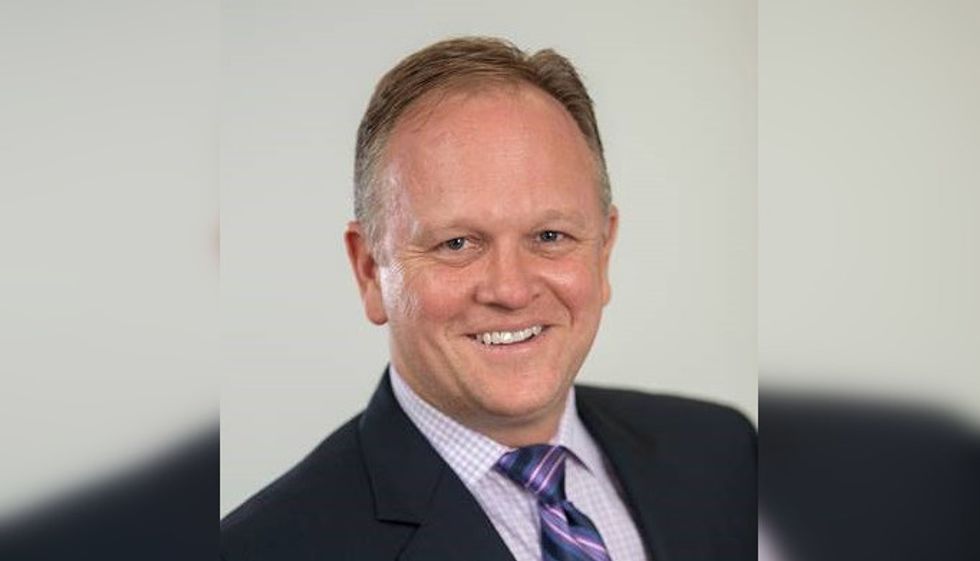
Fast-growing Cart.com has named its new chief people officer. Photo courtesy of Cart.com

Houston-based e-commerce software and services company Cart.com has hired a former Shopify executive as its chief people officer.

Before joining Cart.com, Lani Doyle was chief HR officer at Strategic Solutions Group, a provider of health care software. Previously, she was vice president of HR and people operations at 6 River Systems, a provider of software and robotics for warehouses. Prior to that, Doyle was head of talent development and operations at Shopify, an e-commerce platform for businesses that posted revenue of $7.1 billion in 2023.

Cart.com is one of the fastest-growing companies in commerce today, and I’m excited to partner with our teams to help drive growth and scalability,” Doyle says in a news release. “I am eager to contribute to shaping our culture and developing programming that supports and elevates high-performing teams, ensuring we achieve our ambitious goals.”

Omair Tariq, founder and CEO of Cart.com, describes Doyle as a “strategic leader” who will help develop the startup’s continually growing team. The company, founded in 2020 in Houston, employs more than 1,600 people.

“Her deep expertise in HR strategy and talent development will be instrumental as we accelerate our growth trajectory and foster a dynamic workplace culture,” says Frank Parker, chief operating officer of Cart.com.

In February, Cart.com made another high-level executive move by promoting Joe Barth from senior vice president of fulfillment to chief logistics officer.

Cart.com has more than 6,000 customers. The company handles more than 75 million orders per year from 14 fulfillment centers in the U.S.

Earlier this year, Tariq joined the Houston Innovators Podcast to share a bit about his company's growth and its relocation from Austin back to Houston.

"I think Austin served its purpose. It certainly allowed us to be in the limelight in all the right ways, and I'm grateful for it," Tariq says on the show. "But once we got to a point, once we closed our series C round and became a unicorn ... I think we're now at a scale where the infrastructure that Houston provides is probably something that will be more attractive and useful for us in the long term."

Houston-based Data Gumbo has a new C-level exec to lead its growing sales team. Courtesy of Data Gumbo

Growing Houston blockchain company expands C-suite

building blockchain

After expanding into the Asian market last month, a Houston blockchain startup has grown its C-suite with the addition of a chief commercial officer to lead its sales team.

Data Gumbo Corp. has brought Bill Arend onto its team. Arend brings over 20 years of experience in software sales from the likes of Workday, Oracle. and Microsoft. The new hire comes at a time when Data Gumbo continues to expand, and, in March, the company brought on Indonesia-based client, Air Drilling Associates Indonesia-based client, Air Drilling Associates, a drilling and project management service provider.

"The opportunity abounds for Data Gumbo to help industry leaders to streamline current processes, eliminate errors, reduce contract leakage and save on costs," says Andrew Bruce, CEO of Data Gumbo, in a news release.

"Arend has the proven track record to support our mission in helping industrial players realize greater efficiencies and the leadership skills to scale our growing team as we continue to garner commercial momentum."

Data Gumbo's GumboNet is a robust blockchain network that provides automated contract execution for industrial clients. Beginning in the energy industry, Data Gumbo has since expanded into water management and construction.

"I am excited to join the Data Gumbo team to serve the market," Arrend says in the release. "There is a huge opportunity to provide industrial global enterprises a solution that drives down operating expenses by automating smart contracts."

Since its inception in 2016, the company has raised over $9.3 million in equity funding and grown its clientbase. The company, based out of The Cannon, operates as a blockchain-as-a-service model to improve efficiency for its industrial clients.

"In today's business climate, company's must look at their processes critically to find ways to improve productivity and cost efficiencies," Arend continues in the release. "Data Gumbo is well positioned to aid in that digital transformation for forward-looking companies."

Bill Arend has been named Data Gumbo's chief commercial officer. Photo courtesy of Data Gumbo

Ad Placement 300x100
Ad Placement 300x600

CultureMap Emails are Awesome

Houston VC funding surged nearly 50% in Q1 2026, report says

VC victories

First-quarter venture capital funding for Houston-area startups climbed nearly 50 percent compared to the same time last year, according to the PitchBook-NVCA Venture Monitor.

In Q1 2026, Houston-area startups raised $532.3 million, a 49 percent jump from $320.2 million in Q1 2025, according to the PitchBook-NVCA Venture Monitor.

However, the Q1 total fell 23 percent from the $671.05 million raised in Q4 2025.

Among the first-quarter funding highlights in Houston were:

  • Utility Global, which focuses on industrial decarbonization, announced a first close of $100 million for its Series D round.
  • Sage Geosystems raised a $97 million Series B round to support its geothermal energy storage technology.

Those funding rounds underscore Houston’s evolution as a magnet for VC in the energy sector.

“Today, the energy sector is increasingly extending into the startup economy as venture capital flows into companies developing the technologies that will shape the future of global energy,” the Greater Houston Partnership says.

The energy industry accounted for nearly 40 percent of Houston-area VC funding last year, according to market research and lead generation service Growth List.

Adding to Houston’s stature in VC for energy startups are investors like Chevron Technology Ventures, the investment arm of Houston-based oil and gas giant Chevron; Goose Capital; Mercury Fund; and Quantum Energy Partners.

How Houston innovators played a role in the historic Artemis II splashdown

safe landing

Research from Rice University played a critical role in the safe return of U.S. astronauts aboard NASA’s Artemis II mission this month.

Rice mechanical engineer Tayfun E. Tezduyar and longtime collaborator Kenji Takizawa developed a key computational parachute fluid-structure interaction (FSI) analysis system that proved vital in NASA’s Orion capsule’s descent into the Pacific Ocean. The FSI system, originally developed in 2013 alongside NASA Johnson Space Center, was critical in Orion’s three-parachute design, which slowed the capsule as it returned to Earth, according to Rice.

The model helped ensure that the parachute design was large enough to slow the capsule for a safe landing while also being stable enough to prevent the capsule from oscillating as it descended.

“You cannot separate the aerodynamics from the structural dynamics,” Tezduyar said in a news release. “They influence each other continuously and even more so for large spacecraft parachutes, so the analysis must capture that interaction in a robustly coupled way.”

The end result was a final parachute system, refined through NASA drop tests and Rice’s computational FSI analysis, that eliminated fluctuations and produced a stable descent profile.

Apart from the dynamic challenges in design, modeling Orion’s parachutes also required solving complex equations that considered airflow and fabric deformation and accounted for features like ringsail canopy construction and aerodynamic interactions among multiple parachutes in a cluster.

“Essentially, my entire group was dedicated to that work, because I considered it a national priority,” Tezduyar added in the release. “Kenji and I were personally involved in every computer simulation. Some of the best graduate students and research associates I met in my career worked on the project, creating unique, first-of-its-kind parachute computer simulations, one after the other.”

Current Intuitive Machines engineer Mario Romero also worked on Orion during his time at NASA. From 2018 to 2021, Romero was a member of the Orion Crew Capsule Recovery Team, which focused on creating likely scenarios that crewmembers could encounter in Orion.

The team trained in NASA’s 6.2-million-gallon pool, using wave machines to replicate a range of sea conditions. They also simulated worst-case scenarios by cutting the lights, blasting high-powered fans and tipping a mock capsule to mimic distress situations. In some drills, mock crew members were treated as “injured,” requiring the team to practice safe, controlled egress procedures.

“It’s hard to find the appropriate descriptors that can fully encapsulate the feeling of getting to witness all the work we, and everyone else, did being put into action,” Romero tells InnovationMap. “I loved seeing the reactions of everyone, but especially of the Houston communities—that brought me a real sense of gratitude and joy.”

Intuitive Machines was also selected to support the Artemis II mission using its Space Data Network and ground station infrastructure. The company monitored radio signals sent from the Orion spacecraft and used Doppler measurements to help determine the spacecraft's precise position and speed.

Tim Crain, Chief Technology Officer at Intuitive Machines, wrote about the experience last week.

"I specialized in orbital mechanics and deep space navigation in graduate school,” Crain shared. “But seeing the theory behind tracking spacecraft come to life as they thread through planetary gravity fields on ultra-precise trajectories still seems like magic."