


This week's Houston innovators to know roundup includes Aimee Woodall of The Black Sheep Agency, Alok Pant of Unvired, and Abbey Donnell of Work & Mother. Photos courtesy

Houston's rising COVID-19 case numbers and Texas' new regulations for bars and restaurants are a sure sign that the city isn't out of the woods from the pandemic — and that includes Houston's startups and entrepreneurs.

This week's three Houston innovators to know include three people who are advocating for continuing through the pandemic — the right way, from using tech to better communicate with employees at home to factoring in the new moms when you roll out your back-to-work plans.

Aimee Woodall, CEO and founder of the Black Sheep Agency
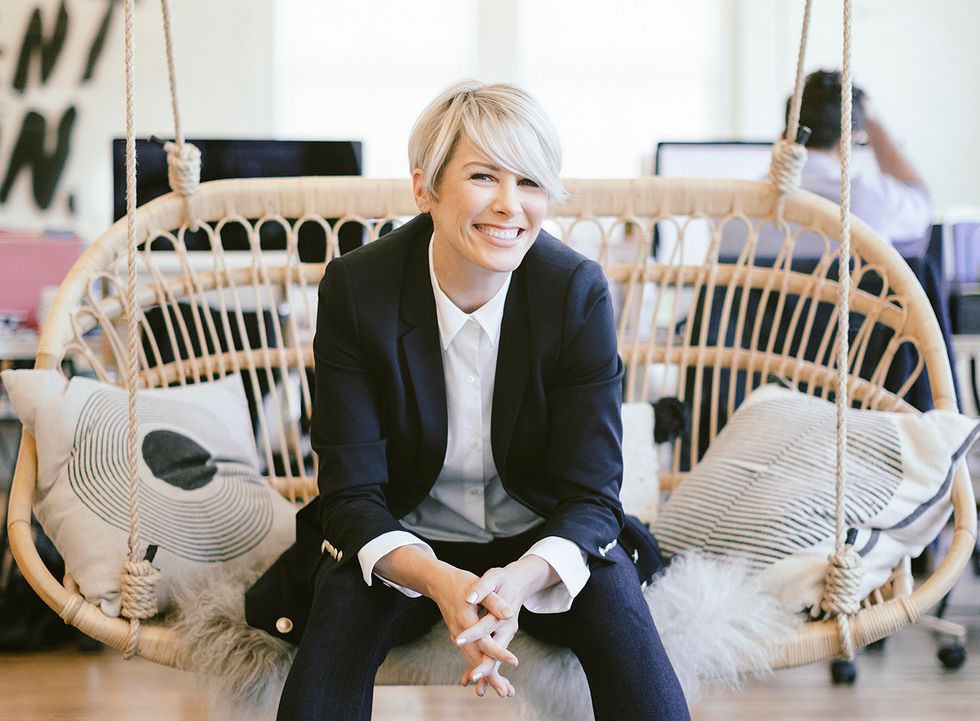
Aimee Woodall has been focused on innovation and creativity during COVID-19 for her own company, The Black Sheep Agency, but also for its clients. Photo courtesy of The Black Sheep Agency

Aimee Woodall founded The Black Sheep Agency in order to help impact-based businesses tell their stories. Now, amid COVID-19, that mission is more important than ever.

"We write, we design, we build campaigns, we work in the digital space — whatever it takes to tell the story of the organization and to rally other people to not only pay attention to what the organization is doing but to also find their own way to participate in moving that mission forward," Woodall shares on this week's episode of the Houston Innovators Podcast.

Thinking back to when COVID-19 really started affecting business and her campaigns, Woodall remembers how she and her team had to reevaluate existing content, pivot planned projects, and, in some cases, cancel events or programming. Read more.

Alok Pant, founder and CEO of Unvired
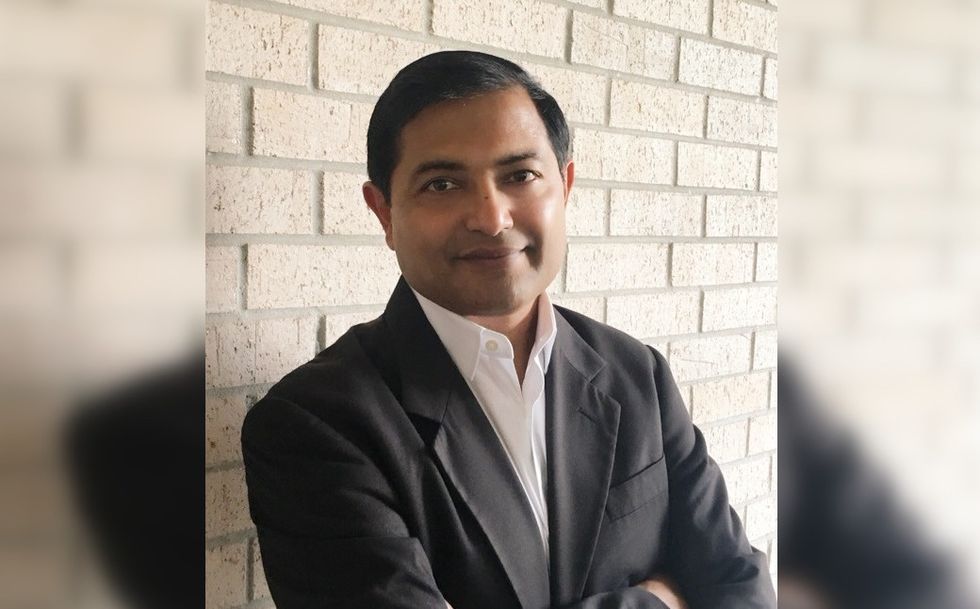
A Houston software startup has created a communication tool and is allowing free access amid the COVID-19 pandemic. Photo courtesy of Unvired

A Houston startup recently released an app to help employees voice their concerns and keep businesses with their finger on the pulse of employee morale. The survey is customizable for each business and contains questions with the most important factors such as employee health and well being, communication, confidence, and leadership.

"Digital Forms fits in with a whole new paradigm in the software world," says Alok Pant, CEO of Unvired. "It allows a business user to make their own specialized applications fast and easy with no coding necessary."

The low-code platform has a drag-and-drop form building feature to instantly deploy surveys, can store data in the Unvired Cloud, and instantly generate reports for insights in the administration portal. Read more.

Abbey Donnell, founder of Work & Mother
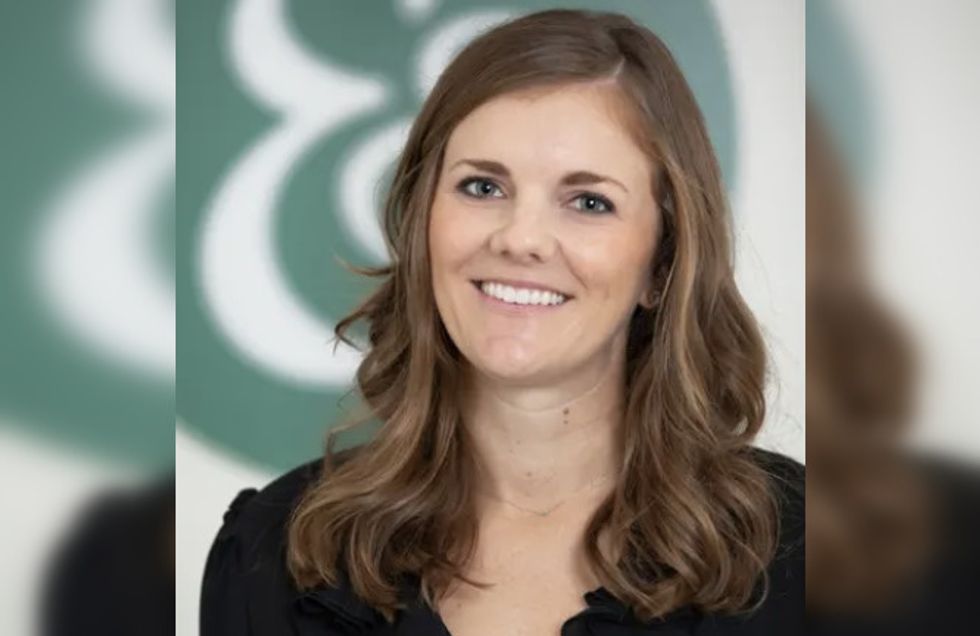
Abbey Donnell's startup, Work & Mother, provides a new way for new moms to pump breast milk during the workday. Courtesy of Work & Mother

As offices started to reopen and release new safety measures that will be put in place in the office, Abbey Donnell noticed a certain group or people who were going to be affected by these measures: New moms. Mother's rooms are usually multi purposeful, lack access to sinks, and seen as expendable, Donnell writes in a guest column for InnovationMap,

"If mother's needs are not part of this vital return to work safety conversation, women may be left behind," she writes. "So let's start the conversation." Read more.

What are the best companies to work for in Houston? Inc. magazine has released its list. Getty Images

Inc. named the​ best workplaces in U.S. — and 6 Houston companies landed on the list

workers loving work

These days, finding work is a full-time job for thousands of struggling Houstonians. Some of those people might want to check out six employers from Greater Houston that were just named among the country's best workplaces.

On May 5, Inc. magazine revealed the 395 employers in the U.S. that made its 2020 list of the best workplaces. In all, 30 employers in Texas ranked among the country's top workplaces.

To develop the ranking, Omaha, Nebraska-based Quantum Workplace surveyed employees from more than 3,000 companies in the U.S. on topics such as trust, management effectiveness, perks, and confidence in the future. Quantum based the final list on a composite score of survey results.

Houston employers that appear on the 2020 list are:

  • Alliantgroup, a tax consulting firm
  • AMB Architects, an architecture firm that specializes in designing medical and corporate offices, stores, and building renovations.
  • Eagle Pipe, a distributor of pipes for industrial and municipal projects
  • G&A Partners, an HR outsourcing company
  • Rekruiters, a staffing firm
  • The Black Sheep Agency, a marketing, branding, and design firm

Here's a rundown of the other Texas companies that earned spots on Inc.'s list of the country's best workplaces.

Dallas

  • Dialexa, a provider of technology R&D and development
  • Embark, a financial consulting firm
  • January Digital, a digital marketing and consulting firm
  • Munck Wilson Mandala, a tech-focused law firm
  • OneDay, a provider of a video storytelling platform for senior living centers
  • OutMatch, a provider of a platform that helps employers hire, retain, and develop employees
  • Worldwide Express, a shipping company

Addison

  • Lone Star Analysis, a provider of analytics software

Fort Worth

  • Blue Jean Networks, an IT support and services company

Irving

  • 5, an energy advisory firm
  • JB Warranties, an insurance firm

Plano

  • LiquidAgents Healthcare, a staffing agency for nurses
  • The Vested Group, a consulting firm for users of NetSuite software
  • TRUth, an advertising and marketing agency

Austin

  • 9Gauge Partners, a business management consulting firm
  • Abilitie, a provider of simulation-based learning tools
  • AlertMedia, a provider of emergency notification software
  • AllPro Hospitality Staffing, a staffing service for hotels and caterers
  • OJO Labs, a maker of AI-powered software for homebuyers and home sellers
  • Personiv, an outsourcing company
  • Pushnami, a provider of digital marketing software
  • SourceDay, a maker of supply chain management software
  • The Zebra, an insurance comparison website

Round Rock-based Jacaruso Enterprises also showed up in the ranking. It offers sales training, technology, and consulting for hotels.

------

This article originally ran on CultureMap.

Ad Placement 300x100
Ad Placement 300x600

CultureMap Emails are Awesome

Houston ranks among world’s top 30 emerging startup ecosystems

Startup Status

Long known as the Energy Capital of the World, Houston also ranks among the world’s top 30 emerging startup ecosystems, according to a new report.

The report from Startup Genome, a research and advisory organization, doesn’t assign a specific numeric ranking to Houston’s startup ecosystem. Rather, it puts Houston in the ranking range of 21 to 30 for emerging ecosystems. Startup Genome weighed factors such as early-stage funding, performance and talent to identify the top emerging ecosystems.

Houston also gained notice for being one of the world’s 20 emerging ecosystems with at least four unicorn startups in the past 10 years. Houston and nine other ecosystems each had four unicorns.

According to StartupBlink, a startup research platform, Houston’s startup ecosystem grew 24 percent in 2025, with over 1,300 startups and total startup funding exceeding $808 million. StartupBlink places Houston at No. 46 among the world’s top 100 startup ecosystems.

In a recent post on LinkedIn, David Horsup, executive in residence at the Rice Alliance Clean Energy Accelerator, wrote that Houston “has all the ingredients to be wildly successful if it stays true to its differentiated pillars that drive the economy — energy, medical, and aerospace.”

Mumbai topped Startup Genome’s list of emerging ecosystems, followed by Istanbul, Madrid, Salt Lake City-Provo and Barcelona. After Salt Lake City-Provo, the top U.S. ecosystems were Phoenix, Detroit, Minneapolis and Las Vegas.

Silicon Valley led Startup Genome’s ranking of the world’s top established ecosystems, followed by New York City, London, Tel Aviv and Boston. Austin landed at No. 18 in this category and Dallas at No. 27.

“For much of the past decade, this report has chronicled the welcome dispersion of opportunity beyond the traditional hubs,” Startup Genome writes. “That trend has not died — but it has been complicated. Capital and scale are consolidating once more, particularly in the United States, and the gap between leading and emerging ecosystems is widening.”

KBR names C-suite duo to lead $5.3B government services spinoff

new leaders

In advance of the spinoff of its Mission Technology Solutions unit, Houston-based KBR has made two C-suite hires for the new business.

Michael LaRouche is coming aboard as president and CEO of the spinoff, currently called SpinCo, on Sept. 26. Nicholas Veasey is joining as executive vice president and chief financial officer on July 1.

“Michael and Nick bring a highly complementary combination of operational leadership, financial expertise, and mission-driven experience, and together they will accelerate our impact for stakeholders,” Stuart Bradie, chairman, president and CEO of publicly traded KBR, said in a news release.

LaRouche currently is CEO of Serco North America, a Herndon, Virginia-based government services contractor. Veasey most recently was CFO of MAG Aerospace, a Fairfax, Virginia-based defense contractor.

SpinCo, a government services contractor, will launch with more than $5.3 billion in annual revenue and 20,000 employees. KBR’s total headcount is around 36,000. Branding for SpinCo, including a formal name, will be revealed in July.

“SpinCo is positioned as a top-tier provider of differentiated technology solutions, anchored by deep mission expertise, global scale, and a relentless commitment to delivering for our customers,” LaRouche says.

After the spinoff, the slimmed-down KBR will focus on its Sustainable Technology Solutions business, a provider of energy and industrial technology that generated $2.5 billion in revenue in 2025. Bradie will remain chairman, president and CEO of the business.

Both SpinCo and the new KBR will be public companies. The spinoff is scheduled to be completed in January.

Experts: Houston's VC ecosystem has set the foundation — now we need scale

guest column

Fervo Energy went public earlier this summer. The Houston geothermal company priced its IPO at $27 per share, raised $1.89 billion, and opened the next morning at a market capitalization north of $10 billion. By most measures, it is the largest venture-backed cleantech IPO in history and an unambiguous win for Houston. It’s also a useful moment to look at where Houston's venture ecosystem stands and where it can go. The highlight: Houston's venture ecosystem has real foundations and, with increased company formation activity, can grow into the scale our city's ambitions deserve.

A Houston energy story in the national recovery

The recent uptick in Houston venture activity follows national trends. U.S. venture deal count contracted roughly 22 percent from its 2021 peak through 2024 before rebounding to about 16,700 rounds in 2025. Houston's 23 percent increase in VC funding from 2023 to 2024 is part of a national recovery of comparable magnitude over the same time window.

The energy sector is where Houston exhibits unique trends—and where the story turns clearly positive. (Houston's strong health and space sectors deserve their own separate consideration.) By deal count, energy-related rounds have accounted for 15 to 20 percent of Houston activity, roughly consistent over the past few years.

By capital, energy's share surged from about 14 percent in 2023 to over 60 percent in 2025, driven by a small number of large Houston-headquartered rounds, primarily in geothermal and related technologies. Fervo is the obvious anchor, but Sage Geosystems, Quaise Energy, Zeta Energy, Vaulted Deep, Applied Carbon and Mariana Minerals have all closed meaningful rounds. Houston is concentrated and accelerating as an energy capital market, an invaluable position to build upon.

From foundation to scale

The institutional pieces are in place. Greentown Labs, Activate, the Ion and others have built sector-specialized infrastructure most cities would struggle to assemble. Fervo itself is an alum of both Activate and Greentown Labs. Mercury Fund closed its $160 million Fund V, its largest ever. Houston Angel Network, GOOSE Capital, Fathom Fund, and broader pre-seed and seed capital coverage are here. The Houston $10 million-plus Series A list now includes 40 rounds since 2021, which break roughly into two eras. While 2021 to 2022 was biotech-heavy, with companies like Sporos Bioventures, RadioMedix, Cellenkos and Coya Therapeutics, 2024 to 2025 has tilted clearly toward energy, climate, and critical minerals, with Vaulted Deep, Applied Carbon, Mariana Minerals, Sage Geosystems and Ignis H2 Energy among them.

What’s less developed is the volume of seed-stage companies flowing into that capital. Imagine a dozen more Fervos coming out of that infrastructure over the next decade, each generating jobs, recycled founder capital, and the next wave of operators and angel investors. That is the kind of opportunity Houston has within reach if we build the company-formation pipeline to feed it. To be relevant on the national stage as a venture market, and to drive an economy the size of Houston's into the 2030s, the city needs to be doing closer to 20 Series A rounds per month rather than per year. That throughput implies roughly 1,000 seed rounds per year, feeding the funnel at a 20 percent to 30 percent graduation rate. Reaching such throughput depends on how many new founders Houston produces and how quickly our innovation ecosystem can help them achieve lift-off.

Houston in context

The comparative picture brings the scaling challenge into focus. Between 2021 and 2024, Houston-area startups closed between 126 and 153 disclosed venture rounds per year, against a national count between 9,854 and 14,125. That places Houston at a little over 1 percent of the U.S. deal count. For comparison, Austin ran about three times Houston's deal count each year.

At the Series A level, Houston closed between 12 and 24 rounds in any given year. The median Houston Series A across the period was about $10.7 million, compared with $15.4 million in San Francisco. Houston founders are raising fewer and smaller Series A rounds than founders in peer metros, which points directly to where Houston has the most room to grow.

The unicorn picture tells the same story. From 2021 through 2025, the U.S. produced 590 venture-backed unicorns. Four were Houston-based: Solugen and Axiom Space in 2021, Cart.com in 2023, and Fervo Energy in 2024. Adding HighRadius from 2020 brings Houston's all-time total to five. Austin added 19 over the same five-year window. The path from here is to make Houston's entries on lists like these less the exception and more the rule.

Where this leads

Houston has a real opportunity to become the deepest, most credible energy and climate capital market in the country, with the company formation, talent and operator density to support it. The data shows the foundation is already in place. Fervo, Solugen and the growing roster of energy-adjacent Series A graduates are proof. Fervo's IPO is the first of what should be many. Houston has not had a venture-backed cleantech liquidity event of this scale before, and the city now has one to reference, recruit against and build on. With increased company formation at the seed and pre-seed stages, a Fervo-scale outcome need not be a generational event in Houston, but instead, it can become part of a chain reaction powering the city's economy.

---

Stephanie T. Schmidt, PhD, is the founder of a stealth startup, a Venture Fellow at Energy Transition Ventures, and an Executive MBA candidate at Rice University's Jones Graduate School of Business. Lawson Gow is the Chief Operating Officer of Greentown Labs. The full Houston VC landscape report is available at Energy Transition Ventures and CleanTech.Org.

Sources: Crunchbase, PitchBook-NVCA, Carta