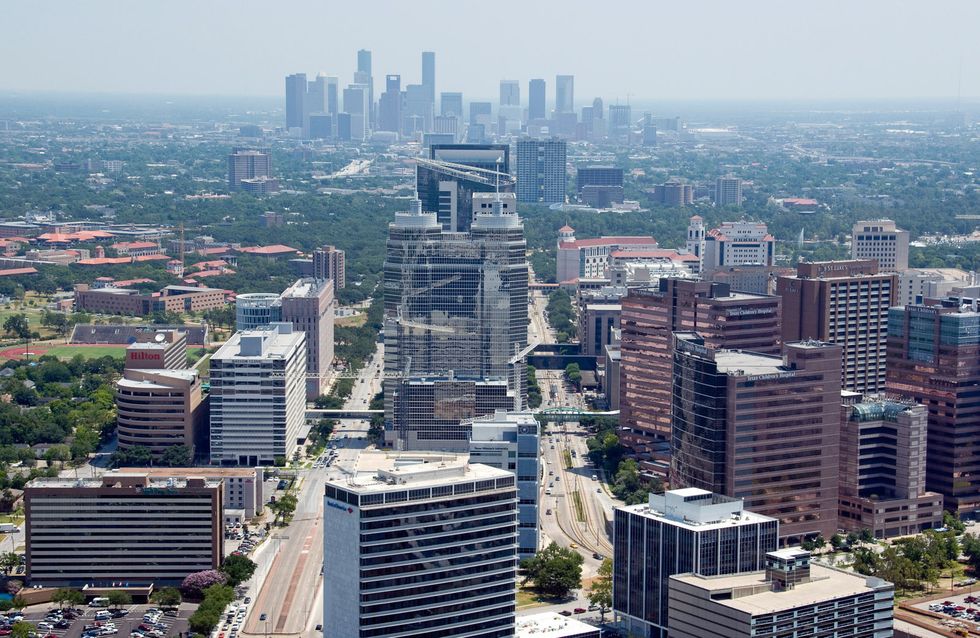
Here are the eight companies currently being accelerated by Texas Medical Center Innovation. Photo courtesy of TMC

The Texas Medical Center Innovation has named its new cohort of health tech companies it's currently accelerating.

This first batch of companies for 2024 was selected from last fall's TMC Bootcamp. Eight of the 10 startups from the bootcamp have moved on to the Accelerator for HealthTech.

"Hailing from diverse corners of the globe—from the tech corridors of Texas and California to Ireland and Australia—these companies converge with a shared mission—to move healthcare forward," Devin Dunn, head of the Accelerator for Health Tech, writes in a TMC blog post. "Through personalized mentorship and guidance, these eight companies are able to navigate complex challenges and refine their strategies, while leveraging the expertise of Texas Medical Center ecosystem to validate their innovations and drive real-world impact."

The selected companies include:

  • AcorAI, from Stockholm, Sweden, which is developing a first-of-its-kind, hand-held, scalable medical device for non-invasive intracardiac pressure monitoring to improve heart failure management for more than 64 million patients worldwide.
  • AirSeal, based in St. Louis, Missouri, which has developed a novel serum-based biomarker technology – circulating fatty acid synthase (cFAS) – that can diagnose cardiovascular and peripheral artery disease with high accuracy in both women and men.
  • Foxo, headquartered in Brisbane, Australia, serves as an interoperable tool designed to enhance clinical collaboration across the healthcare ecosystem. It enables secure, two-way communication with features such as video, voice, screen share, file sharing, and real-time messaging.
  • San Francisco-based Knowtex, an artificial intelligence-powered software writes medical documentation for you and assigns correct codes to ensure proper reimbursement.
  • NeuroBell, from Cork, Ireland, which is working on a novel medical device providing portable EEG monitoring with real-time and automated neonatal seizure alerts at the bedside.
  • Perth, Australia-based OncoRes Medical that's developing an intraoperative imaging technology to provide surgeons with real-time assessment of tissue microstructure.
  • From right here in Houston, Steradian Technologies, which has created RUMI, the first noninvasive, fully portable infectious disease diagnostic that costs the price of a latte. It uses novel photon-based detection to collect and diagnose infectious diseases in breath within 30 seconds.
  • TYBR, also based in Houston, created a flowable extracellular matrix hydrogel, crafted to safeguard healing tendons and ligaments from scarring and adhesions. The company originated from the TMCi’s Biodesign fellowship and now has entered into the Accelerator for HealthTech to sharpen its regulatory strategy, particularly in anticipation of FDA conversations.

Applications for the next Accelerator for HealthTech will open in May of this year.

Houston-based Steradian Technologies founder Asma Mirza took home third place at the annual awards. Photo by Natalie Harms/InnovationMap

Houston female-focused health tech pitch competition names top 3 startup founders

A female-focused pitch competition named its top health tech startups for the fifth year running.

Ignite Healthcare Network, a Houston nonprofit founded on the mission of supporting women in health care, hosted its annual Fire Pitch Competition on November 9 at the Ion, crowning the award recipients and doling out cash prizes.

This year, Ignite accelerated 19 female health tech founders through its program that connects entrepreneurs with mentors and industry professionals. The program concludes with a select number of finalists presenting at the Fire Pitch event.

This year, eight finalists presented at the competition for judges and an audience:

  • Suchismita Acharya, CEO of Fort Worth-based AyuVis, an immunotherapy platform that's developing treatments and prevention for inflammatory and infectious diseases, specifically of the lung, kidney, skin, eye, and sepsis.
  • Piyush Modak, co-founder, vice president of research and development of New Jersey-based EndoMedix, a technology platform developing engineered biosurgery devices that address clinical needs. The first device based on this platform is PlexiClotTM Absorbable Hemostat for brain and spinal surgery.
  • Somer Baburek, co-founder and CEO of San Antonio-based HERAbiotech, which is developing a non-surgical, molecular diagnostic test for endometriosis.
  • Melissa Bowley, founder of Flourish Care, a B2B health services platform and network addressing maternal health disparities and improve outcomes. The Boston company works with health systems and insurance companies..
  • Patty Lee, co-founder and CEO of Orbit Health, a Munich-based company that uses AI and sensor technologies to develop digital health solutions for the management of Parkinson's.
  • Tawny Hammett, chief revenue officer of New York-based Paloma Health, a patient-focused technology providing holistic approach to thyroid care all from the comfort of home.
  • Meghan Doyle, CEO and co-founder of Chicago-based Partum Health, a company focused on combining specialty reproductive care, including mental health, lactation, nutrition, physical therapy, birth doula support, and more.
  • Asma Mirza, CEO and co-founder of Houston-based Steradian Technologies, creator of the RUMI, a medical device that's providing diagnostic accessibility.

Ayse McCracken, founder and board chair of Ignite, and her partners presented several prizes and awards, including naming the winners — EndoMedix won first place, Hera Biotech secured second place, and Steradian Technologies was awarded third place.

In addition to naming the three top companies, the following prizes were doled out:

  • Memorial Hermann presented AyuVis with a certificate indicating interest in a potential partnership.
  • Golden Seeds awarded a $1,000 cash prize and three hours of mentoring to Steradian Technologies.
  • Texas Children's Hospital presented Flourish Care with a certificate indicating interest in a potential partnership.
  • Southwest-Midwest National Pediatric Device Innovation Consortium awarded Hera Biotech with $20,000.
  • Houston Methodist awarded each of the three top companies with mentorship from innovation leadership.
  • JLabs presented EndoMedix with a one-year virtual residency.
  • Donna Peters, founder of The Me Suite and mentor for Ignite, presented Hera Biotech with three coaching sessions.

Last year, Joanna Nathan, CEO of Houston-based Prana Thoracic, won the top award for her company. The company went on to raise a $3 million seed round.

Earlier this year, McCracken sat down with InnovationMap to share how she's grown the program over the past five years — and why she's so passionate about what she does.

"Having an impact in the health care industry and finding solutions is important to me," McCracken says on an episode of the Houston Innovators Podcast. "The second aspect of that is there are so many women in health care, and yet you don't see them in leadership roles."

Meet the latest global health tech startups to get an invite to Houston from TMC Innovation. Photo via tmc.edu

TMC names latest cohort of health tech startups for upcoming bootcamp

headed to Houston

The Texas Medical Center's innovation arm has again invited a set of health tech startups to mix and mingle with potential partners, investors, and customers in hopes to score a place in the HealthTech Accelerator.

For the 17th time, the TMC Innovation Factory is hosting its HealthTech Accelerator — starting first with announcing its bootcamp cohort, a process that includes bringing all 10 companies to Houston for valuable networking. A selection of the bootcamp will be invited into the full accelerator that will run into next spring.

The 10 selected companies with solutions from heart failure to chronic respiratory disease and more, according to TMC, include:

  • Acorai, from Stockholm, Sweden, which is developing a first-of-its-kind, hand-held, scalable medical device for non-invasive intracardiac pressure monitoring to improve heart failure management for more than 64 million patients worldwide.
  • Singapore-based Aevice Health, a connected care platform powered by the world’s smallest smart wearable stethoscope to support chronic respiratory disease patients through their continuum of care.
  • AirSeal, based in St. Louis, Missouri, which has developed a novel serum-based biomarker technology – circulating fatty acid synthase (cFAS) – that can diagnose cardiovascular and peripheral artery disease with high accuracy in both women and men.
  • Candlelit Care, a Charlotte, North Carolina-based point-of-care digital platform focused on the prevention of perinatal mental and anxiety disorders (PMADs) among Black women and birthing parents.
  • San Francisco-based Knowtex, an artificial intelligence-powered software writes medical documentation for you and assigns correct codes to ensure proper reimbursement.
  • NeuroBell, from Cork, Ireland, which is working on a novel medical device providing portable EEG monitoring with real-time and automated neonatal seizure alerts at the bedside.
  • Perth, Australia-based OncoRes Medical that's developing an intraoperative imaging technology to provide surgeons with real-time assessment of tissue microstructure.
  • From right here in Houston, Steradian Technologies, which has created RUMI, the first noninvasive, fully portable infectious disease diagnostic that costs the price of a latte. It uses novel photon-based detection to collect and diagnose infectious diseases in breath within 30 seconds.
  • Foxo, headquartered in Brisbane, Australia, serves as an interoperable tool designed to enhance clinical collaboration across the healthcare ecosystem. It enables secure, two-way communication with features such as video, voice, screen share, file sharing, and real-time messaging.
  • Thrive Health’s, from Vancouver, Canada, is a platform is a low-code framework for designing and delivering patient engagement solutions. Create tools that enable partners to close healthcare gaps quickly, strengthen care relationships, and improve patient experience and outcomes.

TMC Innovation's last bootcamp cohort was announced in May. The organization also recently named 16 digital health and medical device startups from the United Kingdom to a new accelerator formed in partnership with Innovate UK.

Earlier this fall, TMC formed a strategic partnership, or BioBridge, with the Netherlands.

Meet the female health tech founders being accelerated by Ignite Healthcare this year. Photo courtesy of Ignite

Houston health tech accelerator names annual cohort ahead of its pitch competition

female founders

Last month, a Houston organization dedicated to supporting female founders in health care kicked off its 2023 accelerator with cohort participants from across the country.

Ignite Healthcare Network, based in Houston, is a nonprofit founded on the mission of supporting women in health care. Ignite established its 12-week accelerator program to help advance and connect female health tech founders with mentors and potential clients as their startups scale.

"We have 19 founders doing great work, and we have them matched with three to four advisors helping to mentor them," Ayse McCracken, founder and board chair of Ignite tells InnovationMap. "We also have a virtual learning program, which is new this year, and we have two sessions of those a week."

The programming is curated to tackle the health tech industry's biggest topics and provide advice for a small group of engaged startups, McCracken explains. In its fifth year now, the program has a large group of partners that are involved.

"We've had 91 companies come through our program in the last fours years," McCracken says. "They've raised over $550 million."

The cohort concludes on November 9 with the Fire Pitch Competition at the Ion, where a handful of finalists — selected by Ignite's team of mentors — will present to win the top award.

This year's cohort includes:

  • Somer Baburek, CEO and co-founder of Hera Biotech
  • Sue Carr, president and founder of CarrTech Corp
  • Suchismita Acharya, CEO, chief strategy officer, and co-founder of AyuVis
  • Asma Mirza, CEO and founder of Steradian Technologies
  • J’Vanay Santos, CEO and founder of MyLÚA Health
  • Maureen Brown, CEO and co-founder of Mosie Baby
  • Elizabeth Friedman, president and founder of Safen Medical Products
  • Meghan Doyle, CEO and co-founder of Partum Health
  • Marina Tarasova, COO and co-founder of Paloma Health
  • Melissa Bowley, CEO and founder of Flourish Care
  • Molly Hegarty, CEO and founder of Junum
  • Patty Lee, CEO and co-founder of Orbit Health
  • Piyush Modak, Vice President of R&D and co-founder of EndoMedix
  • Debbie Chen, CEO and founder of Hydrostasis
  • Rachael Grimaldi, CEO and co-founder of CardMedic
  • Rachna Dhamija, CEO of Ejenta
  • Carolyn Treviño Jenkins, CEO and co-founder of We Are Here
  • Lyn Markey, CEO and co-founder of XTremedy
  • Camille O’Malley, CTO and co-founder of XTremedy
Last year, Joanna Nathan, CEO of Houston-based Prana Thoracic, won the top award for her company.
Innovative shoewear, luxury EV charging, and more — all this innovation and more is coming out of Houston startups. Courtesy photos

Top 5 Houston startup feature stories of 2022

year in review

Editor's note: As 2022 comes to a close, InnovationMap is looking back at the year's top stories in Houston innovation. This past year, InnovationMap featured profiles on dozens of these Houston startups — from sportstech apps and health tech companies to startups with solutions in EV tech and more. Here are five Houston startup features that stood out to readers this year — be sure to click through to read the full story.

Houston-based health tech startup is revolutionizing patient selection for clinical trials

Sieve Health is an AI cloud-based SaaS platform designed to automate and accelerate matching patients with clinical trials. Photo via Getty Images

On many occasions in her early career, Dr. Arti Bhosale, co-founder and CEO of Sieve Health, found herself frustrated with having to manually sift through thousands of digital files.

The documents, each containing the medical records of a patient seeking advanced treatment through a clinical trial, were always there to review — and there were always more to read.

Despite the tediousness of prescreening, which could take years, the idea of missing a patient and not giving them the opportunity to go through a potentially life-altering trial is what kept her going. The one she didn’t read could have slipped through the cracks and potentially not given someone care they needed.

“Those stories have stayed with me,” she says. “That’s why we developed Sieve.” Read more.

Houston startup snags prestigious grant from global health leader

Houston-based medical device and biotech startup Steradian Technologies has been recognized by the Bill and Melinda Gates Foundation. Photo by Dwight C. Andrews/Greater Houston Convention and Visitors Bureau

A female-founded biotech startup has announced that it has received a grant from the Bill & Melinda Gates Foundation.

Steradian Technologies has developed a breath-based collection device that can be used with diagnostic testing systems. Called RUMI, the device is non-invasive and fully portable and, according to a news release, costs the price of a latte.

“We are extremely honored to receive this award and be recognized by the Bill & Melinda Gates Foundation, a leader in global health. This funding will propel our work in creating deep-tech diagnostics and products to close the equity gap in global public health," says Asma Mirza, CEO and co-founder of Steradian Technologies, in the release. “The RUMI will demonstrate that advanced technology can be delivered to all areas of the world, ensuring the Global South and economically exploited regions receive access to high-fidelity diagnostics instead of solutions that are ill-suited to the environment.” Read more.

Houston sports tech startup is enhancing performance metrics for runners and athletes

Houston-based AiKYNETIX is equipping runners with high-tech tracking tools. Image courtesy of AiKYNETIX

With the Houston Marathon only five months away, a new application using human motion insights could help a runner refine their form to reach peak performance – all from the convenience of their smart phone.

While traditional treadmills are limited in training feedback and wearables are not designed to track elevation, Houston-based AiKYNETIX uses real-time technology to provide a new option for runners on treadmills.

“Runners spend a lot of time, energy and money to run better,” says Denis Akhiyarov, CEO and co-founder. “In my personal life with training for nine marathons, I’ve seen limitations with wearables, they don’t actually track running form while running. Overall, our technology tracks not only your basic parameters but it can also analyze the human running form while in motion.” Read more.

Local startup to upgrade EV charging in Houston and beyond

Houston-based Spark Spaces is looking to build out luxury spots for electric vehicle charging. Rendering courtesy of Spark Spaces

At 3 a.m. one night, just as he had many nights before, Tarun Girish found himself leaving his Houston apartment in search of an EV charger.

Once he located one, he would sit in his car for an hour and a half while his vehicle charged — with not much to do but wait.

But it was on this night he wondered if there was a way to use his previous hospitality experience to build a new kind of experience for EV drivers. He then developed his first iteration of a business plan — all while sitting in his driver’s seat.

His idea became Sparks Spaces, a startup formed in 2021 looking to shake up the EV charging game — the company aims to elevate the experience of charging electric vehicles by focusing on the space between car and charger by creating an airport lounge-type space for drivers. These EV lounges would include luxury waiting areas, clean restrooms, high-end food options, and availability to utilize them 24/7. Read more.

Houston neuroscientist turned startup founder takes steps toward comfier shoes

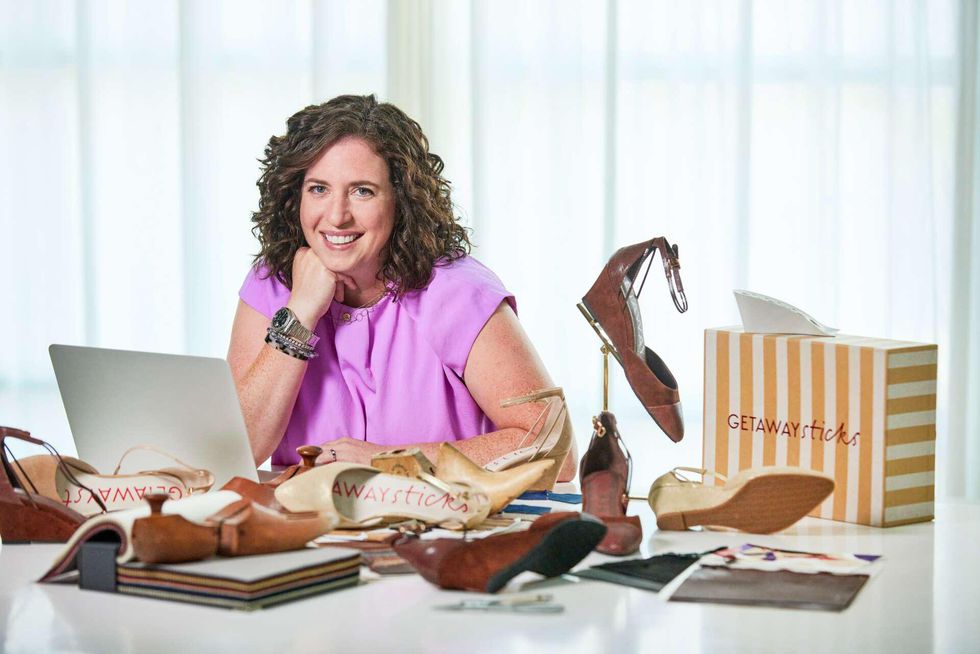
Steffie Tomson founded a company to prioritize comfort — without sacrificing style — for women on the go. Photo via getawaysticks.com

Two and half years ago, native Houstonian Steffie Tomson ordered $2,000 worth of shoes and sliced them all in half with a bandsaw just to see what was inside.

Tomson, a neuroscientist by trade and the founder and CEO of footwear startup Getaway Sticks, had an idea for a different kind of shoe — one that was redesigned to prioritize women’s comfort.

“I thought, ‘why can’t we start with a sneaker material and then build a heel around it?’” she tells InnovationMap. “I started just slicing everyone else’s shoes and now I’m more convinced than ever that our shoe is different.” Read more.

The 2022 Houston Innovation Awards revealed its big winners across 11 categories. Photos courtesy

InnovationMap, HX reveal winners from 2022 Houston Innovation Awards Gala

and the winners are...

That's a wrap on the Houston Innovation Awards Gala. InnovationMap and Houston Exponential announced the winners of the 2022 awards that celebrated Houston's booming innovation ecosystem, and 11 startups and individuals walked away with the awards.

The event, held November 9 at the Ion, honored all 43 finalists as well as Trailblazer Award recipient, Blair Garrou, managing director and founder of Houston-based venture capital firm Mercury. Click here to read about all the finalists.

Eight judges evaluated over 150 companies and individuals across 11 categories for the 2022 Houston Innovation Awards. This year's judges included Carolyn Rodz, founder and CEO of Hello Alice; Wogbe Ofori, founder of Wrx Companies; Scott Gale, executive director of Halliburton Labs; Ashley Danna, senior manager of regional economic development of Greater Houston Partnership; Kelly McCormick, professor at the University of Houston; Paul Cherukuri, vice president of innovation at Rice University; Lawson Gow, CEO of Houston Exponential; and Natalie Harms, editor of InnovationMap.

Without further adieu, here the winners from the 2022 Houston Innovation Awards.

BIPOC-Founded Business: Steradian Technologies

The winner for the BIPOC-Founded Business category, honoring an innovative company founded or co-founded by BIPOC representation, is: Steradian Technologies, a health tech startup that uses deep-photonics technology to diagnose respiratory diseases in seconds, all for the price of a latte.

Female-Founded Business: Sesh Coworking

The winner for the Female-Founded Business category, honoring an innovative company founded or co-founded by a woman, is: Sesh Coworking, a women and genderqueer inclusive coworking and community.

Hardtech Business: Fluence Analytics

The winner for the Hardtech Business category, honoring an innovative company developing and commercializing a physical technology across life science, energy, space, and beyond, is: Fluence Analytics, real-time analytics solution that optimizes processes and provides novel insights into material properties that enable customers to increase yields, improve product quality, and reduce costs.

B2B Software Business: Liongard

The winner for the B2B Software Business category, honoring an innovative company developing and programming a digital solution to impact the business sector, is: Liongard — software company that unlocks the intelligence hidden deep within IT systems to give MSPs an operational advantage that delivers both higher profits and an exceptional customer experience.

Green Impact Business: Cemvita Factory

The winner for the Green Impact Business category, honoring an innovative company providing a solution within renewables, climatetech, clean energy, alternative materials, and beyond, is: Cemvita Factory, a biotech company that uses a sustainable, economical, nature-inspired approach to empower companies with sustainable products and environmental technologies to decrease their carbon footprint, reverse climate change, and create a brighter future for the planet.

Smart City Business: Sensytec

The winner for the Smart City Business category, honoring an innovative company providing a tech solution within transportation, infrastructure, data, and beyond, is: Sensytec, an IoT Solutions platform that expedites and enhances concrete construction operations.

New to Hou Business: Venus Aerospace

The winner for the New to Hou Business category, honoring an innovative company, accelerator, or investor that has relocated its primary operations to Houston within the past three years, is: Venus Aerospace, the creator of a hypersonic spaceplane capable of one-hour global travel.

DEI Champion: Loretta Williams Gurnell

The winner for the DEI Champion category, honoring an individual who is leading impactful diversity, equity, and inclusion initiatives and progress within Houston and their organization, is: Loretta Williams Gurnell, founder of SUPERGirls SHINE Foundation.

Mentor of the Year: Kara Branch

The winner for the Mentor of the Year category, honoring an individual who dedicates their time and expertise to guide and support to budding entrepreneurs, is: Kara Branch, founder and CEO of Black Girls Do Engineer Corp. and developer and manager at Intel Corp.

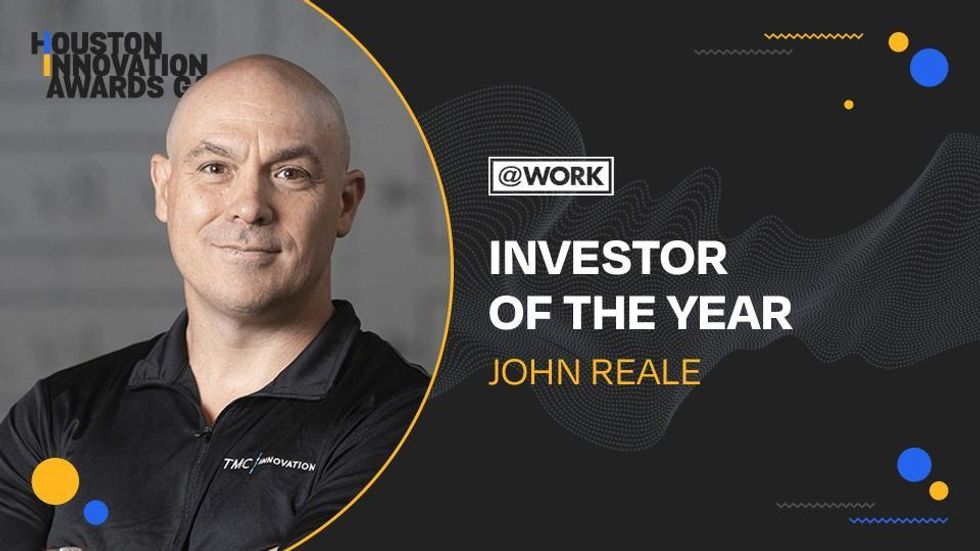
Investor of the Year: John "JR" Reale

The winner for the Investor of the Year category, honoring an individual who is leading venture capital or angel investing, is: John (JR) Reale, managing director of Integr8d Capital and venture lead of the Texas Medical Center Venture Fund

People's Choice (Startup of the Year): Milkify

The winner for the People's Choice: Startup of the Year category, selected via an interactive voting portal during of the event, is: Milkify — creator of patent-pending process to freeze-dry breast milk into a powder that is easy to use and transport and lasts for three years on the shelf.

Ad Placement 300x100
Ad Placement 300x600

CultureMap Emails are Awesome

Aegis Aerospace appoints Houston space leader as new president

moving up

Houston-based Aegis Aerospace's current chief strategy officer, Matt Ondler, will take on the additional role of president on Jan. 1. Ondler will succeed Bill Hollister, who is retiring.

“Matt's vision, experience, and understanding of our evolving markets position us to build on our foundation and pursue new frontiers,” Stephanie Murphy, CEO of Aegis Aerospace, said in a news release.

Hollister guided Aegis Aerospace through expansion and innovation in his three years as president, and will continue to serve in the role of chief technology officer (CTO) for six months and focus on the company's technical and intellectual property frameworks.

"Bill has played an instrumental role in shaping the success and growth of our company, and his contributions leave an indelible mark on both our culture and our achievements," Murphy said in a news release.

Ondler has a background in space hardware development and strategic leadership in government and commercial sectors. Ondler founded subsea robots and software company Houston Mechatronics, Inc., now known as Nauticus Robotics, and also served as president, CTO and CSO during a five-year tenure at Axiom Space. He held various roles in his 25 years at NASA and was also named to the Texas Aerospace Research and Space Economy Consortium Executive Committee last year.

"I am confident that with Matt at the helm as president and Bill supporting us as CTO, we will continue to build on our strong foundation and further elevate our impact in the space industry," Murphy said in a news release. "Matt's vision, experience, and understanding of our evolving markets position us to build on our foundation and pursue new frontiers."

Rice University launches new center to study roots of Alzheimer’s and Parkinson’s

neuro research

Rice University launched its new Amyloid Mechanism and Disease Center last month, which aims to uncover the molecular origins of Alzheimer’s, Parkinson’s and other amyloid-related diseases.

The center will bring together Rice faculty in chemistry, biophysics, cell biology and biochemistry to study how protein aggregates called amyloids form, spread and harm brain cells. It will serve as the neuroscience branch of the Rice Brain Institute, which was also recently established.

The team will work to ultimately increase its understanding of amyloid processes and will collaborate with the Texas Medical Center to turn lab discoveries into real progress for patients. It will hold its launch event on Jan. 21, 2026, and hopes to eventually be a launchpad for future external research funding.

The new hub will be led by Pernilla Wittung-Stafshed, a Rice biophysicist and the Charles W. Duncan Jr.-Welch Chair in Chemistry.

“To make a real difference, we have to go all the way and find a cure,” Wittung-Stafshede said in a news release. “At Rice, with the Amyloid Mechanism and Disease Center as a catalyst, we have the people and ideas to open new doors toward solutions.”

Wittung-Stafshede, who was recruited to Rice through a Cancer Prevention and Research Institute of Texas grant this summer, has led pioneering work on how metal-binding proteins impact neurodegenerative disorders, including Alzheimer’s and Parkinson’s diseases. Her most recent study, published in Advanced Science, suggests a new way of understanding how amyloids may harm cells and consume the brain’s energy molecule, ATP.

According to Alzheimer’s Disease International, neurodegenerative disease cases could reach around 78 million by 2030 and 139 million by 2050. Wittung-Stafshede’s father died of dementia several years ago.

“This is close to my heart,” Wittung-Stafshede added in the news release. “Neurodegenerative diseases such as dementia, Alzheimer’s and Parkinson’s are on the rise as people live longer, and age is the largest risk factor. It affects everyone.”

This Houston airport saw sharp passenger decline in 2025, study shows

Travel Talk

A new global airport travel study has revealed passenger traffic at Houston's William P. Hobby Airport (HOU) sharply decreased from 2024 to 2025.

The analysis from travel magazine LocalsInsider examined recently released data from the Bureau of Transportation Statistics (BTS), the U.S. International Trade Association, and a nationwide survey to determine the following American traveler habits: The most popular U.S. and international destinations, emerging hotspots, and destinations on the decline. The study covered passenger travel trends from January through July 2025.

In the report's ranking of the 40 U.S. airports with the sharpest declines in passenger traffic, HOU ranked 13th on the list.

About 4.26 million arrivals were reported at HOU from January through July 2024, compared to about 3.96 million during the same seven-month period in 2025. According to the data, that's a significant 7.1 percent drop in passenger traffic year-over-year, or a loss of 300,974 passengers.

"As travelers chase new hotspots, some destinations are seeing reduced passenger traffic whether due to rising costs, shifting airline schedules, or evolving traveler preferences, some destinations are seeing a decrease in visitors," the report's author wrote.

It appears most major Texas airports had drops in passenger traffic from 2024 to 2025. Dallas Love Field Airport (DAL) saw the worst in the state, with a dramatic 7.4 percent dip in arrivals. DAL also ranked 11th on the list of U.S. airports with the steepest declines in passenger traffic.

More than 5.13 million arrivals were reported at DAL from January through July 2024, compared to over 4.75 million during the same seven-month period in 2025.

This is how passenger traffic has fallen at other major Texas airports from 2024 to 2025:

Austin-Bergstrom International Airport (AUS):

  • 6,107,597 – Passenger arrivals from January to July 2024
  • 5,828,396 – Passenger arrivals from January to July 2025
  • -4.6 percent – Year-over-year passenger change
Dallas/Fort Worth International Airport (DFW):
  • 23,830,017 – Passenger arrivals from January to July 2024
  • 23,251,302 – Passenger arrivals from January to July 2025
  • -2.4 percent – Year-over-year passenger change

San Antonio International Airport (SAT):

  • 2,937,870 – Passenger arrivals from January to July 2024
  • 2,836,774 – Passenger arrivals from January to July 2025
  • -3.4 percent – Year-over-year passenger change
El Paso International Airport (ELP):
  • 1,094,431 – Passenger arrivals from January to July 2024
  • 1,076,845 – Passenger arrivals from January to July 2025
  • -1.6 percent – Year-over-year passenger change
---

This story originally appeared on CultureMap.com.