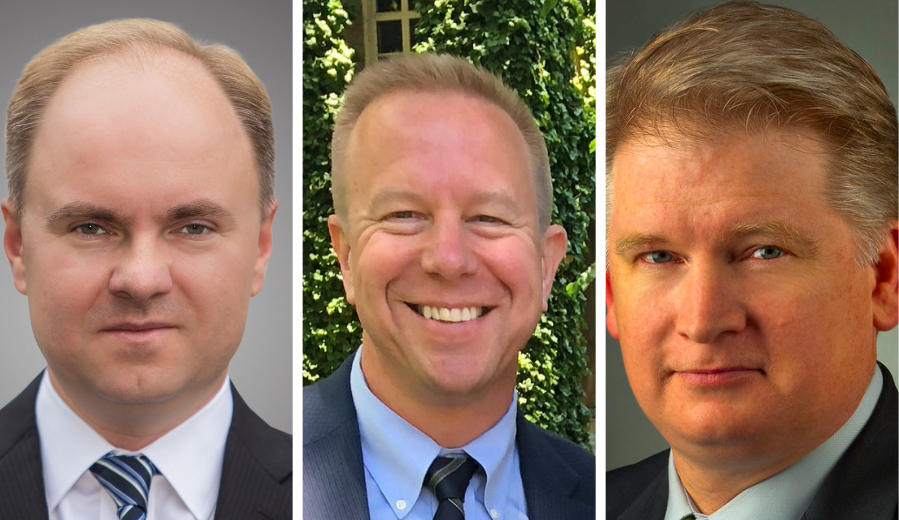
A growing digital home sales platform has moved into town. Courtesy photo

Digital home buying and selling tool expands to Houston market
Real estate tech

A Phoenix-based real estate company has expanded to the Houston market and opened a new office in town.

First launched in 2015, Offerpad is a tech-enabled home buying and selling solution. As of October, Offerpad had expanded to 534 cities with access to an estimated 6.7 million home-owning households.

The company is what's known as an iBuyer — a type of investor that uses automated valuation models, or AVMs, and other technology to quickly turn around offers on homes to sellers and then resell them to home buyers. The process tends to be quicker and higher tech than the normal home selling and buying process.

Offerpad previously had expanded into Dallas before launching in Houston on January 15. It's the first expansion in 2019 — a year that's poised to be full of growth for the company, the press release says.

"The company has a very concentrated vision to bring our real estate solutions to millions more people this year," Trent Capps, Offerpad's regional market director focused on Texas, says in the release. "Our start in Texas, with Dallas-Fort Worth, has far and away exceeded our expectations and we anticipate the same for our other Texas markets. In Houston, we began receiving home offer requests weeks ago, so we foresee huge success there, as well as in San Antonio later in the quarter."

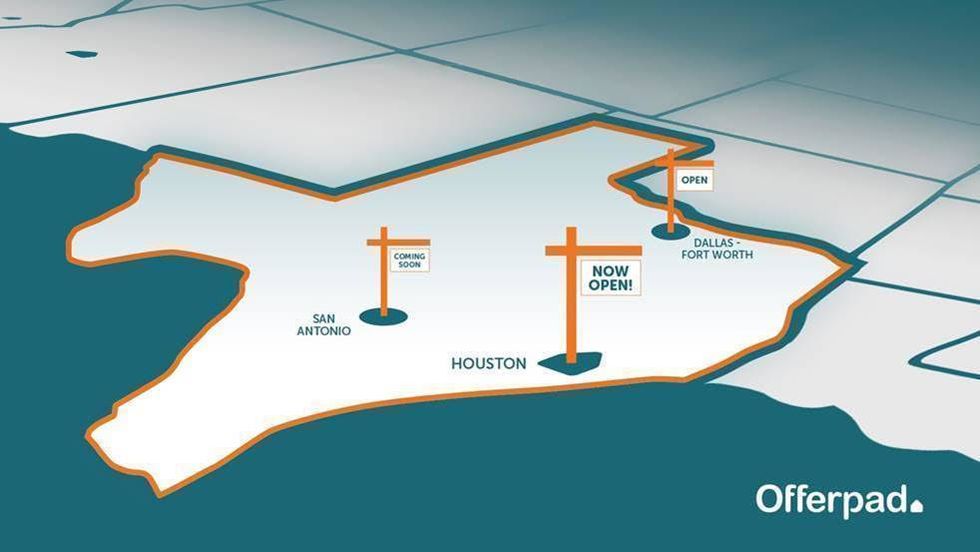
The new local office is located in The Woodlands and serves 86 cities within the Houston area including Bellaire, Pearland, Sugar Land, Seabrook, and Friendswood. San Antonio is the next Texas market Offerpad is headed for.

"Dallas, Houston, and San Antonio are all cities we've had intentions of offering our service in," Founder and CEO Brian Bair says in the release. "I'm confident that Texans are going to value the solutions we've developed to the once complicated and stressful process of selling a home."

Graphic courtesy of Offerpad

Ad Placement 300x100
Ad Placement 300x600

CultureMap Emails are Awesome

Rice student startup lands $1.85M to launch medical drone network

critical cargo

Students at Rice University have developed a medical cargo drone transport system to help deliver sensitive medical supplies and improve mobile healthcare efforts.

Haast Autonomous is the brainchild of graduating seniors Ege Halac, Jason Chen and Santiago Brent, who got their venture idea off the ground with help from the Liu Idea Lab for Innovation and Entrepreneurship (Lilie) Summer Venture Studio. The founders have developed the prototype at Rice’s Oshman Engineering Design Kitchen (OEDK) with fellow Rice researchers Felix Hasson, Ethan Javedan, Kenna Sanders and Caden Schmidt.

The startup has raised $1.85 million in pre-seed funding, according to Rice. The founders plan to focus on Haast full-time following graduation. They said they aim to launch pilot trials in 2027 and head to market later that year.

“We need better alternatives for a fast, safe and on-demand system of transport for life-critical cargo,” Halac said in a news release from Rice.

The Haast team has developed a custom aircraft with software that manages dispatch, routes, and chain of custody to assist in how materials move between sites in centralized medical systems. Generally, the transportation of medical supplies and materials between facilities and points of care relies on ground shipping or expensive air transport.

Haast Autonomous’ aircraft can take off and land vertically, and is designed around a mission profile of 50 to 62 miles. It can carry a payload of at least 5 pounds, with future versions intended to scale up in size. It also includes a built-in payload bay that regulates temperature, pressure, vibration and tilt to protect sensitive contents such as patient samples, antivenom or poisoning kits and radioligands or other therapies, according to Rice.

At first, the company envisioned the mission to be centered around transplants, but saw the product being best suited for a variety of operations.

“What we realized is that the platform we are building is suited for medicine, but it really underlies a much larger problem of mission-critical transport across industries,” Brent added in the news release. “We are building the fastest, most secure logistics chain for the world’s most sensitive cargo.”

Haast Autonomous was recognized at the 2026 Oshman Engineering Design Showcase and Competition, where it won Best Aerospace or Transportation Technology. It also performed well in the 2026 Napier Rice Launch Challenge.

In the future, Haast Autonomous plans to deploy a fleet of aircraft. The software will be designed to assist hospitals in requesting flights and tracking deliveries in real time.

“The drone is only part of the solution,” Chen also added in the release. “What matters is moving something from point A to point B in a way that fits into how hospitals already operate.”

Houston scientist wins prestigious Pew Scholar award for brain cancer research

standout scholar

Christina Tringides, an assistant professor of materials science and nanoengineering at Rice University, is one of 21 scientists to win a prestigious Pew Biomedical Scholar award.

She is the first faculty member from Rice to win the distinction, which provides $300,000 over four years for advances in biomedicine, according to the university. The awards are granted to researchers who are in the first few years at the assistant professor level.

In Tringides’ case, the funding will support her innovative new method of modeling glioblastoma, a common and extremely aggressive form of brain cancer. Thanks to producing its own blood supply, glioblastoma spreads quickly, weaving tendrils of blighted tissue throughout the brain. Because of this, surgery is difficult and conventional therapies ineffective.

Understanding the way glioblastoma spreads is crucial to the search for a cure. Tringides is using hydrogels that mimic the brain’s extracellular matrix. Using cultures and a microscopic labyrinth, her team can see how the cancer spreads, bonds with neurons and changes cell wall activity. Essentially, Tringides has devised an intelligence test for tumors in hopes of learning how to outsmart them.

“As cancer crawls through the maze, we can look at how it is interacting with the neurons more and more, and measure how electrical activity is changing as a result,” she said in a news release from Rice.

Examining how cancer cells grow can reveal which conditional changes slow them down. Finding ways to alter the structure of brain matter in a way that makes it inhospitable to the cancer could lead to therapies that would impede growth or even reverse it. Using her custom-made ersatz brain maze makes it easier to observe changes than it would be in a patient’s brain.

“Imaging synapses is time-intensive ⎯ it can involve large data files that are hard to visualize, but if we know that the only place where we might have a synapse is this tiny 1-by-4-by-10 micron channel, it makes it much faster and reliable to image them,” Tringides said.

Born in Ames, Iowa, Tringides received her doctorate in biophysics from Harvard before joining Rice in 2024 through a Cancer Prevention and Research Institute of Texas (CPRIT) recruitment award.

Her research was also one of the first four projects to receive research awards through the Rice Brain Institute and TMC Neuro Collaboration Seed Grant Program.

Texas residents earn 11th highest income in U.S., says 2026 study

Money Matters

A new WalletHub study comparing income disparities across America has ranked Texas residents No. 11 on the list of states with the highest earning residents in the nation.

The report, "States Where People Have the Highest Income (2026)," analyzed U.S. Census Bureau income data in all 50 states and the District of Columbia. The report evaluated the average annual income of the top five percent, the median annual household income, and the average annual income of the bottom 20 percent of residents in every state, all adjusted for the cost of living.

The report's data revealed the top five percent of Texans, the highest earners, make $520,378 on average yearly after adjusting for the cost of living. That's the seventh-highest income among the top five percent of earners nationwide.

Meanwhile, the median annual income of a Texas household is just under $76,000. The bottom 20 percent of Texas residents make $17,651 a year, the report found.

For additional context, the latest data from the Federal Reserve shows an American household's median yearly income is about $83,700. WalletHub analyst Chip Lupo also found that the highest earning 10 percent of individuals in the U.S. earn over 12 times more than those in the lowest-earning 10 percent, based on the latest Census data.

"By measuring the income of various percentiles against a state's median income, we can better identify where income disparities are more prevalent, which could help us better understand why residents of certain states struggle more to make ends meet," said Lupo.

Virginia is the state where residents earn the highest income in the U.S., WalletHub said. Based on the report's findings, the top five percent of Virginians make $545,097 on average per year after adjusting for the cost of living. The median annual income of a Virginia household comes out to $95,339, and the bottom 20 percent of residents make $19,671 annually on average.

Conversely, West Virginia is the state where people have the lowest income in the U.S. A West Virginia household makes a median annual income of $56,610, the third-lowest nationally, and the bottom 20 percent of residents make $13,260 on average per year, which is the fifth-lowest in the nation. The top five percent of West Virginians make $372,218 on average per year.

The top 10 states where residents have the highest income are:

  • No. 1 – Virginia
  • No. 2 – New York
  • No. 3 – New Jersey
  • No. 4 – Washington
  • No. 5 – Connecticut
  • No. 6 – Utah
  • No. 7 – Colorado
  • No. 8 – Minnesota
  • No. 9 – Illinois
  • No. 10 – Massachusetts

---

This article originally appeared on CultureMap.com.