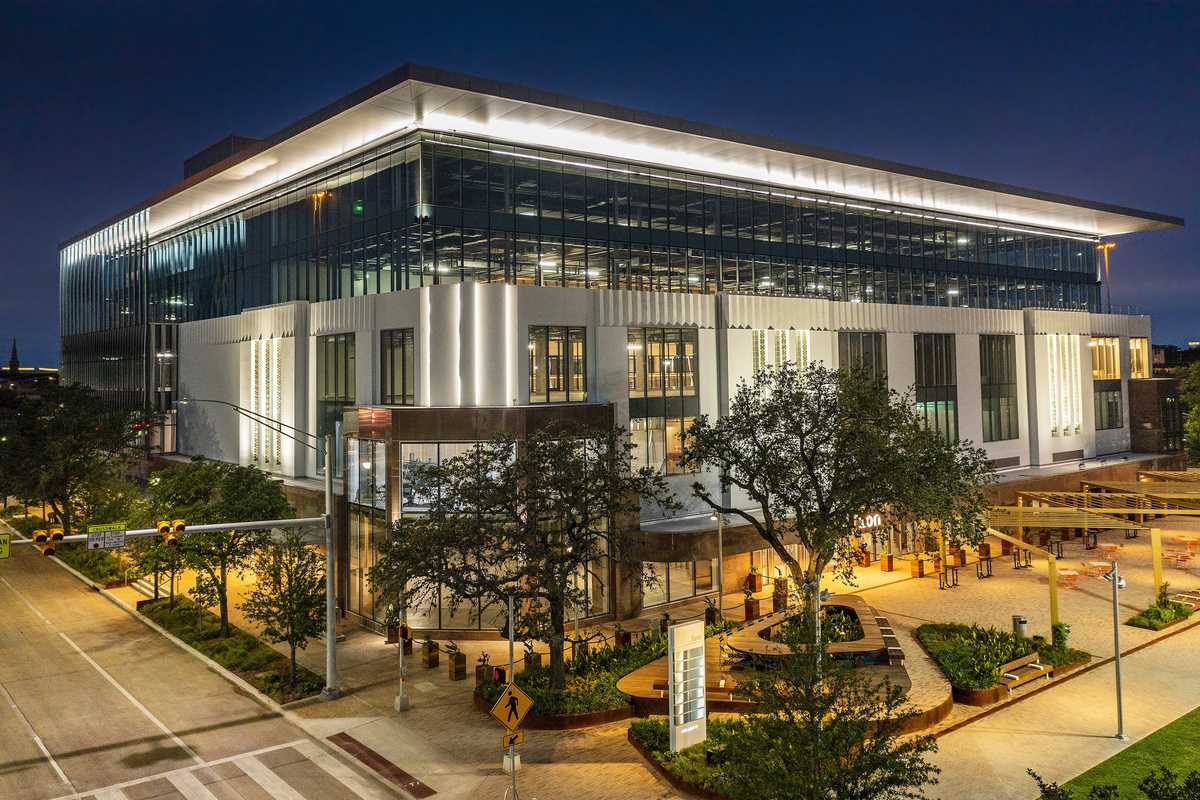
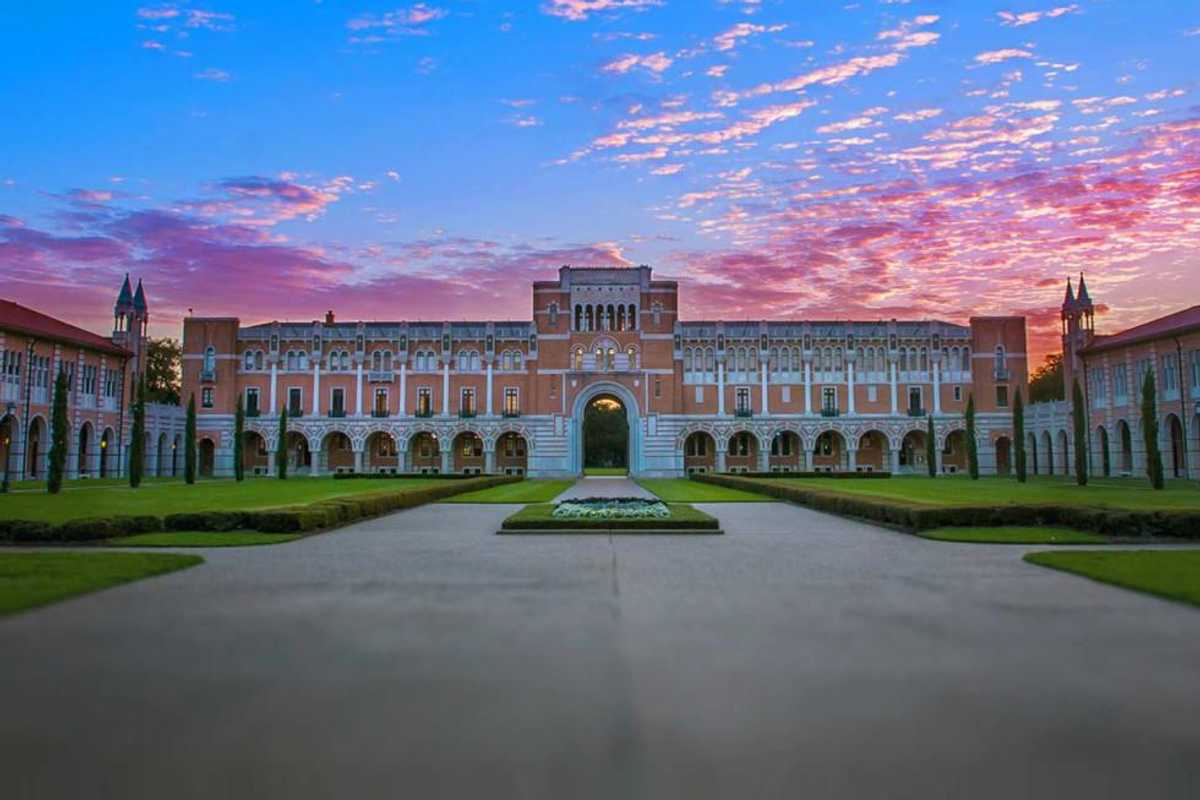
Here's what student teams from around the world were invited to compete in the Rice Business Plan Competition. Photo via rice.edu

Rice Alliance for Technology and Entrepreneurship has named the 42 student startup teams that were extended invitations to compete in the 23rd annual Rice Business Plan Competition

The 2023 startup competition will take place on Rice University campus May 11 to 13, and the teams representing 37 universities from six countries will pitch to investors, mentors, and other industry leaders for the chance to win funding and prizes. Last year's RBPC doled out nearly $2 million in investment prizes.

This year, Rice saw its largest number of student startups applying for the RBPC internal qualifier from within campus. The university selected three to move on to compete at RBPC in May — Sygne Solutions, Neurnano Therapeutics, and Tierra Climate, which also received a total of $5,000 in cash prizes to these top three teams.

The 2023 RBPC will focus on five categories: energy, cleantech and sustainability; life science and health care solutions; consumer products and services; hard tech; and digital enterprise.

This invited companies, if they attend, will join the ranks of the 784 teams that previously competed in RBPC and have raised more than $4.6 billion in capital, as well as seen more than 50 successful exits including five IPOs.

The 2023 Rice Business Plan Competition invitees, according to Rice University's news release:

  • Active Surfaces, Massachusetts Institute of Technology
  • Adrigo Insights, Saint Mary’s University (Canada)
  • AirSeal, Washington University in St. Louis
  • Algbio, Yeditepe University (Turkey)
  • Arch Pet Food, University of Chicago
  • Astria Biosciences, University of Pittsburgh
  • Atma Leather, Yale University
  • Atop, UCLA
  • Biome Future, University of Florida
  • BioSens8, Boston University
  • BlueVerse, Texas Tech University
  • Boardible, Northwestern University
  • Boston Quantum, Massachusetts Institute of Technology
  • ceres plant protein cereal, Tulane University
  • Citrimer, University of Michigan
  • Dart Bioscience, University of Oxford (United Kingdom)
  • DetoXyFi, Harvard University
  • E-Sentience, Duke University
  • Edulis Therapeutics, Carnegie Mellon University
  • FluxWorks, Texas A&M University
  • Integrated Molecular Innovations, Michigan Technological University
  • Inzipio, RWTH Aachen University (Germany)
  • LoopX AI, University of Waterloo (Canada)
  • Magnify Biosciences, Carnegie Mellon University
  • MiraHeart, Johns Hopkins University
  • MyLÚA, Cornell University
  • Outmore Living, University of Texas
  • Pathways, Harvard University
  • Pediatrica Therapeutics, University of Arkansas
  • Perseus Materials, Stanford University
  • Pike Robotics, University of Texas
  • Quantanx, Arizona State University
  • Sheza, San Diego State University
  • Skali, Northwestern University
  • Sundial Solar Components, University of Utah
  • Thryft Ship, University of Georgia
  • Tierra Climate, Rice University
  • TrashTrap Sustainability Solutions, Visvesvaraya Technological University (India)
  • Unchained, North Carolina A&T State University
  • Unsmudgeable, Babson College
  • Vivicaly, University of Pennsylvania
  • Zaymo, Brigham Young University
Ad Placement 300x100
Ad Placement 300x600

CultureMap Emails are Awesome

Rice scientist earns $600K NSF award to study distractions in digital age

fresh funding

Rice University psychologist Kirsten Adam has received a $600,000 National Science Foundation CAREER Award to research how visual distractions like phone notifications, flashing alerts, crowded screens and busy workspaces can negatively impact focus—and how the brain works to try to regain it.

The highly competitive five-year NSF grants are given to career faculty members with the potential to serve as academic models and leaders in research and education. Adam’s work will aim to clarify how the brain refocuses in the age of screens, instant gratification and other lingering distractions. The funding will also be used to train graduate students in advanced cognitive neuroscience methods, expand access to electroencephalography (EEG) and for public data sharing.

“Kirsten is a valued member of the School of Social Sciences, and we are thrilled that she has been awarded the prestigious NSF CAREER,” Rachel Kimbro, dean of social sciences, said in a news release. “Because distractions continue to increase all around us, her research is timely and imperative to understanding their widespread impacts on the human brain.”

In Adam’s lab, participants complete simplified visual search tasks while their brain activity is recorded using EEG, allowing researchers to measure attention shifts in real time. This process then captures the moment attention is drawn from a goal and how much effort it takes to refocus.

According to Rice, Adam’s work will test long-standing theories about distraction. The research is meant to have real-world implications for jobs and aspects of everyday life where attention to detail is key, including medical imaging, airport security screening and even driving.

“At any given moment, there’s far more information in the world than our brains can process,” Adam added in the release. “Attention is what determines what reaches our awareness and what doesn’t.”

Additionally, the research could inform the design of new technologies that would support focus and decision-making, according to Rice.

“We’re not trying to make attention limitless,” Adam added. “We’re trying to understand how it actually works, so we can stop designing environments and expectations that fight against it.”

12 Houston climatetech startups join Greentown Labs' growing incubator

Startup Talk

More than 40 climatetech startups joined the Greentown Labs Houston community in the second half of 2025, 12 of which hail from the Bayou City.

The companies are among a group of nearly 70 total that joined the climatetech incubator, which is co-located in Houston and Boston, in Q3 and Q4.

The new companies that have joined the Houston incubator specialize in a variety of clean energy applications, from green hydrogen-producing water-splitting cycles to drones that service wind turbines.

The local startups that joined Greentown Houston include:

  • Houston-based Wise Energie, which delivers turnkey microgrids that blend vertical-axis wind, solar PV, and battery storage into a single, silent system.
  • The Woodlands-based Resollant, which is developing compact, zero-emissions hydrogen and carbon reactors to provide low-cost, scalable clean hydrogen and high-purity carbon for the energy and manufacturing sectors.
  • Houston-based ClarityCastle, which designs and manufactures modular, soundproof work pods that replace traditional drywall construction with reusable, low-waste alternatives made from recycled materials.
  • Houston-based WattSto Energy, which manufactures vanadium redox flow batteries to deliver long-duration storage for both grid-scale projects and off-grid microgrids.
  • Houston-based AMPeers, which delivers advanced, high-temperature superconductors in the U.S. at a fraction of traditional costs.
  • Houston-based Biosimo, which is developing bio-based platform chemicals, pioneering sustainable chemistry for a healthier planet and economy.
  • Houston-based Ententia, which offers purpose-built, generative AI for industry.
  • Houston-based GeoKiln Energy Innovation, which is developing a new way to produce clean hydrogen by accelerating natural geologic reactions in iron-rich rock formations using precision electrical heating.
  • Houston-based Timbergrove, which builds AI and IoT solutions that connect and optimize assets—boosting visibility, safety, and efficiency.
  • Houston-based dataVediK, which combines energy-domain expertise with advanced machine learning and intelligent automation to empower organizations to achieve operational excellence and accelerate their sustainability goals.
  • Houston-based Resonant Thermal Systems, which uses a resonant energy-transfer (RET) system to extract critical minerals from industrial and natural brines without using membranes or grid electricity.
  • Houston-based Torres Orbital Mining (TOM),which develops autonomous excavation systems for extreme environments on Earth and the moon, enabling safe, data-driven resource recovery and laying the groundwork for sustainable off-world industry.

Other startups from around the world joined the Houston incubator in the same time period, including:

More than 100 startups joined Greentown this year, according to an end-of-year reflection shared by Greentown CEO Georgina Campbell Flatter.

Flatter joined Greentown in the top leadership role in February 2025. She succeeded former CEO and president Kevin Knobloch, who stepped down in July 2024.

"I moved back to the United States in March 2025 after six years overseas—2,000 miles, three children, and one very patient husband later. Over these months, I’ve had the chance to hear from the entrepreneurs, industry leaders, investors, and partners who make this community thrive. What I’ve experienced has left me brimming with urgent optimism for the future we’re building together," she said in the release.

According to Flatter, Greentown alumni raised more than $2 billion this year and created more than 3,000 jobs.

"Greentown startups and ecosystem leaders—from Boston, Houston, and beyond—are showing that we can move further and faster together. That we don’t have to choose between more energy or lower emissions, or between increasing sustainability and boosting profit. I call this the power of 'and,'" Flatter added. "We’re working for energy and climate, innovation and scale, legacy industry and startups, prosperity for people and planet. The 'and' is where possibility expands."

---

This article originally appeared on EnergyCaptialHTX.com.

Intuitive Machines forms partnership with Italian companies for lunar exploration services

to the moon

Houston-based space technology, infrastructure and services company Intuitive Machines has forged a partnership with two Italian companies to offer infrastructure, communication and navigation services for exploration of the moon.

Intuitive Machines’ agreement with the two companies, Leonardo and Telespazio, paves the way for collaboration on satellite services for NASA, a customer of Intuitive Machines, and the European Space Agency, a customer of Leonardo and Telespazio. Leonardo, an aerospace, defense and security company, is the majority owner of Telespazio, a provider of satellite technology and services.

“Resilient, secure, and scalable space infrastructure and space data networks are vital to customers who want to push farther on the lunar surface and beyond to Mars,” Steve Altemus, co-founder and CEO of Intuitive Machine, said in a news release.

Massimo Claudio Comparini, managing director of Leonardo’s space division, added that the partnership with Intuitive Machines is a big step toward enabling human and robotic missions from the U.S., Europe and other places “to access a robust communications network and high-precision navigation services while operating in the lunar environment.”

Intuitive Machines recently expanded its Houston Spaceport facilities to ramp up in-house production of satellites. The company’s first satellite will launch with its upcoming IM‑3 lunar mission.

Intuitive Machines says it ultimately wants to establish a “center of space excellence” at Houston Spaceport to support missions to the moon, Mars and the region between Earth and the moon.