A Rice University course on fostering innovation at your company, investor Q&As, a summit for drone and robotics within the energy industry, and more online events not to miss this month. Getty Images

Virtual events at this point has become the new normal for Houston's innovation ecosystem. From interactive Q&As and virtual pitches to online courses and panels, here's what's in store for Houston entrepreneurs this month.

July 1 — The Ion Smart and Resilient Cities Accelerator Cohort 2 Demo Day

The Ion Smart and Resilient Cities Accelerator Cohort 2's Demo Day will be filled with sessions that speak to Cohort 2's themes of air quality, water purification, and cleantech efforts in Houston. These sessions will feature the work that is currently being done, and highlight the work that needs to be done.

Details: This event takes place Wednesday, July 1, from 9 a.m. to 5 p.m. Learn more.

July 8 — HXTV'S HouTech Talks ft. AvidXchange

Tyler Gill and Chris Elmore of AvidXchange join HXTV for a live Q&A that will tackle the big questions on everyone's mind, like how founders should adjust in the face of the pandemic and what fundraising will look like once the pandemic loosens its grip.

Details: This event takes place Wednesday, July 8, from 1 to 2 pm. Learn more.

July 9 — Intro to Investing & Ask Me Anything with Dumb Money and Joshua Baer

Join Capital Factory as they walk you through the ins and outs of investing in startups, stocks, and more with guest speakers from Dumb Money.


Details: This event takes place Thursday, July 9, from 2 to 3:30 pm. Learn more.

July 11 — Enventure Basecamp: Business Building Workshop

Enventure's community-driven business building basecamp series returns this June to support a local innovator construct their healthcare venture. This month, BioVentures team DiaPacer is featured.

Details: This event takes place Saturday, July 11, from 9 a.m. to noon. Learn more.

July 14 — HXTV's VC Ask Me Anything Virtual Event featuring Plug and Play

In this virtual event, Neda Amidi, Milad Malek, and Payal Patel will share information about Plug and Play's investment activities and other plans in Houston.

Details: This event takes place Tuesday, July 14, from 5 to 6 p.m. Learn more.

July 14-16 — Energy Drone & Robotics Virtual Summer Summit

Ahead of its fall summit, Energy Drone & Robotics is bringing live industry keynotes, asset owner panels, moderated discussion groups, 1:1 meetings, demos and use cases with hardware, software and service solution providers virtually.

Details: This event takes place Tuesday, July 14, to Thursday, July 16. Learn more.

July 15 — Maintaining an Ecosystem in a Time of Uncertainty

At this event, General Assembly is hosting local leaders to discuss how they are coping with the COVID-19 devastation and what they're doing to maintain community and interaction within their groups.

Details: This event takes place Wednesday, July 15, from 6 to 7:30 p.m. Learn more.

July 16 — HXTV's VC Ask Me Anything Virtual Event featuring Bowery Capital

Bowery Capital is an early-stage venture capital investor focused exclusively on founders looking to modernize business through technology. The live Q&A that will tackle the big questions on everyone's mind, like how founders should adjust in the face of the pandemic and what fundraising will look like once the pandemic loosens its grip.

Details: This event takes place Thursday, July 16, from 3 to 4 pm. Learn more.

July 16-17 — MassChallenge's Virtual Showcase

Hear from all 56 startups in the Houston cohort as well as the Boston, Austin, and Rhode Island cohorts. The showcase environment is a premier opportunity for hear directly from the founding teams and get a sneak peek at the future of business and technology. At the center of the event will be the startup demo booths where each company will actively pitch their mission and business to event guests.

Details: This event takes place Thursday, July 16, to Friday, July 17, from noon to 3 p.m. Learn more.

July 17 — Open Innovation and Problem-Solving in an Organization

Open innovation enables firms to leverage data, talent and expertise to rapidly generate new ideas, solve problems and find efficiencies. This Rice University course will help business leaders identify urgent and critical problems amenable to open innovation solutions and develop creative strategies and implementation through open innovation.

Details: This event takes place Friday, July 17, from 9 to 11 a.m. Learn more.

July 29 — Transition into Tech (For Oil and Gas Professionals)

What happens when you've realized it's time for a change? For many, it can be as simple as a new look, a new restaurant, or a trip out of town. But what about when it's your career and livelihood that needs to be revamped? This can happen for any number of reasons, but the challenges and questions remain the same - what's next and how do I get there?

Details: This event takes place Wednesday, July 29, from 6 to 7:30 p.m. Learn more.

An innovative post office renovation, self-driving cars, and July business events were all among the trending stories for this week. Photo courtesy of Lovett Commercial

5 most popular innovation stories in Houston this week

What's Trending

Closing up on a holiday week, laptops are probably closed and phones put away to enjoy a long weekend. However, before you check out from the world, scroll through the trending innovation news highlights from the past week.

New technology gives this Houston hospital a competitive edge

A new prostate cancer treatment at Houston Methodist is enhancing the system's patient care. Getty Images

As the top ranking hospital in Texas and one of the biggest employers in Houston, Houston Methodist Hospital is poised to treat the thousands of Texan men who will be diagnosed with prostate cancer this year.

Building on its legacy of delivering advanced cancer treatment, the healthcare giant is one of the first hospitals in the United States to offer men a benign approach to treating localized prostate cancer, using high intensity focused ultrasound, or HIFU. HIFU is a minimally invasive procedure that allows patients to maintain their quality of life with potentially fewer side effects. Read more.

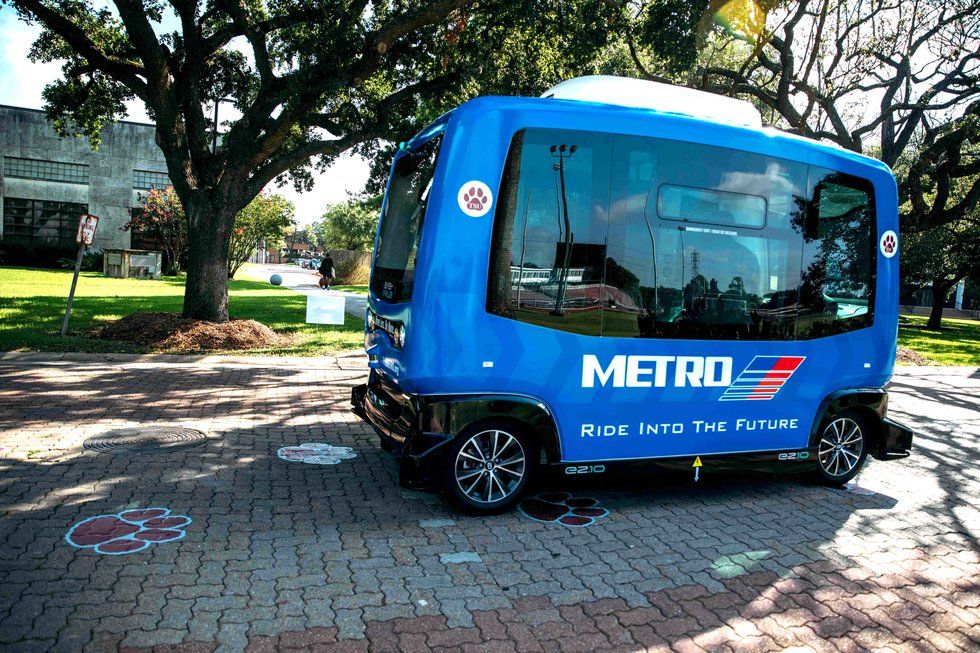
METRO launches self-driving shuttle, Data Gumbo hires new exec, and more Houston innovation news

METRO launches a driver-less route, Houston biotech company raises millions, and more quick innovation news. Courtesy of METRO

So much Houston innovation news — so little time. In order to help keep in touch with all the news happening among startups and technology in Houston, we're hitting the highlights in this innovation news roundup. Read more.

10+ can't-miss Houston business and innovation events for July

From enlightening talks to networking opportunities, here's where you need to be in July. Getty Images

If you were hoping that business events would slow down for the summer, keep hoping. While you're probably getting plenty of OOO emails during your daily communications, there's no shortage of face-to-face opportunities within Houston business and innovation. Read more.

Houston to be home to one of the world's largest rooftop gardens after downtown post office's renovations

Post Houston will be site of one of the world's largest rooftop gardens. Photo courtesy of Lovett Commercial

Downtown Houston will soon have one of the largest rooftop gardens and farms in the world, thanks to the innovative reimagining of a forgotten structure. The Barbara Jordan Post Office, the massive government building nestled in the Theater District, will be transformed into a bustling, dynamic, mixed-use complex that's meant to become the city's new urban ecosystem.

At an official groundbreaking, Lovett Commercial revealed the plans for the more than 550,000-square-foot building, which was formerly the epicenter of the city's mail system from 1936 to 2014. The post office will fittingly become Post Houston and will house a concert venue, retail and office concepts, restaurants, bars, an international market hall, and a flexible co-working space.

Hospitality startup adds a new luxe approach to Houston's apartment rental market

Lodgeur provides its guests with hotel luxury with room to breathe. Courtesy of Lodgeur

In 2018, Houston set a new tourism record with 22.3 million visitors to the city. That same year, Sébastien Long was finishing his Cambridge thesis on home-sharing companies like Airbnb and falling in love with a classmate. When the couple moved to Houston after graduation, Long brought his ideas with him, and that's how Lodgeur was born.

Lodgeur works as an upscale home-sharing startup that offers luxury apartments in midtown and downtown Houston for nightly rent. It doesn't replace Airbnb; customers can browse through and book the properties through the familiar website. Read more.

Ad Placement 300x100
Ad Placement 300x600

CultureMap Emails are Awesome

Houston researchers develop material to boost AI speed and cut energy use

ai research

A team of researchers at the University of Houston has developed an innovative thin-film material that they believe will make AI devices faster and more energy efficient.

AI data centers consume massive amounts of electricity and use large cooling systems to operate, adding a strain on overall energy consumption.

“AI has made our energy needs explode,” Alamgir Karim, Dow Chair and Welch Foundation Professor at the William A. Brookshire Department of Chemical and Biomolecular Engineering at UH, explained in a news release. “Many AI data centers employ vast cooling systems that consume large amounts of electricity to keep the thousands of servers with integrated circuit chips running optimally at low temperatures to maintain high data processing speed, have shorter response time and extend chip lifetime.”

In a report recently published in ACS Nano, Karim and a team of researchers introduced a specialized two-dimensional thin film dielectric, or electric insulator. The film, which does not store electricity, could be used to replace traditional, heat-generating components in integrated circuit chips, which are essential hardware powering AI.

The thinner film material aims to reduce the significant energy cost and heat produced by the high-performance computing necessary for AI.

Karim and his former doctoral student, Maninderjeet Singh, used Nobel prize-winning organic framework materials to develop the film. Singh, now a postdoctoral researcher at Columbia University, developed the materials during his doctoral training at UH, along with Devin Shaffer, a UH professor of civil engineering, and doctoral student Erin Schroeder.

Their study shows that dielectrics with high permittivity (high-k) store more electrical energy and dissipate more energy as heat than those with low-k materials. Karim focused on low-k materials made from light elements, like carbon, that would allow chips to run cooler and faster.

The team then created new materials with carbon and other light elements, forming covalently bonded sheetlike films with highly porous crystalline structures using a process known as synthetic interfacial polymerization. Then they studied their electronic properties and applications in devices.

According to the report, the film was suitable for high-voltage, high-power devices while maintaining thermal stability at elevated operating temperatures.

“These next-generation materials are expected to boost the performance of AI and conventional electronics devices significantly,” Singh added in the release.

Houston to become 'global leader in brain health' and more innovation news

Top Topics

Editor's note: The most-read Houston innovation news this month is centered around brain health, from the launch of Project Metis to Rice''s new Amyloid Mechanism and Disease Center. Here are the five most popular InnovationMap stories from December 1-15, 2025:

1. Houston institutions launch Project Metis to position region as global leader in brain health

The Rice Brain Institute, UTMB's Moody Brain Health Institute and Memorial Hermann’s comprehensive neurology care department will lead Project Metis. Photo via Unsplash.

Leaders in Houston's health care and innovation sectors have joined the Center for Houston’s Future to launch an initiative that aims to make the Greater Houston Area "the global leader of brain health." The multi-year Project Metis, named after the Greek goddess of wisdom and deep thought, will be led by the newly formed Rice Brain Institute, The University of Texas Medical Branch's Moody Brain Health Institute and Memorial Hermann’s comprehensive neurology care department. The initiative comes on the heels of Texas voters overwhelmingly approving a ballot measure to launch the $3 billion, state-funded Dementia Prevention and Research Institute of Texas (DPRIT). Continue reading.

2.Rice University researchers unveil new model that could sharpen MRI scans

New findings from a team of Rice University researchers could enhance MRI clarity. Photo via Unsplash.

Researchers at Rice University, in collaboration with Oak Ridge National Laboratory, have developed a new model that could lead to sharper imaging and safer diagnostics using magnetic resonance imaging, or MRI. In a study published in The Journal of Chemical Physics, the team of researchers showed how they used the Fokker-Planck equation to better understand how water molecules respond to contrast agents in a process known as “relaxation.” Continue reading.

3. Rice University launches new center to study roots of Alzheimer’s and Parkinson’s

The new Amyloid Mechanism and Disease Center will serve as the neuroscience branch of Rice’s Brain Institute. Photo via Unsplash.

Rice University has launched its new Amyloid Mechanism and Disease Center, which aims to uncover the molecular origins of Alzheimer’s, Parkinson’s and other amyloid-related diseases. The center will bring together Rice faculty in chemistry, biophysics, cell biology and biochemistry to study how protein aggregates called amyloids form, spread and harm brain cells. It will serve as the neuroscience branch of the Rice Brain Institute, which was also recently established. Continue reading.

4. Baylor center receives $10M NIH grant to continue rare disease research

BCM's Center for Precision Medicine Models has received funding that will allow it to study more complex diseases. Photo via Getty Images

Baylor College of Medicine’s Center for Precision Medicine Models has received a $10 million, five-year grant from the National Institutes of Health that will allow it to continue its work studying rare genetic diseases. The Center for Precision Medicine Models creates customized cell, fly and mouse models that mimic specific genetic variations found in patients, helping scientists to better understand how genetic changes cause disease and explore potential treatments. Continue reading.

5. Luxury transportation startup connects Houston with Austin and San Antonio

Shutto is a new option for Houston commuters. Photo courtesy of Shutto

Houston business and leisure travelers have a luxe new way to hop between Texas cities. Transportation startup Shutto has launched luxury van service connecting San Antonio, Austin, and Houston, offering travelers a comfortable alternative to flying or long-haul rideshare. Continue reading.

Texas falls to bottom of national list for AI-related job openings

jobs report

For all the hoopla over AI in the American workforce, Texas’ share of AI-related job openings falls short of every state except Pennsylvania and Florida.

A study by Unit4, a provider of cloud-based enterprise resource planning (ERP) software for businesses, puts Texas at No. 49 among the states with the highest share of AI-focused jobs. Just 9.39 percent of Texas job postings examined by Unit4 mentioned AI.

Behind Texas are No. 49 Pennsylvania (9.24 percent of jobs related to AI) and No. 50 Florida (9.04 percent). One spot ahead of Texas, at No. 47, is California (9.56 percent).

Unit4 notes that Texas’ and Florida’s low rankings show “AI hiring concentration isn’t necessarily tied to population size or GDP.”

“For years, California, Texas, and New York dominated tech hiring, but that’s changing fast. High living costs, remote work culture, and the democratization of AI tools mean smaller states can now compete,” Unit4 spokesperson Mark Baars said in a release.

The No. 1 state is Wyoming, where 20.38 percent of job openings were related to AI. The Cowboy State was followed by Vermont at No. 2 (20.34 percent) and Rhode Island at No. 3 (19.74 percent).

“A company in Wyoming can hire an AI engineer from anywhere, and startups in Vermont can build powerful AI systems without being based in Silicon Valley,” Baars added.

The study analyzed LinkedIn job postings across all 50 states to determine which ones were leading in AI employment. Unit4 came up with percentages by dividing the total number of job postings in a state by the total number of AI-related job postings.

Experts suggest that while states like Texas, California and Florida “have a vast number of total job postings, the sheer volume of non-AI jobs dilutes their AI concentration ratio,” according to Unit4. “Moreover, many major tech firms headquartered in California are outsourcing AI roles to smaller, more affordable markets, creating a redistribution of AI employment opportunities.”