These fast-growing companies have new personnel announcements to share. Photos courtesy

Three Houston startups have new hires they're excited about.

From new board members to c-level execs, here's who's moving and shaking in Houston innovation.

GoExpedi names senior vice president of sales

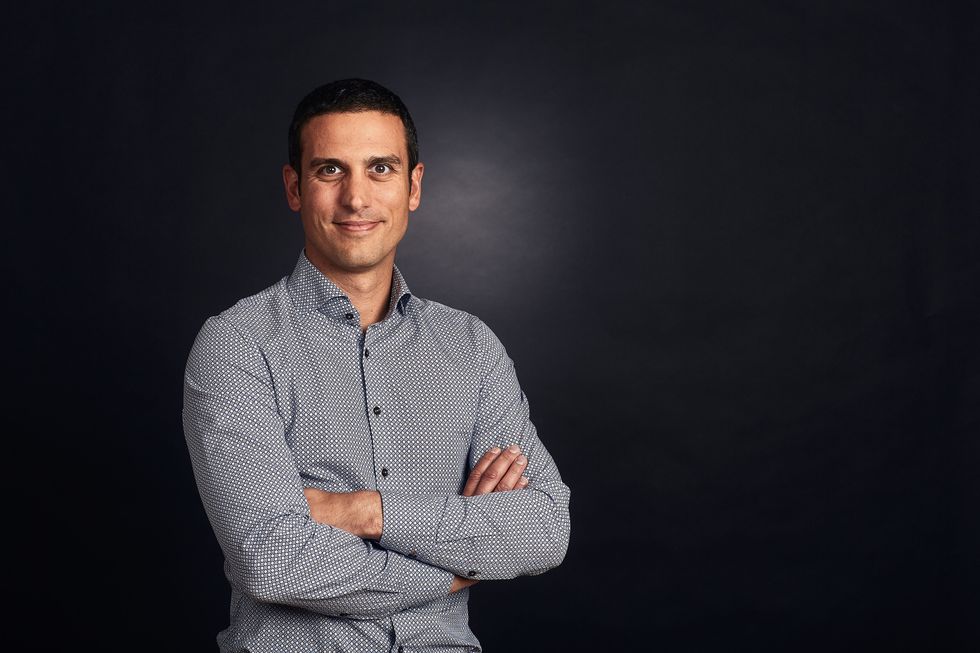
Michael Hanes will focus on sales at fast-growing GoExpedi. Photo courtesy of GoExpedi

E-commerce and supply chain company, GoExpedi, which is focused on transforming procurement for industrial and energy maintenance, repair and operations, has announced named a new executive.

Michael Hanes has been onboarded as senior vice president of sales. Hanes has over 20 years of experience in startups and emerging technologies. Most recently, Hanes worked at Heart Rhythm Society as its director of corporate relations.

"There are very few leaders that have the same level of sales experience and the diverse industry background as Michael. He is an outstanding addition to our team, as he's already started to build fruitful relationships with customers and partners, who are embracing change through the adoption of our interactive intelligence platforms," says Tim Neal, GoExpedi CEO, in a news release.

"Michael has also begun establishing a strong rapport with all of our sales leaders across the country, helping to further sharpen our processes and accelerate the growth of our already robust sales pipeline," Neal continues. "He will be instrumental for the expansion of our customer base and overall success."

Last fall, GoExpedi raised $25 million in a series C investment round in order to keep up with growth and demand.

"I am thrilled to join GoExpedi. What Tim and his team have built in just a few short years is nothing short of remarkable," says Hanes in the release. "Driving the sale of a truly innovative technology -- with the support of a deeply talented team of sales professionals -- is an amazing position to be in.

"I look forward to introducing fresh perspectives and bringing energy to further enhance our sales processes and market presence and accelerate the company's already fast-paced growth trajectory."

The Postage announces new board of directors member

Former startup CFO and venture capital adviser is joining a Houston tech company's board. Photo via liveoakvp.com

Lynn Atchison has joined the board of directors for Houston tech company The Postage, a full-service digital platform and mobile app for afterlife planning.

Based in Austin, Atchison most recently served as CFO at Khoros (née Spredfast) and also previously worked at HomeAway Inc. as CFO as well. She currently serves on other tech boards, such as Absolute Software, Bumble, Q2 Technologies and Convey, as well as being an advisory partner at LiveOak Venture Partners.

"As evidenced by her impressive experience, Lynn thrives when working with transformational and fast-growing companies, making The Postage a perfect fit," says Emily Cisek, CEO and co-founder of The Postage. "She has scaled operations, driven growth and improved profitability for companies in all lifecycle stages. We are absolutely thrilled to welcome Lynn to The Postage team."

The Postage launched last fall as a way to help simplify afterlife planning. Cisek was inspired to create her tech solution after she lost three family members back to back. This month, the company announced its new app.

During her time at HomeAway, Atchison oversaw more than 20 acquisitions and global expansions before the company went public in 2011 before being acquired by Expedia in 2015 for $3.9 billion.

"Throughout my career, I've worked with companies that redefined and established markets, ultimately becoming leaders in their respective industries, which is what I hope to do at The Postage," said Atchison. "Addressing the challenges associated with end-of-life planning is an exciting opportunity that I can personally relate to. I recently experienced a loss in my family, and I know there is something special about this idea. The Postage creates security of all users by ensuring that their families are taken care of after they pass."

Innowatts appoints new c-level exec

Energy software expert Jeff Wright has joined the globally expanding Innowatts. Photo courtesy of Innowatts

As Houston-based Innowatts continues its global expansion — most recently opening its European Union headquarters in Cork, Ireland, the energy software-as-a-service company has named a new member to its C suite.

Jeff Wright has been named the chief revenue officer of Innowatts. to drive continued expansion in the U.S. and also accelerate its growth globally. Wright was previously the global vice president of GE Digital's Grid Solutions business unit. During his tenure, GE's market position climbed from the No. 5 to No. 1 for its energy control room related software, according to a news release.

"Jeff's career can be summarized as 'Energy Meets Technology,'" says Innowatts CEO Siddhartha Sachdeva in the release. "As Innowatts business and global reach expands, we are grateful to have Jeff joining the company. He is a true energy tech leader who has second-to-none domain expertise across a diverse set of utility functions and operating units."

Wright will lead all aspects of the company's go-to-market initiatives and oversee global sales efforts and marketing channels.

"My passion to help companies disrupt and transform the utility industry aligns squarely with Innowatts' mission," says Wright in the release. "Innowatts is transforming the way energy providers will leverage data and AI to operate. Playing a pivotal role in the growth of the company coupled with driving the resilient and sustainable energy solutions of the future is a career opportunity that I am excited and passionate about. I'm truly delighted to be part of the Innowatts leadership team."
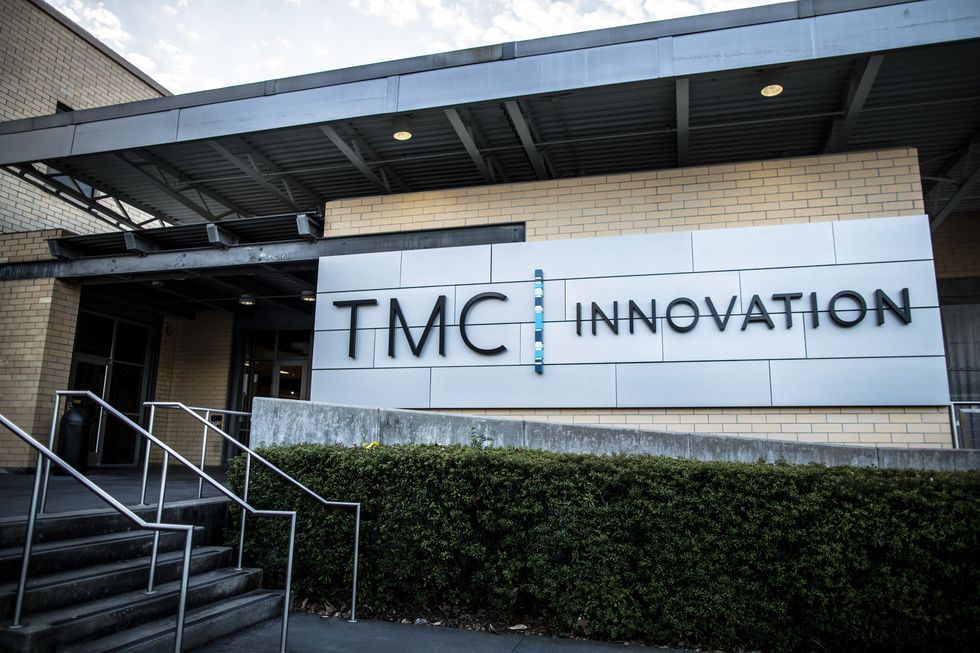

The new programming geared at idea-stage startups has officially commenced at TMC Innovation Institute. Courtesy of TMCx

New TMCx program launches, C-level execs named at Houston startups, and more innovation news

Short stories

There's been a lot of recent Houston innovation news, and you might have missed something. Keep up to date with all the news happening among startups and technology in Houston in this innovation news roundup.

If you know of innovation-focused news happening, email me at natalie@innovationmap.com with the details and subscribe to our daily newsletter that sends fresh stories straight to your inboxes every morning.

TMCalpha premieres 

Courtesy of TMC

The Texas Medical Center has long counseled budding medical entrepreneurs in various capacities through its TMC Innovation Institute, but wanted to introduce programming specifically for early-stage companies. That's how TMC alpha was born and announced at the most recent TMCx Demo Day.

The program officially launched on July 18 and will host meetups on the third Thursday of every month.

"Over the past five years, TMC Innovation has blossomed into a global proving ground for healthcare startup companies from across the world, and we could not be more pleased with the myriad ways in which the ecosystem here has expanded in nature," says TMC Innovation Director Tom Luby in a release. "That being said, we realized that TMC Innovation needed to do more for the local innovation community and offer ample resources to support homegrown talent from within the confines of the largest medical city in the world. With TMC alpha, the hope is to connect anyone with a fledgling healthcare idea to the TMC Innovation network and create a two-way channel of meaningful dialogue."

Innowatts scores extra funding and names new C-level exec

Photo via innowatts.com

Houston-based AI-enabled analytics company, Innowatts, is growing in more ways than one. The company, which is fresh off an over $18.2 million Series B fundraise, added move funds and a new C-level executive.

Veronorte, a South American venture capital firm backed by one of the largest utilities in Colombia, became an additional investor in the company with an undisclosed contribution. Meanwhile, Eric Danziger joined the company as its new chief revenue officer. He will be tasked with the growth and sales of Innowatts' eUtility™ product.

"As the utility grid becomes more complex with the proliferation of electric vehicles and distributed generation," says Danziger in a release, "utility companies have to adapt to the data generated and needs of their consumers to manage these complex requirements."

Startup snags free office space prize

Photo courtesy of The Cannon

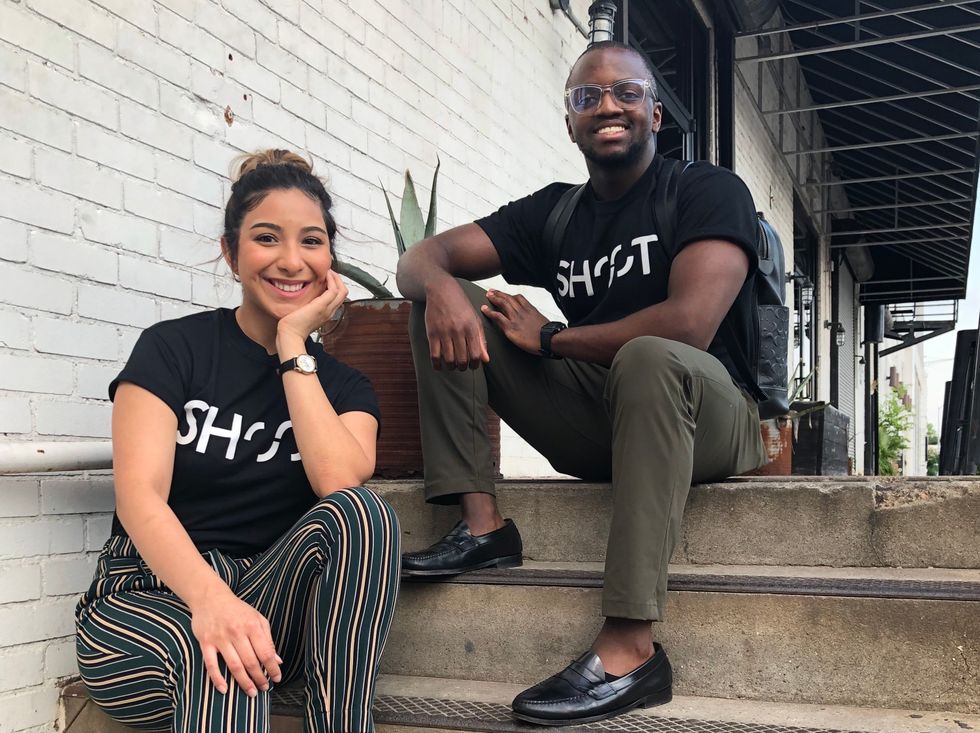
Shoot, a digital marketplace that simplifies the photographer and videographer booking process, has scored free office space in the newly opened Cannon building after receiving the second annual Insperity Innovation Scholarship.

The company was co-founded by Simbai Mutandiro and Alina Merida and has already launched its beta platform. The company will release its next version of the platform soon.

"Our relationship with The Cannon and the Insperity Innovation Scholarship are part of our initiative to help startups become successful more quickly by connecting and collaborating with like-minded individuals," says Larry Shaffer, Insperity senior vice president of marketing and business development, in a release. "We congratulate Shoot on receiving this scholarship and wish the co- founders continued success in furthering their entrepreneurial dream."

The other three finalists in the contest — Delfin, Social Chains, and SOTAOG — will receive open desk memberships at The Cannon for six months.

Houston falls low on the list of cities booming with growing private companies

Texas Money

Getty Images

When it comes to the major metros with the biggest jump in private businesses with over $1 million in revenue, Houston is the last on the list for Texas cities. LendingTree looked at the data, and, between 2014 and 2016, Houston only saw an increase of 4.9 percent in million-dollar business growth. This earned the Bayou City a No. 32 ranking across the country.

Dallas was slightly ahead of Houston with 5.2 percent growth and a No. 29 rank. Meanwhile, Austin earned the top spot with 15.1 percent growth. San Antonio, the only other Texas metro in the study, ranked No. 12 with 9 percent growth.

Nesh forms partnership

Oil rig

Photo courtesy of Thomas Miller/Breitling Energy

The Woodlands-based WellDatabase has announced a partnership with Nesh, an AI-optimized tool that's like the Siri or Alexa of oil and gas.

"The technology is amazing and we are thrilled to work with the Nesh team," writes John Ferrell, CEO of WellDatabase, in a blog post. "The integration allows Nesh to run real-time queries against WellDatabase. Users can ask a multitude of questions and get instant answers. They can also work with the Nesh team directly to train and build new questions and workflows."

Rice University and Cognite join forces

Courtesy of Cognite

When Oslo, Norway-based Cognite announced its dual U.S. headquarters in Houston and Austin, it had plans to engage universities from the get go. Now, the company, which specializes in data software with industrial applications, has officially created a partnership and internship program with Rice University.

"This partnership illustrates Cognite's commitment to attracting top people to build the most talented software engineering team in the world," says John Markus Lervik, Cognite co-founder and CEO, in a release. "Cognite solves some of the most complex problems related to industrial digitalization. To do that, we need the best minds, so partnering with Rice University was a natural choice."

Rice students are currently in Norway this summer working for Cognite as a part as the inaugural program.

The Cannon teams up with Thompson & Knight

Courtesy of The Cannon

Houston-based law firm Thompson & Knight has officially signed on to provide resources for The Cannon startups in a strategic partnership between the two companies.

"Thompson & Knight is pleased to partner with Houston-based entrepreneurs who are building the innovation, services, and technological platforms of the very near future," says Mark M. Sloan, managing partner of Thompson & Knight, in a news release. "We will offer our experience in the issues common to startup businesses, including intellectual property, technology, corporate, labor, and other areas of counsel that will help further the goals of these pioneering companies."

The law firm will have an office in The Cannon's recently opened building in West Houston.

Solugen names president

Getty Images


In May, Houston-based chemicals company, Solugen Inc., closed a $32 million round. Now, the company has put a portion of that money to work to hired the newest executive on the team. Jason Roberts, who has a decade of chemicals and oil and gas experience, has joined Solugen as president.

"What I found most compelling about Solugen was the company's quick successes and their overarching goal of decarbonizing the chemicals industry," says Roberts in a release. "The company's fundamental chemistry and technologies have created products that no one in the industry currently has. I am excited to join this young company's fast moving team at such a significant time in its history and look forward to helping scale their innovative products and services."

Houston-based Innowatts closed its Series B funding round — a $18.2 million commitment from the likes of Energy Impact Partners, Shell Ventures, and more. Photo via innowattts.com

Houston AI-enabled retail energy platform receives $18.2M investment

Follow the money

Houston-based Innowatts has closed its Series B funding round lead by Energy Impact Partners. The company, which enables artificial intelligence through its retail energy technology platform, secured a $18.2 million investment. Current funders also include Shell Ventures, Iberdrola, and Energy and Environment Investment (EEI Japan) — which all three supported the company in its Series A — along with new investor Evergy Ventures.

The funds will be used to grow the company's eUtilityTMplatform technology — a B2B cloud-based software tool to help retail energy providers better deliver quality energy services and insights to clients. The eUtilityTM platform already processes meter data from over 21 million customers globally and across 13 regional energy markets, according to the release.

"Competing in today's complex and evolving marketplace requires utility companies use data and intelligence to drive business and customer value," says Siddhartha Sachdeva, founder and CEO of Innowatts, in a release. "Energy Impact Partners, along with its coalition of innovative utility investors, appreciates the role that the eUtilityTM platform can play in creating a smarter, more efficient energy value chain. We're excited to have EIP join us on the next phase of our journey in building the digital utility of the future."

The company is "poised to become a key building block in the software-driven, intelligent grid of the future," says Michael Donnelly, partner and chief risk officer at EIP in the release.

"We invest in companies driving the transformation of the energy sector towards an increasingly decarbonized, digitized, and electrified future – solutions that our utility partners can commercialize at scale and have the greatest impact," Donnelly continues.

Innowatts' $6 million Series A round closed in August 2017. Shell Ventures lead that round.

"Utilities have the opportunity to deliver more value to customers, at lower costs and with greater personalization than ever before, while helping streamline the complex energy marketplace," says Geert van de Wouw, vice president Shell Ventures, in a release. "The predictive customer intelligence and digital solutions provided by Innowatts' eUtilityTM platform is central to executing that vision."

Ad Placement 300x100
Ad Placement 300x600

CultureMap Emails are Awesome

Houston lab explores how AI bots can help the elderly

AI for aging

The University of Houston’s Empathetic Lifespan AI & Robotics for Aging (ELARA) Lab is currently conducting research into how AI bots may be able to help the elderly live more social and independent lives through several ongoing initiatives.

The lab officially launched last month as part of the Gerald D. Hines College of Architecture & Design under the leadership of Assistant Professor Chorong Park. Part of the lab’s mission is tackling ongoing problems with aging, such as dealing with disabilities and social isolation. Researchers’ current work is focused on designing a new AI companion bot specifically tailored to the needs of older people.

“We need to take all the needs of older adults seriously,” Park said in a news release. “They won't use the robot if they don't feel at ease or if they feel they are being constantly watched.”

The field testing of new AI bots in this population hopes to overcome several traditional obstacles in technology use among the elderly. A study by Park shows that many older people have a fear of overt surveillance when using advanced AI. There is also ageism to consider. Most new technologies are designed with younger and employed buyers in mind, not retirees who may need help remembering daily tasks or accessing important information.

“The more older adults are excluded from technology development, the worse those technology gaps will become,” Park said. “AI and the majority of technologies are created for younger people, so my research method integrates older adults directly into the design process.”

ELARA recently collaborated with the Mamie George Community Center in Richmond, Texas, to track seniors’ response to desktop AI bots like Emo and Cupboo. Researchers also had participants use air-dry modeling clay to create their ideal robotic companion.

While the eventual AI bot may be able to help the elderly feel less isolated and more supported, there are concerns to consider. A study published in the Asian Journal of Psychology charted the development of delusional thinking in a 72-year-old woman who became convinced the empathic-response bot was in love with her. The rise of “AI psychosis” has the potential to exacerbate mental health problems, particularly in socially isolated people, which a quarter of Americans over the age of 65 are.

ELARA’s research is focused on creating “pet-like” AI models with enhanced trust cues. If it can overcome the dangers of socially isolated people relying on AI for companionship, it could be a big step forward for independent aging.

SpaceX IPO set to be biggest ever and could make Elon Musk a trillionaire

IPO News

SpaceX says it plans to raise up to $75 billion when it goes public this month, setting the stage for the largest-ever stock market debut and putting Elon Musk on course to becoming the world's first trillionaire.

The company, formally known as Space Exploration Technologies Corp., said Wednesday it will sell 555.6 million shares at $135 a piece in an initial public offering. The estimated proceeds would easily top the $26 billion raised by oil giant Saudi Aramco in 2019. The offering would also give SpaceX a market value of $1.77 trillion. Only six companies in the S&P 500 are currently worth more, with Nvidia tops at $5.2 trillion.

Besides the size of the offering and the expected proceeds, SpaceX's amended prospectus updates details about how much control of the company Musk will have. As SpaceX's CEO, chief technical officer and chairman, Musk's voting power will come primarily through his ownership of 5.22 billion Class B shares, which give the holder 10 votes for every share held. According to the filing, Musk would have 82.4% of the voting power in the company.

Forbes currently values Musk's net worth at $826 billion and his stake in SpaceX at $542 billion. The estimated value of his SpaceX holdings was based on an overall value for the company of $1.25 trillion. Based on those numbers, a $1.77 trillion valuation for SpaceX would boost Musk's net worth by $223 billion, making him a trillionaire. However, much of Musk's worth is in stock that he has yet to cash in.

Even as it makes a bid for a blockbuster market debut, SpaceX is currently losing billions of dollars a year. The filing shows that the company lost $2.6 billion from operations last year on $18.7 billion in revenue, and the losses kept piling up at the start of this year, too.

Fantastical plans

Time will tell how SpaceX fares on the market. Musk's plans for the company are as fantastical as the money he hopes raise in the sale.

Colorful, even frightening in parts, the IPO document strikes a contrast with the typically dry, technical prose in IPO documents, detailing plans to use proceeds from the sale to help put men on the moon again and perhaps even Mars. In one section, it talks of a need to build "a permanent human colony" on the red planet with "at least one million inhabitants" as existential threats loom that could consign man to "the same fate as the dinosaurs."

Musk has almost equally ambitious plans for his other publicly traded company, Tesla. His goal is to transform the maker of electric vehicles into a producer of robotaxis and humanoid robots. Dan Ives of Wedbush Securities wrote in a research note that he expects Tesla and SpaceX to merge next year.

AI plays a key role

Key to the success of both companies — and any merged entity — is artificial intelligence. In its IPO filing, SpaceX says it sees potential revenue from AI of up to $26.5 trillion. But that depends on another lofty Musk ambition — putting data centers in space, which is not technologically possible at the moment.

Transforming his space company into a primarily AI-focused company will be a challenge for Musk, who started xAI in 2023 with 11 other co-founders who have all since left. Some were recruited away by rivals.

Its main AI product, the chatbot Grok, is "less impressive than anything that we see from any other major player in the space, whether that's OpenAI, or Anthropic, or (Google's) Gemini," said IDC analyst Arnal Dayaratna.

Dayaratna said that doesn't mean SpaceX doesn't have potential as a major AI player, thanks in part to its computing partnership with Anthropic and Musk's recent deal that gave SpaceX the rights to buy AI coding tool Cursor for $60 billion later this year. Folding in Cursor's capabilities would give SpaceX access to the coveted business customers now using Anthropic's Claude or OpenAI's ChatGPT.

SpaceX plans to use the net proceeds from the IPO to fund the expansion of infrastructure for its AI and rocket businesses, and to beef up the constellation of satellites that power Starlink Mobile, among other investments.

The company plans to list on the Nasdaq under the symbol "SPCX" and could begin trading as soon as the end of next week.

And SpaceX isn't the only colossal market debut investors are now bracing for. Earlier this week, Anthropic submitted a confidential filing with the U.S. Securities and Exchange Commission to officially start its own IPO clock.

OpenAI has not yet reported filing the initial SEC paperwork, but an IPO from the ChatGPT maker is widely expected.

"This listing represents the first major test for public markets after years of muted IPO activity with SpaceX paving the way for AI giants Anthropic and OpenAI to follow soon after," Ives wrote.

___

Associated Press Technology Writer Matt O'Brien contributed.

New UH survey reveals concerns over AI data center growth in Houston

data findings

A new report out of the University of Houston shows that area residents remain wary of the long-term effects of operating data centers.

The recent survey from the University of Houston’s latest SPACE City Panel, conducted by the Center for Public Policy at the Hobby School of Public Affairs, shows that while 85 percent of Houston-area residents use AI, nearly 63 percent oppose the construction of AI data centers within 1 mile of their homes.

Respondents’ concerns centered around data centers’ high energy demand and the area’s power grid reliability. According to the survey, 32 percent of residents who oppose local data center projects would be more likely to support the centers if they relied on renewable energy over fossil fuels.

“Respondents understand that AI can bring economic and educational benefits, but they are also concerned about the physical infrastructure needed to fuel AI, especially data centers,” Soran Mohtadi, post-doctoral fellow at the Hobby School and a researcher on the report, said in a news release. “This physical infrastructure demands more electricity and water, leading to environmental impacts.”

Experts estimate that 6.5 gigawatts of data center capacity will be added to the Texas grid by 2030. And Houston’s data center capacity is predicted to more than double by 2028.

The Electric Reliability Council of Texas also projects electricity demand could reach 218 gigawatts by 2031, which would be more than double the record peak set in August 2023. Data centers are expected to account for 86 gigawatts of that new demand.

Survey respondents also said they are concerned about the state's future water supply, given the large amounts of water that data centers need to stay cool.

In terms of who’s responsible for that issue, 57.6 percent of respondents said they put the onus on Texas lawmakers, while 31.5 percent say tech companies should be responsible.

Additionally, more than 75 percent of respondents believed that data center developers and technology companies—not residents—should bear the cost of infrastructure upgrades to support data centers.

“Every decision legislators make has implications on residents’ everyday lives and local infrastructure now and in the future,” Maria P. Perez Arguelles, lead researcher on the report and research assistant professor at the Hobby School, added in the news release. “This issue is going to become more important in years to come, so this is just the beginning.”

Read the full report here.