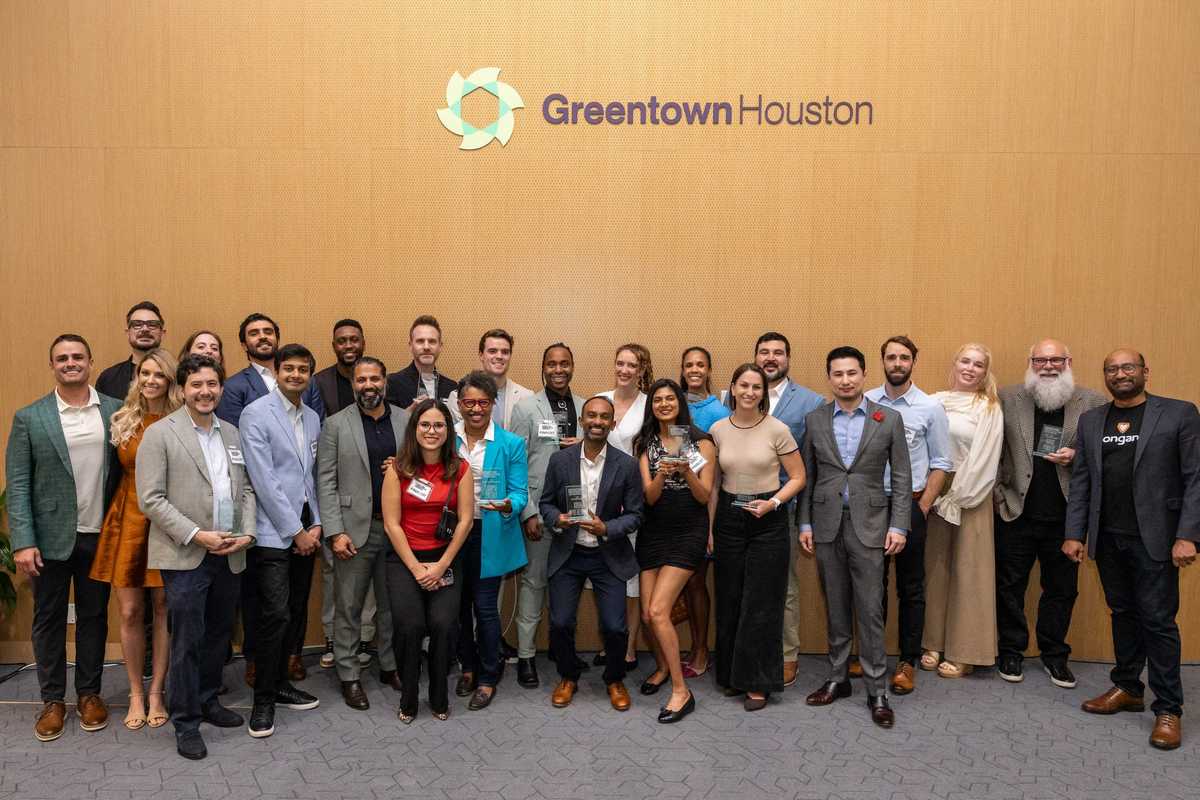

The finalists range from a startup developing miniaturized medical technologies for spaceflight to a company using AI to create cancer treatment plans. Photo via Getty Images

Houston has been driving medical innovation for decades. And thanks to leading hospitals, cutting-edge research and breakthrough technologies, the region’s healthcare ecosystem continues to improve how patients are diagnosed, treated and cared for.

The Health Tech Business category in our 2026 Houston Innovation Awards will honor an innovative startup within the health and medical technology sectors.

Four forward-thinking businesses have been named finalists for the 2026 award. This year's finalists, selected by our esteemed panel of judges, range from a startup developing miniaturized medical technologies for space to a company using AI to help develop cancer treatment plans.

Read more about these businesses, their innovative founders, and how they're shaping the future of health care below.. The 2026 winners will be announced on InnovationMap.com in mid-November.

Bairitone Health

Bairitone Health is bringing anatomy imaging for sleep apnea to the home environment. The company's platform maps users' anatomy during natural sleep using a facial patch to determine the root cause of airway obstruction. It then offers effective therapies for each patient.

The company was founded in 2022 in the Texas Medical Center's Biodesign program by CEO Meagan Pitcher, CTO Onur Kilic and chief medical officer Britt Cross. It was a member of Activate Houston's inaugural cohort and has participated in numerous accelerators and incubators. The company raised an oversubscribed seed round for $2.4 million earlier this year and received Breakthrough Device Designation from the Food and Drug Administration in April.

InformAI Inc.

InformAI Inc. develops fit-to-purpose AI solutions for the clinical setting. Its RadOncAI product recently received FDA 510(k) clearance. The product uses AI to create a first-pass radiation therapy dose plan for complex head and neck cancers in an effort to eliminate bottlenecks in radiation planning and ultimately cancer treatment. The company has also developed AI products for sinus disease detection and 3D organ reconstruction.

CEO Jim Havelka founded the company in 2017. It is participating in the Mayo Clinic Accelerate Platform. It has raised about $4 million in seed funding and has received numerous non-dilutive grants from the National Science Foundation, the National Institutes of Health and the Cancer Prevention and Research Institute of Texas. The company shared in its application that it plans to launch a Series A fundraising round and submit an FDA 510K application for its organ reconstruction product, Voluquant, by the end of 2026.

Prana Surgical

Prana Surgical is developing a minimally invasive surgical platform for small, hard-to-reach lung nodules that may be cancerous. The company's Prana System cleared U.S. Food and Drug Administration (FDA) approval earlier this year.

Prana Surgical was originally founded as Prana Thoracic in 2022. It has participated in numerous accelerators, including the Texas Medical Center Innovation Accelerator in 2023 and the IGNITE Health accelerator in 2022. It raised $6 million in Series A funding rounds in 2023 and 2024 , with a Series B currently ongoing. The company said in its application that it is currently moving into the next stage of clinical validation and revenue generation in the U.S., in addition to preparing its manufacturing and commercial infrastructure for broader use.

Skybound MedTech

Skybound MedTech develops technologies that aim to address the health risks of long-duration spaceflight. Its compact, miniaturized medical technologies can deliver complex therapies without a physician.

CEO Matthew Kuhn, who previously founded Taurus Vascular, founded Skybound last year. The company emerged from stealth in January after raising a $1.25 million Series A round. It plans to advance its lead dual-use platform into critical preclinical validation in November, the company shared in its application. It is currently raising a $25 million Series A round and is pursuing federal research partnerships with DARPA and ARPA-H.

Chen-Yang Lin and Tianshu Zhai, cofounders of HEXAspec. Photo courtesy of Rice University

5 minority-founded startups shaping the future of Houston innovation

meet the finalists

Houston’s startup ecosystem reflects the diversity of the city itself.

As part of the 2026 Houston Innovation Awards, our Minority-founded Businesses category will honor an innovative Houston startup founded or co-founded by BIPOC or LGBTQ+ representation.

Five minority-founded businesses have been named finalists for the 2026 award. The finalists, selected by our esteemed panel of judges, range from an AI edtech startup to a company operating in the floating offshore energy infrastructure sector.

Read more about these innovative businesses, their initiatives, and their inspirational founders below. The 2026 winners will be announced on InnovationMap.com in mid-November.

AI Made Fun

Edtech startup AI Made Fun is working to close the gap in AI education by teaching K-12 students how to understand and responsibly use artificial intelligence. The company has developed a comprehensive AI literacy curriculum with 60 modules, animated videos, interactive activities, teacher guides and family resources. Its curriculum covers how AI works, misinformation, algorithmic bias, data privacy, online safety and academic integrity.

AI Made Fun was founded in 2025 by Devshree Golecha. It launched in classrooms this school year with five licensed schools serving more than 800 students. The company is pursuing partnerships with Houston-area school districts, including Houston ISD and Alief ISD, and has pledged free and subsidized access for underserved communities.

Deep Anchor Solutions

Offshore energy consulting and design company Deep Anchor Solutions wants to help scale floating offshore energy infrastructure by removing anchoring as a barrier. Its deeply embedded ring anchor (DERA) technology can be installed quietly without heavy-lift vessels, reducing anchor-related costs by up to 75 percent and lifecycle CO2 emissions by up to 80 percent.

The company was founded in 2023 by CEO Junho Lee and technical advisor Charles Aubeny. Lee earned his Ph.D. in geotechnical engineering from Texas A&M University, where Aubeny is a professor of civil and environmental engineering. The company has participated in numerous accelerators and incubators, including Greentown Labs, MassChallenge, EnergyTechNexus LiftOff and others. Lee was an Activate 2025 fellow.

HEXAspec

Rice University spinout HEXASpec is working to improve the sustainability and thermal conductivity of semiconductor chips. The company has developed breakthrough inorganic fillers that allow graphic processing units (GPUs) to use less water and electricity and generate less heat.

HEXASpec was founded in 2025 by CEO Tianshu Zhai, CTO Jing Zhang and chief product officer Chen-Yang Lin. It has raised $800,000 in pre-seed funding and another $1.5 million in non-dilutive grants, according to the company's application. The startup won the Liu Idea Lab for Innovation and Entrepreneurship's H. Albert Napier Rice Launch Challenge in 2024 and the 2025 Energy Venture Day and Pitch Competition during CERAWeek in the TEX-E student track in 2025. It was awarded a $500,000 National Science Foundation Partnership for Innovation grant last summer.

Prana Surgical

Health tech company Prana Surgical is developing a minimally invasive surgical platform for small, hard-to-reach lung nodules that may be cancerous. The company's Prana System cleared U.S. Food and Drug Administration (FDA) approval earlier this year.

Prana Surgical was originally founded as Prana Thoracic in 2022. It has participated in numerous accelerators, including the Texas Medical Center Innovation Accelerator in 2023 and the IGNITE Health accelerator in 2022. It raised $6 million in Series A funding rounds in 2023 and 2024 , with a Series B currently ongoing. The company said in its application that it is currently moving into the next stage of clinical validation and revenue generation in the U.S., in addition to preparing its manufacturing and commercial infrastructure for broader use.

Torres Orbital Mining Inc.

Space tech company Torres Orbital Mining is developing autonomous excavation and material preprocessing systems to move and process granular materials while reducing workers’ exposure to hazardous dust. The company is initially commercializing its technology for Earth-bound applications—including silica sand, recycled glass and mine tailings—though the technology is also designed to support future lunar mining operations. The company aims to accelerate a permanent and ethical human presence on the Moon.

CEO Luis Torres founded Torres Orbital Mining in 2025. The company is a member of Greentown Labs and has participated in accelerators like the ESRIC Space Resources Startup Program and Capital Factory All Access Fund. The company received a six-month, $225,000 SBIR Phase I contract from NASA in August.

Ad Placement 300x100
Ad Placement 300x600

CultureMap Emails are Awesome

UTHealth Houston officially opens new tower in TMC's Helix Park

open for innovation

UTHealth Houston School of Public Health recently opened its new state-of-the-art tower in the Texas Medical Center’s Helix Park.

The 350,000-square-foot, 10-story campus at 1930 Old Spanish Trail was celebrated with an official ribbon-cutting ceremony on Oct. 28. The $229 million project will consolidate all UTHealth Houston School of Public Health operations into one facility. It will also connect students who are at the Austin, Brownsville, Dallas, El Paso and San Antonio campuses with peers and faculty through digital and distance learning.

Disciplines taught in the new tower will include epidemiology, genetics, nutrition, health policy, data science and health promotion, UTHealth shared when the building first broke ground in 2023.

Architects Kirksey Architecture and Smith Group designed the building, and Vaughn Construction served as general contractor. The facility features labs for studying human disease, classrooms and spaces to support interdisciplinary and community-based research, a broadcast studio and a teaching kitchen. A skybridge over Old Spanish Trail connects the new tower with a plaza that's shared with MD Anderson.

“This new facility reflects the kind of forward-looking investment that will serve Texans for generations,” Janiece Longoria, vice chairman of the UT System Board of Regents, said in a news release. “By creating an environment where talented people can learn, collaborate, and pursue new ideas, UTHealth Houston is building capacity to meet the challenges of tomorrow while strengthening its impact across our state.”

UTHealth says the system aims for the new campus to expand on collaborative research efforts and continue graduate education, as enrollment at the School of Public Health has increased by 27 percent over the last five years.

“This new building, with its state-of-the-art education technology and learning environment, will strengthen and advance the school’s mission to educate and train the next generation of experts who will advance scientific discovery, shape evidence-based health policy, and lead innovative solutions to the complex health challenges in communities throughout Texas and across the nation,” Kevin Morano, senior vice president, provost and chief academic officer of UTHealth Houston, added in a news release.

Attending the ceremony were Dr. Melina R. Kibbe, UTHealth Houston president and Alkek Williams Distinguished Chair; Eric Boerwinkle, dean, M. David Low Chair in Public Health and Kozmetsky Family Chair in Human Genetics at the School of Public Health; Texas State Representative Lauren Ashley Simmons, Texas House District 146; representatives of the offices of Senator John Cornyn and Harris County Commissioner Rodney Ellis; and Dr. Theresa Tran, director of the Houston Health Department.

"This building represents far more than a home for our school,” Boerwinkle added in the release. “It represents the people who make our mission possible: the faculty, staff, and students who fill each laboratory and classroom with curiosity, discovery, and purpose to improve the population’s quality of life.”

Rice University breaks ground on new innovation hub, The Arc

breaking ground

Construction is officially underway on Rice University's The Arc in Houston’s Ion District.

The university broke ground on the 200,000-square-foot research, corporate innovation and office building on Nov. 4. The facility will share a plaza with the existing Ion building, fostering collaboration within the innovation space, according to Rice.

“The Arc will bring Rice’s extraordinary research and talent and Houston’s impactful innovation ecosystem into even closer connection with the industries and innovators working to solve some of the world’s most consequential challenges,” Rice President Reginald DesRoches said in an announcement. “That constant exchange of ideas and expertise will help move discoveries more rapidly from the laboratory to real-world impact.”

Construction is scheduled to be completed by Q2 2028. Rice Real Estate Co. is developing the project, and Rice University will occupy about 80,000 square feet in the building (about 40 percent). Preleasing has begun, with floor plans ranging from 28,000 to 31,000 square feet.

The Arc will feature conference and meeting spaces, an amenity lounge, fitness center, outdoor plazas, underground parking, and on-site retail and dining, according to the release.

It aims to host tenants focused on artificial intelligence and machine learning, data science, robotics, quantum science and engineering and energy, including Rice's new AI Foundry.

Rice says the AI Foundry will be a space where university experts and partners can support organizations with AI challenges. Rice recently committed to hiring 75 new AI-focused faculty and announced plans to launch a new Master of Artificial Intelligence (MAI) next fall.

“The AI Foundry is exactly the kind of collaboration the Arc is designed to enable,” Amy Dittmar, the Howard R. Hughes Provost and executive vice president for academic affairs at Rice, added in the release. “By bringing Rice researchers together with industry partners in a shared environment, we can accelerate the movement of ideas from research into practical applications while helping organizations build the capabilities they need to succeed as AI continues to evolve.

Developers of The Arc are targeting LEED Gold certification by incorporating smart building automation and energy-saving features into the project's design. Rice first announced the project in September 2025.

Rendering courtesy Bogza

Houston battery tech startup FlowCellutions acquired by Katy energy co.

M&A

Katy-based TerraFlow Energy, an energy storage and infrastructure company, has acquired Houston-based battery technology startup FlowCellutions. Financial terms weren’t disclosed.

FlowCellutions still operates under its established name, but with the tagline “A TerraFlow Energy Company.” Becca Segel, founder and CEO of FlowCellutions, now runs the business as its president.

FlowCellutions specializes in electrochemical sensing, diagnostics, analytics, and testing that offer insights into battery chemistry, charging capabilities, and system performance.

“FlowCellutions has always been focused on developing better ways to understand what is happening inside a flow battery and using that information to improve how these systems perform,” Segal said in a press release. “Joining TerraFlow gives us the opportunity to apply that work at a much larger scale while continuing to build the capabilities and expertise that make FlowCellutions unique.”

The FlowCellutions platform supports data centers and other heavy users of power. It’s designed to help reduce operating costs, prevent failures and costly downtime, and extend battery lifetime from about seven years to more than 30 years.

Segel founded the company in 2022. A member of Greentown Labs, the company raised more than $2 million in non-dilutive funding and received $1.5 million in National Science Foundation funding earlier this year.

FlowCellutions is one of five finalists in the Energy Transition Business category of InnovationMap’s 2026 Houston Innovation Awards.

“FlowCellutions brings a depth of scientific and technical expertise that fits naturally with where TerraFlow is going,” Jon Parrella, CEO of TerraFlow, said in the release.

“As we move from developing these systems to deploying them at commercial scale, understanding performance at a deeper level matters,” he said. “Bringing FlowCellutions into TerraFlow strengthens that capability and gives both teams more opportunity to advance the technology.”TerraFlow, founded in 2024, develops long-duration energy storage and power infrastructure for data centers, industrial facilities, utilities and other large power consumers.

---

This article originally appeared on EnergyCapitalHTX.com.