Don't miss these February events — from talks with the hall-of-fame beauty business founders to AI summits. Photo courtesy of Rice University

From talks with the hall-of-fame beauty business founders to agtech and AI summits, Houston will host a number of events focused on innovation and innovators in February.

Here’s what not to miss and how to register.

Note: This post might be updated to add more events.

Feb. 7 – SheSpace Offsite: Coffee & Connection

Get out of the office and head over to Midtown network with fellow SheSpace members and working women via coffee and conversation.

This event is Friday, Feb. 7, from 2-4 p.m. at Kefita Coffee. RSVP here.

Feb. 11 – Texas Business Hall of Fame x Ion: Creators Series with Founders Janet Gurwitch (Laura Mercier) and Tiffany Masterson (Drunk Elephant)

Take part in Texas Business Hall of Fame’s launch of its Creators 2025 speaker series. Janet Gurwitch, founder of Laura Mercier, and Tiffany Masterson, founder of Drunk Elephant, will discuss lessons learned while building their global retail brands and their successful exits.

This event is Tuesday, Feb. 11, from 8–10 a.m. at the Ion. Register here.

Feb. 11 – How to Start a Startup

Gain insight from Mercury Fund’s Heath Butler and stick around for a happy hour afterward. This session, originally scheduled for Jan. 21, is geared toward entrepreneurs, small business owners, investors and academic partners

This event is Tuesday, Feb. 11, from 5:30–7 p.m. at the Ion. Register here.

Feb. 15 – Ion Family Tech Day: Youth Entrepreneurship with Lemonade Day University

Bring the whole family out to the Ion for a family-friendly entrepreneurial workshop with Lemonade Day. Kids can compete in a pitch competition to win free supplies, and trained instructors will coach kids on how to set goals, develop a business or marketing plan and budget, create a brand, save and invest money, and more.

This event is Saturday, Feb. 15, from 10 a.m.–12:30 p.m. at the Ion. Register here.

Feb. 18 — Female Founders and Friends

Connect with like-minded female founders, funders, and allies at this recurring event. Female Founders & Friends is open to all industries and coffee is provided.

This event is Tuesday, Feb. 18, at 9 a.m. at Sesh Coworking. Register here.

Feb. 20 — Diaspora Africa Conference

Come together to hear inspiring speakers, participate in interactive workshops and network with others who are passionate about African heritage and the contributions of the African diaspora. This event will showcase African innovation and allow attendees to connect with funding sources actively seeking high-growth opportunities in Africa.

This event is Thursday, Feb. 20, from 9 a.m.–6 p.m. at the Ion. Register here.

Feb 20–21 — TMC AI Summit 2025

The TMC AI Summit aims to translate advanced AI innovations into practical solutions for real-world biomedical and health care challenges by bringing together researchers, clinicians, and industry leaders. The event features various workshops and tracks with keynote speakers from Rice University, UTHealth, Microsoft Health Futures and other organizations.

This event is Thursday, Feb. 20, from noon–7 p.m. and Friday, Feb. 21, from 8 a.m.–5 p.m. at TMC Helix Park in the TMC3 Collaborative Building. Register here.

Feb. 25 — Houston Methodist Leadership Speaker Series at Ion - Tesha Montgomery

Hear from Houston Methodist’s SVP of System Patient Access about how the health care system is approaching improvements to patient access and highlighting women in health care leadership. Audiences can participate in a 30-minute discussion following Montgomery’s remarks.

This event is Tuesday, Feb. 25, from 4:45–6 p.m. at the Houston Methodist Tech Hub at the Ion. Register here.

Feb. 26 — Inaugural HTX AgTech Rodeo Innovation Summit 2025

Network with farmers, founders, startups and investors at the first-ever HTX AgTech Rodeo Innovation Summit. The all-day event will feature panels, fireside chats, a Saddle Up Pitch Competition and reception with live music.

This event is Wednesday, Feb. 26, from 8:30 a.m.–8 p.m. Find more information and register here.

Feb. 27 — NASA Tech Talks

Every fourth Thursday of the month, NASA experts, including longtime engineer Montgomery Goforth, present on technology development challenges challenges NASA’s Johnson Space Center and the larger aerospace community are facing and how they can be leveraged by Houston’s innovation community. Stick around after for drinks and networking at Second Draught.


This event is Thursday, Feb. 27, from 6-7 p.m. at the Ion. Register here.

Feb. 27–28 – QVIDTVM x The Ion: Inaugural Hack Day Competition

Investment firm QVIDTVM and the Ion are calling all data scientists, analysts, developers and innovators to a new hack day. Participants will aim to find the total value of real estate platformed by Airbnb globally and can participate in a Fireside Chat on AI with Nick King, founder and CEO of Data Kinetic. Teams can include up to four people and prizes for first through third place will be awarded.

This event is Thursday, Feb. 27, at 9:30 a.m. until Friday, Feb. 28, at 5 p.m. at the Ion. Register here.
From after-alcohol relief to a smart pillbox, these Houston-founded companies have innovative holiday gifts to offer. Images via Instagram

8 gift ideas from Houston startups

innovative gifts

It's holiday gift crunch time right about now, and whether you're scrambling for gifts or planning how you're going to treat yourself, Houston startups have innovative options for you.

All of the following gift ideas have a Houston tie, which makes for an extra special gift within a gift. While they are all available online, some might specify it's too late to ship by Christmas.

Here are eight ideas for gifts made by Houston startups.

A smart pillbox to make taking medicine cool

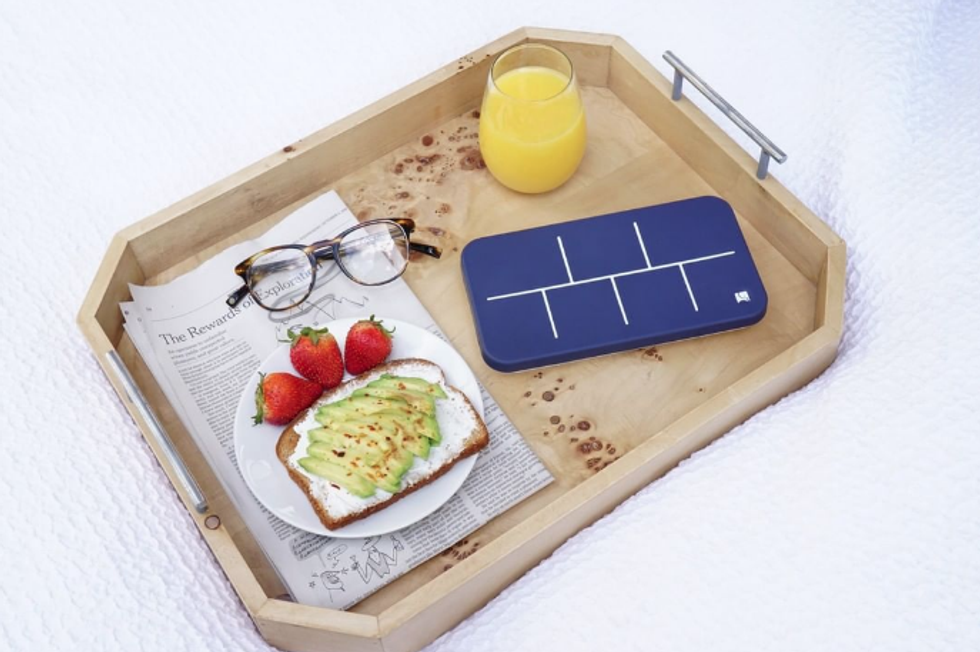
EllieGrid, the smart pillbox, makes it easier — and way cooler — to take your medicine. EllieGrid/Instagram

Never would you ever think to get a loved one a pillbox for Christmas — but EllieGrid is not your ordinary pillbox. The medical device has been completely reimagined by its Houston founders. The box, which is synced with a smartphone, will light up when it's time to take a dose. The lights indicate which compartment to pull from and how many pills to take. The app notifies you too, and, if you're gifting this to someone you want to stay on top of, you can actually opt in to receive the notifications and can be alerted if there's not compliance.

The box is available online for $149.

A personal, creative card that doubles as a work of art

tellinga

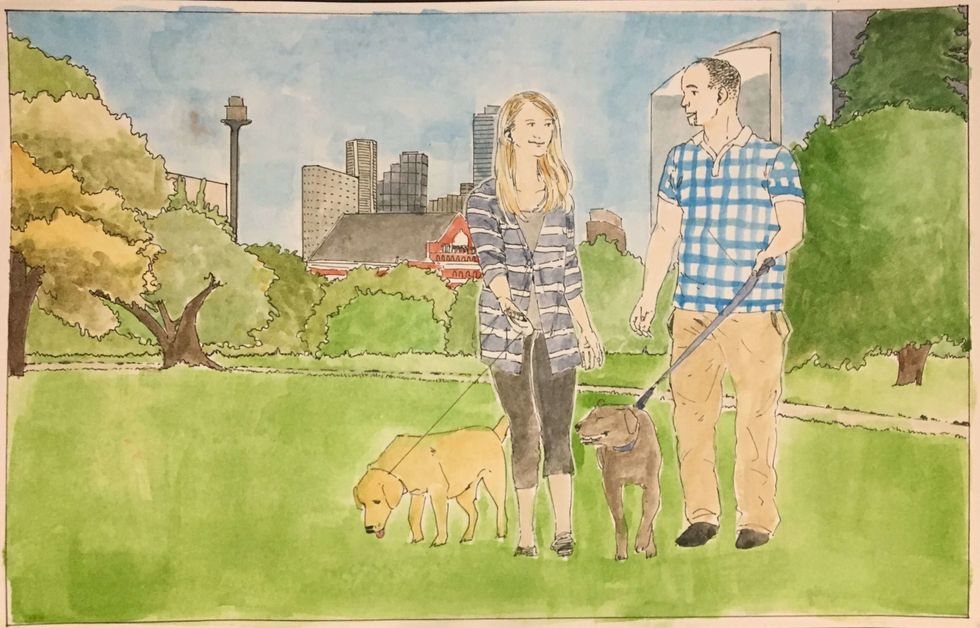
Tellinga creates artistic and personal cards for every occasion. Courtesy of Tellinga

There's giving a card, then there's doing even more than that. Houston-based Tellinga isn't just a maker of greeting cards; it's in the business of storytelling, and customers can have personalized artworks delivered right to their mailboxes — a site for reclaiming, founder Alex Kurkowski says, from the dread of bills and marketing materials.

"I'm trying to tap back into the tangible, physical and real side of life," Kurkowski says.

The cards begin at $9.99 and are perfect for reaching that loved one who you don't get to spend time with this holiday season.

A portable workspace for the friend on the go

Alcove

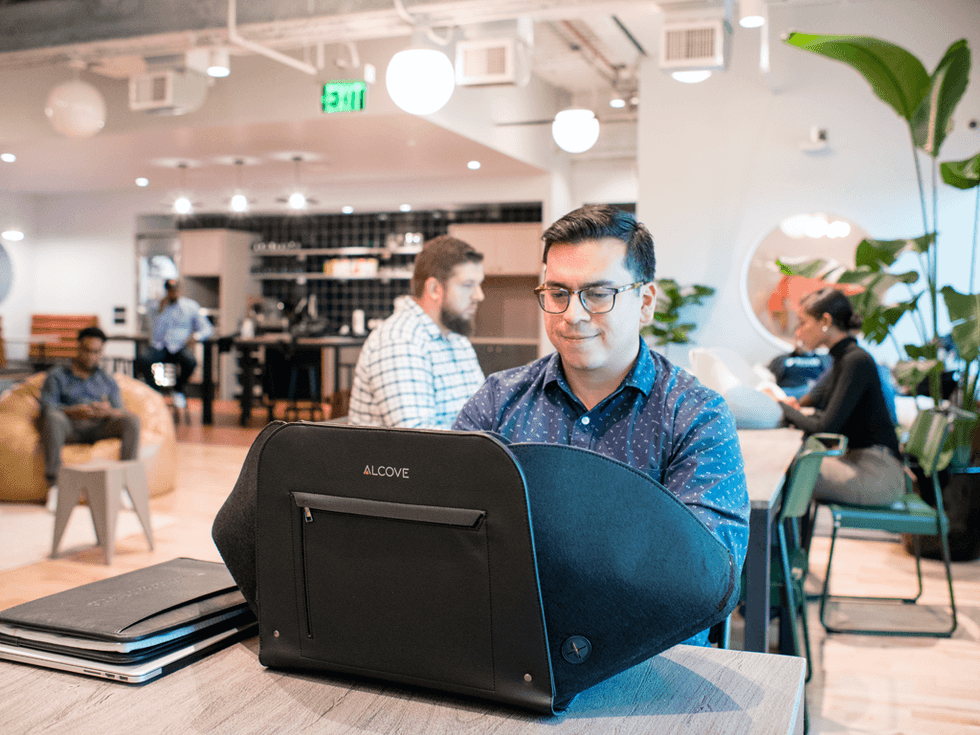
Alcove transforms from a laptop case to a private workspace in just a few moves. Courtesy of Alcove

It's a mobile world we're living in, but that does not mean you have to sacrifice comfort, design, and privacy. Houston-based Alcove has designed a solution in its laptop-carrier-turned-workspace. The item can convert into a productive work area in seconds — the wings pop out, the top lifts, and a kickstand holds the case upright while ergonomically holds up the laptop at a 40- to 45-degree angle. Founder Yared Akalou even consulted with an acoustic engineer to ensure the materials are optimized for users.

Alcove's items are available online in two colors in two sizes, starting at $49.

Skincare products from a Houston success story

drunk elephant

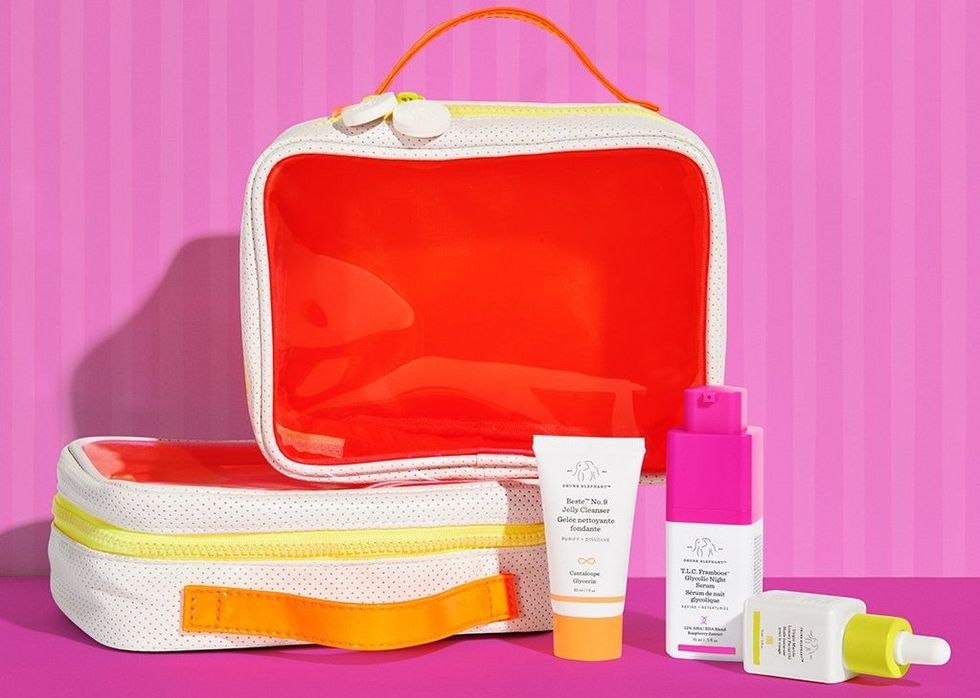
Houston-founded Drunk Elephant had a great year this year with a huge exit to an international company. Photo via drunkelephant.com

A couple months ago, a Houston skincare company was acquired in an international $845 million deal. So, while Drunk Elephant is far from just a local startup, you can give the gift of beauty this holiday season that is also a nod to a Houston success story.

Houstonian Tiffany Masterson, founder and chief creative officer, started the company in Houston in 2012. The quality of products and playful branding attracted a broad range of demographics as the company experienced exponential growth.

"I started this business as an industry outsider, and from the beginning I did things a little differently," Masterson says in a news release. "To join with a powerhouse beauty company such as Shiseido that leads the industry in innovation and global excellence is a dream come true for me and for Drunk Elephant. We share similar values, most importantly an unwavering commitment to the consumer. I chose a partner who will let the brand continue to be itself, with the same formulations and the same team."

Online, Drunk Elephant sells a few options for holiday gifts. The set pictured is on sale for $62.

An anti-stink workout shirt for the fitness freak

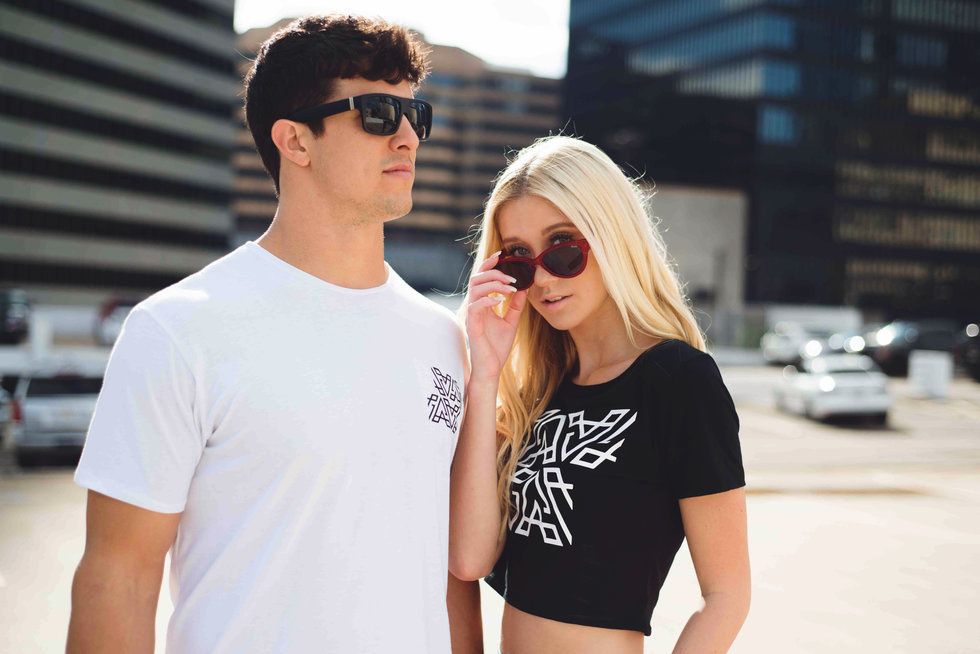
The perfect anti-stink workout wear is designed right here in Houston. Courtesy of Accel Lifestyle

Any devote workout fanatic deserves an opportunity to have workout clothes that don't smell up their entire laundry basket. Houston-based Accel Lifestyle, founded by chemist Megan Eddings, has a solution. The clothing is made with an anti-stink material created patented by Eddings. The pieces are also sustainably and ethically made in the United States. For every shirt bought, the company also plants five trees as a way of giving back.

Men and women's tops are available online in different styles from $59 to $89.

A creative cocktail that fizzes

What started as an idea to get her kids to drink more water has turned into a profitable party favor company. Courtesy of My Drink Bomb

The ability to make bar-quality cocktails at home has never been easier — or as fun — now that Houston-based My Drink Bomb is in business. The company, which has seen great success in the wedding favor industry, creates drink bombs that fizz like bath bombs that are packed with flavors and ingredients. All the user has to do is just add water and, if so inclined, their liquor of choice. Mocktails and kid-friendly options are available too.

The bombs are available online in two-packs for $12.50, but prices per bomb drop as you order larger packs.

A foolproof hangover cure

cheers

Cheers has a solution for after-alcohol recovery. Photo via Instagram/cheershealth

Hangovers are never fun and seem to just get worse as the years go by. Houston-based Cheers has created a suite of products that help you when you're in recovery mode. The key ingredient, Dihydromyricetin, a natural extract — like caffeine to coffee. This year, the company even has gift sets to choose from where you can even customize a message to your recipient.

The sets range from just $20 to $80, which includes all three products, and are available online.

Timeless table pieces for any occasion

rigby

This isn't your grandmother's tableware company. Courtesy of Rigby

A good tableware set comes into your life once in a lifetime — and usually that occasion is from a wedding registry. But a Houston entrepreneur wants to change that way of thinking. Sara Kelly created her direct-to-consumer tableware brand called Rigby, which features handcrafted stoneware dishes, glassware, and a flatware line.

"With Rigby I want to encourage individuals in all life stages to feel at home with the present," says Kelly in a news release. "You shouldn't feel like you have to wait for a big lifetime event, like getting married or buying a house, to purchase tableware and other items that make your time at home more enjoyable."

The products, which are sold in sets, range from $19 to $280. They are available online, as are gift card options.

Samantha Lewis, Tilman Fertitta, and Tiffany Masterson are this week's innovators to know in Houston. Courtesy images

3 Houston innovators to know this week

Who's who

Houston entrepreneurs never cease to impress, leaving a mark on the city for their business minds, creativity, and overall gumption. This week's three innovators to know are no exception.

From a startup venture capitalist and Houston's most recognizable billionaire to a local mom that created — and now sold — a skincare line with a cult following, these are this week's innovative Houstonians to keep an eye on.

Samantha Lewis, director at The GOOSE Society of Texas

Courtesy of Samantha Lewis

Houston has a big fan in Samantha Lewis. The New Mexico native found her way to Texas by way of Texas A&M University before joining the Houston innovation ecosystem and getting her MBA at Rice University.

On the second episode of the Houston Innovators Podcast, Lewis, who's the director at The GOOSE Society of Texas, shares her story of wanting to work in venture capital, but being afraid Houston's venture activity would be too slim. She stuck it out and now the ecosystem is in good place for growth.

"We have to think about getting more capital available for companies that add strategic value to Houston," Lewis says on the podcast. Click here to read more and to listen.

Tilman Fertitta, owner of Fertitta Entertainment

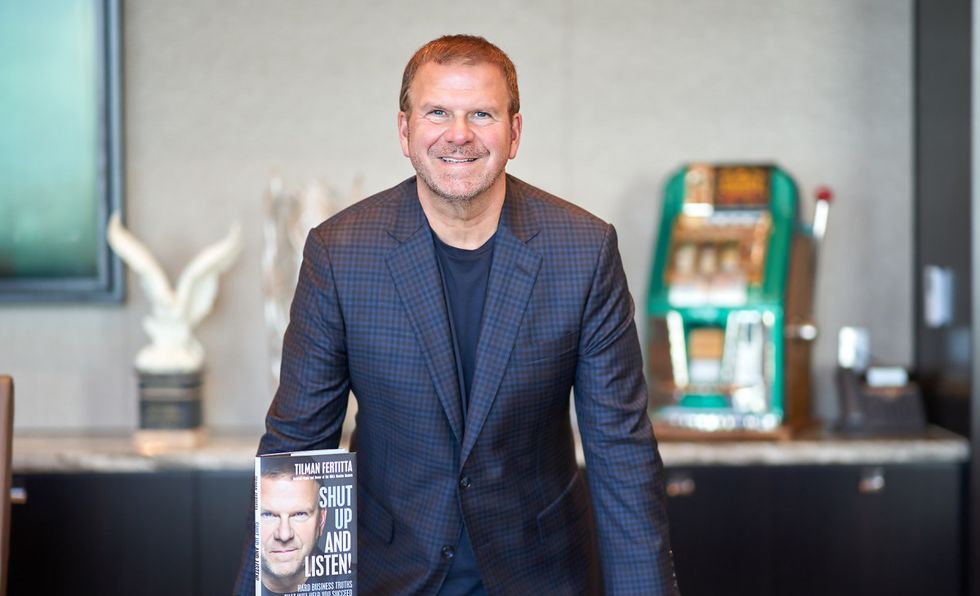
Photo by J. Thomas Ford

Likely, Tilman Fertitta is already a name known and in need of no reminder, but the Houston billionaire is again in the headlines. Fertitta, who just recently acquired Del Frisco's steakhouse chain, has released a new business book, Shut Up and Listen! The book contains the entrepreneur's business advice and "Tilmanisms."

"I thought that I would always write a life story book, but Harper Collins approached me and said they wanted a business management book," Fertitta tells CultureMap. I can't tell you how many times we sat around with my close group and edited this book at the end and went through it five times and read it. If we found a paragraph that was boring, we got rid of it or rewrote it."

CultureMap sat down with Fertitta during a rare break to talk books, business, and his beloved Bayou City. Click here to read the interview.

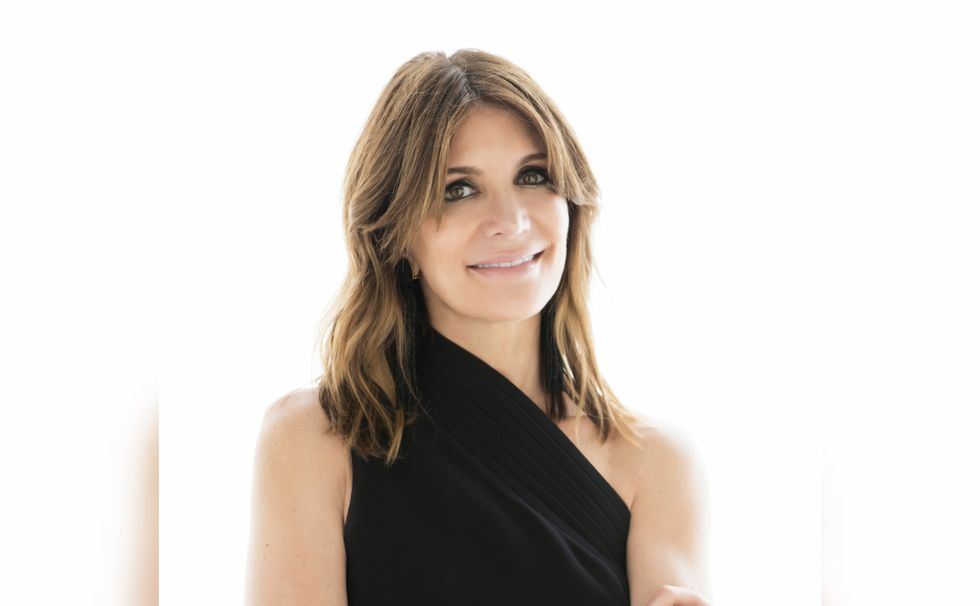
Tiffany Masterson, chief creative officer and founder of Drunk Elephant

Photo via Business Wire

It was a good week for Houstonian Tiffany Masterson. She sold her skincare line, Drunk Elephant, for a reported $845 million to international makeup giant, Shiseido Company Ltd.

"I started this business as an industry outsider, and from the beginning I did things a little differently," Masterson says in a news release. "To join with a powerhouse beauty company such as Shiseido that leads the industry in innovation and global excellence is a dream come true for me and for Drunk Elephant. We share similar values, most importantly an unwavering commitment to the consumer. I chose a partner who will let the brand continue to be itself, with the same formulations and the same team."

Masterson will stay on with the company as the acquisition allows her products to reach a wider, worldwide audience. Click here to read more.

International beauty giant Shiseido Company Ltd. has acquired Houston-founded Drunk Elephant. Photo via Business Wire

Houstonian's skincare line acquired for $845 million

A beautiful acquisition

A skincare line with ties to Houston is joining the ranks of other popular beauty brands this week. International beauty giant Shiseido Company Ltd. has announced that it is acquiring Drunk Elephant in a reported $845 million deal.

Houstonian Tiffany Masterson, chief creative officer, founded the company in Houston in 2012. The quality of products and playful branding attracted a broad range of demographics as the company experienced exponential growth.

"I started this business as an industry outsider, and from the beginning I did things a little differently," Masterson says in a news release. "To join with a powerhouse beauty company such as Shiseido that leads the industry in innovation and global excellence is a dream come true for me and for Drunk Elephant. We share similar values, most importantly an unwavering commitment to the consumer. I chose a partner who will let the brand continue to be itself, with the same formulations and the same team."

According to the release, the acquisition will allow Drunk Elephant's products to expand more throughout America, and enter new markets in Asian and Europe. The new subsidiary will also have support from Shiseido's Global Innovation Center and Digital Center of Excellence.

"This transaction is squarely aligned with Shiseido's VISION 2020 goal of accelerating growth and creating value through strategic partnerships," says Masahiko Uotani, president and CEO of Shiseido, in a news release. "I am very pleased to welcome Tiffany and the Drunk Elephant team to the Shiseido Family and together, pursue our long-term mission of 'Beauty innovations for a better world.'"

Masterson will maintain her role as chief creative officer and add the title of president for the company. She will report to Marc Rey, CEO of Shiseido Americas and chief growth officer of Shiseido.

"Drunk Elephant is built on a strong brand foundation and a unique philosophy that fits perfectly with Shiseido's values and skincare heritage," Rey says in the release. "Our innovative and people-first cultures are well aligned, and we share an unwavering commitment to our consumers. I also believe the brand will contribute to the business performance of Shiseido Americas."

The beauty industry is having a bit of a moment right now as consumers — who have shelves and shelves of products to choose from — are drawn to specific products.

"While reasons for acquisitions in the beauty space vary, we are seeing that some of the big players are seeking to balance their portfolios by creating products and services that consumers find relevant," says Laura Gurski, Accenture's global lead for consumer goods and services, in a statement.

"It is crucial that brands completely reinvent the beauty experience, making it much more than a transactional event," she continues. "This is what startups and disruptors do best. They create a collaboration with each consumer, allowing them to participate and experience products, services and brands in new ways."

According to Accenture Strategy's research on M&A in consumer goods, companies acquiring new capabilities represents 47 percent of activity and new technologies represents 35 percent of activity. These figures are on par with more traditional reasons for M&A, like new industries (43 percent) and new geographic markets (37 percent).

"For the first time, beauty companies have the opportunity to achieve real differentiation by taking their relationships with consumers to a completely new level," Gurski says.

Ad Placement 300x100
Ad Placement 300x600

CultureMap Emails are Awesome

​Planned UT Austin med center, anchored by MD Anderson, gets $100M gift​

med funding

The University of Texas at Austin’s planned multibillion-dollar medical center, which will include a hospital run by Houston’s University of Texas MD Anderson Cancer Center, just received a $100 million boost from a billionaire husband-and-wife duo.

Tench Coxe, a former venture capitalist who’s a major shareholder in chipmaking giant Nvidia, and Simone Coxe, co-founder and former CEO of the Blanc & Otus PR firm, contributed the $100 million—one of the largest gifts in UT history. The Coxes live in Austin.

“Great medical care changes lives,” says Simone Coxe, “and we want more people to have access to it.”

The University of Texas System announced the medical center project in 2023 and cited an estimated price tag of $2.5 billion. UT initially said the medical center would be built on the site of the Frank Erwin Center, a sports and entertainment venue on the UT Austin campus that was demolished in 2024. The 20-acre site, north of downtown and the state Capitol, is near Dell Seton Medical Center, UT Dell Medical School and UT Health Austin.

Now, UT officials are considering a bigger, still-unidentified site near the Domain mixed-use district in North Austin, although they haven’t ruled out the Erwin Center site. The Domain development is near St. David’s North Medical Center.

As originally planned, the medical center would house a cancer center built and operated by MD Anderson and a specialty hospital built and operated by UT Austin. Construction on the two hospitals is scheduled to start this year and be completed in 2030. According to a 2025 bid notice for contractors, each hospital is expected to encompass about 1.5 million square feet, meaning the medical center would span about 3 million square feet.

Features of the MD Anderson hospital will include:

  • Inpatient care
  • Outpatient clinics
  • Surgery suites
  • Radiation, chemotherapy, cell, and proton treatments
  • Diagnostic imaging
  • Clinical drug trials

UT says the new medical center will fuse the university’s academic and research capabilities with the medical and research capabilities of MD Anderson and Dell Medical School.

UT officials say priorities for spending the Coxes’ gift include:

  • Recruiting world-class medical professionals and scientists
  • Supporting construction
  • Investing in technology
  • Expanding community programs that promote healthy living and access to care

Tench says the opportunity to contribute to building an institution from the ground up helped prompt the donation. He and others say that thanks to MD Anderson’s participation, the medical center will bring world-renowned cancer care to the Austin area.

“We have a close friend who had to travel to Houston for care she should have been able to get here at home. … Supporting the vision for the UT medical center is exactly the opportunity Austin needed,” he says.

The rate of patients who leave the Austin area to seek care for serious medical issues runs as high as 25 percent, according to UT.

New Rice Brain Institute partners with TMC to award inaugural grants

brain trust

The recently founded Rice Brain Institute has named the first four projects to receive research awards through the Rice and TMC Neuro Collaboration Seed Grant Program.

The new grant program brings together Rice faculty with clinicians and scientists at The University of Texas Medical Branch, Baylor College of Medicine, UTHealth Houston and The University of Texas MD Anderson Cancer Center. The program will support pilot projects that address neurological disease, mental health and brain injury.

The first round of awards was selected from a competitive pool of 40 proposals, and will support projects that reflect Rice Brain Institute’s research agenda.

“These awards are meant to help teams test bold ideas and build the collaborations needed to sustain long-term research programs in brain health,” Behnaam Aazhang, Rice Brain Institute director and co-director of the Rice Neuroengineering Initiative, said in a news release.

The seed funding has been awarded to the following principal investigators:

  • Kevin McHugh, associate professor of bioengineering and chemistry at Rice, and Peter Kan, professor and chair of neurosurgery at the UTMB. McHugh and Kan are developing an injectable material designed to seal off fragile, abnormal blood vessels that can cause life-threatening bleeding in the brain.
  • Jerzy Szablowski, assistant professor of bioengineering at Rice, and Jochen Meyer, assistant professor of neurology at Baylor. Szablowski and Meyer are leading a nonsurgical, ultrasound approach to deliver gene-based therapies to deep brain regions involved in seizures to control epilepsy without implanted electrodes or invasive procedures.
  • Juliane Sempionatto, assistant professor of electrical and computer engineering at Rice, and Aaron Gusdon, associate professor of neurosurgery at UTHealth Houston. Sempionatto and Gusdon are leading efforts to create a blood test that can identify patients at high risk for delayed brain injury following aneurysm-related hemorrhage, which could lead to earlier intervention and improved outcomes.
  • Christina Tringides, assistant professor of materials science and nanoengineering at Rice, and Sujit Prabhu, professor of neurosurgery at MD Anderson, who are working to reduce the risk of long-term speech and language impairment during brain tumor removal by combining advanced brain recordings, imaging and noninvasive stimulation.

The grants were facilitated by Rice’s Educational and Research Initiatives for Collaborative Health (ENRICH) Office. Rice says that the unique split-funding model of these grants could help structure future collaborations between the university and the TMC.

The Rice Brain Institute launched this fall and aims to use engineering, natural sciences and social sciences to research the brain and reduce the burden of neurodegenerative, neurodevelopmental and mental health disorders. Last month, the university's Shepherd School of Music also launched the Music, Mind and Body Lab, an interdisciplinary hub that brings artists and scientists together to study the "intersection of the arts, neuroscience and the medical humanities." Read more here.

Your data center is either closer than you think or much farther away

houston voices

A new study shows why some facilities cluster in cities for speed and access, while others move to rural regions in search of scale and lower costs. Based on research by Tommy Pan Fang (Rice Business) and Shane Greenstein (Harvard).

Key findings:

  • Third-party colocation centers are physical facilities in close proximity to firms that use them, while cloud providers operate large data centers from a distance and sell access to virtualized computing resources as on‑demand services over the internet.
  • Hospitals and financial firms often require urban third-party centers for low latency and regulatory compliance, while batch processing and many AI workloads can operate more efficiently from lower-cost cloud hubs.
  • For policymakers trying to attract data centers, access to reliable power, water and high-capacity internet matter more than tax incentives.

Recent outages and the surge in AI-driven computing have made data center siting decisions more consequential than ever, especially as energy and water constraints tighten. Communities invest public dollars on the promise of jobs and growth, while firms weigh long-term commitments to land, power and connectivity.

Against that backdrop, a critical question comes into focus: Where do data centers get built — and what actually drives those decisions?

A new study by Tommy Pan Fang (Rice Business) and Shane Greenstein (Harvard Business School) provides the first large-scale statistical analysis of data center location strategies across the United States. It offers policymakers and firms a clearer starting point for understanding how different types of data centers respond to economic and strategic incentives.

Forthcoming in the journal Strategy Science, the study examines two major types of infrastructure: third-party colocation centers that lease server space to multiple firms, and hyperscale cloud centers owned by providers like Amazon, Google and Microsoft.

Two Models, Two Location Strategies

The study draws on pre-pandemic data from 2018 and 2019, a period of relative geographic stability in supply and demand. This window gives researchers a clean baseline before remote work, AI demand and new infrastructure pressures began reshaping internet traffic patterns.

The findings show that data centers follow a bifurcated geography. Third-party centers cluster in dense urban markets, where buyers prioritize proximity to customers despite higher land and operating costs. Cloud providers, by contrast, concentrate massive sites in a small number of lower-density regions, where electricity, land and construction are cheaper and economies of scale are easier to achieve.

Third-party data centers, in other words, follow demand. They locate in urban markets where firms in finance, healthcare and IT value low latency, secure storage, and compliance with regulatory standards.

Using county-level data, the researchers modeled how population density, industry mix and operating costs predict where new centers enter. Every U.S. metro with more than 700,000 residents had at least one third-party provider, while many mid-sized cities had none.

ImageThis pattern challenges common assumptions. Third-party facilities are more distributed across urban America than prevailing narratives suggest.

Customer proximity matters because some sectors cannot absorb delay. In critical operations, even slight pauses can have real consequences. For hospital systems, lag can affect performance and risk exposure. And in high-frequency trading, milliseconds can determine whether value is captured or lost in a transaction.

“For industries where speed is everything, being too far from the physical infrastructure can meaningfully affect performance and risk,” Pan Fang says. “Proximity isn’t optional for sectors that can’t absorb delay.”

The Economics of Distance

For cloud providers, the picture looks very different. Their decisions follow a logic shaped primarily by cost and scale. Because cloud services can be delivered from afar, firms tend to build enormous sites in low-density regions where power is cheap and land is abundant.

These facilities can draw hundreds of megawatts of electricity and operate with far fewer employees than urban centers. “The cloud can serve almost anywhere,” Pan Fang says, “so location is a question of cost before geography.”

The study finds that cloud infrastructure clusters around network backbones and energy economics, not talent pools. Well-known hubs like Ashburn, Virginia — often called “Data Center Alley” — reflect this logic, having benefited from early network infrastructure that made them natural convergence points for digital traffic.

Local governments often try to lure data centers with tax incentives, betting they will create high-tech jobs. But the study suggests other factors matter more to cloud providers, including construction costs, network connectivity and access to reliable, affordable electricity.

When cloud centers need a local presence, distance can sometimes become a constraint. Providers often address this by working alongside third-party operators. “Third-party centers can complement cloud firms when they need a foothold closer to customers,” Pan Fang says.

That hybrid pattern — massive regional hubs complementing strategic colocation — may define the next phase of data center growth.

Looking ahead, shifts in remote work, climate resilience, energy prices and AI-driven computing may reshape where new facilities go. Some workloads may move closer to users, while others may consolidate into large rural hubs. Emerging data-sovereignty rules could also redirect investment beyond the United States.

“The cloud feels weightless,” Pan Fang says, “but it rests on real choices about land, power and proximity.”

---

This article originally appeared on Rice Business Wisdom. Written by Scott Pett.

Pan Fang and Greenstein (2025). “Where the Cloud Rests: The Economic Geography of Data Centers,” forthcoming in Strategy Science.