

Houston innovator dedicated to fostering community within local founders

HOUSTON INNOVATORS PODCAST EPISODE 194

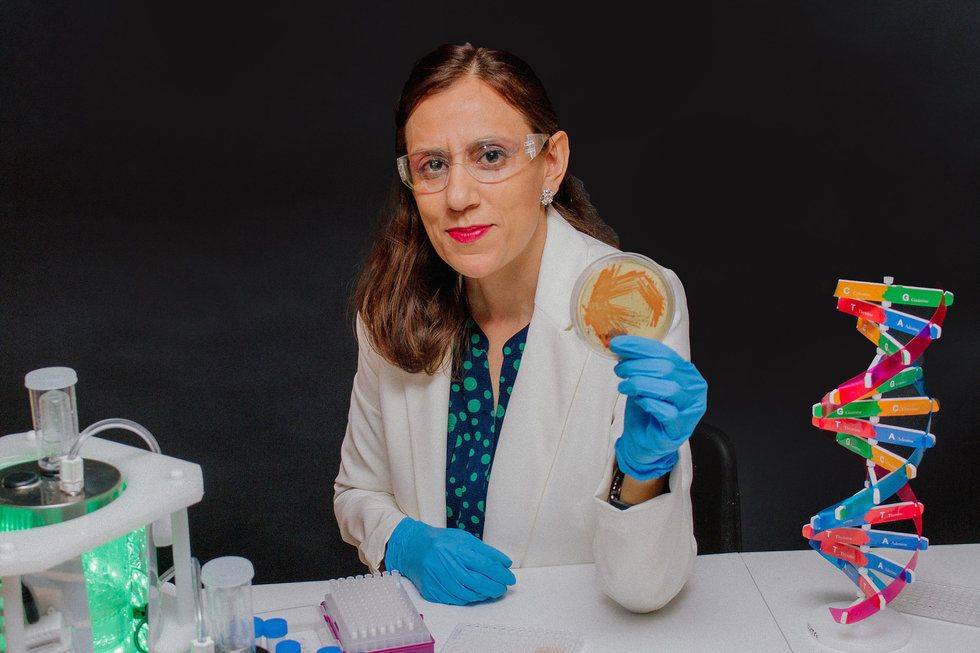
Every month, Adrianne Stone of Bayou City Startups hosts a happy hour for startup founders to create a safe space to network, collaborate, commensurate, and more. Photo courtesy of Adrianne Stone

Starting a company can be daunting and lonely, but entrepreneurs — at least those who call Houston home — have a monthly opportunity to connect with fellow founders thanks to Adrianne Stone.

Stone, who's had a varied career from getting her PhD in Translational Biology & Molecular Medicine at Baylor College of Medicine and joining the 23andMe team as a scientist to supporting founders at Capital Factory, launched Bayou City Startups last year to help connect Houston founders over beers. Now, Stone shares on the Houston Innovators Podcast that her monthly Bayou City Startups meetups attract over 50 attendees on average.

"Being the venture associate with Capital Factory in Houston, I'd seen what the Houston ecosystem had to offer. There were events — happy hours, coffee meet-ups, all these things," Stone says. "But it was not just a casual networking event usually. I wanted a consistent community where I could show up and say, 'guys, I had the worst week,' to people who got where I was coming from and who could commensurate or lean in and help."

Stone observes a need for that type of community more in Houston than Silicon Valley, where she worked when she was at 23andMe. The Bayou City has less of a concentrated startup scene.

"Houston and the Bay Area could not be more different in a lot of ways," she explains. "Everybody I met had a startup in California — it didn't matter if they worked somewhere else, they had a startup.

"I would love to see more of that here in Houston," Stone continues. "Our founders in Houston are super scrappy. They do so much with so little, and we just do not have the amount of capital floating around this ecosystem that you do in SF. I'd love to see more of that here too."

The next opportunity to network with Bayou City Startups is Tuesday, July 18, from 5 to 7 pm at Kirby Ice House. Stone says she picks different types of bars all over the city to meet people where they are and to offer a variety of locations. She adds that she's always up for co-hosts and partners.

Part of what makes Stone, who consults with startups in a professional capacity, an interesting point of view is her "zig-zagging" career. She's held a wide range of roles at an even wider range of professions before she made it to tech startups.

“The through line for me is following my curiosity,” she says on the show. “I was interested in politics, so I did a White House internship. I had a background in science, so I wanted to do something with it, so I went into teaching. Through teaching, I got interested in web development and blogging, so that's how I made the transition into the digital space.”

Her advice to fellow zig-zaggers? Knowing when to say no to things.

"You can overcommit yourself and you're going to burnout or drop the ball or end up disappointing people," she says, admitting she's had to get better at this herself. "Practice saying no. Make it your default. Founders tend to say yes first."

Stone shares more about her career and her observations on Houston's startup ecosystem on the show. Listen to the interview below — or wherever you stream your podcasts — and subscribe for weekly episodes.

This week's episode of the Houston Innovators Podcast features five mini interviews with Houston innovators. Photos courtesy

Podcast: Here's what innovators think of Houston's innovation ecosystem

HOUSTON INNOVATORS PODCAST EPISODE 175

It's the fourth year for Houston Tech Rodeo — a four-day event that takes over Houston's innovation ecosystem — and the programming is in full swing.

The week, put on by Houston Exponential, shines a spotlight on Houston innovators, investors, startup development organizations, and more and invites everyone to the table to learn more about the goings on within Houston's business community and connect with fellow Houstonians.

In honor of the week, today's edition of the Houston Innovators Podcast is a bit different. Rather than sit down with one Houston innovator, I got to chat briefly with five movers and shakers within Houston tech: Damyanna Cooke of Boozed and the Black Founders Network, Joshua Taylor of Capital Factory and the Black Founders Network, LaGina Harris of The US Space, Brandy Guidry of the Pearland Innovation Hub, and Chad Spensky of Allthenticate.

I took the opportunity to ask each of them about how they have engaged with the Houston innovation ecosystem and how they've seen it evolve and grow. Each of them also told me what they thought the city still needed to work on as well as its greatest asset to founders and the greater innovation community.

Listen to the interview below — or wherever you stream your podcasts — and subscribe for weekly episodes.


With Clutch, connecting brands with creators has never been easier and more inclusive. Photo courtesy of Clutch

Houston-based creator economy platform goes live nationally

so clutch

An app that originally launched on Houston college campuses has announced it's now live nationwide.

Clutch founders Madison Long and Simone May set out to make it easier for the younger generation to earn money with their skill sets. After launching a beta at local universities last fall, Clutch's digital marketplace is now live for others to join in.

The platform connects brands to its network of creators for reliable and authentic work — everything from social media management, video creation, video editing, content creation, graphic design projects, and more. With weekly payments to creators and an inclusive platform for users on both sides of the equation, Clutch aims to make digital collaboration easier and more reliable for everyone.

“We’re thrilled to bring our product to market to make sustainable, authentic lifestyles available to everyone through the creator economy," says May, CTO and co-founder of Clutch. "We’re honored to be part of the thriving innovation community here in Houston and get to bring more on-your-own-terms work opportunities to all creators and businesses through our platform.”

In its beta, Clutch facilitated collaborations for over 200 student creators and 50 brands — such as DIGITS and nama. The company is founded with a mission of "democratizing access to information and technology and elevating the next generation for all people," according to a news release from Clutch. In the beta, 75 percent of the creators were people of color and around half of the businesses were owned by women and people of color.

“As a Clutch Creator, I set my own pricing, schedule and services when collaborating on projects for brands,” says Cathy Syfert, a creator through Clutch. “Clutch Creators embrace the benefits of being a brand ambassador as we create content about the products we love, but do it on behalf of the brands to help the brands grow authentically."

The newly launched product has the following features:

  • Creator profile, where users can share their services, pricing, and skills and review inquiries from brands.
  • Curated matching from the Clutch admin team.
  • Collab initiation, where users can accept or reject incoming collab requests with brands.
  • Collab management — communication, timing, review cycles — all within the platform.
  • In-app payments with a weekly amount selected by the creators themselves.
  • Seamless cancellation for both brands and creators.
Clutch raised $1.2 million in seed funding from Precursor Ventures, Capital Factory, HearstLab, and more. Clutch was originally founded as Campus Concierge in 2021 and has gone through the DivInc Houston program at the Ion.

Madison Long, left, and Simone May co-founded Clutch. Photo courtesy of Clutch
Capital Factory's Houston HQ will be in The Ion. Photo courtesy of The Ion

Texas-based startup investor and mentorship network announces new Houston HQ

innovation collaboration

A company that supports entrepreneurship and startups across the Lone Star State with mentorship and funding has announced its new homebase in Houston.

Capital Factory has revealed a new programming partnership with The Ion. Through the collaboration, Capital Factory will host programming, events, and resources within the innovation hub to grow, educate, and support Houston-based startups and entrepreneurs.

"Capital Factory's presence at The Ion will further expand the opportunities for startups and innovators in the Houston region, while strengthening an important pillar of the Texas Startup Manifesto," says Joshua Baer, founder and CEO of Capital Factory, in a news release.

Capital Factory was founded in Austin in 2009 and boosts on being the most active investor in Texas, deploying smaller investments to a multitude of early-stage startups. According to Crunchbase's data, the entity has invested in over 160 companies with 20 exits. Capital Factory officially entered the Houston market in 2019 and doubled down its presence last year when it merged with Station Houston.

Now, with its Houston headquarters moving into The Ion, the two innovation partners will take an inclusive approach to creating connections between innovators, mentors, investors, and markets, per the release.

"We are thrilled to have Capital Factory as a programming partner at The Ion" says Jan E. Odegard, executive director of The Ion, in the release. "The Ion seeks to work with key partners and established brands to help build a rich and inclusive set of startup services that can support all innovators and startups wherever they are in their entrepreneurial journey. Capital Factory brings a proven track record for providing entrepreneurs with services and investments that brings great value not only to The Ion ecosystem, but also to the entire Houston innovation ecosystem."

Capital Factory's first event at The Ion will be Open Coffee on November 16th followed by Open Coworking all day, Baer adds in his statement.

From enlightening talks to anniversary celebrations, here's where you need to be in August. Getty Images

10 can't-miss Houston business and innovation events in August

where to be

This month, Houstonians have yet another good batch of in-person and online innovation events — from Zoom panels to conferences — and you and your tech network need to know about them.

Here's a roundup of virtual events not to miss this month — like demo days, workshops, conventions, and more.

Note: This post might be updated to add more events.

August 4 — Bayou Startup Showcase

Join Rice University and the University of Houston to celebrate the launch of the newest startups from OwlSpark and RED Labs. The Eighth Annual Bayou Startup Showcase will have founders from Class 9 showcase their summer progress. Come listen to pitches, network and get a first look at Houston's newest startups.

The event is on Wednesday, August 4, at 6 pm. It's free and happening at The Cannon (1334 Brittmoore Rd). Click here to register.

August 5 — Ask-Me-Anything Event With Carin Luna-Ostaseski: Tackling Roadblocks as a Solopreneur

A Hello Alice alum and first-generation Cuban American, Carin Luna-Ostaseski has truly achieved the unexpected, launching her one-woman operation through crowdfunding and becoming one of the first Hispanic entrepreneurs in history to create a scotch whisky brand. During the virtual event, she'll answer all of your questions, offer tips on navigating uncharted territory in business, and share details on the newly launched Entrepreneurial Spirit Fund by SIA Scotch that's awarding $10,000 grants to small business owners of color.

The event is on Thursday, August 5, at 1:30 pm. It's free and happening online. Click here to register.

August 10 — FTE Show: Creating a Digitally Enabled Innovation Community that Works with Jon Lambert and Lawson Gow

The way entrepreneurial communities interact and collaborate today cannot keep pace with the ever increasing speed of innovation. What are best ways to leverage physical and virtual hub interactions to create a digitally enabled innovation community with that works? Join The Cannon Founder Lawson Gow and CEO Jon Lambert as they share specifics around what they are trying, where they are getting traction and where they are most challenged.

The event is on Tuesday, August 10, at noon. It's free and happening online. Click here to register.

August 10-13 — HealthTech Beyond Borders

This online event created to offer business opportunities and global collaboration focused on innovation and technology in medicine between companies in Chile and the United States. Join the International Summit to explore the future and impact of new technologies in the health sector.

The event is on Tuesday, August 10. It's free and happening online. Click here to register.

August 11 — Open Project Night: Building an Equitable, Inclusive and Resilient Houston

Impact Hub Houston is proud to bring you a monthly opportunity to come together to work on solutions for some of Houston's most pressing issues. Our city is full of changemakers across all ages, cultures, skillsets, and industries. This is your chance to conned and collaborate for the greater good.

The event is on Wednesday, August 11, at 5 pm. It's free and happening online. Click here to register.

August 11 — Women in AI USA: WaiACCELERATE 2021 Demo Day

Ethical leadership & business acceleration program, WaiACCELERAT USA, aims to bridge the gender gap in the industry and targets female innovators looking to start a business in the fields of AI, Machine Learning and Data Science. With the final Pitch Event "ACCELER-AI-TE!" organized in VR, we will celebrate 40+ impact and commercially-proof early-stage startups and their founders

The event is on Wednesday, August 11, at 6 pm. It's free and happening online. Click here to register.

August 12-13 — EVOLVE 2021: How AI is Transforming Industry

Join industry leaders from the world's largest and most innovative companies for this 2-day hybrid event featuring both technical and business presentations focused on the real-world value of Artificial Intelligence. Evolve will provide a unique, interactive experience where you will learn from and engage with thought leaders from across North America.

The event is on Thursday, August 12, to Friday, August 13. It's free and happening at Houston Marriott Sugar Land and online. Click here to register.

August 17 — Texas Startup Scene & Ask Me Anything with Wogbe Ofori

Are you an entrepreneur starting a new company? Recently moved your company to Texas? Want to find out how to connect with other entrepreneurs, mentors, and investors in the startup ecosystem? Join Capital Factory to hear an overview from experienced entrepreneurs, venture capitalists, investors, and community partners at Intro to Texas Startup Scene & Ask Me Anything. Get a chance to introduce yourself and ask any questions on entrepreneurship and other related topics.

The event is on Tuesday, August 17, at 2 pm. It's free and happening online Click here to register.

August 18 — Tips for Working with a Gen Z Intern

Ampersand CEO, Allie Danziger, will speak to business owners and founders on the benefits of hiring an intern for your growing business, and tips for managing a remote, or in person, intern. It has to be a lot more than just "getting coffee" in order to maximize the experience on both sides and Allie will talk through tips on clear communication, ideal assignments, best way to structure the relationship and more. She will answer attendees questions, live, and discuss real-life scenarios the aspiring professionals and business partners in Ampersand have faced.

The event is on Wednesday, August 18, at 11 am. It's free and happening at The Cannon (1334 Brittmoore Rd). Click here to register.

August 19 — LatinX in Tech presented by Accenture

Capital Factory is dedicated to increasing diversity in the tech community and making its co-working space an inclusive environment for people of all backgrounds and identities. Attendees can look forward to a keynote address from a serial entrepreneur or investor, insightful discussion sessions, a startup showcase pitch competition, and informative panels.

The event is on Thursday, August 19, at noon. It's free and happening online Click here to register.

August 25 — The Cannon + Dell Pitch Party

Calling all member startups that are fundraising or are planning to open a round in 2021. The Cannon has partnered with Dell to host a virtual Pitch Party. Prizes will include up to $10k in Dell Equipment and the opportunity to pitch in the winners round later this year. If you would like to learn more and be considered to pitch, please fill out the application here.

The event is on Wednesday, August 25, at noon. It's free and happening online. Click here to register.

Several Houston startups won kudos and more at recent competitions — plus more Houston innovation news. Photo via Getty Images

Houston energy startups claim big wins, space health fellows named, and more innovation news

Short stories

What's the latest in news for the Houston innovation ecosystem? So glad you asked. Here's some local startup and tech news you might have missed.

In this roundup of short stories within Houston innovation, an energy transition startup snagged $100,000 in a recent competition, four space health researchers were named to a Houston program, a Houston tech startup was tapped by Google for its recent cohort, and more.

Cemvita Factory wins $100,000 in clean energy competition

Cemvita Factory has secured wins in two recent startup competitions. Photo courtesy of Cemvita

A Houston company has been named the the $100,000 cash winner of an inaugural competition.

The GS Beyond Energy Innovation Challenge from Cleantech.org named Cemvita Factory as the big winner — out of six finalists. Another Houston company, Amperon Inc. , came in second place, followed by Skycool Systems in third place. The third Houston startup named to the finals, Veloce Energy, was named the crowd's favorite. The three Houston finalists were announced in June.

"Our top three startups face many challenges on the path to accelerating the energy transition, and we are honored to be a part of their journey. Startuplandia is a rough and tumble world, and it was a very close competition. Congrats to Moji Karimi and the Cemvita Factory team. Can't wait to see what you do next," says Neal Dikeman, chairman of Cleantech.org and a partner at one of the prize sponsors, Energy Transition Ventures, in a news release. "And a huge thanks to our accelerator and incubator partners. We look forward to working with everyone again in the future."

Cemvita Factory was also named the winner of The Ion's Houston Startup Showcase a few weeks ago.

Google taps Houston startup for latest cohort

Google has named DOSS to its Black Founders Accelerator. Photo via Pexels

A Houston startup has made it into the Google for Startups Accelerator: Black Founders cohort. DOSS, a digital, voice-activated real estate tool, was selected for the second cohort of the accelerator.

Bobby Bryant leads the company as founder and CEO. DOSS is joined by 10 other startups — including two other Texas companies, Dallas-based Zirtue and Fêtefully.

"Being a digital real estate search and transactional marketplace, this is a perfect opportunity for DOSS to have direct access to Google Engineers and Developers. This is a startup founder's dream to work with Google," Bryant writes in a LinkedIn post.

The program concludes with a showcase on Thursday, October 21 from 11:30 am to 1:00 pm.

Space health organization selects four fellows

These four fellows will continue their space health research with the support of TRISH. Photo via Pexels

Houston-based Translational Research Institute for Space Health, known as TRISH, at Baylor College of Medicine has named four scientists to receive postdoctoral fellowship awards to further their career in space health. Each fellow will work on a two-year project that "addresses challenges to astronaut health during deep space exploration missions," according to a news release. The fellows also become part of the TRISH Academy of Bioastronautics, a forum for postdoctoral researchers working on TRISH research projects.

"The space industry needs a strong pool of highly-trained scientists focused on human health to return us to the moon," says Zélia Worman, TRISH scientific program manager and lead for postdoctoral career development, in the release. "TRISH has selected four postdoctoral fellows who are ready for the challenge. We are proud to welcome these outstanding scientists to our Academy of Bioastronautics and work with them to launch their career in space health and reach for the Moon and Mars safely."

The postdoctoral fellows are:

  • Kaylin Didier of the University of Wisconsin, Madison — focused on ionizing radiation and immune responses: exploring sex differences
  • James Jahng of Stanford University, California — focused on countermeasure development against myocardial mitochondrial stress by space radiation exposure
  • Heather McGregor of the University of Florida, Gainesville — focused on investigating planta somatosensory noise as a countermeasure for balance and locomotion impairments in simulated lunar and Martian gravity
  • Mallika Sarma of Johns Hopkins University, Baltimore, Maryland — focused on stress response and neurovestibular compensation and the potential ameliorative effects of team support

Houston energy consortium names winners in startup competition

Energy tech founders pitched at the Society of Petroleum Engineers' summit. Photo via Getty Images

The Innovation and Entrepreneurship Summit from the Society of Petroleum Engineers-Gulf Coast Section concluded with a startup pitch event earlier this month. Three startups were recognized at the Shark Tank-style competition.

  • The judges selected Houston-based SaaS startup InerG as the winner.
  • The People's Choice winner was New Jersey-based Anax Power.
  • North Carolina-based Revolution Turbine was the runner-up, according to the judges, as well as received honorable mention from the People's Choice portion of the competition.
The judges of the event — or the "sharks" — included Plug and Play Director Payal Patel, Montrose Lane Managing Partner Ryan Gurney, CSL Ventures Vice President Abhinav Jain, and SCF Ventures Managing Director Hossam Eldadawy.

Capital Factory is calling for all female founders

Attention female founders — Capital Factory has a competition you need to know about. Photo via Getty Images

Austin-based Capital Factory's Texas Fund, in partnership with Beam Angel Network, Seven Seven Six Fund, and Golden Seeds (Houston), has announced a $100,000 Investment Challenge for its 4th Annual Women In Tech Summit on October 4. Capital Factory is looking for five technology startup finalists to pitch to a panel of advisors and judges made up of successful investors, entrepreneurs, and industry leaders. The prize on the line? A $100,000 investment and membership into Capital Factory.

Any software, hardware, or CPG startup in Texas with a female founder or co-founder can apply to participate. The finalists will all be fast tracked into the Capital Factory portfolio, access to the Capital Factory Mentor network and coworking space, and up to $250,000 in potential total hosting credits from AWS, Google Cloud, Microsoft Azure and other major hosting providers. Capital Factory will receive: 1 percent common stock grant as advisor equity (separate from the investment) and the right to invest up to $250,000 in the next round of funding.

One winner will receive a $100,000 cash investment on a SAFE or Convertible Note using Capital Factory's term sheet and your most recent funding valuation, or a qualified term sheet provided by the company. The deadline is September 12. Submit your application

Ad Placement 300x100
Ad Placement 300x600

CultureMap Emails are Awesome

Baylor College of Medicine launches VC fund to invest in biotech startups

fresh funding

Houston’s Baylor College of Medicine just unveiled a new venture capital fund that backs early-stage biotech startups—and it’s already made its first investment.

BCM Legacy Fund I, funded by philanthropies, invested an undisclosed amount in Houston biotech startup Nemea Therapeutics. Nemea, a spinout of the Baylor College of Medicine and Germany’s Lead Discovery Center, is developing an oral drug to treat metastatic triple-negative breast cancer that no longer responds to currently available therapies.

This type of aggressive cancer spreads from the breast to other areas of the body, such as the bones, liver, lungs or brain. Roughly 38,000 to 57,000 Americans are diagnosed each year with metastatic triple-negative breast cancer. One study showed about half of patients survive past the one-year mark following diagnosis and about one-third survive two years.

“Baylor College of Medicine’s laboratories produce discoveries with the potential to change patients’ lives, and too many of them stall where academic funding ends and private investment has not yet begun,” Dr. Jakub Tolar, president, CEO and executive dean of the Baylor College of Medicine, said in a press release. “The BCM Legacy Fund fills that gap, giving our scientists a path to advance their discoveries to patients.”

The National Institutes of Health awards more than $36 billion per year for biomedical research in the U.S., Baylor said. But some biomedical discoveries “never leave the starting line because they don’t yet fit the economics of venture capital,” the college said.

“The forefront of a new model”

The BCM Legacy Fund aggregates philanthropic capital from private foundations and donor-advised funds. It then invests in startups so they can move beyond that starting line and into later-stage investment rounds. The Greater Houston Community Foundation is the fund’s philanthropic partner.

“It’s exciting to be on the forefront of a new model for philanthropic capital,” said Houston entrepreneur and investor Burton Hanson, managing partner of the fund.

“Not only do we hope to solve a real problem by advancing these therapies to the patients who need them most, but we also hope this model will inspire others in the city and beyond toward philanthropic creativity and a posture of ‘I sacrifice; we win.’”

The fund expects to invest in about 15 early-stage startups over a five-year span. Baylor declined to divulge the amount of money in the fund and the size of the investment in Nemea.

Nemea’s “world-class chemistry”

Hanson oversees the Baylor fund alongside Chicago investor Steve Lehmann, who led the University of Chicago’s Innovation Fund.

Lehmann said Nemea, the fund’s first portfolio company, “has world-class chemistry, Baylor biology, and patients with no good options. Our job is to fund the experiments that carry it to the next handoff, so that industry and later-stage investors can take it from there.”

Based at Houston’s massive Texas Medical Center, Nemea plans to start clinical trials next year in collaboration with Baylor’s Lester and Sue Smith Breast Center.

Nemea previously received $9 million from the Lead Discovery Center and a $1.6 million grant from Baylor. Last year, the startup said it was seeking $25 million to $30 million in seed and Series A funding.

Debra McCoy of Houston, a former managing director at BlackRock and former partner at Bain & Co., and Paul Thomas, co-founder and CEO of Spring-based benefits manager Luscinia Health, sit on the Baylor fund’s governing board. Dr. Paul Klotman, former president, CEO and executive dean of Baylor, is a senior strategic adviser.

How does the fund find investment targets?

The Baylor Legacy Fund relies on two tools to help unearth early-stage biotech startups:

  • High-resolution “innovation maps” of research institutions. These maps surface hidden clusters of innovation, identify rising-star researchers and tie pockets of “innovation supply” at Baylor to areas of “innovation demand” in biotech.
  • AI-enhanced due diligence. AI agents assist with due diligence of early-stage biotech startups. The fund says the platform “distills the frameworks we’ve developed over a decade of teaching and investing into a flexible … diligence environment.”

MD Anderson unveils $3.4B expansion with two new Houston cancer care facilities

major expansion

The cutting edge of cancer-fighting technology and science is getting even sharper after MD Anderson announced last week that it will open two new facilities in the Texas Medical Center within the next five years. Inspiration Tower and Prism will expand MD Anderson’s annual patient load in the TMC to 250,000 annually and will incorporate a variety of new techniques.

The $3.4 billion project will add 2 million square feet to MD Anderson's TMC footprint, bringing its total campus size to 22 million square feet by 2032. Located at the corner of Fannin Street and Holcombe Boulevard, the cancer center says the two new facilities will serve as its new "front door" to the TMC.

“Every detail of these buildings, from the technology to the treatment rooms, was designed around our patients who will receive their care in them and our employees who will work in them. The facilities will serve as a physical representation of hope for the patients and their families who will walk through the doors,” Dr. Jeffrey E. Lee, president ad interim of UT MD Anderson, said in a news release. “Inspiration Tower and Prism are the future of cancer care, and we are grateful for the longstanding support and guidance we’ve received from the UT System Board of Regents to bring these projects to life. These facilities are part of the most impactful capital expansion in UT MD Anderson’s history.”

Prism is especially exciting as it will represent fully half of the linear accelerator treatment in the TMC. Linear accelerator is a radiation treatment that uses magnetically charged fields to deliver targeted external radiation therapy, like shooting cancer with a rail gun. The treatment is safer and has fewer side effects than older radiation treatments.

In addition, Prism will contain 12 MRI machines, four CT scanners, two PET-CT units, 18 radiation vaults and seven radiation simulators. Patient comfort has also been put at a premium with multiple gardens and roof overlooks.

“Every patient we treat deserves an environment that reflects the excellence of the care they receive at UT MD Anderson,” Chris McKee, executive vice president and chief strategy officer at UT MD Anderson, added in the release. “Our new facilities will be innovative, agile, adaptable and beautiful, and they will allow us to care for more patients, more effectively – in an environment that enhances healing and well-being. We are building for our future and for every patient who will be counting on us.”

Prism is slated to open in 2030.

Inspiration Tower will have 25 floors of surgical, diagnostic, and treatment services. At 1.4 million square feet, it’s currently expected to be the largest cancer-specific treatment facility in the United States. The tower will be divided into units for specific types of cancer, making it easy to integrate the advancing research being done all over Houston.

Like Prism, Inspiration Tower is specifically designed to offer comfort and reassurance, with more garden space, terraces, and beautiful scenery to ease patient distress. It is expected to open in 2032.

Tesla will pull the plug on Cybertruck production at Texas factory in 2027

Tesla Talk

Tesla’s Cybertruck, the hulking, stainless-steel pickup that inspired devotion and derision with its science-fiction looks, will cease production next year.

CEO Elon Musk announced the model’s demise Friday, November 6, with a curt post on X, his social media site, simply noting production of the vehicle “will be winding down” around the middle of 2027 at its facility outside Austin, Texas. Musk said the move was to allow increased production of its Cybercab robotaxi.

For the Cybertruck, a pet project of Musk who insisted it was Tesla’s best product, it marks an unceremonious end to one of the auto industry’s most ballyhooed debuts.

“Few vehicles in history have generated as much attention,” said Armen Hareyan, whose Torque News site covers autos. “The Cybertruck became a cultural symbol – loved, mocked and impossible to ignore.”

The Cybertruck rolled onto the scene in a dramatic unveiling in 2019, when a Tesla designer hurled a metal ball at the vehicle to demonstrate its supposedly unbreakable glass, only to see it shatter. He repeated the stunt on another window of the truck only to shatter that one, too.

Even as some critics scoffed, Musk was steadfast.

“I just wanted to make a futuristic battle tank — something that looks like it could come out of ‘Blade Runner’ or ‘Aliens’ or something like that but was also highly functional,” he told Automotive News. He called it “a better sports car than a Porsche 911” and “a better truck than an F-150.”

It struck some as the perfect vehicular reflection of the brash, convention-busting Musk.

“A really controversial vehicle unveiled by a controversial individual into a market where none of the electric trucks have been able to really capture demand,” said Spencer Penn, a former Tesla executive who left the company before the Cybertruck’s launch and now heads software developer LightSource.

Penn remembered watching the unveiling and feeling initially revolted by the sight of the Cybertruck, calling its appearance “madness.” But the more he looked at it, the more his opinion changed. He signed up for a pre-sale reservation, though ended up not getting a Cybertruck when Musk’s promises of a price tag under $40,000 went unmet and the first trucks sold for double or more. Penn called the Cybertruck part of Tesla’s adventurous spirit that drives innovation.

“Some of these bets work and some of these bets don’t,” he said.

While the decision to end Cybertruck production may be driven by sales realities, it's also a reflection of Tesla’s shift to autonomous vehicles, on which Musk is betting the company’s future.

Musk once forecast he’d make 250,000 Cybertrucks a year. Kelley Blue Book estimated Tesla sold just 20,237 of the vehicles last year, down about half from the year prior. Sales through the end of September this year were down another 28%, according to Kelley Blue Book.

If the imposing, sharp-angled, dystopian appearance of the Cybertruck weren’t enough to turn many potential buyers away, Musk did so himself by allying with a panoply of right-wing figures, most notably U.S. President Donald Trump. He alienated some customers as his image morphed from eccentric innovator to polarizing force trading his billions for political influence.

Once-passionate Tesla drivers rushed to sell off their cars, or slapped stickers on the bumper declaring, “I bought this before Elon went crazy.” Organizers staged demonstrations outside Tesla showrooms and urged investors to dump shares of the company’s stock. Anger spilled into violence, with Molotov cocktails hurled at Tesla vehicles, charging stations set ablaze, and dealerships covered in graffiti.

Lovers of the Cybertruck became targets, too, subjected to shouts of “Nazi!” and extended middle fingers.

Ross Blankenship is one of them. When he first laid eyes on the Cybertruck, he felt transported to a world from his childhood, when he would play “Halo,” the sci-fi video game. He had to have it.

“I had that sort of child in me wanting to be part of something cool that would change the future of automotive,” Blankenship said in a call from his Cybertruck as he drove through Sunnyside, Colorado. Even as Blankenship found he agreed with Musk on politics, he hated seeing a vehicle he loved turned into a political symbol. “I never bought it for any other reason than the fascination with the future technology of trucks … so that was a little heartbreaking.”

He would buy another Cybertruck again in a heartbeat, calling its end “a sad moment.”