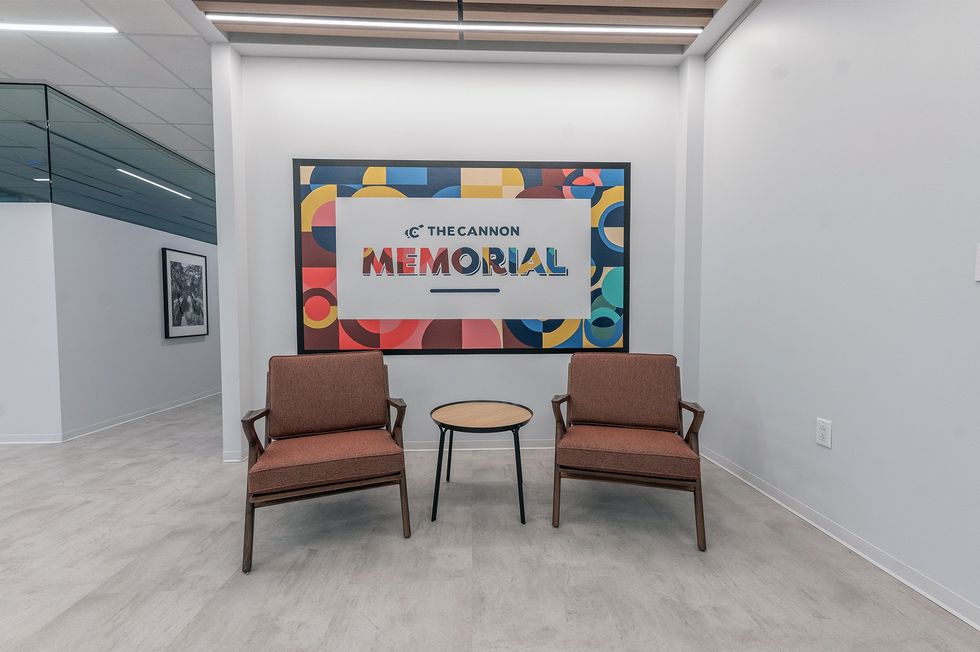
Introducing — The Cannon Memorial, which is opening its doors on Monday, May 13. Photo courtesy of The Cannon

The Cannon is gearing up to open its latest location featuring coworking and community events and programming.

The coworking concept, which announced The Cannon Memorial earlier this year, will officially open the new location on Monday, May 13, with a full week of community-focused events. The new location was developed in partnership with MetroNational, the real estate developer behind 300-acre mixed-use development in West Houston.

“MetroNational has long been recognized for offering exceptionally located, high quality, well amenitized office space,” says Anne Marie Ratliff, vice president of Asset Management at MetroNational, in a news release. “The Cannon Memorial diversifies our existing office portfolio to provide flexible space solutions for the evolving needs of the business community.”

The Cannon Memorial has 39 furnished offices, flex user space, dedicated seating, lockable storage, a fully stocked kitchen with complimentary coffee, and five bookable meeting rooms. Members will also receive 24/7-access to the facilities and free parking in the attached garage.

Beginning May 13 and running through May 17, potential members can try out the coworking space for free, as well as attend daily events:

  • Monday, May 13: Coffee & Community (2 to 3 pm)
  • Tuesday, May 14: Community Lunch (11:30 am to 12:30 pm)
  • Wednesday, May 15: Open House and Happy Hour (4 – 6 pm)
  • Thursday, May 16: Therapeutic Thursday with 15-minute massages (noon to 2 pm)
  • Friday, May 17: Cowboy Breakfast (9 to 10 am)

"As we open the doors to our next innovation focused workspace, we couldn't be more thrilled to share this moment with our community," says Jon Lambert, CEO of The Cannon. "This week marks not just the inauguration of a new physical space, but the realization of a shared vision and the culmination of an exceptional partnership with our partners at MetroNational. More than just a space, The Cannon Memorial will be an environment where innovation thrives.”

The Cannon Memorial has 39 furnished offices.
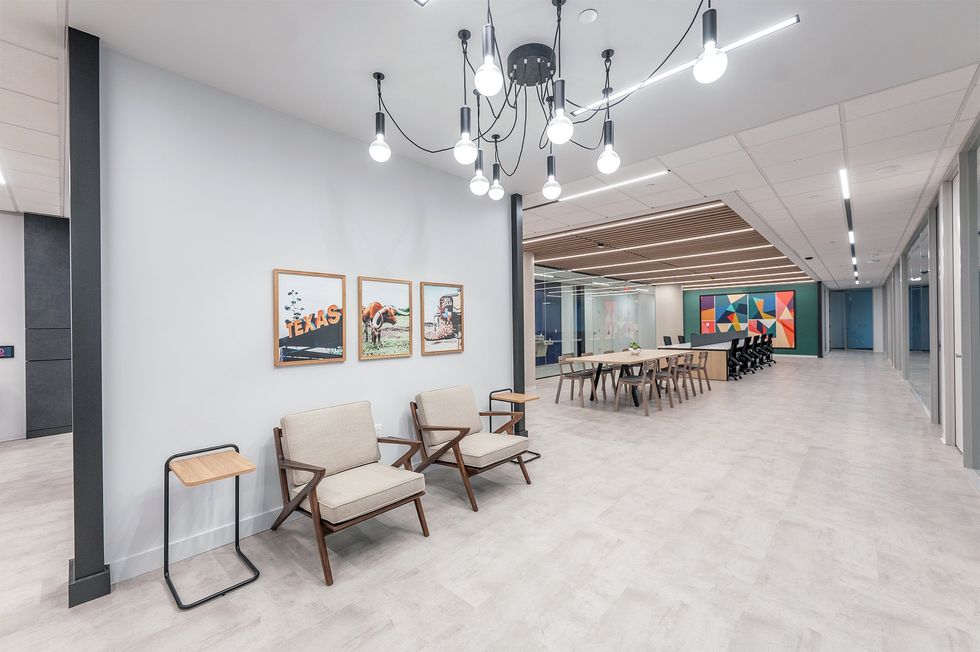
Photo courtesy of The Cannon
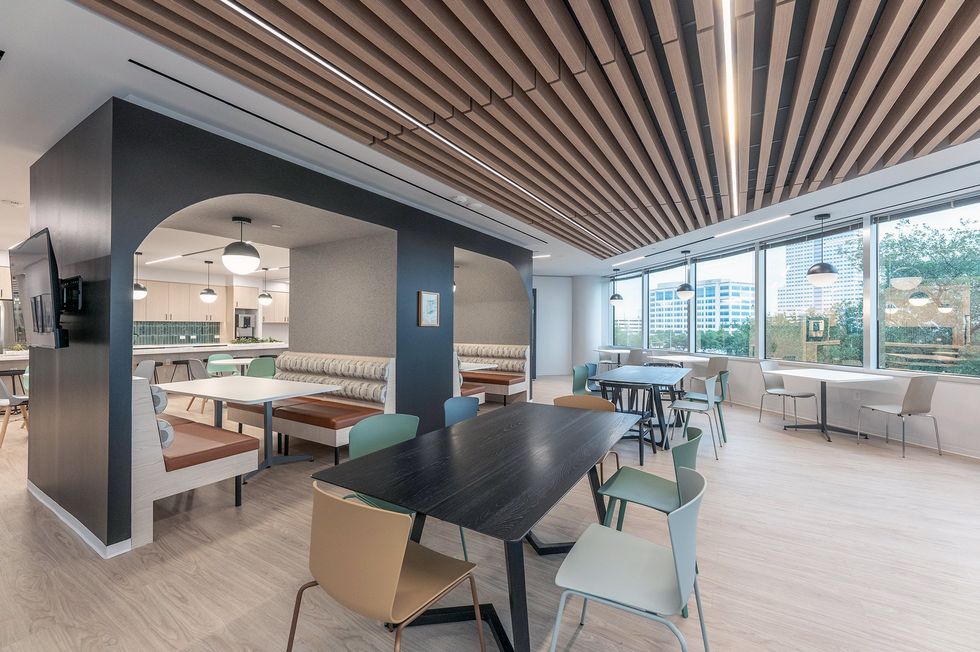
The Cannon is opening a new location just down the road from its headquarters. Photo courtesy of The Cannon

Houston coworking concept expands with new location

coming soon

The Cannon has announced its latest coworking location, and it's not too far from where the company's original facility launched.

The Cannon Memorial is expected to open this spring in Two Memorial City Plaza (820 Gessner) within MetroNational's Memorial City, a 265-acre planned development in west Houston. The coworking concept will take up one floor with 21,960 square feet of space.

"We are delighted to unveil The Cannon Memorial as a pivotal addition to Houston's dynamic business landscape," Jon Lambert, CEO of The Cannon, says in a news release. "Our expansion into Two Memorial City Plaza aligns seamlessly with our mission to cultivate innovation, collaboration, and success within the business community. We eagerly anticipate welcoming entrepreneurs and professionals to experience the unparalleled environment we've created."

The new location is less than three miles from The Cannon West Houston (1334 Brittmoore Rd) and will feature:

  • 38 private office spaces
  • accomodations for over 60 flex users
  • 24/7 access for members
  • free covered parking in the attached garage
  • programmed events, workshops, and networking sessions

“MetroNational is thrilled that The Cannon Memorial is opening and is another exciting milestone in our continued commitment to constantly elevate and enhance the services and experiences at Memorial City,” Anne Marie Ratliff, vice president of Asset Management at MetroNational, says in the release. “This partnership represents not just a collaboration but a testament to our dedication to staying at the forefront of innovation.”

The Cannon — founded in 2017 by Lawson Gow, the son of David Gow, founder of InnovationMap's parent company, Gow Media — has a presence in seven of Houston's regions, including west Houston, downtown, uptown, Fish Creek, The Woodlands, Pearland, and Galveston.

Ad Placement 300x100
Ad Placement 300x600

CultureMap Emails are Awesome

Rice launches 'brain economy' initiative at World Economic Forum

brain health

Rice University has launched an initiative that will position “brain capital” as a key asset in the 21st century.

Rice rolled out the Global Brain Economy Initiative on Jan. 21 at the World Economic Forum in Davos, Switzerland.

“This initiative positions brain capital, or brain health and brain skills, at the forefront of global economic development, particularly in the age of artificial intelligence,” the university said in a news release.

The Rice-based initiative, whose partners are the University of Texas Medical Branch in Galveston and the Davos Alzheimer’s Collaborative, aligns with a recent World Economic Forum and McKinsey Health Institute report titled “The Human Advantage: Stronger Brains in the Age of AI,” co-authored by Rice researcher Harris Eyre. Eyre is leading the initiative.

“With an aging population and the rapid transformation of work and society driven by AI, the urgency has never been greater to focus on brain health and build adaptable human skills—both to support people and communities and to ensure long-term economic stability,” says Amy Dittmar, a Rice provost and executive vice president for academic affairs.

This initiative works closely with the recently launched Rice Brain Institute.

In its first year, the initiative will establish a global brain research agenda, piloting brain economy strategies in certain regions, and introducing a framework to guide financial backers and leaders. It will also advocate for public policies tied to the brain economy.

The report from the McKinsey Health Institute and World Economic Forum estimates that advancements in brain health could generate $6.2 trillion in economic gains by 2050.

“Stronger brains build stronger societies,” Eyre says. “When we invest in brain health and brain skills, we contribute to long-term growth, resilience, and shared prosperity.”

Rice Alliance and the Ion leader Brad Burke to retire this summer

lasting legacy

Brad Burke—a Rice University associate vice president who leads the Ion District’s Rice Alliance for Technology and Entrepreneurship and is a prominent figure in Houston’s startup community—is retiring this summer after a 25-year career at the university.

Burke will remain at the Rice Alliance as an adviser until his retirement on June 30.

“Brad’s impact on Rice extends far beyond any single program or initiative. He grew the Rice Alliance from a promising campus initiative into one of the most respected university-based entrepreneurship platforms,” Rice President Reginald DesRoches said in a news release.

During Burke’s tenure, the Rice Business School went from unranked in entrepreneurship to The Princeton Review’s No. 1 graduate entrepreneurship program for the past seven years and a top 20 entrepreneurship program in U.S. News & World Report’s rankings for the past 14 years.

“Brad didn’t just build programs — he built an ecosystem, a culture, and a reputation for Rice that now resonates around the world,” said Peter Rodriguez, dean of the business school. “Through his vision and steady leadership, Rice became a place where founders are taken seriously, ideas are rigorously supported, and entrepreneurship is embedded in the fabric of the university.”

One of Burke’s notable achievements at Rice is the creation of the Rice Business Plan Competition. During his tenure, the competition has grown from nine student teams competing for $10,000 into the world’s largest intercollegiate competition for student-led startups. Today, the annual competition welcomes 42 student-led startups that vie for more than $1 million in prizes.

Away from Rice, Burke has played a key role in cultivating entrepreneurship in the energy sector: He helped establish the Energy Tech Venture Forum along with Houston Energy and Climate Startup Week.

Furthermore, Burke co-founded the Texas University Network for Innovation and Entrepreneurship in 2008 to bolster the entrepreneurship programs at every university in Texas. In 2016, the Rice Alliance assumed leadership of the Global Consortium of Entrepreneurship Centers.

In 2023, Burke received the Trailblazer Award at the 2023 Houston Innovation Awards and was recognized by the Deshpande Foundation for his contributions to innovation and entrepreneurship in higher education.

“Working with an amazing team to build the entrepreneurial ecosystem at Rice, in Houston, and beyond has been the privilege of my career,” Burke said in the release. “It has been extremely gratifying to hear entrepreneurs say our efforts changed their lives, while bringing new innovations to market. The organization is well-positioned to help drive exponential growth across startups, investors, and the entrepreneurial ecosystem.”

Starting April 15, John “JR” Reale Jr. will serve as interim associate vice president at Rice and executive director of the Rice Alliance. He is managing director of the alliance. Reale is co-founder of the Station Houston startup hub and a startup investor. He was also recently named director for startups and investor engagement at the Ion.

“The Rice Alliance has always been about helping founders gain advantages to realize their visions,” Reale said. “Under Brad’s leadership, the Rice Alliance has become a globally recognized platform that is grounded in trust and drives transformational founder outcomes. My commitment is to honor what Brad has built and led while continuing to serve our team and community, deepen relationships and deliver impact.”

Burke joined the Houston Innovators Podcast back in 2022. Listen to the full interview here.

Houston team uses CPRIT funding to develop nanodrug for cancer immunotherapy

cancer research

With a relative five-year survival rate of 50 percent, pancreatic cancer is a diagnosis nobody wants. At 60 percent, the prognosis for lung cancer isn’t much rosier. That’s because both cancers contain regulatory B cells (Bregs), which block the body’s natural immunity, making it harder to fight the enemies within.

Newly popular immunotherapies in a category known as STING agonists may stimulate natural cancer defenses. However, they can also increase Bregs while simultaneously causing significant side effects. But Wei Gao, assistant professor of pharmacology at the University of Houston College of Pharmacy, may have a solution to that conundrum.

Gao and her team have developed Nano-273, a dual-function drug, packaged in an albumin-based particle, that boosts the immune system to help it better fight pancreatic and lung cancers. Gao’s lab recently received a $900,000 grant from the Cancer Prevention and Research Institute of Texas (CPRIT) to aid in fueling her research into the nanodrug.

“Nano-273 both activates STING and blocks PI3Kγ—a pathway that drives Breg expansion, while albumin nanoparticles help deliver the drug directly to immune cells, reducing unwanted side effects,” Gao said in a press release. “This approach reduces harmful Bregs while boosting immune cells that attack cancer, leading to stronger and more targeted anti-tumor responses.”

In studies using models of both pancreatic and lung cancers, Nano-273 has shown great promise with low toxicity. Its best results thus far have involved using the drug in combination with immunotherapy or chemotherapy.

With the CPRIT funds, Gao and her team will be able to charge closer to clinical use with a series of important steps. Those include continuing to test Nano-273 alongside other drugs, including immune checkpoint inhibitors. Safety studies will follow, but with future patients in mind, Gao will also work toward improving her drug’s production, making sure that it’s safe and high-quality every time, so that it is eventually ready for trials.

Gao added: “If successful, this project could lead to a new type of immunotherapy that offers lasting tumor control and improved survival for patients with pancreatic and lung cancers, two diseases that urgently need better treatments."