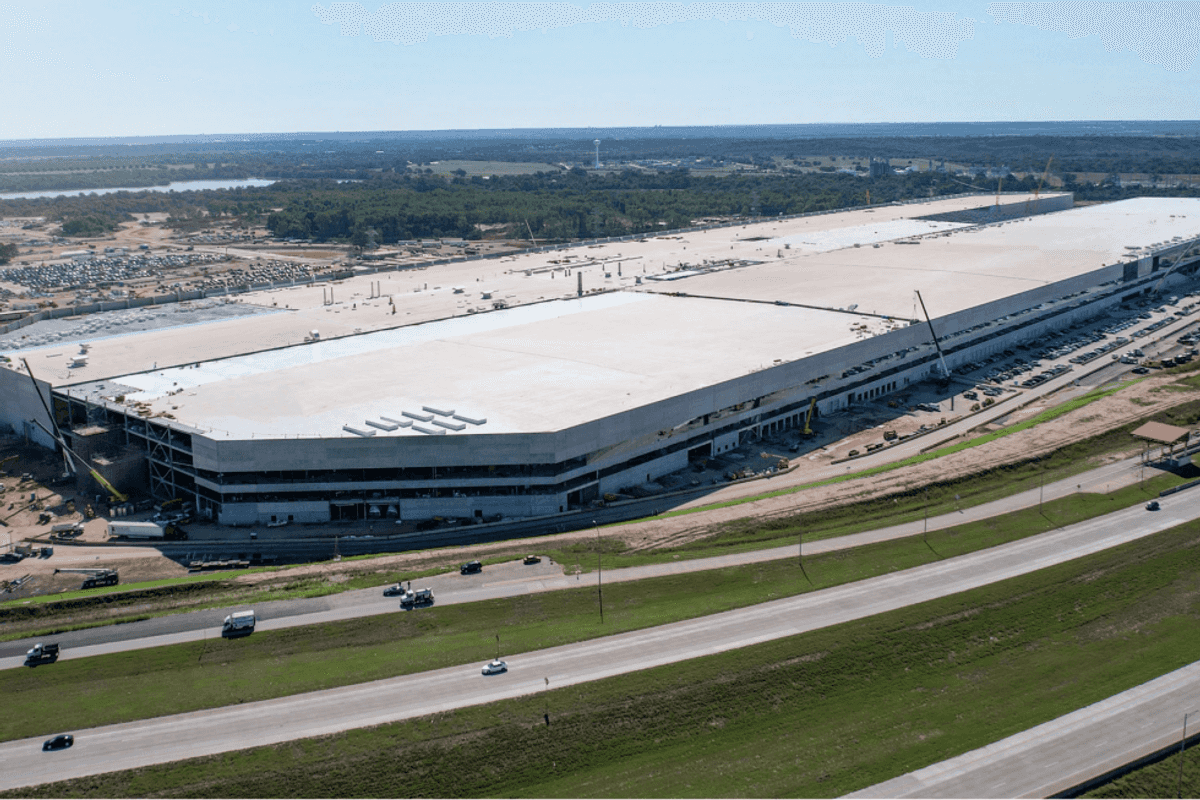
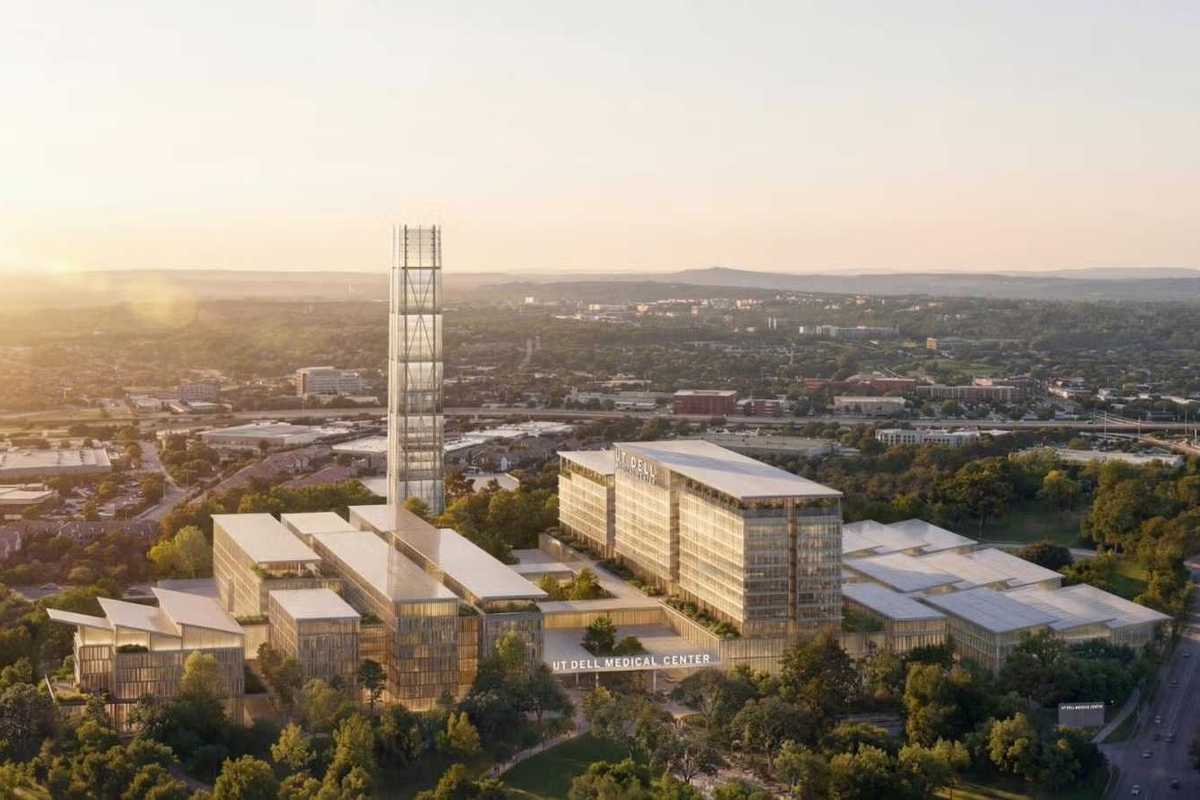
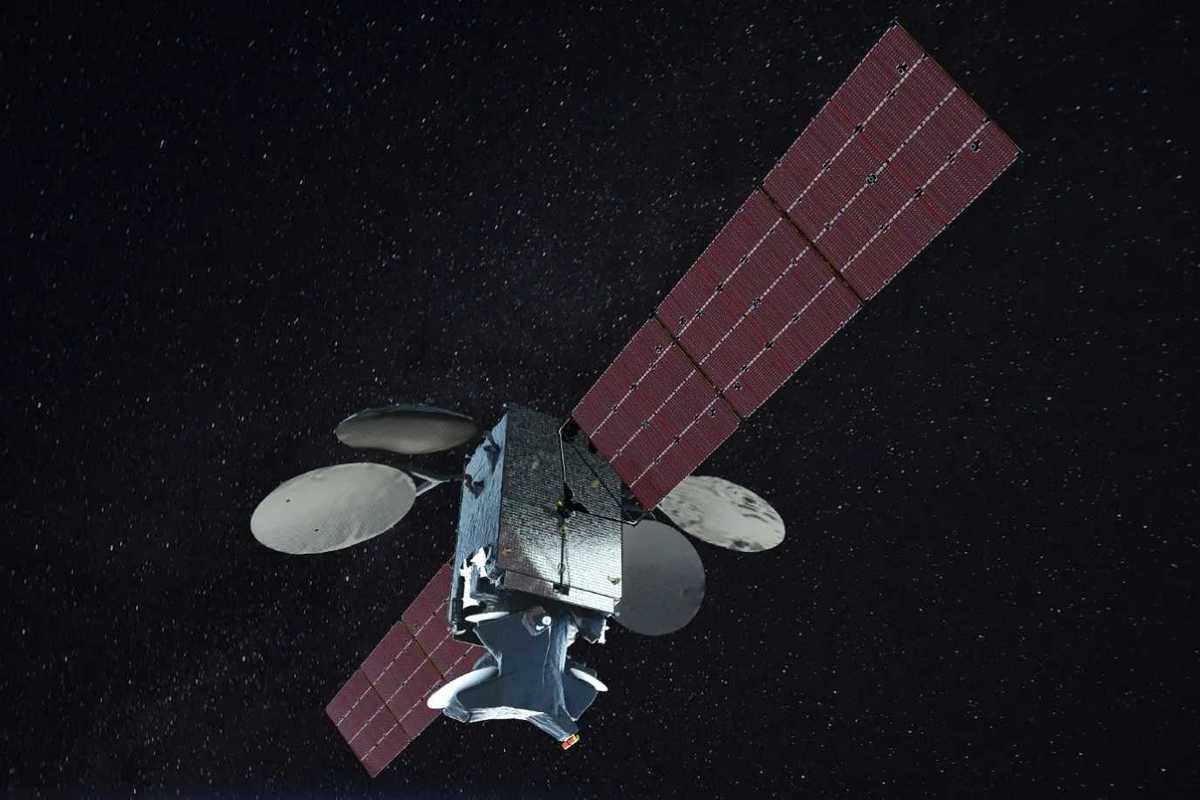
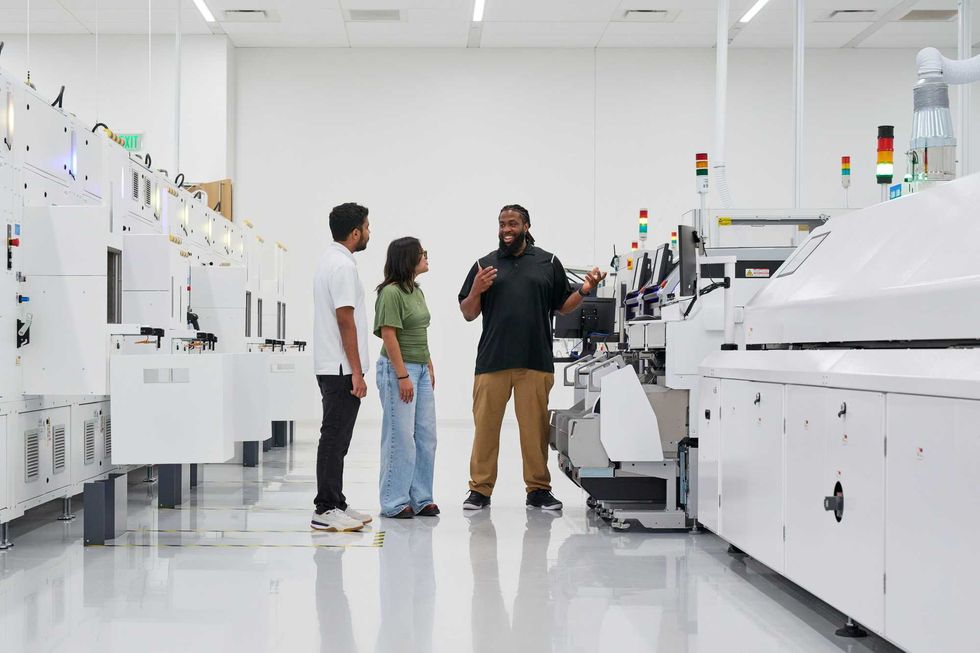
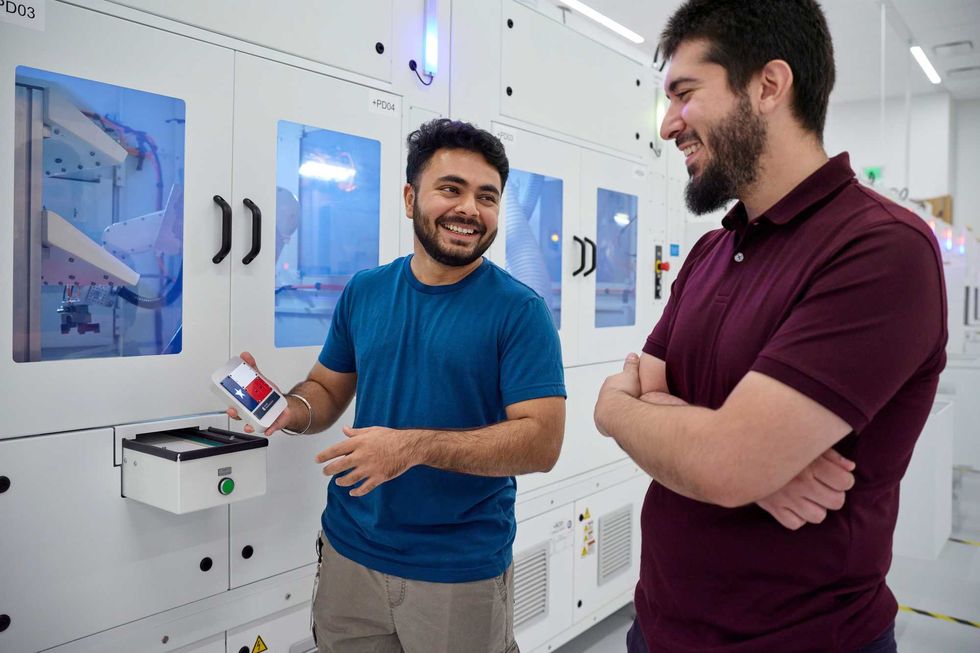
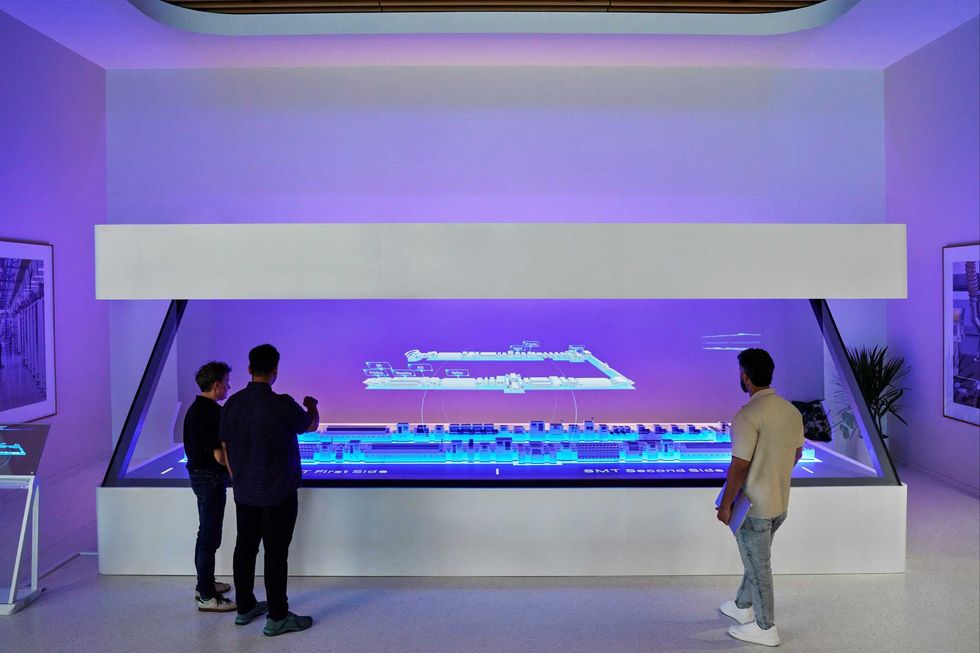
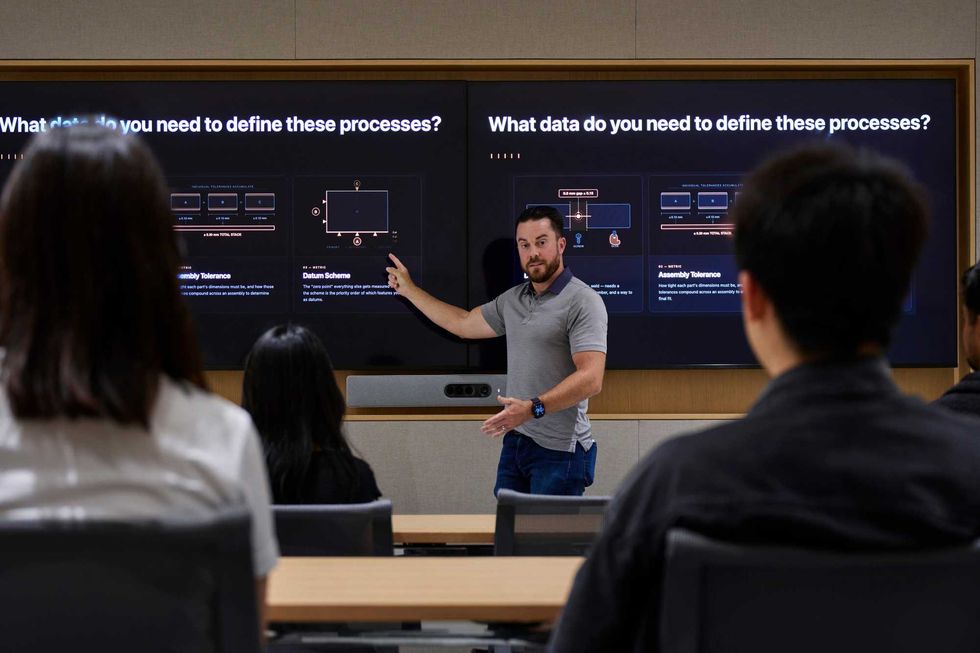
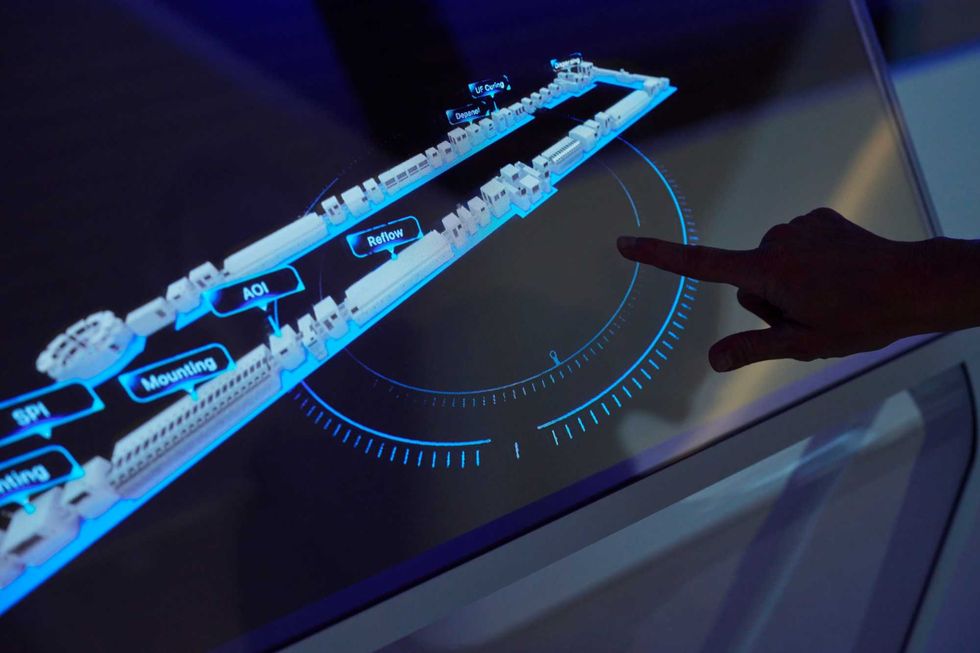
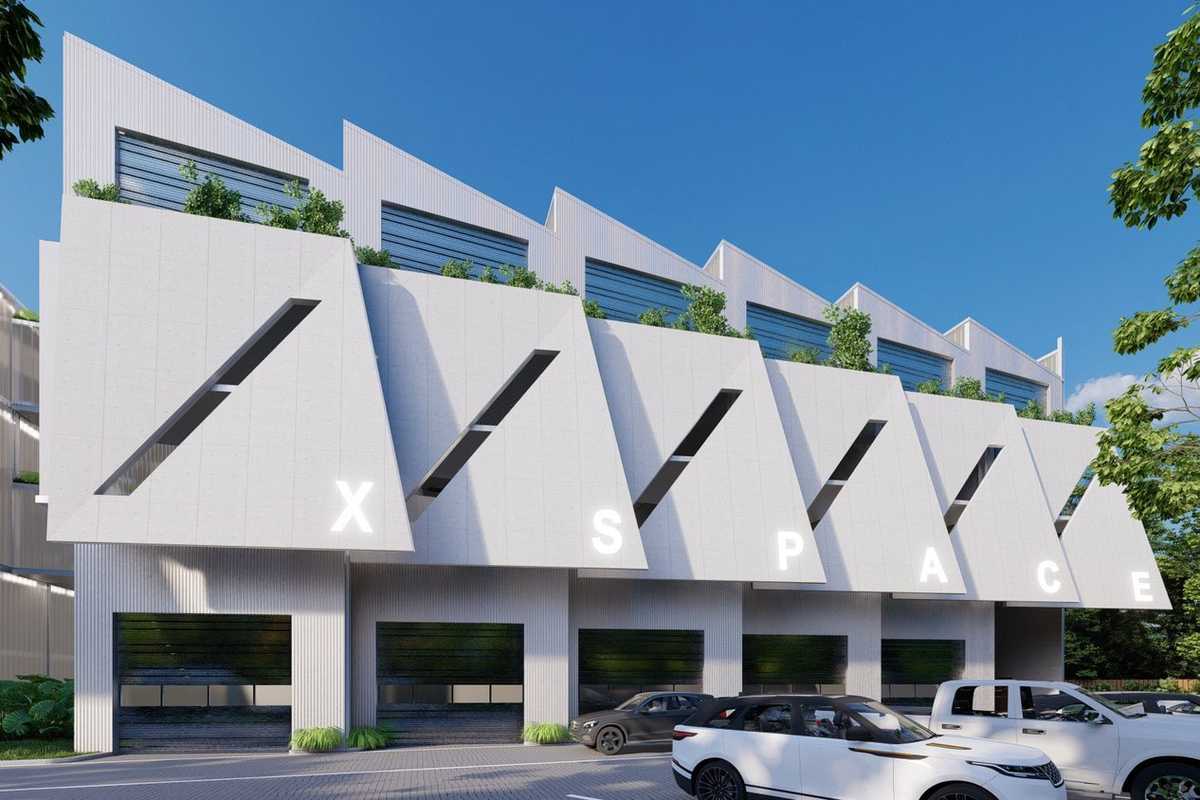
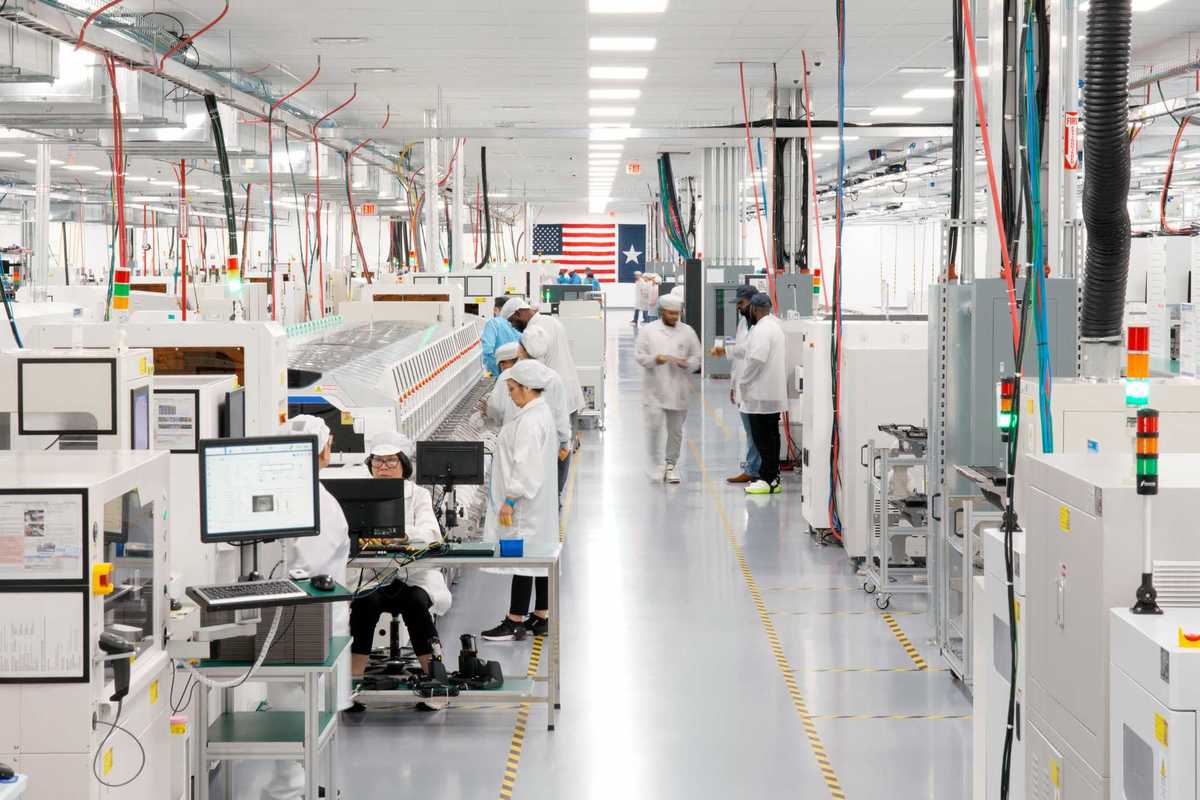
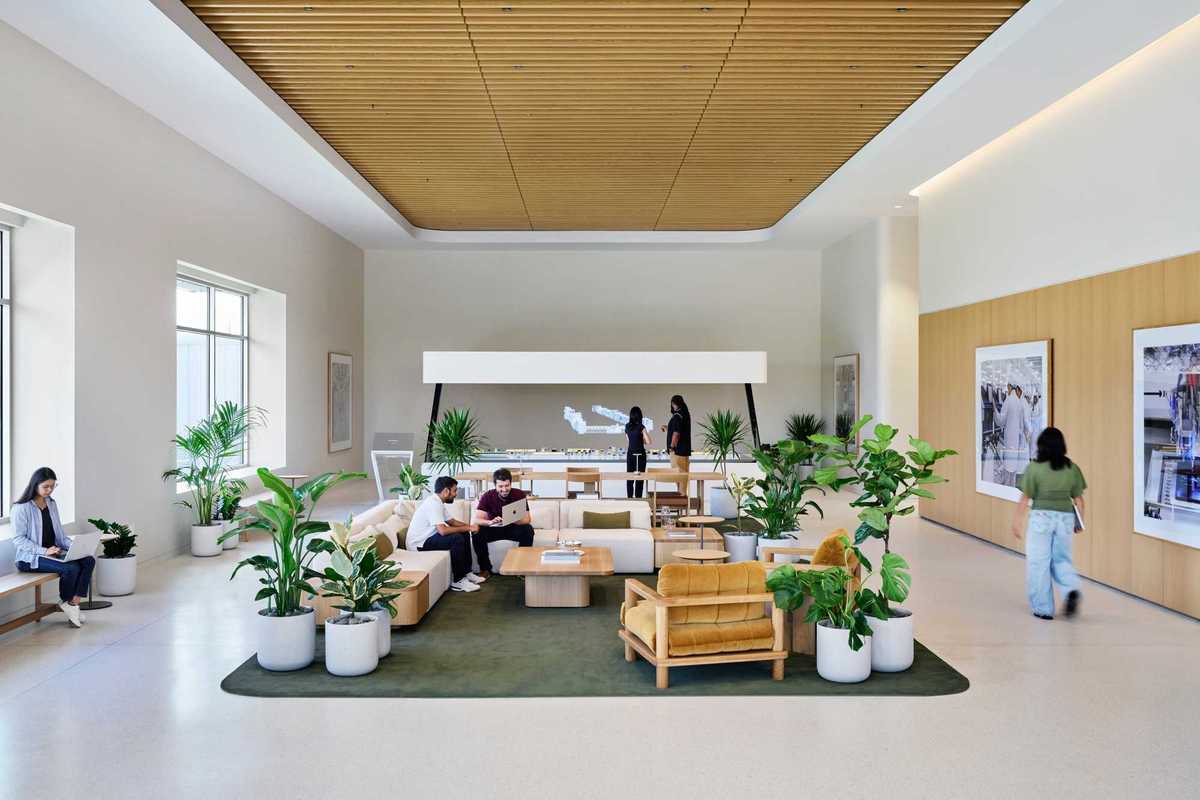
Apple's Advanced Manufacturing Center. Photos courtesy Apple

Tech giant Apple opens Advanced Manufacturing Center at massive Houston facility
up and running

Cupertino, California-based Apple Inc. unveiled its Advanced Manufacturing Center in the Houston area last week, marking the completion of the second of three facilities the tech giant plans to launch in the city by the end of this year.

The 20,000-square-foot training center will welcome small- and medium-sized businesses for free training and educational sessions to "help accelerate smart manufacturing across America," according to a release from Apple. Apple opened a similar Apple Manufacturing Academy in Detroit last year.

The AMC is part of Apple's 500,000-square-foot site in northwest Harris County. It also features a massive manufacturing site for Apple’s advanced AI servers and Mac mini. The facility was originally slated to open in 2026, but Apple began producing its advanced AI servers ahead of schedule in 2025.

The company said it plans to begin manufacturing its Mac mini at the site this year. The move will bring production of the compact desktop computer to the U.S. for the first time.

“In less than nine months, we have invested hundreds of millions of dollars into this Houston facility. We stood up a factory, started production, and shipped the first advanced AI servers off the line. Today, we’re thrilled to open our new Advanced Manufacturing Center, a place where businesses, workers, and students can learn the same innovative processes that we use to make Apple’s most groundbreaking products. And we’re pleased to begin Mac mini production later this year,” Tim Cook, Apple’s CEO, said in the news release. “We believe in American workers and American ingenuity, and we are moving at an incredible pace because we want to build more than great products. We want to build the future of American manufacturing.”

Apple's Advanced Manufacturing Center. Photos courtesy Apple

Apple's Houston expansion is part of a $600 billion commitment the company made to the U.S. in 2025.

The company originally announced plans in February 2025 to open a 250,000-square-foot Houston factory, but doubled the facility's planned size about a year later. Apple has reported that the factory will employ thousands of workers.

“Houston is grateful to Apple for this significant investment in our city. The Advanced Manufacturing Center will create local jobs and will continue improving the quality of life of Houston residents," Houston Mayor John Whitmire added in the release. "The AMC also recognizes our city as a growing technology hub and solidifies Houston’s leadership in the manufacturing sector of the United States.”

The opening comes on the heels of New Jersey-based pharmaceutical giant Bristol Myers Squibb Co. officially naming Houston home of its new $2.3 billion, state-of-the-art manufacturing site. Read more here.

Apple is bringing the production of its Mac mini to Houston. Getty Images

Tech giant Apple doubles down on Houston with new production facility

coming soon

Tech giant Apple announced that it will double the size of its Houston manufacturing footprint as it brings production of its Mac mini to the U.S. for the first time.

The company plans to begin production of its compact desktop computer at a new factory at Apple’s Houston manufacturing site later this year. The move is expected to create thousands of jobs in the Houston area, according to Apple.

Last year, the Cupertino, California-based company announced it would open a 250,000-square-foot factory to produce servers for its data centers in the Houston area. The facility was originally slated to open in 2026, but Apple reports it began production ahead of schedule in 2025.

The addition of the Mac mini operations at the site will bring the footprint to about 500,000 square feet, the Houston Chronicle reports. The New York Times previously reported that Taiwanese electronics manufacturer Foxconn would be involved in the Houston factory.

Apple also announced plans to open a 20,000-square-foot Advanced Manufacturing Center in Houston later this year. The project is currently under construction and will "provide hands-on training in advanced manufacturing techniques to students, supplier employees, and American businesses of all sizes," according to the announcement. Apple opened a similar Apple Manufacturing Academy in Detroit last year.

Apple doubles down on Houston with new production facility, training center Photo courtesy Apple.

“Apple is deeply committed to the future of American manufacturing, and we’re proud to significantly expand our footprint in Houston with the production of Mac mini starting later this year,” Tim Cook, Apple’s CEO, said in the news release. “We began shipping advanced AI servers from Houston ahead of schedule, and we’re excited to accelerate that work even further.”

Apple's Houston expansion is part of a $600 billion commitment the company made to the U.S. in 2025.

Ad Placement 300x100
Ad Placement 300x600

CultureMap Emails are Awesome

Houston ranks No. 3 among rising coding markets in U.S.

city code

When you think of coders—the wizards who design, write and test programming languages for software and mobile apps—tech hotbeds like Silicon Valley and Austin might pop into your head.

But Houston has earned a spot on the coding map.

A new study puts the Houston area in third place among the fastest-growing metros for coding in the U.S.

The study, published by coding platform Coddy Tech, ranks Albuquerque, New Mexico, as the top on-the-rise market for coding. San Antonio sits in second place.

Houston earned a “momentum score” of 77 out of 100. The momentum category measured job growth for developers, rising interest in coding as measured by online searches, and growth in hackathon activity.

Here are the 10 fastest-rising U.S. metros for coding:

  • No. 1 Albuquerque, New Mexico
  • No. 2 San Antonio
  • No. 3 Houston
  • No. 4 Jacksonville, Florida
  • No. 5 Cape Coral, Florida
  • No. 6 Columbia, South Carolina
  • No. 7 New York City
  • No. 8 Salt Lake City
  • No. 9 North Port, Florida
  • No. 10 Tampa, Florida

The study analyzed the country’s 75 largest metros “to map where coding has taken hold and where it’s catching fire.” It took into account learning searches, GitHub developer density, job growth, interest in bootcamps and hackathon activity. Only 64 metros were eligible for the ranking of fastest-growing markets.

Austin tops ranking of coding capitals

Coddy crowned Austin the coding capital of the country, with Houston landing at No. 24 in the ranking of the most established coding hubs. San Antonio appeared at No. 16 and Dallas at No. 22.

Here are the top 10 coding hubs:
  • No. 1 Austin
  • No. 2 San Jose, California
  • No. 3 Seattle
  • No. 4 San Francisco
  • No. 5 New York City
  • No. 6 Salt Lake City
  • No. 7 Denver
  • No. 8 San Diego
  • No. 9 Los Angeles
  • No. 10 Raleigh, North Carolina

Why do coders matter?

Without coders, cellphones, laptops, smart TVs and other devices might not work well — or at all. Coding allows people to communicate with these devices, according to ComputerScience.org.

“Since computers do not communicate like humans, coding acts as a translator,” ComputerScience.org explains. “Code converts human input into numerical sequences that computers understand.”

NASA awards Texas Space Commission role in $10M aerospace workforce initiative

space hub

The Texas Space Commission is one of seven organizations tapped by NASA to lead the space agency's new state and regional Skilled Technical Workforce Hubs.

The $10.5 million initiative aims to help foster the next generation of skilled workers in the aerospace industry.

Through the new program, the hubs will work together over the next three years to meet growing industry needs by aligning “industry employers, community colleges, high school career and technical education programs, and workforce systems,” according to a news release from NASA.

It aims to create clear pathways for workers in technical jobs, like welding, electrical work and machining, plus other jobs that require advanced STEM knowledge but do not require a bachelor’s degree.

“The need for technical talent is already urgent and will only continue to grow as we return humanity to the Moon and set our sights on Mars and beyond,” Elaine Ho, associate administrator for the Office of STEM Engagement at NASA, said in the release. “NASA is uniquely positioned to be the catalyst and convener that accelerates America’s aerospace workforce development and fosters the next generation of technicians.”

As part of the initiative, the TSC plans to launch the statewide network known as the Texas Space STEM Alliance (TSSA). According to a TSC release, the TSSA will link up schools, colleges, workforce groups and aerospace companies to build a pipeline for space-industry workers.

Additionally, the TSC is developing the Texas Aerospace Pathways Plus (TAP+) portal to consolidate information on training programs, internships, apprenticeships, employment opportunities and scholarships, while also identifying regional gaps in workforce opportunities.

Other state and regional organizations to receive the award include:

  • Antelope Valley Community College District in Lancaster, California
  • Georgia Tech Research Corporation
  • Minnesota State Colleges and Universities
  • Southern Utah University
  • Space Florida
  • State Board for Community Colleges and Occupation Education, Arapahoe Community College in Littleton, Colorado

The Houston area is home to more than 43,000 aerospace and aviation professionals, according to the Greater Houston Partnership. The Texas Space Commission has been awarded $150 million for 24 projects since being established to increase the state’s space economy in 2023.

The funding for the NASA state hubs comes from NASA’s Office of STEM Engagement through its Next Gen STEM Project.

Amazon's robotaxi service Zoox rolls out in 'sprawling' Houston market

On the Road

Amazon-owned robotaxi ride-hailing service Zoox is zooming into Houston in September, becoming the latest robotaxi operator jockeying for local riders.

Initially, self-driving retrofitted SUVs with safety drivers on board will serve downtown Houston, centrally located tourist hotspots, and certain residential neighborhoods. The SUVs will test Houston roads before Zoox rolls out autonomous robotaxis here, the company says.

Zoox takes Houston for a test drive

At the outset, Zoox says, a limited number of vehicles will be driven by people to gather data about Houston roads.

Zoox test drive Photo courtesy of Zoox

“This helps create a detailed picture of each street, from road geometry to traffic lights,” the company says. “Once we have mapped out an area, we will test autonomous driving capabilities. Safety and operational readiness govern the pace of our rollout.”

Zoox says its robotaxi differs from vehicles operated by other ride-hailing services.

The all-electric robotaxi “is purpose-built for autonomous ride-hailing and designed for riders from day one,” the company says. “It has no traditional driving controls and instead has carriage-style seating, sliding glass doors, and features that let the rider personalize their journey.”

To help manage the fleet, Zoox plans to open a depot in Houston for vehicle charging and maintenance, a representative says via email.

Along with Houston, Zoox is launching this month in San Diego. The ride-hailing service already operates in Austin, Dallas, Atlanta, Las Vegas, Los Angeles, Miami, Phoenix, the San Francisco Bay Area, Seattle, and Washington, D.C.

Zoox breaks into “sprawling” Houston market

Zoox describes Houston as its “most sprawling market to date.”

“Driving here means navigating complex service-road networks, unique merging scenarios, and challenging environmental conditions, including severe heat, heavy rain, and urban flooding,” the company says. “It’s a rigorous test of our technology across geography and terrain.”

Zoox will join two other autonomous ride-hailing services in Houston:

  • Waymo began rolling in Houston in February. Alphabet, the parent company of Google, owns Waymo.
  • Electric vehicle manufacturer Tesla began offering robotaxi services earlier this year.

A third Zoox competitor is arriving within the next year. A partnership comprising rideshare provider Uber, EV manufacturer Lucid, and autonomous technology company Nuro plans to launch a robotaxi service in Houston by mid-2027.

---

This article originally appeared on CultureMap.com.