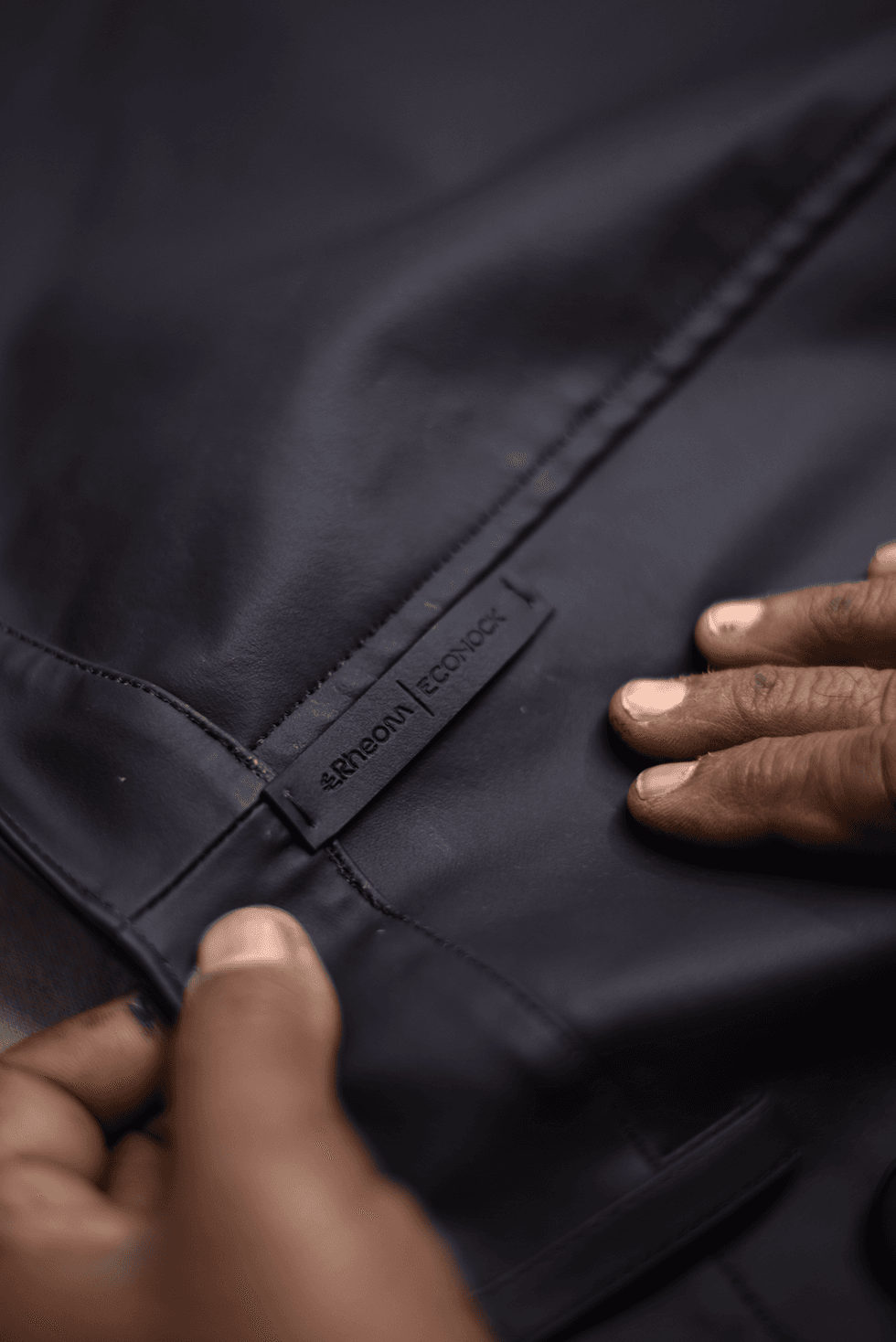
Earlier this month, Houston-based Rheom Materials and India’s conscious design studio Econock unveiled a collaborative capsule collection that signaled more than just a product launch.
Hosted at Lineapelle—long considered the global epicenter of the world's premier leather supply chain—in the vaulted exhibition halls of Rho-Fiera Milano, the collection centered around Rheom’s 91 percent bio-based leather alternative, Shorai.
It was a bold move, one that shifted sustainability from a concept discussed in panel sessions to garments that buyers could touch and wear.
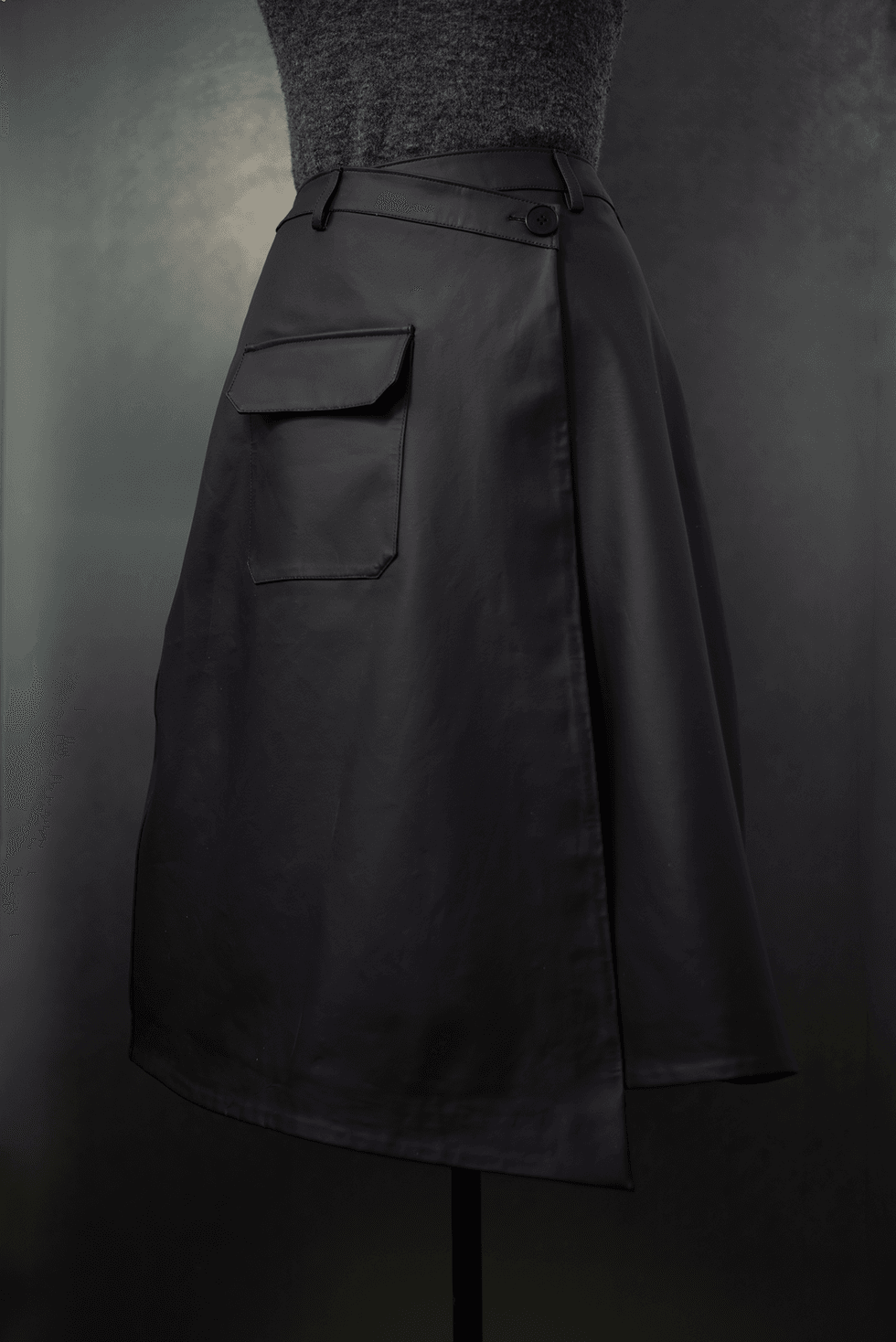
The collection featured a bomber-style jacket, an asymmetrical skirt and a suite of accessories—all fabricated from Shorai.
The standout piece, a sculptural jacket featuring a funnel neck and dual-zip closure, was designed for movement, challenging assumptions about performance limitations in bio-based materials. The design of the asymmetrical skirt was drawn from Indian armored warrior traditions, according to Rheom, with biodegradable corozo fasteners.
Built as a modular wardrobe rather than isolated pieces, the collection reflects a shared belief between Rheom and Econock in designing objects that adapt to daily life, according to the companies.
The collection was born out of a new partnership between Rheom and Econock, focused on bringing biobased materials to the market. According to Rheom, the partnership solves a problem that has stalled the adoption of many next-gen textiles: supply chain friction.
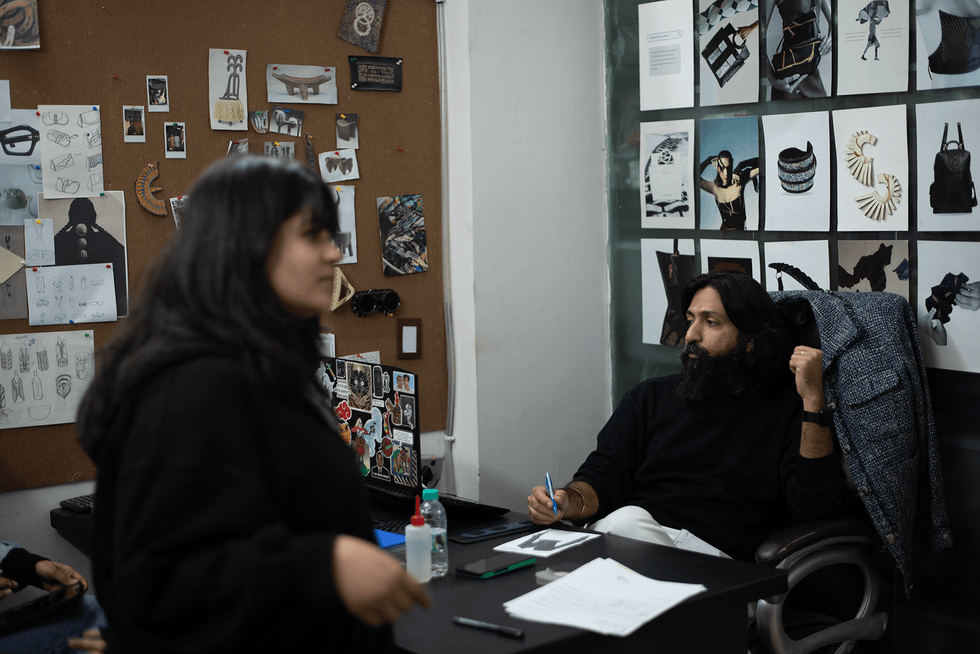
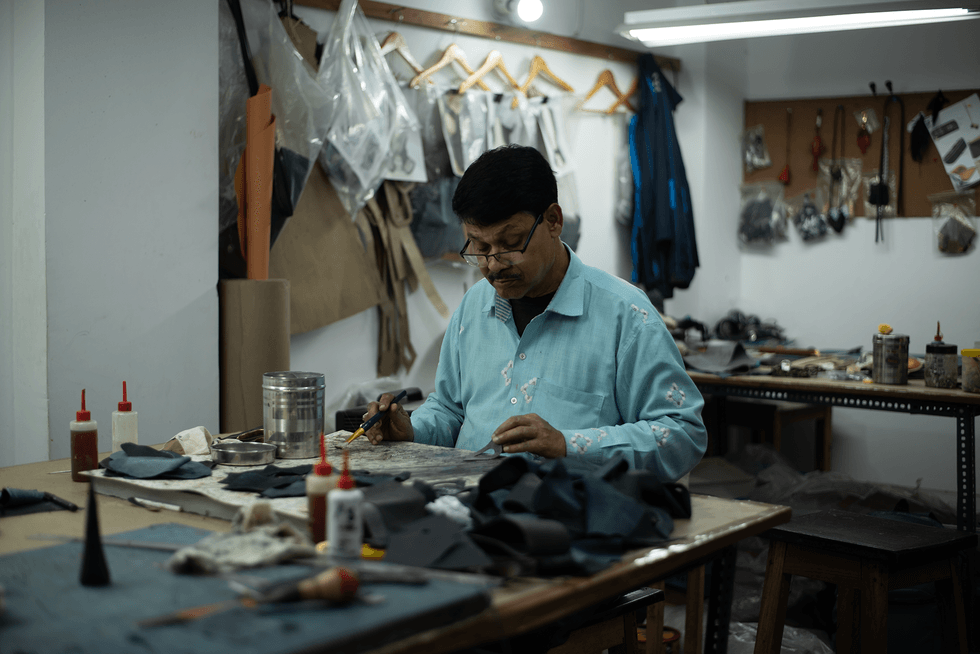
While Rheom focuses on engineering scalable bio-based materials, New Delhi-based Econock brings the complementary design and manufacturing ecosystem that integrates artisans, circular materials and production expertise to translate the innovative material into finished goods.
"This partnership removes one of the biggest barriers brands face when adopting next-generation materials,” Megan Beck, Rheom’s director of product, shared in a news release. “By reducing friction across the supply chain, Rheom can connect brands directly with manufacturers who already know how to work with Shorai, making the transition to more sustainable materials far more accessible.”
Sanyam Kapur, advisor of growth and impact at Econock, added: “Our partnership with Rheom Materials represents the benchmark of responsible design where next-gen materials meet craft, creativity, and real-world scalability.”
Rheom, formerly known as Bucha Bio, has developed Shorai, a sustainable leather alternative that can be used for apparel, accessories, car interiors and more; and Benree, an alternative to plastic without the carbon footprint. In 2025, Rheom was a finalist for Startup of the Year in the Houston Innovation Awards.
Shorai is already used by fashion lines like Wuxly and LuckyNelly, according to Rheom. The company scaled production of the sugar-based material last year and says it is now produced in rolls that brands can take to market with the right manufacturer.