


This week's roundup of Houston innovators includes Tammi Wallace of the Greater Houston LGBT Chamber of Commerce, Adam Putterman of OURS, and Ghazal Qureshi of UpBrainery. Courtesy photos

Editor's note: In this week's roundup of Houston innovators to know, I'm introducing you to three local innovators across industries — from edtech to mental health — recently making headlines in Houston innovation.

Tammi Wallace, co-founder of the Greater Houston LGBT Chamber of Commerce

Tammi Wallace of the Greater Houston LGBT Chamber of Commerce was a panelist on The Ion's Pride in Tech event. Photo via LinkedIn

There are a few days left in Pride Month, and Houston's tech community came together last week to celebrate — but also discuss some of the challenges within the ecosystem for LGBTQIA+ entrepreneurs.

In a Q&A with InnovationMap, Tammi Wallace, co-founder of the Houston LGBT Chamber of Commerce, shared her advice for LGBTQIA+ innovators and allies.

"Get involved with the Houston LGBT Chamber of Commerce," she says. "Since 2016, the chamber has been working to build a strong community to support LGBTQIA+ entrepreneurs and get them access to resources to help their businesses grow and thrive." Click here to read more.

Adam Putterman, co-founder of OURS
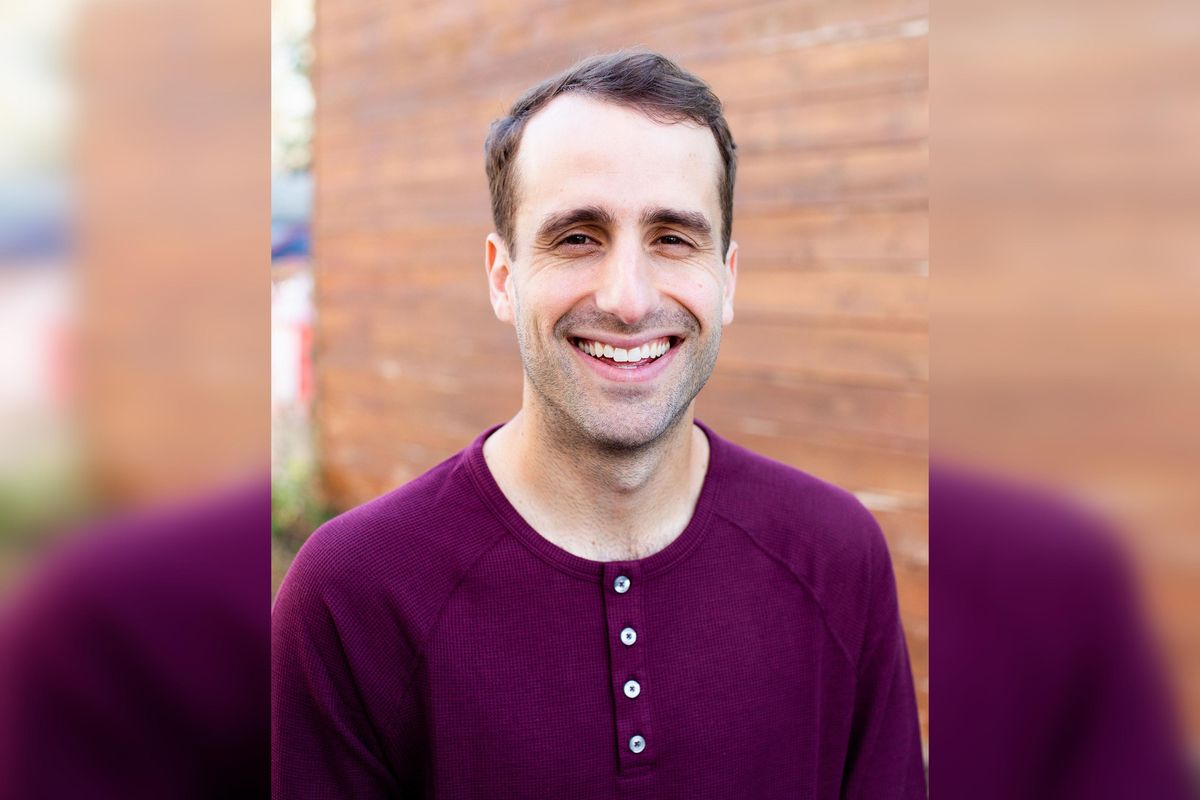
Adam Putterman, co-founder of OURS, shares how he jumped on the opportunity that is innovating the future of relationship health. Photo courtesy of OURS

More than ever before, people are warming up to the idea of seeking professional health care for more than just their bodies, Adam Putterman, co-founder of OURS says on the most recent episode of the Houston Innovators Podcast.

"We've seen a massive shift in the perception of counseling and therapy — and, more importantly, all the aspects of health that are not just your body," he explains. "It's no longer just going to the gym, it's meditating, coaching for a professional field. We've found that people are taking that mindset and applying it to their relationship as well."

After launching its beta in 2020, OURS worked in stealth to develop its product, which officially launched in May. The platform costs $400 for a four-week program that includes six personalized interactive sessions with an OURS guide at the helm of the experience. These one-hour technology-powered sessions are based around an innovative new technology, called Loveware, and include dynamic and meaningful conversations between a couple that are built around the magic that comes from being in the room with an expert. Click here to listen to the full episode and read more.

Ghazal Qureshi, founder and CEO of UpBrainery

Innovations like artificial intelligence, augmented reality, and machine learning certainly have advantages in the edtech sector. Photo courtesy

The education community is facing big changes thanks to technology and new innovations. In a guest column for InnovationMap, Ghazal Qureshi — founder and CEO of UpBrainery, a Houston-based immersive educational technology platform — shares how things like artificial intelligence, machine learning, and more have the potential to impact the sector.

"AI has created benefits for educators as well, such as it has created a task automation system in which all kinds of daily mundane tasks including grading papers, admin work, replying to queries, etc. have been directly automated," she writes. "Although adopting cutting-edge technology in the educational industry for most institutions is certainly not a piece of cake as it is time-consuming and very costly." Click here to read more.

Ad Placement 300x100
Ad Placement 300x600

CultureMap Emails are Awesome

MD Anderson makes AI partnership to advance precision oncology

AI Oncology

Few experts will disagree that data-driven medicine is one of the most certain ways forward for our health. However, actually adopting it comes at a steep curve. But what if using the technology were democratized?

This is the question that SOPHiA GENETICS has been seeking to answer since 2011 with its universal AI platform, SOPHiA DDM. The cloud-native system analyzes and interprets complex health care data across technologies and institutions, allowing hospitals and clinicians to gain clinically actionable insights faster and at scale.

The University of Texas MD Anderson Cancer Center has just announced its official collaboration with SOPHiA GENETICS to accelerate breakthroughs in precision oncology. Together, they are developing a novel sequencing oncology test, as well as creating several programs targeted at the research and development of additional technology.

That technology will allow the hospital to develop new ways to chart the growth and changes of tumors in real time, pick the best clinical trials and medications for patients and make genomic testing more reliable. Shashikant Kulkarni, deputy division head for Molecular Pathology, and Dr. J. Bryan, assistant professor, will lead the collaboration on MD Anderson’s end.

“Cancer research has evolved rapidly, and we have more health data available than ever before. Our collaboration with SOPHiA GENETICS reflects how our lab is evolving and integrating advanced analytics and AI to better interpret complex molecular information,” Dr. Donna Hansel, division head of Pathology and Laboratory Medicine at MD Anderson, said in a press release. “This collaboration will expand our ability to translate high-dimensional data into insights that can meaningfully advance research and precision oncology.”

SOPHiA GENETICS is based in Switzerland and France, and has its U.S. offices in Boston.

“This collaboration with MD Anderson amplifies our shared ambition to push the boundaries of what is possible in cancer research,” Dr. Philippe Menu, chief product officer and chief medical officer at SOPHiA GENETICS, added in the release. “With SOPHiA DDM as a unifying analytical layer, we are enabling new discoveries, accelerating breakthroughs in precision oncology and, most importantly, enabling patients around the globe to benefit from these innovations by bringing leading technologies to all geographies quickly and at scale.”

Houston company plans lunar mission to test clean energy resource

lunar power

Houston-based natural resource and lunar development company Black Moon Energy Corporation (BMEC) announced that it is planning a robotic mission to the surface of the moon within the next five years.

The company has engaged NASA’s Jet Propulsion Laboratory (JPL) and Caltech to carry out the mission’s robotic systems, scientific instrumentation, data acquisition and mission operations. Black Moon will lead mission management, resource-assessment strategy and large-scale operations planning.

The goal of the year-long expedition will be to gather data and perform operations to determine the feasibility of a lunar Helium-3 supply chain. Helium-3 is abundant on the surface of the moon, but extremely rare on Earth. BMEC believes it could be a solution to the world's accelerating energy challenges.

Helium-3 fusion releases 4 million times more energy than the combustion of fossil fuels and four times more energy than traditional nuclear fission in a “clean” manner with no primary radioactive products or environmental issues, according to BMEC. Additionally, the company estimates that there is enough lunar Helium-3 to power humanity for thousands of years.

"By combining Black Moon's expertise in resource development with JPL and Caltech's renowned scientific and engineering capabilities, we are building the knowledge base required to power a new era of clean, abundant, and affordable energy for the entire planet," David Warden, CEO of BMEC, said in a news release.

The company says that information gathered from the planned lunar mission will support potential applications in fusion power generation, national security systems, quantum computing, radiation detection, medical imaging and cryogenic technologies.

Black Moon Energy was founded in 2022 by David Warden, Leroy Chiao, Peter Jones and Dan Warden. Chiao served as a NASA astronaut for 15 years. The other founders have held positions at Rice University, Schlumberger, BP and other major energy space organizations.

Houston co. makes breakthrough in clean carbon fiber manufacturing

Future of Fiber

Houston-based Mars Materials has made a breakthrough in turning stored carbon dioxide into everyday products.

In partnership with the Textile Innovation Engine of North Carolina and North Carolina State University, Mars Materials turned its CO2-derived product into a high-quality raw material for producing carbon fiber, according to a news release. According to the company, the product works "exactly like" the traditional chemical used to create carbon fiber that is derived from oil and coal.

Testing showed the end product met the high standards required for high-performance carbon fiber. Carbon fiber finds its way into aircraft, missile components, drones, racecars, golf clubs, snowboards, bridges, X-ray equipment, prosthetics, wind turbine blades and more.

The successful test “keeps a promise we made to our investors and the industry,” Aaron Fitzgerald, co-founder and CEO of Mars Materials, said in the release. “We proved we can make carbon fiber from the air without losing any quality.”

“Just as we did with our water-soluble polymers, getting it right on the first try allows us to move faster,” Fitzgerald adds. “We can now focus on scaling up production to accelerate bringing manufacturing of this critical material back to the U.S.”

Mars Materials, founded in 2019, converts captured carbon into resources, such as carbon fiber and wastewater treatment chemicals. Investors include Untapped Capital, Prithvi Ventures, Climate Capital Collective, Overlap Holdings, BlackTech Capital, Jonathan Azoff, Nate Salpeter and Brian Andrés Helmick.

---

This article originally appeared on our sister site, EnergyCapitalHTX.com.