Ad Placement 300x100
Ad Placement 300x600

CultureMap Emails are Awesome

Report: Houston ranks among 10 most affordable metros to raise a child

Family Matters

Raising a child is not an easy or inexpensive feat, but a new study has determined Houston parents have the 7th lowest childrearing costs in the country.

SmartAsset's new report, "Cost of Raising a Child in Major U.S. Metros – 2026 Study," calculated year-over-year changes in the annual cost of raising a child (factoring in childcare, additional housing costs, food, transportation, medical costs and other necessities) in the 48 largest U.S. metro areas. MIT's Living Wage Calculator was used to compare the living costs of a household with two working adults and one child to that of a childless household with two working adults.

Childrearing costs in Houston-Pasadena-The Woodlands have grown 3.37 percent since last year, totaling $22,605 for a family of three in 2026. That's $737 more than what it took to raise a child in 2025 and $1,209 higher than in 2024.

This is how SmartAsset broke down the annual cost for raising a child in the Houston area:

  • Cost of childcare: $10,265
  • Cost of food: $1,721
  • Other expenses: $10,619

Houston ranked 42nd in SmartAsset's national list of cities with the highest childrearing costs in 2026, making it the No. 7 most affordable U.S. metro.

San Francisco-Oakland-Fremont in California topped the list with the highest childrearing costs in the U.S., at $43,171. The cost for raising a child in this California metro soared nearly 11 percent higher since last year.

Memphis, Tennessee ranked dead last as the most affordable U.S. metro for raising a child in 2026. Families will spend less than $20,000 to raise a child in Memphis, only 3.24 percent more than what was needed in 2025.

Raising a child in other Texas metros
It may come as no surprise that Austin is the most expensive place to raise a child in Texas, and it appeared as the 31st most expensive U.S. metro for families. Parents will spend nearly $25,000 to raise a child in the state's capital city, which is $703 higher than it was a year ago.

Two other Texas metros join Houston among the top 10 most affordable U.S. metros for raising a family: San Antonio-New Braunfels (No. 3) and Dallas-Fort Worth-Arlington (No. 10). Childrearing costs in San Antonio add up to $21,393 annually, and Dallas-Fort Worth parents will spend $23,340 to raise their children in 2026.

The top 10 most affordable U.S. metros for raising a child in 2026 are:

  • No. 1 – Memphis, Tennessee ($19,922)
  • No. 2 – Nashville, Davidson-Murfreesboro-Franklin, Tennessee ($21,216)
  • No. 3 – San Antonio-New Braunfels ($21,393)
  • No. 4 – Birmingham, Alabama ($21,684)
  • No. 5 – Virginia Beach-Chesapeake-Norfolk, Virginia ($22,314)
  • No. 6 – Atlanta-Sandy Springs-Roswell, Georgia ($22,470)
  • No. 7 – Houston-Pasadena-The Woodlands ($22,605)
  • No. 8 – Richmond, Virginia ($22,658)
  • No. 9 – Louisville/Jefferson County, Kentucky ($23,270)
  • No. 10 – Dallas-Fort Worth-Arlington ($23,340)
---

This article originally appeared on CultureMap.com.

Axiom Space expands executive team with two C-suite hires

new leaders

Fresh off officially making Texas its legal headquarters, Axiom Space has named two new C-level executives.

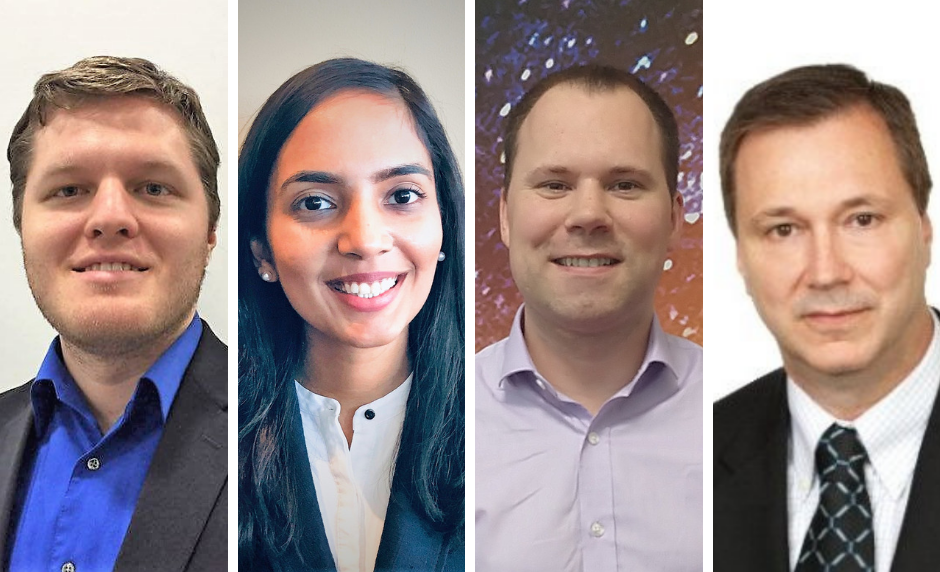
The Houston-based spacetech company, which is developing the first commercial space station, announced earlier this month that it had appointed Zach Gitomer as its new chief financial officer and Erick Wegerer as chief information officer.

Gitomer served as vice president of investor relations and capital markets for Axiom from March to June of this year. Before joining Axiom, he held various leadership roles at Bank of America, Merrill Lynch, and Citi, where he supported technology and growth companies, according to Axiom.

"Building era-defining space infrastructure and pioneering the orbital economy is a complex endeavor that requires not just an audacious vision and stellar engineering talent, but the financial infrastructure, discipline, and capital strategy to match," Gitomer shared in a LinkedIn post. "I’m honored to take on this role ... I’m looking forward to partnering with the exceptional leadership team here at Axiom Space during a defining chapter for the company and commercial spaceflight broadly, as well as a crucial period for maintaining U.S. human presence in low-Earth orbit and leadership in space exploration."

Wegerer joins Axiom after most recently serving as CIO of Washington-based Insitu Inc., a subsidiary of Boeing that develops customized unmanned hardware for commercial, government and defense customers.

"My time at Insitu was defined by talented people, meaningful challenges, and work that mattered. I'm grateful for the teams, partners, and leaders who made progress there possible. Stepping into Axiom, I'm energized by the mission, the momentum, and the opportunity to help shape what's next," Wegerer shared.

Photo via LinkedIn

The duo was celebrated on the floor of the New York Stock Exchange last week.

“We are pleased to welcome these exceptional leaders to the Axiom Space team," Axiom CEO Jonathan Cirtain added in the announcement. “Their strong record of helping complex organizations advance their strategic priorities will strengthen our executive team to further advance our core business objectives."

It's been a busy summer for Axiom. The company tacked on an additional $175 million to a previously announced capital raise, bringing the oversubscribed round to a total of more than $525 million, in June.

It also announced plans to open a Japanese subsidiary July 1. It tapped veteran Japanese astronaut Koichi Wakata to lead Axiom Space Japan as chief technology officer in the Asia-Pacific region. It also shared plans to establish Axiom Space Switzerland, a wholly owned subsidiary based in Lucerne that is also expected to begin operations this summer.

Axiom also officially redomiciled its legal headquarters from Delaware to Texas last month. Read more here.

Houston hardtech accelerator names 8 founders to 2026 cohort

hardtech fellows

Hardtech-focused organization Activate has named 50 new members to its 2026 cohort of scientists, which includes eight startups joining Activate Houston.

Activate aims to support scientists at "the outset of their entrepreneurial journey." It partners with U.S.-based funders and research institutions to support its fellows in developing high-impact technology. Its fellows receive a living stipend, research and development funding, connections from Activate's robust network of mentors and access to a curriculum specific to the program for two years.

This year's fellows represent 41 companies from 22 U.S. cities and 11 states.

“This cohort clearly demonstrates that the next industry-defining companies won't choose between modern technology and deep science; they'll be built by combining both,” Cyrus Wadia, CEO of Activate, said in the announcement. “These are the scientists and engineers turning our most urgent global challenges into the companies that will deliver a more sustainable future.”

The Houston fellows are working across the energy, space, AI infrastructure and agriculture sectors. They include:

  • Sophie Clare Broun, founder of Anning Corporation, which is producing clean hydrogen by stimulating naturally occurring geologic deposits
  • Kathy Andersen, founder of Brint Tech, which builds optical sensing systems that quantify hydrogen for infrastructure operators
  • Dorsa Talebi, founder of Kinetiq Drive, which builds rare-earth-free, contact-free electric motors with wireless rotors for small appliances and heavy industry alike
  • Neethu Pottackal, founder of Nivera, which is developing natural, edible coatings made from agricultural byproducts to reduce food waste and extend the shelf life of fresh food
  • Jonathan Huffman, founder of Orbital Arc, which is shrinking spacecraft propulsion to a microchip powerful enough for deep space
  • Tim Lee, founder of Renesin, which develops advanced materials for faster, more efficient AI hardware
  • Joshua Livingston, founder of Selerra Separations, which is developing high-performance membranes that cut the cost and energy consumption of water treatment
  • Wenli Jiang, founder of SwieNitro Recovery, which is developing technology that converts nitrogen-rich waste streams into valuable fertilizer

"Home to the largest concentration of engineers in the United States and a dense ecosystem of Fortune 100 and Fortune 500 companies, Houston is uniquely positioned for scientists tackling large-scale industrial challenges. Activate Houston fellows are connected to the city's deep networks in energy, chemicals, and materials," Activate said in the announcement.

Activate named its inaugural Houston cohort in 2024. It has other hubs in Boston, New York, and Berkley, California—where Activate is headquartered. The organization also offers a virtual and remote cohort, known as Activate Anywhere. Nationally, it has supported 346 fellows and 276 companies since 2015.

Activate Houston is led by managing director Jeremy Pitts, who co-founded Greentown Labs in Boston. It is based out of the Ion. The latest cohort is Activate Houston's third. Read more about the last year's cohort here.