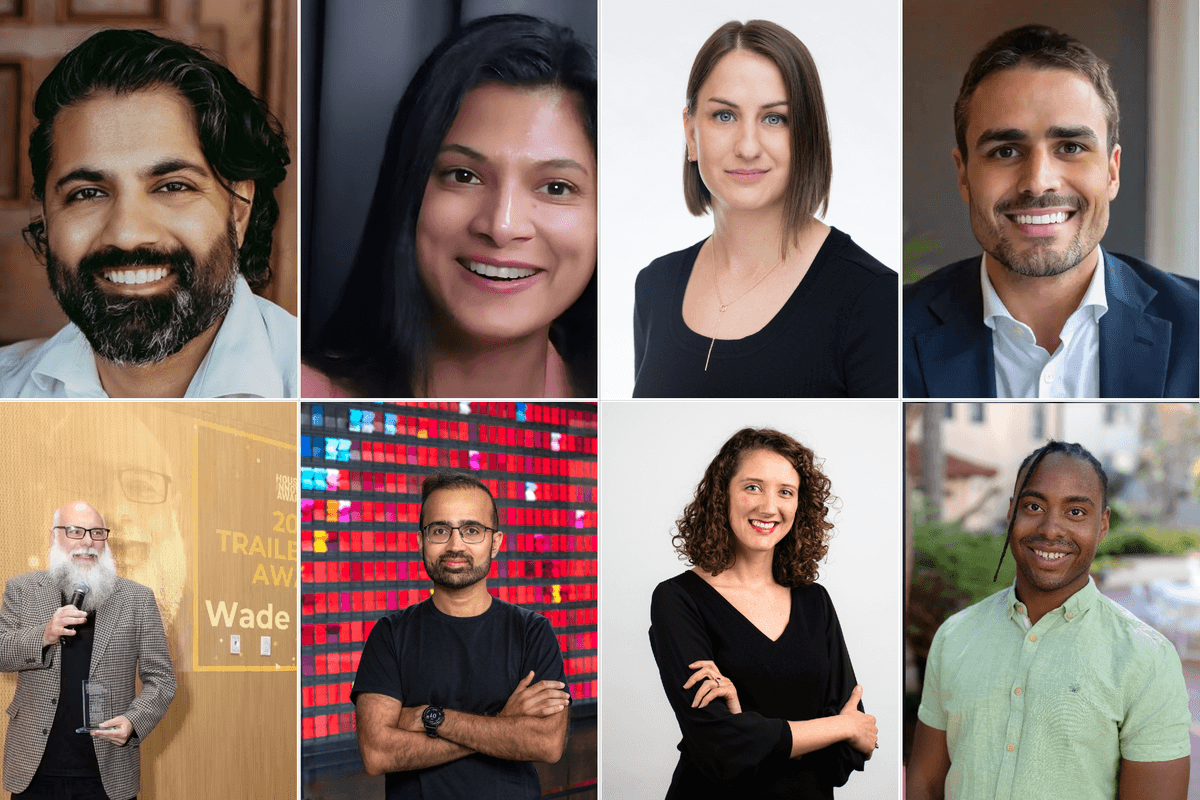
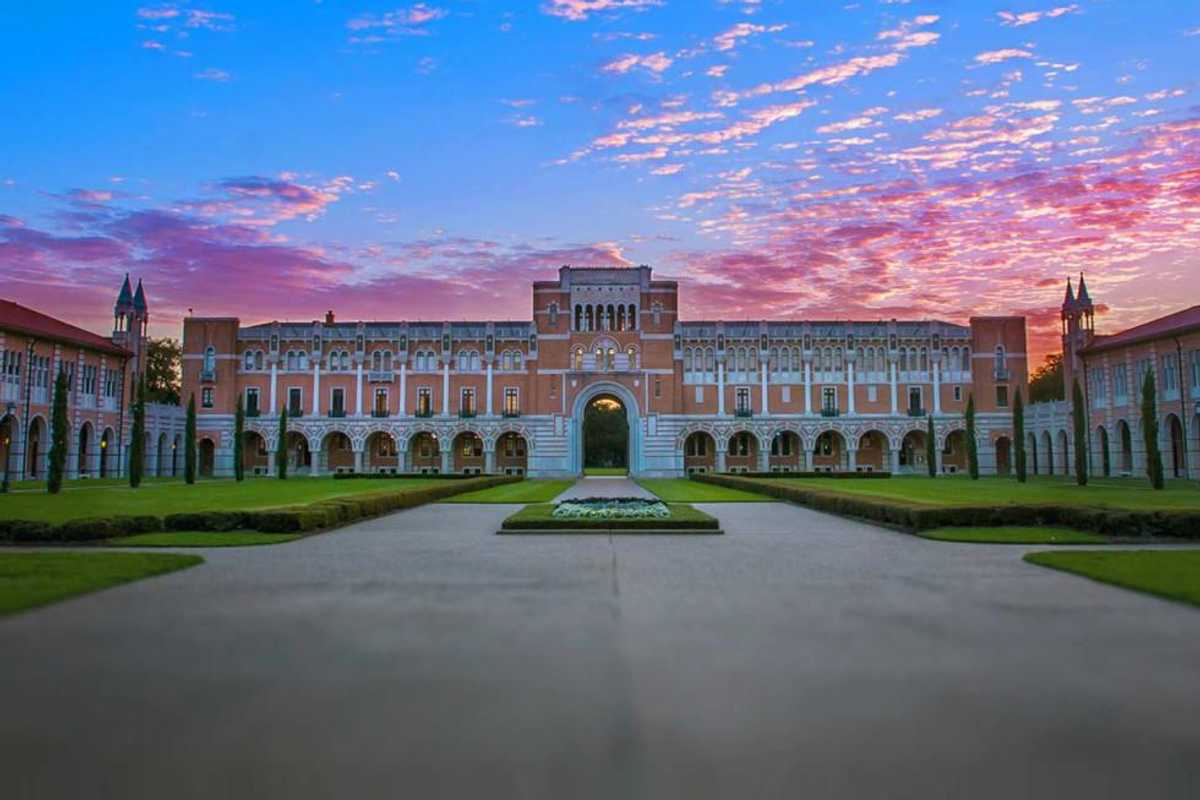
The Rice Business Plan Competition is back in person this year, and these are the 42 teams that will go head to head for investments and prizes. Photo courtesy of Rice University

The Rice Alliance for Technology and Entrepreneurship and the Jones Graduate School of Business have announced the 42 student teams that will compete in the 2022 Rice Business Plan Competition, which returns to an in-person format on the Rice University campus in April.

Of the teams competing for more than $1 million in prizes and funding in this year's competition, six hail from Texas — two teams each from Rice University, University of Texas at Austin, and Texas A&M University. The student competitors represent 31 universities — including three from European universities. The 42 teams were narrowed down from over 400 applicants and divided into five categories: energy, cleantech and sustainability; life sciences and health care solutions; consumer products and services; hard tech; and digital enterprise.

This is the first in-person RBPC since 2019, and the university is ready to bring together the entrepreneurs and a community of over 250 judges, mentors, and investors to the competition.

“As we come out on the other side of a long and challenging two years, we're feeling a sense of renewal and energy as we look to the future and finding inspiration from the next generation of entrepreneurs who are building a better world,” says Catherine Santamaria, director of the RBPC, in a news release.

“This year's competition celebrates student founders with a strong sense of determination — founders who are ready to adapt, build and grow companies that can change the future,” she continues. “We hope their participation will provide guidance and inspiration for our community.”

According to a news release, this year's RBPC Qualifier Competition, which narrowed down Rice's student teams that will compete in the official competition, saw the largest number of applicants, judges, and participants in the competition’s history. The Rice Alliance awarded a total of $5,000 in cash prizes to the top three teams from the internal qualifier: EpiFresh, Green Room and Anvil Diagnostics. From those three, Rice teams EpiFresh and Green Room received invitations to compete in the 2022 RBPC..

The full list of student teams that will be competing April 7 to 9 this year include:

  • Acorn Genetics from Northwestern University
  • Advanced Optronics from Carnegie Mellon University
  • Aethero Space from University of Missouri
  • AImirr from University of Chicago
  • AiroSolve from UCLA
  • Algeon Materials from UC San Diego
  • Anise Health from Harvard University
  • Beyond Silicon from Arizona State University
  • Bold Move Beverages from University of Texas at Austin
  • Diamante from University of Verona
  • EarthEn from Arizona State University
  • Empower Sleep from University of Pennsylvania
  • EpiFresh from Rice University
  • EpiSLS from University of Michigan
  • Green Room from Rice University
  • Horizon Health Solutions from University of Arkansas
  • Hoth Intelligence from Thomas Jefferson University
  • INIA Biosciences from Boston University
  • Invictus BCI from MIT
  • Invitris from Technical University of Munich (TUM)
  • KLAW Industries from Binghamton University
  • LIDROTEC from RWTH Aachen
  • Locus Lock from University of Texas at Austin
  • LymphaSense from Johns Hopkins University
  • Mallard Bay Outdoors from Louisiana State University
  • Mantel from MIT
  • Olera from Texas A&M University
  • OpenCell AI from Weill Cornell Medicine
  • OraFay from UCLA
  • Pareto from Stanford University
  • Photonect Interconnect Solutions from University of Rochester
  • PLAKK from McGill University
  • PneuTech from Johns Hopkins University
  • Rola from UC San Diego
  • RotorX from Georgia Tech
  • SimulatED from Carnegie Mellon University
  • SuChef from University of Pennsylvania
  • Symetric Finance from Fairfield University
  • Teale from Texas A&M University
  • Team Real Talk from University at Buffalo
  • TransCrypts from Harvard University
  • Woobie from Brigham Young University
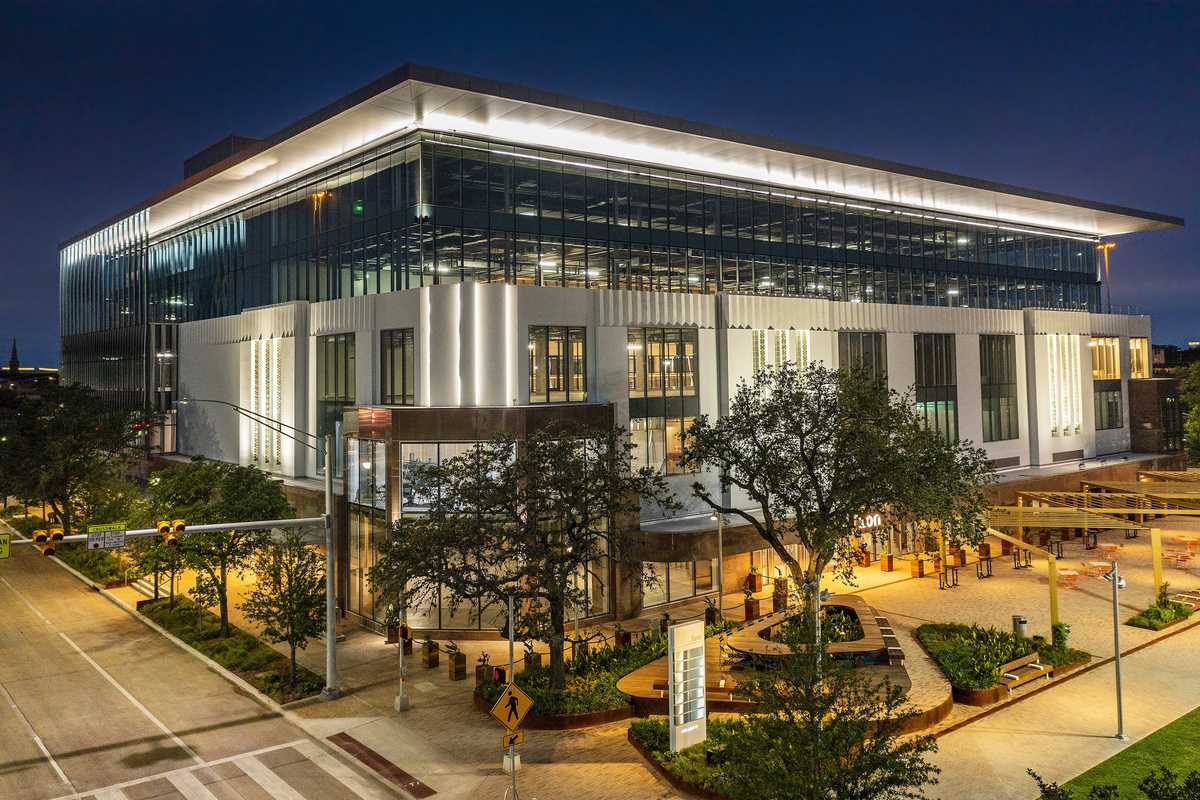
Last year's awards had 54 student teams competing virtually, with over $1.4 million in cash and prizes awarded. Throughout RBPC's history, competitors have gone onto raise more than $3.57 billion in capital and more than 259 RBPC alumni have successfully launched their ventures. Forty RBPC startups that have had successful exits through acquisitions or trading on a public market, per the news release.
Ad Placement 300x100
Ad Placement 300x600

CultureMap Emails are Awesome

Top Houston space news of 2025 soars with NASA deals, lunar missions

Year in Review

Editor's note: As 2025 comes to a close, we're looking back at the stories that defined Houston innovation this year. The space tech sector soared with companies landing huge NASA contracts and furthering their lunar missions. Here are the 10 biggest Houston space tech stories of the year:

Houston native picked for 2025 class of NASA astronaut candidates

Houston native Anna Menon, posing below the first A in “NASA,” is one of 10 new NASA astronaut candidates. Photo courtesy NASA.

NASA has selected 10 new astronaut candidates, including one whose hometown is Houston, for its 2025 training class. The candidates will undergo nearly two years of training before they can assume flight assignments.

Intuitive Machines lands $9.8M to complete orbital transfer vehicle

Intuitive Machines expects to begin manufacturing and flight integration on its orbital transfer vehicle as soon as 2026. Photo courtesy Intuitive Machines.

Houston-based Intuitive Machines, which rang the NASDAQ opening bell July 31, secured a $9.8 million Phase Two government contract for its orbital transfer vehicle. The contract will push the project through its Critical Design Review phase, which is the final engineering milestone before manufacturing can begin.

Houston tech company tapped by NASA for near space initiative

Intuitive Machines is among four companies awarded contracts for NASA’s Near Space Network. Photo via intuitivemachines.com

In January, Intuitive Machines nailed down a NASA deal to expand the agency’s communications network for spacecraft. Additionally, NASA completed the first round of “human in the loop” testing for Intuitive Machines’ Moon RACER lunar terrain vehicle at the agency’s Johnson Space Center. RACER (Reusable Autonomous Crewed Exploration Rover) is one of three commercially developed unpressurized lunar terrain vehicles being considered for NASA’s Artemis lunar initiative.

Texas Space Commission doles out $5.8 million to Houston companies

Axiom Space and FluxWorks are the latest Houston-area companies to receive funding from the Texas Space Commission. Photo via Getty Images.

Two Houston-area companies landed more than $5.8 million in funding from the Texas Space Commission. The commission granted up to $5.5 million to Houston-based Axiom Space and up to $347,196 to Conroe-based FluxWorks in June 2025. The two-year-old commission previously awarded $95.3 million to 14 projects. A little over $34 million remains in the commission-managed Space Exploration and Aeronautics Research Fund.

Houston company awarded $2.5B NASA contract to support astronaut health and space missions

NASA has awarded KBR a five-year, $2.5 billion Human Health and Performance Contract. Photo courtesy NASA.

Houston-based technology and energy solution company KBR was awarded a $2.5 billion NASA contract to support astronaut health and reduce risks during spaceflight missions. Under the terms of the Human Health and Performance Contract 2, KBR will provide support services for several programs, including the Human Research Program, International Space Station Program, Commercial Crew Program, Artemis campaign and others. This will include ensuring crew health, safety, and performance; occupational health services and risk mitigation research for future flights.

Houston engineering firm lands $400M NASA contract

Bastion Technologies has been tapped to provide safety and mission services for NASA's Marshall Space Flight Center in Alabama. Photo via nasa.gov.

NASA granted Houston-based Bastion Technologies Inc. the Safety and Mission Assurance II (SMAS II) award with a maximum potential value of $400 million. The award stipulates that the engineering and technical services company provide safety and mission services for the agency’s Marshall Space Flight Center in Huntsville, Alabama.

Houston startups win NASA funding for space tech projects

Houston startups were recently named among the nearly 300 recipients that received a portion of $44.85 million from NASA to develop space technology. Photo via NASA/Ben Smegelsky

Three Houston startups were granted awards from NASA in July 2025 to develop new technologies for the space agency. The companies were among nearly 300 recipients that received a total agency investment of $44.85 million through the Small Business Innovation Research (SBIR) and Small Business Technology Transfer (STTR) Phase I grant programs.

Texas Republicans are pushing to move NASA headquarters to Houston

Here's why Texas Republicans think NASA's headquarters should move to Texas in 2028. File photo.

Two federal lawmakers from Texas spearheaded a campaign to relocate NASA’s headquarters from Washington, D.C., to the Johnson Space Center in Houston’s Clear Lake area. Houston faces competition on this front, though, as lawmakers from two other states are also vying for this NASA prize. With NASA’s headquarters lease in D.C. set to end in 2028, U.S. Sen. Ted Cruz, a Texas Republican, and U.S. Rep. Brian Babin, a Republican whose congressional district includes the Johnson Space Center, wrote a letter to President Trump touting the Houston area as a prime location for NASA’s headquarters.

Intuitive Machines to acquire NASA-certified deep space navigation company

Intuitive Machines will acquire Kinetx, which marks its entry into the precision navigation and flight dynamics segment of deep space operations. Photo via Getty Images.

In August 2025, Intuitive Machines agreed to buy Tempe, Arizona-based aerospace company KinetX for an undisclosed amount. The deal is expected to close by the end of this year. KinetX specializes in deep space navigation, systems engineering, ground software and constellation mission design. It’s the only company certified by NASA for deep space navigation. KinetX’s navigation software has supported both of Intuitive Machines’ lunar missions.

Axiom Space launches semiconductor and astronaut training initiatives

Axiom Space chief astronaut Michael López-Alegría (left) trains with Axiom’s new “Project Astronaut,” Emiliano Ventura. Photo courtesy of Axiom Space.

In fall 2025, Axiom Space, a Houston-based commercial spaceflight and space infrastructure company, launched initiatives in two very different spheres — semiconductors and astronaut training.

Paraplegic engineer becomes first wheelchair user to blast into space

Space News

A paraplegic engineer from Germany blasted off on a dream-come-true rocket ride with five other passengers Saturday, December 20, leaving her wheelchair behind to float in space while beholding Earth from on high.

Severely injured in a mountain bike accident seven years ago, Michaela Benthaus became the first wheelchair user in space, launching from West Texas with Jeff Bezos’ company Blue Origin. She was accompanied by a retired SpaceX executive also born in Germany, Hans Koenigsmann, who helped organize and, along with Blue Origin, sponsored her trip. Their ticket prices were not divulged.

An ecstatic Benthaus said she laughed all the way up — the capsule soared more than 65 miles (105 kilometers) — and tried to turn upside down once in space.

“It was the coolest experience,” she said shortly after landing.

The 10-minute space-skimming flight required only minor adjustments to accommodate Benthaus, according to the company. That’s because the autonomous New Shepard capsule was designed with accessibility in mind, “making it more accessible to a wider range of people than traditional spaceflight,” said Blue Origin’s Jake Mills, an engineer who trained the crew and assisted them on launch day.

Among Blue Origin’s previous space tourists: those with limited mobility and impaired sight or hearing, and a pair of 90-year-olds.

For Benthaus, Blue Origin added a patient transfer board so she could scoot between the capsule’s hatch and her seat. The recovery team also unrolled a carpet on the desert floor following touchdown, providing immediate access to her wheelchair, which she left behind at liftoff. She practiced in advance, with Koenigsmann taking part with the design and testing. An elevator was already in place at the launch pad to ascend the seven stories to the capsule perched atop the rocket.

Benthaus, 33, part of the European Space Agency’s graduate trainee program in the Netherlands, experienced snippets of weightlessness during a parabolic airplane flight out of Houston in 2022. Less than two years later, she took part in a two-week simulated space mission in Poland.

“I never really thought that going on a spaceflight would be a real option for me because even as like a super healthy person, it’s like so competitive, right?” she told The Associated Press ahead of the flight.

Her accident dashed whatever hope she had. “There is like no history of people with disabilities flying to space," she said.

When Koenigsmann approached her last year about the possibility of flying on Blue Origin and experiencing more than three minutes of weightlessness on a space hop, Benthaus thought there might be a misunderstanding. But there wasn't, and she immediately signed on.

It’s a private mission for Benthaus with no involvement by ESA, which this year cleared reserve astronaut John McFall, an amputee, for a future flight to the International Space Station. The former British Paralympian lost his right leg in a motorcycle accident when he was a teenager.

An injured spinal cord means Benthaus can’t walk at all, unlike McFall who uses a prosthetic leg and could evacuate a space capsule in an emergency at touchdown by himself. Koenigsmann was designated before flight as her emergency helper; he and Mills lifted her out of the capsule and down the short flight of steps at flight’s end.

“You should never give up on your dreams, right?” Benthaus urged following touchdown.

Benthaus was adamant about doing as much as she could by herself. Her goal is to make not only space accessible to the disabled, but to improve accessibility on Earth too.

While getting lots of positive feedback within “my space bubble,” she said outsiders aren't always as inclusive.

“I really hope it’s opening up for people like me, like I hope I’m only the start," she said.

Besides Koenigsmann, Benthaus shared the ride with business executives and investors, and a computer scientist. They raised Blue Origin’s list of space travelers to 86.

Bezos, the billionaire founder of Amazon, created Blue Origin in 2000 and launched on its first passenger spaceflight in 2021. The company has since delivered spacecraft to orbit from Cape Canaveral, Florida, using the bigger and more powerful New Glenn rocket, and is working to send landers to the moon.

Houston neighbor named richest small town in Texas for 2025

Ranking It

Affluent Houston neighbor Bellaire is cashing in as the richest small town in Texas for 2025, according to new study from GoBankingRates.

The report, "The Richest Small Town in Every State," used data from the U.S. Census Bureau's American Community Survey to determine the 50 richest small towns in America based on their median household income.

Of course, Houstonians realize that describing Bellaire as a "small town" is a bit of misnomer. Located less than 10 miles from downtown and fully surrounded by the City of Houston, Bellaire is a wealthy enclave that boasts a population of just over 17,000 residents. These affluent citizens earn a median $236,311 in income every year, which GoBankingRates says is the 11th highest household median income out of all 50 cities included in the report.

The average home in this city is worth over $1.12 million, but Bellaire's lavish residential reputation often attracts properties with multimillion-dollar price tags.

Bellaire also earned a shining 81 livability score for its top quality schools, health and safety, commute times, and more. The livability index, provided by Toronto, Canada-based data analytics and real estate platform AreaVibes, said Bellaire has "an abundance of exceptional local amenities."

"Among these are conveniently located grocery stores, charming coffee shops, diverse dining options and plenty of spacious parks," AreaVibes said. "These local amenities contribute significantly to its overall appeal, ensuring that [residents'] daily needs are met and offering ample opportunities for leisure and recreation."

Earlier in 2025, GoBankingRates ranked Bellaire as the No. 23 wealthiest suburb in America, and it's no stranger to being named on similar lists comparing the richest American cities.

---

This article originally appeared on CultureMap.com.