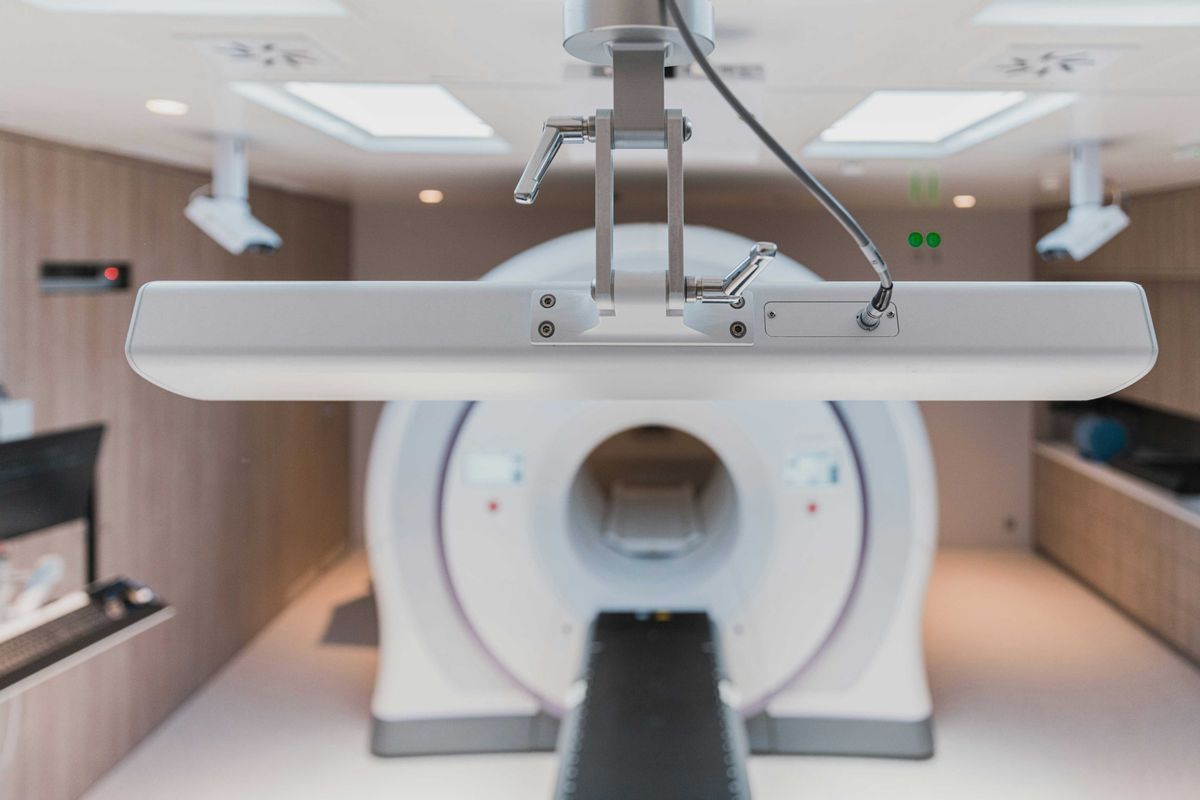
Project Metis puts Greater Houston at the forefront of brain health. Photo via Getty Images

Editor's note: The most-read Houston innovation news this month is centered around brain health, from the launch of Project Metis to Rice''s new Amyloid Mechanism and Disease Center. Here are the five most popular InnovationMap stories from December 1-15, 2025:

1. Houston institutions launch Project Metis to position region as global leader in brain health

The Rice Brain Institute, UTMB's Moody Brain Health Institute and Memorial Hermann’s comprehensive neurology care department will lead Project Metis. Photo via Unsplash.

Leaders in Houston's health care and innovation sectors have joined the Center for Houston’s Future to launch an initiative that aims to make the Greater Houston Area "the global leader of brain health." The multi-year Project Metis, named after the Greek goddess of wisdom and deep thought, will be led by the newly formed Rice Brain Institute, The University of Texas Medical Branch's Moody Brain Health Institute and Memorial Hermann’s comprehensive neurology care department. The initiative comes on the heels of Texas voters overwhelmingly approving a ballot measure to launch the $3 billion, state-funded Dementia Prevention and Research Institute of Texas (DPRIT). Continue reading.

2.Rice University researchers unveil new model that could sharpen MRI scans

New findings from a team of Rice University researchers could enhance MRI clarity. Photo via Unsplash.

Researchers at Rice University, in collaboration with Oak Ridge National Laboratory, have developed a new model that could lead to sharper imaging and safer diagnostics using magnetic resonance imaging, or MRI. In a study published in The Journal of Chemical Physics, the team of researchers showed how they used the Fokker-Planck equation to better understand how water molecules respond to contrast agents in a process known as “relaxation.” Continue reading.

3. Rice University launches new center to study roots of Alzheimer’s and Parkinson’s

The new Amyloid Mechanism and Disease Center will serve as the neuroscience branch of Rice’s Brain Institute. Photo via Unsplash.

Rice University has launched its new Amyloid Mechanism and Disease Center, which aims to uncover the molecular origins of Alzheimer’s, Parkinson’s and other amyloid-related diseases. The center will bring together Rice faculty in chemistry, biophysics, cell biology and biochemistry to study how protein aggregates called amyloids form, spread and harm brain cells. It will serve as the neuroscience branch of the Rice Brain Institute, which was also recently established. Continue reading.

4. Baylor center receives $10M NIH grant to continue rare disease research

BCM's Center for Precision Medicine Models has received funding that will allow it to study more complex diseases. Photo via Getty Images

Baylor College of Medicine’s Center for Precision Medicine Models has received a $10 million, five-year grant from the National Institutes of Health that will allow it to continue its work studying rare genetic diseases. The Center for Precision Medicine Models creates customized cell, fly and mouse models that mimic specific genetic variations found in patients, helping scientists to better understand how genetic changes cause disease and explore potential treatments. Continue reading.

5. Luxury transportation startup connects Houston with Austin and San Antonio

Shutto is a new option for Houston commuters. Photo courtesy of Shutto

Houston business and leisure travelers have a luxe new way to hop between Texas cities. Transportation startup Shutto has launched luxury van service connecting San Antonio, Austin, and Houston, offering travelers a comfortable alternative to flying or long-haul rideshare. Continue reading.

The Rice Brain Institute, UTMB's Moody Brain Health Institute and Memorial Hermann’s comprehensive neurology care department will lead Project Metis. Photo via Unsplash.

Houston institutions launch Project Metis to position region as global leader in brain health

brain trust

Leaders in Houston's health care and innovation sectors have joined the Center for Houston’s Future to launch an initiative that aims to make the Greater Houston Area "the global leader of brain health."

The multi-year Project Metis, named after the Greek goddess of wisdom and deep thought, will be led by the newly formed Rice Brain Institute, The University of Texas Medical Branch's Moody Brain Health Institute and Memorial Hermann’s comprehensive neurology care department. The initiative comes on the heels of Texas voters overwhelmingly approving a ballot measure to launch the $3 billion, state-funded Dementia Prevention and Research Institute of Texas (DPRIT).

According to organizers, initial plans for Project Metis include:

  • Creating working teams focused on brain health across all life stages, science and medical advances, and innovation and commercialization
  • Developing a regional Brain Health Index to track progress and equity
  • Implanting pilot projects in areas such as clinical care, education and workplace wellness
  • Sharing Houston’s progress and learnings at major international forums, including Davos and the UN General Assembly

The initiative will be chaired by:

  • Founding Chair: Dr. Jochen Reiser, President of UTMB and CEO of the UTMB Health System
  • Project Chair: Amy Dittmar, Howard R. Hughes Provost and Executive Vice President of Rice University
  • Project Chair: Dr. David L. Callender, President and CEO of Memorial Hermann Health System

The leaders will work with David Gow, Center for Houston’s Future president and CEO. Gow is the founder and chairman of Gow Media, InnovationMap's parent company.

“Now is exactly the right time for Project Metis and the Houston-Galveston Region is exactly the right place,” Gow said in a news release. “Texas voters, by approving the state-funded Dementia Prevention Institute, have shown a strong commitment to brain health, as scientific advances continue daily. The initiative aims to harness the Houston’s regions unique strengths: its concentration of leading medical and academic institutions, a vibrant innovation ecosystem, and a history of entrepreneurial leadership in health and life sciences.”

Lime Rock Resources, BP and The University of Texas MD Anderson Cancer Center served as early steering members for Project Metis. HKS, Houston Methodist and the American Psychiatric Association Foundation have also supported the project.

An estimated 460,000 Texans are living with dementia, according to the Alzheimer’s Association, and more than one million caregivers support them.

“Through our work, we see both the immense human toll of brain-related illness and the tremendous potential of early intervention, coordinated care and long-term prevention," Callender added in the release. "That’s why this bold new initiative matters so much."

Ad Placement 300x100
Ad Placement 300x600

CultureMap Emails are Awesome

8+ can't-miss Houston business and innovation events in January

where to be

Editor's note: Kick off 2026 by hearing insightful talks and making meaningful connections in Houston's innovation scene. From networking workshops to presentations from major industry leaders, here's what not to miss and how to register. Please note: this article may be updated to include additional event listings.

Jan. 13 – Financing the Future

Hear from James Blake, head of capital markets at Fervo Energy, in this informative talk. Blake will cover the current investment landscape for geothermal power, how geothermal projects are structured and the role of policy incentives and innovative financing models in moving the industry forward. A small reception follows.

This event is Tuesday, Jan. 13, from 5:30-7:30 p.m. at the Ion. Register here.

Jan. 13 – Your Path to the Boardroom

Visit Sesh Coworking to hear from Keith Dorsey, an executive advisor and author of The Boardroom Journey, as he shares insights and lessons from hundreds of corporate board members and presents an actionable roadmap for women at every stage of their careers. Dorsey will speak on what "optimal diversity” means in the boardroom, how purpose-driven leaders sustain resilience under relentless pressure and why inclusive leadership is non-negotiable for growth and innovation.

This event is Tuesday, Jan. 13, from 6-8 p.m. at Sesh Coworking. Register here.

Jan. 14 — A Conversation with Dr. Wayne J. Riley on Leading Through Healthcare Transformation

Rice Business Partners will host Dr. Wayne J. Riley, president of SUNY Downstate Health Sciences University, for a moderated discussion with Dean Peter Rodriguez. Riley will share insights on leading complex healthcare organizations in an era of unprecedented industry challenges and reflect on his time at the Jones Graduate School of Business.

This event is Wednesday, Jan. 14, from 6:30-8:30 p.m. at McNair Hall on Rice University's campus. Register here.

Jan. 14 — VDW: Igniting Connections for Startup Success

Entrepreneurial communications instructor Diana Massaro will lead Lilie's latest Venture Development Workshop, focused on soft skills like clear communication, active listening and compelling introductions. Attendees will gain a personalized networking game plan and communication tools to turn casual encounters into meaningful relationships to support their ventures or careers.

This event is Wednesday, Jan. 14, from 6-7:30 p.m. at the Liu Idea Lab for Innovation and Entrepreneurship on Rice University's campus. Register here.

Jan. 21 — Upstream: Digital Tech Meetup

This month's Upstream: Digital Tech Meetup will explore how AI and real-time monitoring are being applied in safety-critical offshore environments, what’s working today, where the biggest gaps remain going into 2026 and how operators and service companies are approaching adoption. Expect to hear from leaders at NOV, Incom Solutions, Timbergrove and others.

This event is Wednesday, Jan. 21, from 8:30-10:30 a.m. at the Ion. Find more information here.

Jan. 22 — HEAD AND HEART: Leading Technology with Humanity While Everything Changes

Hear from Chris Hyams, former CEO of Indeed, at the latest installment of Rice's Master of Engineering Management & Leadership Seminar Series. Hyams will present on the intersection of technology, humanity and change—and how AI is reshaping all three.

This event is Thursday, Jan. 22, at 6 p.m. at Duncan Hall on Rice University's campus. Find more information here.

Jan. 22 – NASA Tech Talk

This month's NASA Tech Talks will feature a special delegation from the UK Science and Technology Network. Expect to hear from a panel of UK space experts, followed by a fireside chat featuring David Alexander, head of the Rice Space Institute, and Meganne Christian, ESA reserve astronaut and senior exploration manager.

This event is Thursday, Jan. 22, from 6-7 p.m. at the Ion. Find more information here.

Jan. 29 – Ignition Hub Startup Career Fair

Lilie will host the Ignition Hub Startup Career Fair this month in partnership with Rice University’s Center for Career Development and Career Development Office. The fair will bring together some of the most innovative, high-growth companies to offer Rice students exciting opportunities. Startups can apply to be considered for the fair. The event is open to Rice University undergraduate, graduate, MBA, and PhD students.

This event is Thursday, Jan. 29, at Grand Hall on Rice University's campus. Find more information here.

Jan. 29 – Health Policy Symposium: Value-Based Care & the Health Care Workforce

The Humana Integrated Health Systems Science Institute at the University of Houston will host its latest Health Policy Symposium this month, focused on the evolving landscape of value-based care and the importance of preparing and strengthening the health care workforce. Hear keynote addresses from leaders at Humana, UH, the American Medical Association and Houston Health Department.

This event is Thursday, Jan. 29, from 11:30 a.m.-1:30 p.m. at the Tilman J. Fertitta Family College of Medicine on Rice University's campus. Find more information here.

Jan. 30 — GHP Annual Meeting

The Greater Houston Partnership's premier event will highlight the region’s progress, honor visionary leadership and set the tone for the year ahead. Hear reflections from outgoing board chair, Gretchen Watkins (former -president of Shell USA); welcome incoming board chair, Armando Perez (EVP of H-E-B Houston); and more

This event is Friday, Jan. 30, from 11:30 a.m.-1:30 p.m. at Hilton Americas. Find more information here.

CPRIT CEO: Houston’s $2B in funding is transforming cancer research and prevention

fighting cancer

With its plethora of prestigious health care organizations like the University of Texas MD Anderson Cancer Center, UTHealth Houston, and the Baylor College of Medicine, Houston sits at the heart of cancer research and prevention in Texas.

Of course, it takes piles of cash to support Houston’s status as the state’s hub for cancer research and prevention. Much of that money comes from the Cancer Prevention and Research Institute of Texas (CPRIT).

Data supplied by CPRIT shows organizations in Harris County gained $2.3 billion in institute funding from 2009 through 2025, or nearly $145 million per year. That represents almost 60 percent of the roughly $4 billion that CPRIT has granted to Texas institutions over a 16-year period.

“The life sciences ecosystem that has developed and changed in Houston is phenomenal,” Kristen Doyle, who became the agency’s CEO in July 2024, tells InnovationMap. “In the next decade, we will look back and see a great transformation.”

That ecosystem includes more than 1,100 life sciences and biotech companies, according to the Greater Houston Partnership.

Houston plays critical role in clinical trials

Texas voters approved the creation of CPRIT in 2007. Twelve years later, voters agreed to earmark an extra $3 billion for CPRIT, bringing the state agency’s total investment in cancer research and prevention to $6 billion.

To date, CPRIT money has gone toward recruiting 344 cancer researchers to Texas (mainly to Houston) and has supported cancer prevention services for millions of Texans in the state’s 254 counties. CPRIT funding has also helped establish, expand, or relocate 25 cancer-focused companies. In Houston, MD Anderson ranks as the No. 1 recipient of CPRIT funding.

Regarding cancer research, Doyle says Houston plays a critical role in clinical trials.

“[Clinical trials are] something that CPRIT has focused on more and more. Brilliant discoveries are crucial to this whole equation of solving the cancer problem,” Doyle says. “But if those brilliant ideas stay in the labs, then we’ve all failed.”

Researchers conduct more clinical trials in Houston than anywhere else in the U.S., the Greater Houston Partnership says.

Doyle, a 20-year survivor of leukemia, notes that a minority of eligible patients participate in clinical trials for cancer treatments, “and that’s one of the reasons that it takes so long to get a promising drug to market.”

An estimated 7 percent of cancer patients sign up for clinical trials, according to a study published in 2024 in the Journal of Clinical Oncology.

MD Anderson takes on cancer prevention

Doyle also notes that Houston is leading the charge in cancer prevention.

“We get some national recognition for programs that have been developed in Houston that then can be replicated in other parts of the country,” she says.

Much of the work in Houston focusing on cancer prevention takes place at MD Anderson. The hospital reports that it has received more than $725 million from the CPRIT since 2007, representing approximately 18 percent of CPRIT’s total awards.

“These efforts can have profound impact on the lives of patients and their families, and this funding ensures our exemplary clinicians and scientists can continue working together to drive breakthroughs that advance our mission to end cancer,” Dr. Giulio Draetta, chief scientific officer at MD Anderson, said in a November news release, following the most recent CPRIT award for the hospital totaling more than $29 million.

CPRIT funding for Houston institutions supplements the more than $4.5 billion in federal funding for health and life sciences research and innovations that the Houston area received from 2020 to 2024, according to the Greater Houston Partnership.

“We are curing cancer every single day,” Doyle says of CPRIT. “Every step that we are taking — whether that’s funding great ideas or funding the clinical trials that are bringing promising drugs to Texas and to the world — we are making a difference.”

Houston energy tech co. breaks ground on low-cost hydrogen pilot plant

Coming Soon

Houston’s Lummus Technology and Advanced Ionics have broken ground on their hydrogen pilot plant at Lummus’ R&D facility in Pasadena, Texas.

The plant will support Advanced Ionics’ cutting-edge electrolyzer technology, which aims to deliver high-efficiency hydrogen production with reduced energy requirements.

“By demonstrating Advanced Ionics’ technology at our state-of-the-art R&D facility, we are leveraging the expertise of our scientists and R&D team, plus our proven track record of developing breakthrough technologies,” Leon de Bruyn, president and CEO of Lummus, said in a news release. “This will help us accelerate commercialization of the technology and deliver scalable, cost-effective and sustainable green hydrogen solutions to our customers.”

Advanced Ionics is a Milwaukee-based low-cost green hydrogen technology provider. Its electrolyzer converts process and waste heat into green hydrogen for less than a dollar per kilogram, according to the company. The platform's users include industrial hydrogen producers looking to optimize sustainability at an affordable cost.

Lummus, a global energy technology company, will operate the Advanced Ionics electrolyzer and manage the balance of plant systems.

In 2024, Lummus and Advanced Ionics established their partnership to help advance the production of cost-effective and sustainable hydrogen technology. Lummus Venture Capital also invested an undisclosed amount into Advanced Ionics at the time.

“Our collaboration with Lummus demonstrates the power of partnerships in driving the energy transition forward,” Ignacio Bincaz, CEO of Advanced Ionics, added in the news release. “Lummus serves as a launchpad for technologies like ours, enabling us to validate performance and integration under real-world conditions. This milestone proves that green hydrogen can be practical and economically viable, and it marks another key step toward commercial deployment.”

---

This article originally appeared on EnergyCapitalHTX.com.