Catch these Houston innovators at SXSW 2026. Photo courtesy of SXSW

Houston's innovation scene will be well represented at South by Southwest (SXSW) this month.

The week-long, Austin-based conference and festival will spotlight some of the Bayou City's leaders in health care, energy, space and more. The event kicks off today, March 12, and runs through March 18. The SXSW Innovation Conference will feature keynotes, workshops, mentoring sessions and more throughout various venues in the city.

Here's who to see and when and where to find them:

March 12

Aileen Allen, venture partner at Mercury Fund

Mentor Session from 4-5:15 p.m. at Hilton Austin Downtown

Allen will host a mentoring session focused on funding, marketing, advertising, PR and the future of work.

March 13

Heath Butler, partner at Mercury Fund

SXSW Pitch-Smart Cities, Transportation, Manufacturing & Logistics from 2:30-3:30 p.m. at the J.W. Marriott

Butler will judge five innovative startups as they pitch their solutions to advance smart cities, enhance transportation systems, modernize manufacturing, transform logistics, and strengthen government infrastructure and civic operations.

Jonathan Cirtain, CEO and president of Axiom Space

The Clock is Ticking for Space - Replacing the ISS from 4-5 p.m. at the J.W. Marriott

Cirtain will discuss Axiom's pursuit of building the world’s first commercial space station.

March 14

Jesse Martinez, founder and CEO of LSA Global

SXSW Pitch-Intelligent Systems, Robotics, & Multisensory Technology from 10-11 a.m. at the J.W. Marriott

Martinez will judge five innovative startups as they pitch their technologies that aim to enhance the way people connect, communicate and share unique life experiences with those around them in a digital ecosystem.

Jennifer Schmitt, head of operations at Rhythm Energy

Powering Texas with Reliable Integrated High-Demand Energy from 10-11 a.m. at Marlow

Schmitt will join a panel to discuss how EirGrid, the state-owned electric power transmission operator in Ireland, is pioneering solutions as the country works toward 80 percent renewable integration by 2030.

Saki Sasagawa, director of business development for JETRO Houston

Now is Japan's Time: Leading the Future with Deep Tech from 10-11 a.m. at the J.W. Marriott

Sasagawa joins a panel that will share real-time insights from diverse perspectives on the forefront of Japan’s deep tech and IP businesses.

March 15

Bosco Lai, CEO and co-founder of Little Place Labs

SXSW Pitch Alumni: Where Are They Now? from 10-11 a.m. at the J.W. Marriott

Lai joins a panel of four former SXSW Pitch winners to share how they leveraged the platform to take their startups to the next level.

Tara Karimi, cofounder and chief science and sustainability officer at Cemvita

South by South America: The Rise of Southern Brazil Tech from 2:30-3:30. p.m. at The Line

Karimi will participate in a panel to discuss how Rio Grande do Sul, Brazil's southernmost state, is attracting elite talent and AI infrastructure and share insights on navigating the next wave of South American tech growth.

March 16

Dr. Pavitra P. Krishnamani, emergency medicine physician at The University of Texas MD Anderson Cancer Center

Viva La Revolution: How the Digital Age is Transforming Wellness from 11:30 a.m.-12:30 p.m. at Hilton Austin Downtown

Krishnamani will discuss the latest advancements and policies that can accelerate the digital age of health care, such as wearables, telehealth and artificial intelligence.

March 18

Charlie Childs, co-founder and CEO of Intero Biosystems

Spinning Out: What It Takes to Build a University Startup from 2:30-3:30 p.m. at The Line

Childs will join founders who spun their companies out of the University of Michigan to share the real story of navigating IP, early capital, team building, market validation and the “valley of death.”

Dr. James Allison, regental chair of immunology and director of The Allison Institute at The University of Texas MD Anderson Cancer Center

Dr. Padmanee Sharma, professor in the Department of Genitourinary Medical Oncology, Division of Cancer Medicine at The University of Texas MD Anderson Cancer Center

Beyond Checkpoints: Immunotherapy’s Next Act from 2:30-3:30 p.m. at the J.W. Marriott

Allison and Sharma will sit down with 21-year-old, Stage 4 cancer survivor Sharon Belvin and Time Magazine journalist Alice Park will discuss the future of immunotherapy and what challenges remain.

Last year, Houston startups Little Places Labs and Helix Earth won top prizes in their respective categories at the prestigious SXSW Pitch event, held this year from March 13-14. No Houston startups were named finalists to compete in this year's event.
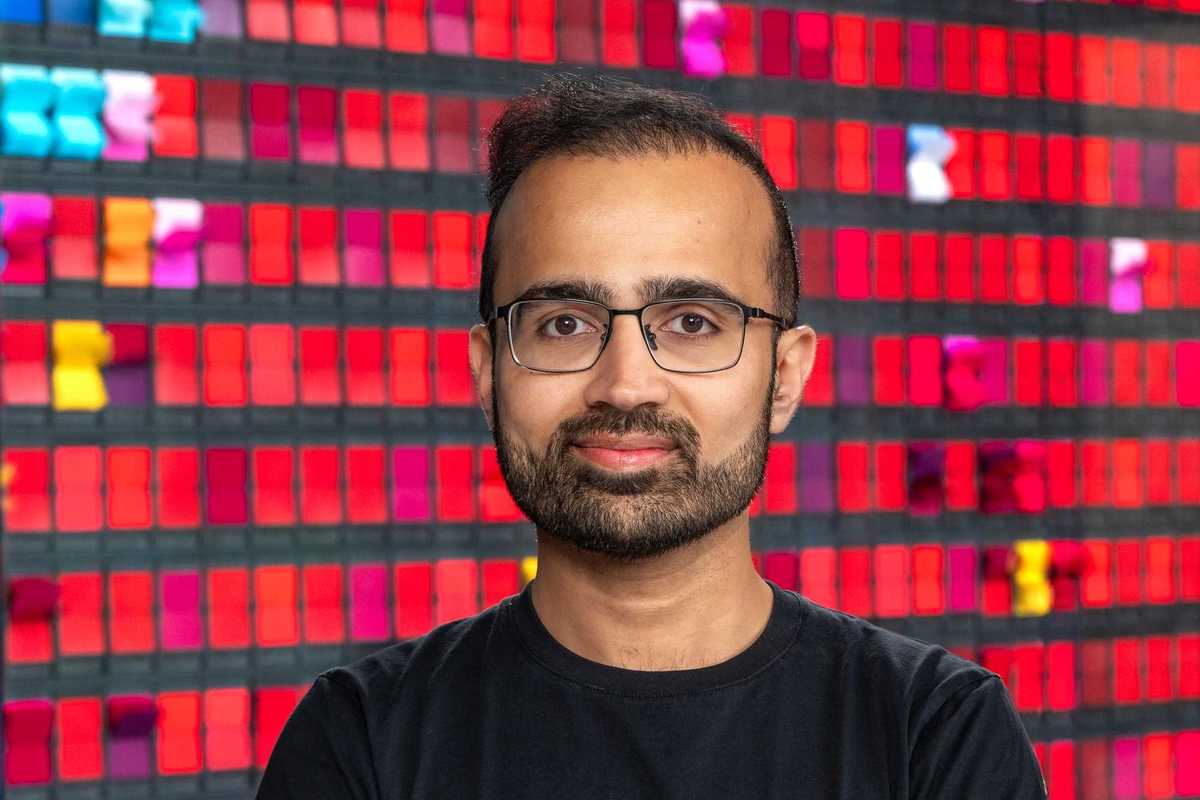
PHIOGEN, based at Texas Medical Center Innovation, is headed to Austin next month. Photo courtesy of TMC

Houston biotech startup selected to pitch at SXSW

austin bound

Houston biotech startup PHIOGEN is among 45 finalists that will present at this year’s SXSW Pitch showcase in Austin.

PHIOGEN is one of five food, nutrition, and health startups that will participate in the pitch competition, set for March 9 and 10. A panel of judges will listen to the pitches and then pick the winners. Since 2009, SXSW Pitch finalists have raised more than $23.2 billion in funding.

PHIOGEN has developed the world’s first biogenetics technology platform to harness the power of bacteriophages in the fight against serious drug-resistant infections. Bacteriophages — viruses that are found in bacterial cells — “are ubiquitous in the environment and are recognized as the most abundant biological agent on earth,” according to an article published in 2022 by StatPearls.

Founded in 2023, PHIOGEN is a spinoff of the Baylor College of Medicine’s TAILOR Labs. The startup, based at the Texas Medical Center’s Innovation Hub, has attracted more than $5 million in funding.

“Nothing about our treatments is fabricated; it boils down to creating natural environments that mimic real-life infections, driving biological changes to create ‘super phages’ against the superbugs,” Amanda Burkardt, CEO of PHIOGEN, said in 2023. “As a result, we receive high-performing phage fighters that are trained and ready to deliver safe and effective treatments for clinical applications.”

Professional services firm KPMG is the main sponsor of SXSW Pitch.

Six of this year’s SXSW Pitch judges are from Houston:

  • Heath Butler of Mercury Fund
  • Jesse Martinez of LSA Global
  • Trevor Purvis of the Houston Astros
  • Anu Puvvada of KPMG
  • Irene Tang of StartOut
  • Nate Thompson of HTX Sports Tech

“2024 is an exciting year for startups, and we are looking forward to showcasing these inspiring companies that are making waves in their respective industries and the world as a whole, as well as help connect them with the resources needed to continue advancing,” says Chris Valentine, producer of SXSW Pitch.

Ad Placement 300x100
Ad Placement 300x600

CultureMap Emails are Awesome

UH breakthrough moves superconductivity closer to real-world use

Energy Breakthrough

University of Houston researchers have set a new benchmark in the field of superconductivity.

Researchers from the UH physics department and the Texas Center for Superconductivity (TcSUH) have broken the transition temperature record for superconductivity at ambient pressure. The accomplishment could lead to more efficient ways to generate, transmit and store energy, which researchers believe could improve power grids, medical technologies and energy systems by enabling electricity to flow without resistance, according to a release from UH.

To break the record, UH researchers achieved a transition temperature 151 Kelvin, which is the highest ever recorded at ambient pressure since the discovery of superconductivity in 1911.

The transition temperature represents the point just before a material becomes superconducting, where electricity can flow through it without resistance. Scientists have been working for decades to push transition temperature closer to room temperature, which would make superconducting technologies more practical and affordable.

Currently, most superconductors must be cooled to extremely low temperatures, making them more expensive and difficult to operate.

UH physicists Ching-Wu Chu and Liangzi Deng published the research in the Proceedings of the National Academy of Sciences earlier this month. It was funded by Intellectual Ventures and the state of Texas via TcSUH and other foundations. Chu, founding director and chief scientist at TcSUH, previously made the breakthrough discovery that the material YBCO reaches superconductivity at minus 93 K in 1987. This helped begin a global competition to develop high-temperature superconductors.

“Transmitting electricity in the grid loses about 8% of the electricity,” Chu, who’s also a professor of physics at UH and the paper’s senior author, said in a news release. “If we conserve that energy, that’s billions of dollars of savings and it also saves us lots of effort and reduces environmental impacts.”

Chu and his team used a technique known as pressure quenching, which has been adapted from techniques used to create diamonds. With pressure quenching, researchers first apply intense pressure to the material to enhance its superconducting properties and raise its transition temperature.

Next, researchers are targeting ambient-pressure, room-temperature superconductivity of around 300 K. In a companion PNAS paper, Chu and Deng point to pressure quenching as a promising approach to help bridge the gap between current results and that goal.

“Room-temperature superconductivity has been seen as a ‘holy grail’ by scientists for over a century,” Rohit Prasankumar, director of superconductivity research at Intellectual Ventures, said in the release. “The UH team’s result shows that this goal is closer than ever before. However, the distance between the new record set in this study and room temperature is still about 140 C. Closing this gap will require concerted, intentional efforts by the broader scientific community, including materials scientists, chemists, and engineers, as well as physicists.”

---

This article originally appeared on EnergyCapitalHTX.com.

Rice University to lead AI conferences in Paris this spring and summer

where to be

Houston’s own Rice University will host a series of conferences on artificial intelligence in Paris, France, starting this month. The series will tackle the impact and possibilities of AI in fields like econometrics and online privacy security.

“Artificial intelligence is transforming the global economy and raising profound questions about how technology intersects with society,” Caroline Levander, Rice’s vice president for global strategy, said in a news release. “By convening scholars from multiple disciplines and countries in Paris, Rice is helping shape the international conversation about how AI should be developed, governed and used.”

The four conferences in Paris aim for a multi-disciplinary approach that tackles aspects of AI from diverging angles. The conferences come as part of Rice’s increased partnership with French researchers at the Université Paris Sciences & Lettres. The two institutions have formed a binary star system of academic sharing and support.

“Paris has quickly become one of the most important global hubs for artificial intelligence research, entrepreneurship and policy,” Levander said. “For Rice, having a presence in the city allows our scholars to engage directly with that ecosystem while building collaborations that connect Europe and the United States around the future of AI.”

The conferences will be held at the Rice Global Paris Center. Topics scheduled are:

Emerging Topics in Operations Management: Platforms, Blockchains and AI

April 27-29

This conference will focus on how companies like Uber, Airbnb, Spotify, and DoorDash can use blockchain ledgers to deliver goods and services more transparently. It will also look at tokenized incentives, presumably forms of cryptocurrency and non-fungible tokens in the app space.

Econometrics and AI

May 5-7

This conference will explore how AI can be used in various economic statistical models and practices.

Human Flourishing in the Age of AI

June 3-5

This conference will be a collaboration between engineers and philosophers about the ethics and impact of AI on the lives of its users.

On the Crossroads of AI and Society: Incentives, Privacy and Fairness

July 15-16

This conference will consider how to stakeholders can ensure AI’s actions most benefit people, particularly in the fields of healthcare education, energy and public policy.

Houston claims 19% of Texas’ new live-work-play growth

by the numbers

In Texas, Houston is a big player in the live-work-play real estate movement.

A new 21-city analysis from coworking marketplace CoworkingCafe shows the Houston area added five live-work-play projects—mixed-use developments with residential, office and recreational components—over the past decade.

From 2016 to 2025, Houston accounted for 19 percent of Texas’ new live-work-play inventory, the analysis shows. Among the new local developments were Arrive Upper Kirby, St. Andrie, and The Laura:

  • Arrive Upper Kirby, which was sold in 2021 for $182 million, offers more than 61,000 square feet of retail and restaurant space adjacent to apartments and offices. The 13-story, 265,000-square-foot project was completed in 2017.
  • St. Andrie, a 32-acre, mixed-use community, was completed in 2019. The apartment-anchored development includes an H-E-B grocery store and 37,000 square feet of office space.
  • The Laura, spanning 110,000 square feet, was completed in 2023. Among the apartment complex’s amenities is a coworking space.

According to Northspyre, a software provider for real estate developers, live-work-play projects enable people to meet their needs, such as housing, workplaces, stores, restaurants, and recreation facilities, in a single place.

A total of 542 live-work-play developments opened between 2016 and 2025 in the 21 cities, with another 69 in the pipeline for 2026, CoworkingCafe says. Among major markets, New York City made up the largest share (119) of new live-work-play developments from 2016 to 2025.

The Houston area’s five projects were built in 2018, 2019, 2020, 2024, and 2025, CoworkingCafe data indicates, with another project scheduled for completion next year. The Greater Houston Partnership recently highlighted four mixed-use projects taking shape in the region, but only one of them is scheduled to be finished in 2027. It can take two to five years or more to complete a mixed-use development.

Of the five Houston developments finished in the past decade, 56 percent of the space went toward multifamily units, 29 percent toward offices, and 16 percent toward retail, CoworkingCafe says.

As noted by the Houston-Galveston Area Council, economic development in the 21st century “is about cultivating quality live-work-play environments that attract, retain, and grow a diverse and skilled population. Employers and businesses are increasingly choosing to make long-term investments in places that connect and engage people to strengthen economic competitiveness and promote innovation.”

With eight completed projects, Austin led construction of live-work-play developments in Texas from 2016 to 2025, according to CoworkingCafe. Dallas, which welcomed five live-work-play developments during that period, tied with Houston. San Antonio data wasn’t available.