


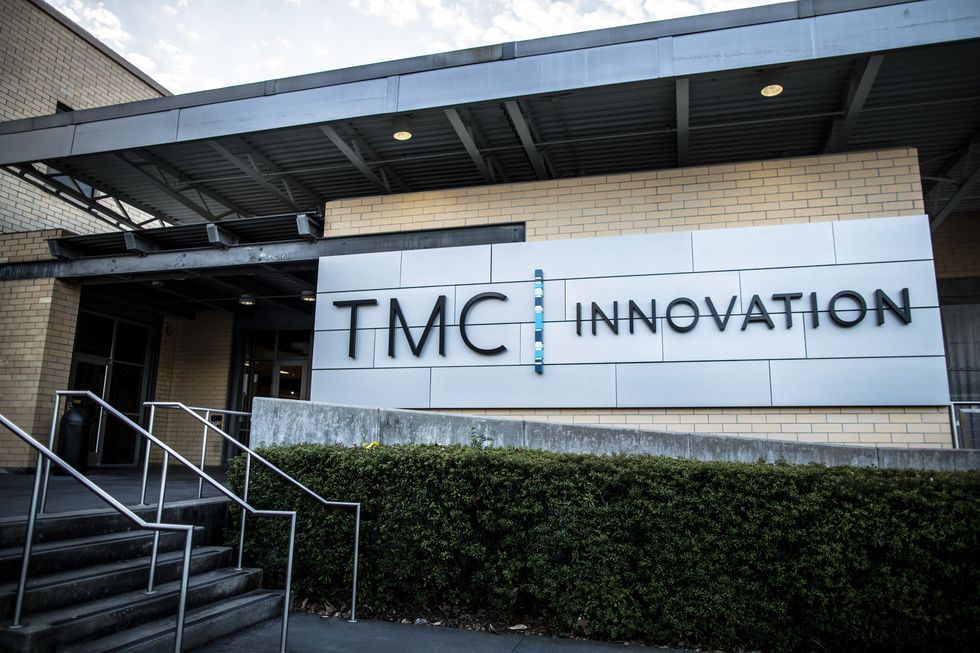
The new programming geared at idea-stage startups has officially commenced at TMC Innovation Institute. Courtesy of TMCx

There's been a lot of recent Houston innovation news, and you might have missed something. Keep up to date with all the news happening among startups and technology in Houston in this innovation news roundup.

If you know of innovation-focused news happening, email me at natalie@innovationmap.com with the details and subscribe to our daily newsletter that sends fresh stories straight to your inboxes every morning.

TMCalpha premieres 
Courtesy of TMC

The Texas Medical Center has long counseled budding medical entrepreneurs in various capacities through its TMC Innovation Institute, but wanted to introduce programming specifically for early-stage companies. That's how TMC alpha was born and announced at the most recent TMCx Demo Day.

The program officially launched on July 18 and will host meetups on the third Thursday of every month.

"Over the past five years, TMC Innovation has blossomed into a global proving ground for healthcare startup companies from across the world, and we could not be more pleased with the myriad ways in which the ecosystem here has expanded in nature," says TMC Innovation Director Tom Luby in a release. "That being said, we realized that TMC Innovation needed to do more for the local innovation community and offer ample resources to support homegrown talent from within the confines of the largest medical city in the world. With TMC alpha, the hope is to connect anyone with a fledgling healthcare idea to the TMC Innovation network and create a two-way channel of meaningful dialogue."

Innowatts scores extra funding and names new C-level exec

Photo via innowatts.com

Houston-based AI-enabled analytics company, Innowatts, is growing in more ways than one. The company, which is fresh off an over $18.2 million Series B fundraise, added move funds and a new C-level executive.

Veronorte, a South American venture capital firm backed by one of the largest utilities in Colombia, became an additional investor in the company with an undisclosed contribution. Meanwhile, Eric Danziger joined the company as its new chief revenue officer. He will be tasked with the growth and sales of Innowatts' eUtility™ product.

"As the utility grid becomes more complex with the proliferation of electric vehicles and distributed generation," says Danziger in a release, "utility companies have to adapt to the data generated and needs of their consumers to manage these complex requirements."

Startup snags free office space prize
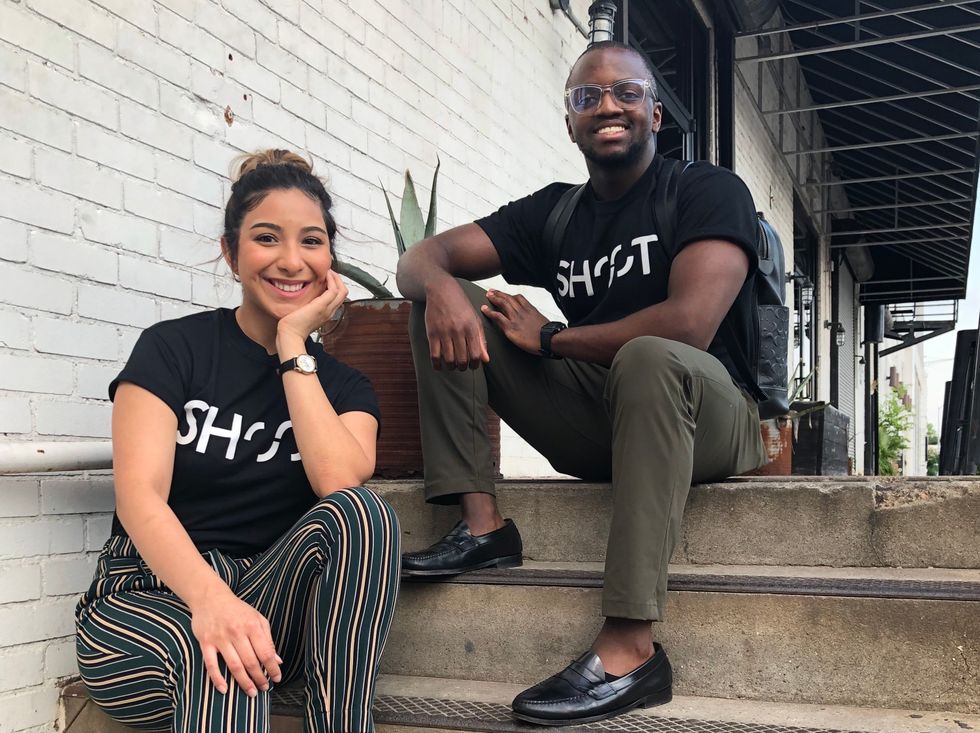
Photo courtesy of The Cannon

Shoot, a digital marketplace that simplifies the photographer and videographer booking process, has scored free office space in the newly opened Cannon building after receiving the second annual Insperity Innovation Scholarship.

The company was co-founded by Simbai Mutandiro and Alina Merida and has already launched its beta platform. The company will release its next version of the platform soon.

"Our relationship with The Cannon and the Insperity Innovation Scholarship are part of our initiative to help startups become successful more quickly by connecting and collaborating with like-minded individuals," says Larry Shaffer, Insperity senior vice president of marketing and business development, in a release. "We congratulate Shoot on receiving this scholarship and wish the co- founders continued success in furthering their entrepreneurial dream."

The other three finalists in the contest — Delfin, Social Chains, and SOTAOG — will receive open desk memberships at The Cannon for six months.

Houston falls low on the list of cities booming with growing private companies
Texas Money

Getty Images

When it comes to the major metros with the biggest jump in private businesses with over $1 million in revenue, Houston is the last on the list for Texas cities. LendingTree looked at the data, and, between 2014 and 2016, Houston only saw an increase of 4.9 percent in million-dollar business growth. This earned the Bayou City a No. 32 ranking across the country.

Dallas was slightly ahead of Houston with 5.2 percent growth and a No. 29 rank. Meanwhile, Austin earned the top spot with 15.1 percent growth. San Antonio, the only other Texas metro in the study, ranked No. 12 with 9 percent growth.

Nesh forms partnership

Oil rig

Photo courtesy of Thomas Miller/Breitling Energy

The Woodlands-based WellDatabase has announced a partnership with Nesh, an AI-optimized tool that's like the Siri or Alexa of oil and gas.

"The technology is amazing and we are thrilled to work with the Nesh team," writes John Ferrell, CEO of WellDatabase, in a blog post. "The integration allows Nesh to run real-time queries against WellDatabase. Users can ask a multitude of questions and get instant answers. They can also work with the Nesh team directly to train and build new questions and workflows."

Rice University and Cognite join forces
Courtesy of Cognite

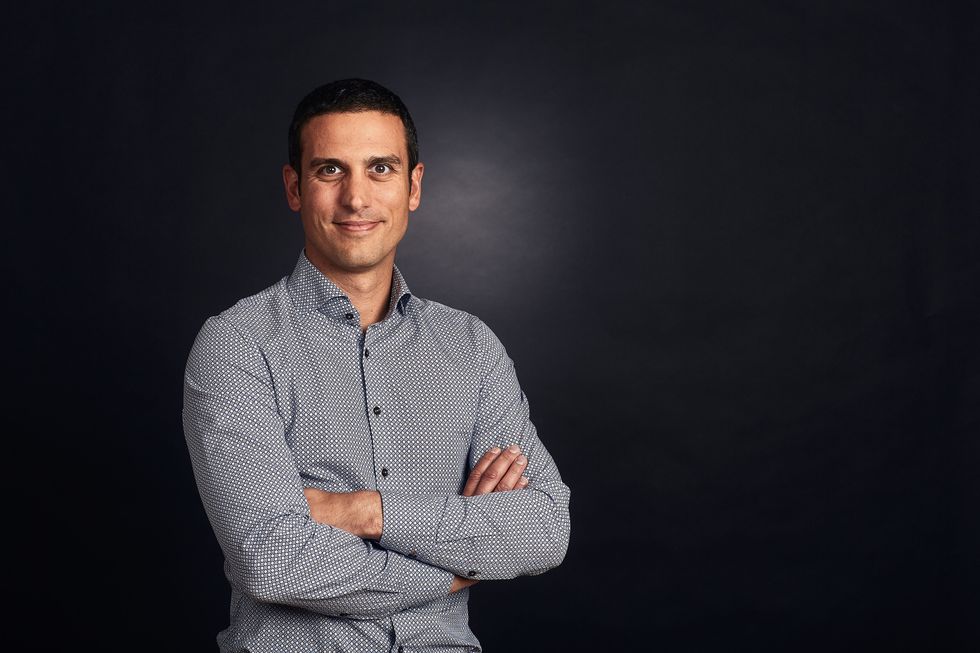
When Oslo, Norway-based Cognite announced its dual U.S. headquarters in Houston and Austin, it had plans to engage universities from the get go. Now, the company, which specializes in data software with industrial applications, has officially created a partnership and internship program with Rice University.

"This partnership illustrates Cognite's commitment to attracting top people to build the most talented software engineering team in the world," says John Markus Lervik, Cognite co-founder and CEO, in a release. "Cognite solves some of the most complex problems related to industrial digitalization. To do that, we need the best minds, so partnering with Rice University was a natural choice."

Rice students are currently in Norway this summer working for Cognite as a part as the inaugural program.

The Cannon teams up with Thompson & Knight
Courtesy of The Cannon

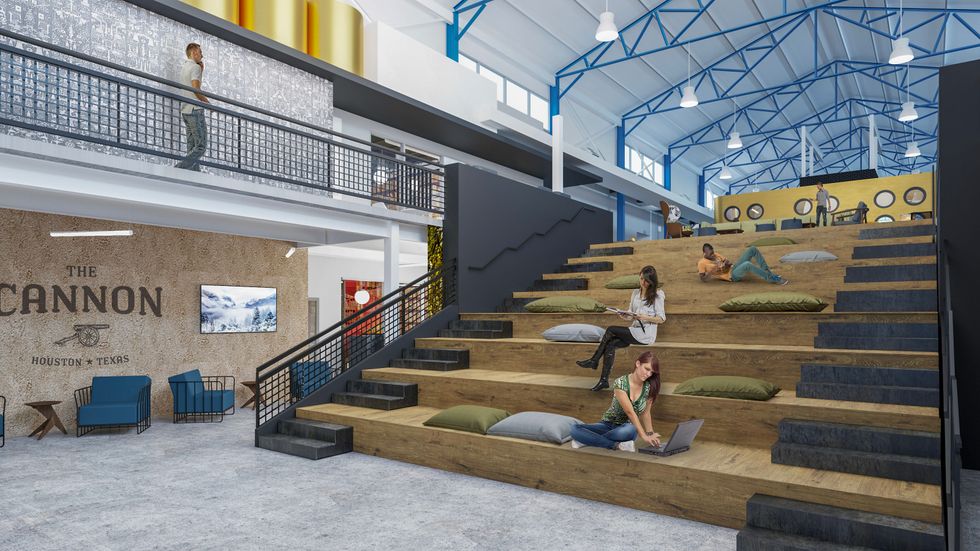
Houston-based law firm Thompson & Knight has officially signed on to provide resources for The Cannon startups in a strategic partnership between the two companies.

"Thompson & Knight is pleased to partner with Houston-based entrepreneurs who are building the innovation, services, and technological platforms of the very near future," says Mark M. Sloan, managing partner of Thompson & Knight, in a news release. "We will offer our experience in the issues common to startup businesses, including intellectual property, technology, corporate, labor, and other areas of counsel that will help further the goals of these pioneering companies."

The law firm will have an office in The Cannon's recently opened building in West Houston.

Solugen names president

Getty Images


In May, Houston-based chemicals company, Solugen Inc., closed a $32 million round. Now, the company has put a portion of that money to work to hired the newest executive on the team. Jason Roberts, who has a decade of chemicals and oil and gas experience, has joined Solugen as president.

"What I found most compelling about Solugen was the company's quick successes and their overarching goal of decarbonizing the chemicals industry," says Roberts in a release. "The company's fundamental chemistry and technologies have created products that no one in the industry currently has. I am excited to join this young company's fast moving team at such a significant time in its history and look forward to helping scale their innovative products and services."

Ad Placement 300x100
Ad Placement 300x600

CultureMap Emails are Awesome

Houston unicorn closes $421M to fuel first phase of flagship energy project

Heating Up

Houston geothermal unicorn Fervo Energy has closed $421 million in non-recourse debt financing for the first phase of its flagship Cape Station project in Beaver County, Utah.

Fervo believes Cape Station can meet the needs of surging power demand from data centers, domestic manufacturing and an energy market aiming to use clean and reliable power. According to the company, Cape Station will begin delivering its first power to the grid this year and is expected to reach approximately 100 megwatts of operating capacity by early 2027. Fervo added that it plans to scale to 500 megawatts.

The $421 million financing package includes a $309 million construction-to-term loan, a $61 million tax credit bridge loan, and a $51 million letter of credit facility. The facilities will fund the remaining construction costs for the first phase of Cape Station, and will also support the project’s counterparty credit support requirements.

Coordinating lead arrangers include Barclays, BBVA, HSBC, MUFG, RBC and Société Générale, with additional participation from Bank of America, J.P. Morgan and Sumitomo Mitsui Trust Bank, Limited, New York Branch.

“As demand for firm, clean, affordable power accelerates, EGS (Enhanced Geothermal Systems) is set to become a core energy asset class for infrastructure lenders,” Sean Pollock, managing director, project Finance at RBC Capital Markets, said in a news release. “Fervo is pioneering this step change with Cape Station, a vital contribution to American energy security that RBC is proud to support.”

The oversubscribed financing marks Cape Station’s shift from early-stage and bridge funding to a long-term, non-recourse capital structure, according to the news release.

“Non-recourse financing has historically been considered out of reach for first-of-a-kind projects,” David Ulrey, CFO of Fervo Energy, said in a news release. “Cape Station disrupts that narrative. With proven oil and gas technology paired with AI-enabled drilling and exploration, robust commercial offtake, operational consistency, and an unrelenting focus on health and safety, we have shown that EGS is a highly bankable asset class.”

Fervo continues to be one of the top-funded startups in the Houston area. The company has raised about $1.5 billion prior to the latest $421 million. It also closed a $462 million Series E in December.

According to Axios Pro, Fervo filed for an IPO that would value the company between $2 billion and $3 billion in January.

---

This article first appeared on EnergyCapitalHTX.com.

Houston food giant Sysco to acquire competitor in $29 billion deal

Mergers & Acquisitions

Sysco, the nation's largest food distributor, will acquire supplier Restaurant Depot in a deal worth more than $29 billion.

The acquisition would create a closer link between Sysco and its customers that right now turn to Restaurant Depot for supplies needed quickly in an industry segment known as “cash-and-carry wholesale.”

Sysco, based in Houston, serves more than 700,000 restaurants, hospitals, schools, and hotels, supplying them with everything from butter and eggs to napkins. Those goods are typically acquired ahead of time based on how much traffic that restaurants typically see.

Restaurant Depot offers memberships to mom-and-pop restaurants and other businesses, giving them access to warehouses stocked with supplies for when they run short of what they've purchased from suppliers like Sysco.

It is a fast growing and high-margin segment that will likely mean thousands of restaurants will rely increasingly on Sysco for day-to-day needs.

Restaurant Depot shareholders will receive $21.6 billion in cash and 91.5 million Sysco shares. Based on Sysco’s closing share price of $81.80 as of March 27, 2026, the deal has an enterprise value of about $29.1 billion.

Restaurant Depot was founded in Brooklyn in 1976. The family-run business then known as Jetro Restaurant Depot, has become the nation's largest cash-and-carry wholesaler.

The boards of both companies have approved the acquisition, but it would still need regulatory approval.

Shares of Sysco Corp. tumbled 13% Monday to $71.26, an initial decline some industry analysts expected given the cost of the deal.

Houston researcher builds radar to make self-driving cars safer

eyes on the road

A Rice University researcher is giving autonomous vehicles an “extra set of eyes.”

Current autonomous vehicles (AVs) can have an incomplete view of their surroundings, and challenges like pedestrian movement, low-light conditions and adverse weather only compound these visibility limitations.

Kun Woo Cho, a postdoctoral researcher in the lab of Rice professor of electrical and computer engineering Ashutosh Sabharwal, has developed EyeDAR to help address such issues and enhance the vehicles’ sensing accuracy. Her research was supported in part by the National Science Foundation.

The EyeDAR is an orange-sized, low-power, millimeter-wave radar that could be placed at streetlights and intersections. Its design was inspired by that of the human eye. Researchers envision that the low-cost sensors could help ensure that AVs always pick up on emergent obstacles, even when the vehicles are not within proper range for their onboard sensors and when visibility is limited.

“Current automotive sensor systems like cameras and lidar struggle with poor visibility such as you would encounter due to rain or fog or in low-lighting conditions,” Cho said in a news release. “Radar, on the other hand, operates reliably in all weather and lighting conditions and can even see through obstacles.”

Signals from a typical radar system scatter when they encounter an obstacle. Some of the signal is reflected back to the source, but most of it is often lost. In the case of AVs, this means that "pedestrians emerging from behind large vehicles, cars creeping forward at intersections or cyclists approaching at odd angles can easily go unnoticed," according to Rice.

EyeDAR, however, works to capture lost radar reflections, determine their direction and report them back to the AV in a sequence of 0s and 1s.

“Like blinking Morse code,” Cho added. “EyeDAR is a talking sensor⎯it is a first instance of integrating radar sensing and communication functionality in a single design.”

After testing, EyeDAR was able to resolve target directions 200 times faster than conventional radar designs.

While EyeDAR currently targets risks associated with AVs, particularly in high-traffic urban areas, researchers also believe the technology behind it could complement artificial intelligence efforts and be integrated into robots, drones and wearable platforms.

“EyeDAR is an example of what I like to call ‘analog computing,’” Cho added in the release. “Over the past two decades, people have been focusing on the digital and software side of computation, and the analog, hardware side has been lagging behind. I want to explore this overlooked analog design space.”