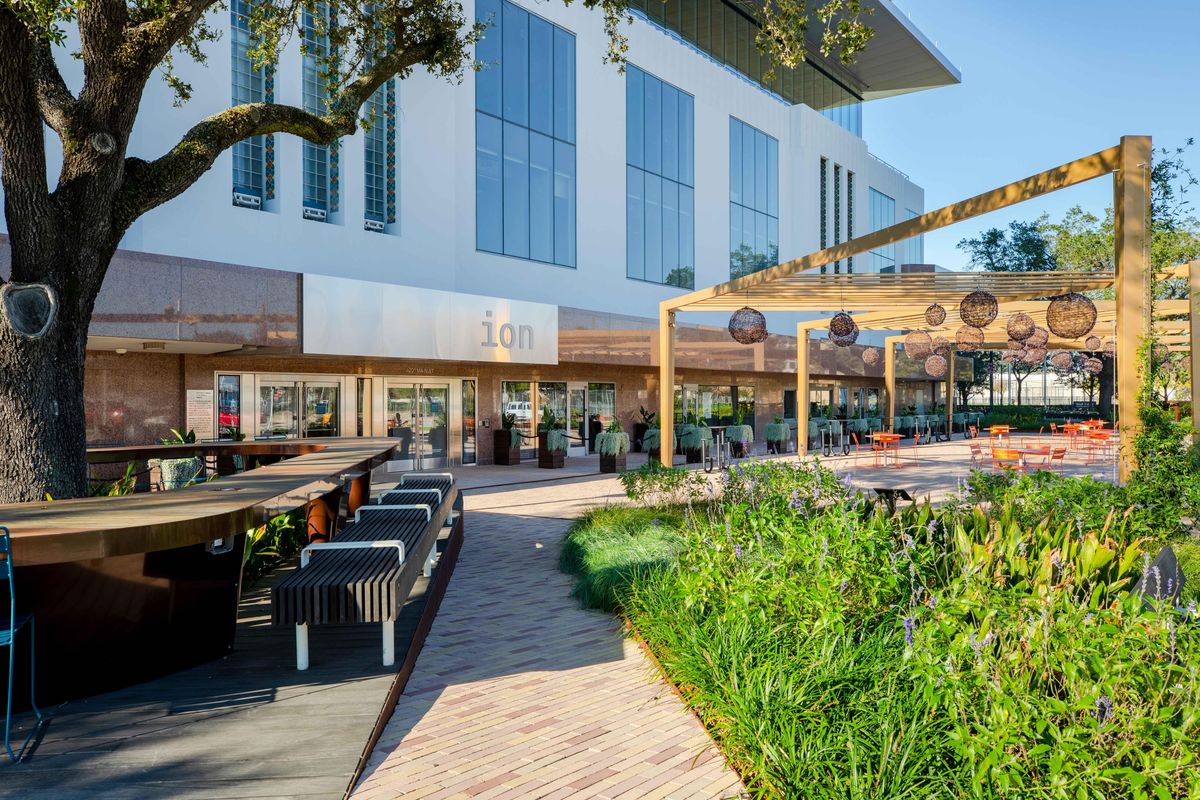
From recurring monthly favorites to the return of annual celebrations and summits, here's what not to miss in February. Photo courtesy the Ion.

Editor's note: February may be short, but its event calendar isn’t. From recurring monthly favorites to the return of annual celebrations and summits, here's what not to miss and how to register. Please note: this article may be updated to include additional event listings.

Feb. 2 — Entrepreneurship Roundtable with OPEN

Join founders, builders and innovators as they explore what it takes to create, scale and sustain meaningful ventures. This event, hosted by Open Houston, will be moderated by Faisal Bhutto, president and CEO of Houston-based end-to-end IT and cybersecurity company Alykas.

This event is Monday, Feb. 2, from 11 a.m.-1 p.m. at the Ion. Register here.

Feb. 3 — Tech+Tequila Talk: Tax Equity: Aligning Incentives for Founders, Investors & Philanthropy

Hear from guest speaker Cesar de la Cerda, founder and CIO of EnvisionVest, at the latest installment of Tech and Tequila Talk. The event will focus on using the tax code as a powerful fundraising tool.

This event takes place Tuesday, Feb. 3, from 5-7 p.m. at the Ion. Register here.

Feb. 5 — Ion Block Party Mardi Gras

Let the good times roll while networking with potential collaborators, mentors and investors at the Ion. Food and drink will be available, and the Ion will provide drink tickets for one free drink at Second Draught upon check-in.

This event is Thursday, Feb. 5, from 4-7 p.m. at the Ion. Register here.

Feb. 10 — Mercury Fund Day at the Ion

The Ion and Houston's Mercury Fund will host this special event, previously known as Software Day. The event will feature a panel that dives into how Mercury is pushing the boundaries of what’s possible with agentic AI and blockchain. A select group of early-stage software startups will also participate in office hours before the panel. Afterwards, all attendees can network during happy hour at Second Draught.

This event is Tuesday, Feb. 10, from 3:30-7:30 p.m. Register here.

Feb. 11-12 – In-Space Physical AI Workshop

Rice Nexus is bringing together industry leaders, government agencies and academia to explore the cutting edge of AI in space exploration. Matt Ondler, president of Aegis Aerospace, will present the keynote address. Other industry leaders from NASA Johnson Space Center, Intuitive Machines, Microsoft and Rice University and other organizations will participate. The event will close with the Inaugural Space Galette Reception hosted by the Consulate General of France in Houston and the Rice Space Institute.

This event begins Wednesday, Feb. 11, at the Ion. Register here.

Feb. 12 — State of the City

Houston First Corporation and the Greater Houston Partnership will host Mayor John Whitmire’s State of the City luncheon. Whitmire will share an update on his administration’s progress since taking office and highlight his top priorities that will continue to elevate Houston and its economy.

This event is Thursday, Feb. 12, from 11 a.m.-1:30 p.m. at the Hilton Americas-Houston. Register here.

Feb. 12 — Positioning Houston as the Brain Capital of the World

David Gow, CEO of the Center for Houston's Future, will present "Positioning Houston as the Brain Capital of the World" at the University of Houston Honors College Leadership Forum. Gow will share how Project Metis aims to establish Houston as a global hub for brain health research, innovation and economic development.

This event is Thursday, Feb. 12, from 7:30-9:30 a.m. at The Junior League of Houston. Register here.

Feb. 13 — From Research to Enterprise: Immigration & Innovation

Innov8 Hub will host an in-person seminar as part of its Startup Resources Series, focused on the intersection of immigration law, entrepreneurship and technology commercialization. The session will feature guest speakers Mario Cantu, Shilpa Ghurye and Vikesh Patel of KM&D PLLC, who will share insights for founders and innovators navigating legal pathways while building and scaling technology-driven ventures.

The event is Friday, Feb. 13, from 1-2 p.m. at the Innovation Center at UH Technology Bridge, Building 4. Register here.

Feb. 18-20 — TMC AI Summit

UTHealth Houston and Texas Children’s Hospital are bringing back the TMC AI Summit for its third year. This event is focused on translating advanced AI innovations into practical, real-world solutions for the biomedical and healthcare industries. It will be broken up into three tracks and will feature poster and oral presentations, workshops and tutorials, industry talks and student research showcases.

The event begins Wednesday, Feb. 18, at the Duncan Neurological Research Institute. Register here.

Feb. 26 — Transition on Tap

Greentown Labs’ signature networking event returns in February to foster conversations and connections within Houston's climate and energy transition ecosystem. Entrepreneurs, investors, students, philanthropists and more are invited to attend, meet colleagues, discuss solutions and engage with the growing community.

The event begins Monday, Feb. 26, from 5:30-7:30 p.m. at Greentown Labs. Register here.

Feb. 26 — NASA Tech Talk

Every fourth Thursday of the month, NASA experts, including longtime engineer Montgomery Goforth, present on technology development challenges NASA’s Johnson Space Center and the larger aerospace community are facing, and how they can be leveraged by Houston’s innovation community. Stick around after for drinks and networking at Second Draught.

This event is Thursday, Feb. 26, from 6-7 p.m. at the Ion. Register here.

Don't miss these June events—from lightning pitches to a female-focused AI summit. Photo by Scott Halleran/Getty Images

9 can't-miss Houston business and innovation events for June

where to be

Editor's note: From lightning pitches to a female-focused AI summit and energy conferences, there's still plenty to do as Houston settles into the summer. Here are the Houston business and innovation events you can't miss in June and how to register. Please note: this article might be updated to add more events.


June 3 – Founders Live Houston 

Watch five Houston founders present their 99-second pitches at Founders Live Houston. Competing teams include AyeDu (Vinita Gupta), Omniscale (Tony Hernandez-Ferman), AnswerPath (Chris Mullins), Katana.video (Sam Bhattacharyya) and TraceWrap (Laketta B.).

This event is Tuesday, May 3, at 5:30 p.m. at the Ion. Register here.

June 4 – Center for Human Performance Research & Networking Event

Rice University and Houston Methodist's Center for Human Performance will host an event to support its work in the study of exercise physiology, injury prevention and rehabilitation. The organizations will share more information on seed grant opportunities, and the event will feature presentations from Rice and Houston Methodist leaders, networking sessions and a poster showcase.

This event is Wednesday, June 4, from 3-5:30 p.m. at the BioScience Research Collaborative at Rice University. Register here.

June 12 – Transition on Tap

Meet and hear lighting pitches from eight of Greentown Labs’ newest startup members. Attendees can network with entrepreneurs, investors, corporate leaders, philanthropists, students and other climate champions. Georgina Campbell Flatter, CEO of Greentown Labs, and Victor Martinez, Greentown's memberships manager, will also speak.

This event is Thursday, June 12, from 5:30-7:30 p.m. at Greentown Houston. Register here.

June 16-18 — Energy Drone & Robotics Summit

This three-day summit, the largest of its kind, will connect 1,500-plus leaders in the global energy/industrial robotics, drone and data sectors. Attendees will glean the latest ideas, use cases, best practices, tech and trends from a wide variety of robotics and drone industry experts.

This event begins June 16 at Woodlands Waterway Marriott. Register here.

June 17 – SGSF’s #SUPERGirlsInSTEM Summit, The Intersection of AI & Workforce

SUPERGirls SHINE Foundation is hosting a one-day summit for women ages 18-24 focused on the evolving intersection of AI and the STEM workforce. The conference will feature keynote speakers, panel discussions and hands-on workshops.

This event is Tuesday, June 17, from 9 a.m.-1 p.m. at the Ion. Register here.

June 18 – 2025 Obsidi BNXT: Juneteenth Tech Forum

Obsidi.com, an online platform launched by the Black Professionals in Tech Network (BPTN), will host a forum for high-performing Black and allied tech executives. The event offers networking opportunities, keynotes and panels that feature executives from Echelon Health Partners, Hewlett-Packard Enterprise, SAP, Intuit and more.

The event is Wednesday, June 18, at NRG Center. Register here.

June 24 — Houston Methodist Leadership Speaker Series

Head to the Houston Methodist Tech Hub at Ion to hear the latest installment of the Houston Methodist Leadership Speaker Series. Trent Fulin, vice president and CEO at Houston Methodist Cypress Hospital, will discuss the new 105-acre campus and its first 100 days of patient care, followed by a Q&A.

This event is Tuesday, June 23, from 4:45-6 p.m. Register here.

June 25-26 – Carbon Capture Technology Expo and  Hydrogen Technology Conference & Expo North America

Tackling climate change is one of the biggest global challenges that requires immediate action, and many industrial sectors are now looking to new technology to help meet net-zero emission targets. The Carbon Capture Technology Expo is North America's leading event for carbon capture, utilization and storage. The expo offers opportunities to network with industry frontrunners and best-in-class solution providers.

This event begins June 25 at NRG Center. Click here to register. It is co-located with the Hydrogen Technology Conference & Expo North America. Expo passes are free.

June 26 – NASA Tech Talk

Every fourth Thursday of the month, NASA experts, including longtime engineer Montgomery Goforth, present on technology development challenges NASA’s Johnson Space Center and the larger aerospace community are facing and how Houston’s innovation community can leverage them. Stick around after for drinks and networking at Second Draught.

This event is Thursday, June 26, from 6-7 p.m. at the Ion. Register here.
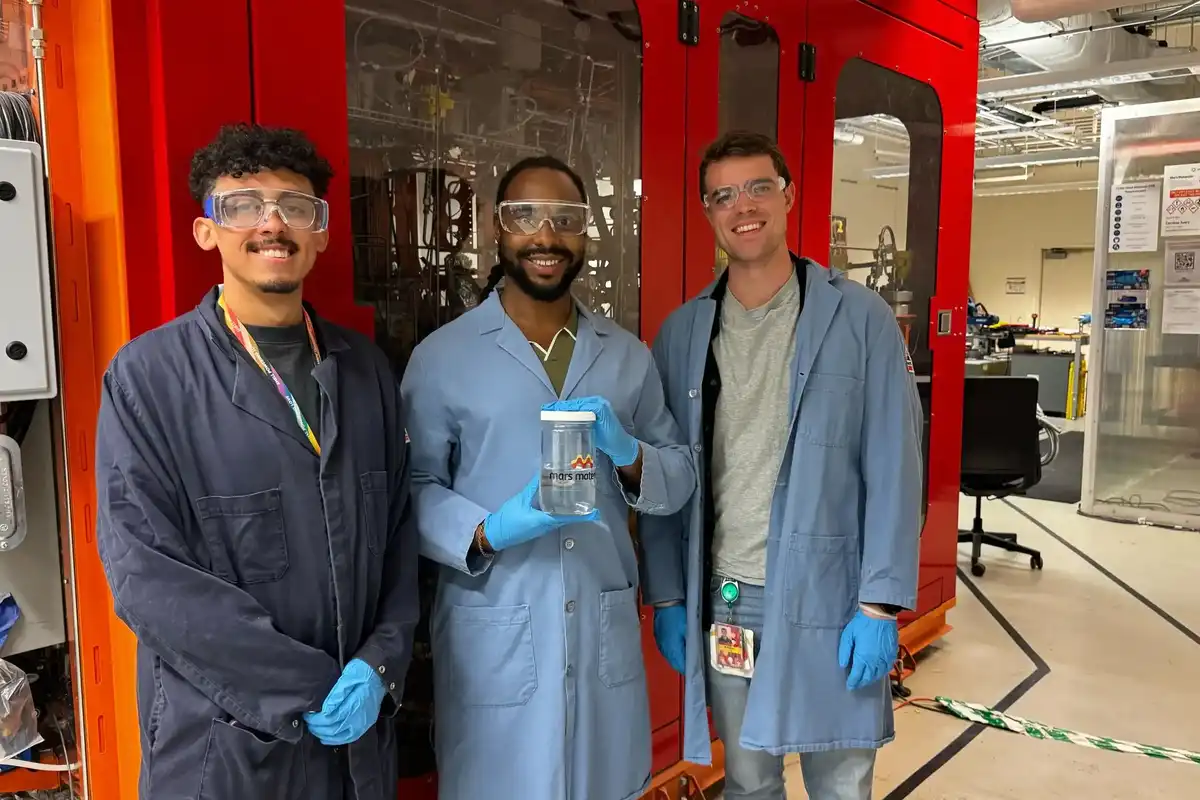
Intuitive Machines has been granted up to $10 million for a new project. Photo via Intuitive Machines

Houston space tech co. lands millions and more innovation news to know

Trending News

Editor's note: It's time to recap the top innovation news for the first half of May 2025. Our five most-read stories from May 1-15 include updates from Intuitive Machines and The Ion. Plus, driverless trucks hit the road from Houston to Dallas. Get all of the details below.

1. Houston space tech leader lands up to $10 million for Earth re-entry vehicle and lab

The Texas Space Commission has selected Houston's Intuitive Machines to develop a vehicle that will return lunar samples to Earth, along with an orbital fabrication lab. Photo courtesy Intuitive Machines.

Houston-based space technology, infrastructure, and services company Intuitive Machines has been awarded a state grant of up to $10 million to help develop an Earth re-entry vehicle and in-space biomanufacturing lab. The Texas Space Commission approved the grant, which is coming from the state’s Space Exploration and Research Fund. Intuitive Machines says the money will support its “critical risk-reduction platform” for returning lunar samples to Earth. The funding will go toward an early 12-month phase of the project. Continue reading.

2. 9 can't-miss Houston business and innovation events for May

Don't miss these May events — from an investor activation series to a crawfish cook-off. Photo courtesy Greentown Labs.

There's a lot to learn this month at events around Houston. Hear from AI and energy experts or gain insights into how to tap into funding at informative panels or sessions. Continue reading.

3. Autonomous truck company rolls out driverless Houston-Dallas route

Aurora began regular driverless deliveries between Houston and Dallas on April 27. Photo courtesy Aurora.

Houston is helping drive the evolution of self-driving freight trucks. In October, Aurora opened a more than 90,000-square-foot terminal at a Fallbrook Drive logistics hub in northwest Houston to support the launch of its first “lane” for driverless trucks—a Houston-to-Dallas route on the Interstate 45 corridor. Aurora opened its Dallas-area terminal in April and the company began regular driverless customer deliveries between the two Texas cities on April 27. Continue reading.

4. Texas-based 'DoorDash for laundry' startup tumbles into Houston market

The service has been a smash success in Austin. Courtesy photo

Laundry may seem like an endless task that piles up, but a new service offers a solution to overwhelmed Houston families. NoScrubs, an Austin-based home laundry pickup service has just expanded to Houston. Described by the company as "DoorDash — but for laundry," they wash customer's clothes at local laundromats and return them the same day, folded and ready to be put away. The service took off like gangbusters in Austin, making an expansion to the state's largest city an obvious choice. Continue reading.

5. New energy innovation and coworking spaces open at the Ion

The Oxy Innovation Center has opened at the Ion and Industrious' coworking space launches soon. Photo courtesy of The Ion

Houston-based Occidental officially opened its new Oxy Innovation Center with a ribbon cutting at the Ion. The opening reflects Oxy and the Ion's "shared commitment to advancing technology and accelerating a lower-carbon future," according to an announcement from the Ion. Oxy, which was named a corporate partner of the Ion in 2023, now has nearly 6,500 square feet on the fourth floor of the Ion. Rice University and the Rice Real Estate Company announced the lease of the additional space last year, along with agreements with Fathom Fund and Activate. Continue reading.

Ad Placement 300x100
Ad Placement 300x600

CultureMap Emails are Awesome

Houston wearable biosensing company closes $13M pre-IPO round

fresh funding

Wellysis, a Seoul, South Korea-headquartered wearable biosensing company with its U.S. subsidiary based in Houston, has closed a $13.5 million pre-IPO funding round and plans to expand its Texas operations.

The round was led by Korea Investment Partners, Kyobo Life Insurance, Kyobo Securities, Kolon Investment and a co-general partner fund backed by SBI Investment and Samsung Securities, according to a news release.

Wellysis reports that the latest round brings its total capital raised to about $30 million. The company is working toward a Korea Securities Dealers Automated Quotations listing in Q4 2026 or Q1 2027.

Wellysis is known for its continuous ECG/EKG monitor with AI reporting. Its lightweight and waterproof S-Patch cardiac monitor is designed for extended testing periods of up to 14 days on a single battery charge.

The company says that the funding will go toward commercializing the next generation of the S-Patch, known as the S-Patch MX, which will be able to capture more than 30 biometric signals, including ECG, temperature and body composition.

Wellysis also reports that it will use the funding to expand its Houston-based operations, specifically in its commercial, clinical and customer success teams.

Additionally, the company plans to accelerate the product development of two other biometric products:

  • CardioAI, an AI-powered diagnostic software platform designed to support clinical interpretation, workflow efficiency and scalable cardiac analysis
  • BioArmour, a non-medical biometric monitoring solution for the sports, public safety and defense sectors

“This pre-IPO round validates both our technology and our readiness to scale globally,” Young Juhn, CEO of Wellysis, said in the release. “With FDA-cleared solutions, expanding U.S. operations, and a strong AI roadmap, Wellysis is positioned to redefine how cardiac data is captured, interpreted, and acted upon across healthcare systems worldwide.”

Wellysis was founded in 2019 as a spinoff of Samsung. Its S-Patch runs off of a Samsung Smart Health Processor. The company's U.S. subsidiary, Wellysis USA Inc., was established in Houston in 2023 and was a resident of JLABS@TMC.

Elon Musk vows to launch solar-powered data centers in space

To Outer Space

Elon Musk vowed this week to upend another industry just as he did with cars and rockets — and once again he's taking on long odds.

The world's richest man said he wants to put as many as a million satellites into orbit to form vast, solar-powered data centers in space — a move to allow expanded use of artificial intelligence and chatbots without triggering blackouts and sending utility bills soaring.

To finance that effort, Musk combined SpaceX with his AI business on Monday, February 2, and plans a big initial public offering of the combined company.

“Space-based AI is obviously the only way to scale,” Musk wrote on SpaceX’s website, adding about his solar ambitions, “It’s always sunny in space!”

But scientists and industry experts say even Musk — who outsmarted Detroit to turn Tesla into the world’s most valuable automaker — faces formidable technical, financial and environmental obstacles.

Feeling the heat

Capturing the sun’s energy from space to run chatbots and other AI tools would ease pressure on power grids and cut demand for sprawling computing warehouses that are consuming farms and forests and vast amounts of water to cool.

But space presents its own set of problems.

Data centers generate enormous heat. Space seems to offer a solution because it is cold. But it is also a vacuum, trapping heat inside objects in the same way that a Thermos keeps coffee hot using double walls with no air between them.

“An uncooled computer chip in space would overheat and melt much faster than one on Earth,” said Josep Jornet, a computer and electrical engineering professor at Northeastern University.

One fix is to build giant radiator panels that glow in infrared light to push the heat “out into the dark void,” says Jornet, noting that the technology has worked on a small scale, including on the International Space Station. But for Musk's data centers, he says, it would require an array of “massive, fragile structures that have never been built before.”

Floating debris

Then there is space junk.

A single malfunctioning satellite breaking down or losing orbit could trigger a cascade of collisions, potentially disrupting emergency communications, weather forecasting and other services.

Musk noted in a recent regulatory filing that he has had only one “low-velocity debris generating event" in seven years running Starlink, his satellite communications network. Starlink has operated about 10,000 satellites — but that's a fraction of the million or so he now plans to put in space.

“We could reach a tipping point where the chance of collision is going to be too great," said University at Buffalo's John Crassidis, a former NASA engineer. “And these objects are going fast -- 17,500 miles per hour. There could be very violent collisions."

No repair crews

Even without collisions, satellites fail, chips degrade, parts break.

Special GPU graphics chips used by AI companies, for instance, can become damaged and need to be replaced.

“On Earth, what you would do is send someone down to the data center," said Baiju Bhatt, CEO of Aetherflux, a space-based solar energy company. "You replace the server, you replace the GPU, you’d do some surgery on that thing and you’d slide it back in.”

But no such repair crew exists in orbit, and those GPUs in space could get damaged due to their exposure to high-energy particles from the sun.

Bhatt says one workaround is to overprovision the satellite with extra chips to replace the ones that fail. But that’s an expensive proposition given they are likely to cost tens of thousands of dollars each, and current Starlink satellites only have a lifespan of about five years.

Competition — and leverage

Musk is not alone trying to solve these problems.

A company in Redmond, Washington, called Starcloud, launched a satellite in November carrying a single Nvidia-made AI computer chip to test out how it would fare in space. Google is exploring orbital data centers in a venture it calls Project Suncatcher. And Jeff Bezos’ Blue Origin announced plans in January for a constellation of more than 5,000 satellites to start launching late next year, though its focus has been more on communications than AI.

Still, Musk has an edge: He's got rockets.

Starcloud had to use one of his Falcon rockets to put its chip in space last year. Aetherflux plans to send a set of chips it calls a Galactic Brain to space on a SpaceX rocket later this year. And Google may also need to turn to Musk to get its first two planned prototype satellites off the ground by early next year.

Pierre Lionnet, a research director at the trade association Eurospace, says Musk routinely charges rivals far more than he charges himself —- as much as $20,000 per kilo of payload versus $2,000 internally.

He said Musk’s announcements this week signal that he plans to use that advantage to win this new space race.

“When he says we are going to put these data centers in space, it’s a way of telling the others we will keep these low launch costs for myself,” said Lionnet. “It’s a kind of powerplay.”

Johnson Space Center and UT partner to expand research, workforce development

onward and upward

NASA’s Johnson Space Center in Houston has forged a partnership with the University of Texas System to expand collaboration on research, workforce development and education that supports space exploration and national security.

“It’s an exciting time for the UT System and NASA to come together in new ways because Texas is at the epicenter of America’s space future. It’s an area where America is dominant, and we are committed as a university system to maintaining and growing that dominance,” Dr. John Zerwas, chancellor of the UT System, said in a news release.

Vanessa Wyche, director of Johnson Space Center, added that the partnership with the UT System “will enable us to meet our nation’s exploration goals and advance the future of space exploration.”

The news release noted that UT Health Houston and the UT Medical Branch in Galveston already collaborate with NASA. The UT Medical Branch’s aerospace medicine residency program and UT Health Houston’s space medicine program train NASA astronauts.

“We’re living through a unique moment where aerospace innovation, national security, economic transformation, and scientific discovery are converging like never before in Texas," Zerwas said. “UT institutions are uniquely positioned to partner with NASA in building a stronger and safer Texas.”

Zerwas became chancellor of the UT System in 2025. He joined the system in 2019 as executive vice chancellor for health affairs. Zerwas represented northwestern Ford Bend County in the Texas House from 2007 to 2019.

In 1996, he co-founded a Houston-area medical practice that became part of US Anesthesia Partners in 2012. He remained active in the practice until joining the UT System. Zerwas was chief medical officer of the Memorial Hermann Hospital System from 2003 to 2008 and was its chief physician integration officer until 2009.

Zerwas, a 1973 graduate of the Houston area’s Bellaire High School, is an alumnus of the University of Houston and Baylor College of Medicine.