
Lilie's 2026 Rice Innovation Fellows. Photo via LinkedIn

Editor's note: As fall reaches full swing, Houston's innovation scene is calling on the latest batch of founders and startups looking to make a difference. A number of accelerators have opened applications. Read below to see which might be a good fit for you or your venture. And take careful note of the deadlines. Please note: this article may be updated to include additional information and programs.

Did we miss an accelerator or competition accepting applications? Email innoeditor@innovationmap.com for editorial consideration.

Texas Life Science Forum

Deadline: Oct. 2

Details: Ventures can apply to present at the 15th annual Texas Life Science Forum, hosted by BioHouston and Rice Alliance. Participants will meet during office hours with venture capitalists, tech scouts, corporate venture groups and angel investors, and present their pitches in a public forum. Pitches take place on Nov. 10 and office hours are held Nov. 11. Find more information here.

Greentown Lab's Go Make 2027: Advanced Carbon Materials with ExxonMobil

Deadline: Oct. 9

Details: Greentown Labs is seeking applications from startups developing novel carbon-based technologies for its latest Go Make cohort in conjunction with ExxonMobil. The structured accelerator is designed to facilitate validation activities and explore potential long-term collaborations with Exxon, according to Greentown. Founders will have the opportunity to engage directly with industry leaders to test, validate and scale their carbon technologies in real commercial contexts. The program tentatively starts on Jan. 20, 2027 and concludes June 16, 2027. Find more information here.

Activate's U.S. Fellowship Cohort 2027

Deadline: Oct. 30

Details: Activate supports scientists at "the outset of their entrepreneurial journey." It partners with U.S.-based funders and research institutions to support its fellows in developing high-impact technology. Its fellows receive a living stipend, research and development funding, connections from Activate's robust network of mentors and access to a curriculum specific to the program for two years. Applicants must have a bachelor’s degree and 4-plus years of post-baccalaureate scientific research, engineering or technology development experience. Their work must be based in the physical or biological sciences or related engineering disciplines. Find more information here.

Rice Innovation Fellows

Deadline: Oct. 30

Details: The Liu Idea Lab for Innovation and Entrepreneurship (Lilie)'s Rice Innovation Fellows program supports Rice Ph.D. students and postdocs in turning their research into real-world ventures. Participants receive $10,000 in translational research funding, co-working space and personalized mentorship. Candidates from all Rice engineering and science-related disciplines are encouraged to apply. Find more information here.

The TMC's Accelerator for Cancer Therapeutics

Deadline: Oct. 30

Details: Texas-based ventures and researchers developing a cancer therapeutics project can apply to this accelerator funded by the Cancer Prevention and Research Institute of Texas. The nine-month program runs February-September 2027 and focuses on market research, FDA regulations, intellectual property, licensing, finance, fundraising, legal and other critical areas for cancer-related ventures. Participants will complete the program with at least one grant submission and have the option to pitch to investors, corporate partners, media and other influential guests. Find more information here.

Ad Placement 300x100
Ad Placement 300x600

CultureMap Emails are Awesome

UTHealth Houston officially opens new tower in TMC's Helix Park

open for innovation

UTHealth Houston School of Public Health recently opened its new state-of-the-art tower in the Texas Medical Center’s Helix Park.

The 350,000-square-foot, 10-story campus at 1930 Old Spanish Trail was celebrated with an official ribbon-cutting ceremony on Oct. 28. The $229 million project will consolidate all UTHealth Houston School of Public Health operations into one facility. It will also connect students who are at the Austin, Brownsville, Dallas, El Paso and San Antonio campuses with peers and faculty through digital and distance learning.

Disciplines taught in the new tower will include epidemiology, genetics, nutrition, health policy, data science and health promotion, UTHealth shared when the building first broke ground in 2023.

Architects Kirksey Architecture and Smith Group designed the building, and Vaughn Construction served as general contractor. The facility features labs for studying human disease, classrooms and spaces to support interdisciplinary and community-based research, a broadcast studio and a teaching kitchen. A skybridge over Old Spanish Trail connects the new tower with a plaza that's shared with MD Anderson.

“This new facility reflects the kind of forward-looking investment that will serve Texans for generations,” Janiece Longoria, vice chairman of the UT System Board of Regents, said in a news release. “By creating an environment where talented people can learn, collaborate, and pursue new ideas, UTHealth Houston is building capacity to meet the challenges of tomorrow while strengthening its impact across our state.”

UTHealth says the system aims for the new campus to expand on collaborative research efforts and continue graduate education, as enrollment at the School of Public Health has increased by 27 percent over the last five years.

“This new building, with its state-of-the-art education technology and learning environment, will strengthen and advance the school’s mission to educate and train the next generation of experts who will advance scientific discovery, shape evidence-based health policy, and lead innovative solutions to the complex health challenges in communities throughout Texas and across the nation,” Kevin Morano, senior vice president, provost and chief academic officer of UTHealth Houston, added in a news release.

Attending the ceremony were Dr. Melina R. Kibbe, UTHealth Houston president and Alkek Williams Distinguished Chair; Eric Boerwinkle, dean, M. David Low Chair in Public Health and Kozmetsky Family Chair in Human Genetics at the School of Public Health; Texas State Representative Lauren Ashley Simmons, Texas House District 146; representatives of the offices of Senator John Cornyn and Harris County Commissioner Rodney Ellis; and Dr. Theresa Tran, director of the Houston Health Department.

"This building represents far more than a home for our school,” Boerwinkle added in the release. “It represents the people who make our mission possible: the faculty, staff, and students who fill each laboratory and classroom with curiosity, discovery, and purpose to improve the population’s quality of life.”

Rice University breaks ground on new innovation hub, The Arc

breaking ground

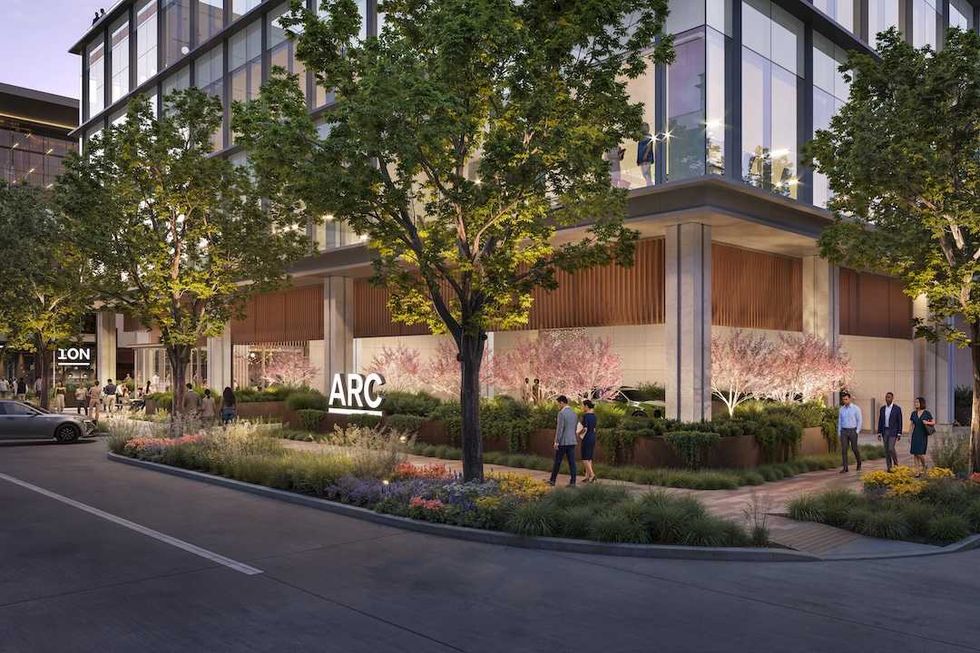
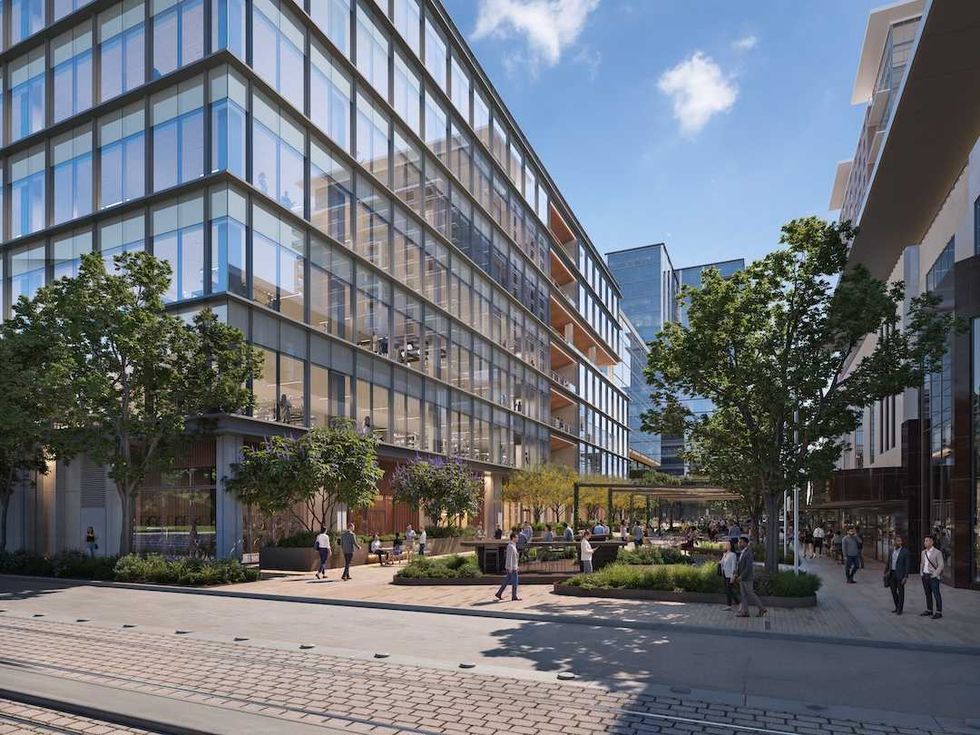
Construction is officially underway on Rice University's The Arc in Houston’s Ion District.

The university broke ground on the 200,000-square-foot research, corporate innovation and office building on Nov. 4. The facility will share a plaza with the existing Ion building, fostering collaboration within the innovation space, according to Rice.

“The Arc will bring Rice’s extraordinary research and talent and Houston’s impactful innovation ecosystem into even closer connection with the industries and innovators working to solve some of the world’s most consequential challenges,” Rice President Reginald DesRoches said in an announcement. “That constant exchange of ideas and expertise will help move discoveries more rapidly from the laboratory to real-world impact.”

Construction is scheduled to be completed by Q2 2028. Rice Real Estate Co. is developing the project, and Rice University will occupy about 80,000 square feet in the building (about 40 percent). Preleasing has begun, with floor plans ranging from 28,000 to 31,000 square feet.

The Arc will feature conference and meeting spaces, an amenity lounge, fitness center, outdoor plazas, underground parking, and on-site retail and dining, according to the release.

It aims to host tenants focused on artificial intelligence and machine learning, data science, robotics, quantum science and engineering and energy, including Rice's new AI Foundry.

Rice says the AI Foundry will be a space where university experts and partners can support organizations with AI challenges. Rice recently committed to hiring 75 new AI-focused faculty and announced plans to launch a new Master of Artificial Intelligence (MAI) next fall.

“The AI Foundry is exactly the kind of collaboration the Arc is designed to enable,” Amy Dittmar, the Howard R. Hughes Provost and executive vice president for academic affairs at Rice, added in the release. “By bringing Rice researchers together with industry partners in a shared environment, we can accelerate the movement of ideas from research into practical applications while helping organizations build the capabilities they need to succeed as AI continues to evolve.

Developers of The Arc are targeting LEED Gold certification by incorporating smart building automation and energy-saving features into the project's design. Rice first announced the project in September 2025.

Rendering courtesy Bogza

Houston battery tech startup FlowCellutions acquired by Katy energy co.

M&A

Katy-based TerraFlow Energy, an energy storage and infrastructure company, has acquired Houston-based battery technology startup FlowCellutions. Financial terms weren’t disclosed.

FlowCellutions still operates under its established name, but with the tagline “A TerraFlow Energy Company.” Becca Segel, founder and CEO of FlowCellutions, now runs the business as its president.

FlowCellutions specializes in electrochemical sensing, diagnostics, analytics, and testing that offer insights into battery chemistry, charging capabilities, and system performance.

“FlowCellutions has always been focused on developing better ways to understand what is happening inside a flow battery and using that information to improve how these systems perform,” Segal said in a press release. “Joining TerraFlow gives us the opportunity to apply that work at a much larger scale while continuing to build the capabilities and expertise that make FlowCellutions unique.”

The FlowCellutions platform supports data centers and other heavy users of power. It’s designed to help reduce operating costs, prevent failures and costly downtime, and extend battery lifetime from about seven years to more than 30 years.

Segel founded the company in 2022. A member of Greentown Labs, the company raised more than $2 million in non-dilutive funding and received $1.5 million in National Science Foundation funding earlier this year.

FlowCellutions is one of five finalists in the Energy Transition Business category of InnovationMap’s 2026 Houston Innovation Awards.

“FlowCellutions brings a depth of scientific and technical expertise that fits naturally with where TerraFlow is going,” Jon Parrella, CEO of TerraFlow, said in the release.

“As we move from developing these systems to deploying them at commercial scale, understanding performance at a deeper level matters,” he said. “Bringing FlowCellutions into TerraFlow strengthens that capability and gives both teams more opportunity to advance the technology.”TerraFlow, founded in 2024, develops long-duration energy storage and power infrastructure for data centers, industrial facilities, utilities and other large power consumers.

---

This article originally appeared on EnergyCapitalHTX.com.