David Gow has been named president and CEO of the Center for Houston's Future. His role is effective September 3.Photo via CultureMap

A nonprofit organization dedicated to leading Houston into the future has named its next leader.

The Center for Houston’s Future named David Gow as president and CEO, succeeding Brett Perlman, who was announced in April to be remaining at the Center with a focus on the Center’s hydrogen initiative. Gow is the founder and chairman of Gow Media, InnovationMap's parent company. His role is effective September 3.

“I am excited to step into this opportunity with the Center and work with the team, the board and many other stakeholders to help shape Houston’s future,” Gow says in a news release. “The Center presents an exciting opportunity to cast a vision for our region and identify initiatives that will make an impact.”

Gow — whose career includes a portfolio of online media properties and ESPN Radio — is a board member of Goose Capital and chair of MSAI, an entity he formed through a SPAC acquisition. Before he founded Gow Media, he served as CFO and CEO of an online watch retailer, Ashford.com. Prior to Ashford, Gow was director of corporate strategy at Compaq Computers and a consultant at McKinsey & Co. He received his master’s in public policy from Harvard and his bachelor's in economics from Williams College.

“David’s portfolio of experiences and skills, record of innovation and success, and deep commitment to the Houston community make him the perfect fit to lead the Center as we chart and execute on our next set of initiatives focused on ensuring a bright future for all residents in the Houston region,” adds Center for Houston’s Future Board Chair Cindy Yeilding.

In his new role, Gow will lead the Center’s next effort, Vision 2050, which plans to identify the city's key issues, gaps, and opportunities.

“Today’s announcement also reflects the success of the Center’s clean hydrogen program,” Yeilding continues. “On behalf of the Center’s board, I’d also like to recognize Brett for launching and building such a successful and important effort as well as his overall leadership and record of achievement at the Center these past seven years.”

Houston, we have a new energy transition news outlet. Photo via Getty Images

Gow Media announces new energy transition media platform backed by GHP

breaking news

Houston has historically been home to a significant portion of the energy industry. Now, among the energy transition, the city has plans to hold a big role in that sector too, and a news outlet is emerging to cover that journey.

Houston-based Gow Media, a multi-platform media company and the parent company of InnovationMap, CultureMap, SportsMap, and ESPN Radio 97.5FM and 92.5FM, announced its plans to launch energycapitalhtx.com.

Launching in the second quarter of this year, the site will cover Houston's energy transition ecosystem — the people, companies, capital sources, and numerous initiatives in Houston.

“Houston is aligning some of the city’s best and brightest to lead the energy transition,” says David Gow, CEO of Gow Media. “We have been deeply impressed by the efforts of the Greater Houston Partnership’s Houston Energy Transition Initiative and are excited for energycapitalhtx to be the voice of the energy transition.”

The site’s inaugural sponsor isHETI, which launched in 2021. Led by Executive Director Jane Stricker, HETI was founded to drive economic growth in the Houston area within the energy transition toward a lower carbon future.

“We are excited to support Gow Media with the launch energycapitalhtx.com,” says Stricker. "There is so much innovative and exciting activity in our ecosystem. Houston is the Energy Capital of the World, and this platform will amplify the energy leadership that is already happening here.”

The news site will launch in Q2. Screenshot via energycapitalhtx.com

The Cannon's new sportstech hub is just one step in putting a national spotlight on Houston as a city for vibrant sports innovation. Graphic courtesy of The Cannon

Newly opened hub to put Houston on the map for sports innovation

sportstech

Silicon Valley emerged as a consumer tech capital, and Atlanta has carved out a niche for fintech — but as sports innovation continues to be driven by startups and new technology, where should the innovators set up shop?

"There isn't really a sports tech town, and we felt there's an opportunity to stick a stake in the ground and claim Houston as the sports tech capital of the world," says Lawson Gow, founder of The Cannon.

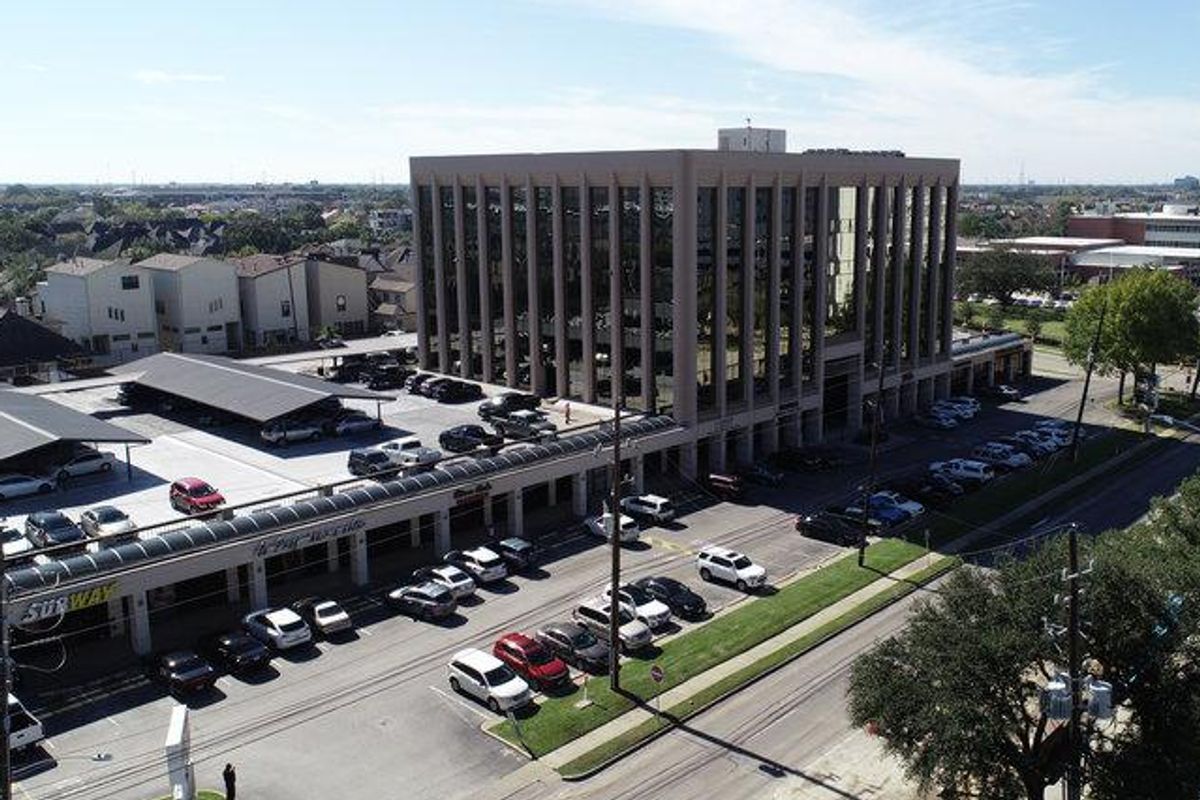
The Cannon in collaboration with Braun Enterprises and Gow Media opened Houston's first dedicated space to sports innovation. (Gow Media is the parent company of InnovationMap.) The new two-story space includes 23 offices and a 1,500-square-foot open space in 53 West, a Galleria-area office building recently renovated by Braun. The hub is adjacent to Gow Media's office alongside Gow Broadcasting LLC and the SportsMap Radio Network, which includes local sports station ESPN 97.5 as well as national syndicated content.

The idea for a sports-focused tech hub has been on the minds of The Cannon team since the early days of The Cannon, where sportstech activity started occurring naturally.

"The sportstech startup scene in Houston caught us by surprise at the very early stages of the Cannon," Gow tells InnovationMap. "We were created to transform Houston's innovation community and part of that was thinking about what things we could win at. Sportstech, for a lot of reasons, seemed really logical to us."

The Cannon's new space is in 53 West, a Galleria-area office building recently renovated by Braun Enterprises. Graphic courtesy of The Cannon
Over the years, The Cannon has grown its network of sportstech startups and developed its programming within the industry. Now, these efforts have a home in The Cannon Uptown - Sports + Media.

"Houston has never been able to attract tech entrepreneurs for any reason, and sports tech can be that reason," Gow says. "Having a sports innovation hub in Houston is only one of a dozen grand initiatives that needs to happen."

Some of those other initiatives include growing sports tech density, introducing new sports-focused accelerators, more events, funding — including venture capital and angel investment — and interest from professional teams.

Another recent sportstech opportunity that's come about in Houston is the SportsMap Tech Acquisition Corp. (NASDAQ: SMAPU) going public as a blank-check company last month at $115 million. The SPAC is run by David Gow, Lawson Gow's father and CEO of Gow Media, and plans to find a sports tech business to acquire, specifically in one of four categories within the industry: fan engagement, health and wellness, esports, or fantasy/gambling.

"With the IPO complete, we now begin the search for a company to acquire in the sports tech industry, which we define as the realm where technology is transforming sports," says David Gow. "We have not been able to talk with target companies yet, but have been doing our homework to develop a list. We also plan to tap into the extensive relationships of our board."

The company is backed by an all-star team making up the board, including Oliver Luck, Reid Ryan, David Graf, and Steve Webster.

Calling all sports tech companies. A Galleria-area sports tech hub is opening this summer. Photo via braunenterprises.com

Exclusive: Houston coworking company to open sports tech-focused hub

go team

It's game time for a Houston-based coworking company that's working on opening a sports innovation hub this summer.

The Cannon is working on opening new hub in 53 West, a Galleria-area office building recently renovated by Braun Enterprises. The project is in partnership with Braun and Gow Media, InnovationMap's parent company, and will be co-located with the media business that runs Gow Broadcasting LLC and the SportsMap Radio Network, which includes local sports station ESPN 97.5 as well as national syndicated content.

The Cannon's founder Lawson Gow tells InnovationMap that Gow Media — founded by Lawson's father, David Gow — and Braun Enterprises were opportunistic partners for the organization.

"We've always been optimistically looking for strategic partners that we can co-locate with or team up with to create a hyper focused, niche community," Lawson Gow says. "We've spent a lot of time thinking about what that can be."

Expected to open midsummer, the new two-story space will have 23 offices and a 1,500-square-foot open space that can be used for events. All existing Cannon members will have access to the space, and potential tenants can expect a similar pricing model to The Cannon's other three Houston-area locations.

Houston makes sense for sports tech, which Gow defines as encompassing four categories of innovation — fan engagement, activity and performance, fantasy and gambling, and esports. Houston has the money, the big four sports teams, a big fan base, and corporate interest, he explains.

"Sports tech is a thing we can win at. There's no global hub for sports tech — so Houston can do that," Gow says. "We've always had that in our heads as a direction we want the city to head down, so it just makes it so opportunistic to create a space for that kind of innovation at work for the city."

53 West has been undergoing renovations recently. Photo via braunenterprises.com

AutomotiveMap is the newest outlet from Gow Media. Courtesy graphic

Announcing AutomotiveMap: The new destination for auto enthusiasts has arrived

Calling all car fans

The automotive industry is now on the map. Gow Media, the large multi-platform media company with leading online destinations CultureMap, SportsMap, and InnovationMap, as well as sports radio properties ESPN 97.5 FM in Houston and SB Nation Radio, has announced the launch of its newest outlet, AutomotiveMap.

The new site will cover industry news from coast to coast, provide auto reviews, showcase innovation, and serve as a thoughtful guide to consumers.

"We are excited to add AutomotiveMap to our portfolio of media platforms," says David Gow, CEO of Gow Media. "We now have four content categories — culture, sports, innovation, and automotive — all under the 'map' brand identity. And we love that each of these categories taps into the passions of our audiences.

"Eileen Falkenberg-Hull will serve as inaugural editor of AutomotiveMap. She brings 10 years of digital publishing experience to her new position and has covered the automotive segment exclusively for five years, with regular bylines in Trucks.com, U.S. News & World Report, and American City Business Journals. She is a co-host of Let's Talk Wheels on SB Nation Radio.

In her new role, Falkenberg-Hull will report to Arden Ward, vice president of editorial for Gow Media statewide. "Eileen is an outstanding addition to our team," says Ward. "Her enthusiasm for the auto industry is unmatched, and, as editor, she blends her extensive knowledge with an approachable voice that connects to our readers."

"I am thrilled to become part of Gow Media," says Falkenberg-Hull. "I have been impressed with the creative energy, professionalism, and commitment to storytelling that the team has. AutomotiveMap will be both informative and highly engaging; it will educate consumers and delight enthusiasts."

AutomotiveMap is the latest addition to Gow Media's ever-growing portfolio. Since acquiring CultureMap in February of 2017, Gow has launched SportsMap; InnovationMap; and GiftingMap, an e-commerce site.

"Our other site launches are going very well — we are experiencing tremendous audience and revenue growth — enabling us to step out again with AutomotiveMap," says David Gow.

------

This article originally ran on CultureMap.

David Gow, right, with Houston Astros president Reid Ryan. Photo by Michele Lee Sparks/Archer Sparks

A CEO's message: From humble beginnings, our company has grown up

All grown up

Last week, the son of a good friend came up to our office. It had been a couple of years since I had seen him, so I still envisioned that he would be an 18-year-old high-school kid. But, when he walked in the room, I did a double-take, as he was now a mature young man. The kid had grown up, and he was standing before me ready to talk business.

In some ways, the story illustrates Gow Media. Sometimes I come across people who will ask me: "How is 1560-The-Game doing?"

We are not that young kid anymore. We have matured from a sports radio venture to a multi-platform media company. And we, too, stand before you ready to talk business.

Here's the story of that grown-up company, with the following highlights:

  • ESPN 97.5 FM: Dominant sports ratings.
  • CultureMap: A large wave of growth.
  • SportsMap: New content and record traffic.
  • InnovationMap: A banner start.
  • SB Nation Radio: Elimination of a competitor.
  • The Team: New faces in leadership roles.

ESPN 97.5 FM

A year ago, we secured the No. 1 sports ratings position. This past quarter, we dominated. In the latest Nielsen book, we have the top four sports shows in the city, and five of the top six. The top four: (No. 1) John and Lance; (No. 2) The Blitz; (No. 3) The Usual Suspects; and (No. 4) The Charlie Pallilo Show. In morning and afternoon drive times, our ratings share was higher than our two competitors combined. And more good news: this quarter the Houston Press announced "The Best Radio Station" in Houston. The winner: ESPN 97.5FM.

CultureMap

Last week, more than 1,000 people in Houston turned out for our Tastemakers event, which sold out for the second year in a row. It is an amazing sight to see hundreds of folks line up early at the door. The turnout embodied the growth of CultureMap, where online traffic is soaring. Our Houston editorial team of Steven Devadanam, Eric Sandler, Ken Hoffman and others is on a roll. For that matter, the same is true of our teams statewide. We are experiencing double-digit growth year-over-year, yielding a very large and loyal following.

SportsMap

Our deep pool of sports experts has led to record traffic levels. One fun feature: We get to try new combinations such as videos featuring Raheel with AJ and Granato; Lance paired with AJ; Faour and Pallilo. Other must-see videos include Charlie Pallilo and Joel Blank (aka "one-take-Jake"). And we continue to get great written contributions from Barry Laminack, Joshua Jordan, Jermaine Every, Cody Stoots, Jerry Bo and, of course, SportsMap editor Fred Faour.

InnovationMap

Due to the collective efforts of many, Houston is experiencing a great wave of innovation. And now the city has a media outlet to tell the stories. Launched late last year, and backed by blue-chip sponsors, InnovationMap is off to a great start.

When we were planning the site, we were continually asked: who would be the editor? We found a good answer: Natalie Harms, whose fingerprints are all over the site. Last week Natalie was honored by AAF Houston, given the "Rising Star" award.

SB Nation Radio

In this business where we provide sports shows and updates for other stations across the country, we have faced a very competitive landscape the past four years. Finally, in January one of our competitors, NBC Sports Radio, withdrew from the market — enabling new growth and increasing our reach. Our SB Nation Radio Network is now heard on 600 radio stations across the country.

The Team

This has been an exciting season of growth for our people also.In the past quarter, we promoted Josh Jordan to assistant editor of SportsMap; Tyler Scott became assistant programming director. And, most notably, we tapped AJ Hoffman to become program director for 97.5 FM.

Most everyone knows Fred and AJ as leading show hosts, but they are proving to be far more. As Editor of SportsMap for the past 18 months, Fred has been a catalyst for our growth and success online. With AJ, we are tapping into his natural programming instincts and leadership. I have enjoyed watching their talents extend beyond the show and into management.

Another double-take

Let's give sage Ken Hoffman the last word. Some may recall that Ken was with us for a short while in the early 1560-The-Game days. Two years ago, he returned to write for CultureMap — so he has some perspective, having seen both our youth and maturity.

The other day, he wandered into my office. Looking at Gow Media, it appears Ken had done a double-take. He declared: "I have something to tell you. You have the best group of people and talent now. You really do. This is different than before. You are a real grown-up company now."

------

David Gow is CEO of Gow Media, which owns ESPN 97.5 FM, CultureMap, SportsMap, InnovationMap, and SB Nation Radio. He is also host of The Boss and The Gloss on SB Nation Radio.

This article originally ran on CultureMap.

Ad Placement 300x100
Ad Placement 300x600

CultureMap Emails are Awesome

Rice University researchers unveil new model that could sharpen MRI scans

MRI innovation

Researchers at Rice University, in collaboration with Oak Ridge National Laboratory, have developed a new model that could lead to sharper imaging and safer diagnostics using magnetic resonance imaging, or MRI.

In a study recently published in The Journal of Chemical Physics, the team of researchers showed how they used the Fokker-Planck equation to better understand how water molecules respond to contrast agents in a process known as “relaxation.” Previous models only approximated how water molecules relaxed around contrasting agents. However, through this new model, known as the NMR eigenmodes framework, the research team has uncovered the “full physical equations” to explain the process.

“The concept is similar to how a musical chord consists of many notes,” Thiago Pinheiro, the study’s first author, a Rice doctoral graduate in chemical and biomolecular engineering and postdoctoral researcher in the chemical sciences division at Oak Ridge National Laboratory, said in a news release. “Previous models only captured one or two notes, while ours picks up the full harmony.”

According to Rice, the findings could lead to the development and application of new contrast agents for clearer MRIs in medicine and materials science. Beyond MRIs, the NMR relaxation method could also be applied to other areas like battery design and subsurface fluid flow.

“In the present paper, we developed a comprehensive theory to interpret those previous molecular dynamics simulations and experimental findings,” Dilipkumar Asthagiri, a senior computational biomedical scientist in the National Center for Computational Sciences at Oak Ridge National Laboratory, said in the release. ”The theory, however, is general and can be used to understand NMR relaxation in liquids broadly.”

The team has also made its code available as open source to encourage its adoption and further development by the broader scientific community.

“By better modeling the physics of nuclear magnetic resonance relaxation in liquids, we gain a tool that doesn’t just predict but also explains the phenomenon,” Walter Chapman, a professor of chemical and biomolecular engineering at Rice, added in the release. “That is crucial when lives and technologies depend on accurate scientific understanding.”

The study was backed by The Ken Kennedy Institute, Rice Creative Ventures Fund, Robert A. Welch Foundation and Oak Ridge Leadership Computing Facility at Oak Ridge National Laboratory.

Luxury transportation startup connects Houston with Austin and San Antonio

On The Road Again

Houston business and leisure travelers have a luxe new way to hop between Texas cities. Transportation startup Shutto has launched luxury van service connecting San Antonio, Austin, and Houston, offering travelers a comfortable alternative to flying or long-haul rideshare.

Bookings are now available Monday through Saturday with departure times in the morning and evening. One-way fares range from $47-$87, putting Shutto in a similar lane to Dallas-based Vonlane, which also offers routes from Houston to Austin and San Antonio.

Shutto enters the market at a time when highway congestion is a hotter topic than ever. With high-speed rail still years in the future, its model aims to provide fast, predictable service at commuter prices.

The startup touts an on-time departure guarantee and a relaxed, intimate ride. Only 12 passengers fit inside each Mercedes Sprinter van, equipped with Wi-Fi and leather seating. And each route includes a pit stop at roadside favorite Buc-ee's.

In announcing the launch, founder and CEO Alberto Salcedo called the company a new category in Texas mobility.

“We are bringing true disruptive mobility to Texas: faster and more convenient than flying (no security lines, no delays), more comfortable and exclusive than the bus or train, and up to 70 percent cheaper than private transfers or Uber Black,” Salcedo said in a release.

“Whether you’re commuting for business, visiting family, exploring Texas wineries, or doing a taco tour in San Antonio, Shutto makes traveling between these cities as easy and affordable as riding inside the city."

Beyond the scheduled routes, Shutto offers private, customizable trips anywhere in the country, a service it expects will appeal to corporate retreat planners, party planners, and tourists alike.

In Houston, the service picks up and drops off near the Galleria at the Foam Coffee & Kitchen parking lot, 5819 Richmond Ave.. In San Antonio, it is located at La Panadería Bakery’s parking lot at 8305 Broadway. In Austin, the location is the Pershing East Café parking lot at 2501 E. Fifth St.

---

This article originally appeared on CultureMap.com.

Houston-area lab grows with focus on mobile diagnostics and predictive medicine

mobile medicine

When it comes to healthcare, access can be a matter of life and death. And for patients in skilled nursing facilities, assisted living or even their own homes, the ability to get timely diagnostic testing is not just a convenience, it’s a necessity.

That’s the problem Principle Health Systems (PHS) set out to solve.

Founded in 2016 in Clear Lake, Texas, PHS began as a conventional laboratory but quickly pivoted to mobile diagnostics, offering everything from core blood work and genetic testing to advanced imaging like ultrasounds, echocardiograms, and X-rays.

“We were approached by a group in a local skilled nursing facility to provide services, and we determined pretty quickly there was a massive need in this area,” says James Dieter, founder, chairman and CEO of PHS. “Turnaround time is imperative. These facilities have an incredibly sick population, and of course, they lack mobility to get the care that they need.”

What makes PHS unique is not only what they do, but where they do it. While they operate one of the largest labs serving skilled nursing facilities in the state, their mobile teams go wherever patients are, whether that’s a nursing home, a private residence or even a correctional facility.

Diagnostics, Dieter says, are at the heart of medical decision-making.

“Seventy to 80 percent of all medical decisions are made from diagnostic results in lab and imaging,” he says. “The diagnostic drives the doctor’s or the provider’s next move. When we recognized a massive slowdown in lab results, we had to innovate to do it faster.”

Innovation at PHS isn’t just about speed; it’s about accessibility and precision.

Chris Light, COO, explains: “For stat testing, we use bedside point-of-care instruments. Our phlebotomists take those into the facilities, test at the bedside, and get results within minutes, rather than waiting days for results to come back from a core lab.”

Scaling a mobile operation across multiple states isn’t simple, but PHS has expanded into nine states, including Texas, Oklahoma, Kansas, Missouri and Arizona. Their model relies on licensed mobile phlebotomists, X-ray technologists and sonographers, all trained to provide high-level care outside traditional hospital settings.

The financial impact for patients is significant. Instead of ambulance rides and ER visits costing thousands, PHS services often cost just a fraction, sometimes only tens or hundreds of dollars.

“Traditionally, without mobile diagnostics, the patient would be loaded into a transportation vehicle, typically an ambulance, and taken to a hospital,” Dieter says. “Our approach is a fraction of the cost but brings care directly to the patients.”

The company has also embraced predictive and personalized medicine, offering genetic tests that guide medication decisions and laboratory tests that predict cognitive decline from conditions like Alzheimer's and Parkinson’s.

“We actively look for complementary services to improve patient outcomes,” Dieter says. “Precision medicine and predictive testing have been a great value-add for our providers.”

Looking to the future, PHS sees mobile healthcare as part of a larger trend toward home-based care.

“There’s an aging population that still lives at home with caretakers,” Dieter explains. “We go into the home every day, whether it’s an apartment, a standalone home, or assisted living. The goal is to meet patients where they are and reduce the need for hospitalization.”

Light highlighted another layer of innovation: predictive guidance.

“We host a lot of data, and labs and imaging drive most treatment decisions,” Light says. “We’re exploring how to deploy diagnostics immediately based on results, eliminating hours of delay and keeping patients healthier longer.”

Ultimately, innovation at PHS isn’t just about technology; it’s about equity.

“There’s an 11-year life expectancy gap between major metro areas and rural Texas,” Dieter says. “Our innovation has been leveling the field, so everyone has access to high-quality diagnostics and care, regardless of where they live.”