


Google for Startups Latino Founders Fund and Black Founders Fund announced their latest cohorts and two Houston founders made the cut. Photo via Getty Images

Two Houston startups have received funding from Google in the latest round of the tech giant's Founders Funds grants.

That's Clutch, a creator economy platform that connects emerging brands with its network of digital marketing professionals, was named to the second cohort of Google for Startups Latino Founders Fund. And SmartWiz, an AI enabled IRS approved tax professional software, was named to Google for Startups' sixth Black Founders Fund.

Both startups will receive $150,000 in non-dilutive funds, mentorship, access to programs, and other resources like sales training, investor prep, mental health coaching at no cost.

Madison Long, CEO and Co-founder at That’s Clutch said the funds will help That's Clutch build upon it's go to market strategy and sales strategy, among other benefits.

“The Google for Startups support network has introduced me to so many valuable connections across the country,” Long said in a statement. “Being selected for the Founders Fund is not only an honor but a massive resource as we take Clutch to the next level."
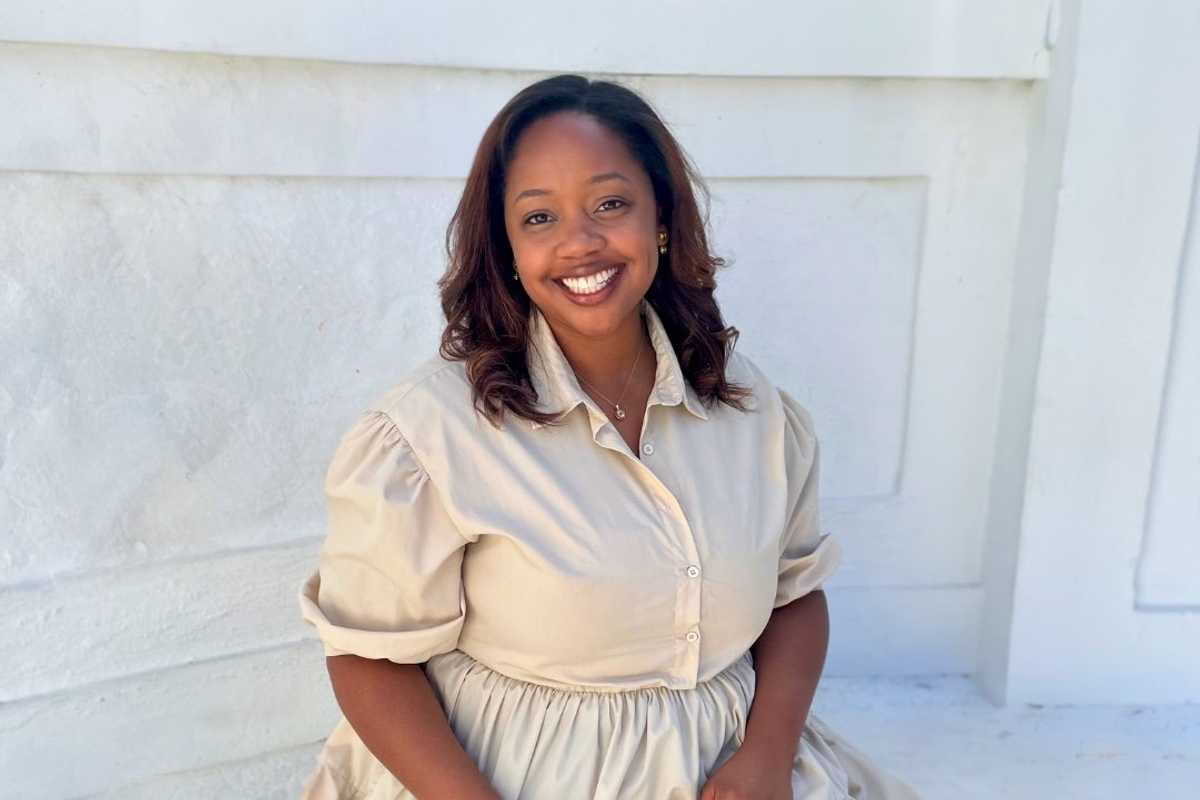
Madison Long of That's Clutch joins the 448 founders who have been supported by Google's funds. Photo courtesy

Bre Johnson — who is based in Houston, while her company SmartWiz is headquartered in Birmingham, Alabama — told Innovation Map that the funds and partnership with Google will help her company scale and improve their AI platform for the tax industry.

"This funding (gives) us the ability to build our product faster, scale our organization and really take over the digital space with improved support on how we market our software using Google SEO," she says. "We will be giving our users a more innovative, fun and revolutionary approach to tax preparation while ensuring every single person who gets their taxes done by someone using our software will have an improved experience every single year."

"Being black founders, and even me being a woman, we don't take this opportunity for granted because we know that it is a blessing," she continues.
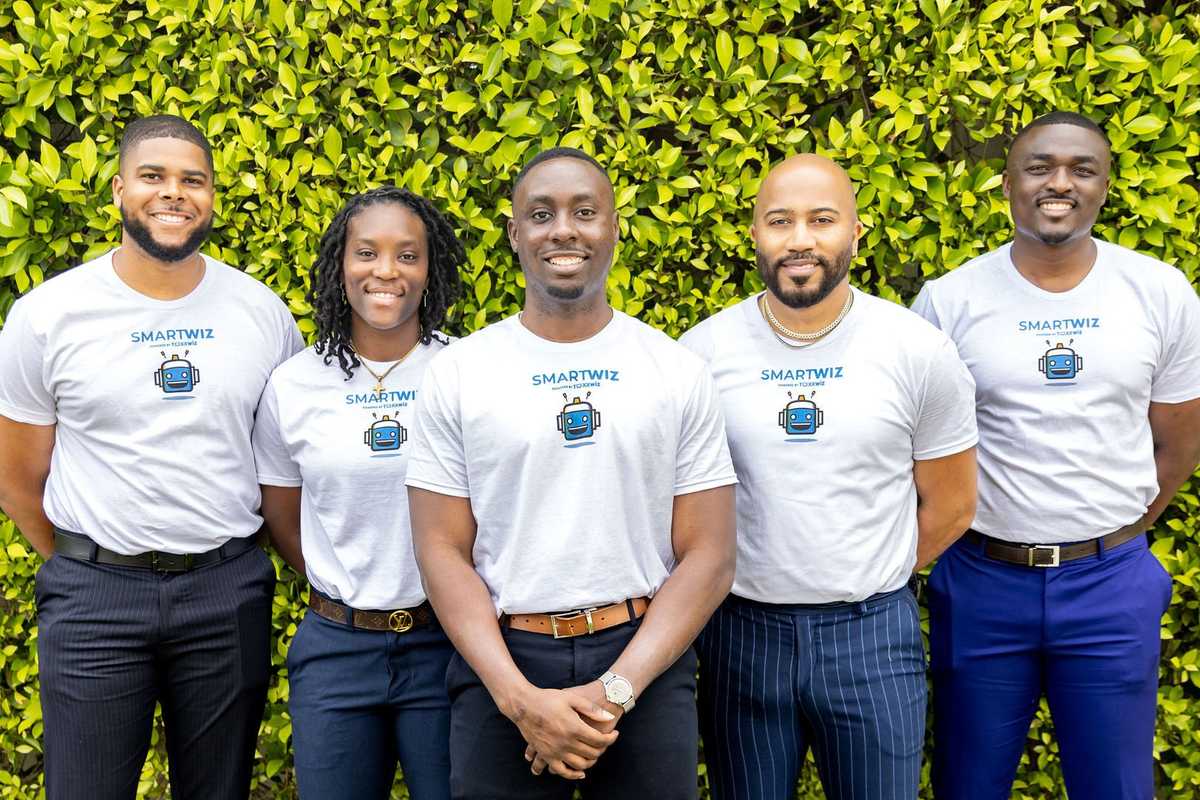
Bre Johnson of SmartWiz also received funding from Google. Photo courtesy

That's Clutch and SmartWiz are among the 448 founders Google has backed through its Founder Funds globally since 2020. Five other Texas-based startups received funding this round, according to an announcement.

Other Texas startups include:

Last year, three Houston startups were named to the inaugural Google for Startups Latino Founders Fund: AnswerBite, Boxes and Ease. That same year, ChurchSpace and Enrichly were named to the Google for Startups Black Founders Fund.

Ease, a health care fintech platform founded by Mario Amaro in 2018, was also named to Amazon's WS Impact Accelerator Latino Founders Cohort, part of Amazon's $30 million commitment to supporting underrepresented startup founders, earlier this summer.
Ad Placement 300x100
Ad Placement 300x600

CultureMap Emails are Awesome

MD Anderson receives $10M gift to launch pancreatic cancer program

med funding

The University of Texas MD Anderson Cancer Center will be getting a significant boost in the fight against pancreatic cancer thanks to a recent gift from longtime supporters Zelma and William Reid. The medical system announced this month that a $10 million donation would help it establish a new Pancreatic Cancer High-Risk Interception Program.

“Philanthropic investments like this create opportunities to accelerate discoveries and pursue bold approaches to some of the most challenging cancers we face,” said Dr. Jeffrey E. Lee, president ad interim of UT MD Anderson, said in a news release. “We are deeply grateful to Zelma and Bill Reid for their generosity and enduring commitment. Their support will help advance innovative research aimed at intercepting pancreatic cancer earlier, when we have the greatest opportunity to improve outcomes for patients.”

Pancreatic cancer is one of the most deadly types of cancer. Despite being relatively rare, it ranks third in total deaths from cancer in the United States. Less than 10 percent of patients diagnosed with pancreatic cancer are still alive five years later.

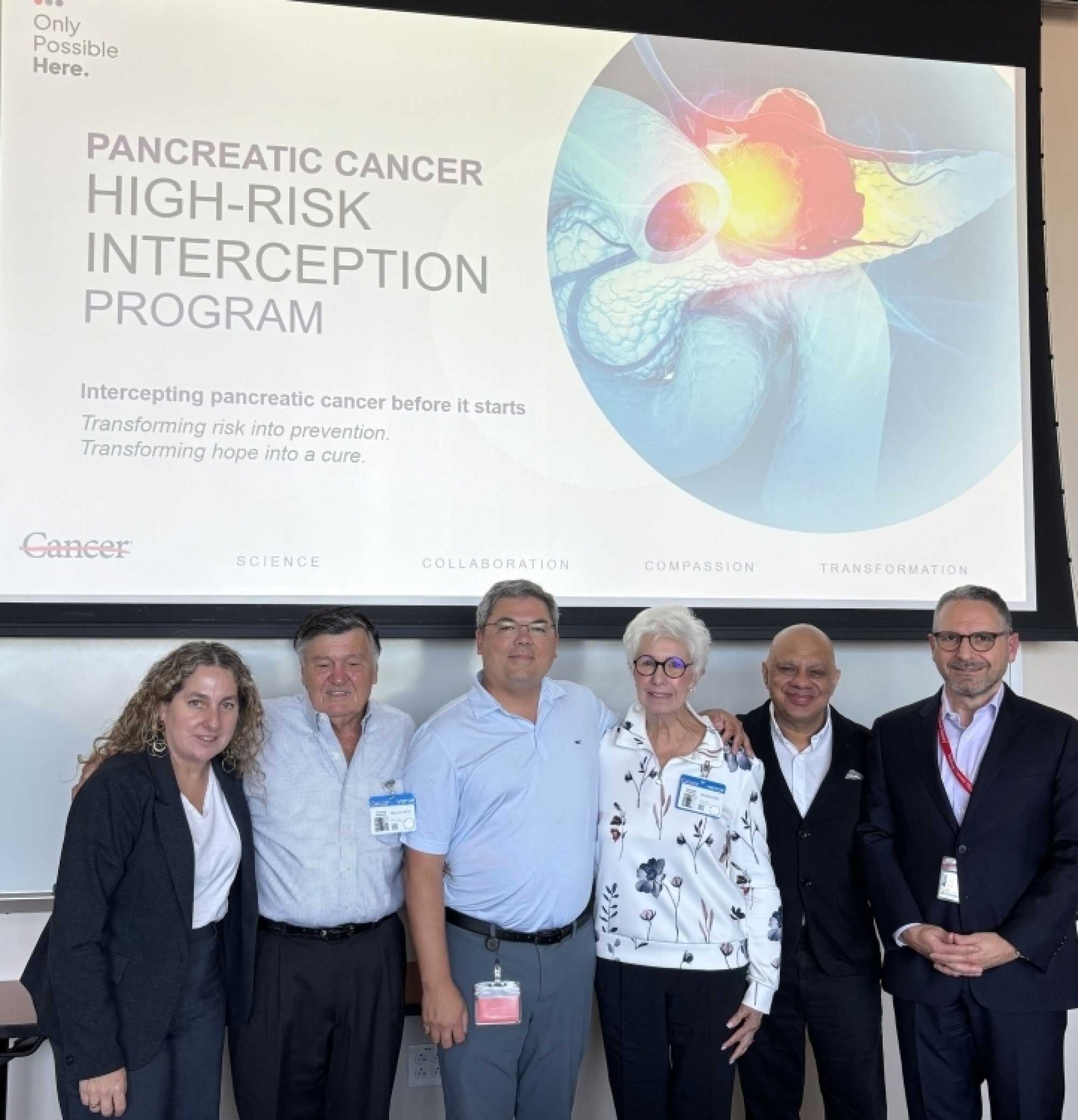
Dr. Florencia McAllister, William Reid, Dr. Michael P. Kim, Zelma Reid, Dr. Manoop S. Bhutani, and Dr. Matthew H.G. Katz. Photo courtesy MD Anderson

The problem is often detection. The pancreas is located deep in the upper abdomen among many other organs, which can make spotting tumors difficult. Some blood tests can indicate pancreatic cancer, but it is usually not diagnosed until it spreads.

The new Pancreatic Cancer High-Risk Interception Program hopes to assemble new diagnostic techniques and patient screening tools to increase early detection. MD Anderson’s Dr. Michael P. Kim, associate professor of surgical oncology; Dr. Manoop S. Bhutani, professor of gastroenterology and hepatology; and Dr. Florencia McAllister, professor of gastrointestinal medical oncology and genetics, will lead the new program.

The team will rely on advanced imaging, molecular diagnostics, AI-driven assessment, and DNA testing to both create an at-risk patient population profile and hopefully help detect the cancer in its earliest stages. For instance, some of these tools will be able to monitor pancreatic cysts without invasive surgery.

“The ultimate goal is to intercept pancreatic cancer development or to initiate treatment earlier in the disease process, when patients have the best chance for successful outcomes,” Kim added in the release. “This gift will allow us to expand our research efforts, strengthen collaborations across disciplines and accelerate promising strategies to identify and intercept pancreatic cancer before it becomes life-threatening. We are incredibly thankful to the Reids for making this work possible.”

Axiom Space inks partnership to grow semiconductor crystals in orbit

space deal

Down in Webster, Texas, and high above the Earth, Axiom Space and Kansas-based Nitride Global Inc. will grow the next generation of semiconductor crystals in microgravity thanks to a new memorandum of understanding (MOU) signed earlier this month.

“Signing this MOU with Nitride Global reflects the growing commercial interest in producing advanced semiconductor materials in space,” Lucie Low, chief science officer for Axiom Space, said in a news release. “Their leadership in aluminium nitride (AlN) crystal growth and advanced packaging technologies, combined with Axiom Space’s capabilities in orbital infrastructure and mission integration, position us to demonstrate real commercial value in low-Earth orbit (LEO).”

This latest partnership builds on existing collaboration between Axiom and NitrideGlobal and NASA Ames Research Center.

Aluminium nitride crystals are part of the cutting-edge generation of semiconductors essential to emerging high-voltage transistors and also used in various medical technologies. Because of their high thermal stability, they can be used in a variety of environments and applications that have revolutionized everything from electric cars to the grids the cars run on.

However, the crystals are challenging to grow on Earth and face defects and size limitations due to gravity. Growing them in space can enhance their performance, according to NitrideGlobal. Microgravity allows them to grow more uniformly and with fewer defects, potentially resulting in larger, purer and more reliable crystals.

That’s where Axiom Space comes in. The company is developing Axiom Station, a successor to the International Space Station, where new research and manufacturing can be carried out.

“This MOU marks a pivotal milestone in our close partnership with Axiom Space that started as part of the NASA Small Business Innovation Research (SBIR) for AlN growth in space and is now expanding to usher the development of an innovation ecosystem,” Mahyar Khosravi, CEO of Nitride Global Inc., added in the release. “With Axiom Space’s leadership in the in-space manufacturing sector, this partnership will aim to deliver a platform for commercially viable manufacturing of [ultrawide bandgap materials] that will enable the next generation of semiconductor & microelectronics for terrestrial and planetary exploration uses.”

Houston's IAH lands on list of 15 most expensive U.S. airports

Travel Woes

Hold on to those carry-on bags: George Bush Intercontinental Airport is checking in as one of the 15 most expensive airports in the U.S., a new study has revealed.

The analysis from digital commerce and marketing platform ConsumerVoice.org compared the average domestic flight costs at the 50 largest U.S. airports, ranking them from highest to lowest. Flight price data was sourced from the U.S. Department of Transportation’s Bureau of Transportation Statistics (BTS) during the first and second quarters of 2026 and compared with the same period in 2025.

Washington Dulles International Airport in Virginia tops the list as the priciest major airport in the U.S, with domestic flights at IAD costing $534.34 on average. Charlotte Douglas International Airport in North Carolina comes in second place with an average fare cost of $527.79.

IAH lands at No. 13 nationwide, and it's the second most expensive in Texas, the findings show. The typical domestic flight from IAH costs $482.02, and they aren't getting any cheaper. Flights out of IAH are nine percent more expensive than they were a year ago, the report found. The average domestic flight cost $37.80 less in 2025.

Houstonians not only need to be prepared to spend a little extra money when booking their tickets; they'll also need to pack their patience, as IAH also ranks among the worst airports for flight delays and cancellations.

Travelers on a budget can save more on flights out of William P. Hobby Airport, if they're willing to make the drive. Travelers can save about 13 percent on their flights by flying through HOU instead of IAH, but there are other costs to take into consideration.

"Ground transportation, gas, and parking can eat into the difference, so factor these in when choosing the most economical departure airport," the report said.

HOU ranked as the No. 31 most expensive airport on the list with domestic flights coming in at $417.78 on average. Average fares at HOU are also nine percent more expensive than they were last year.

The top 10 priciest major airports in the U.S. are:

  • No. 1 – Washington Dulles International Airport
  • No. 2 – Charlotte Douglas International Airport
  • No. 3 – Detroit metro Wayne County Airport
  • No. 4 – Salt Lake City International
  • No. 5 – Minneapolis-St. Paul International
  • No. 6 – San Francisco International
  • No. 7 – John F. Kennedy International
  • No. 8 – Newark Liberty International
  • No. 9 – Dallas/Fort Worth International
  • No. 10 – Hartsfield-Jackson Atlanta International
---

This article originally appeared on CultureMap.com.