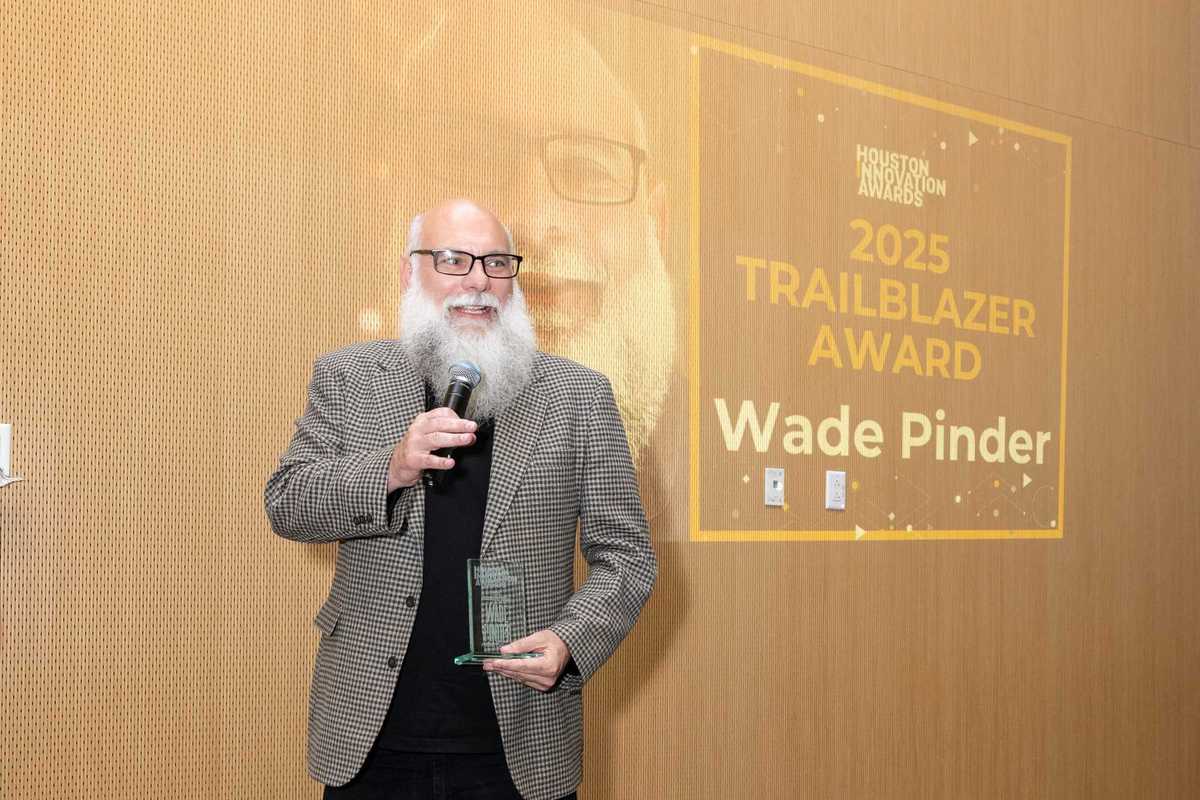
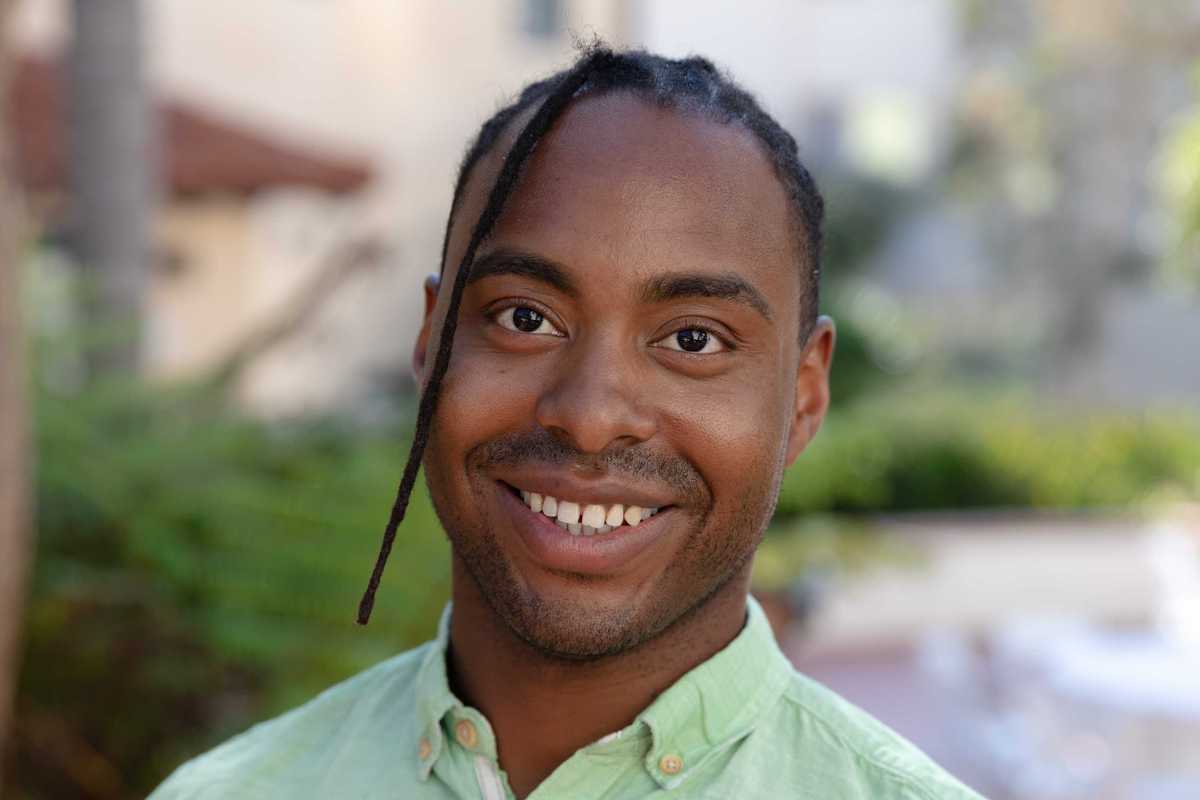
Mark Cuban described AI as "the great democratizer" for low-income, young people at the Clover x Shark Tank Summit this month. Photo courtesy Clover.

Texas billionaire Mark Cuban—whose investment portfolio includes Houston-based Holliball, a startup that makes and sells large inflatable holiday ornaments—believes AI is leveling the playing field for budding low-income entrepreneurs.

At the recent Clover x Shark Tank Summit in Las Vegas, the Shark Tank alum called AI “the greater democratizer.”

Cuban told Axios that free and low-cost AI tools enable disadvantaged teenagers to compete with seasoned professionals.

“Right now, if you’re a 14- to 18-year-old and you’re in not-so-good circumstances, you have access to the best professors and the best consultants,” Cuban said. “It allows people who otherwise would not have access to any resources to have access to the best resources in real time. You can compete with anybody.”

While Cuban believes AI is “the great democratizer” for low-income young people, low-income workers still face hurdles in navigating the AI landscape, according to Public Works Partners, an urban planning and consulting firm. The firm says access to AI among low-income workers may be limited due to cost, insufficient digital literacy and infrastructure gaps.

“Without adequate resources and training, these workers may struggle to adapt to AI-driven workplaces or access the educational opportunities necessary to acquire new skills,” Public Works Partners said.

Texas 2036, a public policy organization focused on the state’s future, reported in January AI jobs in Texas are projected to grow 27 percent over the next decade. The number 2036 refers to the year when Texas will celebrate its bicentennial.

As for the current state of AI, Cuban said he doesn’t think the economy is witnessing an AI bubble comparable to the dot-com bubble, which lasted from 1998 to 2000.

“The difference is, the improvement in technology basically slowed to a trickle,” Cuban said of the dot-com era. “We’re nowhere near the improvement in technology slowing to a trickle in AI.”
Ad Placement 300x100
Ad Placement 300x600

CultureMap Emails are Awesome

Rice University launches new center to study roots of Alzheimer’s and Parkinson’s

neuro research

Rice University launched its new Amyloid Mechanism and Disease Center last month, which aims to uncover the molecular origins of Alzheimer’s, Parkinson’s and other amyloid-related diseases.

The center will bring together Rice faculty in chemistry, biophysics, cell biology and biochemistry to study how protein aggregates called amyloids form, spread and harm brain cells. It will serve as the neuroscience branch of the Rice Brain Institute, which was also recently established.

The team will work to ultimately increase its understanding of amyloid processes and will collaborate with the Texas Medical Center to turn lab discoveries into real progress for patients. It will hold its launch event on Jan. 21, 2026, and hopes to eventually be a launchpad for future external research funding.

The new hub will be led by Pernilla Wittung-Stafshed, a Rice biophysicist and the Charles W. Duncan Jr.-Welch Chair in Chemistry.

“To make a real difference, we have to go all the way and find a cure,” Wittung-Stafshede said in a news release. “At Rice, with the Amyloid Mechanism and Disease Center as a catalyst, we have the people and ideas to open new doors toward solutions.”

Wittung-Stafshede, who was recruited to Rice through a Cancer Prevention and Research Institute of Texas grant this summer, has led pioneering work on how metal-binding proteins impact neurodegenerative disorders, including Alzheimer’s and Parkinson’s diseases. Her most recent study, published in Advanced Science, suggests a new way of understanding how amyloids may harm cells and consume the brain’s energy molecule, ATP.

According to Alzheimer’s Disease International, neurodegenerative disease cases could reach around 78 million by 2030 and 139 million by 2050. Wittung-Stafshede’s father died of dementia several years ago.

“This is close to my heart,” Wittung-Stafshede added in the news release. “Neurodegenerative diseases such as dementia, Alzheimer’s and Parkinson’s are on the rise as people live longer, and age is the largest risk factor. It affects everyone.”

This Houston airport saw sharp passenger decline in 2025, study shows

Travel Talk

A new global airport travel study has revealed passenger traffic at Houston's William P. Hobby Airport (HOU) sharply decreased from 2024 to 2025.

The analysis from travel magazine LocalsInsider examined recently released data from the Bureau of Transportation Statistics (BTS), the U.S. International Trade Association, and a nationwide survey to determine the following American traveler habits: The most popular U.S. and international destinations, emerging hotspots, and destinations on the decline. The study covered passenger travel trends from January through July 2025.

In the report's ranking of the 40 U.S. airports with the sharpest declines in passenger traffic, HOU ranked 13th on the list.

About 4.26 million arrivals were reported at HOU from January through July 2024, compared to about 3.96 million during the same seven-month period in 2025. According to the data, that's a significant 7.1 percent drop in passenger traffic year-over-year, or a loss of 300,974 passengers.

"As travelers chase new hotspots, some destinations are seeing reduced passenger traffic whether due to rising costs, shifting airline schedules, or evolving traveler preferences, some destinations are seeing a decrease in visitors," the report's author wrote.

It appears most major Texas airports had drops in passenger traffic from 2024 to 2025. Dallas Love Field Airport (DAL) saw the worst in the state, with a dramatic 7.4 percent dip in arrivals. DAL also ranked 11th on the list of U.S. airports with the steepest declines in passenger traffic.

More than 5.13 million arrivals were reported at DAL from January through July 2024, compared to over 4.75 million during the same seven-month period in 2025.

This is how passenger traffic has fallen at other major Texas airports from 2024 to 2025:

Austin-Bergstrom International Airport (AUS):

  • 6,107,597 – Passenger arrivals from January to July 2024
  • 5,828,396 – Passenger arrivals from January to July 2025
  • -4.6 percent – Year-over-year passenger change
Dallas/Fort Worth International Airport (DFW):
  • 23,830,017 – Passenger arrivals from January to July 2024
  • 23,251,302 – Passenger arrivals from January to July 2025
  • -2.4 percent – Year-over-year passenger change

San Antonio International Airport (SAT):

  • 2,937,870 – Passenger arrivals from January to July 2024
  • 2,836,774 – Passenger arrivals from January to July 2025
  • -3.4 percent – Year-over-year passenger change
El Paso International Airport (ELP):
  • 1,094,431 – Passenger arrivals from January to July 2024
  • 1,076,845 – Passenger arrivals from January to July 2025
  • -1.6 percent – Year-over-year passenger change
---

This story originally appeared on CultureMap.com.

NASA names new chief astronaut based in Houston

new hire

NASA has a new chief astronaut. Scott Tingle, stationed at the space agency’s Johnson Space Center in Houston, assumed the post Nov. 10.

Tingle succeeds NASA astronaut Joe Acaba, who had been chief astronaut since February 2023. Acaba now works on the staff of the Johnson Space Center’s director.

As chief astronaut, Tingle runs NASA’s Astronaut Office. His job includes developing astronauts’ flight crew operations and assigning crews for space missions, such as Artemis missions to the moon.

Tingle, a former captain in the Navy, was named a NASA astronaut candidate in 2009. He has logged over 4,500 flight hours in more than 50 aircraft.

Tingle was a flight engineer aboard the International Space Station, where he spent 168 days in orbit during two expeditions that launched in December 2017. Since returning to Earth, he has held various roles in the Astronaut Office, including mission support, technical leadership and crew readiness.

Before joining NASA, Tingle worked in El Segundo, California, on the technical staff of The Aerospace Corp., a nonprofit that supports U.S. space programs.

Tingle recalls expressing his desire to be an astronaut when he was 10 years old. It took him four tries to be accepted by NASA as an astronaut candidate.

“The first time I figured it was kind of too early. The second application, they sent out some feelers, and that was about it. Put in my third application, and got a couple of calls, but it didn’t quite happen,” Tingle said in an article published on the website of Purdue University, his alma mater.