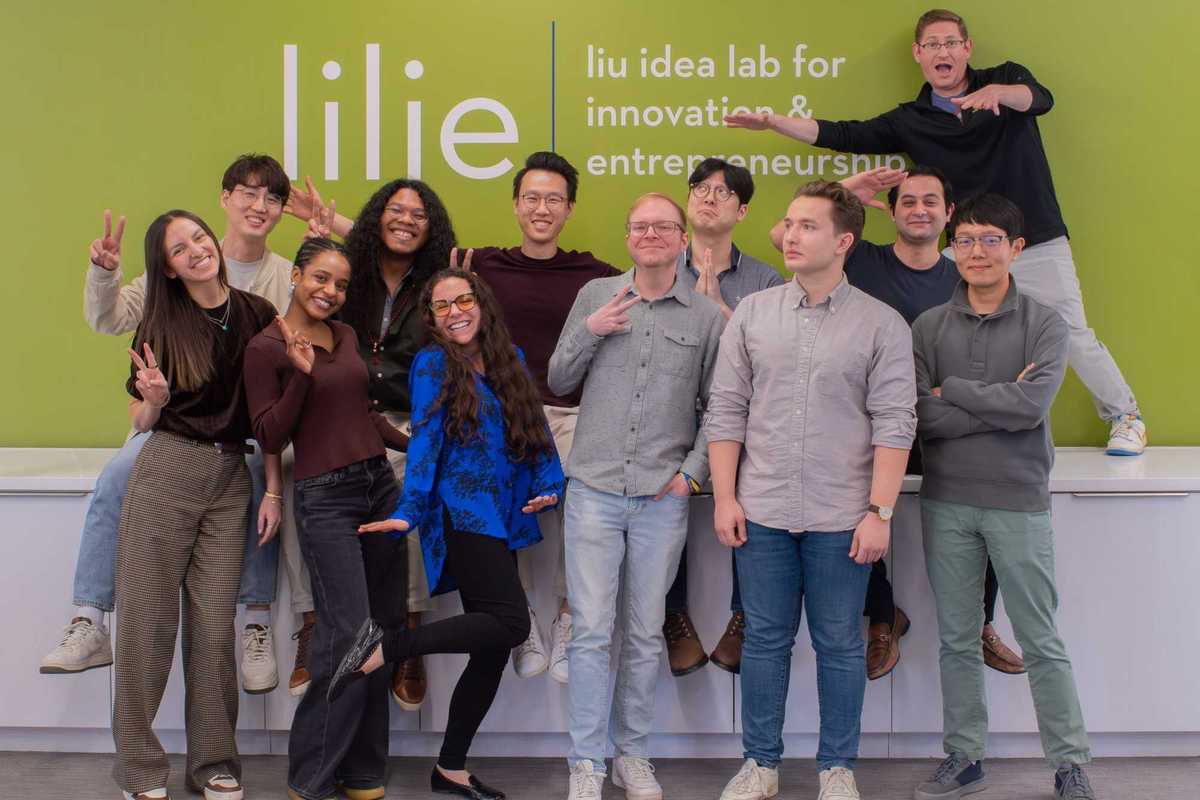
Axiom Space has added new members to its University Alliance. Photo courtesy of SpaceX

Houston’s Axiom Space has added 26 new members to its University Alliance—including two from Houston—to support the next generation of space exploration.

Engineers, researchers and students from the partnering universities will be dedicated to advancing microgravity research, technology development and commercial innovation in low-Earth orbit.

Rice University and the University of Houston are among the new colleges to join the alliance, which launched with 15 members last year. The University of Texas at Austin and the University of Texas at El Paso have also joined, in addition to international institutions in Europe, Asia and Australia, and others from around the U.S. See full list here.

“Through the University Alliance, Axiom Space is uniting the international research community driven to enable human progress,” Lucie Low, Axiom Space chief science officer, said in a news release. “Together, alliance members are taking the initiative to ensure microgravity research benefits everyone on Earth and our shared goals fulfill a scientific purpose to advance civilization.”

Axiom is building the world’s first commercial space station, known as Axiom Station. The University Alliance “will support and advance space science during the transition from government-led to commercially owned and operated space stations,” the company said in a release. Partnering universities will contribute to the research community by participating in international collaborative scientific initiatives, identifying future research, and bolstering strategic positions in the commercial orbit research field.

Recently, the Rice Space Institute was also selected to lead the U.S. Space Force Strategic Institute 4 in addition to other space-centric partnerships.

“We’re excited to bring our expertise to this global alliance and to benefit from the deep expertise of our partners,” David Alexander, professor of physics and astronomy and director of the Rice Space Institute, said in a news release. “Space is truly a collaborative and global endeavor. Alliances like these are key to progress.”

UH and NASA’s Johnson Space Center expanded their collaboration in 2022. In 2024, UH launched its NASA MIRO Inflatable Deployable Environments and Adaptive Space Systems Center (IDEAS2) via a five-year, $5 million grant.

“As a major public research university located in Space City, the University of Houston has a unique opportunity and responsibility to help lead the future of space innovation, and our participation in Axiom Space’s University Alliance represents a major step forward in that mission,” Karolos Grigoriadis, the Hugh Roy and Lillie Cranz Cullen Endowed Professor and chair of mechanical and aerospace engineering at UH, added in a separate release.

Meanwhile, Axiom recently tacked on an additional $175 million to a previously announced capital raise, bringing the oversubscribed round to a total of more than $525 million. It also has announced plans to launch Swiss and Japanese subsidiaries.

Ad Placement 300x100
Ad Placement 300x600

CultureMap Emails are Awesome

Tech giant Apple opens Advanced Manufacturing Center at massive Houston facility

up and running

Cupertino, California-based Apple Inc. unveiled its Advanced Manufacturing Center in the Houston area last week, marking the completion of the second of three facilities the tech giant plans to launch in the city by the end of this year.

The 20,000-square-foot training center will welcome small- and medium-sized businesses for free training and educational sessions to "help accelerate smart manufacturing across America," according to a release from Apple. Apple opened a similar Apple Manufacturing Academy in Detroit last year.

The AMC is part of Apple's 500,000-square-foot site in northwest Harris County. It also features a massive manufacturing site for Apple’s advanced AI servers and Mac mini. The facility was originally slated to open in 2026, but Apple began producing its advanced AI servers ahead of schedule in 2025.

The company said it plans to begin manufacturing its Mac mini at the site this year. The move will bring production of the compact desktop computer to the U.S. for the first time.

“In less than nine months, we have invested hundreds of millions of dollars into this Houston facility. We stood up a factory, started production, and shipped the first advanced AI servers off the line. Today, we’re thrilled to open our new Advanced Manufacturing Center, a place where businesses, workers, and students can learn the same innovative processes that we use to make Apple’s most groundbreaking products. And we’re pleased to begin Mac mini production later this year,” Tim Cook, Apple’s CEO, said in the news release. “We believe in American workers and American ingenuity, and we are moving at an incredible pace because we want to build more than great products. We want to build the future of American manufacturing.”

Apple's Advanced Manufacturing Center. Photos courtesy Apple

Apple's Houston expansion is part of a $600 billion commitment the company made to the U.S. in 2025.

The company originally announced plans in February 2025 to open a 250,000-square-foot Houston factory, but doubled the facility's planned size about a year later. Apple has reported that the factory will employ thousands of workers.

“Houston is grateful to Apple for this significant investment in our city. The Advanced Manufacturing Center will create local jobs and will continue improving the quality of life of Houston residents," Houston Mayor John Whitmire added in the release. "The AMC also recognizes our city as a growing technology hub and solidifies Houston’s leadership in the manufacturing sector of the United States.”

The opening comes on the heels of New Jersey-based pharmaceutical giant Bristol Myers Squibb Co. officially naming Houston home of its new $2.3 billion, state-of-the-art manufacturing site. Read more here.

Nominations for the 2026 Houston Innovation Awards are due by Aug. 27

Calling All Innovators

Calling all Houston innovators: The 2026 Houston Innovation Awards, presented by InnovationMap, return this fall to celebrate the best and brightest in the Houston innovation ecosystem right now.

We're asking you to nominate Houston's top innovators and startups for this year's awards. Nominations are open now through August 27 and can be made on behalf of yourself, your organization, and other influential leaders in the local innovation scene.

The annual awards program recognizes the most innovative individuals and companies in Houston across 10 prestigious categories.

This year's awards will honor the following categories:

  • Minority-founded Business, honoring an innovative startup founded or co-founded by BIPOC or LGBTQ+ representation.
  • Female-founded Business, honoring an innovative startup founded or co-founded by a woman.
  • Energy Transition Business, honoring an innovative startup providing a solution within renewables, climatetech, clean energy, alternative materials, circular economy, and beyond.
  • Health Tech Business, honoring an innovative startup within the health and medical technology sectors.
  • Deep Tech Business, honoring an innovative startup providing technology solutions based on substantial scientific or engineering challenges, including those in the AI, robotics, and space sectors.
  • Startup of the Year (People's Choice), honoring a startup celebrating a recent milestone or success. The winner will be selected by the community via an interactive voting experience.
  • Scaleup of the Year, honoring an innovative later-stage startup that's recently reached a significant milestone in company growth.
  • Incubator/Accelerator of the Year, honoring a local incubator or accelerator that is championing and fueling the growth of Houston startups.
  • Mentor of the Year, honoring an individual who dedicates their time and expertise to guide and support budding entrepreneurs.
  • Trailblazer, honoring an innovator who's made a lasting impact on the Houston innovation community.

You have three weeks to submit nominees, so don't delay — nominate today at this link or fill out the form below. Qualified nominees will receive a formal application to complete, which will be reviewed by our esteemed panel of judges to determine the finalists and winners.

More announcements about the 2026 Houston Innovation Awards are coming soon, including an introduction to this year's panel of judges. Interested in sponsoring the 2026 Houston Innovation Awards? Please contact sales@innovationmap.com.

$5B MD Anderson-anchored Austin medical center to break ground this fall

moving forward

Construction on the $1 billion first phase of the AI-native University of Texas Dell Medical Center in Austin—which will feature a hospital operated by Houston’s UT MD Anderson Cancer Center—is set to start this fall.

The UT System Board of Regents approved funding for first-phase construction on Aug. 12.

The medical center—now expected to cost $5 billion, up from the initial $2.9 billion estimate—will span about 2.5 million square feet. It will include 300 to 500 patient beds, outpatient facilities, an emergency department and specialized care for cancer patients.

MD Anderson will bring its world-renowned oncology programs to the center’s integrated health care model, Dr. Claudia Lucchinetti, senior vice president of medical affairs at UT Austin and dean of the university’s Dell Medical School, tells Health Leaders.

Earlier this year, Austin tech billionaire Michael Dell and his wife, Susan, pledged $750 million for development of the medical center. The medical center, scheduled for completion in December 2030, will be a cornerstone of the new 300-acre UT Dell Campus for Advanced Research, a medical education and research hub.

“Through this new campus and medical center, Texas will lead America in health care innovation,” Gov. Greg Abbott said when the research campus was announced in April. “The next generation of medical breakthroughs will take place in Central Texas.”

The medical center will fold AI tools and other technology into the infrastructure, rather than having them added after it’s built. Among other capabilities, the technology will monitor real-time medical data, automate data entry, and help health care professionals quickly predict and identify risks to patients, according to Health Leaders.

“We are not just building a new medical center,” Lucchinetti says. “We are building a fundamentally new model of health. It’s not just a new facility. It’s not just a new collaboration. It is a convergence of capabilities that rarely come together at the same time.”