Headed to SXSW 2025? Here's what to do. Photo courtesy of SXSW

South by Southwest, Austin's signature hybrid music, film and interactive festival, returns to the Texas capital this month, running March 7 through 15.

In the business and innovation sector, the festival fuses together SXSW Edu for educators at the beginning of the week and SXSW Interactive, which is one of the largest gatherings in the world of innovators, technologists, artists, startups, investors and policy-makers. SXSW is a powerful international magnet for creators and the people who serve them.

I started coming to Austin for SXSW in 1999, a few years after the Interactive portion (nicknamed "Spring Break for Nerds") launched and when the entire conference of 6,000 attendees fit into the Austin Convention Center. Back then, you could rub shoulders with famous bloggers who challenged established tech journalists in the hallways, multimedia artists handing out bootleg CD-ROMS, and hard-core geeks setting web standards and laws related to technology that we enjoy today.

SXSW, like Austin itself, has grown up quite a bit in the last two decades and has fended off the common Austin refrain of "It was better X years ago," as everything has become more commercial, less "authentic" and more expensive. SXSW officially sells tickets or badges for $2295.00 at the Platinum level (with cheaper options as well) providing access to stand in lines with hundreds of your friends for the most popular keynotes and panels.

One critical tradition of SXSW and part of the relentless motivation to "Keep Austin Weird" is the dozens of unofficial side events that pop up during the event all across the city. These unofficial events and activations typically provide networking opportunities fueled by the draw of internet-famous speakers, free food, and free alcohol. As SXSW has grown exponentially, it still seems to retain its charm and quirkiness as not quite a music festival, like Bonnaroo or Lollapalooza, nor a film festival like Sundance or Tribeca, and certainly not a traditional tech conference like CES. I like to think of it as a Carnival with many things to do and see but without a specific agenda or outcome. Since COVID and the financial market retraction, these parties and happy hours have become a lot more restrained, but they still exist if you know where to look.

This article is designed to guide you through the highlights, both official and unofficial, of SXSW with a focus on professional business development with a strong bent toward networking with tech startups. Here's what not to miss.

Friday, March 7

Equitech Texas Welcome Breakfast
9–11 a.m.
Inn Cahoots, 1221 E 6th St.
A breakfast gathering of people involved with Impact Investing and Equity Tech, led by Laurie Felker Jones

Startup Superconnector featuring Practice Pitch
11 a.m.–4 p.m.
Funded House,
315 Lavaca St.
This is a "Pop Up Pitch" event designed to help startups with their investor pitches by putting them in the same room with investors and professional service providers.

Startup Crawl at SXSW 2025
5 p.m. for Backstage VIP
6–9 p.m.
Capital Factory, 701 Brazos St., Suite 1600

Startup Crawl is arguably the most important unofficial event during SXSW where hundreds of startups showcase their offerings in a huge trade show, party format.

Saturday, March 8

The Red ThreadX
607 W. Third Street, 29th Floor
Curated content, strategic connections and actionable insights for military and defense-oriented businesses

SXSW 2025: Dolphin Tank
8–10:30 a.m.
FQ Lounge: Waller Creek Boathouse, 74 Trinity St.
In partnership with Amazon and The Female Quotient, this event is dedicated to championing women entrepreneurs.

Sunday, March 9

2025 TXST SXSW Lab: The Bobcat Den
1:30–8:00 p.m.
The Bobcat Den @ SXSW, Q-Branch 200 E. Sixth St., Suite 310
PROMO CODE: MICHAELBESTVIP
The TXST SXSW Lab: The Bobcat Den is a dynamic, all-day event that showcases Texas State University’s cutting-edge research, industry collaborations, and student innovation.

Monday, March 10

Founded in Texas - For Women Founders
9 a.m.–12:30 p.m.
Brown Advisory, 200 W. Sixth St., Suite 1700
Project W, The Artemis Fund, HearstLab and Brown Advisory have joined forces to bring you Founded in Texas, an investor feedback session designed to support Texas-based women who are founders of B2B and B2B2C technology companies.

Inaugural Texas House
11:00 a.m. on Monday, March 10, until 11:59 p.m. on Tuesday March 11
315 Lavaca St.
More than ever, Texans are leading at the frontiers of technology, entrepreneurship, and culture. See the full agenda

Tuesday, March 11

Super Connectors Meet Up
4–5 p.m.
Hilton Austin Downtown, 500 E. Fourth St., Room 412
*Badge-only event
"Superconnectors," tor those who seem hyper-connected to large networks of people, are naturally drawn to SXSW. They thrive in a creative and innovative environment, affording them countless opportunities to meet interesting people. Meet some here.

---

This information and more can be found at Marc Nathan's VIP Insider’s Guide to SXSW.
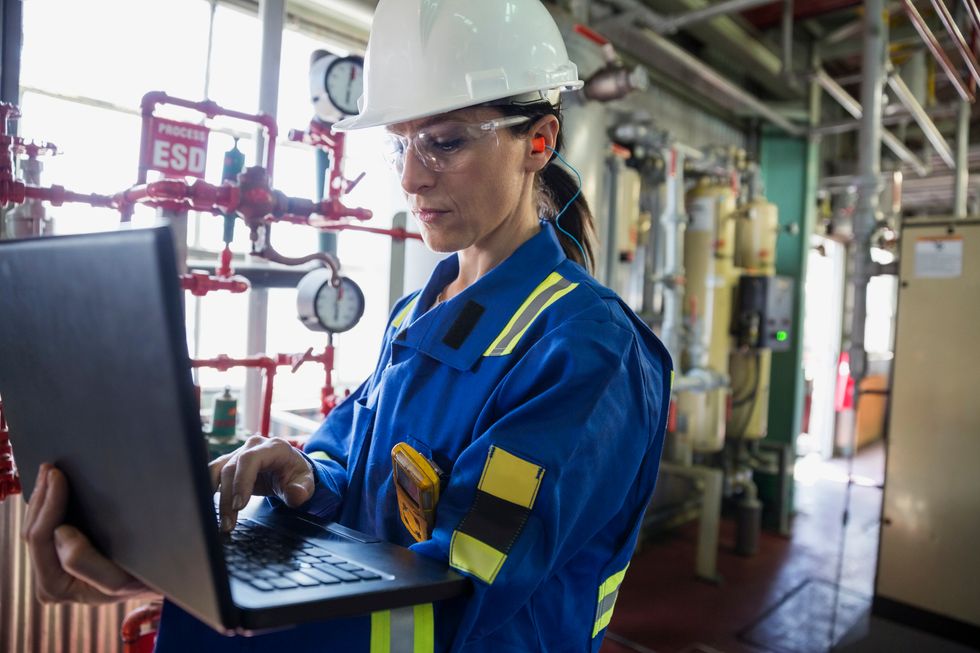

A handful of Houston startups will be bouncing back and forth to Austin for the second annual MassChallenge Texas accelerator. Getty Images

These are the Houston companies headed to MassChallenge Texas in Austin

Texas road trip

It's the second cohort for Boston-based MassChallenge Texas in Austin, and this year's 74 selected finalists are well represented by Houston.

"Coming from an extremely competitive application pool, the startups in our second Austin-based cohort represent an incredibly high bar of creativity and talent, all of who are poised to make an impact," says Mike Millard, managing director of MassChallenge Texas, in a release. "This year's program will offer the finalists innovation at scale with direct access to resources through our programs in Houston and Austin, and our community around the state. Through these channels, startups will have more opportunities to test and validate their ideas with partners while creating meaningful engagements to help them get to pilot or pivot as fast as possible."

While there is the upcoming MassChallenge Texas inaugural Houston cohort, these seven companies opted for a spot in the Austin-based cohort where the stakes are higher and cash prizes are on the line — $500,000, the largest equity-free cash prize in Texas, to be precise. (Houston's inaugural set of prizes reportedly don't included money.)

These are seven of the Houston-related companies that will be trekking back and forth to Austin from June until October.

crewcollar

Getty Images

It's crewcollar's mission to optimize hiring for industrial and blue-collar jobs, simplifying the entire process from curated job posts to paperwork filing. The company is based just outside of Houston in Missouri City.

"We are super excited to be joining MassChallenge Texas, and know that this experience will help us take it to the next level," says M. Siler, CEO and founder, in a release.

GotSpot Inc.

Courtesy of GotSpot

Houston-based GotSpot is Reda Hicks solution to finding temporary space quickly and easily — in a way that benefits all sides of the transaction. The model is like AirBnb, but for retail, meeting, and even emergency space. The corporate lawyer has grown the platform over the past few years and the MassChallenge opportunity is another move in the right direction. Click here to read more about Hicks and GotSpot.

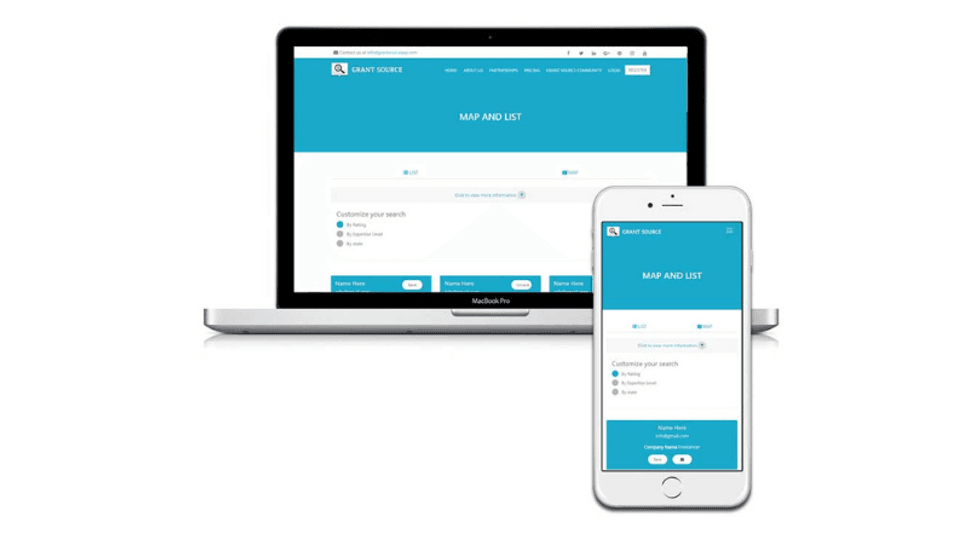
Grant Source

Photo via grantsourceapp.com

Grant Source is like the magic genie to help organizations find funding through grants and opportunities. The Houston startup has a database of opportunities and can help match businesses with appropriate grants to apply to — all within the Grant Source mobile app.

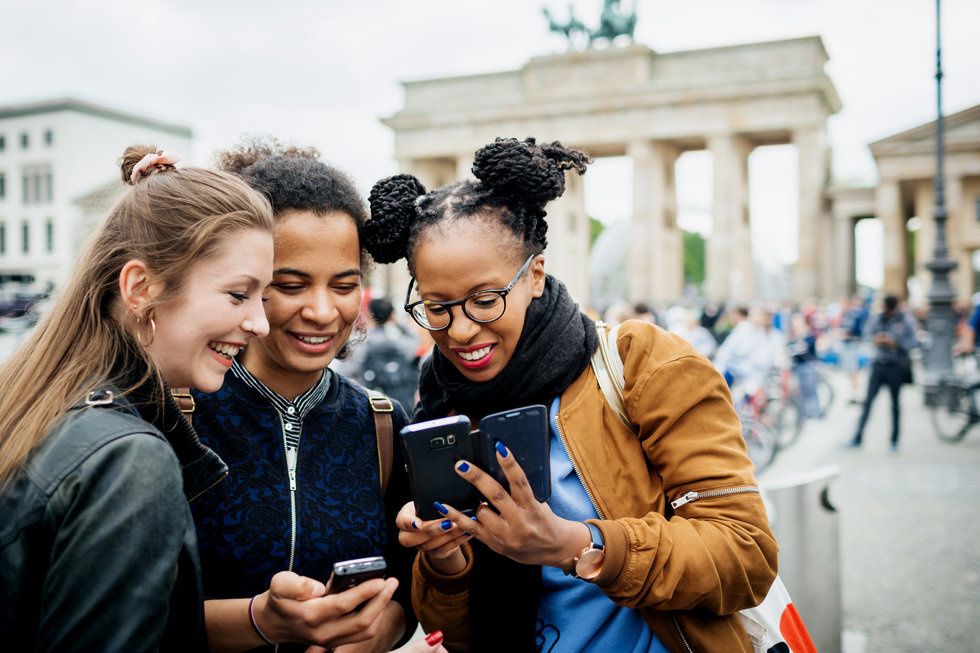
Guzo

Getty Images

Guzo is the tool every traveler has dreamed up. The Houston-based app connects travelers — not just in the planning phase — but throughout the travel process. The company was created by two brothers — Joshua and Gordon Taylor — and is the recreation of Croozen, formerly a long-distance carpool app.

"One of the things that got Gordan and I excited in the beginning of Croozen was just the idea of someone else in the car with you and that shared experience," Joshua Taylor tells InnovationMap in a previous interview about revamping Croozen as Guzo. "Looking past that, just being focused on the car was hindering us. Let's divorce the car and focus on travel as a whole."

Lazarus 3D

Photo via laz3d.com

Practice makes perfect, and surgeons should be as close to perfect as possible, right? Lazarus 3D uses 3D printing to make realistic body parts and organs so that surgeons can rehearse their surgeries before ever slicing into a patient. The company is conveniently located in the Texas Medical Center.

Pilot Plus

Photo via pilotplus.com

The trucking industry needs a rebrand. It's a tireless job that's go-go-go, and the unappealing nature of the career isn't ideal. Pilot Plus puts the humanity back in the process that benefits the driver and makes for bragging rights for the company employing the trucker. The logistics company allows for a system of drivers that work together for the long haul so that drivers can actually spend time resting in their own homes.

Topl

Courtesy of Topl

Topl's MassChallenge bio lists their HQ in the Netherlands, but the blockchain startup founded by three Rice University alumni has some of its operations right here in town. Topl has a goal of using blockchain technology to connect the dots and enhance transparency in various applications from retail to even being able to track the success of investments or scholarships.

"We are a generation that wants a story," Kim Raath, president at Topl, tells InnovationMap in a previous interview. "We want an origin, and don't want to be fooled. And, because you might be able to reduce the cost by having this transparency, you might be able to bring down the cost on both sides."


Ad Placement 300x100
Ad Placement 300x600

CultureMap Emails are Awesome

​Planned UT Austin med center, anchored by MD Anderson, gets $100M gift​

med funding

The University of Texas at Austin’s planned multibillion-dollar medical center, which will include a hospital run by Houston’s University of Texas MD Anderson Cancer Center, just received a $100 million boost from a billionaire husband-and-wife duo.

Tench Coxe, a former venture capitalist who’s a major shareholder in chipmaking giant Nvidia, and Simone Coxe, co-founder and former CEO of the Blanc & Otus PR firm, contributed the $100 million—one of the largest gifts in UT history. The Coxes live in Austin.

“Great medical care changes lives,” says Simone Coxe, “and we want more people to have access to it.”

The University of Texas System announced the medical center project in 2023 and cited an estimated price tag of $2.5 billion. UT initially said the medical center would be built on the site of the Frank Erwin Center, a sports and entertainment venue on the UT Austin campus that was demolished in 2024. The 20-acre site, north of downtown and the state Capitol, is near Dell Seton Medical Center, UT Dell Medical School and UT Health Austin.

Now, UT officials are considering a bigger, still-unidentified site near the Domain mixed-use district in North Austin, although they haven’t ruled out the Erwin Center site. The Domain development is near St. David’s North Medical Center.

As originally planned, the medical center would house a cancer center built and operated by MD Anderson and a specialty hospital built and operated by UT Austin. Construction on the two hospitals is scheduled to start this year and be completed in 2030. According to a 2025 bid notice for contractors, each hospital is expected to encompass about 1.5 million square feet, meaning the medical center would span about 3 million square feet.

Features of the MD Anderson hospital will include:

  • Inpatient care
  • Outpatient clinics
  • Surgery suites
  • Radiation, chemotherapy, cell, and proton treatments
  • Diagnostic imaging
  • Clinical drug trials

UT says the new medical center will fuse the university’s academic and research capabilities with the medical and research capabilities of MD Anderson and Dell Medical School.

UT officials say priorities for spending the Coxes’ gift include:

  • Recruiting world-class medical professionals and scientists
  • Supporting construction
  • Investing in technology
  • Expanding community programs that promote healthy living and access to care

Tench says the opportunity to contribute to building an institution from the ground up helped prompt the donation. He and others say that thanks to MD Anderson’s participation, the medical center will bring world-renowned cancer care to the Austin area.

“We have a close friend who had to travel to Houston for care she should have been able to get here at home. … Supporting the vision for the UT medical center is exactly the opportunity Austin needed,” he says.

The rate of patients who leave the Austin area to seek care for serious medical issues runs as high as 25 percent, according to UT.

New Rice Brain Institute partners with TMC to award inaugural grants

brain trust

The recently founded Rice Brain Institute has named the first four projects to receive research awards through the Rice and TMC Neuro Collaboration Seed Grant Program.

The new grant program brings together Rice faculty with clinicians and scientists at The University of Texas Medical Branch, Baylor College of Medicine, UTHealth Houston and The University of Texas MD Anderson Cancer Center. The program will support pilot projects that address neurological disease, mental health and brain injury.

The first round of awards was selected from a competitive pool of 40 proposals, and will support projects that reflect Rice Brain Institute’s research agenda.

“These awards are meant to help teams test bold ideas and build the collaborations needed to sustain long-term research programs in brain health,” Behnaam Aazhang, Rice Brain Institute director and co-director of the Rice Neuroengineering Initiative, said in a news release.

The seed funding has been awarded to the following principal investigators:

  • Kevin McHugh, associate professor of bioengineering and chemistry at Rice, and Peter Kan, professor and chair of neurosurgery at the UTMB. McHugh and Kan are developing an injectable material designed to seal off fragile, abnormal blood vessels that can cause life-threatening bleeding in the brain.
  • Jerzy Szablowski, assistant professor of bioengineering at Rice, and Jochen Meyer, assistant professor of neurology at Baylor. Szablowski and Meyer are leading a nonsurgical, ultrasound approach to deliver gene-based therapies to deep brain regions involved in seizures to control epilepsy without implanted electrodes or invasive procedures.
  • Juliane Sempionatto, assistant professor of electrical and computer engineering at Rice, and Aaron Gusdon, associate professor of neurosurgery at UTHealth Houston. Sempionatto and Gusdon are leading efforts to create a blood test that can identify patients at high risk for delayed brain injury following aneurysm-related hemorrhage, which could lead to earlier intervention and improved outcomes.
  • Christina Tringides, assistant professor of materials science and nanoengineering at Rice, and Sujit Prabhu, professor of neurosurgery at MD Anderson, who are working to reduce the risk of long-term speech and language impairment during brain tumor removal by combining advanced brain recordings, imaging and noninvasive stimulation.

The grants were facilitated by Rice’s Educational and Research Initiatives for Collaborative Health (ENRICH) Office. Rice says that the unique split-funding model of these grants could help structure future collaborations between the university and the TMC.

The Rice Brain Institute launched this fall and aims to use engineering, natural sciences and social sciences to research the brain and reduce the burden of neurodegenerative, neurodevelopmental and mental health disorders. Last month, the university's Shepherd School of Music also launched the Music, Mind and Body Lab, an interdisciplinary hub that brings artists and scientists together to study the "intersection of the arts, neuroscience and the medical humanities." Read more here.

Your data center is either closer than you think or much farther away

houston voices

A new study shows why some facilities cluster in cities for speed and access, while others move to rural regions in search of scale and lower costs. Based on research by Tommy Pan Fang (Rice Business) and Shane Greenstein (Harvard).

Key findings:

  • Third-party colocation centers are physical facilities in close proximity to firms that use them, while cloud providers operate large data centers from a distance and sell access to virtualized computing resources as on‑demand services over the internet.
  • Hospitals and financial firms often require urban third-party centers for low latency and regulatory compliance, while batch processing and many AI workloads can operate more efficiently from lower-cost cloud hubs.
  • For policymakers trying to attract data centers, access to reliable power, water and high-capacity internet matter more than tax incentives.

Recent outages and the surge in AI-driven computing have made data center siting decisions more consequential than ever, especially as energy and water constraints tighten. Communities invest public dollars on the promise of jobs and growth, while firms weigh long-term commitments to land, power and connectivity.

Against that backdrop, a critical question comes into focus: Where do data centers get built — and what actually drives those decisions?

A new study by Tommy Pan Fang (Rice Business) and Shane Greenstein (Harvard Business School) provides the first large-scale statistical analysis of data center location strategies across the United States. It offers policymakers and firms a clearer starting point for understanding how different types of data centers respond to economic and strategic incentives.

Forthcoming in the journal Strategy Science, the study examines two major types of infrastructure: third-party colocation centers that lease server space to multiple firms, and hyperscale cloud centers owned by providers like Amazon, Google and Microsoft.

Two Models, Two Location Strategies

The study draws on pre-pandemic data from 2018 and 2019, a period of relative geographic stability in supply and demand. This window gives researchers a clean baseline before remote work, AI demand and new infrastructure pressures began reshaping internet traffic patterns.

The findings show that data centers follow a bifurcated geography. Third-party centers cluster in dense urban markets, where buyers prioritize proximity to customers despite higher land and operating costs. Cloud providers, by contrast, concentrate massive sites in a small number of lower-density regions, where electricity, land and construction are cheaper and economies of scale are easier to achieve.

Third-party data centers, in other words, follow demand. They locate in urban markets where firms in finance, healthcare and IT value low latency, secure storage, and compliance with regulatory standards.

Using county-level data, the researchers modeled how population density, industry mix and operating costs predict where new centers enter. Every U.S. metro with more than 700,000 residents had at least one third-party provider, while many mid-sized cities had none.

ImageThis pattern challenges common assumptions. Third-party facilities are more distributed across urban America than prevailing narratives suggest.

Customer proximity matters because some sectors cannot absorb delay. In critical operations, even slight pauses can have real consequences. For hospital systems, lag can affect performance and risk exposure. And in high-frequency trading, milliseconds can determine whether value is captured or lost in a transaction.

“For industries where speed is everything, being too far from the physical infrastructure can meaningfully affect performance and risk,” Pan Fang says. “Proximity isn’t optional for sectors that can’t absorb delay.”

The Economics of Distance

For cloud providers, the picture looks very different. Their decisions follow a logic shaped primarily by cost and scale. Because cloud services can be delivered from afar, firms tend to build enormous sites in low-density regions where power is cheap and land is abundant.

These facilities can draw hundreds of megawatts of electricity and operate with far fewer employees than urban centers. “The cloud can serve almost anywhere,” Pan Fang says, “so location is a question of cost before geography.”

The study finds that cloud infrastructure clusters around network backbones and energy economics, not talent pools. Well-known hubs like Ashburn, Virginia — often called “Data Center Alley” — reflect this logic, having benefited from early network infrastructure that made them natural convergence points for digital traffic.

Local governments often try to lure data centers with tax incentives, betting they will create high-tech jobs. But the study suggests other factors matter more to cloud providers, including construction costs, network connectivity and access to reliable, affordable electricity.

When cloud centers need a local presence, distance can sometimes become a constraint. Providers often address this by working alongside third-party operators. “Third-party centers can complement cloud firms when they need a foothold closer to customers,” Pan Fang says.

That hybrid pattern — massive regional hubs complementing strategic colocation — may define the next phase of data center growth.

Looking ahead, shifts in remote work, climate resilience, energy prices and AI-driven computing may reshape where new facilities go. Some workloads may move closer to users, while others may consolidate into large rural hubs. Emerging data-sovereignty rules could also redirect investment beyond the United States.

“The cloud feels weightless,” Pan Fang says, “but it rests on real choices about land, power and proximity.”

---

This article originally appeared on Rice Business Wisdom. Written by Scott Pett.

Pan Fang and Greenstein (2025). “Where the Cloud Rests: The Economic Geography of Data Centers,” forthcoming in Strategy Science.