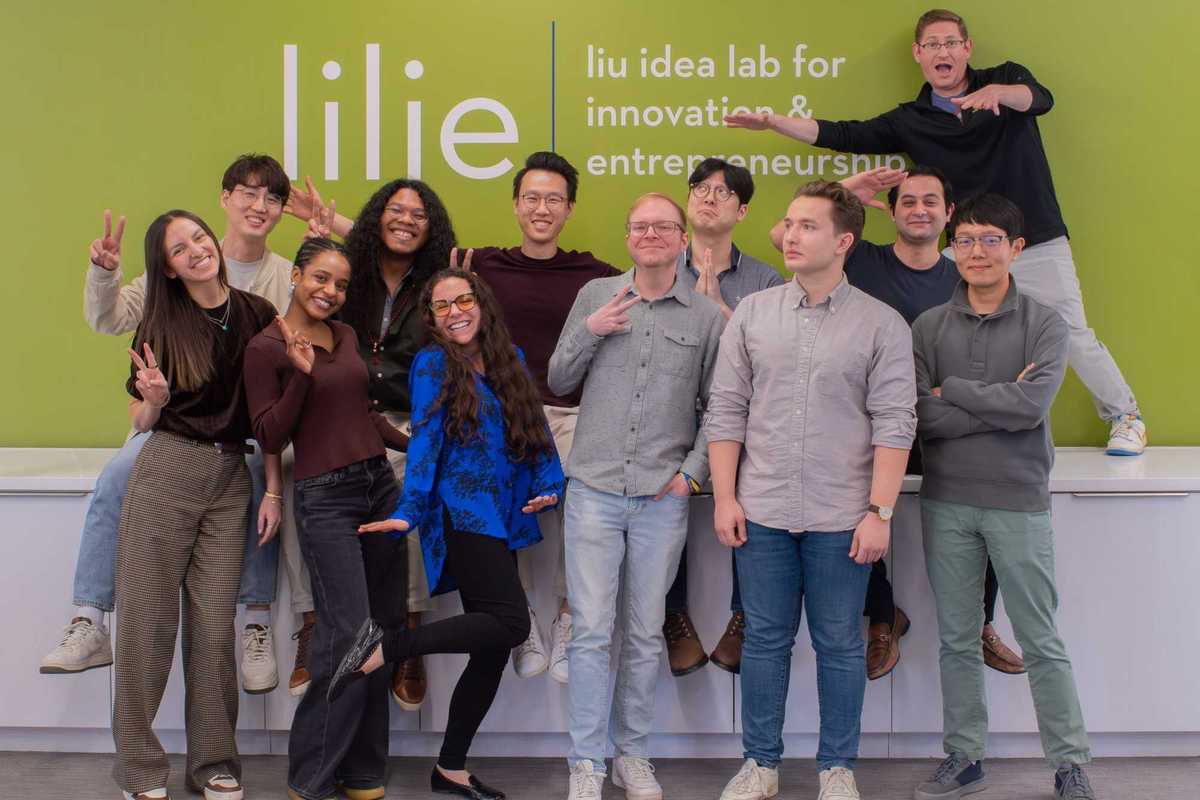
Activate Houston has named eight fellows to its 2026 cohort. Photos courtesy Activate

Hardtech-focused organization Activate has named 50 new members to its 2026 cohort of scientists, which includes eight startups joining Activate Houston.

Activate aims to support scientists at "the outset of their entrepreneurial journey." It partners with U.S.-based funders and research institutions to support its fellows in developing high-impact technology. Its fellows receive a living stipend, research and development funding, connections from Activate's robust network of mentors and access to a curriculum specific to the program for two years.

This year's fellows represent 41 companies from 22 U.S. cities and 11 states.

“This cohort clearly demonstrates that the next industry-defining companies won't choose between modern technology and deep science; they'll be built by combining both,” Cyrus Wadia, CEO of Activate, said in the announcement. “These are the scientists and engineers turning our most urgent global challenges into the companies that will deliver a more sustainable future.”

The Houston fellows are working across the energy, space, AI infrastructure and agriculture sectors. They include:

  • Sophie Clare Broun, founder of Anning Corporation, which is producing clean hydrogen by stimulating naturally occurring geologic deposits
  • Kathy Andersen, founder of Brint Tech, which builds optical sensing systems that quantify hydrogen for infrastructure operators
  • Dorsa Talebi, founder of Kinetiq Drive, which builds rare-earth-free, contact-free electric motors with wireless rotors for small appliances and heavy industry alike
  • Neethu Pottackal, founder of Nivera, which is developing natural, edible coatings made from agricultural byproducts to reduce food waste and extend the shelf life of fresh food
  • Jonathan Huffman, founder of Orbital Arc, which is shrinking spacecraft propulsion to a microchip powerful enough for deep space
  • Tim Lee, founder of Renesin, which develops advanced materials for faster, more efficient AI hardware
  • Joshua Livingston, founder of Selerra Separations, which is developing high-performance membranes that cut the cost and energy consumption of water treatment
  • Wenli Jiang, founder of SwieNitro Recovery, which is developing technology that converts nitrogen-rich waste streams into valuable fertilizer

"Home to the largest concentration of engineers in the United States and a dense ecosystem of Fortune 100 and Fortune 500 companies, Houston is uniquely positioned for scientists tackling large-scale industrial challenges. Activate Houston fellows are connected to the city's deep networks in energy, chemicals, and materials," Activate said in the announcement.

Activate named its inaugural Houston cohort in 2024. It has other hubs in Boston, New York, and Berkley, California—where Activate is headquartered. The organization also offers a virtual and remote cohort, known as Activate Anywhere. Nationally, it has supported 346 fellows and 276 companies since 2015.

Activate Houston is led by managing director Jeremy Pitts, who co-founded Greentown Labs in Boston. It is based out of the Ion. The latest cohort is Activate Houston's third. Read more about the last year's cohort here.


Meagan Pitcher, CEO of Houston-based Bairitone Health. Photo courtesy of LinkedIn

6 female-founded startups shaping the Houston innovation ecosystem

meet the finalists

Female-founded businesses reached a new milestone last year. According to payroll company Gusto, female founders launched 49 percent of new businesses in 2024, reaching near parity with male-founded businesses for the first time.

And though they still face challenges, with access to VC funding at the top of the list, those women-led companies are driving major impact in the startup and innovation ecosystem.

The fifth-annual Houston Innovation Awards will honor six women-led startups that are shaping Houston innovation in our Female-founded Businesses category, presented by Houston Powder Coaters.

The finalists for the 2025 award, selected by our esteemed panel of judges, range from a company developing natural carbon-free fuel to another launching at-home sleep apnea technology.

Read more about these innovative startups and the visionary female founders behind them below. Then join us at the Houston Innovation Awards on Nov. 13 at Greentown Labs, when the winner will be unveiled at our live awards ceremony.

Tickets are now on sale for this exclusive event celebrating all things Houston innovation.

Anning Corporation

Clean energy company Anning Corporation is working to develop geologic hydrogen, a natural carbon-free fuel, using its proprietary stimulation approaches and advanced exploration modeling. The company said that geologic hydrogen has the potential to be the lowest-cost source of reliable baseload electricity in the U.S.

The company was founded by CEO Sophie Broun in 2024 and is a member of Greentown Labs. Last month, it also announced that it was chosen to participate in Breakthrough Energy’s prestigious Fellows Program. Anning raised a pre-seed round this year and is currently raising a $6 million seed round.

Bairitone Health

Bairitone Health is bringing anatomy imaging for sleep apnea to the home environment. The company's platform maps users' anatomy during natural sleep using a facial patch to determine the root cause of airway obstruction. It then offers effective therapies for each patient. The system is currently in the research and development phase and is being used in clinical trials and studies.

The company was founded in 2022 in the Texas Medical Center's Biodesign program by CEO Meagan Pitcher, CTO Onur Kilic and chief medical officer Britt Cross. It was a member of Activate Houston's inaugural cohort and has participated in numerous accelerators and incubators. It raised a pre-seed round last year of $435,000.

Brain Haven

Founded at the University of Houston, Brain Haven is developing neuroscience-based, clinically validated protocols that use sensory stimulation through smell and sound to offer a natural and non-invasive way to activate the brain and preserve neuroplasticity. The company aims to deliver an accessible and affordable way for the aging population to preserve memory, delay cognitive decline and improve quality of life.

The company was co-founded by Gail Aflalo, a graduate student in the University of Houston College of Optometry, and Jokūbas Žiburkus, an associate professor in the department of biology and biochemistry at UH. It was selected to participate in the 2024 Innov8 Cohort, where it won the cohort's Startup Pitch Day, and was included in Class 13 of UH RED Labs. Brain Haven was awarded $70,000 in seed funding from UH in June 2025 to support a year-long research initiative in adults aged 50 and above.

FlowCare

Sugar Land-based FlowCare is developing a period health platform that integrates smart dispensers, education and healthcare into one system to make free, high-quality organic period products more accessible.

The company was founded by CEO Tanu Jain, a registered nurse and product management executive, in 2024. It participated in the TiE Women Program and the Houston Community College Business Plan Competition, placing in the top five in both pitch competitions.

March Biosciences

Houston cell therapy company March Biosciences aims to treat unaddressed challenging cancers, with its MB-105, a CD5-targeted CAR-T cell therapy for patients with relapsed or refractory CD5-positive T-cell lymphoma, currently in Phase 2 clinical trials.

The company was founded in 2021 by CEO Sarah Hein, Max Mamonkin and Malcolm Brenner and was born out of the TMC Accelerator for Cancer Therapeutics. The company completed a $29.6 million series A last year and also raised a $4.2 million seed round.

TrialClinIQ

Houston-based TrialClinIQ is an AI-powered clinical trial recruitment platform that helps identify, qualify and enroll eligible patients in appropriate trials faster and more accurately.

The company was founded in 2025 by CEO Jontel Pierce and Janette Obi.

-----

The Houston Innovation Awards program is sponsored by Houston City College Northwest, Houston Powder Coaters, FLIGHT by Yuengling, and more to be announced soon. For sponsorship opportunities, please contact sales@innovationmap.com.

Ad Placement 300x100
Ad Placement 300x600

CultureMap Emails are Awesome

UTHealth Houston team joins NASA initiative to protect border drinking water

water watch

Climate change means far more to public health than living with hotter days. Transformations in our weather are contributing to challenges in accessing safe drinking water in some communities.

One of the most dire situations is along the US–Mexico border. The National Aeronautics and Space Administration (NASA) is seeking to address that issue with its Water Quality Applications program. An 11-researcher project led by a UTHealth Houston School of Public Health faculty member has been selected to participate.

“Drinking water is one of the most fundamental public health protections, but producing safe drinking water involves a delicate balance,” Yun Hang, assistant professor of environmental and occupational health sciences, said in a news release. Her team’s proposal was one of 93 that were submitted for funding through NASA’s Research Opportunities in Space and Earth Sciences (ROSES)-2025 program.

This is the first time that NASA has worked with a team devoted to water quality applications. The group, which includes researchers from across the nation, will use satellite observations of Earth, as well as hydrologic modeling, to potentially anticipate and act on water quality conditions as they change. Challenges addressed over the course of the three-year program, which kicked off in June, might include problems with water quality due to climate variability and increased pressure on water resources.

Hang’s team will focus on a pair of borderlands: Paso del Norte and the Rio Grande Valley.

“Working closely with El Paso Water ensures that our research addresses real operational needs while helping utilities better prepare for climate-related water quality changes and continue providing safe drinking water to communities across the Texas border region,” Hang added in the release.

She and the team will use data gathered by NASA on both past and future Earth-observing missions, which will allow them to track environmental changes that may affect source water quality. Combined with past water treatment records and hydrologic models, the team will also utilize artificial intelligence to develop predictive tools that aim to stop issues before they become larger hurdles to water safety.

Another one of the project’s goals is to create visualization tools and source water summaries that can be utilized by those without scientific expertise. The tools will be produced in English and Spanish to further broaden their accessibility.

The hope is that the materials made by the team will also go far beyond the border, with protocols that can be adapted or adopted by other areas dealing with water quality issues.

U.S. News declares Houston hospital No. 1 in Texas for the 15th year

Top of the Chart

Houston Methodist Hospital and over a dozen more Houston-area hospitals have earned bragging rights in U.S. News & World Report's newly released rankings of the Best Hospitals for 2026-2027.

Every year, U.S. News annually evaluates nearly 4,500 U.S. hospitals to determine which meet the publication's rigorous standards and offer the best care for patients across 14 adult specialties and 23 procedures and conditions. New to this year's batch of rankings, U.S. News introduced regional rankings in cancer; cardiology; heart and vascular surgery; orthopedics; and rehabilitation.

Houston Methodist Hospital was the only Texas institution named on U.S. News' Best Hospitals Honor Roll, a prestigious list of the 20 best medical centers in the country. Houston Methodist also reigns as Texas' best hospital for the 15th consecutive year.

The hospital also shines among the nation’s best in 10 specialties:

  • No. 5 – Gastroenterology and GI Surgery
  • No. 7 – Obstetrics and Gynecology
  • No. 10 – Cardiology, Heart, and Vascular Surgery
  • No. 11 – Pulmonology and Lung Surgery
  • No. 13 – Neurology and Neurosurgery
  • No. 19 – Cancer
  • No. 21 – Orthopedics
  • No. 23 – Diabetes and Endocrinology
  • No. 24 – Geriatrics
  • No. 43 – Urology
Houston Methodist also earned high performing distinctions across one regional specialty (Rehabilitation) and 21 procedures and conditions.

"This recognition reflects the remarkable dedication of our physicians and employees and their tireless focus on delivering unparalleled care to our patients," said Houston Methodist president and CEO Marc L. Boom, M.D. in a press release. "While we are honored by this recognition, its true significance lies in what it represents — an unwavering commitment to putting patients first."

Elsewhere in Houston, The University of Texas MD Anderson Cancer Center ranked as the No. 1 best cancer hospital in the nation for the 12th year in a row.

"This ranking is a tremendous honor, and it reflects our unwavering commitment to continue making progress in our mission to end cancer," said UT MD Anderson president Peter WT Pisters, M.D. "We are deeply grateful to everyone who made this recognition possible: our faculty and staff, volunteers, donors, and the patients and families we are honored to serve."

MD Anderson also earned national rankings in two specialties — Urology (No. 6) and Gastroenterology and GI Surgery (No. 16) — and it received high performing distinctions in six procedures and conditions: Colon Cancer Surgery; Ear, Nose, and Throat Surgery; Gynecological Cancer Surgery; Leukemia, Lymphoma, and Myeloma Treatment; Lung Cancer Surgery; and Prostate Cancer Surgery.

The additional Houston hospitals that ranked among the best in Texas for 2026-2027 are:

  • No. 3 – Houston Methodist Sugar Land Hospital (tied with Baylor University Medical Center Dallas)
  • No. 5 – Baylor St. Luke's Medical Center, Houston
  • No. 6 – Memorial Hermann Hospital, Houston
  • No. 7 – Houston Methodist The Woodlands Hospital
  • No. 10 – Memorial Hermann Greater Heights Hospital (tied with St. David's Medical Center, Austin)
  • No. 14 – Houston Methodist Baytown Hospital
  • No. 15 – Memorial Hermann Memorial City Medical Center, Houston
  • No. 21 – Houston Methodist Clear Lake Hospital, Nassau Bay; St. Luke's Health-The Woodlands Hospital; University of Texas Medical Branch, Galveston (also tied with six more Texas hospitals)
  • No. 30 – Memorial Hermann Sugar Land Hospital (tied with five other Texas hospitals)
  • No. 36 – HCA Houston Healthcare Kingwood (tied with Parkland Health-Dallas)
---

This article originally appeared on CultureMap.com.

Houston helps power Texas’ rise as AI infrastructure hub, new report finds

eyes on ai

Houston plays a major role in Texas’ rapidly evolving AI economy, a new report indicates.

The report from Build American AI, a pro-AI advocacy group, notes Houston’s growing AI presence includes:

  • A factory being built by AI chipmaker NVIDIA and electronics manufacturer Foxconn that will produce AI supercomputers and infrastructure systems
  • Houston Methodist’s use of ambient AI to listen to health care providers’ conversations with patients, eliminating the need for manual notetaking
  • An abundance of AI products and services for the energy sector

Across the state, billions of dollars in new AI investments are fueling advancements in construction, manufacturing, energy production, logistics, and health care, according to the report.

“Texas is not merely a place where AI products will be used. Texas is becoming one of the places where the AI economy is being assembled,” the report says.

Particularly noteworthy are four major AI-related projects around the state representing an investment of more than $140 billion, including Google’s $40 billion buildout of AI data centers.

“While California had a headstart in building the software era, Texas will build the infrastructure era,” says the report. “That is not a slogan. Economic research has revealed for decades that innovation happens where the local conditions make building and collaboration possible, and Texas is positioned to be a central hub.”

According to the report, components of Texas’ infrastructure era include:

  • Energy leadership
  • Top-tier hospitals
  • Semiconductor investments
  • Construction capabilities
  • Data center growth
  • Major companies and universities

On the workforce front, Stanford University’s 2026 AI Index found Texas had 80,547 AI job postings in 2025, accounting for 8 percent of the national total.

“Texas no longer needs to ask whether AI will reshape the economy. It already has,” the report concludes. “The question is whether Texas will merely host part of that future or lead it.”