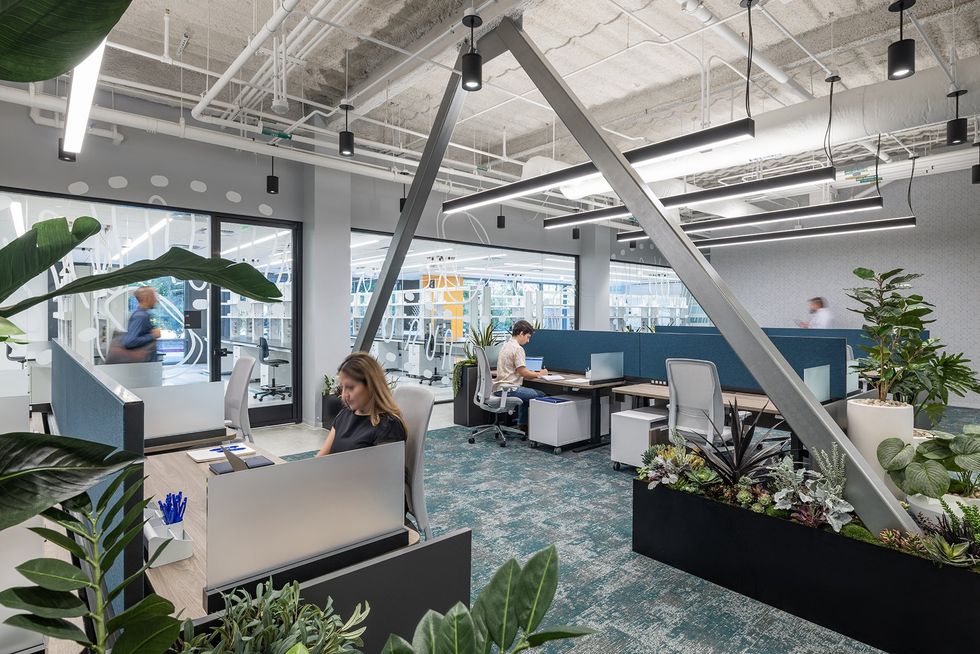
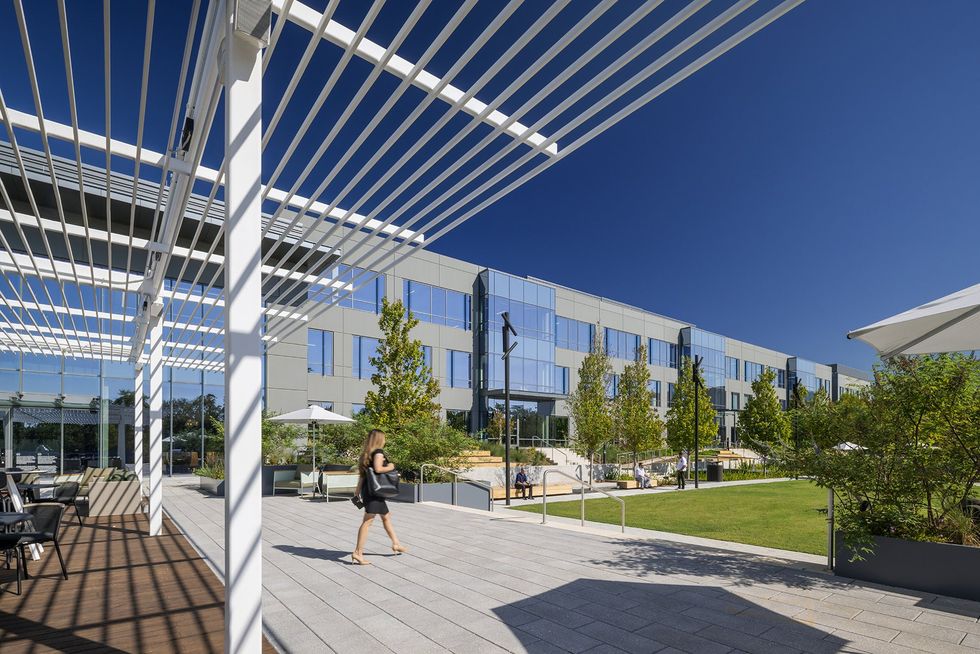
The Alexandria Center for Advanced Technologies at The Woodlands is open for business. Rendering courtesy of Alexandria Real Estate Equities

A new innovation hub mega campus has opened in The Woodlands.

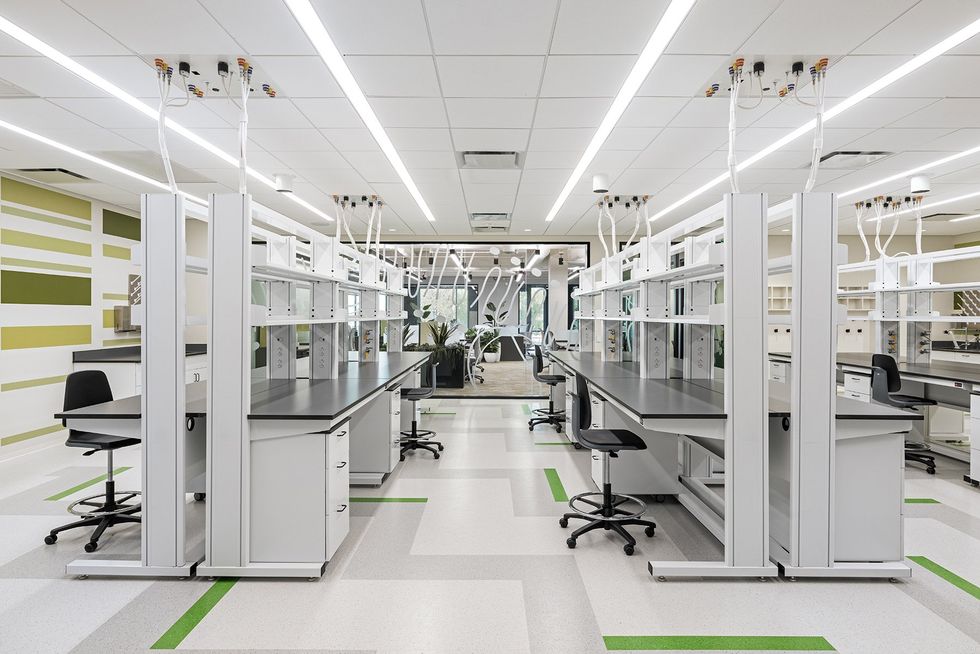
The Alexandria Center for Advanced Technologies at The Woodlands comes courtesy of California-based Alexandria Real Estate Equities Inc. The campus is home to the first purpose-built, cost-effective Class A laboratory infrastructure in the Houston suburb.

The campus takes advantage of Alexandria’s cluster model, which is informed by the cluster theory of business created by Harvard Business School’s Michael E. Porter. The belief behind the cluster is that there are four critical drivers necessary to creating a thriving business cluster: location, innovation, talent and capital. With nearly three decades of creating such STEM ecosystems, Alexandria is well positioned to grow something important in The Woodlands.

The campus’ first building is a 123,392-square-foot, LEED Gold Core and Shell, and Fitwel-certified redevelopment project. One of the initial tenants in that building is Nurix Therapeutics, a San Francisco-based clinical-stage biopharmaceutical company.

“We have had an outstanding strategic relationship with Alexandria since 2014 and approached them to support our expansion to Texas,” Arthur T. Sands, MD, PhD, president and chief executive officer of Nurix said in a press release. “The Woodlands offers us a business-friendly, entrepreneurial environment that is critical to our growth. Alexandria’s thoughtfully designed new campus provides us with state-of-the-art laboratory space and dynamic amenities that are key to helping us attract and retain top talent as we work to change the future of medicine through an exciting new modality of treating disease: targeted protein modulation.”

Nurix’s focus is treating cancer and other challenging diseases using protein modulation. Its expansion to the Houston area will help the company to build both proprietary and partnered programs in oncology as well as autoimmune and inflammatory diseases.

“Our efforts in The Woodlands are much like when we entered New York City, where commercial life science was very limited before we opened our flagship Alexandria Center for Life Science – NYC in 2010,” Joel S. Marcus, executive chairman and founder of Alexandria Real Estate Equities, Inc. and Alexandria Venture Investments, says in a news release. "We are similarly committed to developing a commercial life science presence in The Woodlands.

"Steve Jobs once said, ‘the biggest innovations of the twenty-first century will be at the intersection of biology and technology,’ and his prediction has come to fruition," Marcus continues. "Here in The Woodlands, this important convergence will drive opportunities to accelerate the development of new medicines to benefit patients."

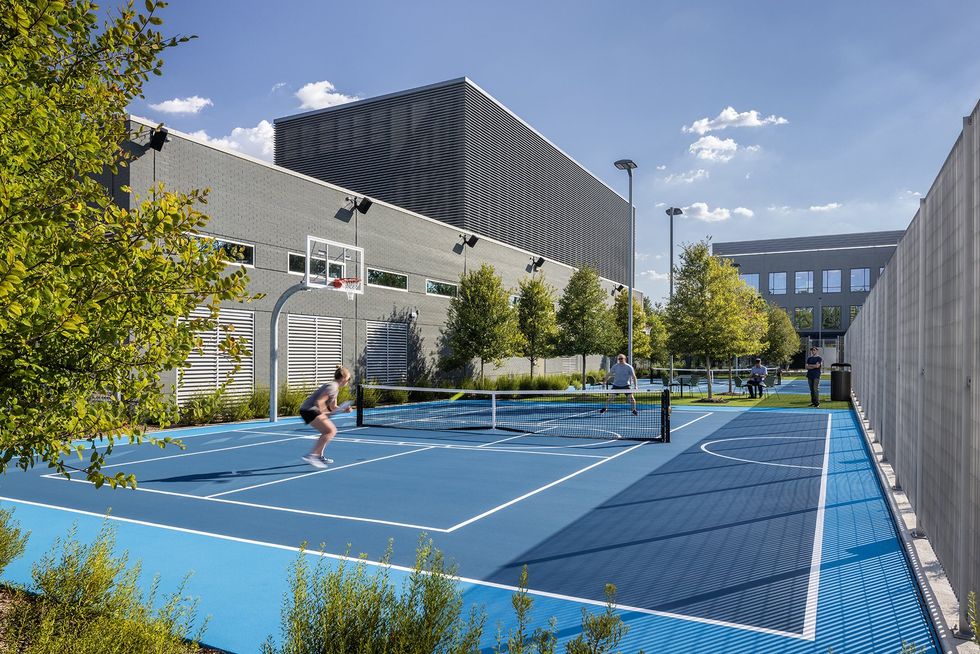
Care for a round of pickleball with a colleague? The Alexandria Center for Advanced Technologies campus is replete with appealing with amenities. They indeed include onsite pickleball courts, but also modern conference and event space; an large, welcoming courtyard and event lawn; and a wellness and fitness center so innovators can keep their bodies as healthy as their minds.

With the objective of further driving this STEM ecosystem, the company is also bringing the Alexandria Seed Capital Platform to The Woodlands. The nationwide platform unites leaders from across the life science community to catalyze early-stage investment in life science companies. If Alexandria’s goals come to fruition, more medical companies may soon be heading to Houston’s ‘burbs.

The Alexandria Center for Advanced Technologies at The Woodlands
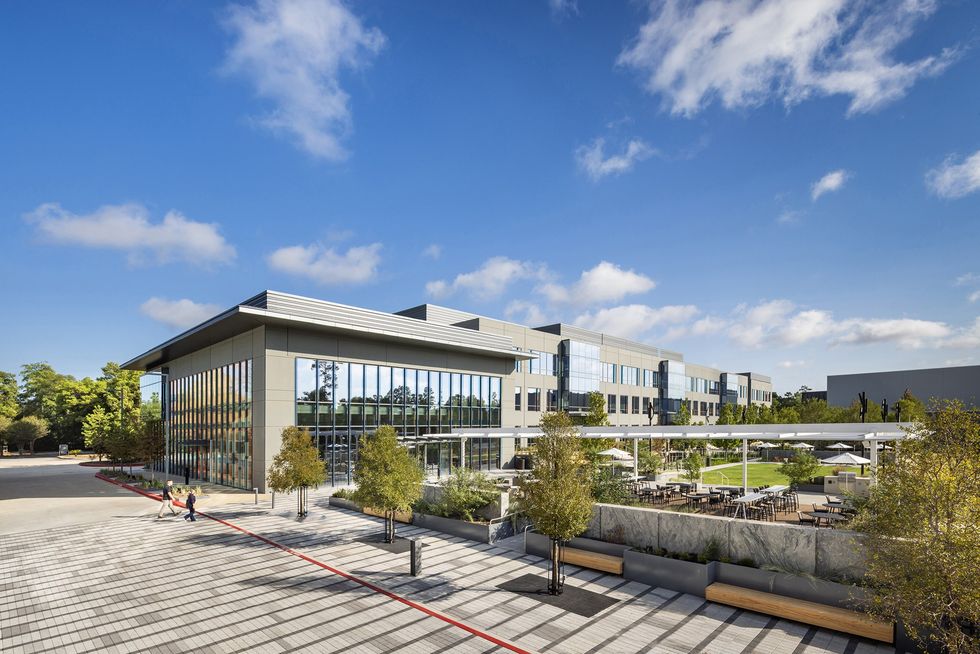
Image courtesy of Alexandria Real Estate Equities
Ad Placement 300x100
Ad Placement 300x600

CultureMap Emails are Awesome

Rice Business Plan Competition awards out $1.4M to 2026 student teams

Another team from the Great Lakes State took home top honors and investments at this year's Rice Business Plan Competition.

BRCĒ, a material-tech startup from Michigan State University, took home the top-place finish and the largest investment total at the annual Houston event. It has developed Lattice-Grip technology to create utility-based polymers that can replace traditional fabric. The materials are stronger, fire-resistant and more stable than traditional textiles, according to the company. Last year, the University of Michigan's Intero Biosystems won first-place finish and the largest investment total of $902,000.

In total, the RBPC doled out more than $1.4 million in investment and cash prizes, according to Rice. Over the three-day event, held April 9-11, the 42 competing startups presented their business plans to 300 angel, venture capital and corporate investors. Seven finalists were selected and each competing startup received at least $950 in prizes for placement in the competition.

Three Texas teams, including one from Houston, were named among the finalists. Here's who won big this year.

BRCĒ, Michigan State University — $571,500

The recent Shark Tank alum finished in first place for its utility-based polymers technology.

  • $200,000 Goose Capital Investment Grand Prize
  • $100,000 The OWL Investment Prize
  • $100,000 Houston Angel Network Investment Prize
  • $75,000 The Indus Entrepreneurs (TiE) Texas Angels Investment Prize
  • $50,000 nCourage Investment Network’s Courageous Women Entrepreneur Investment Prize
  • $25,000 New Climate Ventures Sustainable Investment Prize
  • $20,000 Aramco Innovator Cash Prize
  • $1,000 Anbarci Family Company Showcase Prize
  • $500 Mercury Fund Elevator Pitch Competition Prize – Consumer Hard Tech

Legion Platforms, Arizona State University — $425,500

The startup won second place for its multiplayer gaming platform that can be accessed with slow internet speeds.

  • $100,000 Anderson Family Fund & Finger Interests Second Place Investment Prize
  • $200,000 Goose Capital Investment Prize
  • $100,000 The OWL Investment Prize
  • $25,000 Pearland EDC Spirit of Entrepreneurship Cash Prize
  • $500 Mercury Fund Elevator Pitch Competition Prize – Consumer

Imagine Devices, University of Texas at Austin — $101,000

The pediatric medical device company won third place for its multifunction neonatal feeding tube, known as Trinity Tube

  • $50,000 Anderson Family Fund & Finger Interests Third Place Investment Prize
  • $25,000 Pearland EDC Spirit of Entrepreneurship Cash Prize
  • $25,000 The Eagle Investors Investment Prize
  • $1,000 Anbarci Family Company Showcase Prize

Altaris MedTech, University of Arkansas – $6,000

The startup won fourth place for its pain-free strep test.

  • $5,000 Norton Rose Fulbright Fourth Place Prize
  • $1,000 Mercury Fund Elevator Pitch Competition Prize — Overall Winner

Routora, University of Notre Dame & University of Texas at Austin – $5,500

The team won fifth place for its route optimization app that works to reduce fuel costs, travel time and carbon emissions

  • $5,000 Chevron Fifth Place Prize
  • $500 Mercury Fund Elevator Pitch Competition Prizes — Digital

DialySafe, Rice University — $5,500

The startup won sixth place for its technology that aims to make at-home peritoneal dialysis simpler and safer.

  • $5,000 ExxonMobil Sixth Place Prize
  • $500 Mercury Fund Elevator Pitch Competition Prizes — Life Science

Arrow Analytics, Texas A&M University – $6,000

The startup won seventh place for its AI-powered sizing system for carry-on baggage.

  • $5,000 Shell Ventures Seventh Place Prize
  • $1,000 Anbarci Family Company Showcase Prizes


Other significant prizes included:

BiliRoo, University of Michigan – $26,000

  • $25,000 Southwest National Pediatric Device Consortium Pediatric Device Cash Prize
  • $1,000 Anbarci Family Company Showcase Prizes

BeamFeed, City University of New York – $25,000

  • $25,000 Amentum and WRX Companies Rising Stars Space Technology and Commercial Aerospace Cash Prize

Grapheon, University of Pittsburgh — $20,000

  • $20,000 Aramco Innovator Cash Prize

Last year, the Rice Business Plan Competition facilitated over $2 million in investment and cash prizes. According to Rice, more than 910 startups have raised more than $6.9 billion in capital through the competition over the last 25 years.

See a full list of this year's winners and stream rounds from the competition here.

Here's the income it takes to live comfortably in Houston in 2026

Money Talk

2026 report analyzing how much it costs to live "in sustainable comfort" in the biggest U.S. cities has found Houston residents have the 11th lowest salary requirement to live a comfortable life in 2026.

SmartAsset's annual report found single adult residents in Houston need to make $89,981 a year to qualify as "financially stable." Compared to last year, single Houstonians needed to make $83 more to live comfortably in the city.

Families with two working parents and two children need to make a household income of $204,672 to have a financially stable life in Houston, the report found. That's almost $2,000 less than what families needed to make last year.

To determine the rankings, SmartAsset's analysts examined 100 of the largest U.S. cities and used the latest cost of living data – such as the costs for housing, food, transportation, and income taxes where applicable – from the MIT Living Wage Calculator for childless individuals and for two working adults with two children.

For the purpose of the study, the 50/30/20 budgeting strategy was used to determine "comfortable lifestyle" costs for both individuals and families: 50 percent of income to cover needs and living expenses, 30 percent for "wants," and 20 percent for savings or paying down debt.

Here's breakdown of a Houston resident's comfortable lifestyle based on SmartAsset's findings:

  • $44,991 dedicated to needs and living expenses
  • $26,994 dedicated to wants
  • $17,996 dedicated to savings or debt repayment

This is SmartAsset's interpretation of a comfortable lifestyle for families of four:

  • $102,336 dedicated to needs and living expenses
  • $61,402 dedicated to wants
  • $40,934 dedicated to savings or debt repayment
SmartAsset said single individuals and families should compare the fluctuating local cost of living and their long-term goals to fully "understand the context" of their respective household incomes. But it's worth pointing out that a financially stable life in Houston isn't quite attainable for many residents: The city had a median household income of $64,361 in 2024, according to the U.S. Census Bureau.

Comfortable salaries in other Texas cities

Elsewhere in Texas, the report found that families in the Dallas-Fort Worth suburbs Frisco and McKinney "are closest to a comfortable salary."

"In Frisco, the median household earns $145,444 – substantially higher than the national median of $83,730," the report's author wrote. "This figure also accounts for 63.1 percent of the $230,464 income a family of four in Frisco needs to live comfortably. In McKinney, TX, the $124,177 median household income accounts for 53.9 percent of the $230,464 needed."

Both cities also tied with Plano for the 29th highest salary needed nationally to live comfortably in 2026. Single adults living in these cities need to make $109,242 a year to live a financially stable life this year.


On the opposite end, San Antonio has the lowest salaries needed to live comfortably in the U.S. Single adults only need to make $83,242 a year, and $192,608 for families of four.

Houston medtech startup clears FDA approval for new surgical tool

precision surgery

Houston-based Prana Surgical will soon bring a new electrosurgical tool to operating rooms around the country. The Prana System officially cleared U.S. Food and Drug Administration (FDA) approval earlier this month.

"Receiving FDA clearance for the Prana System represents a defining milestone for our company," Joanna Nathan, CEO and co-founder of Prana Surgical, said in a news release. "Surgeons today are increasingly focused on achieving precise outcomes while minimizing disruption to healthy tissue. The Prana System was designed to support that shift by integrating targeting and excision into a single, streamlined tool."

Prana Surgical began as Prana Thoracic in 2022. Back then, the company primarily focused on developing screening tools for lung cancer diagnosis. It raised $6 million in series A funding rounds in 2023 and 2024 before transitioning to broader surgical needs in 2025.

The Prana System is a minimally invasive, image-guided, single-use tissue extraction tool designed to retrieve samples without damaging healthy tissue. The tool is still designed with the respiratory system in mind, helping Prana in the fight against lung cancer and other thoracic diseases.

Reducing the impact of tissue extraction via electrosurgery and enhanced image scanning can significantly reduce complications. The Prana System combines localization and tissue-cutting capabilities in one, which keeps surgeons from having to swap out components during a procedure, making for a smoother process. It can core, cut and feel blood vessels on the way toward the intended target, giving surgeons greater control over tissue preservation.

"Electrosurgery is foundational to modern surgery, but there is still opportunity to improve how energy-based tools are applied in minimally invasive settings," Nathan added. "Our goal is to introduce a new class of image-guided surgical tools that enable more precise intervention across a range of procedures."

The company projects sales of $7.5 billion from the Prana System in the United States, estimating that 2.5 million surgical modules will be able to use the new tool. While starting out focused on biopsies, the company plans to evolve the system into other procedures, such as ablation, in the future. It is also planning for a controlled U.S. clinical rollout as it moves toward commercialization