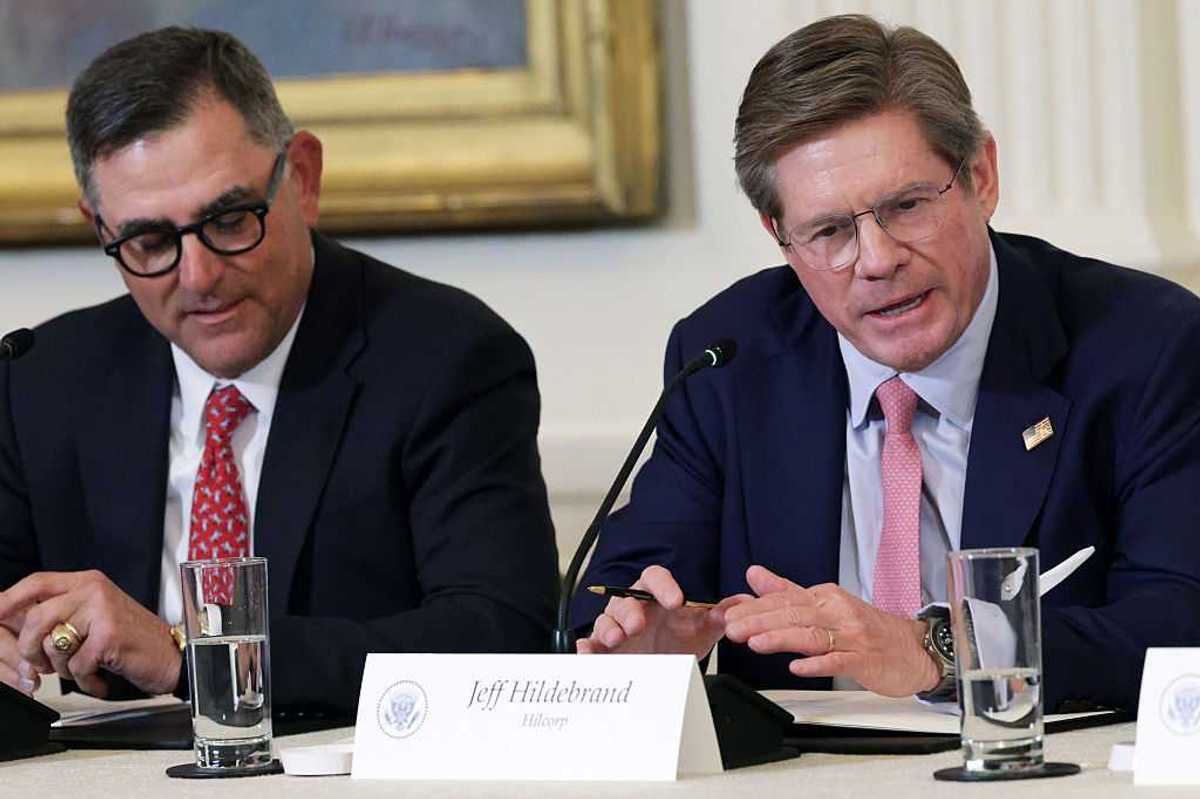
If you feel like it's hard to find venture capitalists in Houston, you wouldn't be wrong, according to this Houston investor. Photo via Getty Images

As a venture capitalist and former startup founder living in Houston, I get asked a lot about the best way to find and connect with a venture capitalist in Houston. My usual advice is to start with a list, and reach out to everyone on that list. But no one has a comprehensive list. In fact, VCs are such a quiet bunch that I’ve yet to meet someone who personally knows everyone on this proverbial list.

So, I got together with a couple of VC friends of mine, and we put together our own Houston venture capitalist list.

There are, by our count, 11 active venture capital funds headquartered in Houston of any size and type, and outside of corporate venture capital and angel investors, there are 30 total venture capitalists running funds.

Houston has always been quite thin on the VC fund front. I’ve jokingly introduced myself for a while as “one of the 13 venture capitalists in Houston.”

Let’s put this scale in some brutal perspective. With 7.2 million people in the Greater Houston Metro Area, the odds of finding a partner level active venture capitalist in Houston is about 1 in 240,000, if you take a most expanded definition of venture capitalist that might come down to 1 in 100,000. We’re the fifth largest metropolitan area in the country with a tremendous economic engine; there is a ton of capital in Houston, but it’s residing in things like institutional fixed income and equities, real estate, wealth management, corporate, private equity, family office, energy and infrastructure Basically, mostly everywhere but in venture capital funds for tech startups.

By comparison, there are almost as many Fortune 500 CEOs in Houston — 24, by our count — as venture capitalists and fewer venture capitalists than Fortune 1000 CEOs, of which there are 43. That means running into a VC in the checkout line at HEB is about as rare as running into the CEO of CenterPoint, ConocoPhillips, or Academy. In fact, as there are 115 cities in the Greater Houston area, you are three times more likely to be a mayor in Greater Houston Area than a partner at an investor at a VC firm, and more likely to be a college or university president. While we’re at it, you’re 400 times more likely to be a lawyer, 250 times more likely to be a CPA, and over 650 times more likely to be a medical doctor.

Our 30 venture capitalists in the Greater Houston Area are spread across 20 firms and all major venture sectors and stages. Venture capitalist is defined for this list as a full time managing director or partner-level investment professional actively running a venture capital fund with limited partners, currently investing in new venture capital deals from their fund from seed to growth stage, and residing in the Greater Houston Metro area.

To get to 31 we added in a couple of people running venture set asides for PE funds, and a number who work from Houston for funds with no office here. We excluded CVCs, as the decision making is more corporate than individual and rarely includes the committed fund and carried interest structure that defines venture capital, and excluded professionals at angel networks, accelerators, and seed funds that provide investment, but don’t manage conventional venture capital funds, as well as PE funds that do the occasional venture deal. We might be able to triple the number if we include venture capitalists at any professional level, and add in those professionals at PE and angel and seed funds, and corporate venture capital teams who are actively investing. But we’ll get to those other sources of funding in the next list.

The 11 venture capital funds headquartered in Houston are: Mercury, Energy Transition Ventures (my fund), Montrose Lane (formerly called Cottonwood), Texas Medical Center Venture Fund, Artemis, New Climate Ventures, Fitz Gate Ventures, Curate Capital, Knightsgate Ventures, Amplo Ventures,and First Bight Ventures.

Another half a dozen firms have a partner level venture capital investor here, but are headquartered elsewhere: Energy Innovation Capital, Decarbonization Partners, 1984 Ventures, Altitude Ventures, Ascension Ventures, Moneta Ventures, and MKB & Co. Two others, CSL Ventures and SCF Partners, are local private equity funds with a venture capital partner in Houston and a dedicated allocation from a PE fund.

Culling these for partner or managing director level currently in Houston, in alphabetical order by first name, LinkedIn profile and all.

We may have missed a couple of VCs hiding in plain sight, as venture capital is a pretty dynamic business.

VCs are just rare. And yes, perhaps more rare in Houston than in California. Something less than 1 in 100 VCs in the country live in Houston. Across the US there are somewhere around 1,000 to 2,000 active venture capital firms, and maybe another 1,000 to 2,000 active US based CVCs — so, plus or minus maybe at most 4,000 to 5,000 currently active partner level venture capitalists in the country excluding CVC professionals (active VCs and VC funds are really hard to count).

Perhaps in the most stunning statistic, the 7,386 elected state legislators in the US today outnumber the total number of American venture capitalists. Luckily for startup founders, the venture capitalists are more likely to return your phone call.

------

Neal Dikeman is a venture capitalist and seven-time startup co-founder investing out of Energy Transition Ventures. He’s currently hosting the Venture Capital for First Time Founders Series at the Ion, where ETV is headquartered.

Ad Placement 300x100
Ad Placement 300x600

CultureMap Emails are Awesome

Houston cleantech, space startups named to World Economic Forum cohort

top honor

Two Houston-based startups have been selected to join the World Economic Forum's Technology Pioneers community.

The two-year program aims to help mission-driven, early-stage start-ups scale their innovations through multi-stakeholder initiatives, co-creating partnerships and other gatherings for community members. One-hundred startups are selected each year from around the globe, this year hailing from 23 countries and working in AI, energy, space, biotech markets and more.

Cleantech startup Vaulted Deep was one of 11 energy and climate companies to be named to the cohort. Julia Reichelstein and Omar Abou-Sayed founded the company in 2023. Its technology injects excess organic waste underground to remove carbon dioxide from the atmosphere.

Last year, Vaulted Deep inked a 12-year deal with Microsoft to remove up to 4.9 million metric tons of carbon dioxide from the environment.

The startup has earned several accolades in recent years, including a No. 3 spot on Fast Company’s list of the World’s Most Innovative Companies of 2026. It was also recently named to market intelligence and advisory firm Cleantech Group's annual Global Cleantech 100 list for a second year in a row.

"Waste management is one of the world's great invisible infrastructure systems ... The need for new infrastructure is growing as disposal challenges become more complex and regulations evolve. Vaulted is building the first new disposal pathway for organic waste in decades by putting it deep underground, permanently," the company shared in a LinkedIn post. "This year, we're joining the World Economic Forum's 2026 Tech Pioneers alongside innovators working on the many interconnected challenges shaping our future."

Houston-based Venus Aerospace was also selected to join the cohort, along with six other spacetech companies. The company was founded in 2020 by Sassie and Andrew Duggleby.

The startup specializes in next-generation rocket engine propulsion as a cleaner alternative to traditional combustion engines. The company's rotating detonation rocket engine (RDRE) burns fuel more efficiently and completed a successful high-thrust test flight last year. Venus says it’s the only company in the world that makes a flight-proven, high-thrust RDRE with a “clear path to scaled production.”

"Frontier technologies matter most when they expand what people, industries, and nations can do," Sassie Duggleby, co-founder and CEO of Venus, said in a news release. "For Venus, RDRE does not just represent a more efficient engine. It is a foundation for faster movement, more capable space systems, and new forms of connectivity across the planet. Being named a Technology Pioneer validates the potential of this technology to help shape a future where distance is less limiting."

---

This article originally appeared on our sister site, EnergyCapitalHTX.com.

Houston Methodist receives record $110M gift, names future tower

historic gift

Houston Methodist has received the largest gift in the health system's history to establish new funds for neurological, neuroscience, and women’s health research and treatment.

The $110 million gift comes from Houston-based The Brockman Medical Research Foundation, which supports education and research in the science, medicine and healthcare fields. In response, Houston Methodist announced that it will name its forthcoming 26-story hospital facility the Brockman Centennial Tower.

The tower’s entrance will be named the Anna Margaret Bellows Centennial Hall to honor Anna Margaret Bellows, a young camper who died during the Camp Mystic flooding last summer.

“This extraordinary gift accelerates discovery and transforms how care is delivered,” Dr. Marc Boom, president and CEO of Houston Methodist, said in a news release. “We are grateful to The Brockman Medical Research Foundation for its incredible generosity and vision that will help change the lives of generations of patients. Naming Centennial Tower in recognition of this gift reflects the scale of this commitment and its impact on the future of neuroscience, neurological care and women’s health.”

The gift will be divided into two parts:

  • $100 million will go toward creating an innovation fund within the Houston Methodist Academic Institute and the Houston Methodist Neurological Institute
  • $10 million will be devoted to Houston Methodist's Department of Obstetrics and Gynecology

“This tremendous gift will accelerate translational research that broadens our understanding of neurological and other diseases,” Dr. Jenny Chang, president and CEO of the Houston Methodist Academic Institute, added in the release. “It will allow us to leverage state-of-the-art platforms to detect, diagnose and deliver therapeutics, keeping patient care at the center of our mission.”

The Brockman Centennial Tower is expected to open next year in the Texas Medical Center. Spanning more than 1 million square feet, it will house 400 patient beds, an expanded emergency department, new operating rooms and a rooftop garden. It will be connected to Houston Methodist's flagship Paula and Joseph C. “Rusty” Walter III Tower, which opened in 2018. The Centennial Tower was estimated to cost $1.4 billion when announced in 2022.

In addition to the news of the Brockman gift, Houston Methodist also announced this month that it has launched the Houston Methodist Center for Cell and Gene Therapy and tapped an internationally recognized scientist as its leader.

The new center is focused on discovering and developing innovative and cost-effective therapies for a variety of congenital and acquired diseases, including cancer, HIV and cardiovascular disease.

Dr. Malcolm Brenner has been named as the center's inaugural leader and will assume the role starting in October. He will work alongside scientists and support staff from Baylor College of Medicine and Texas Children's Hospital.

Brenner is a professor of pediatrics, medicine, molecular and human genetics and translational biology at Baylor College of Medicine. He is known for making early advances in using bone marrow transplantation as a form of cell therapy and in engineered immune-cell treatments for cancer and infections, according to a release from Houston Methodist.

“Malcolm Brenner is a pioneer in the field of cell and gene therapy and is uniquely qualified to lead Houston Methodist’s research efforts in this field,” Chang added. “His vision and leadership will play a pivotal role in advancing our work in this space.”

Report: Houston reclaims top 10 ranking among America's best cities

Houston has made a triumphant return to America's 10 best cities for 2026, certifying the city is a cornerstone of the country's growth and economic prosperity.

Houston ranks No. 9 nationwide in the annual "America's Best Cities" report from Canada-based real estate and tourism marketing firm Resonance Consultancy. Each year, the report ranks the relative qualities of livability, cultural "lovability," and economic prosperity in 393 American cities with metropolitan populations of 500,000 or more.

Dallas surpassed H-Town as the No. 8 best city in America, and the Lone Star State boasts a strong presence among the top 25. Austin and San Antonio, respectively, were named the 11th and 24th best American cities this year.

Previously, Houston was dubbed the 13th best American city in 2025, down from its No. 10 ranking in the 2024 report.

Rather than profiling each individual city like in past reports, the 2026 edition focuses on regional and state prosperity. Texas' economic dominance is second only to Florida's, and the state's growth is solidified by the Dallas-Houston-Austin "triangle," where each metro has its own distinct economic identity, but when combined "form one of the most formidable regional economies in the world."

"In our 2026 survey, Dallas ranks third nationally as the place Americans believe offers the best job opportunities, Austin fifth, and Houston seventh," the report's author wrote. "That concentration of perceived economic opportunity in a single state is unmatched, and the GDP data confirms it isn’t just perception."

After being named one of the best places to start a business or a career earlier in 2026, Houston has continued to punch above its weight with its success in tourism, education, and housing growth.

Overall, the report found a correlation between a city's population growth and its latest ranking, with bigger cities appearing higher up on the list. The top three best American cities — New York, Los Angeles, and Chicago — are coincidentally the three largest metros, while Dallas and Houston are the fourth and fifth largest but appear eighth and ninth on the list.

"Scale compounds at the large city level — more people generate more economic activity, more cultural infrastructure, more employer presence, which attracts more people," the report said.

The top 10 best cities in America for 2026 are:

  • No. 1 – New York
  • No. 2 – Los Angeles
  • No. 3 – Chicago
  • No. 4 – Miami
  • No. 5 – San Francisco
  • No. 6 – Seattle
  • No. 7 – Las Vegas
  • No. 8 – Dallas
  • No. 9 – Houston
  • No. 10 – Boston