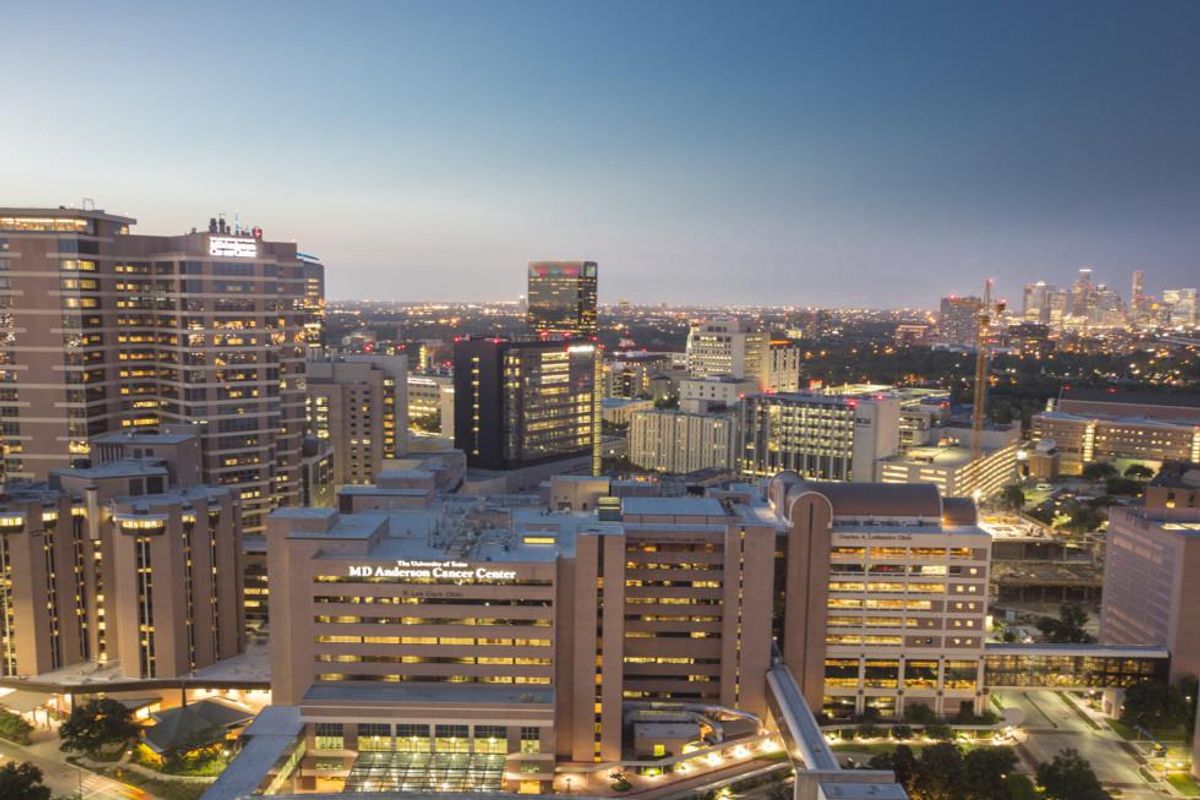
Houston's top startups by valuation range from e-commerce startups to a geothermal pioneer. Photo via Getty Images

Houston’s 10 most valuable startups revealed in new report

by the numbers

The Greater Houston Partnership has released its list of the 10 most valuable startups that are fueling the city’s growth and entrepreneurial energy, including industry giants like Axiom Space and Fervo Energy.

Currently, Houston hosts more than 1,300 startups in industries such as energy, life sciences, manufacturing and aerospace, according to the GHP. The list ranks its top 10 startups by valuation based on the company’s last private funding round, reflected in Pitchbook data, as of Oct. 20 of this year.

The top 10 list includes:

10. NXTClean Fuels

Valuation: $530 million

NXTClean Fuels builds biofuel refineries that produce renewable fuel by using feedstocks like cooking oil and recycled organic materials.

9. Homebase

Valuation: $660 million

HR tech company Homebase provides employee management software that helps manage and optimize timesheets, payroll and more, with over over 100,000 small businesses and 2 million hourly workers using its product.

8. Zolve

Valuation: $800 million

Zolve is a banking platform that provides customers with access to financial products that aim to be accessible, flexible, and affordable than other financial platforms.

7. Stramsen Biotech

Valuation: $807 million

Stramsen Biotech develops plant-based drug therapies that target both infectious and noninfectious diseases, which include cancer, diabetes, HIV, kidney disease and neurological issues.

6. Octagos

Valuation: $843 million

Healthtech company Octagos has developed a remote cardiac monitoring software driven by AI that helps consolidate patient data in real-time, assisting healthcare professionals in providing quicker, easier and more accurate care.

5. Fervo Energy

Valuation: $1.4 billion

Pioneering geothermal company Fervo Energy combines horizontal drilling and fiber-optic sensing to produce electricity. The company is developing its flagship Cape Station geothermal power project in Utah. The first phase of the project will supply 100 megawatts of power beginning in 2026

4.Cart.com

Valuation: $1.7 billion

Cart.com is an e-commerce giant and logistics solutions provider that was founded in 2020 and obtained unicorn status within just three years.

3. Axiom Space

Valuation: $2.1 billion

Axiom Space is one of the anchor tenants at the Houston Spaceport, and has completed four missions of sending commercial astronauts to the ISS since 2022. In 2027, the company expects to see the first section of its private space station, Axiom Station, launched into low-earth orbit.

2. Solugen

Valuation: $2.175 billion

Solugen replaces petroleum-based products with plant-derived substitutes through its Bioforge manufacturing platform.

1. HighRadius

Valuation: $3.2 billion

HighRadius uses advanced technology to automate and manage accounts receivable processes for businesses worldwide.

The GHP also released its State of Houston’s Tech and Innovation Landscape, which mapped Houston’s digital and innovation sectors. Read the full report here.

Ad Placement 300x100
Ad Placement 300x600

CultureMap Emails are Awesome

Luxury transportation startup connects Houston with Austin and San Antonio

On The Road Again

Houston business and leisure travelers have a luxe new way to hop between Texas cities. Transportation startup Shutto has launched luxury van service connecting San Antonio, Austin, and Houston, offering travelers a comfortable alternative to flying or long-haul rideshare.

Bookings are now available Monday through Saturday with departure times in the morning and evening. One-way fares range from $47-$87, putting Shutto in a similar lane to Dallas-based Vonlane, which also offers routes from Houston to Austin and San Antonio.

Shutto enters the market at a time when highway congestion is a hotter topic than ever. With high-speed rail still years in the future, its model aims to provide fast, predictable service at commuter prices.

The startup touts an on-time departure guarantee and a relaxed, intimate ride. Only 12 passengers fit inside each Mercedes Sprinter van, equipped with Wi-Fi and leather seating. And each route includes a pit stop at roadside favorite Buc-ee's.

In announcing the launch, founder and CEO Alberto Salcedo called the company a new category in Texas mobility.

“We are bringing true disruptive mobility to Texas: faster and more convenient than flying (no security lines, no delays), more comfortable and exclusive than the bus or train, and up to 70 percent cheaper than private transfers or Uber Black,” Salcedo said in a release.

“Whether you’re commuting for business, visiting family, exploring Texas wineries, or doing a taco tour in San Antonio, Shutto makes traveling between these cities as easy and affordable as riding inside the city."

Beyond the scheduled routes, Shutto offers private, customizable trips anywhere in the country, a service it expects will appeal to corporate retreat planners, party planners, and tourists alike.

In Houston, the service picks up and drops off near the Galleria at the Foam Coffee & Kitchen parking lot, 5819 Richmond Ave.. In San Antonio, it is located at La Panadería Bakery’s parking lot at 8305 Broadway. In Austin, the location is the Pershing East Café parking lot at 2501 E. Fifth St.

---

This article originally appeared on CultureMap.com.

Houston-area lab grows with focus on mobile diagnostics and predictive medicine

mobile medicine

When it comes to healthcare, access can be a matter of life and death. And for patients in skilled nursing facilities, assisted living or even their own homes, the ability to get timely diagnostic testing is not just a convenience, it’s a necessity.

That’s the problem Principle Health Systems (PHS) set out to solve.

Founded in 2016 in Clear Lake, Texas, PHS began as a conventional laboratory but quickly pivoted to mobile diagnostics, offering everything from core blood work and genetic testing to advanced imaging like ultrasounds, echocardiograms, and X-rays.

“We were approached by a group in a local skilled nursing facility to provide services, and we determined pretty quickly there was a massive need in this area,” says James Dieter, founder, chairman and CEO of PHS. “Turnaround time is imperative. These facilities have an incredibly sick population, and of course, they lack mobility to get the care that they need.”

What makes PHS unique is not only what they do, but where they do it. While they operate one of the largest labs serving skilled nursing facilities in the state, their mobile teams go wherever patients are, whether that’s a nursing home, a private residence or even a correctional facility.

Diagnostics, Dieter says, are at the heart of medical decision-making.

“Seventy to 80 percent of all medical decisions are made from diagnostic results in lab and imaging,” he says. “The diagnostic drives the doctor’s or the provider’s next move. When we recognized a massive slowdown in lab results, we had to innovate to do it faster.”

Innovation at PHS isn’t just about speed; it’s about accessibility and precision.

Chris Light, COO, explains: “For stat testing, we use bedside point-of-care instruments. Our phlebotomists take those into the facilities, test at the bedside, and get results within minutes, rather than waiting days for results to come back from a core lab.”

Scaling a mobile operation across multiple states isn’t simple, but PHS has expanded into nine states, including Texas, Oklahoma, Kansas, Missouri and Arizona. Their model relies on licensed mobile phlebotomists, X-ray technologists and sonographers, all trained to provide high-level care outside traditional hospital settings.

The financial impact for patients is significant. Instead of ambulance rides and ER visits costing thousands, PHS services often cost just a fraction, sometimes only tens or hundreds of dollars.

“Traditionally, without mobile diagnostics, the patient would be loaded into a transportation vehicle, typically an ambulance, and taken to a hospital,” Dieter says. “Our approach is a fraction of the cost but brings care directly to the patients.”

The company has also embraced predictive and personalized medicine, offering genetic tests that guide medication decisions and laboratory tests that predict cognitive decline from conditions like Alzheimer's and Parkinson’s.

“We actively look for complementary services to improve patient outcomes,” Dieter says. “Precision medicine and predictive testing have been a great value-add for our providers.”

Looking to the future, PHS sees mobile healthcare as part of a larger trend toward home-based care.

“There’s an aging population that still lives at home with caretakers,” Dieter explains. “We go into the home every day, whether it’s an apartment, a standalone home, or assisted living. The goal is to meet patients where they are and reduce the need for hospitalization.”

Light highlighted another layer of innovation: predictive guidance.

“We host a lot of data, and labs and imaging drive most treatment decisions,” Light says. “We’re exploring how to deploy diagnostics immediately based on results, eliminating hours of delay and keeping patients healthier longer.”

Ultimately, innovation at PHS isn’t just about technology; it’s about equity.

“There’s an 11-year life expectancy gap between major metro areas and rural Texas,” Dieter says. “Our innovation has been leveling the field, so everyone has access to high-quality diagnostics and care, regardless of where they live.”

Aegis Aerospace appoints Houston space leader as new president

moving up

Houston-based Aegis Aerospace's current chief strategy officer, Matt Ondler, will take on the additional role of president on Jan. 1. Ondler will succeed Bill Hollister, who is retiring.

“Matt's vision, experience, and understanding of our evolving markets position us to build on our foundation and pursue new frontiers,” Stephanie Murphy, CEO of Aegis Aerospace, said in a news release.

Hollister guided Aegis Aerospace through expansion and innovation in his three years as president, and will continue to serve in the role of chief technology officer (CTO) for six months and focus on the company's technical and intellectual property frameworks.

"Bill has played an instrumental role in shaping the success and growth of our company, and his contributions leave an indelible mark on both our culture and our achievements," Murphy said in a news release.

Ondler has a background in space hardware development and strategic leadership in government and commercial sectors. Ondler founded subsea robots and software company Houston Mechatronics, Inc., now known as Nauticus Robotics, and also served as president, CTO and CSO during a five-year tenure at Axiom Space. He held various roles in his 25 years at NASA and was also named to the Texas Aerospace Research and Space Economy Consortium Executive Committee last year.

"I am confident that with Matt at the helm as president and Bill supporting us as CTO, we will continue to build on our strong foundation and further elevate our impact in the space industry," Murphy said in a news release. "Matt's vision, experience, and understanding of our evolving markets position us to build on our foundation and pursue new frontiers."