Baylor College of Medicine has named Dr. Jakub Tolar as its new president, CEO and executive dean. Photo courtesy of Mendel Lectures.

Dr. Jakub Tolar, dean of the University of Minnesota Medical School, is taking over as president, CEO and executive dean of Houston’s Baylor College of Medicine on July 1.

Tolar—who’s also vice president for clinical affairs at the University of Minnesota and a university professor—will succeed Dr. Paul Klotman as head of BCM. Klotman is retiring June 30 after leading Texas’ top-ranked medical school since 2010.

In tandem with medical facilities such as Baylor St. Luke’s Medical Center and Texas Children’s Hospital, Baylor trains nearly half of the doctors who work at Texas Medical Center. In addition, Baylor is home to the Dan L Duncan Comprehensive Cancer Center and the Texas Heart Institute.

The hunt for a new leader at Baylor yielded 179 candidates. The medical school’s search firm interviewed 44 candidates, and the pool was narrowed to 10 contenders who were interviewed by the Board of Trustees’ search committee. The full board then interviewed the four finalists, including Tolar.

Greg Brenneman, chair of Baylor’s board and the search committee, says Tolar is “highly accomplished” in the core elements of the medical school’s mission: research, patient care, education and community service.

“Baylor is phenomenal. Baylor is a superpower in academic medicine,” Tolar, a native of the Czech Republic, says in a YouTube video filmed at the medical school. “And everything comes together here because science saves lives. That is the superpower.”

Tolar’s medical specialties include pediatric blood and bone marrow transplants. His research, which he’ll continue at Baylor, focuses on developing cellular therapies for rare genetic disorders. In the research arena, he’s known for his care of patients with recessive dystrophic epidermolysis bullosa, a severe genetic skin disorder.

In a news release, Tolar praises Baylor’s “achievements and foundation,” as well as the school’s potential to advance medicine and health care in “new and impactful ways.”

The Baylor College of Medicine employs more than 9,300 full-time faculty and staff. For the 2025-26 academic year, nearly 1,800 students are enrolled in the School of Medicine, Graduate School of Biomedical Sciences and School of Health Professions. Its M.D. program operates campuses in Houston and Temple.

In the fiscal year that ended June 30, 2024, Baylor recorded $2.72 billion in operating revenue and $2.76 billion in operating expenses.

The college was founded in 1900 in Dallas and relocated to Houston in 1943. It was affiliated with Baylor University in Waco from 1903 to 1969.


Ad Placement 300x100
Ad Placement 300x600

CultureMap Emails are Awesome

Houston biotech co. raises $11M to advance ALS drug development

drug money

Houston-based clinical-stage biotechnology company Coya Therapeutics (NASDAQ: COYA) has raised $11.1 million in a private investment round.

India-based pharmaceuticals company Dr. Reddy’s Laboratories Inc. led the round with a $10 million investment, according to a news release. New York-based investment firm Greenlight Capital, Coya’s largest institutional shareholder, contributed $1.1 million.

The funding was raised through a definitive securities purchase agreement for the purchase and sale of more than 2.5 million shares of Coya's common stock in a private placement at $4.40 per share.

Coya reports that it plans to use the proceeds to scale up manufacturing of low-dose interleukin-2 (IL-2), which is a component of its COYA 302 and will support the commercial readiness of the drug. COYA 302 enhances anti-inflammatory T cell function and suppresses harmful immune activity for treatment of Amyotrophic Lateral Sclerosis (ALS), Frontotemporal Dementia (FTD), Parkinson’s disease and Alzheimer’s disease.

The company received FDA acceptance for its investigational new drug application for COYA 302 for treating ALS and FTD this summer. Its ALSTARS Phase 2 clinical trial for ALS treatment launched this fall in the U.S. and Canada and has begun enrolling and dosing patients. Coya CEO Arun Swaminathan said in a letter to investors that the company also plans to advance its clinical programs for the drug for FTD therapy in 2026.

Coya was founded in 2021. The company merged with Nicoya Health Inc. in 2020 and raised $10 million in its series A the same year. It closed its IPO in January 2023 for more than $15 million. Its therapeutics uses innovative work from Houston Methodist's Dr. Stanley H. Appel.

New accelerator for AI startups to launch at Houston's Ion this spring

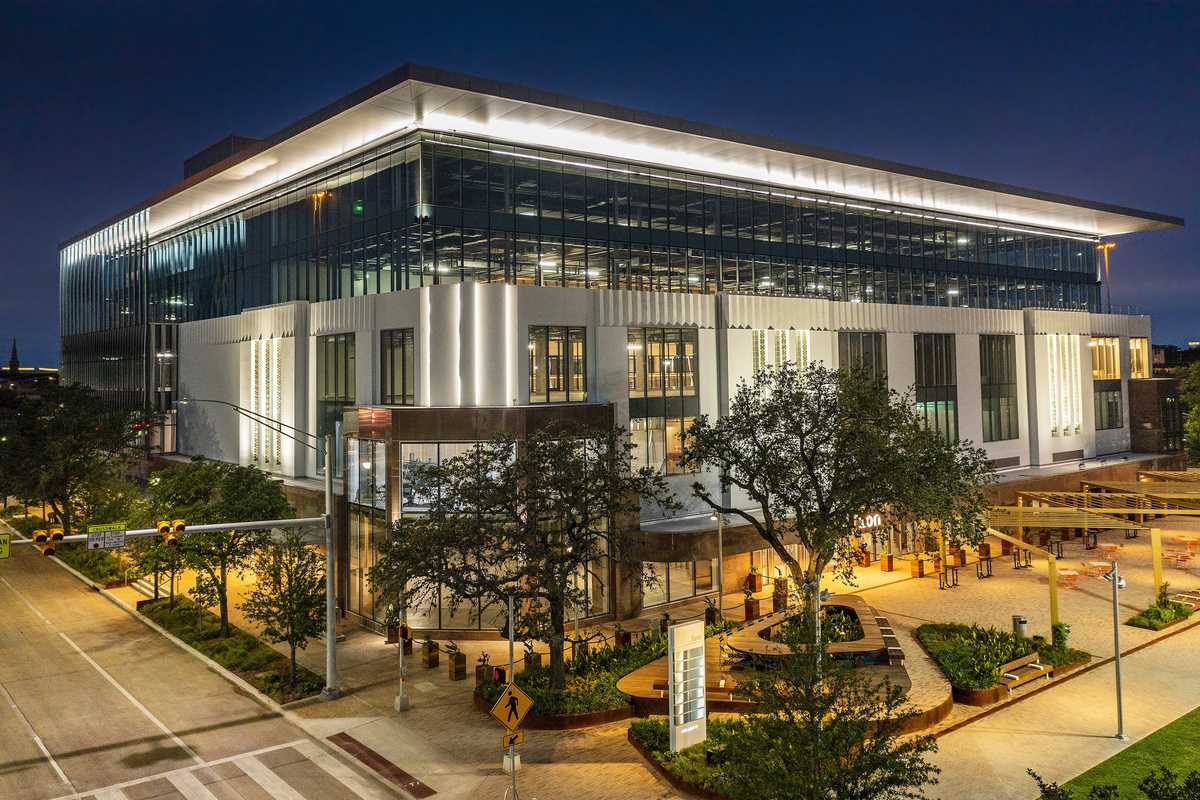
The Collectiv Foundation and Rice University have established a sports, health and wellness startup accelerator at the Ion District’s Collectiv, a sports-focused venture capital platform.

The AI Native Dual-Use Sports, Health & Wellness Accelerator, scheduled to formally launch in March, will back early-stage startups developing AI for the sports, health and wellness markets. Accelerator participants will gain access to a host of opportunities with:

  • Mentors
  • Advisers
  • Pro sports teams and leagues
  • University athletics programs
  • Health care systems
  • Corporate partners
  • VC firms
  • Pilot projects
  • University-based entrepreneurship and business initiatives

Accelerator participants will focus on sports tech verticals inlcuding performance and health, fan experience and media platforms, data and analytics, and infrastructure.

“Houston is quickly becoming one of the most important innovation hubs at the intersection of sports, health, and AI,” Ashley DeWalt, co-founder and managing partner of The Collectiv and founder of The Collectiv Foundation, said in a news release.

“By launching this platform with Rice University in the Ion District,” he added, “we are building a category-defining acceleration engine that gives founders access to world-class research, global sports properties, hospital systems, and venture capital. This is about turning sports-validated technology into globally scalable companies at a moment when the world’s attention is converging on Houston ahead of the 2026 World Cup.”

The Collectiv accelerator will draw on expertise from organizations such as the Rice-Houston Methodist Center for Human Performance, Rice Brain Institute, Rice Gateway Project and the Texas Medical Center.

“The combination of Rice University’s research leadership, Houston’s unmatched health ecosystem, and The Collectiv’s operator-driven investment platform creates a powerful acceleration engine,” Blair Garrou, co-founder and managing partner of the Mercury Fund VC firm and a senior adviser for The Collectiv, added in the release.

Additional details on programming, partners and application timelines are expected to be announced in the coming weeks.

4 Houston-area schools excel with best online degree programs in U.S.

Top of the Class

Four Houston-area universities have earned well-deserved recognition in U.S. News & World Report's just-released rankings of the Best Online Programs for 2026.

The annual rankings offer insight into the best American universities for students seeking a flexible and affordable way to attain a higher education. In the 2026 edition, U.S. News analyzed nearly 1,850 online programs for bachelor's degrees and seven master's degree disciplines: MBA, business (non-MBA), criminal justice, education, engineering, information technology, and nursing.

Many of these local schools are also high achievers in U.S. News' separate rankings of the best grad schools.

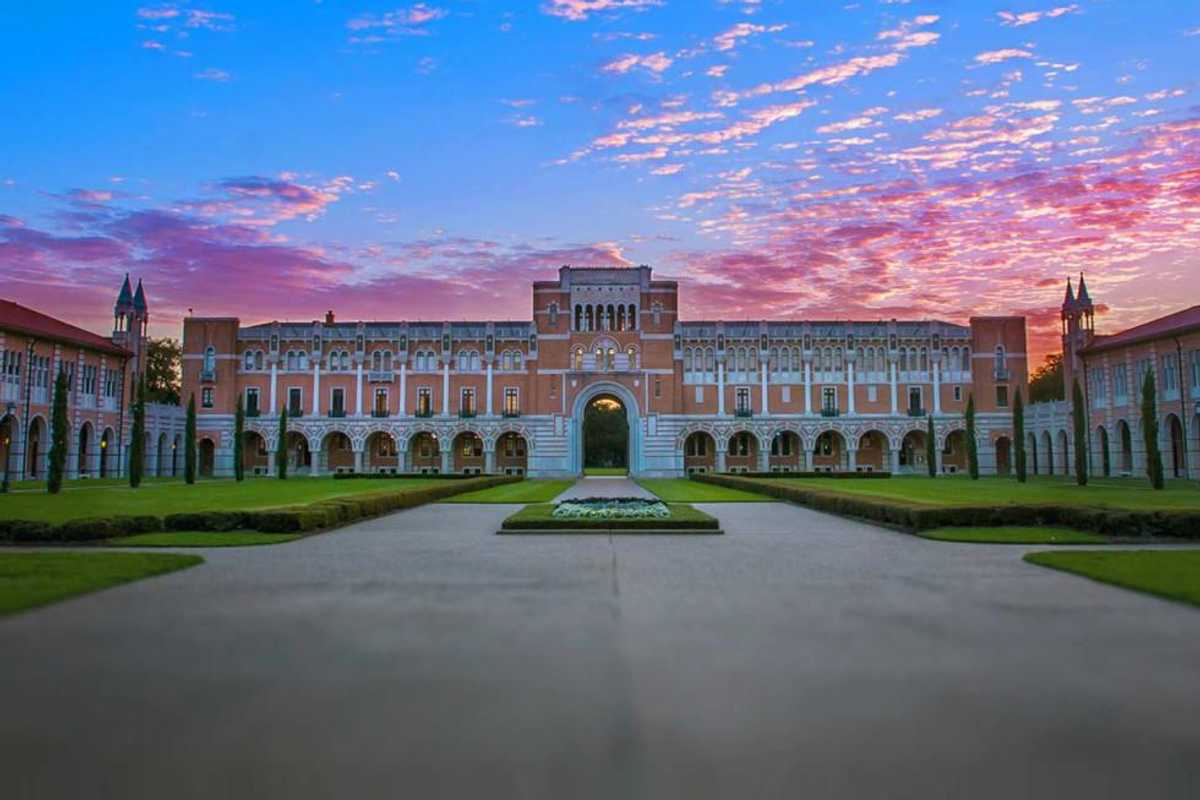
Rice University tied with Texas A&M University in College Station for the No. 3 best online master's in information technology program in the U.S., and its online MBA program ranked No. 21 nationally.

The online master's in nursing program at The University of Texas Medical Branch in Galveston was the highest performing master's nursing degree in Texas, and it ranked No. 19 nationally.

Three different programs at The University of Houston were ranked among the top 100 nationwide:
  • No. 18 – Best online master's in education
  • No. 59 – Best online master's in business (non-MBA)
  • No. 89 – Best online bachelor's program
The University of Houston's Clear Lake campus ranked No. 65 nationally for its online master's in education program.

"Online education continues to be a vital path for professionals, parents, and service members seeking to advance their careers and broaden their knowledge with necessary flexibility," said U.S. News education managing editor LaMont Jones in a press release. "The 2026 Best Online Programs rankings are an essential tool for prospective students, providing rigorous, independent analysis to help them choose a high-quality program that aligns with their personal and professional goals."

A little farther outside Houston, two more universities – Sam Houston State University in Huntsville and Texas A&M University in College Station – stood out for their online degree programs.

Sam Houston State University

  • No. 5 – Best online master's in criminal justice
  • No. 30 – Best online master's in information technology
  • No. 36 – Best online master's in education
  • No. 77 – Best online bachelor's program
  • No. 96 – Best online master's in business (non-MBA)
Texas A&M University
  • No. 3 – Best online master's in information technology (tied with Rice)
  • No. 3 – Best online master's in business (non-MBA)
  • No. 8 – Best online master's in education
  • No. 9 – Best online master's in engineering
  • No. 11 – Best online bachelor's program
---

This article originally appeared on CultureMap.com.