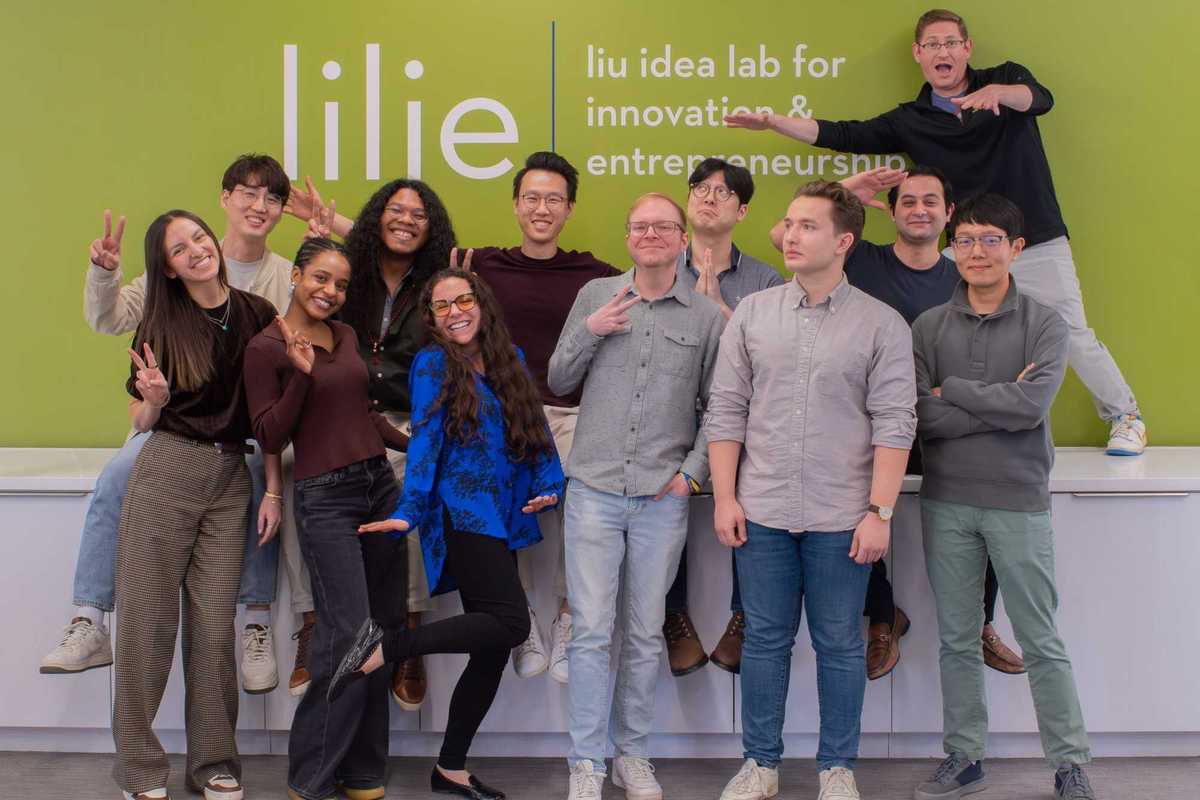
Twelve Korean companies are part of the TMC Innovation Factory's new residency program. Photo courtesy TMC

The powerful partnership between Texas Medical Center (TMC) innovation and the world of Korean biotech advancement is already growing in scope. Just six months after the new TMC Republic of Korea BioBridge was first announced, 12 new companies from the Republic of Korea will establish on-site presences in Houston to further collaboration between the two nations and medical industries.

The expansion comes from a new agreement between TMC and the Korea Health Industry Development Institute (KHIDI). William McKeon, president and CEO of Texas Medical Center, applauded the move and predicted it would benefit both Houston and Korea immensely.

“Korea has established itself as a global leader in biohealth innovation, with a growing pipeline of breakthrough technologies across digital health, biotechnology, and medical devices,” McKeon said in the news release. “Through the TMC Korea BioBridge, we are creating a direct connection between Korea’s innovators and the world’s largest medical city. This collaboration between TMC and KHIDI provides companies with a place to establish a presence, build strategic relationships, engage with leading clinicians and researchers, and accelerate the path toward commercialization and patient impact in the United States.”

The companies that will be in residence at the TMC Innovation Factory include Ardens Lifescience, whose new CAROL device is currently in human trials tackling lung cancer by using the airway network as electrodes to perform bronchoscopic ablation; stem cell-based gene therapy firm CELLeBRAIN, currently working on neurological disorders and solid cancers; and Wellysis, the developer of the S-Patch wearable cardiac monitoring device.

Additional companies include:

  • Antigravity
  • ARPI
  • CTCELLS
  • elecell
  • HUVER Inc.
  • Hutom
  • ORGANOIDSCIENCES
  • YOUTH BIO GLOBAL
  • Seoul Medical Informatics Intelligence Lab Inc.

“This collaboration establishes a strong foundation for connecting Korea’s biohealth innovation ecosystem with world-class clinical and innovation resources in the United States,” Younghun Jeong, executive director of the KHIDI, added in the news release. “Through partnerships with Texas Medical Center and the Korean-American Medical Association Texas, we look forward to fostering meaningful collaboration among innovators, clinicians, and industry leaders while creating new opportunities for clinical validation, commercialization, and global growth. KHIDI remains committed to expanding global partnerships that support biohealth innovation, clinical collaboration, commercialization, and international growth.”

This is the seventh international strategic partnership for the TMC. It launched its first BioBridge with the Health Informatics Society of Australia in 2016. It launched its TMC Japan BioBridge, focused on advancing cancer treatments, last year. It also has BioBridge partnerships with the Netherlands, Ireland, Denmark and the United Kingdom.

The Texas Medical Center and KBIOHealth have launched the TMC Republic of Korea BioBridge. Photo via LinkedIn.

TMC launches new biotech partnership with Republic of Korea

international collaboration

Houston's Texas Medical Center has launched its new TMC Republic of Korea BioBridge.

The new partnership brings together the TMC with the Osong Medical Innovation Foundation, or KBIOHealth. The Biobridge aims to support the commercialization of Korean biotech and life science startups in the U.S., foster clinical research, and boost collaboration in the public, private and academic sectors.

Through the partnership, TMC will also develop a Global Innovators Launch Pad to foster U.S. market entry for international health care companies. Founders will be selected to participate in the 10-week program at the TMC Innovation Factory in Houston.

“Gene and cell therapies are driving biotech innovation, opening possibilities for treating diseases once thought untreatable," William McKeon, president and CEO of the Texas Medical Center, said in a news release. "Expanding biomanufacturing capacity is essential to delivering the next wave of these therapies, and partnerships with leading innovators will strengthen our efforts in Houston and internationally.”

McKeon officially signed the TMC Korea BioBridge Memorandum of Understanding with Myoung Su Lee, chairman of KBIOHealth, in South Korea in October.

"This collaboration marks a significant milestone for Korea’s biohealth ecosystem, creating a powerful bridge between Osong and Houston," Lee added in the release. "By combining KBIOHealth’s strength in research infrastructure and Korea’s biotech talent with TMC’s global network and accelerator platform, we aim to accelerate innovation and bring transformative solutions to patients worldwide.”

This is the seventh international strategic partnership for the TMC. It launched its first BioBridge with the Health Informatics Society of Australia in 2016. It launched its TMC Japan BioBridge, focused on advancing cancer treatments, last year. It also has BioBridge partnerships with the Netherlands, Ireland, Denmark and the United Kingdom.

Ad Placement 300x100
Ad Placement 300x600

CultureMap Emails are Awesome

Rice, Houston Methodist award $90K for cancer research projects

seed grants

Rice University’s Synthesis X Center, in partnership with the Houston Methodist Neal Cancer Center, announced earlier this month the organizations would award $90,000 in seed grant funding to two projects that could help fight cancer. One would ease the pain of chemotherapy, while the other could change the way the progression of leukemia is tracked.

“We’re excited to be collaborating with the Neal Cancer Center to support collaborative, novel and interdisciplinary proposals to improve cancer care and outcomes,” Han Xiao, Rice professor of chemistry and the director of the SynthX Center, said in a news release. “Together, we can achieve translational excellence.”

The projects

Chemotherapy is one of the most effective cancer treatments, but it can be hard on the body. The human body doesn’t like being injected with radioactive material, especially the skin around the injection point, which can become extremely irritated. For patients in long-term treatment, the skin irritation can be more than just a bother; it can lead to infections that are dangerous to a compromised immune system.

Angel A Marti, a professor of chemistry at Rice University, and Biana Godin, an associate professor of nanoscience at Houston Methodist Research Institute, are experimenting with metal nanoclusters as a way to block radiation at the injection site. The nanocluster could be applied in a cream or a gel on the skin, serving as a type of shield against the harsh radioactive material.

Meanwhile, Yuan Ma, an assistant professor of chemistry at Rice, and Shu-Hsia Chen, a professor of immunology at Houston Methodist Research Institute, are working with m6A. Discovered in the 1970s, m6A is the most prevalent chemical modifier found in mRNA in mammals. It is prevalent in many cancers, including leukemia.

Ma and Chen are working on measuring the amount of m6A in leukemia to see if it can determine the most effective cancer treatments. The team is also experimenting with ways to shut off m6A to see if it makes current leukemia treatments more effective.

Progress from SynthX

SynthX was first launched in April 2024 to turn research from Rice and Houston Methodist into real-world cancer treatments. Within a year, the center had secured $1.5 million in grant money to work on crossing the blood-brain barrier in brain cancer treatments. These latest awards show that SynthX Center continues to bridge the worlds of research and clinical practice.

“This collaboration reflects a shared commitment to team science in cancer research,” Daniela Matei, the director of the Houston Methodist Neal Cancer Center, added in the release. “These are the types of translational and pioneering projects that lead to transformation in patient care.”'

The SynthX Center awarded $90,000 in seed grants to three teams in 2025 and $80,000 to three teams in 2024.

Tesla self-driving mode wasn't to blame in Houston-area crash, report suggests

Tesla news

Federal safety investigators looking into a runaway Tesla that killed a grandmother in her home say the driver had pressed the accelerator to full speed, suggesting the vehicle's self-driving software was not to blame.

The driver had told police that he had the self-driving software turned on, but a report from the National Transportation Safety Board concluded that he had actually overridden that feature when he pushed hard on the pedal. Moments later the Tesla Model 3 raced down a residential street in Katy, Texas, at highway speeds, slammed into a brick home and killed a 76-year-old woman standing in the front room.

The crash last month drew national attention because Tesla CEO Elon Musk is seeking to reassure the public its self-driving feature is safe as he prepares to turn hundreds of thousands of Teslas already on the road into fully automatic vehicles and begin selling two-seated Cybercabs missing steering wheels and pedals.

The crash came two months after officials at a separate federal agency, the National Highway Traffic Safety Administration, announced it was elevating a 2024 investigation of the self-driving feature to new “engineering analysis” level, raising the possibility of a recall of 3.2 million Tesla vehicles.

That NHTSA probe was triggered by crashes where the self-driving feature failed to alert drivers to take control in fog and other poor visibility conditions.

The agency opened an investigation last year into 58 incidents in which Teslas reportedly violated traffic safety laws while using self-driving technology, leading to more than a dozen crashes and fires and nearly two dozen injuries.

Separate from the National Transportation Safety Board, NHTSA is also looking into the Tesla house crash in Texas, one of 46 “special crash” investigations of Tesla's self-driving or driver-assistance technology in the past decade, according to the agency’s records. In more than a dozen of those crashes, at least one person — a driver, passenger or pedestrian — was killed.

Tesla had originally called its driver assistance software Full Self-Driving, or FSD, but auto experts and regulators complained it was misleading because drivers must always keep their eyes on the road and be ready to take over at any time.

The company has since changed the name to Full Self-Driving (Supervised).

Video of the Katy, Texas, accident shows the Tesla traveling at more than 70 mph (112.65 kilometers per hour), jumping a curb then tearing across a lawn before crushing through a brick wall of a home. A woman standing feet away, Martha Avila, was found amid piles of crumbling plaster, split beams and bits of furniture and rushed to a hospital but died.

Sales of Tesla cars still haven't recovered fully from boycotts last year over Musk's political stands, but the stock is rising anyway as he has successfully shifted attention away from the sales figures. He says they matter less now that the company is on the cusp of major technological advances, such as turning Teslas into hands-free vehicles and having its Optimus robots take over for humans for tasks at home and work.

Tesla stock has risen 22% in the past year and is currently trading at 170 times expected annual earnings compared to 20 for the S&P 500.

For its second-quarter financial results, financial analysts surveyed by FactSet expect earnings per share will barely budge — 32 cents versus 33 cents a year earlier — continuing a sixth quarter streak of flat or falling profits.

London AI startup selects Houston for first U.S. office after $20M raise

welcome to houston

London-based AI firm Applied Computing has announced a $20 million Series A round and a new office in Houston.

The new Bayou City office is Applied Computing’s first in the United States and part of its North American expansion. The company is known for its Orbital AI platform, which is tailored for energy operations.

The funding round was led by Houston-based KBR Inc., with participation from San Francisco-based Databricks Ventures. KBR’s investment was first announced in March.

KBR and Applied Computing have also entered into a multi-year agreement to deliver exclusive AI products for the energy sector. KBR already has integrated Orbital into its INSITE 3.0 platform for energy projects, and is also using the product for ammonia production.

Applied Computing’s Orbital platform combines physics-grounded intelligence with models across chemical engineering, time-series forecasting and language, according to the company. The system analyzes sensor readings and can recognize a facility’s equipment constraints and operator activity. The platform can also allow technicians to run simulations of how a change to a facility could affect the rest of its operations.

According to TechCrunch, Applied Computing will use the $20 million to further explore projects and deployments with the energy sector, hire engineering and research positions, and continue to expand internationally, potentially into the Middle East.

The company is also working on deals with a major U.S. stream operator, TechCrunch reports. And Applied Computing shared on LinkedIn that it plans to announce its first partnership with a major European oil company in the coming weeks.

“Yesterday we showed Orbital live in deployments at our demo day at the Energy Institute in London,” Callum Adamson, CEO and co-founder of Applied Computing, posted on LinkedIn on July 16. “Today, we're announcing the capital to scale it globally as well as the launch of our new offices in Houston and Bangalore. In the weeks following, there will be more announcements on our progress, partnerships and deployments.”

The company opened its Bangalore offices in December.