
New findings from a team of Rice University researchers could enhance MRI clarity. Photo via Unsplash.

Researchers at Rice University, in collaboration with Oak Ridge National Laboratory, have developed a new model that could lead to sharper imaging and safer diagnostics using magnetic resonance imaging, or MRI.

In a study recently published in The Journal of Chemical Physics, the team of researchers showed how they used the Fokker-Planck equation to better understand how water molecules respond to contrast agents in a process known as “relaxation.” Previous models only approximated how water molecules relaxed around contrasting agents. However, through this new model, known as the NMR eigenmodes framework, the research team has uncovered the “full physical equations” to explain the process.

“The concept is similar to how a musical chord consists of many notes,” Thiago Pinheiro, the study’s first author, a Rice doctoral graduate in chemical and biomolecular engineering and postdoctoral researcher in the chemical sciences division at Oak Ridge National Laboratory, said in a news release. “Previous models only captured one or two notes, while ours picks up the full harmony.”

According to Rice, the findings could lead to the development and application of new contrast agents for clearer MRIs in medicine and materials science. Beyond MRIs, the NMR relaxation method could also be applied to other areas like battery design and subsurface fluid flow.

“In the present paper, we developed a comprehensive theory to interpret those previous molecular dynamics simulations and experimental findings,” Dilipkumar Asthagiri, a senior computational biomedical scientist in the National Center for Computational Sciences at Oak Ridge National Laboratory, said in the release. ”The theory, however, is general and can be used to understand NMR relaxation in liquids broadly.”

The team has also made its code available as open source to encourage its adoption and further development by the broader scientific community.

“By better modeling the physics of nuclear magnetic resonance relaxation in liquids, we gain a tool that doesn’t just predict but also explains the phenomenon,” Walter Chapman, a professor of chemical and biomolecular engineering at Rice, added in the release. “That is crucial when lives and technologies depend on accurate scientific understanding.”

The study was backed by The Ken Kennedy Institute, Rice Creative Ventures Fund, Robert A. Welch Foundation and Oak Ridge Leadership Computing Facility at Oak Ridge National Laboratory.


Ad Placement 300x100
Ad Placement 300x600

CultureMap Emails are Awesome

Woodlands startup Mavria raises $130M to mass-produce AI data centers

seed funding

The Woodlands-based Mavria, which mass-produces factory-built modular AI data centers, just emerged from stealth mode with $130 million in funding at a $1 billion valuation.

Mavria raised the money in pre-seed and seed rounds led by Paradigm, an investment firm that concentrates on early-stage startups developing “pioneer” technology. Participants in the funding rounds include AMP PBC, Critical Frontier, Dream Ventures and Liquid 2 Ventures, co-founded by former NFL quarterback Joe Montana.

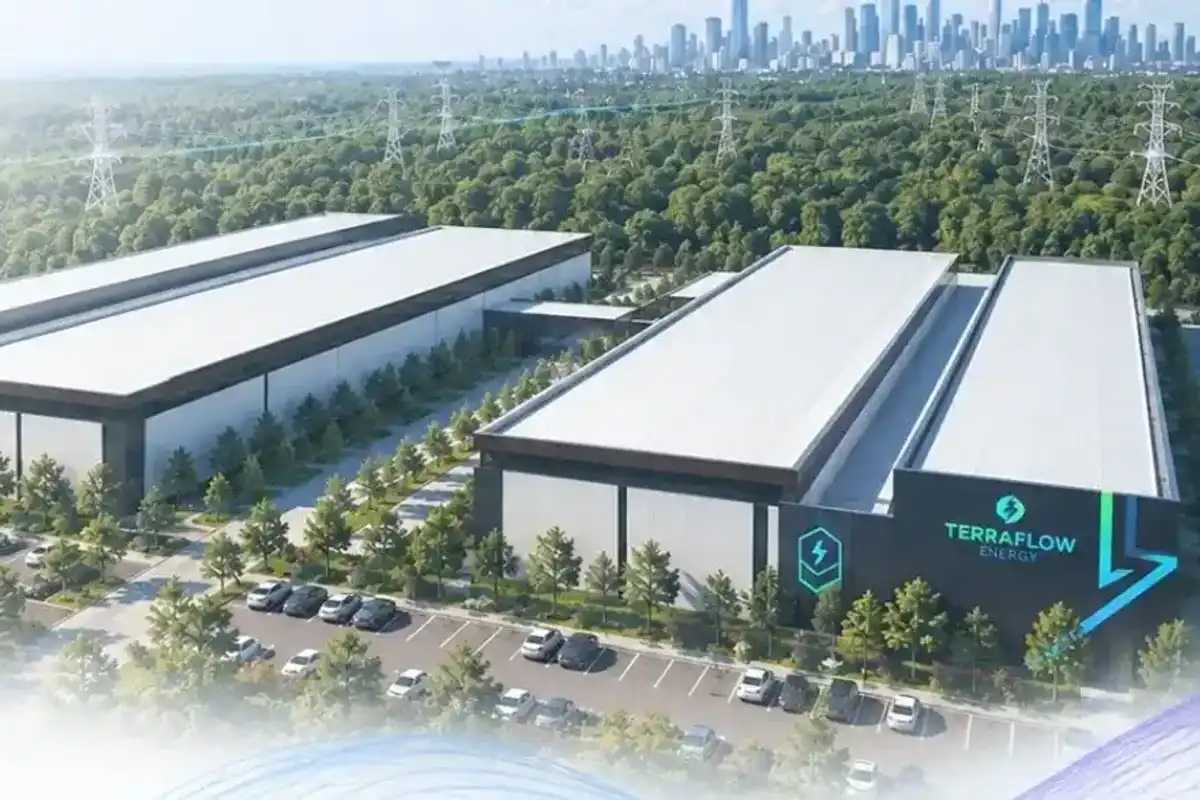
The company’s inaugural product, Terrain, is a prefabricated data center designed for AI labs, cloud computing providers and data center developers. Mavria says its platform avoids ground-up construction, delivering infrastructure more quickly and at a lower cost.

Mavria tells the Wall Street Journal that the first Terrain unit is being built at a Houston-area factory. The 5-megawatt Terrain system features power distribution, direct liquid cooling, controls and server racks.

“America sets the pace at the intelligence frontier. But the race is moving from the lab into the physical world,” Adam Blake, co-founder and CEO of Mavria, wrote in a blog post.

“Intelligence needs data centers. Data centers need power. Power needs factories, equipment, supply chains, and skilled workers, but much of that infrastructure is still built one custom project at a time, on timelines measured in years.”

Blake and Mavria’s two other co-founders, Nick Poradek and Seth Cohen, most recently worked at the U.S. Department of Energy. There, they focused on reforming the nuclear power sector.

From start to finish, it can take roughly three to six years to build a data center at an estimated cost of $10 million to $37 million per megawatt. Based on those figures, a 100-megawatt data center might cost as much as $3.7 billion.

Here are brief bios of Blake, Poradek and Cohen, who co-founded Mavria in May.

Adam Blake

Blake most recently was a senior advisor to U.S. Energy Secretary Chris Wright. He is co-founder and former CEO of Zego, a provider of energy management technology for property managers. Zego spun out from Brightergy, a commercial solar company. Blake is founder and former CEO of Brightergy.

Nick Poradek

Poradek, chief operating officer at Mavria, was also an advisor to the U.S. energy secretary. He is founder and former CEO of Spring-based Edera Energy, co-founder of The Woodlands-based craft-ice brand Clarity Ice, and founder and former CEO of The Woodlands-based Edera Capital. Poradek sold Edera Energy, a manufacturer of oilfield equipment, to Liberty Energy, a fracking company. Wright is Liberty’s founder and former chairman and CEO.

Seth Cohen

Cohen, chief strategy officer and chief legal officer at Mavria, was head of nuclear law and policy at the Department of Energy. He is also a former NASA advisor and a former attorney at Kirkland & Ellis.

“We believe in rapidly deploying infrastructure as a product, rather than custom-building every project,” Blake said. “We’re bringing together engineering, manufacturing, supply chains and capital so that every project makes us better at delivering the next.”

Meet the 40+ finalists for the 2026 Houston Innovation Awards

The Top Startups

Editor's note: We are just days away from unveiling the winners of the 2026 Houston Innovation Awards. Before the big reveal, we've compiled all of the coverage of this year's finalists. Get to know the 40+ finalists for nine awards categories below, then stay tuned to InnovationMap.com, where we'll announce the winners on Wednesday, November 18.

Minority-founded Business Finalists 

Our Minority-founded Businesses category honors innovative Houston startups founded or co-founded by BIPOC or LGBTQ+ representation. Five minority-founded businesses have been named finalists for the 2026 award. The finalists range from an AI edtech startup to a company operating in the floating offshore energy infrastructure sector.

They are: AI Made Fun, Deep Anchor Solutions, HEXASpec, Prana Surgical, and Torres Orbital Mining Inc. Read more.

Female-founded Business Finalists

Houston is home to many standout female founders, making inroads and breakthroughs in every industry. Our Female-founded Business category honors women-led startups that are shaping Houston innovation. Five female-founded businesses have been named finalists for the 2026 award. The finalists range from an AI startup for C-Suite execs to a company developing semi-autonomous crawler robots for corrosion detection.

They are: Adair, ARIX Technologies, Bairitone Health, FlowCellutions, and ParaDocs Health. Read more.

Health Tech Business Finalists

Houston has been driving medical innovation for decades and the local healthcare ecosystem continues to improve how patients are diagnosed, treated and cared for. The Health Tech Business category in our 2026 Houston Innovation Awards honors innovative startups within the health and medical technology sectors. Four forward-thinking businesses have been named finalists for the 2026 award. This year's finalists range from a startup developing miniaturized medical technologies for space to a company using AI to help develop cancer treatment plans.

They are: Bairitone Health, InformAI Inc., Prana Surgical, and Skybound MedTech. Read more.

Deep Tech Business Finalists

Houston has long been at the forefront of innovation, from NASA’s Johnson Space Center to its startup ecosystem using technology to disrupt industries. Our Deep Tech Business category honors innovative startups providing technology solutions based on substantial scientific or engineering challenges, including those in the AI, robotics and space sectors. Five deep tech companies have been named finalists for the 2026 award.

They are: Casimir, FocisAI, Machine Saver Inc., Square Robot, and Venus Aerospace. Read more.

Energy Transition Business Finalists

Houston is home to a growing number of startups reshaping what it means to be called the "Energy Capital of the World." Our Energy Transition Business category honors those innovative startups that are providing solutions within renewables, climatetech, clean energy, alternative materials, circular economy, and more. Five clean energy startups have been named finalists for the 2026 award. The finalists range from a lower-emission steel producer to a diagnostics platform developer working to support batteries used in data centers.

They are: Capwell Services, FlowCellutions, Hertha Metals, Mars Materials, and Solidec. Read more.

Scaleup of the Year Finalists

From IPOs to groundbreakings, some of Houston's most innovative companies reached major milestones this year. Our Scaleup of the Year category honors innovative later-stage startups that have recently reached a significant milestone in company growth. Three scaleups have been named finalists for the 2026 award.

They are: Erock, Hertha Metals, and Venus Aerospace. Read more.

Incubator/Accelerator of the Year Finalists

It takes a village to launch a business. That's where Houston's network of incubators and accelerators can step in, providing the resources, mentorship and community needed to push a fledgling company forward. Our Incubator/Accelerator of the Year category honors local organizations that are championing and fueling the growth of Houston startups. Three incubators and accelerators have been named finalists for the 2026 award. They support startups ranging from hard-tech companies to food and youth concepts.

They are: Activate, Impact Hub Houston, and MarMo Innovation. Read more.

Startup of the Year Finalists

Seven exceptional finalists are in the running for the title of Startup of the Year, which is our people's choice award in the annual Houston Innovation Awards. From innovative platforms benefiting the education, commerce, health, investment and IT sectors to next-gen memory technology and improvements for robotic supply chains, these startups are making an impact in Houston and beyond.

The finalists are: Fluxworks, IronLattice, Lumino, Progress Report, Rosarium Health, TokenRoster, and Thread. Read more.

Mentor of the Year Finalists

Houston’s thriving startup ecosystem is supported by a network of experienced leaders who work behind the scenes, investing their time and knowledge to help the next generation of entrepreneurs succeed. Our Mentor of the Year category honors those who dedicate their time and expertise to guide and support budding entrepreneurs. Six individuals have been named finalists for the 2026 award. They support promising startups in the medical tech, digital health, clean energy, hardware sectors and more.

They are: Al Danto, Rice University; Eric Rubenstein, New Climate Ventures; Jeremy Pitts, Activate; Joe Alapat, Liongard; Kyle Judah, Rice University's Liu Idea Lab for Innovation & Entrepreneurship; Rachel Bickham, Bickham Services Unlimited LLC. Read more.