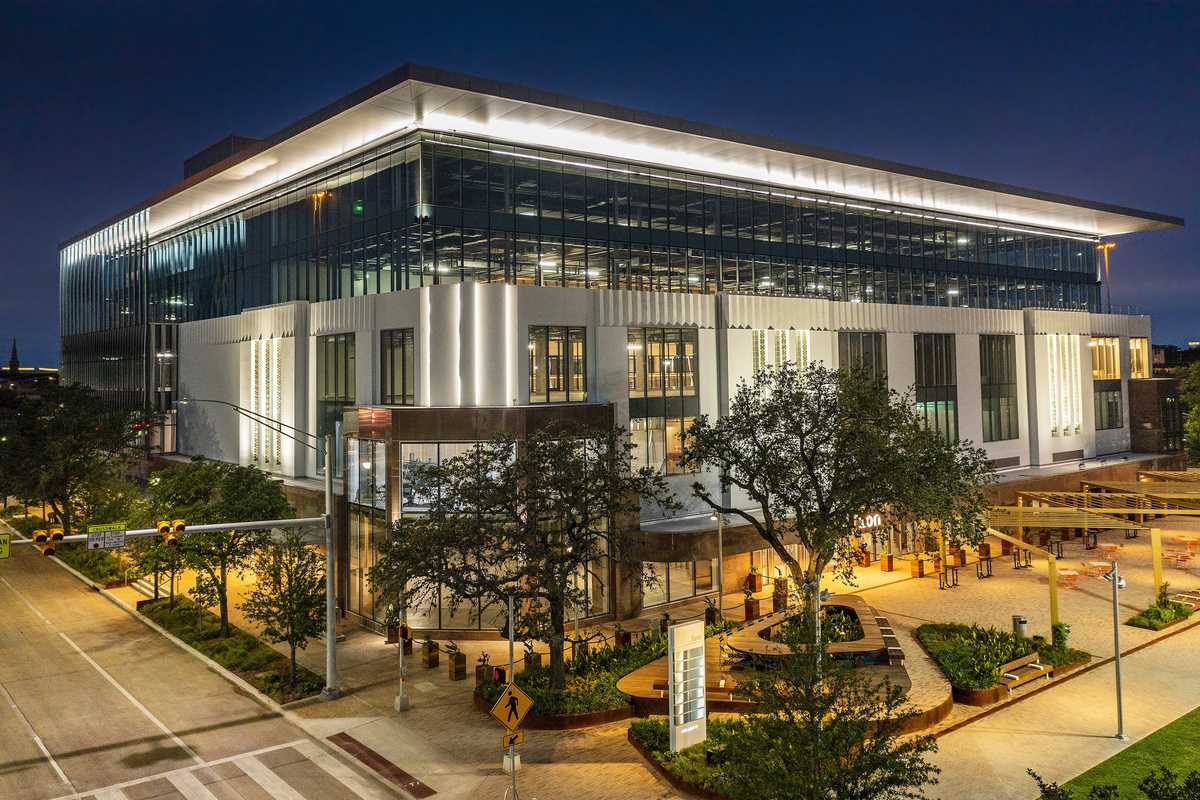
The University of Michigan's Intero Biosystems earned a top-place finish and the largest total investment from the 2025 Rice Business Plan Competition. Photo courtesy Rice University.

Editor's note: As 2026 ramps up, the Houston innovation scene is looking for the latest groups of innovative startups that'll make an impact. A number of accelerators and competitions have opened applications. Read below to see which might be a good fit for you or your venture. And take careful note of the deadlines. Please note: this article may be updated to include additional information and programs.

Did we miss an accelerator or competition accepting applications? Email innoeditor@innovationmap.com for editorial consideration.

2026 HCC Business Plan Competition

Deadline: Jan. 26

Details: HCC’s annual Business Plan Competition (BPC) is an opportunity for proposed, startup and existing entrepreneurs to develop focused plans to start or grow their businesses. Accepted teams will be announced and training will begin in late February and run through early June, with six free, three-hour training sessions. Advising will be provided to each accepted team. Applicants can apply as a team of up to five persons. Finalists will present to to gudges on May 27, 2026. Last year, $26,000 was awarded in seed money to the top five teams. In-kind prizes were also awarded to all graduating teams including free products, services and memberships, with an estimated in-kind value totaling $147,000. Find more information here.

University of Houston Technology Bridge Innov8 Hub (Spring 2026)

Deadline: Jan . 30

Details: UHTB Innov8 Hub’s immersive, 12-week startup acceleration program designed to help early-stage founders launch and scale their technology startups. Selected participants will gain access to expert mentors and advisors, collaborate with a cohort of peers, and compete for cash prizes during our final pitch event. The cohort begins Feb. 16, 2026. The program culminates in Pitch Day, where participants present their ventures to an audience of investors and partners from across the UH innovation ecosystem. Find more information here.

Rice Business Plan Competition 2026

Deadline: Jan. 31

Details: The Rice Business Plan Competition, hosted by the Rice Alliance for Technology and Entrepreneurship, gives collegiate entrepreneurs real-world experience to pitch their startups, enhance their business strategy and learn what it takes to launch a successful company. Forty-two teams will compete for more than $1 million in cash, investments and prizes on April 9-11, 2026. Find more information here.

Rice Veterans Business Battle 2026

Deadline: Jan. 31

Details: The Rice Veterans Business Battle is one of the nation’s largest pitch competitions for veteran-led startups, providing founders with mentorship, exposure to investors and the opportunity to compete for non-dilutive cash prizes. The event has led to more than $10 million of investments since it began in 2015. Teams will compete April 8-9, 2026. Find more information here.

TEX-E Fellows Application 2026-2027

Deadline: Feb. 10

Details: The TEX‑E Fellowship is a hands-on program designed for students interested in energy, climate, and entrepreneurship across Texas. It connects participants with industry mentors, startup founders, investors and academic leaders while providing practical, "real-world" experience in customer discovery, business modeling, and energy-transition innovation. Fellows gain access to workshops, real-world projects, and a statewide network shaping the future of energy and climate solutions. Participants must be a student at PVAMU, UH, UT Austin, Rice University, MIT or Texas A&M. Find more information here.

2026 Energy Venture Day & Pitch Competition

Deadline: Feb. 13

Details: The Rice Alliance, the Houston Energy Transition Initiative (HETI) and TEX-E will present the annual Energy Venture Day and Pitch Competition during CERAWeek on March 24-25, 2026. Energy Venture Day features two days of presentations by energy tech ventures driving efficiency and advancements toward the energy transition. On March 24, the Pitch Preview at the Ion will feature over 50 companies presenting in front of Rice Alliance's robust network of investors and industry partners. On March 25, the Energy Venture Day and Pitch Competition during CERAWeek will showcase 36 ventures at the George R Brown Convention Center. The pitch competition is divided up into the TEX-E university track, in which Texas student-led energy startups compete for $50,000 in cash prizes, and the industry ventures track. The industry track is subdivided into three additional tracks, spanning materials to clean energy. The top three companies from each industry track will be named. The winner of the CERAWeek competition will also have the chance to advance and compete for the $1 million investment prize at the Startup World Cup. Find more information here.

Greentown Go Make 2026

Deadline: March 10

Details: Greentown Go Make 2026 is an open-innovation program with Shell and Technip Energies. The six-month program is advancing industrial decarbonization by accelerating catalytic innovations. Selected startups will gain access to a structured platform to engage leadership from Shell and Technip Energies and explore potential partnership outcomes, including pilots and demonstrations. They’ll also receive networking opportunities, partnership-focused programming, and marketing visibility throughout the program. The cohort will be selected in May. Find more information here.


Ad Placement 300x100
Ad Placement 300x600

CultureMap Emails are Awesome

Houston digital health platform Koda lands strategic investment

money moves

Houston-based advance care planning platform Koda Health has added another investor to the lineup.

The company secured a strategic investment for an undisclosed amount from UPMC Enterprises, the commercialization arm of the University of Pittsburgh Medical Center. The funding is part of Koda's oversubscribed series A funding round that closed in October, according to a release.

"UPMC Enterprises’ investment is a meaningful signal, not just to Koda, but to the broader market," Dr. Desh Mohan, chief medical officer and co-founder of Koda Health, said in the news release. "It validates that health systems are ready to invest in infrastructure that makes advance care planning work the way it should: proactively, at scale, and with the human support that these conversations require. Having UPMC Enterprises as a strategic investor puts us in a unique position to prove what's possible."

Koda has raised $14 million to date, according to a representative from the company. Its series A round was led by Evidenced, with participation from Mudita Venture Partners, Techstars and the Texas Medical Center last year. At the time, the company said the funding would allow it to scale operations and expand engineering, clinical strategy and customer success. The company described the round as a "pivotal moment," as it had secured investments from influential leaders in the healthcare and venture capital space.

Koda Health, which was born out of the TMC's Biodesign Fellowship in 2020, saw major growth last year, as well, and now supports more than 1 million patients nationwide through partnerships with Cigna Healthcare, Privia Health, Guidehealth, Sentara, UPMC and Memorial Hermann Health System.

The company integrated its end-of-life care planning platform with Dallas-based Guidehealth in April 2025 and with Epic Systems in July 2025. It also won the 2025 Houston Innovation Award in the Health Tech Business category. Read more here.

New 'living pharmacy' biotech company launches out of Rice venture studio

fighting cancer

Rice University’s biotech venture studio RBL LLC has launched a new “living pharmacy” company, Duracyte, designed to make cancer treatment easier on patients.

Backed by an up to $45 million Advanced Research Projects Agency for Health (ARPA-H) award, Duracyte aims to commercialize implantable biohybrid pharmacy devices that are designed to produce therapeutic proteins inside the human body around the clock, replacing the need for regular injections and infusions for some cancer patients.

The company’s main platform is its Hybrid Advanced Molecular Manufacturing Regulator (HAMMR), a rechargeable, implantable device that can sense biological signals, monitor tumor environments and adjust therapeutic output in real time. HAMMR has wireless communication capabilities, which allow patients and clinicians to remotely monitor results through an app every five minutes and make changes to treatment plans without a hosptial visit. Additionally, the device can generate its own oxygen supply, which is key for the therapeutic cells’ survival.

“Biologic medicines such as monoclonal antibodies, cytokines and metabolic regulators already account for a significant share of modern therapeutics, but the way we deliver them today often requires frequent injections or infusions that can be demanding for patients and lead to inconsistent drug levels,” Daniel Anderson, MIT professor and co-founder of Duracyte, said in a news release. “Our vision is to enable a continuous, stable therapy by producing these medicines directly inside the body, which could improve treatment consistency, reduce side effects and ultimately transform how biologic therapies are delivered across many diseases.”

Duracyte’s first clinical trial is slated to begin by the end of 2026 and will focus on recurrent ovarian cancer. The Phase I study will build upon existing work on encapsulated cytokine pharmacy technology, and the company hopes that within a few years this treatment can reach clinical application.

The development of Duracyte is supported by ARPA-H's Targeted Hybrid Oncotherapeutic Regulation (THOR) project, which supports a multidisciplinary research consortium co-led by Omid Veiseh, a professor of bioengineering at Rice. The consortium also includes others at Rice, The University of Texas MD Anderson Cancer Center, Stanford University, Carnegie Mellon University, Northwestern University and the University of Houston, plus industry collaborators like Chicago-based CellTrans.

“What we are building is the culmination of years of progress in cell engineering, biomaterials and implantable device technology,” Veiseh added in the release. “By combining these advances with real-time sensing and adaptive drug delivery, we are working with the support of RBL to create a true ‘living pharmacy’ that can deliver continuous, precisely controlled biologic therapies and fundamentally change how these treatments reach patients.”

RBL launched in 2024 and is based out of Houston’s Texas Medical Center Helix Park. Duracyte is the third company launched by RBL, including Sentinel BioTherapeutics, a clinical-stage immunotherapy company developing localized cytokine therapies for solid tumors, and SteerBio, a regenerative medicine company targeting lymphedema.

“Duracyte exemplifies the kind of breakthrough that Houston’s ecosystem is built to produce,” Paul Wotton, managing partner of RBL LLC and co-founder of Duracyte, added in the release. “With world-class clinical infrastructure, exceptional engineering talent and initiatives like the Texas Biotech Task Force driving alignment across industry, investment and talent, this region is uniquely positioned to move the most ambitious ideas in medicine from concept to patient, faster than anywhere else.”