


UH business students can opt into “The Entrepreneurial Genius of Taylor Swift,” a course covering the success and strategy of the billion-dollar performer's career. Photo courtesy of UH Bauer College of Business

By any measure, Taylor Swift put on a masterclass with her Eras Tour this year — her Houston stop was a study in three-hours of pop-culture-perfect brand execution and fan frenzy.

Now, University of Houston is taking Tay studies to the next level with a new biz class.

Appropriately dubbed “The Entrepreneurial Genius of Taylor Swift,” the new class is part of the curriculum at coming to the C. T. Bauer College of Business at the University of Houston next spring. Swfities who’re super “ready for it,” however, can get a jump on enrollment now.

Study “the 1” at a No. 1 institution

Though Swifties and Tay (and Travis) fiends will surely soak up every class hour, the program isn’t just for fans, the prof notes in a press statement. And Bauer College offers serious cred for current and new students, as its Wolff Center for Entrepreneurship has long ranked No. 1 in the U.S.

“You definitely don’t have to be a hardcore fan — a Swiftie — to learn and appreciate the entrepreneurial genius that has made Taylor Swift an international phenomenon,” notes Kelly McCormick, the Professor of Practice leading the course, citing Swift’s expertise in marketing, fan engagement, community building, and brand strategies.

Don’t hate, hate, hate, hate, hate on this Tay tutorial

Sure, Swift haters night hate on a Taylor course. But before they do, they should consider that at age 33, Swift boasts an estimated net worth of $1 billion, according to Forbes. And her aforementioned Eras Tour? Swift earned more than $780 million on the U.S. leg alone this year on the tour, which — by current estimates — cues her up to become the highest-grossing female touring artist of all time.

Her Eras Tour concert film also just became the highest-grossing concert film in North America, raking between $95 million to $97 million in ticket sales during its opening weekend — alone.
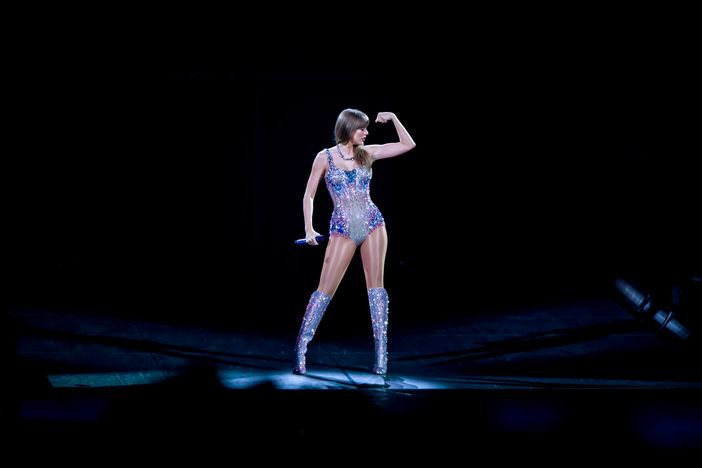
Taylor Swift Houston 2023 Eras Tour
Swift can flex a $1 billion net worth, per Forbes. Photo by Marco Torres/Marco from Houston


And then of course, her music acumen and savvy. In 2021, Swift smartly re-recorded a version of her album Fearless and launched a series of releases of her back catalog, in order to secure ownership of her first six albums.That move came after the masters (the original recordings) sold for a reported $300 million in 2019.

Here in Houston, as CultureMap reported, the Post-Tay Effect (we’re making that a thing) had a lasting economic effect, notbaly for areas pet and food nonprofits.

Hardcore business aside, the class Still, the course will be Taylor-made for Swifties. McCormick, who also serves as managing director for the university’s startup accelerator RED Labs, has themed each session around a different album — or Era, obvi for fans — of Swift’s career.

What to expect on the “mornin' of your very first day”

So, when students take a deep breath and walk through the door of their very first day (obligatory “Fifteen,” callout) they will score friendship bracelet gifts — a huge Swiftie phenomenon — and will be treated to surprise songs during breaks and even Easter eggs hidden in class content. (That’s a clever nod to Swift, who regularly hides clues, callbacks, and “oh yeaaahhhh” moments for fans in her music videos, album artwork, and social media posts).

As for the Tay inspo, McCormick says she has been a Swift fan since the early days of mega-hits “Our Song” and “Love Story.” But like so many who were blown away by the sheer Tay Machine during the Houston Eras Tour stop in April, the professor quickly noted entrepreneurship lessons to be learned over Swift’s in her 17-year career.
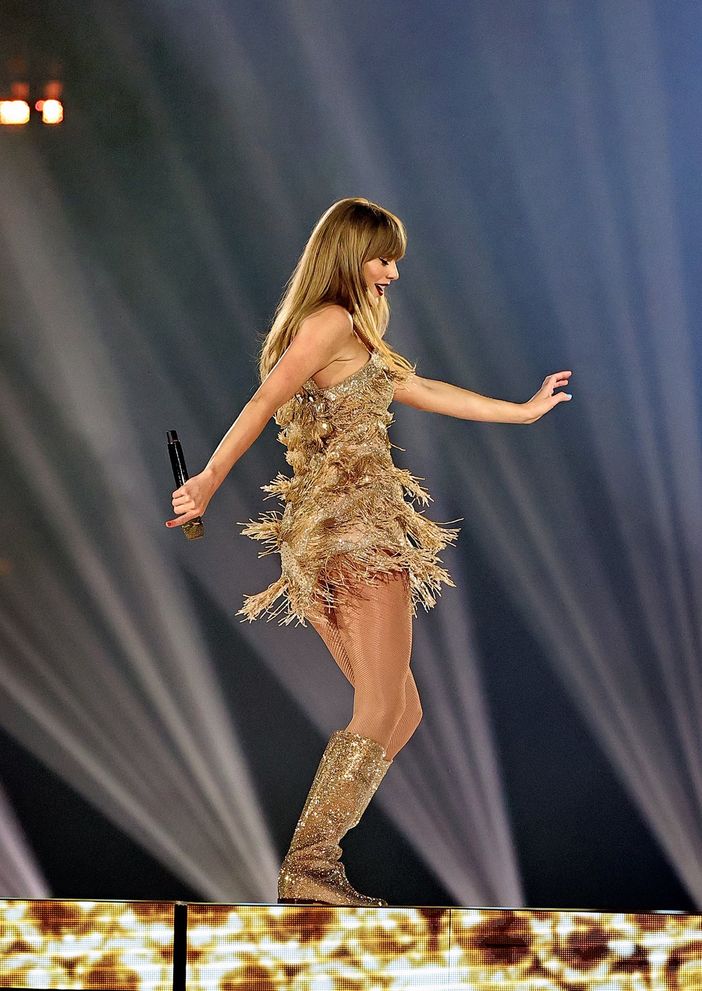
Taylor Swift Houston
The professor says Swift's dazzling Eras Tour stop in Houston inspired the class. Photo: Bob Levey/Getty Images/Taylor Swift Twitter


“I saw the show and loved it,” McCormick adds. “And I realized I actually didn’t know that much about her career. I became absolutely enamored basically overnight and started getting into her whole discography. Taylor is truly impressive!”

She added: “Never have I ever — like ever — been so engrossed in someone’s career after so little time.” (Should anyone doubt all the Tay references, McCormick’s “never have I ever — like ever” comments is shoutout to Swift’s most popular singles, “We Are Never Ever Getting Back Together.” Very clever.)

Travis-Tay included?

But perhaps the top Tay lesson is how to ensure satisfied customers.

“The number one business lesson students can learn from Taylor is the way she treats her fans,” McCormick notes. “She is beloved because she truly does so much to make sure they are happy, appreciated and feel like they are important to her. If every company acted that way about their customers — they’d have way more customers.”

Oh, and, no word — and we didn’t ask, for the record — if Kansas City Chiefs tight end/Swift squeeze Travis Kelce is part of the curriculum. Also no word if, to quote “Fifteen,” students will “sit in class next to a redhead named Abigail.”

------

This article originally ran on CultureMap.

Ad Placement 300x100
Ad Placement 300x600

CultureMap Emails are Awesome

Houston claims 19% of Texas’ new live-work-play growth

by the numbers

In Texas, Houston is a big player in the live-work-play real estate movement.

A new 21-city analysis from coworking marketplace CoworkingCafe shows the Houston area added five live-work-play projects—mixed-use developments with residential, office and recreational components—over the past decade.

From 2016 to 2025, Houston accounted for 19 percent of Texas’ new live-work-play inventory, the analysis shows. Among the new local developments were Arrive Upper Kirby, St. Andrie, and The Laura:

  • Arrive Upper Kirby, which was sold in 2021 for $182 million, offers more than 61,000 square feet of retail and restaurant space adjacent to apartments and offices. The 13-story, 265,000-square-foot project was completed in 2017.
  • St. Andrie, a 32-acre, mixed-use community, was completed in 2019. The apartment-anchored development includes an H-E-B grocery store and 37,000 square feet of office space.
  • The Laura, spanning 110,000 square feet, was completed in 2023. Among the apartment complex’s amenities is a coworking space.

According to Northspyre, a software provider for real estate developers, live-work-play projects enable people to meet their needs, such as housing, workplaces, stores, restaurants, and recreation facilities, in a single place.

A total of 542 live-work-play developments opened between 2016 and 2025 in the 21 cities, with another 69 in the pipeline for 2026, CoworkingCafe says. Among major markets, New York City made up the largest share (119) of new live-work-play developments from 2016 to 2025.

The Houston area’s five projects were built in 2018, 2019, 2020, 2024, and 2025, CoworkingCafe data indicates, with another project scheduled for completion next year. The Greater Houston Partnership recently highlighted four mixed-use projects taking shape in the region, but only one of them is scheduled to be finished in 2027. It can take two to five years or more to complete a mixed-use development.

Of the five Houston developments finished in the past decade, 56 percent of the space went toward multifamily units, 29 percent toward offices, and 16 percent toward retail, CoworkingCafe says.

As noted by the Houston-Galveston Area Council, economic development in the 21st century “is about cultivating quality live-work-play environments that attract, retain, and grow a diverse and skilled population. Employers and businesses are increasingly choosing to make long-term investments in places that connect and engage people to strengthen economic competitiveness and promote innovation.”

With eight completed projects, Austin led construction of live-work-play developments in Texas from 2016 to 2025, according to CoworkingCafe. Dallas, which welcomed five live-work-play developments during that period, tied with Houston. San Antonio data wasn’t available.

Rice Business Plan Competition awards $1.4M to 2026 student teams

winner, winners

Editor's note: This article has been updated to correct the total amount of investment and cash prizes awarded at the RBPC and with additional information from Rice.

Another team from the Great Lakes State took home top honors and investments at this year's Rice Business Plan Competition.

BRCĒ, a material-tech startup from Michigan State University, took home the top-place finish and the largest investment total at the annual Houston event. It has developed Lattice-Grip technology to create utility-based polymers that can replace traditional fabric. The materials are stronger, fire-resistant and more stable than traditional textiles, according to the company. Last year, the University of Michigan's Intero Biosystems won first-place finish and the largest investment total of $902,000.

In total, the RBPC doled out more than $1.4 million in investment and cash prizes, according to Rice. Over the three-day event, held April 9-11, the 42 competing startups presented their business plans to 300 angel, venture capital and corporate investors. Seven finalists were selected.

Three Texas teams, including one from Houston, were named among the finalists. Here's who won big this year, with their investment totals and some of their awards listed below.

BRCĒ, Michigan State University — $611,500

The recent Shark Tank alum finished in first place for its utility-based polymers technology.

  • $200,000 Goose Capital Investment Grand Prize
  • $100,000 The OWL Investment Prize
  • $100,000 Houston Angel Network Investment Prize
  • $75,000 The Indus Entrepreneurs (TiE) Texas Angels Investment Prize
  • $50,000 nCourage Investment Network’s Courageous Women Entrepreneur Investment Prize
  • $25,000 New Climate Ventures Sustainable Investment Prize
  • $20,000 Aramco Innovator Cash Prize
  • $1,000 Anbarci Family Company Showcase Prize
  • $500 Mercury Fund Elevator Pitch Competition Prize – Consumer Hard Tech

Legion Platforms, Arizona State University — $535,500

The startup won second place for its multiplayer gaming platform that can be accessed with slow internet speeds.

  • $100,000 Anderson Family Fund & Finger Interests Second Place Investment Prize
  • $200,000 Goose Capital Investment Prize
  • $100,000 The OWL Investment Prize
  • $25,000 Pearland EDC Spirit of Entrepreneurship Cash Prize
  • $500 Mercury Fund Elevator Pitch Competition Prize – Consumer

Imagine Devices, University of Texas at Austin — $111,000

The pediatric medical device company won third place for its multifunction neonatal feeding tube, known as Trinity Tube

  • $50,000 Anderson Family Fund & Finger Interests Third Place Investment Prize
  • $25,000 Pearland EDC Spirit of Entrepreneurship Cash Prize
  • $25,000 The Eagle Investors Investment Prize
  • $1,000 Anbarci Family Company Showcase Prize

Altaris MedTech, University of Arkansas – $16,000

The startup won fourth place for its pain-free strep test.

  • $5,000 Norton Rose Fulbright Fourth Place Prize
  • $1,000 Mercury Fund Elevator Pitch Competition Prize — Overall Winner

Routora, University of Notre Dame & University of Texas at Austin – $15,500

The team won fifth place for its route optimization app that works to reduce fuel costs, travel time and carbon emissions

  • $5,000 Chevron Fifth Place Prize
  • $500 Mercury Fund Elevator Pitch Competition Prizes — Digital

DialySafe, Rice University — $15,500

The startup won sixth place for its technology that aims to make at-home peritoneal dialysis simpler and safer.

  • $5,000 ExxonMobil Sixth Place Prize
  • $500 Mercury Fund Elevator Pitch Competition Prizes — Life Science

Arrow Analytics, Texas A&M University – $16,000

The startup won seventh place for its AI-powered sizing system for carry-on baggage.

  • $5,000 Shell Ventures Seventh Place Prize
  • $1,000 Anbarci Family Company Showcase Prizes


Other significant prizes included:

BiliRoo, University of Michigan – $26,000

  • $25,000 Southwest National Pediatric Device Consortium Pediatric Device Cash Prize
  • $1,000 Anbarci Family Company Showcase Prizes

BeamFeed, City University of New York – $25,000

  • $25,000 Amentum and WRX Companies Rising Stars Space Technology and Commercial Aerospace Cash Prize

Grapheon, University of Pittsburgh — $20,000

  • $20,000 Aramco Innovator Cash Prize

A total of $75,000 in in-kind legal services was awarded to all finalists. The grand prize winner, BRCĒ, also received a chief financial officer consulting prize worth $40,000. Each competing startup received at least $950 in prizes for placement in the competition.

“The Rice Business Plan Competition has grown into far more than a competition—it’s a proving ground for founders and a catalyst for real company formation, as well as a catalyst for building the Houston entrepreneurial ecosystem,” Brad Burke, associate vice president of Rice Innovation and executive director of Rice Alliance, said in a news release. This year's event was Burke’s final RBPC after nearly 25 years of leadership.

Last year, the Rice Business Plan Competition facilitated over $2 million in investment and cash prizes. According to Rice, more than 910 startups have raised more than $6.9 billion in capital through the competition over the last 25 years.

See a full list of this year's winners and stream rounds from the competition here.

Here's the income it takes to live comfortably in Houston in 2026

Money Talk

2026 report analyzing how much it costs to live "in sustainable comfort" in the biggest U.S. cities has found Houston residents have the 11th lowest salary requirement to live a comfortable life in 2026.

SmartAsset's annual report found single adult residents in Houston need to make $89,981 a year to qualify as "financially stable." Compared to last year, single Houstonians needed to make $83 more to live comfortably in the city.

Families with two working parents and two children need to make a household income of $204,672 to have a financially stable life in Houston, the report found. That's almost $2,000 less than what families needed to make last year.

To determine the rankings, SmartAsset's analysts examined 100 of the largest U.S. cities and used the latest cost of living data – such as the costs for housing, food, transportation, and income taxes where applicable – from the MIT Living Wage Calculator for childless individuals and for two working adults with two children.

For the purpose of the study, the 50/30/20 budgeting strategy was used to determine "comfortable lifestyle" costs for both individuals and families: 50 percent of income to cover needs and living expenses, 30 percent for "wants," and 20 percent for savings or paying down debt.

Here's breakdown of a Houston resident's comfortable lifestyle based on SmartAsset's findings:

  • $44,991 dedicated to needs and living expenses
  • $26,994 dedicated to wants
  • $17,996 dedicated to savings or debt repayment

This is SmartAsset's interpretation of a comfortable lifestyle for families of four:

  • $102,336 dedicated to needs and living expenses
  • $61,402 dedicated to wants
  • $40,934 dedicated to savings or debt repayment
SmartAsset said single individuals and families should compare the fluctuating local cost of living and their long-term goals to fully "understand the context" of their respective household incomes. But it's worth pointing out that a financially stable life in Houston isn't quite attainable for many residents: The city had a median household income of $64,361 in 2024, according to the U.S. Census Bureau.

Comfortable salaries in other Texas cities

Elsewhere in Texas, the report found that families in the Dallas-Fort Worth suburbs Frisco and McKinney "are closest to a comfortable salary."

"In Frisco, the median household earns $145,444 – substantially higher than the national median of $83,730," the report's author wrote. "This figure also accounts for 63.1 percent of the $230,464 income a family of four in Frisco needs to live comfortably. In McKinney, TX, the $124,177 median household income accounts for 53.9 percent of the $230,464 needed."

Both cities also tied with Plano for the 29th highest salary needed nationally to live comfortably in 2026. Single adults living in these cities need to make $109,242 a year to live a financially stable life this year.


On the opposite end, San Antonio has the lowest salaries needed to live comfortably in the U.S. Single adults only need to make $83,242 a year, and $192,608 for families of four.