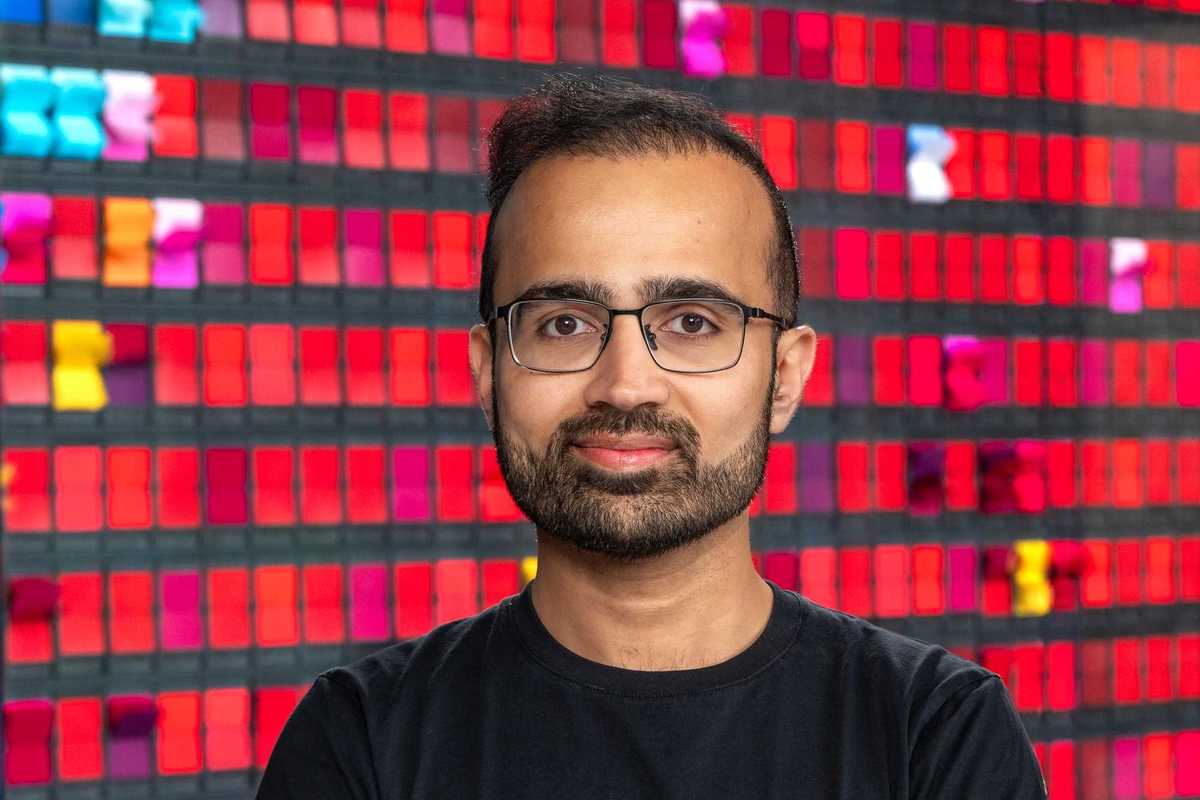
Rice University's Owl Spark and the University of Houston’s RED Labs will culminate at The Bayou Startup Showcase in July. Photo courtesy Rice University.

OwlSpark, a startup and small business accelerator for Rice University-affiliated ventures, has named the latest 11 companies to its program that focus on challenges across technology, health care, consumer products and other sectors. The program is hosted in tandem with the University of Houston’s RED Labs and will take place at the Ion.

The early-stage accelerator runs for 12 weeks and culminates at The Bayou Startup Showcase on July 31.

According to a news release from Rice, “the accelerator cultivates a vibrant environment where founders are empowered to build, test, and scale their ideas in a setting built for entrepreneurship.”

The program is divided into two tracks: one for high-growth tech startups and another for small businesses.

The latest OwlSpark class includes:

  • Web and mobile platform EasilyBEE, which boosts family and community engagement in K-12 schools
  • Diagnos, a wearable-integrated wellness platform that monitors health and prevents injuries in college athletes
  • Johnnie, an AI-powered records management software for rural and midsize first responder agencies
  • JustKindHumility, which offers faith-based travel journals
  • Klix, which automates early-stage clinical trial management from document screening to AI-driven patient outreach and eligibility checks
  • Lizzy’s Gourmet Gains, which offers high-protein, flavor-forward dips and dressings
  • NextStep, an AI-powered multilingual assistant helping underserved communities navigate resources for health care
  • A catheter-integrated sensor device PeriShield, which detects early infection in peritoneal dialysis patients
  • Right Design, which connects creatives with vetted employers, mentors and projects via job matching and commissions
  • UCoreAlly, which provides business support for biotech startups in marketing, business development, customer support, human resources and accounting
  • Ultrasound-based ablation system VentriTech that treats ventricular arrhythmias

The Owl Spark accelerator has supported 229 founders and launched 104 ventures with participants raising more than $116 million in funding since 2013, according to Rice.

UH also shared the 9 teams that will participate in RED Labs' latest cohort.

The latest RED Labs class includes:

  • BLEED, an art agency that helps artists commercialize their work by connecting art collectors to original artwork and artists
  • Brain Haven, which is developing nasal inhalers designed to stimulate the emotional and memory processing centers to preserve neuroplasticity and delay cognitive decline
  • Candi Wands Automated Cotton Candy, which has developed a continuously operating cotton candy machine to help entertainment venues boost passive revenue
  • ChériCollectible, a series of in-person events where Gen Z and collectors can buy, sell, and trade modern collectibles
  • JobRadar, a job board that uses AI to analyze and categorize positions in real-time and then apply candidates instantly
  • Stage Select LLC, a supplementary talent booking service that partners with multi-stage venues to help fill gaps in programming and increase profitability by finding and booking local talent for their "second stage."
  • P-LEGS, a pediatric lower-limb exoskeleton that reduces physical strain on therapists while delivering customizable gait training.
  • Roll ‘N’ Reel Photo Booth, an interactive event-based equipment rental business
  • Stayzy, which automates guest communication and handles maintenance issues with an AI-powered software for short-term rental companies that manage 20-plus rentals
Ad Placement 300x100
Ad Placement 300x600

CultureMap Emails are Awesome

Houston edtech company closes oversubscribed $3M seed round

fresh funding

Houston-based edtech company TrueLeap Inc. closed an oversubscribed seed round last month.

The $3.3 million round was led by Joe Swinbank Family Limited Partnership, a venture capital firm based in Houston. Gamper Ventures, another Houston firm, also participated with additional strategic partners.

TrueLeap reports that the funding will support the large-scale rollout of its "edge AI, integrated learning systems and last-mile broadband across underserved communities."

“The last mile is where most digital transformation efforts break down,” Sandip Bordoloi, CEO and president of TrueLeap, said in a news release. “TrueLeap was built to operate where bandwidth is limited, power is unreliable, and institutions need real systems—not pilots. This round allows us to scale infrastructure that actually works on the ground.”

True Leap works to address the digital divide in education through its AI-powered education, workforce systems and digital services that are designed for underserved and low-connectivity communities.

The company has created infrastructure in Africa, India and rural America. Just this week, it announced an agreement with the City of Kinshasa in the Democratic Republic of Congo to deploy a digital twin platform for its public education system that will allow provincial leaders to manage enrollment, staffing, infrastructure and performance with live data.

“What sets TrueLeap apart is their infrastructure mindset,” Joe Swinbank, General Partner at Joe Swinbank Family Limited Partnership, added in the news release. “They are building the physical and digital rails that allow entire ecosystems to function. The convergence of edge compute, connectivity, and services makes this a compelling global infrastructure opportunity.”

TrueLeap was founded by Bordoloi and Sunny Zhang and developed out of Born Global Ventures, a Houston venture studio focused on advancing immigrant-founded technology. It closed an oversubscribed pre-seed in 2024.

Texas space co. takes giant step toward lunar excavator deployment

Out of this world

Lunar exploration and development are currently hampered by the fact that the moon is largely devoid of necessary infrastructure, like spaceports. Such amenities need to be constructed remotely by autonomous vehicles, and making effective devices that can survive the harsh lunar surface long enough to complete construction projects is daunting.

Enter San Antonio-based Astroport Space Technologies. Founded in San Antonio in 2020, the company has become a major part of building plans beyond Earth, via its prototype excavator, and in early February, it completed an important field test of its new lunar excavator.

The new excavator is designed to function with California-based Astrolab's Flexible Logistics and Exploration (FLEX) rover, a highly modular vehicle that will perform a variety of functions on the surface of the moon.

In a recent demo, the Astroport prototype excavator successfully integrated with FLEX and proceeded to dig in a simulated lunar surface. The excavator collected an average of 207 lbs (94kg) of regolith (lunar surface dust) in just 3.5 minutes. It will need that speed to move the estimated 3,723 tons (3,378 tonnes) of regolith needed for a lunar spaceport.

After the successful test, both Astroport and Astrolab expressed confidence that the excavator was ready for deployment. "Leading with this successful excavator demo proves that our technology is no longer theoretical—it is operational," said Sam Ximenes, CEO of Astroport.

"This is the first of many implements in development that will turn Astrolab's FLEX rover into the 'Swiss Army Knife' of lunar construction. To meet the infrastructure needs of the emerging lunar economy, we must build the 'Port' before the 'Ship' arrives. By leveraging the FLEX platform, we are providing the Space Force, NASA, and commercial partners with a 'Shovel-Ready' construction capability to secure the lunar high ground."

"We are excited to provide the mobility backbone for Astroport's groundbreaking construction technology," said Jaret Matthews, CEO of Astrolab, in a release. "Astrolab is dedicated to establishing a viable lunar ecosystem. By combining our FLEX rover's versatility with Astroport's civil engineering expertise, we are delivering the essential capabilities required for a sustainable lunar economy."

---

This article originally appeared on CultureMap.com.

Houston biotech co. raises $11M to advance ALS drug development

drug money

Houston-based clinical-stage biotechnology company Coya Therapeutics (NASDAQ: COYA) has raised $11.1 million in a private investment round.

India-based pharmaceuticals company Dr. Reddy’s Laboratories Inc. led the round with a $10 million investment, according to a news release. New York-based investment firm Greenlight Capital, Coya’s largest institutional shareholder, contributed $1.1 million.

The funding was raised through a definitive securities purchase agreement for the purchase and sale of more than 2.5 million shares of Coya's common stock in a private placement at $4.40 per share.

Coya reports that it plans to use the proceeds to scale up manufacturing of low-dose interleukin-2 (IL-2), which is a component of its COYA 302 and will support the commercial readiness of the drug. COYA 302 enhances anti-inflammatory T cell function and suppresses harmful immune activity for treatment of Amyotrophic Lateral Sclerosis (ALS), Frontotemporal Dementia (FTD), Parkinson’s disease and Alzheimer’s disease.

The company received FDA acceptance for its investigational new drug application for COYA 302 for treating ALS and FTD this summer. Its ALSTARS Phase 2 clinical trial for ALS treatment launched this fall in the U.S. and Canada and has begun enrolling and dosing patients. Coya CEO Arun Swaminathan said in a letter to investors that the company also plans to advance its clinical programs for the drug for FTD therapy in 2026.

Coya was founded in 2021. The company merged with Nicoya Health Inc. in 2020 and raised $10 million in its series A the same year. It closed its IPO in January 2023 for more than $15 million. Its therapeutics uses innovative work from Houston Methodist's Dr. Stanley H. Appel.