


Chevron has doubled down on its commitment to The Cannon in West Houston, a new study finds Houston a top city for STEM, a Houston startup takes home a win from a digital pitch competition, and more. Photo courtesy of The Cannon

Houston's innovation ecosystem has been booming with news, and it's likely some might have fallen through the cracks.

For this roundup of short stories within Houston innovation, a startup snags a win at a pitch competition, Chevron announces a new makerspace, a software company makes an acquisition, and more.

Houston named a best city for STEM
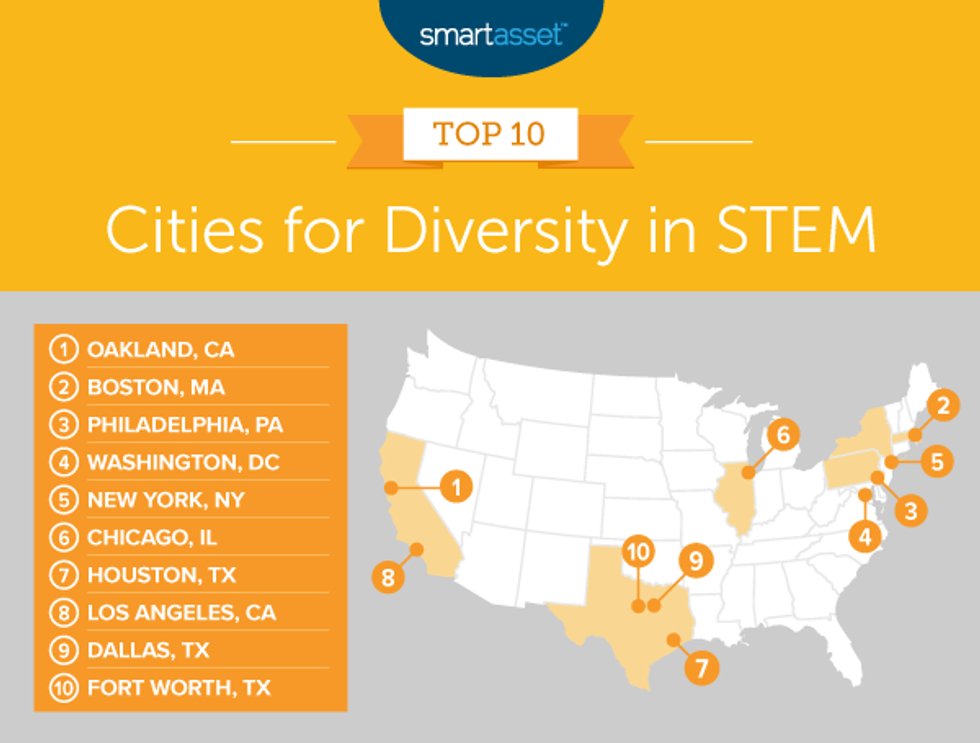
Image via SmartAsset

For the fifth year, personal finance website, SmartAsset, analyzed data for the 35 cities in the county with the largest STEM workforces. The study looked at the racial diversity index as well as the gender diversity index. The data for both metrics comes from the Census Bureau's 2019 1-year American Community Survey.

Houston ranked No. 7 on the list, and according to the report, the total number of STEM workers in Houston, Texas exceeds 79,500. Around 70 percent of the total STEM workers there are men, and more than 30 percent are women. Additionally, Houston has the third-best race/ethnicity index score in the study with more than 19 percent of STEM workers are Hispanic or Latino, almost 20 percent are Asian, and more than 8 percent are Black.

Texas makes up about a third of the top 10 list with Dallas and Fort Worth coming in at No. 9 and No.10, respectively.

Chevron announces digital makerspace in The Cannon
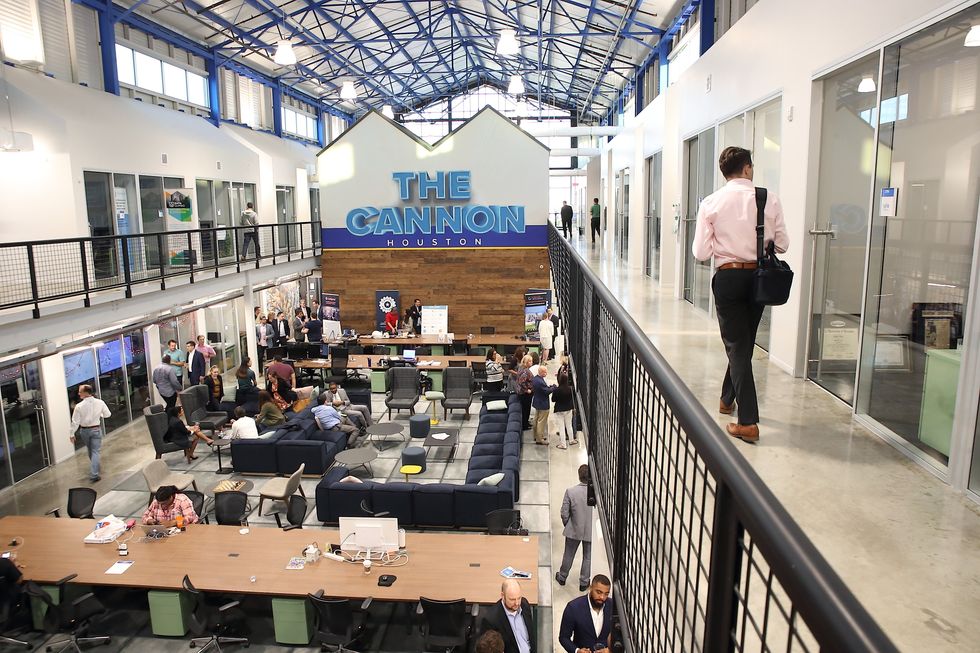
Photo courtesy of The Cannon

The Cannon and its surrounding Founders District in West Houston has announced the addition of Chevron's digital makerspace, which will be dedicated to startup partnerships and community organizations.

"Chevron's support for The Founders District and The Cannon expands our commitment to Houston's growing innovation ecosystem," says Barbara Burger, Chevron vice president, Innovation and president of Chevron Technology Ventures, in a news release. "We look forward to utilizing this new space to collaborate with other Chevron organizations, such as our Wells group, as we work to deliver more reliable, affordable, ever-cleaner energy."

While Chevron has been a key partner for The Cannon since 2018 and even had branded office space within the hub, this new space represents a new lease agreement for a significantly larger footprint.

"We are thrilled to partner with Chevron Technology Ventures in developing this exciting makerspace at The Founders District," says Mark Toon, CEO of Puma Development, the company developing The Founders District and founder of Work America Capital, a venture capital firm dedicated to investing in Houston-based businesses. "CTV is the paradigm for meaningful innovation in Houston. By investing in emerging technologies in energy, they are paving the way for innovation to remain at the heart of Houston's most prominent industry."

Lazarus 3D wins The Ion's pitch competition
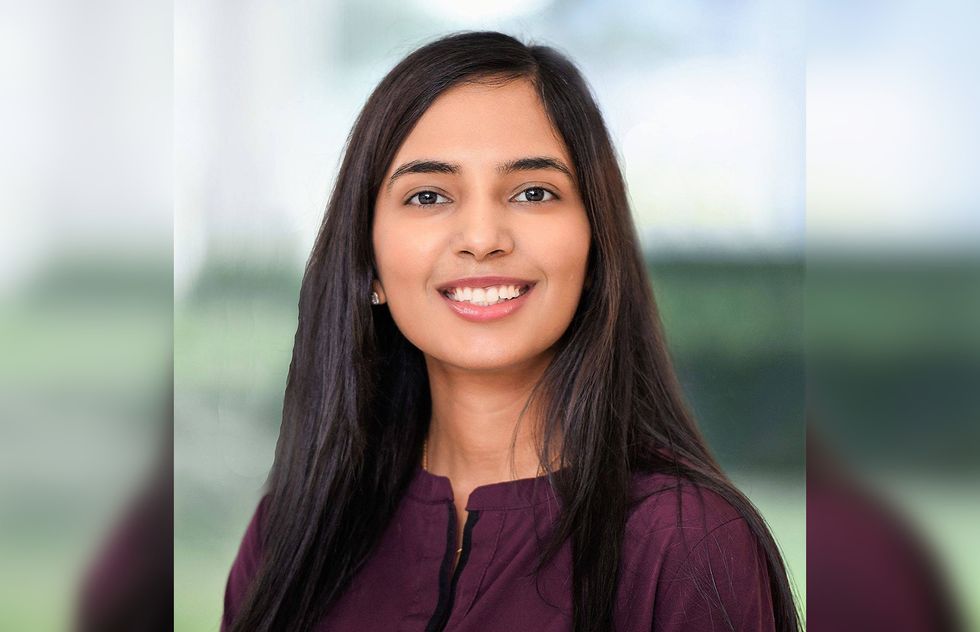
Photo via Laz3d.com

After months of pitching events, The Ion's Startup Demo Day for 2020 concluded on November 18 with four final pitches from Lazarus 3D, Skylark Wireless, HelloWoofy, and Swoovy.

After each of the four founders presented at the virtual event, which was powered by Dell Technologies, Lazarus 3D, a startup that produces 3D-printed organs and tissues for surgical practice, took home the win and the cash prize.

"I'm so grateful to Ion Houston — I've met so many people and made so many connections," says Smriti Zaneveld, co-founder and president. "All of the companies that present at these events are doing something so meaningful."

Applications are now open for the next series. Apply online by clicking here.

Houston tech co. acquires New Zealand business
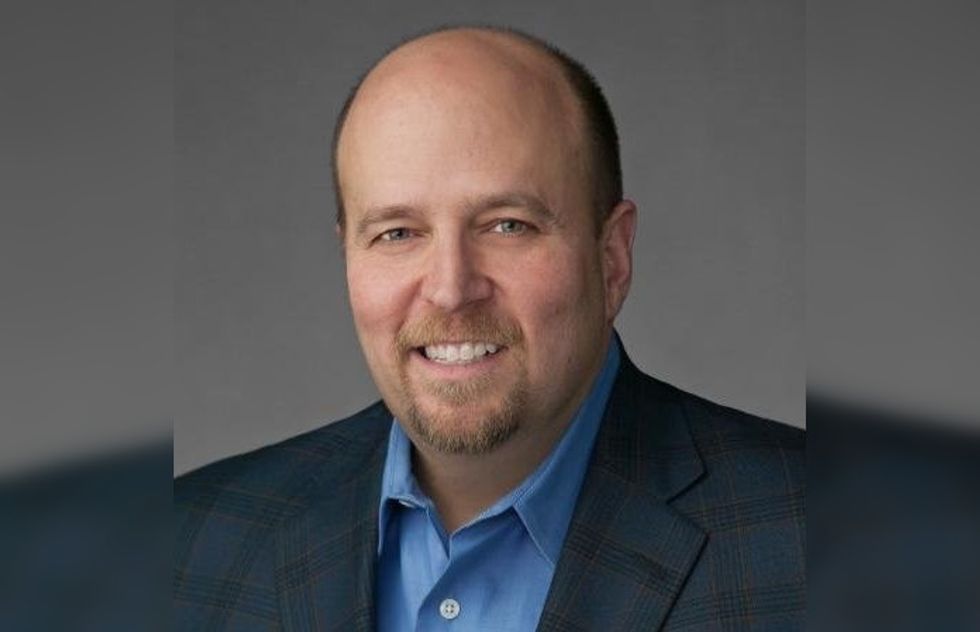
Photo via Onit.com

Houston-based Onit Inc., a legal software provider, announced that the company has acquired McCarthyFinch and its artificial intelligence platform.

"Our vision is to build AI into our workflow platform and every product across the Onit and SimpleLegal product portfolios," says Eric M. Elfman, Onit CEO and co-founder, in a news release. "AI will have an active role in everything from enterprise legal management to legal spend management and contract lifecycle management, resulting in continuous efficiencies and cost savings for corporate legal departments.

"Historically, legal departments have been thought of as black boxes where requests go in and information, decisions or contracts come out with no real transparency," Elfman continues. "AI has the potential to enhance transparency and contribute to stronger enterprise-wide business collaboration in a way that conserves a lawyer's valuable time."

The newly acquired software has the capacity to accelerate contract processing by up to 70 percent and increase productivity by over 50 percent. With the acquisition, Onit is enhancing its new artificial intelligence platform Precedent and the company's first release on the platform will be ReviewAI.

New sustainability-focused app launches at Climathon

Photo courtesy of Footprint

Houston-based Footprint App Inc. launched its latest carbon footprint education and action software during the Houston Climathon that was hosted earlier this month by Impact Hub Houston.

By tracking the user's sustainable habits, the student-focused tool allows users to compete to reduce their environmental impact. Footprint has launched in over 50 classrooms across the nation and is also being used by several corporations.

"With the state of Texas recently receiving an 'F' in climate education from the National Science Foundation, we see Footprint as the perfect tool for K-12 and beyond to help Texas students engage with climate science in a fun, competitive way," says Dakota Stormer, Footprint App, Inc. CEO and co-founder, in a news release.

Ad Placement 300x100
Ad Placement 300x600

CultureMap Emails are Awesome

Houston startup debuts new drone for first responders

taking flight

Houston-based Paladin Drones has debuted Knighthawk 2.0, its new autonomous, first-responder drone.

The drone aims to strengthen emergency response and protect first responders, the company said in a news release.

“We’re excited to launch Knighthawk 2.0 to help build safer cities and give any city across the world less than a 70-second response time for any emergency,” said Divyaditya Shrivastava, CEO of Paladin.

The Knighthawk 2.0 is built on Paladin’s Drone as a First Responder (DFR) technology. It is equipped with an advanced thermal camera with long-range 5G/LTE connectivity that provides first responders with live, critical aerial awareness before crews reach the ground. The new drone is National Defense Authorization Act-compliant and integrates with Paladin's existing products, Watchtower and Paladin EXT.

Knighthawk 2.0 can log more than 40 minutes of flight time and is faster than its previous model, reaching a reported cruising speed of more than 70 kilometers per hour. It also features more advanced sensors, precision GPS and obstacle avoidance technology, which allows it to operate in a variety of terrains and emergency conditions.

Paladin also announced a partnership with Portuguese drone manufacturer Beyond Vision to integrate its Drone as a First Responder (DFR) technology with Beyond Vision’s NATO-compliant, fully autonomous unmanned aerial systems. Paladin has begun to deploy the Knighthawk 2.0 internationally, including in India and Portugal.

The company raised a $5.2 million seed round in 2024 and another round for an undisclosed amount earlier this year. In 2019, Houston’s Memorial Villages Police Department piloted Paladin’s technology.

According to the company, Paladin wants autonomous drones responding to every 911 call in the U.S. by 2027.

Rice research explores how shopping data could reshape credit scores

houston voices

More than a billion people worldwide can’t access credit cards or loans because they lack a traditional credit score. Without a formal borrowing history, banks often view them as unreliable and risky. To reach these borrowers, lenders have begun experimenting with alternative signals of financial reliability, such as consistent utility or mobile phone payments.

New research from Rice Business builds on that approach. Previous work by assistant professor of marketing Jung Youn Lee showed that everyday data like grocery store receipts can help expand access to credit and support upward mobility. Her latest study extends this insight, using broader consumer spending patterns to explore how alternative credit scores could be created for people with no credit history.

Forthcoming in the Journal of Marketing Research, the study finds that when lenders use data from daily purchases — at grocery, pharmacy, and home improvement stores — credit card approval rates rise. The findings give lenders a powerful new tool to connect the unbanked to credit, laying the foundation for long-term financial security and stronger local economies.

Turning Shopping Habits into Credit Data

To test the impact of retail transaction data on credit card approval rates, the researchers partnered with a Peruvian company that owns both retail businesses and a credit card issuer. In Peru, only 22% of people report borrowing money from a formal financial institution or using a mobile money account.

The team combined three sets of data: credit card applications from the company, loyalty card transactions, and individuals’ credit histories from Peru’s financial regulatory authority. The company’s point-of-sale data included the types of items purchased, how customers paid, and whether they bought sale items.

“The key takeaway is that we can create a new kind of credit score for people who lack traditional credit histories, using their retail shopping behavior to expand access to credit,” Lee says.

The final sample included 46,039 credit card applicants who had received a single credit decision, had no delinquent loans, and made at least one purchase between January 2021 and May 2022. Of these, 62% had a credit history and 38% did not.

Using this data, the researchers built an algorithm that generated credit scores based on retail purchases and predicted repayment behavior in the six months following the application. They then simulated credit card approval decisions.

Retail Scores Boost Approvals, Reduce Defaults

The researchers found that using retail purchase data to build credit scores for people without traditional credit histories significantly increased their chances of approval. Certain shopping behaviors — such as seeking out sale items — were linked to greater reliability as borrowers.

For lenders using a fixed credit score threshold, approval rates rose from 15.5% to 47.8%. Lenders basing decisions on a target loan default rate also saw approvals rise, from 15.6% to 31.3%.

“The key takeaway is that we can create a new kind of credit score for people who lack traditional credit histories, using their retail shopping behavior to expand access to credit,” Lee says. “This approach benefits unbanked applicants regardless of a lender’s specific goals — though the size of the benefit may vary.”

Applicants without credit histories who were approved using the retail-based credit score were also more likely to repay their loans, indicating genuine creditworthiness. Among first-time borrowers, the default rate dropped from 4.74% to 3.31% when lenders incorporated retail data into their decisions and kept approval rates constant.

For applicants with existing credit histories, the opposite was true: approval rates fell slightly, from 87.5% to 84.5%, as the new model more effectively screened out high-risk applicants.

Expanding Access, Managing Risk

The study offers clear takeaways for banks and credit card companies. Lenders who want to approve more applications without taking on too much risk can use parts of the researchers’ model to design their own credit scoring tools based on customers’ shopping habits.

Still, Lee says, the process must be transparent. Consumers should know how their spending data might be used and decide for themselves whether the potential benefits outweigh privacy concerns. That means lenders must clearly communicate how data is collected, stored, and protected—and ensure customers can opt in with informed consent.

Banks should also keep a close eye on first-time borrowers to make sure they’re using credit responsibly. “Proactive customer management is crucial,” Lee says. That might mean starting people off with lower credit limits and raising them gradually as they demonstrate good repayment behavior.

This approach can also discourage people from trying to “game the system” by changing their spending patterns temporarily to boost their retail-based credit score. Lenders can design their models to detect that kind of behavior, too.

The Future of Credit

One risk of using retail data is that lenders might unintentionally reject applicants who would have qualified under traditional criteria — say, because of one unusual purchase. Lee says banks can fine-tune their models to minimize those errors.

She also notes that the same approach could eventually be used for other types of loans, such as mortgages or auto loans. Combined with her earlier research showing that grocery purchase data can predict defaults, the findings strengthen the case that shopping behavior can reliably signal creditworthiness.

“If you tend to buy sale items, you’re more likely to be a good borrower. Or if you often buy healthy food, you’re probably more creditworthy,” Lee explains. “This idea can be applied broadly, but models should still be customized for different situations.”

---

This article originally appeared on Rice Business Wisdom. Written by Deborah Lynn Blumberg

Anderson, Lee, and Yang (2025). “Who Benefits from Alternative Data for Credit Scoring? Evidence from Peru,” Journal of Marketing Research.

XSpace adds 3 Houston partners to fuel national expansion

growth mode

Texas-based XSpace Group has brought onboard three partners from the Houston area to ramp up the company’s national expansion.

The new partners of XSpace, which sells high-end multi-use commercial condos, are KDW, Pyek Financial and Welcome Wilson Jr. Houston-based KDW is a design-build real estate developer, Katy-based Pyek offers fractional CFO services and Wilson is president and CEO of Welcome Group, a Houston real estate development firm.

“KDW has been shaping the commercial [real estate] landscape in Texas for years, and Pyek Financial brings deep expertise in scaling businesses and creating long‑term value,” says Byron Smith, founder of XSpace. “Their commitment to XSpace is a powerful endorsement of our model and momentum. With their resources, we’re accelerating our growth and building the foundation for nationwide expansion.”

The expansion effort will target high-growth markets, potentially including Nashville, Tennessee; Orlando, Florida; and Charlotte and Raleigh, North Carolina.

XSpace launched in Austin with a $20 million, 90,000-square-foot project featuring 106 condos. The company later added locations on Old Katy Road in Houston and at The Woodlands Town Center. A third Houston-area location is coming to the Design District.

XSpace condos range in size from 300 to 3,000 square feet. They can accommodate a variety of uses, such as a luxury-car storage space, a satellite office, or a podcasting studio.

“XSpace has tapped into a fundamental shift in how entrepreneurs and professionals want to use space,” Wilson says. “Houston is one of the best places in the country to innovate and build, and XSpace’s model is perfectly aligned with the needs of this fast‑growing, opportunity‑driven market.”