Axiom Space chief astronaut Michael López-Alegría (left) trains with Axiom’s new “Project Astronaut,” Emiliano Ventura. Photo courtesy of Axiom Space.

Axiom Space, a Houston-based commercial spaceflight and space infrastructure company, has launched initiatives in two very different spheres — semiconductors and astronaut training.

On the semiconductor front, Axiom has signed a memorandum of understanding with Japanese chemical company Resonac Corp. to collaborate on semiconductor R&D and manufacturing projects carried out in space. Among Resonac’s products are materials used in chip manufacturing.

Axiom said the deal “paves the way toward leveraging microgravity to advance next-generation chip technologies and accelerate the in-space manufacturing market.”

Under the agreement, Axiom and Resonac will explore the potential production of semiconductor materials and chip packaging in microgravity and low-Earth-orbit environments.

“The unique environment of space offers immense potential for advancing semiconductor materials, especially in crystal growth,” Masato Fukushima, Resonac’s chief technology officer, said in a news release.

The deal will also extend Resonac’s work with Axiom on the development of molding compounds that can reduce “soft errors” when semiconductor devices are exposed to space radiation.

“Our collaboration with Resonac underscores how Axiom Space is enabling global corporations from around the world to leverage space to drive manufacturing innovation across critical technology sectors such as semiconductors,” Axiom astronaut Koichi Wakata, the company’s chief technology officer, said.

In the astronaut training arena, Axiom has tapped Portuguese physiologist Emiliano Ventura as its first “Project Astronaut.” Ventura will apply his expertise in human performance to a pilot program aimed at testing six-month astronaut training protocols.

“His goal is to participate in a future mission and explore, with scientific depth and curiosity, how the human body adapts to microgravity, contributing fresh insights to the current body of research in space physiology,” Axiom said.

Ventura has helped several Axiom crewmembers with physiological needs before and after missions aboard the International Space Station.

Axiom said Ventura’s pilot program will study astronauts’ physiological responses to microgravity during spaceflight. The program eventually will benefit Axiom astronauts heading to the world’s first commercial space station, which is being built by Axiom.

Michael López-Alegria, Axiom’s chief astronaut, said he and the company’s two other astronauts will train with Ventura. The Project Astronaut initiative “strengthens our commitment to enabling safe, effective, and inspiring commercial space missions while supporting scientific objectives worldwide.” López-Alegria said.

Ad Placement 300x100
Ad Placement 300x600

CultureMap Emails are Awesome

Houston clean energy co. secures $100M to deploy tech on global scale

Going Global

Houston-based Utility Global has raised $100 million in an ongoing Series D round to globally deploy its decarbonization technology at an industrial scale.

The round was led by Ara Partners and APG Asset, according to a news release. Utility plans to use the funding to expand manufacturing, grow its teams and support its commercial developments and partnerships.

“This financing marks a critical step in Utility’s transition from a proven technology to full-scale global commercial execution,” Parker Meeks, CEO and president of Utility Global, said in the release. “Industrial customers are no longer looking for pilots or promises; they need deployable solutions that work within existing assets and deliver true economic industrial decarbonization today that is operationally reliable and highly scalable. Utility’s technology produces both economic clean hydrogen and capture-ready CO2 streams, and this capital enables us to scale and deploy that impact globally with speed, discipline, and rigor.”

Utility Global's H2Gen technology produces low-cost, clean hydrogen from water and industrial off-gases without requiring electricity. It's designed to integrate into existing industrial infrastructure in hard-to-abate assets in the steel, refining, petrochemical, chemical, low-carbon fuels, and upstream oil and gas sectors.

“Utility is tackling one of the most difficult challenges in the energy transition: decarbonizing hard‑to‑abate industrial sectors,” Cory Steffek, partner at Ara Partners and Utility Global board chair, said in the release. “What sets Utility apart is its ability to compete head‑to‑head with conventional fossil‑based solutions on cost and reliability, even as it materially reduces emissions. With this new funding, Utility is well-positioned for its next chapter of commercial growth while maintaining the technical excellence and capital discipline that have defined its development to date.”

Utility Global reached several major milestones in 2025. After closing a $53 million Series C, the company agreed to develop at least one decarbonization facility at an ArcelorMittal steel plant in Brazil. It also signed a strategic partnership with California-based Kyocera International Inc. to scale global manufacturing of its H2Gen electrochemical cells.

The company also partnered with Maas Energy Works, another California company, to develop a commercial project integrating Maas’ dairy biogas systems with H2Gen to produce economical, clean hydrogen.

"These projects were never intended to stand alone. They anchor a deep and growing pipeline of commercial projects now in development globally across steel, refining, chemicals, biogas and other hard-to-abate sectors worldwide, Meeks shared in a 2025 year-in-review note. He added that 2026 would be a year of "focused acceleration to scale."

---

This article originally appeared on EnergyCapitalHTX.com.

Houston Methodist awarded $4M grant to recruit head of Neal Cancer Center

new hire

Armed with a $4 million state grant, the Houston Methodist Academic Institute has recruited a renowned expert in ovarian and endometrial cancer research to lead the Dr. Mary and Ron Neal Cancer Center.

The grant, provided by the Cancer Prevention and Research Institute of Texas, enabled the institute to lure Dr. Daniela Matei away from Northwestern University’s Feinberg School of Medicine in Chicago. There, she is the Diana Princess of Wales Professor in Cancer Research and chief of the Division of Reproductive Science in Medicine.

Matei will succeed Dr. Jenny Chang, who was hired last year to run the Houston Methodist Academic Institute.

At the Neal Cancer Center, located in the Texas Medical Center complex, oncologists work on innovations in cancer research, treatment, and technology. The center opened in 2021 after the Neals donated $25 million to expand Houston Methodist’s cancer research capabilities. It handles about 7,000 new cases each year involving more than two dozen types of cancer.

U.S. News & World Report puts Houston Methodist Hospital at No. 19 among the country’s best hospitals for cancer care, two spots below Chicago’s Northwestern Memorial Hospital. The University of Texas MD Anderson Cancer Center in Houston sits at No. 1 on the list.

Matei’s research related to ovarian and endometrial cancer holds the potential to benefit tens of thousands of American women. The American Cancer Society estimates:

  • 21,010 women in the U.S. will be diagnosed with ovarian cancer, and 12,450 women will die from it.
  • 68,270 women in the U.S. will be diagnosed with endometrial cancer, and 14,450 women will die from it.

Matei is leaving Northwestern in the wake of widespread cuts in federal funding for medical research. The National Institutes of Health (NIH) has canceled or frozen tens of millions of dollars in grants for Northwestern, the Wall Street Journal reports, and the university has been plugging the gaps with its own money.

“The university is totally keeping us on life support,” Matei told the newspaper last year. “The big question is for how long they can do this.”

According to the Wall Street Journal, Matei’s $5 million NIH grant supporting 69 cancer trials has been caught up in the federal funding chaos, so Northwestern stepped in to cover trial expenses such as nurses’ salaries and diagnostic procedures.

Trial participants include some patients with rare, incurable tumors who are undergoing experimental treatments aligned with the genetics of their condition, the newspaper says.

“It’s certainly a life-and-death situation for cancer patients on these trials,” Matei said in 2025.

Matei is among the beneficiaries of more than $15 million in grants approved February 18 by CPRIT’s board. The grants went toward recruiting five cancer researchers to institutions in Texas.

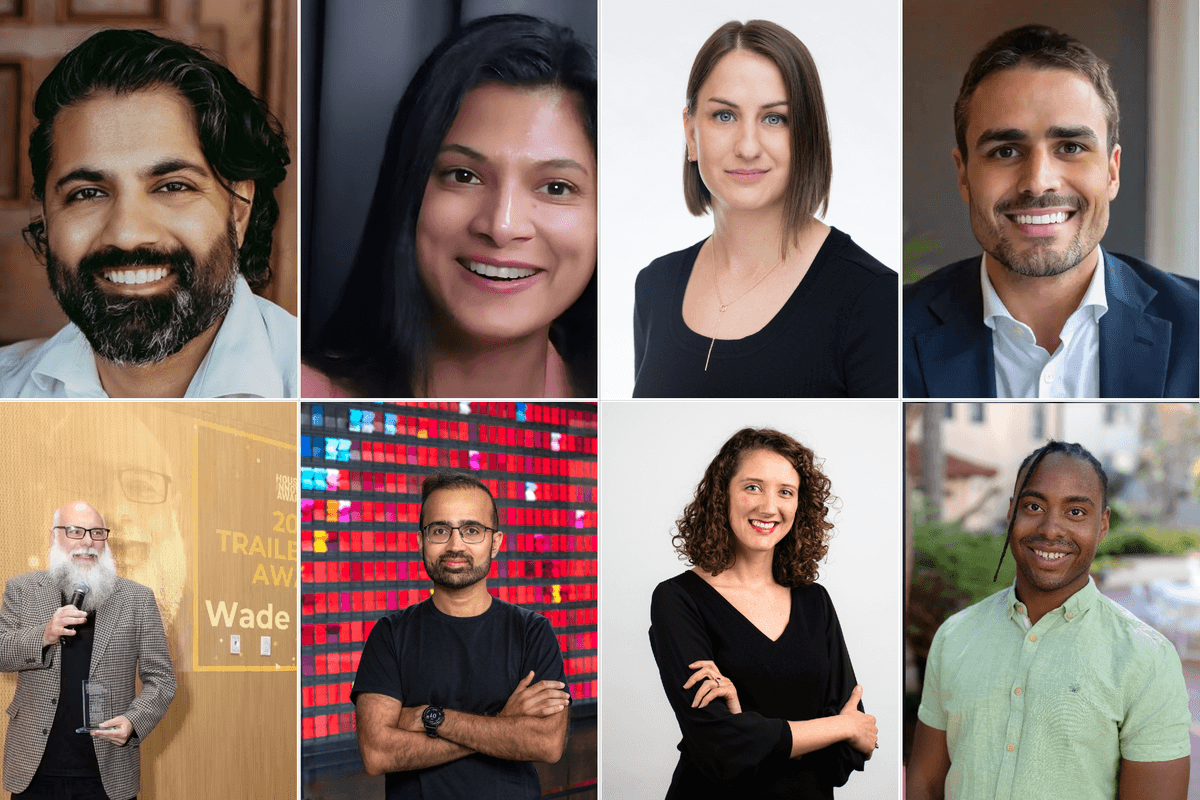
One of those grants, totaling $1.5 million, went to the University of Houston to recruit Akash Gupta, a research scientist at MIT’s Koch Institute for Integrative Cancer Research. The remaining grants went to recruit scientists to The University of Texas at Dallas and The University of Texas Southwestern Medical Center.

Rice University lands $14M state grant to open Center for Space Technologies

on a mission

Rice University’s Space Institute soon will be home to the newly created Center for Space Technologies.

On Feb. 17, the Texas Space Commission approved a nearly $14.2 million grant for the Rice project. The Center for Space Technologies will target:

  • Research and development
  • Technology transfer and innovation
  • Statewide partnerships
  • Workforce development training
  • Space-focused education programs

The goal of the new center “is to fulfill an articulated need for research, workforce development, and industry collaboration,” said Kemah communications and marketing executive Gwen Griffin, chair of the commission.

State Rep. Greg Bonnen, a Friendswood Republican, authored the bill that set up the Texas Space Commission.

Since being authorized in 2023, the commission has funded 24 projects, with Rice and Houston-area companies accounting for nearly $75 million in grants to back space-related initiatives.

The grant to Rice brings the TSC's total investment to $150 million, fully committing the entire state appropriation from the Texas Legislature in 2023.

Other local companies that have received grants over the years include Aegis Aerospace, Axiom Space, Intuitive Machines, Starlab Space and Venus Aerospace.

The commission also awarded $7 million to Blue Origin earlier this month. See a list of the 24 awards here.