A concept design rendering of Persona AI's humanoid robot. The company is one of the finalists for the 2025 Houston Innovation Awards in the Deep Tech Business category. Rendering courtesy Persona AI.

Houston is no stranger to technology that's shaping the future. As the longtime location of NASA Johnson Space Center to home base for new ventures disrupting industries with their technology, the Bayou City has had its finger on the pulse of what's new and next for decades.

The Deep Tech Business category in our 2025 Houston Innovation Awards will honor an innovative startup providing technology solutions based on substantial scientific or engineering challenges, including those in the AI, robotics and space sectors.

Six deep tech companies have been named finalists for the 2025 award. They range from a company developing predictive software to accelerate the energy transition to a new venture that's developing humanoid robots.

Read more about these businesses, their founders and their breakthrough technologies below. Then join us at the Houston Innovation Awards on Nov. 13 at Greentown Labs, when the winner will be unveiled.

Tickets are now on sale for this exclusive event celebrating Houston Innovation.

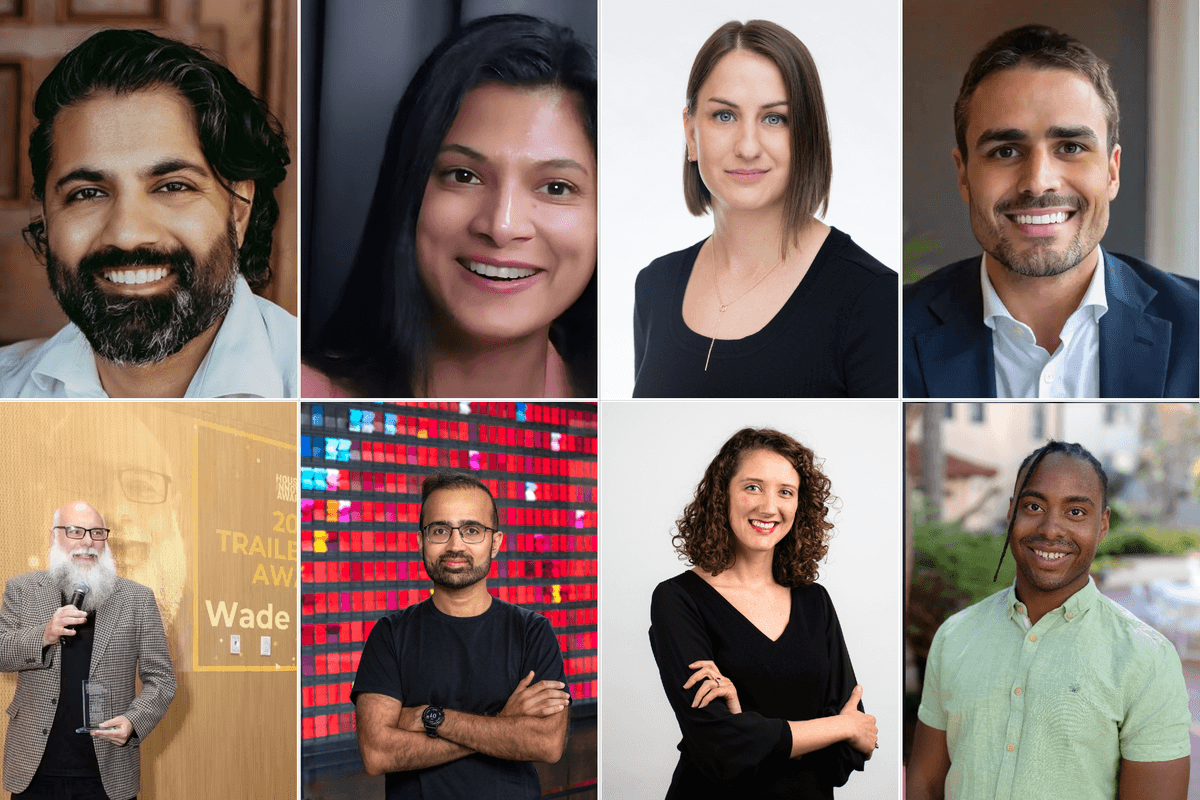
ARIX Technologies

Industrial and robotics company ARIX Technologies is an integrated robotics and data analytics company that delivers inspection services. Its ARIX VENUS robot combines aerospace-grade engineering, advanced non-destructive testing (NDT) and AI-powered analytics to detect hidden corrosion under insulation for the downstream energy, petrochemical, and chemical processing sectors.

ARIX was founded in 2017 by Dianna Liu, a former ExxonMobil engineer. Craig Mallory serves as CEO. The company reports that it is scaling deployments with major Gulf Coast refineries, expanding its analytics platform to include predictive corrosion modeling and growing a global partner program.

Little Place Labs

Space tech company Little Place Labs is developing an AI, machine-learning software across a network of satellites that can provide insights from space in under seven minutes.

The company was founded in 2022 by CEO Bosco Lai and CTO Gaurav Bajaj. The company recently received an award from the U.S. Space Force that will support it in deploying multiple applications and products onto more than 55 satellites over the next 36 months for both national security and commercial use cases. The company won the Security, GovTech & Space competition at the SXSW Pitch showcase last year.

Newfound Materials

Newfound Materials has developed a predictive synthesis software platform for accelerating the discovery of novel materials for critical energy applications, such as batteries, magnets, catalysts, and more. It guides users on the best experiments to try in the lab to optimize the synthesis of their materials.

Newfound Materials was founded in 2024 by CEO Matthew McDermott and participated in the inaugural Activate cohort. The company plans to release a public web app soon. It also has plans to raise a pre-seed or angel round.

Paladin Drones

Paladian develops drone-as-first-responder (DFR) systems for public safety. Its technology gives first responders live aerial video before teams arrive, enabling quicker decisions, better resource allocation and reduced false alarms.

The company was founded in 2018 by Divyaditya Shrivastava and participated in the Y Combinator accelerator that year. The company raised a $5.2 million seed round in 2024 and another round for an undisclosed amount earlier this year. In the future, it plans to expand its DFR deployments into more cities, offer new payload delivery capabilities (like delivering Narcan and life vests), and enhance deconfliction features.

Persona AI

Persona AI is building modularized humanoid robots that aim to deliver continuous, round-the-clock productivity and skilled labor for "dull, dirty, dangerous, and declining" jobs.

The company was founded by Houston entrepreneur Nicolaus Radford, who serves as CEO, along with CTO Jerry Pratt and COO Jide Akinyode. It raised eight figures in pre-seed funding this year and also expanded its operations at the Ion. The company is developing its prototype of a robot-welder for Hyundai's shipbuilding division, which it plans to unveil in 2026.

Tempest Droneworx

Tempest Droneworx provides real-time intelligence collected through drones, robots and sensors. Its Harbinger software platform shares data through a video game engine and aims to provide teams with early warning and insight to help them make decisions faster.

The company was founded in 2021 by CEO Ty Audronis and COO Dana Abramovitz. It participated in the Mass Challenge Air Force Labs and won the Best Speed Pitch at SXSW earlier this year. The company is currently raising a $2.5M seed round.

---

The Houston Innovation Awards program is sponsored by Houston City College Northwest, Houston Powder Coaters, FLIGHT by Yuengling, and more to be announced soon. For sponsorship opportunities, please contact sales@innovationmap.com.


Ad Placement 300x100
Ad Placement 300x600

CultureMap Emails are Awesome

Houston startup debuts bio-based 'leather' fashion collection in Milan

sustainable fashion

Earlier this month, Houston-based Rheom Materials and India’s conscious design studio Econock unveiled a collaborative capsule collection that signaled more than just a product launch.

Hosted at Lineapelle—long considered the global epicenter of the world's premier leather supply chain—in the vaulted exhibition halls of Rho-Fiera Milano, the collection centered around Rheom’s 91 percent bio-based leather alternative, Shorai.

It was a bold move, one that shifted sustainability from a concept discussed in panel sessions to garments that buyers could touch and wear.

The collection featured a bomber-style jacket, an asymmetrical skirt and a suite of accessories—all fabricated from Shorai.

The standout piece, a sculptural jacket featuring a funnel neck and dual-zip closure, was designed for movement, challenging assumptions about performance limitations in bio-based materials. The design of the asymmetrical skirt was drawn from Indian armored warrior traditions, according to Rheom, with biodegradable corozo fasteners.

Built as a modular wardrobe rather than isolated pieces, the collection reflects a shared belief between Rheom and Econock in designing objects that adapt to daily life, according to the companies.

The collection was born out of a new partnership between Rheom and Econock, focused on bringing biobased materials to the market. According to Rheom, the partnership solves a problem that has stalled the adoption of many next-gen textiles: supply chain friction.

While Rheom focuses on engineering scalable bio-based materials, New Delhi-based Econock brings the complementary design and manufacturing ecosystem that integrates artisans, circular materials and production expertise to translate the innovative material into finished goods.

"This partnership removes one of the biggest barriers brands face when adopting next-generation materials,” Megan Beck, Rheom’s director of product, shared in a news release. “By reducing friction across the supply chain, Rheom can connect brands directly with manufacturers who already know how to work with Shorai, making the transition to more sustainable materials far more accessible.”

Sanyam Kapur, advisor of growth and impact at Econock, added: “Our partnership with Rheom Materials represents the benchmark of responsible design where next-gen materials meet craft, creativity, and real-world scalability.”

Rheom, formerly known as Bucha Bio, has developed Shorai, a sustainable leather alternative that can be used for apparel, accessories, car interiors and more; and Benree, an alternative to plastic without the carbon footprint. In 2025, Rheom was a finalist for Startup of the Year in the Houston Innovation Awards.

Shorai is already used by fashion lines like Wuxly and LuckyNelly, according to Rheom. The company scaled production of the sugar-based material last year and says it is now produced in rolls that brands can take to market with the right manufacturer.

Houston startup debuts leather alternative fashion collection in Milan

Houston clean energy co. secures $100M to deploy tech on global scale

Going Global

Houston-based Utility Global has raised $100 million in an ongoing Series D round to globally deploy its decarbonization technology at an industrial scale.

The round was led by Ara Partners and APG Asset, according to a news release. Utility plans to use the funding to expand manufacturing, grow its teams and support its commercial developments and partnerships.

“This financing marks a critical step in Utility’s transition from a proven technology to full-scale global commercial execution,” Parker Meeks, CEO and president of Utility Global, said in the release. “Industrial customers are no longer looking for pilots or promises; they need deployable solutions that work within existing assets and deliver true economic industrial decarbonization today that is operationally reliable and highly scalable. Utility’s technology produces both economic clean hydrogen and capture-ready CO2 streams, and this capital enables us to scale and deploy that impact globally with speed, discipline, and rigor.”

Utility Global's H2Gen technology produces low-cost, clean hydrogen from water and industrial off-gases without requiring electricity. It's designed to integrate into existing industrial infrastructure in hard-to-abate assets in the steel, refining, petrochemical, chemical, low-carbon fuels, and upstream oil and gas sectors.

“Utility is tackling one of the most difficult challenges in the energy transition: decarbonizing hard‑to‑abate industrial sectors,” Cory Steffek, partner at Ara Partners and Utility Global board chair, said in the release. “What sets Utility apart is its ability to compete head‑to‑head with conventional fossil‑based solutions on cost and reliability, even as it materially reduces emissions. With this new funding, Utility is well-positioned for its next chapter of commercial growth while maintaining the technical excellence and capital discipline that have defined its development to date.”

Utility Global reached several major milestones in 2025. After closing a $53 million Series C, the company agreed to develop at least one decarbonization facility at an ArcelorMittal steel plant in Brazil. It also signed a strategic partnership with California-based Kyocera International Inc. to scale global manufacturing of its H2Gen electrochemical cells.

The company also partnered with Maas Energy Works, another California company, to develop a commercial project integrating Maas’ dairy biogas systems with H2Gen to produce economical, clean hydrogen.

"These projects were never intended to stand alone. They anchor a deep and growing pipeline of commercial projects now in development globally across steel, refining, chemicals, biogas and other hard-to-abate sectors worldwide, Meeks shared in a 2025 year-in-review note. He added that 2026 would be a year of "focused acceleration to scale."

---

This article originally appeared on EnergyCapitalHTX.com.

Houston Methodist awarded $4M grant to recruit head of Neal Cancer Center

new hire

Armed with a $4 million state grant, the Houston Methodist Academic Institute has recruited a renowned expert in ovarian and endometrial cancer research to lead the Dr. Mary and Ron Neal Cancer Center.

The grant, provided by the Cancer Prevention and Research Institute of Texas, enabled the institute to lure Dr. Daniela Matei away from Northwestern University’s Feinberg School of Medicine in Chicago. There, she is the Diana Princess of Wales Professor in Cancer Research and chief of the Division of Reproductive Science in Medicine.

Matei will succeed Dr. Jenny Chang, who was hired last year to run the Houston Methodist Academic Institute.

At the Neal Cancer Center, located in the Texas Medical Center complex, oncologists work on innovations in cancer research, treatment, and technology. The center opened in 2021 after the Neals donated $25 million to expand Houston Methodist’s cancer research capabilities. It handles about 7,000 new cases each year involving more than two dozen types of cancer.

U.S. News & World Report puts Houston Methodist Hospital at No. 19 among the country’s best hospitals for cancer care, two spots below Chicago’s Northwestern Memorial Hospital. The University of Texas MD Anderson Cancer Center in Houston sits at No. 1 on the list.

Matei’s research related to ovarian and endometrial cancer holds the potential to benefit tens of thousands of American women. The American Cancer Society estimates:

  • 21,010 women in the U.S. will be diagnosed with ovarian cancer, and 12,450 women will die from it.
  • 68,270 women in the U.S. will be diagnosed with endometrial cancer, and 14,450 women will die from it.

Matei is leaving Northwestern in the wake of widespread cuts in federal funding for medical research. The National Institutes of Health (NIH) has canceled or frozen tens of millions of dollars in grants for Northwestern, the Wall Street Journal reports, and the university has been plugging the gaps with its own money.

“The university is totally keeping us on life support,” Matei told the newspaper last year. “The big question is for how long they can do this.”

According to the Wall Street Journal, Matei’s $5 million NIH grant supporting 69 cancer trials has been caught up in the federal funding chaos, so Northwestern stepped in to cover trial expenses such as nurses’ salaries and diagnostic procedures.

Trial participants include some patients with rare, incurable tumors who are undergoing experimental treatments aligned with the genetics of their condition, the newspaper says.

“It’s certainly a life-and-death situation for cancer patients on these trials,” Matei said in 2025.

Matei is among the beneficiaries of more than $15 million in grants approved February 18 by CPRIT’s board. The grants went toward recruiting five cancer researchers to institutions in Texas.

One of those grants, totaling $1.5 million, went to the University of Houston to recruit Akash Gupta, a research scientist at MIT’s Koch Institute for Integrative Cancer Research. The remaining grants went to recruit scientists to The University of Texas at Dallas and The University of Texas Southwestern Medical Center.