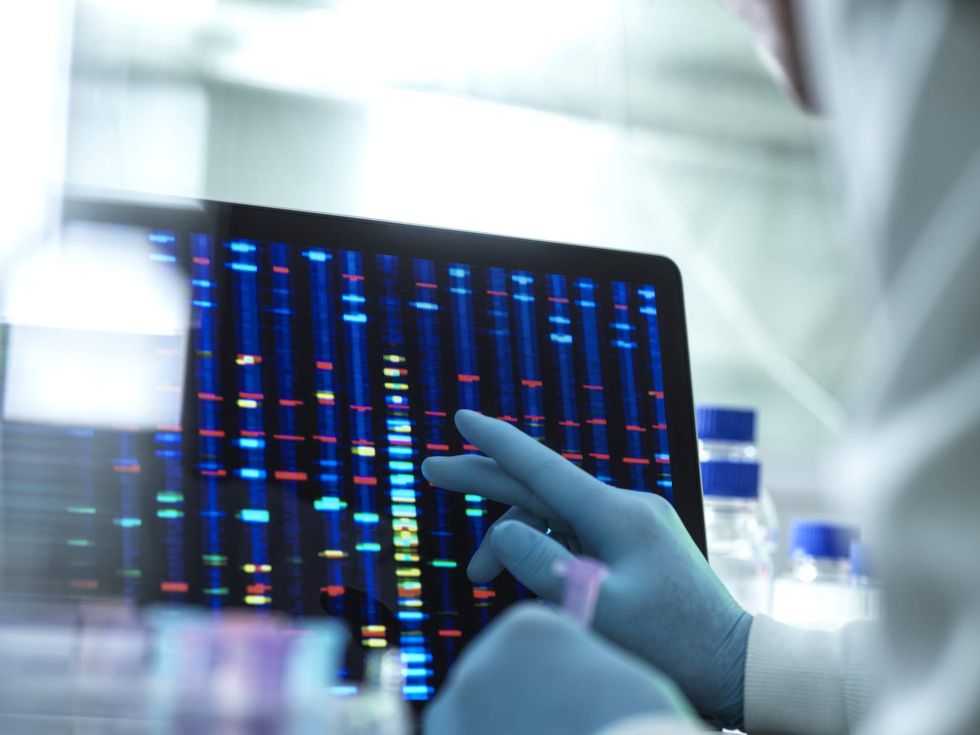
Patho Care LLC says its technology is more cost-effective and provides results faster than traditional diagnostic methods. Photo via Getty Images

Houston firm invests $150M in leading 'lab on a chip' medical diagnostics co.
fresh funds

Houston-based health technology investment firm Hamershlag Private Capital Management Limited (HPCM) announced a $150.15 million venture investment in Patho Care LLC.

Patho Care is a “lab on a chip” medical diagnostics company known for its noninvasive point-of-care testing platforms, such as its Raman spectroscopy-based platform.

Its digital point-of-care testing devices are programmable, mobile, and reusable and can detect current or future respiratory bacterial or viral infections. The company says the technology is more cost-effective and provides results faster than traditional diagnostic methods.

“Patho Care LLC is a distinguished leader in healthcare diagnostics through the utilization of a novel approach with spectroscopy and this investment aligns with HPCM’s strategy of partnering with high-potential companies in dynamic industries,” L. Mychal Jefferson, Chairman of Hamershlag, said in a news release.

The transaction was structured as an acquisition and recapitalization using newly issued common stock and cash, which will work through a newly formed entity, PathoCare Holdings Inc. The deal will also facilitate the repayment of Patho Care LLC's existing financial obligations and settle Patho Care’s outstanding notes, helping ensure the company’s financial readiness, according to the release.

The investment will help Patho Care LLC improve operational efficiencies, broaden its service offerings and continue to innovate in the diagnostic testing space. The companies hope the collaboration will help “unlock new growth opportunities while maintaining the company’s legacy of excellence in an emerging technology,” according to a news release.

“Our commitment to delivering transformative value through innovative investments underscores our confidence in Patho Care’s vision and capabilities,” Jefferson added.

Ad Placement 300x100
Ad Placement 300x600

CultureMap Emails are Awesome

Houston geothermal unicorn Fervo officially files for IPO

going public

Fervo Energy has officially filed for IPO.

The Houston-based geothermal unicorn filed a registration statement on Form S-1 with the U.S. Securities and Exchange Commission on April 17 to list its Class A common stock on the Nasdaq exchange. Fervo intends to be listed under the ticker symbol "FRVO."

The number and price of the shares have not yet been determined, according to a news release from Fervo. J.P. Morgan, BofA Securities, RBC Capital Markets and Barclays are leading the offering.

The highly anticipated filing comes as Fervo readies its flagship Cape Station geothermal project to deliver its first power later this year

"Today, miles-long lines for gasoline have been replaced by lines for electricity. Tech companies compete for megawatts to claim AI market share. Manufacturers jockey for power to strengthen American industry. Utilities demand clean, firm electricity to stabilize the grid," Fervo CEO Tim Latimer shared in the filing. "Fervo is prepared to serve all of these customers. Not with complex, idiosyncratic projects but with a simplified, standardized product capable of delivering around-the-clock, carbon-free power using proven oil and gas technology."

Fervo has been preparing to file for IPO for months. Axios Pro first reported that the company "quietly" filed for an IPO in January and estimated it would be valued between $2 billion and $3 billion.

Fervo also closed $421 million in non-recourse debt financing for the first phase of Cape Station last month and raised a $462 million Series E in December. The company also announced the addition of four heavyweights to its board of directors last week, including Meg Whitman, former CEO of eBay, Hewlett-Packard, and Spring-based HPE.

Fervo reported a net loss of $70.5 million for the 2025 fiscal year in the S-1 filing and a loss of $41.1 million in 2024.

Tracxn.com estimates that Fervo has raised $1.12 billion over 12 funding rounds. The company was founded in 2017 by Latimer and CTO Jack Norbeck.

---

This article originally appeared on our sister site, EnergyCapitalHTX.com.

New UT Austin med center, anchored by MD Anderson, gets $1 billion gift

Future of Health

A donation announced Tuesday, April 21, breaks a major record at the University of Texas at Austin. Michael and Susan Dell are now UT Austin's first supporters to give $1 billion. In response, the university will create the UT Dell Campus for Advanced Research and the UT Dell Medical Center to "advance human health," per a press release.

The release also records "significant support" for undergraduate scholarships, student housing, and the Texas Advanced Computing Center for supercomputing research.

Both the new research campus and the UT Dell Medical Center will integrate advanced computing into their research and practices. At the medical center, the university hopes that will lead to "earlier detection, more precise and personalized care, and better health outcomes." The University of Texas MD Anderson Cancer Center will also be integrated into the new medical center.

That comes with a numeric goal measured in 10s: raise $10 billion and rank among the top 10 medical centers in the U.S., both in the next decade.

In the shorter term, the university will break ground on the medical center with architecture firm Skidmore, Owings & Merrill (SOM) "later this year."

“UT Austin, where Dell Technologies was founded from a dorm room, has always been a place where bold ideas become real-world impact,” said Michael and Susan Dell in a joint statement.

They continued, “What makes this moment so meaningful is the opportunity to build something that brings every part of the journey together — from how students learn, to how discoveries are made, to how care reaches families. By bringing together medicine, science and computing in one campus designed for the AI era, UT can create more opportunity, deliver better outcomes, and build a stronger future for communities across Texas and beyond.”

This is the second major gift this year for the planned multibillion-dollar medical center. In January, Tench Coxe, a former venture capitalist who’s a major shareholder in chipmaking giant Nvidia, and Simone Coxe, co-founder and former CEO of the Blanc & Otus PR firm, contributed $100 million$100 million.

Baylor scientist lands $2M grant to explore links between viruses and Alzheimer’s

Alzheimer’s research

A Baylor College of Medicine scientist will begin exploring the possible link between Alzheimer’s disease and viral infections thanks to a $2 million grant awarded in March.

Dr. Ryan S. Dhindsa is an assistant professor of pathology & immunology at Baylor and a principal investigator at Texas Children’s Duncan Neurological Research Institute (Duncan NRI). He hypothesizes that Alzheimer’s may have some link to previous viral infections contracted by the patient. To study this intriguing possibility, the American Brain Foundation has gifted him the Cure One, Cure Many award in neuroinflammation.

“It is an honor to receive this support from the Cure One, Cure Many Award. Viral infections are emerging as a major, underappreciated driver of Alzheimer's disease, and this award will allow our team to conduct the most comprehensive screen of viral exposures and host genetics in Alzheimer's to date, spanning over a million individuals,” Dhindsa said in a news release. “Our goal is to identify which viruses matter most, why some people are more vulnerable than others, and ultimately move the field closer to new therapeutic strategies for patients.”

Roughly 150 million people worldwide will suffer from Alzheimer’s by 2050, making it the most common cause of dementia in the world. Despite this, scientists are still at a loss as to what exactly causes it.

Dhindsa’s research is part of a new range of theories that certain viral infections may trigger Alzheimer’s. His team will take a two-fold approach. First, they will analyze the medical records of more than a million individuals looking for patterns. Second, they will analyze viral DNA in stem cell-derived brain cells to see how the infections could contribute to neurological decay. The scale of the genomic data gathering is unprecedented and may highlight a link that traditional studies have missed.

Also joining the project are Dr. Caleb Lareau of Memorial Sloan Kettering Cancer Center and Dr. Artem Babaian of the University of Toronto. Should a link be found, it would open the door to using anti-virals to prevent or treat Alzheimer’s.