Intuitive Machines has been granted up to $10 million for a new project. Photo via Intuitive Machines

Editor's note: It's time to recap the top innovation news for the first half of May 2025. Our five most-read stories from May 1-15 include updates from Intuitive Machines and The Ion. Plus, driverless trucks hit the road from Houston to Dallas. Get all of the details below.

1. Houston space tech leader lands up to $10 million for Earth re-entry vehicle and lab
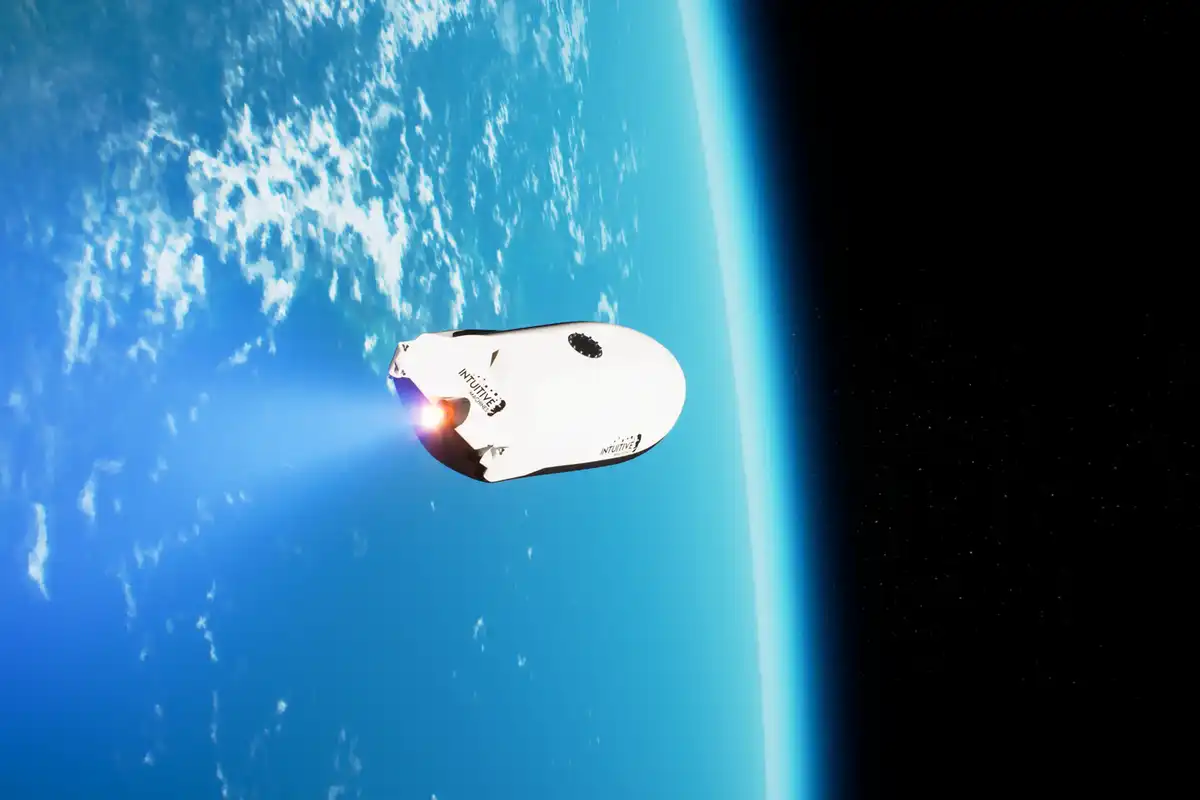
The Texas Space Commission has selected Houston's Intuitive Machines to develop a vehicle that will return lunar samples to Earth, along with an orbital fabrication lab. Photo courtesy Intuitive Machines.

Houston-based space technology, infrastructure, and services company Intuitive Machines has been awarded a state grant of up to $10 million to help develop an Earth re-entry vehicle and in-space biomanufacturing lab. The Texas Space Commission approved the grant, which is coming from the state’s Space Exploration and Research Fund. Intuitive Machines says the money will support its “critical risk-reduction platform” for returning lunar samples to Earth. The funding will go toward an early 12-month phase of the project. Continue reading.

2. 9 can't-miss Houston business and innovation events for May

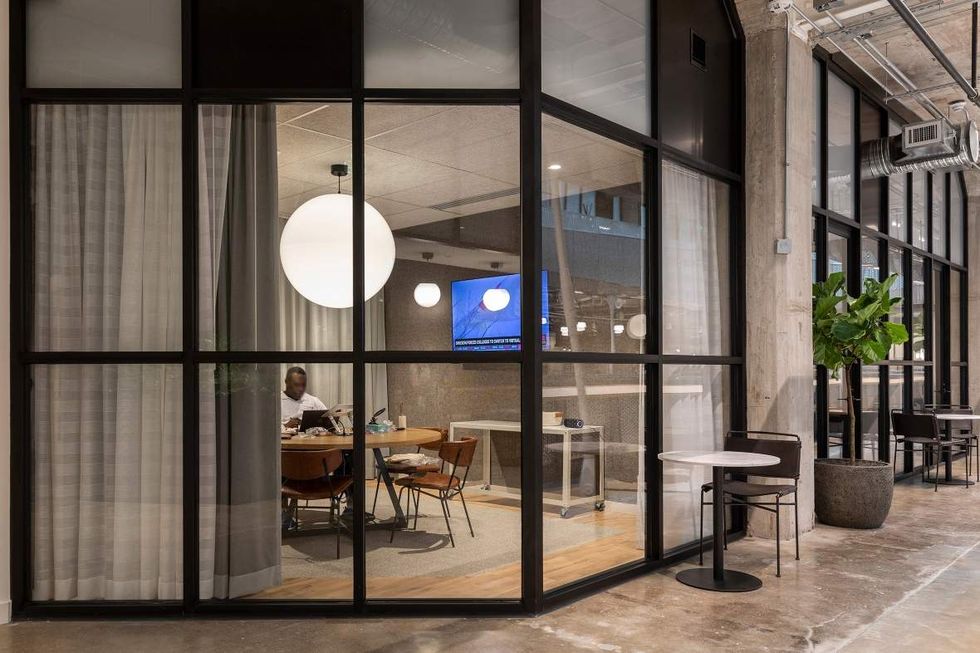
Don't miss these May events — from an investor activation series to a crawfish cook-off. Photo courtesy Greentown Labs.

There's a lot to learn this month at events around Houston. Hear from AI and energy experts or gain insights into how to tap into funding at informative panels or sessions. Continue reading.

3. Autonomous truck company rolls out driverless Houston-Dallas route
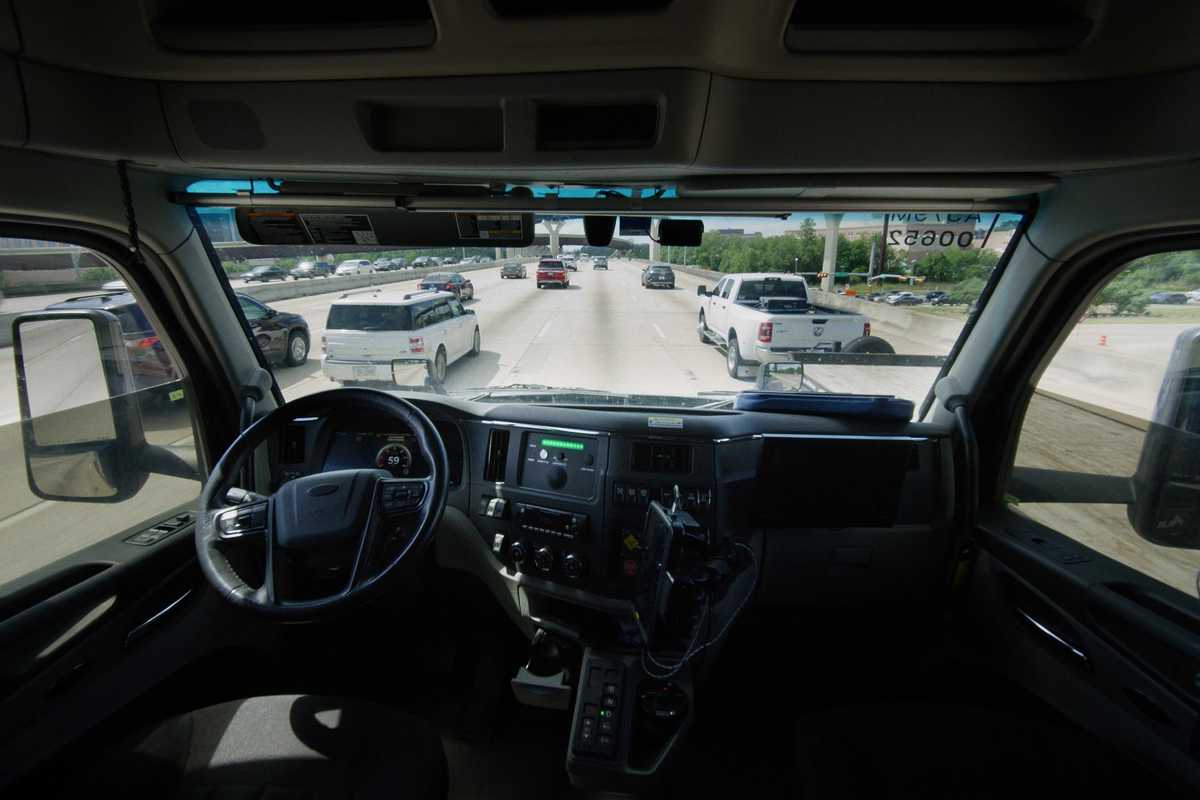
Aurora began regular driverless deliveries between Houston and Dallas on April 27. Photo courtesy Aurora.

Houston is helping drive the evolution of self-driving freight trucks. In October, Aurora opened a more than 90,000-square-foot terminal at a Fallbrook Drive logistics hub in northwest Houston to support the launch of its first “lane” for driverless trucks—a Houston-to-Dallas route on the Interstate 45 corridor. Aurora opened its Dallas-area terminal in April and the company began regular driverless customer deliveries between the two Texas cities on April 27. Continue reading.

4. Texas-based 'DoorDash for laundry' startup tumbles into Houston market

The service has been a smash success in Austin. Courtesy photo

Laundry may seem like an endless task that piles up, but a new service offers a solution to overwhelmed Houston families. NoScrubs, an Austin-based home laundry pickup service has just expanded to Houston. Described by the company as "DoorDash — but for laundry," they wash customer's clothes at local laundromats and return them the same day, folded and ready to be put away. The service took off like gangbusters in Austin, making an expansion to the state's largest city an obvious choice. Continue reading.

5. New energy innovation and coworking spaces open at the Ion
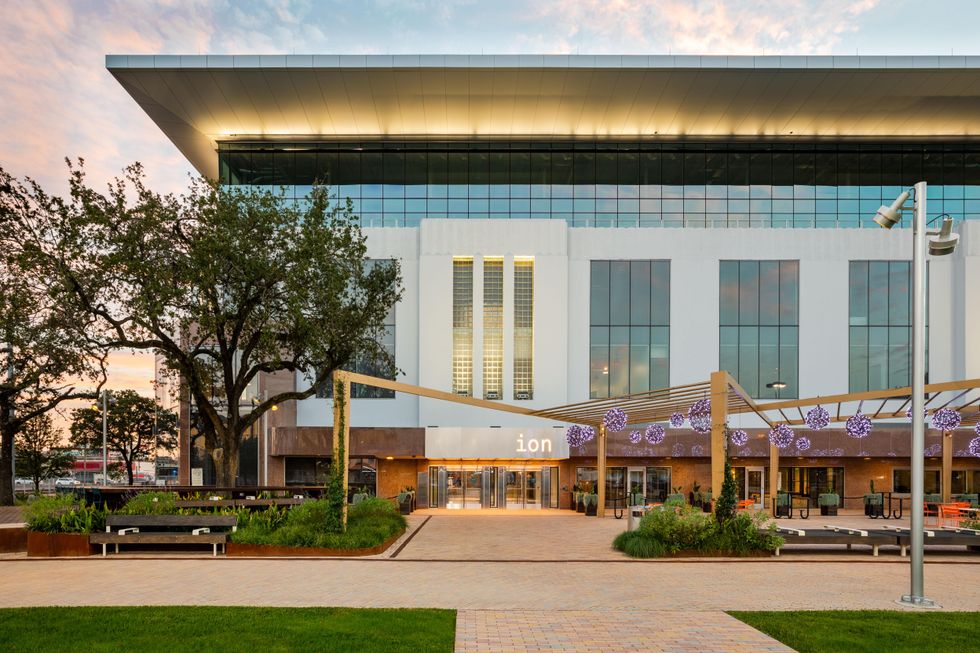
The Oxy Innovation Center has opened at the Ion and Industrious' coworking space launches soon. Photo courtesy of The Ion

Houston-based Occidental officially opened its new Oxy Innovation Center with a ribbon cutting at the Ion. The opening reflects Oxy and the Ion's "shared commitment to advancing technology and accelerating a lower-carbon future," according to an announcement from the Ion. Oxy, which was named a corporate partner of the Ion in 2023, now has nearly 6,500 square feet on the fourth floor of the Ion. Rice University and the Rice Real Estate Company announced the lease of the additional space last year, along with agreements with Fathom Fund and Activate. Continue reading.
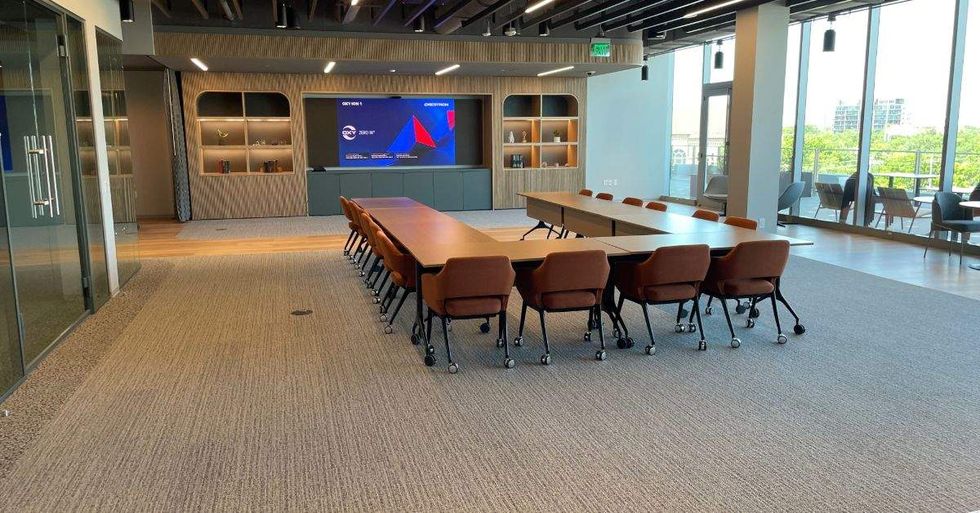
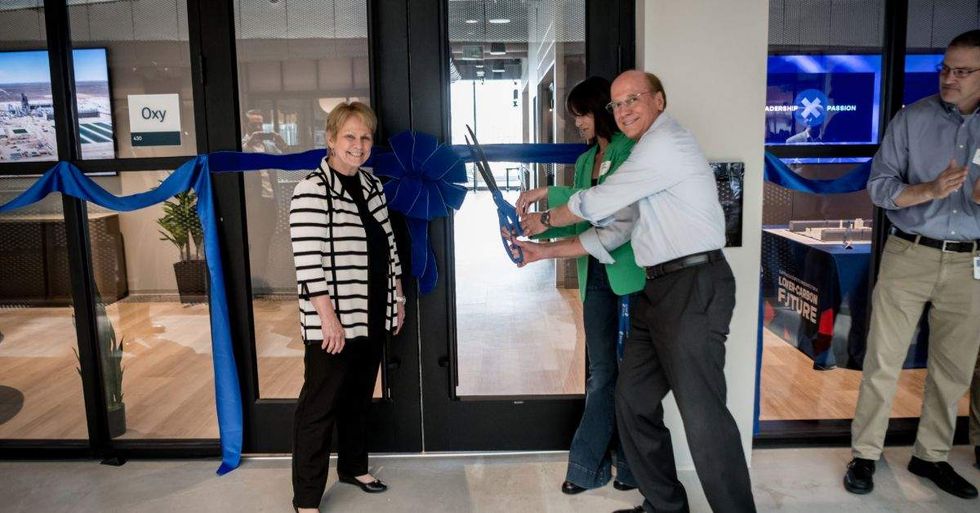
The Oxy Innovation Center has opened at the Ion and Industrious' coworking space launches soon. Photo courtesy of The Ion

New energy innovation and coworking spaces open at the Ion

moving in

Houston-based Occidental officially opened its new Oxy Innovation Center with a ribbon cutting at the Ion last week.

The opening reflects Oxy and the Ion's "shared commitment to advancing technology and accelerating a lower-carbon future," according to an announcement from the Ion.

Oxy, which was named a corporate partner of the Ion in 2023, now has nearly 6,500 square feet on the fourth floor of the Ion. Rice University and the Rice Real Estate Company announced the lease of the additional space last year, along with agreements with Fathom Fund and Activate.

At the time, the leases brought the Ion's occupancy up to 90 percent.

Additionally, New York-based Industrious plans to launch its coworking space at the Ion on May 8. The company was tapped as the new operator of the Ion’s 86,000-square-foot coworking space in Midtown in January.

Dallas-based Common Desk previously operated the space, which was expanded by 50 percent in 2023 to 86,000 square feet.

CBRE agreed to acquire Industrious in a deal valued at $400 million earlier this year. Industrious also operates another local coworking space is at 1301 McKinney St.

Industrious will host a launch party celebrating the new location Thursday, May 8. Find more information here.


Oxy Innovation Center. Photo via LinkedIn.

Ad Placement 300x100
Ad Placement 300x600

CultureMap Emails are Awesome

Aegis Aerospace appoints Houston space leader as new president

moving up

Houston-based Aegis Aerospace's current chief strategy officer, Matt Ondler, will take on the additional role of president on Jan. 1. Ondler will succeed Bill Hollister, who is retiring.

“Matt's vision, experience, and understanding of our evolving markets position us to build on our foundation and pursue new frontiers,” Stephanie Murphy, CEO of Aegis Aerospace, said in a news release.

Hollister guided Aegis Aerospace through expansion and innovation in his three years as president, and will continue to serve in the role of chief technology officer (CTO) for six months and focus on the company's technical and intellectual property frameworks.

"Bill has played an instrumental role in shaping the success and growth of our company, and his contributions leave an indelible mark on both our culture and our achievements," Murphy said in a news release.

Ondler has a background in space hardware development and strategic leadership in government and commercial sectors. Ondler founded subsea robots and software company Houston Mechatronics, Inc., now known as Nauticus Robotics, and also served as president, CTO and CSO during a five-year tenure at Axiom Space. He held various roles in his 25 years at NASA and was also named to the Texas Aerospace Research and Space Economy Consortium Executive Committee last year.

"I am confident that with Matt at the helm as president and Bill supporting us as CTO, we will continue to build on our strong foundation and further elevate our impact in the space industry," Murphy said in a news release. "Matt's vision, experience, and understanding of our evolving markets position us to build on our foundation and pursue new frontiers."

Rice University launches new center to study roots of Alzheimer’s and Parkinson’s

neuro research

Rice University launched its new Amyloid Mechanism and Disease Center last month, which aims to uncover the molecular origins of Alzheimer’s, Parkinson’s and other amyloid-related diseases.

The center will bring together Rice faculty in chemistry, biophysics, cell biology and biochemistry to study how protein aggregates called amyloids form, spread and harm brain cells. It will serve as the neuroscience branch of the Rice Brain Institute, which was also recently established.

The team will work to ultimately increase its understanding of amyloid processes and will collaborate with the Texas Medical Center to turn lab discoveries into real progress for patients. It will hold its launch event on Jan. 21, 2026, and hopes to eventually be a launchpad for future external research funding.

The new hub will be led by Pernilla Wittung-Stafshed, a Rice biophysicist and the Charles W. Duncan Jr.-Welch Chair in Chemistry.

“To make a real difference, we have to go all the way and find a cure,” Wittung-Stafshede said in a news release. “At Rice, with the Amyloid Mechanism and Disease Center as a catalyst, we have the people and ideas to open new doors toward solutions.”

Wittung-Stafshede, who was recruited to Rice through a Cancer Prevention and Research Institute of Texas grant this summer, has led pioneering work on how metal-binding proteins impact neurodegenerative disorders, including Alzheimer’s and Parkinson’s diseases. Her most recent study, published in Advanced Science, suggests a new way of understanding how amyloids may harm cells and consume the brain’s energy molecule, ATP.

According to Alzheimer’s Disease International, neurodegenerative disease cases could reach around 78 million by 2030 and 139 million by 2050. Wittung-Stafshede’s father died of dementia several years ago.

“This is close to my heart,” Wittung-Stafshede added in the news release. “Neurodegenerative diseases such as dementia, Alzheimer’s and Parkinson’s are on the rise as people live longer, and age is the largest risk factor. It affects everyone.”

This Houston airport saw sharp passenger decline in 2025, study shows

Travel Talk

A new global airport travel study has revealed passenger traffic at Houston's William P. Hobby Airport (HOU) sharply decreased from 2024 to 2025.

The analysis from travel magazine LocalsInsider examined recently released data from the Bureau of Transportation Statistics (BTS), the U.S. International Trade Association, and a nationwide survey to determine the following American traveler habits: The most popular U.S. and international destinations, emerging hotspots, and destinations on the decline. The study covered passenger travel trends from January through July 2025.

In the report's ranking of the 40 U.S. airports with the sharpest declines in passenger traffic, HOU ranked 13th on the list.

About 4.26 million arrivals were reported at HOU from January through July 2024, compared to about 3.96 million during the same seven-month period in 2025. According to the data, that's a significant 7.1 percent drop in passenger traffic year-over-year, or a loss of 300,974 passengers.

"As travelers chase new hotspots, some destinations are seeing reduced passenger traffic whether due to rising costs, shifting airline schedules, or evolving traveler preferences, some destinations are seeing a decrease in visitors," the report's author wrote.

It appears most major Texas airports had drops in passenger traffic from 2024 to 2025. Dallas Love Field Airport (DAL) saw the worst in the state, with a dramatic 7.4 percent dip in arrivals. DAL also ranked 11th on the list of U.S. airports with the steepest declines in passenger traffic.

More than 5.13 million arrivals were reported at DAL from January through July 2024, compared to over 4.75 million during the same seven-month period in 2025.

This is how passenger traffic has fallen at other major Texas airports from 2024 to 2025:

Austin-Bergstrom International Airport (AUS):

  • 6,107,597 – Passenger arrivals from January to July 2024
  • 5,828,396 – Passenger arrivals from January to July 2025
  • -4.6 percent – Year-over-year passenger change
Dallas/Fort Worth International Airport (DFW):
  • 23,830,017 – Passenger arrivals from January to July 2024
  • 23,251,302 – Passenger arrivals from January to July 2025
  • -2.4 percent – Year-over-year passenger change

San Antonio International Airport (SAT):

  • 2,937,870 – Passenger arrivals from January to July 2024
  • 2,836,774 – Passenger arrivals from January to July 2025
  • -3.4 percent – Year-over-year passenger change
El Paso International Airport (ELP):
  • 1,094,431 – Passenger arrivals from January to July 2024
  • 1,076,845 – Passenger arrivals from January to July 2025
  • -1.6 percent – Year-over-year passenger change
---

This story originally appeared on CultureMap.com.