Octaria Software, which serves startups to established small and medium-sized ventures with digital solutions, has expanded out of state. Photo via Pexels

Many innovators don't have the tools in their toolkit to make their tech dream a reality, but one Houston company might be able to help.

Octaria Software is focused on helping businesses, from the very seedlings of startups to established small and medium-sized ventures, to effectively go digital. Though it may include building an app, CEO and founder Greg Micek II says that isn’t all the only service that Octaria provides. His job, essentially is to supply the advice of a highly technical software architect to non-technical founders.

“There's a lot of outsourcing firms out there that work really well if you already have a tech lead as an employee. What about those people that don't have a CTO? What do they do? And so I realized there was a place in the market to give them a little bit of help, and really support them and kind of help build and grow from there,” Micek tells InnovationMap.

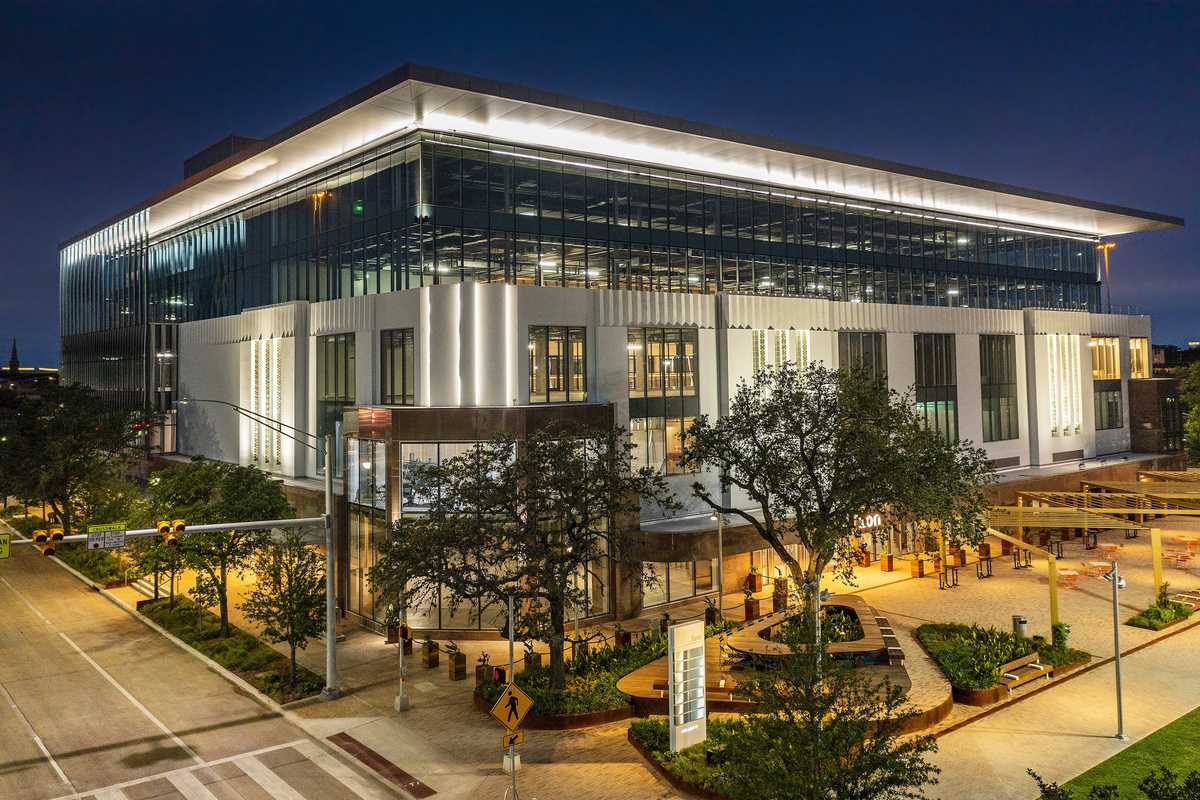
As he puts it, he can step in as a fractional CTO for companies who aren’t yet ready to make a full-time hire. A year and a half ago, Micek moved Octaria Software to The Cannon Downtown, but his 15-person distributed team also included director of product management Matthew Lowinger, based in the Washington, DC area. Last month, Lowinger helped to open Octaria’s second physical office in Tysons Corner, Virginia, (with an official address of McLean, Virginia) about half an hour outside the bigger city.

“There are so many startups emerging there,” Lowinger says. “There is a reason that Tysons Corner is considered the tech capital of DC. There's so many companies that are headquartered and launched right in our backyard. There's some really cool expansion opportunities where we can help out more founders, more entrepreneurs, more small- to medium-sized businesses than ever before.”

One example of a business that benefited from working with Octaria Software is an app called Lokum. Founder Joy Ademuyewo is a Houston-based certified registered nurse anesthetist (CRNA). Realizing that staffing was still decidedly twentieth-century, Ademuyewo took it upon herself to create a company that would spawn an app to streamline hiring for hospitals in need of experts like her.

“When she came to us initially, she had some UI and UX designs, but she didn't have any software at that point in time,” recalls Micek. “We've been able to work with her to release a web and mobile application and it's just been really great working with her and seeing her get her initial customers and help her grow from there.”

But not every founder comes to Micek and his team as well prepared as Ademuyewo did. Some just have an idea, in which case, Lowinger says they start with a product management sprint that will validate assumptions that the company will be building the right thing for its potential customers.

From there, they go into facets of design before approaching the build of the app. It’s a financially conservative way to do business that favors the needs of the founder, but is still focused on making headway. Micek says that they have taken products to market in as little as three months, though he admits, “It varies wildly.”

For nontechnical founders who are ready to test their ideas, Octaria hopes to provide a supportive means to make their dream an app.


Ad Placement 300x100
Ad Placement 300x600

CultureMap Emails are Awesome

Houston space co. adds local colleges to university alliance

space schools

Houston’s Axiom Space has added 26 new members to its University Alliance—including two from Houston—to support the next generation of space exploration.

Engineers, researchers and students from the partnering universities will be dedicated to advancing microgravity research, technology development and commercial innovation in low-Earth orbit.

Rice University and the University of Houston are among the new colleges to join the alliance, which launched with 15 members last year. The University of Texas at Austin and the University of Texas at El Paso have also joined, in addition to international institutions in Europe, Asia and Australia, and others from around the U.S. See full list here.

“Through the University Alliance, Axiom Space is uniting the international research community driven to enable human progress,” Lucie Low, Axiom Space chief science officer, said in a news release. “Together, alliance members are taking the initiative to ensure microgravity research benefits everyone on Earth and our shared goals fulfill a scientific purpose to advance civilization.”

Axiom is building the world’s first commercial space station, known as Axiom Station. The University Alliance “will support and advance space science during the transition from government-led to commercially owned and operated space stations,” the company said in a release. Partnering universities will contribute to the research community by participating in international collaborative scientific initiatives, identifying future research, and bolstering strategic positions in the commercial orbit research field.

Recently, the Rice Space Institute was also selected to lead the U.S. Space Force Strategic Institute 4 in addition to other space-centric partnerships.

“We’re excited to bring our expertise to this global alliance and to benefit from the deep expertise of our partners,” David Alexander, professor of physics and astronomy and director of the Rice Space Institute, said in a news release. “Space is truly a collaborative and global endeavor. Alliances like these are key to progress.”

UH and NASA’s Johnson Space Center expanded their collaboration in 2022. In 2024, UH launched its NASA MIRO Inflatable Deployable Environments and Adaptive Space Systems Center (IDEAS2) via a five-year, $5 million grant.

“As a major public research university located in Space City, the University of Houston has a unique opportunity and responsibility to help lead the future of space innovation, and our participation in Axiom Space’s University Alliance represents a major step forward in that mission,” Karolos Grigoriadis, the Hugh Roy and Lillie Cranz Cullen Endowed Professor and chair of mechanical and aerospace engineering at UH, added in a separate release.

Meanwhile, Axiom recently tacked on an additional $175 million to a previously announced capital raise, bringing the oversubscribed round to a total of more than $525 million. It also has announced plans to launch Swiss and Japanese subsidiaries.

This Houston suburb named one of 10 newest boomtowns in U.S.

Booming 'Burb

What do you get when you combine a city's surge in population, housing growth, and economy? For the Houston suburb of Conroe, it adds up to being America's No. 9 newest boomtown, according to a new survey from SmartAsset.

The personal finance website's just-released report analyzed more than 400 U.S. cities with populations of 65,000 or more to identify places experiencing rapid growth based on five-year changes in economic output, housing units, and labor force size.

Texas is home to the second-highest concentration of new boomtowns in America with 18 out of 75 located in the Lone Star State. Only Florida ranks higher than Texas by just one.

However, Texas nearly locked out the top five most bustling boomtowns in America. Austin suburb Georgetown topped the list, and its Central Texas neighbors New Braunfels (No. 2) and Leander (No. 4) ranked close behind. Dallas-Fort Worth mid-city Lewisville claimed the No. 5 spot. Lehi, Utah ranked in third place.

Conroe has soared in popularity as one of America's most sought-after suburbs over the last several years, boosted by its renter-friendliness and its livability among the millennial generation.

Conroe has seen a 37 percent increase in housing units from 2019 to 2024, with its labor force growing by 33 percent during that time. SmartAsset also determined that Montgomery County's economic output grew at compound annual rates of 4.9 percent.

The report says population booms and "expanding business activity" can create "visible momentum" for an up-and-coming city, but these fast changes can alter a city in ways residents may not expect.

"In recent years, some American cities stand out for attracting people, investment and development at a pace that sets them apart," the report said. "Boomtown status does not mean growth benefits everyone equally, but it does reflect a city’s expanding economic capacity and the new opportunities that come with it."

America's top 10 new boomtowns are:

  • No. 1 – Georgetown
  • No. 2 – New Braunfels
  • No. 3 – Lehi, Utah
  • No. 4 – Leander
  • No. 5 – Lewisville
  • No. 6 – Palm Coast, Florida
  • No. 7 – Nampa, Idaho
  • No. 8 – McKinney
  • No. 9 – Conroe
  • No. 10 – Frisco
---

This article originally appeared on CultureMap.com.