


Tempest Droneworx won the Best Speed Pitch award at SXSW Pitch earlier this year. Photo via LinkedIn.

Editor's note: As we reflect on 2025, we're looking back at the stories and startups that made waves in Houston's innovation scene. These 10 startups reached memorable milestones, won prestigious awards, found creative solutions, and disrupted their industries.

Persona AI: Houston humanoid robotics startup inks new deal to deploy its rugged robots
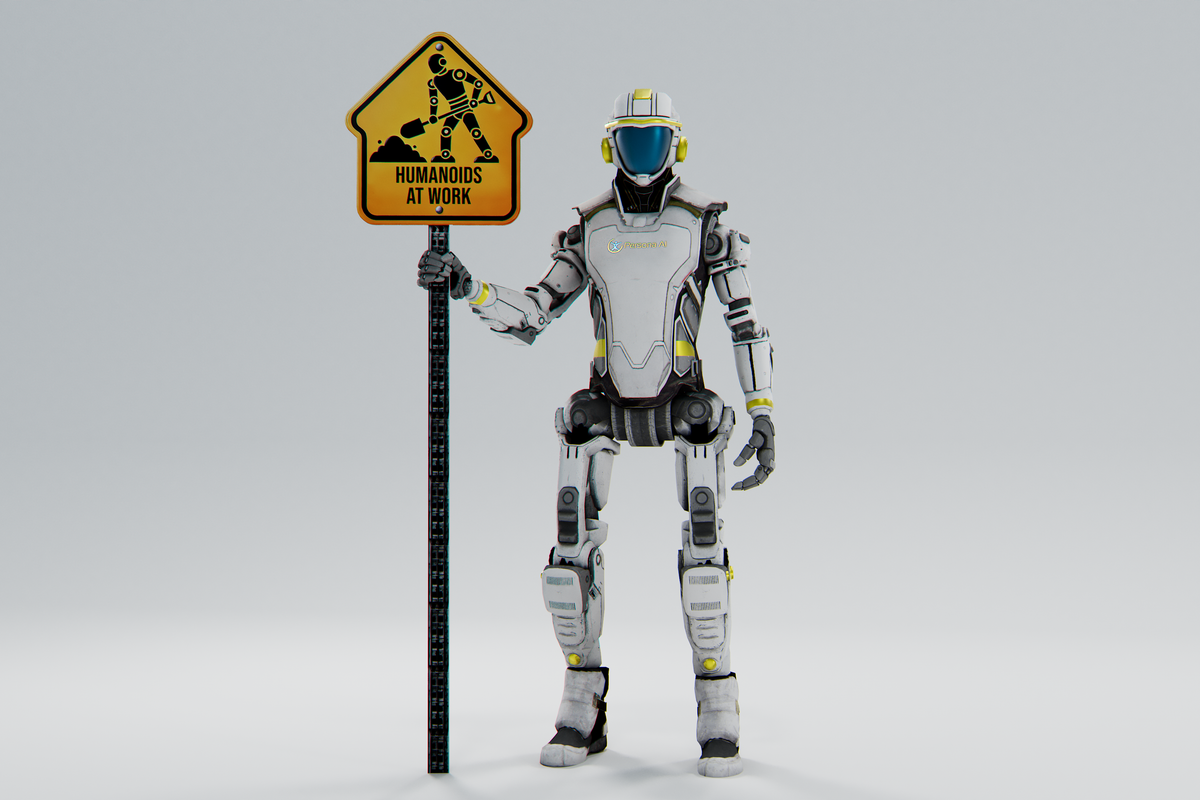
A concept design rendering of Persona AI's humanoid robot. The company is expanding at the Ion and plans to deliver prototype humanoids by the end of 2026 for complex shipyard welding tasks. Rendering courtesy Persona AI.

Persona AI is building modularized humanoid robots that aim to deliver continuous, round-the-clock productivity and skilled labor for "dull, dirty, dangerous, and declining" jobs. The company was founded by Houston entrepreneur Nicolaus Radford, who serves as CEO, along with CTO Jerry Pratt and COO Jide Akinyode. It raised $42 million in pre-seed funding this year and is developing its prototype of a robot-welder for Hyundai's shipbuilding division, which it plans to unveil in 2026. The company won in the Deep Tech Business category at this year's Houston Innovation Awards. Continue reading.

Rheom Materials: Houston startup unveils its innovative leather alternative at the rodeo

Rheom Materials presented its bio-based alternative, Shorai, a 93 percent bio-based leather, at the rodeo and plans to scale it up this year. Photos courtesy Rheom Materials

Rheom Materials presented its scalable, bio-based alternative known as Shorai, a 93 percent bio-based leather, through two custom, western-inspired outfits that showed off cowboy flair through a sustainable lens at the Houston Livestock Show and Rodeo earlier this year.

Next up, the company said it aimed to scale production of Shorai, the Japanese word for “future,” at a competitive price point, while also reducing its carbon footprint by 80 percent when compared to synthetic leather. The company also made a large-scale production partnership with a thermoplastic extrusion and lamination company, Bixby International, this year. Continue reading.

Koda Health: Houston digital health platform Koda closes $7 million funding round
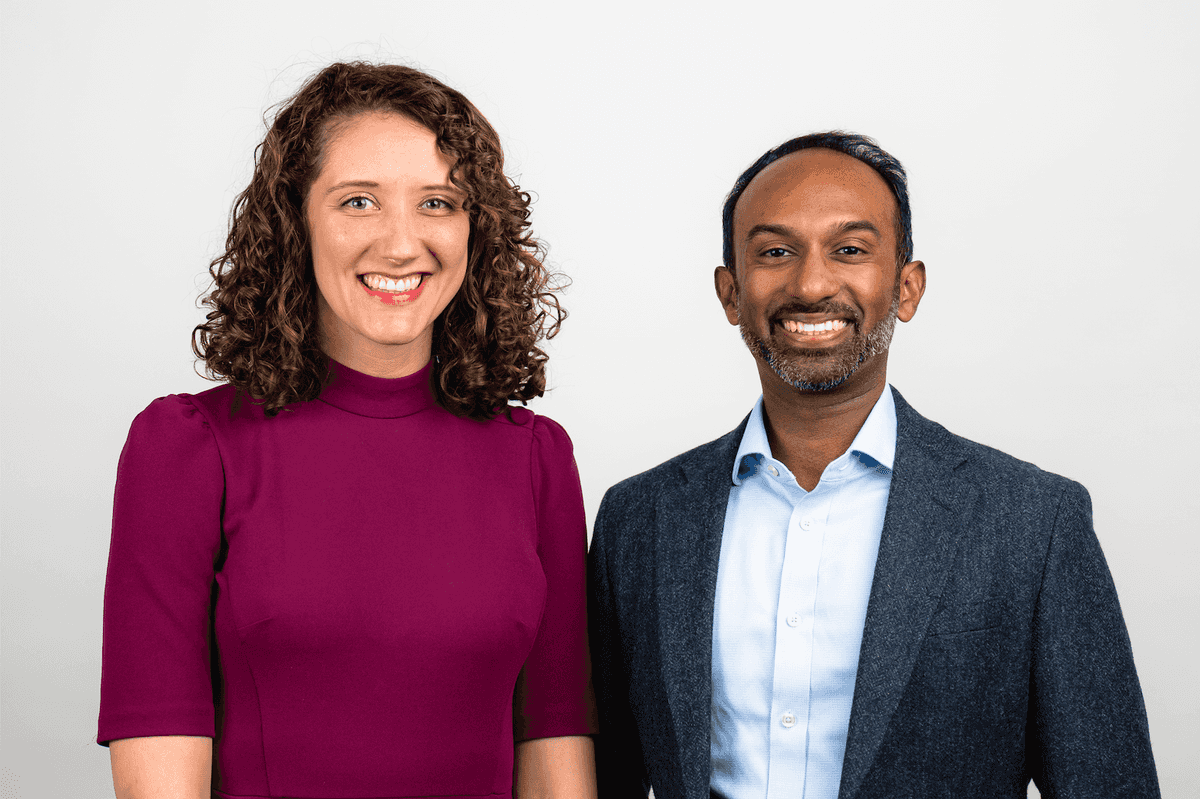
Tatiana Fofanova and Dr. Desh Mohan, founders of Koda Health, which recently closed a $7 million series A. Photo courtesy Koda Health.

Houston-based digital advance care planning company Koda Health closed an oversubscribed $7 million series A funding round this year. The round, led by Evidenced, with participation from Mudita Venture Partners, Techstars and Texas Medical Center, will allow the company to scale operations and expand engineering, clinical strategy and customer success. Koda Health, saw major growth this year by integrating its end-of-life care planning platform with Dallas-based Guidehealth in April and with Epic Systems in July. The company won the Health Tech Business category at the 2025 Houston Innovation Awards. Continue reading.

Veloci Running: Student-led startup runs away with prestigious prize at Rice competition
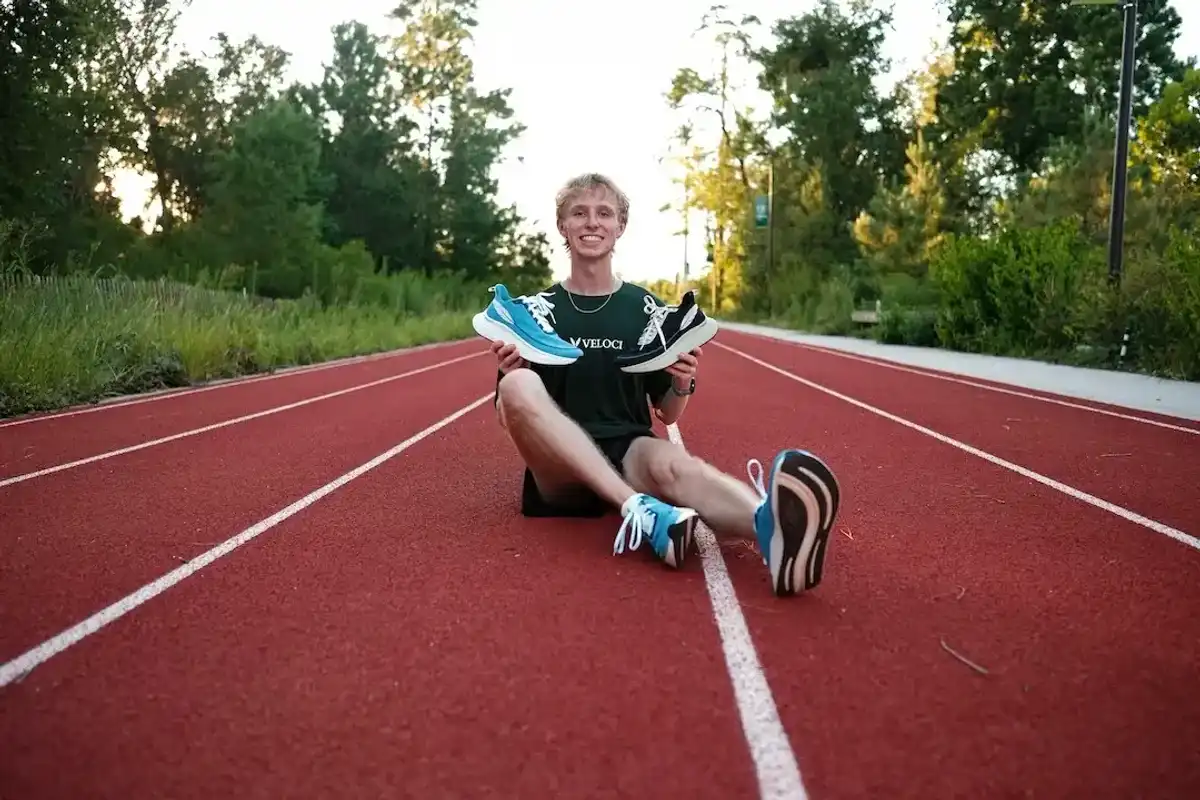
The H. Albert Napier Rice Launch Challenge awarded $100,000 in equity-free funding to student-led startups, including first-place finisher Veloci Running. Photo courtesy of Rice University.

Veloci Running took home the first-place prize and $50,000 at the annual Liu Idea Lab for Innovation and Entrepreneurship's H. Albert Napier Rice Launch Challenge. The company was founded by Tyler Strothman, a former track and field athlete and senior at Rice, majoring in sport management. Inspired by the foot pain he suffered due to the narrow toe boxes in his running shoes, Strothman decided to create a naturally shaped shoe designed to relieve lower leg tightness and absorb impact. Additional prize winners included SteerBio, Kinnections, Labshare and several others. Continue reading.

Square Robot Inc.: Houston robotics co. unveils new robot that can handle extreme temperatures

The new robot eliminates the need for humans to enter dangerous and toxic environments. Photo courtesy of Square Robot

Houston- and Boston-based Square Robot Inc.'s newest tank inspection robot became commercially available and certified to operate at extreme temperatures this fall. The new robot, known as the SR-3HT, can operate from 14°F to 131°F, representing a broader temperature range than previous models in the company's portfolio. According to the company, its previous temperature range reached 32°F to 104°F. The company also announced a partnership with downstream and midstream energy giant Marathon Petroleum Corp. (NYSE: MPC) last month. Continue reading.

Bot Auto: Houston autonomous trucking co. completes first test run without human intervention
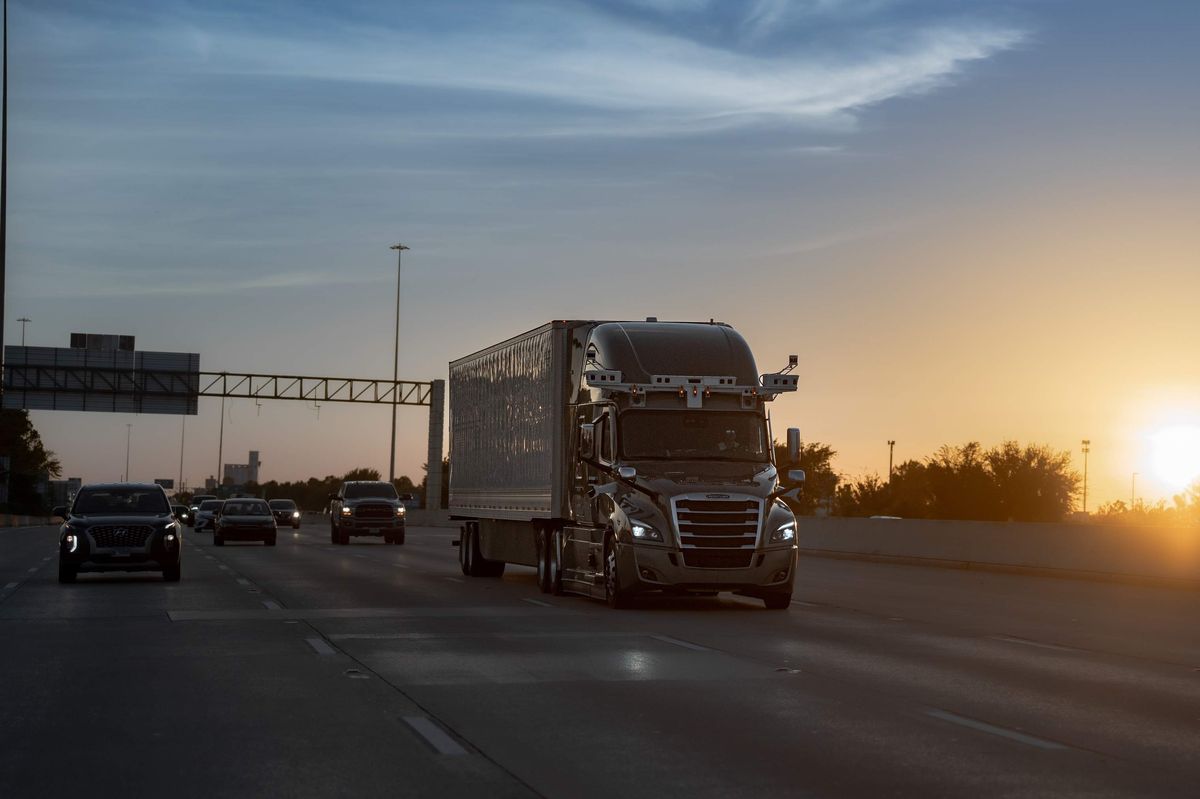
Bot Auto completed its first test run without human assistance in Houston. Photo courtesy Bot Auto.

Houston-based Bot Auto, an autonomous trucking company, completed its first test run without human assistance earlier this year. Bot Auto conducted the test in Houston. The transportation-as-a-service startup added that this milestone “serves as a validation benchmark, demonstrating the maturity and safety of Bot Auto’s autonomy stack and test protocols.” This summer, founder Xiaodi Hou told the Front Lines podcast that Bot Auto had raised more than $45 million. Continue reading.

Nomad: Screen-free hiking app developed in Houston earns 'Best of the Best' award
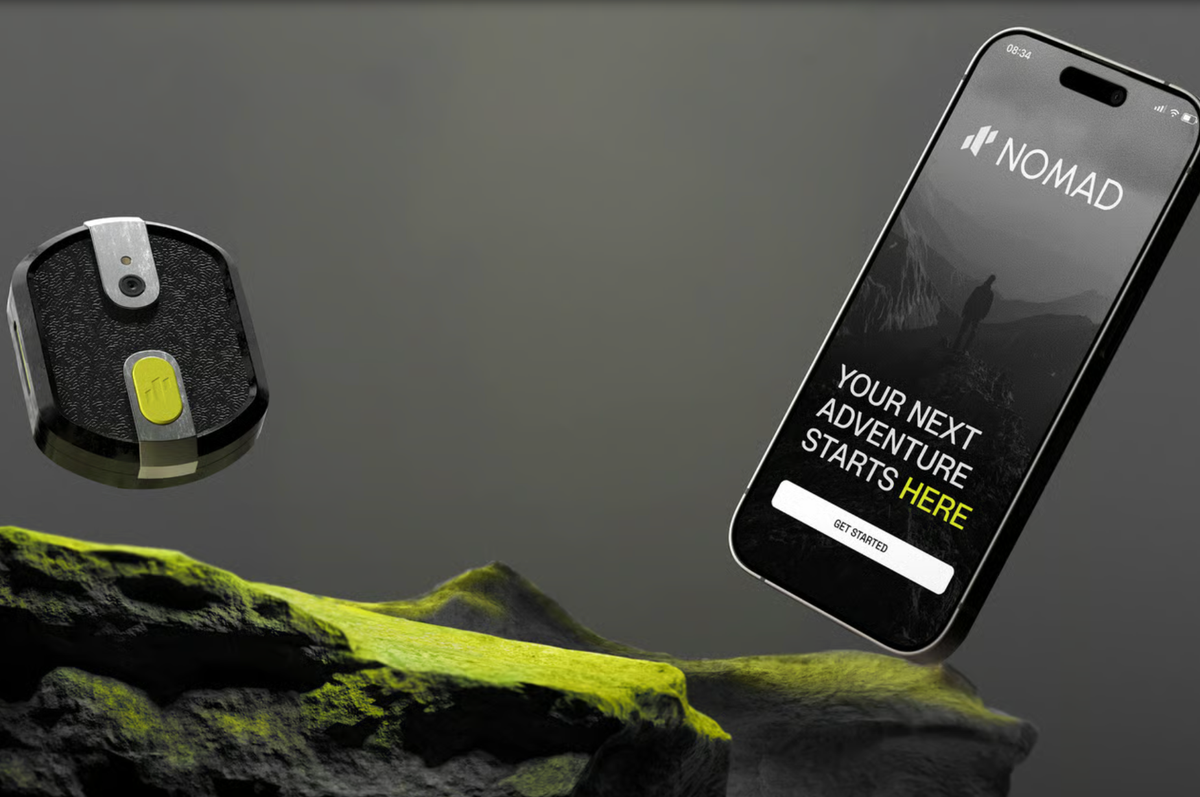
NOMAD aims to help hikers stay in the moment while still utilizing technology. Photo courtesy UH.

An AI-powered, screen-free hiking system developed by Varshini Chouthri, a recent industrial design graduate from the University of Houston, received this year's Red Dot’s “Best of the Best” award, which recognizes the top innovative designs around the world. Known as NOMAD, the system aims to help users stay in the moment while still utilizing technology. Continue reading.

Little Place Labs, Helix Earth, Tempest Droneworx: Houston startups win big at SXSW 2025 pitch competition
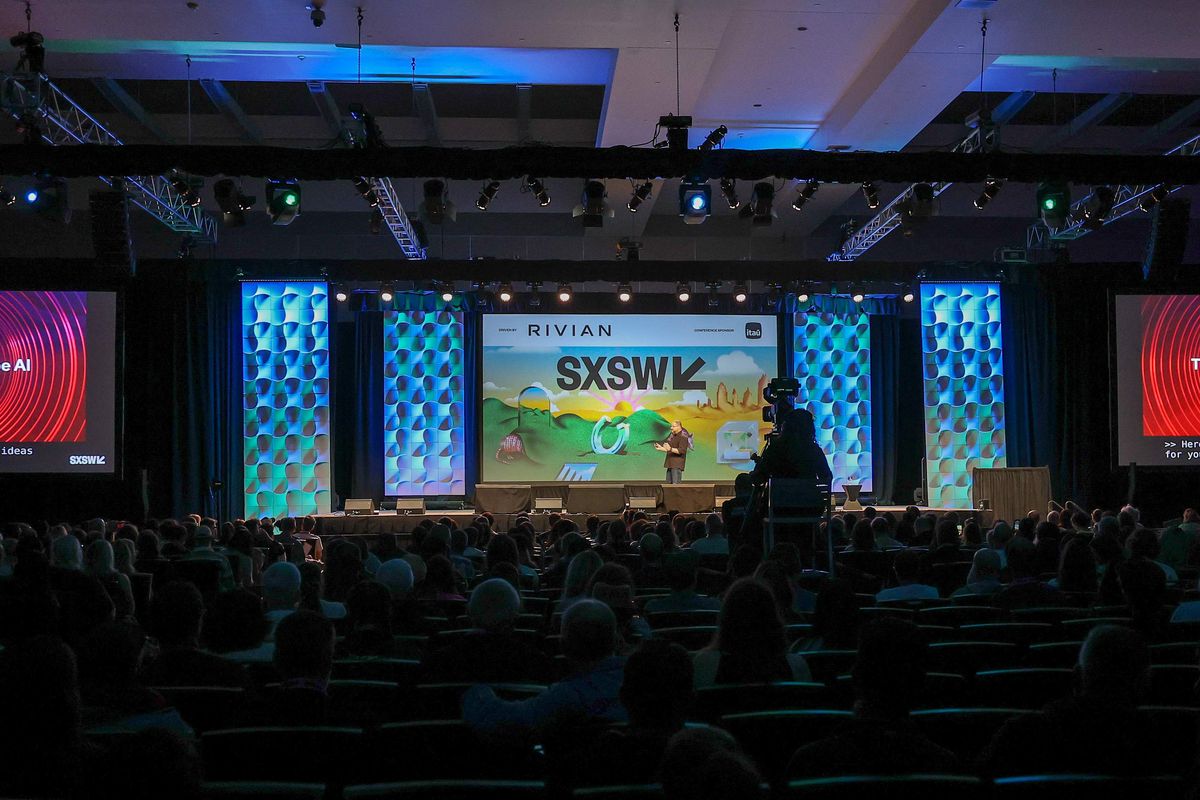
Two Houston startups won the SXSW Pitch showcase in their respective categories. Photo via Getty Images

Houston had a strong showing at the SXSW Pitch showcase in Austin this year, with several local startups claiming top prizes in their respective categories.

Little Place Labs, a Houston space data startup, won the Security, GovTech & Space competition. Clean-tech company Helix Earth, which spun out of Rice University and was incubated at Greentown Labs, won in the Smart Cities, Transportation & Sustainability contest. Tempest Droneworx, a Houston-based company that provides real-time intelligence collected through drones, robots and sensors, won the Best Speed Pitch award. Continue reading.

Ad Placement 300x100
Ad Placement 300x600

CultureMap Emails are Awesome

Houston wearable biosensing company closes $13M pre-IPO round

fresh funding

Wellysis, a Seoul, South Korea-headquartered wearable biosensing company with its U.S. subsidiary based in Houston, has closed a $13.5 million pre-IPO funding round and plans to expand its Texas operations.

The round was led by Korea Investment Partners, Kyobo Life Insurance, Kyobo Securities, Kolon Investment and a co-general partner fund backed by SBI Investment and Samsung Securities, according to a news release.

Wellysis reports that the latest round brings its total capital raised to about $30 million. The company is working toward a Korea Securities Dealers Automated Quotations listing in Q4 2026 or Q1 2027.

Wellysis is known for its continuous ECG/EKG monitor with AI reporting. Its lightweight and waterproof S-Patch cardiac monitor is designed for extended testing periods of up to 14 days on a single battery charge.

The company says that the funding will go toward commercializing the next generation of the S-Patch, known as the S-Patch MX, which will be able to capture more than 30 biometric signals, including ECG, temperature and body composition.

Wellysis also reports that it will use the funding to expand its Houston-based operations, specifically in its commercial, clinical and customer success teams.

Additionally, the company plans to accelerate the product development of two other biometric products:

  • CardioAI, an AI-powered diagnostic software platform designed to support clinical interpretation, workflow efficiency and scalable cardiac analysis
  • BioArmour, a non-medical biometric monitoring solution for the sports, public safety and defense sectors

“This pre-IPO round validates both our technology and our readiness to scale globally,” Young Juhn, CEO of Wellysis, said in the release. “With FDA-cleared solutions, expanding U.S. operations, and a strong AI roadmap, Wellysis is positioned to redefine how cardiac data is captured, interpreted, and acted upon across healthcare systems worldwide.”

Wellysis was founded in 2019 as a spinoff of Samsung. Its S-Patch runs off of a Samsung Smart Health Processor. The company's U.S. subsidiary, Wellysis USA Inc., was established in Houston in 2023 and was a resident of JLABS@TMC.

Elon Musk vows to launch solar-powered data centers in space

To Outer Space

Elon Musk vowed this week to upend another industry just as he did with cars and rockets — and once again he's taking on long odds.

The world's richest man said he wants to put as many as a million satellites into orbit to form vast, solar-powered data centers in space — a move to allow expanded use of artificial intelligence and chatbots without triggering blackouts and sending utility bills soaring.

To finance that effort, Musk combined SpaceX with his AI business on Monday, February 2, and plans a big initial public offering of the combined company.

“Space-based AI is obviously the only way to scale,” Musk wrote on SpaceX’s website, adding about his solar ambitions, “It’s always sunny in space!”

But scientists and industry experts say even Musk — who outsmarted Detroit to turn Tesla into the world’s most valuable automaker — faces formidable technical, financial and environmental obstacles.

Feeling the heat

Capturing the sun’s energy from space to run chatbots and other AI tools would ease pressure on power grids and cut demand for sprawling computing warehouses that are consuming farms and forests and vast amounts of water to cool.

But space presents its own set of problems.

Data centers generate enormous heat. Space seems to offer a solution because it is cold. But it is also a vacuum, trapping heat inside objects in the same way that a Thermos keeps coffee hot using double walls with no air between them.

“An uncooled computer chip in space would overheat and melt much faster than one on Earth,” said Josep Jornet, a computer and electrical engineering professor at Northeastern University.

One fix is to build giant radiator panels that glow in infrared light to push the heat “out into the dark void,” says Jornet, noting that the technology has worked on a small scale, including on the International Space Station. But for Musk's data centers, he says, it would require an array of “massive, fragile structures that have never been built before.”

Floating debris

Then there is space junk.

A single malfunctioning satellite breaking down or losing orbit could trigger a cascade of collisions, potentially disrupting emergency communications, weather forecasting and other services.

Musk noted in a recent regulatory filing that he has had only one “low-velocity debris generating event" in seven years running Starlink, his satellite communications network. Starlink has operated about 10,000 satellites — but that's a fraction of the million or so he now plans to put in space.

“We could reach a tipping point where the chance of collision is going to be too great," said University at Buffalo's John Crassidis, a former NASA engineer. “And these objects are going fast -- 17,500 miles per hour. There could be very violent collisions."

No repair crews

Even without collisions, satellites fail, chips degrade, parts break.

Special GPU graphics chips used by AI companies, for instance, can become damaged and need to be replaced.

“On Earth, what you would do is send someone down to the data center," said Baiju Bhatt, CEO of Aetherflux, a space-based solar energy company. "You replace the server, you replace the GPU, you’d do some surgery on that thing and you’d slide it back in.”

But no such repair crew exists in orbit, and those GPUs in space could get damaged due to their exposure to high-energy particles from the sun.

Bhatt says one workaround is to overprovision the satellite with extra chips to replace the ones that fail. But that’s an expensive proposition given they are likely to cost tens of thousands of dollars each, and current Starlink satellites only have a lifespan of about five years.

Competition — and leverage

Musk is not alone trying to solve these problems.

A company in Redmond, Washington, called Starcloud, launched a satellite in November carrying a single Nvidia-made AI computer chip to test out how it would fare in space. Google is exploring orbital data centers in a venture it calls Project Suncatcher. And Jeff Bezos’ Blue Origin announced plans in January for a constellation of more than 5,000 satellites to start launching late next year, though its focus has been more on communications than AI.

Still, Musk has an edge: He's got rockets.

Starcloud had to use one of his Falcon rockets to put its chip in space last year. Aetherflux plans to send a set of chips it calls a Galactic Brain to space on a SpaceX rocket later this year. And Google may also need to turn to Musk to get its first two planned prototype satellites off the ground by early next year.

Pierre Lionnet, a research director at the trade association Eurospace, says Musk routinely charges rivals far more than he charges himself —- as much as $20,000 per kilo of payload versus $2,000 internally.

He said Musk’s announcements this week signal that he plans to use that advantage to win this new space race.

“When he says we are going to put these data centers in space, it’s a way of telling the others we will keep these low launch costs for myself,” said Lionnet. “It’s a kind of powerplay.”

Johnson Space Center and UT partner to expand research, workforce development

onward and upward

NASA’s Johnson Space Center in Houston has forged a partnership with the University of Texas System to expand collaboration on research, workforce development and education that supports space exploration and national security.

“It’s an exciting time for the UT System and NASA to come together in new ways because Texas is at the epicenter of America’s space future. It’s an area where America is dominant, and we are committed as a university system to maintaining and growing that dominance,” Dr. John Zerwas, chancellor of the UT System, said in a news release.

Vanessa Wyche, director of Johnson Space Center, added that the partnership with the UT System “will enable us to meet our nation’s exploration goals and advance the future of space exploration.”

The news release noted that UT Health Houston and the UT Medical Branch in Galveston already collaborate with NASA. The UT Medical Branch’s aerospace medicine residency program and UT Health Houston’s space medicine program train NASA astronauts.

“We’re living through a unique moment where aerospace innovation, national security, economic transformation, and scientific discovery are converging like never before in Texas," Zerwas said. “UT institutions are uniquely positioned to partner with NASA in building a stronger and safer Texas.”

Zerwas became chancellor of the UT System in 2025. He joined the system in 2019 as executive vice chancellor for health affairs. Zerwas represented northwestern Ford Bend County in the Texas House from 2007 to 2019.

In 1996, he co-founded a Houston-area medical practice that became part of US Anesthesia Partners in 2012. He remained active in the practice until joining the UT System. Zerwas was chief medical officer of the Memorial Hermann Hospital System from 2003 to 2008 and was its chief physician integration officer until 2009.

Zerwas, a 1973 graduate of the Houston area’s Bellaire High School, is an alumnus of the University of Houston and Baylor College of Medicine.