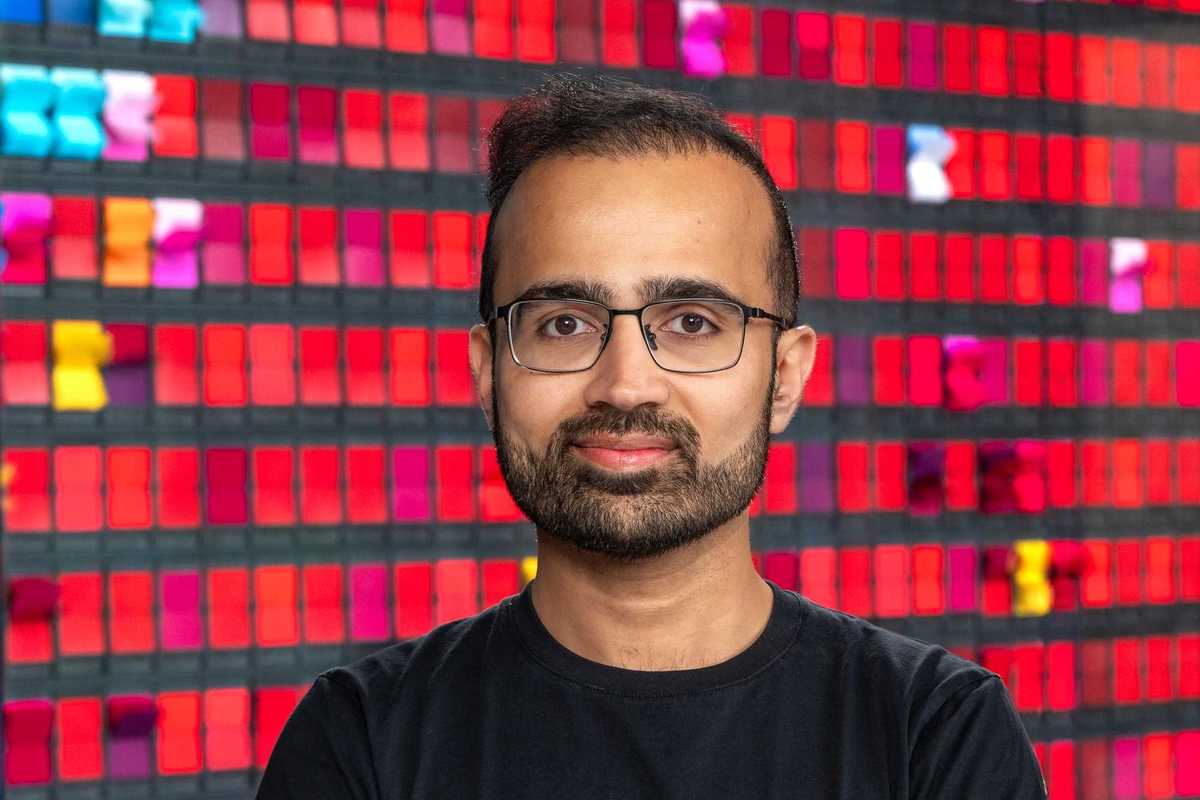
UH professor John O’Brien has landed new funding from the National Eye Institute. Photo courtesy UH.

University of Houston College of Optometry Professor John O’Brien has received a $2.6 million grant from the National Eye Institute to continue his research on the retina and neurological functions.

O’Brien is considered a leading expert in retinal neuroscience with more than 20 years of research in the field. The new funding will allow O’Brien and his team to continue to study the dense assembly of proteins associated with electrical synapses, or gap junctions, in the retina.

Gap junctions transfer electrical signals between neurons. And the plasticity of gap junctions changes the strength of a synapse, in turn changing how visual information is processed. Previous research has shown that reduced functions of electrical synapses could be linked to autism, while their hyperfunction may lead to seizures.

“The research we propose will significantly advance our understanding of the molecular complexes that control the function of electrical synapses,” O’Brien said in a news release.

The team at UH will work to identify the proteins and examine how they impact electrical synapses. It is particularly interested in the Connexin 36, or Cx36, protein. According to O’Brien, phosphorylation of Cx36, a short-term chemical modification of the protein, serves as a key driver of plasticity. And the protein has been linked to refractive error development, which is one of the largest vision problems in the world today.

Additionally, OBrien’s research has shown that plasticity is essential for all-day vision, allowing the retina to adjust sensitivity and sharpen images. He has also built a catalog of the core set of proteins surrounding electrical synapses that are conserved across species. His research has been funded by the NEI since 2000.

The Cynthia and George Mitchell Foundation has granted $1.1M to the University of Houston to support research on Usher Syndrome. Photo courtesy University of Houston.

UH receives $1M grant to advance research on rare pediatric disorder

peds research

The University of Houston has received a two-year, $1.1 million gift from the Cynthia and George Mitchell Foundation to advance research on a rare genetic disorder that can lead to both deafness and blindness in children, known as Usher Syndrome.

The current grant will support the research of UH biomedical engineering professors Muna Naash and Muayyad Al-Ubaidi, who work in the Laboratory for Retinal Molecular and Cellular Biology and Gene Therapy in the Cullen College of Engineering. The professors have published their findings in the journal Nature Communications.

Naash and Al-Ubaidi’s research focuses on mutations in the USH2A gene, which is crucial to the development and maintenance of the inner ear and retina. The work was inspired by a chance meeting that changed Naash’s life.

“Our work began more than two decades ago when I met a young boy who had lost his both his vision and hearing, and it made me realize just how precious those two senses are, and it truly touched my heart,” Naash said in a news release from UH. “Thanks to the generosity of the Cynthia and George Mitchell Foundation, we can now take the next critical steps in our research and bring hope to families affected by this challenging condition.”

The grant from the foundation comes in addition to a previous $1.6 million award from the National Eye Institute in 2023, which helped create a research platform for innovative gene therapy approaches for the condition.

Usher Syndrome affects 25,000 people in the U.S. and is the most common genetic condition worldwide that impacts both hearing and vision in children. Currently, there is no cure for any of the main three types of the condition. UH believes support from the Cynthia and George Mitchell Foundation will help elevate research, advance real-world solutions in health and improve lives.

“What makes UH such a powerful hub for research is not just its own resources, but also its location and strategic partnerships, including those with the Texas Medical Center,” Al-Ubaidi said in a news release. “We have access to an extraordinary network, and that kind of collaborative environment is essential when tackling complex diseases like Usher syndrome, where no single lab can do it alone.”

Ad Placement 300x100
Ad Placement 300x600

CultureMap Emails are Awesome

Texas voters OK $3 billion for new dementia research institute

state funding

Texas voters on Nov. 4 overwhelmingly approved a ballot measure that provides $3 billion in state funding over a 10-year span for the newly established Dementia Prevention and Research Institute of Texas (DPRIT).

Thanks to the passage of Proposition 14, Texas now boasts the country’s largest state-funded initiative dedicated to dementia research and prevention, according to the Alzheimer’s Association. Up to $300 million in grants will be awarded during the 10-year funding period.

“This is a transformative moment for Texas and for the fight against Alzheimer’s and all other dementia,” said Joanne Pike, president and CEO of the Alzheimer’s Association. “Texans have chosen to invest in hope, innovation, and solutions for the millions of families affected by these devastating diseases. With the passage of Proposition 14, Texas is now poised to lead the nation in dementia research and prevention.”

The association says DPRIT will drive scientific breakthroughs, attract top-notch dementia researchers to Texas, and generate thousands of jobs statewide.

An estimated 460,000 Texans are living with dementia, the association says, and more than one million caregivers support them.

DPRIT is modeled after the Cancer Prevention and Research Institute of Texas (CPRIT). Since 2008, the state agency has awarded nearly $4 billion in grants to research organizations for cancer-related academic research, prevention programs, and product development.

An analysis by the McKinsey Health Institute found that investing in brain health initiatives like DPRIT could boost Texas’ GDP by $260 billion. Much of that GDP bump could benefit the Houston area, which is home to dementia-focused organizations such as UTHealth Houston Neurosciences, Baylor College of Medicine’s Center for Alzheimer’s and Neurodegenerative Diseases, the University of Texas Medical Branch at Galveston’s Collaborative Alzheimer’s Disease and Memory Disorders Program, and the Houston Methodist Research Institute’s John M. O’Quinn Foundation Neurodegenerative Disorders Laboratory.

The Greater Houston Partnership says DPRIT holds the potential “to elevate Texas — particularly Houston — as a hub for brain health research.”

State Sen. Joan Huffman, a Houston Republican, is one of DPRIT’s champions. She sponsored legislation this year to create the institute and ask Texas voters to approve the $3 billion in funding.

“By establishing the Dementia Prevention and Research Institute of Texas, we are positioning our state to lead the charge against one of the most devastating health challenges of our time,” Huffman said in May. “With $3 billion in funding over the next decade, we will drive critical research, develop new strategies for prevention and treatment, and support our health care community.”

Get your tickets to the 2025 Houston Innovation Awards today

Ticket Time

We're just one week away from the 2025 Houston Innovation Awards, and it's time to secure your seat for the annual event.

Join us on Nov. 13 at Greentown Labs for an intimate evening of networking and celebrating Houston's extensive innovation community. We'll honor the trailblazers and visionaries who are shaping the future of our city, and you'll connect with like-minded individuals, industry leaders, investors, and entrepreneurs.

From burgeoning startups to fast-growing scaleups, we'll celebrate outstanding nominees across 10 prestigious categories and unveil this year's winners during our live awards ceremony. Be in the room to see who is named 2025 Startup of the Year, 2025 Mentor of the Year, and more.

Individual tickets are available for $45 and include complimentary light bites, drinks, and non-reserved seating. A limited number of Founder Tickets are available for startup founders at a special discounted price of $35.

Bringing a group? Corporate 10-packs include light bites and drinks, as well as a full row of reserved seating for 10 guests, complete with company branding.

The event is just a week away, so secure your seats today. Then, get to know the finalists in each category via our editorial spotlights.

---

The Houston Innovation Awards program is sponsored by Houston City College Northwest, Houston Powder Coaters, FLIGHT by Yuengling, and more to be announced soon. For sponsorship opportunities, please contact sales@innovationmap.com.

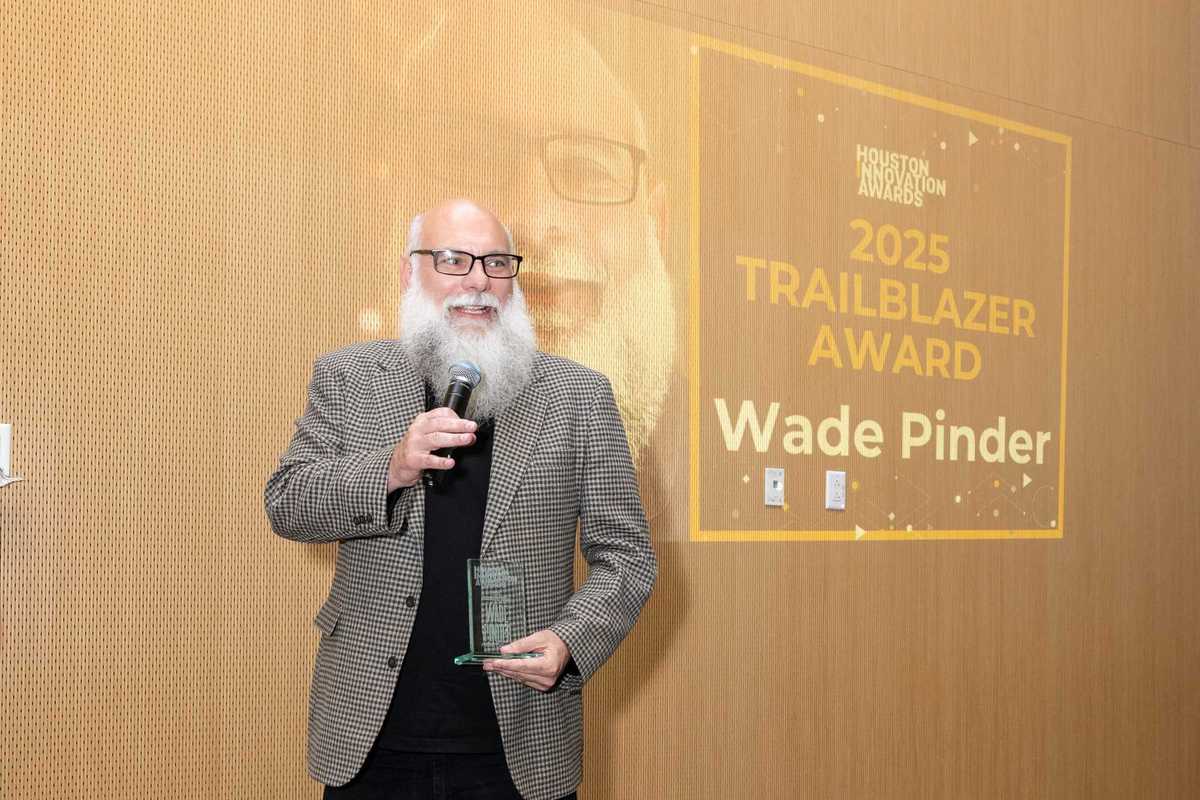
Houston Innovation Awards to honor Wade Pinder as 2025 Trailblazer

And the award goes to...

On Nov. 13, we'll gather for the 2025 Houston Innovation Awards to celebrate the best and brightest in Houston innovation right now. And, as is tradition with the annual program, we'll honor one longstanding Houston innovator with the Trailblazer Award.

The award was established to recognize an individual who has left a profound impact on Houston's business and innovation ecosystem and is dedicated to continuing to support Houston and its entrepreneurs. The recipient is selected by our esteemed panel of judges from a pool of internal and external recommendations.

The 2025 Trailblazer Award recipient is Wade Pinder of Product Houston. A familiar face to those active in Houston's innovation sector, Pinder identifies as an "Ecosystem Wayseeker" and is the founder of Product Houston.

Pinder, a former product manager at Blinds.com, arrived in Houston in 2008 and has been deeply engaged in Houston’s startup and innovation scene since 2012. Over the years, he has supported hundreds of founders, product leaders, and community builders across the Houston area.

In 2023, he was honored as Mentor of the Year in the Houston Innovation Awards. Today, he fosters collaboration, clarity, and connection through his work at Product Houston, and he helps innovators find their place in the local sector via his monthly "Houston Ecosystem Mapping" sessions.

Read below for Pinder's insightful takes on the Houston innovation scene and what it means to blaze a new trail. Then, join us as we celebrate Pinder and all of our nominees and winners at the 2025 Houston Innovation Awards on Nov. 13 at Greentown Labs. Tickets are available now.

InnovationMap: Describe the growth of the Houston innovation ecosystem from your arrival in 2008 to now.

Wade Pinder: When I first arrived in Houston in 2008, the innovation ecosystem was more fragmented than it is today. Connecting with other innovators often meant attending a lot of hit-or-miss events. Over the years, it’s been incredible to see the network take shape and grow into a true community. I’ve had the privilege of being involved with several coworking spaces and accelerator programs along the way, and it’s been especially exciting to see Station Houston evolve into what is now the Ion District. What makes the Ion unique is how it blends openness and opportunity… ideas spill into and out of the space, and anyone can walk in, participate in programming, and find themselves in proximity to people who might help them take the next steps.

Additionally, the expansion of spaces like Texas Medical Center Innovation, Helix Park, The Cannon, and many others, have broadened Houston’s innovation landscape in powerful ways.

Today, when someone new moves to Houston and wants to plug into the startup and innovation scene, it’s much easier for them to find their way than when I moved here in 2008. I think that’s something Houston can really be proud of.

IM: As someone who engages with the broader Houston innovation community on a regular basis, what are the shared characteristics and traits that you see among its members?

WP: One of the things that makes Houston’s innovation community unique is how deeply it’s rooted in industry. So many of the innovators I meet come from within Houston’s major sectors, and they’ve seen firsthand where opportunities lie, which gives their innovation a certain practicality. They’re developing solutions that solve real, often complex, business and industry problems, not chasing trends or trying to create the next flashy consumer app.

What I admire most is that this community is growing in its understanding of the value of collaboration. They work with the systems and expertise that already exist, and find better ways to make them work together. Another shared trait I see across Houston’s innovators is a deep sense of curiosity and a drive to question the status quo while looking for better ways to build, improve, and solve.

IM: You’ve said, "Houston has Houston problems, and Houston needs Houston solutions." How do you see this taking shape in the innovation sector right now?

WP: When I first started getting connected to Houston’s startup and innovation scene in 2012, I noticed folks had a tendency to look at other cities and ask, "How can we do what they did?" Back then, we saw phrases like "Silicon Bayou" pop up, and while that enthusiasm was hopeful, it often discounted the things that make Houston unique. Over time, I’ve come to believe that the better question is: "What are we already great at, and how can we innovate from there?" The flip side of that question is to reflect on the things that hold us back as an ecosystem… identifying the friction points and finding practical ways to smooth them out.

From my time wandering around our ecosystem, I’ve come to understand Houston is great at infrastructure at scale, solving life-and-death challenges in the global spotlight, and "boldly going where no one’s gone before." These three things, in my opinion, capture the essence of Houston does best: We do hard things here.

What excites me today is that we’re applying innovation to those core strengths in ways that feel authentically Houston. One area I’m especially excited about is the emergence of the “New Space Economy,” captured beautifully in Wogbe Ofori’s thought piece “The Astropreneur’s Startup Journey Map.” It's a great example of how the next wave of space-related innovation might connect to Houston’s long-standing strengths in manufacturing, logistics, and problem-solving at scale.

Another challenge Houston faces is what I call a "proximity problem." Even when events are only a few miles apart, traffic can make it difficult for people to stay connected across the city. That’s why I’m so encouraged by the rise of what I think of as "intent-based gatherings" around the city: events designed with purpose, where people know they’ll find real connection and value once they arrive.

IM: Finally, what does being a "Trailblazer" mean to you?
WP: To me, trailblazing in the Houston innovation ecosystem means being willing to wander through the many different corners of the community and look for value in places we often overlook. It’s about showing up at events, community meetings, and pitch competitions — not just to participate, but to notice how each of these "nodes" in the ecosystem connects and adds value to the others.

Sometimes the trailblazer only walks a trail once: as they are discovering it. If you can help others see a newfound trail’s purpose and potential, it becomes a path others can follow more easily in the future. That’s the real work of a trailblazer: mapping connections, framing their value, and helping people recognize how those pathways strengthen the ecosystem as a whole.

In a broader sense, trailblazing is about seeing things not just as they are, but as they could be. Then taking the steps, however small, that make that vision real.

---

The Houston Innovation Awards program is sponsored by Houston City College Northwest, Houston Powder Coaters, FLIGHT by Yuengling, and more to be announced soon. For sponsorship opportunities, please contact sales@innovationmap.com.